
立天云德 / 知识中心
碳纤维知识中心。.
212 practical guides across eight topics. Find material definitions, component design questions, manufacturing considerations and the records needed for a clear purchase enquiry.
Browse by topic, or search all 212 guides.
Materials & Laminates
Understand carbon fiber reinforcement and laminate descriptions: tow size, fabric weight, fibre fraction, ply thickness, orientation and construction.
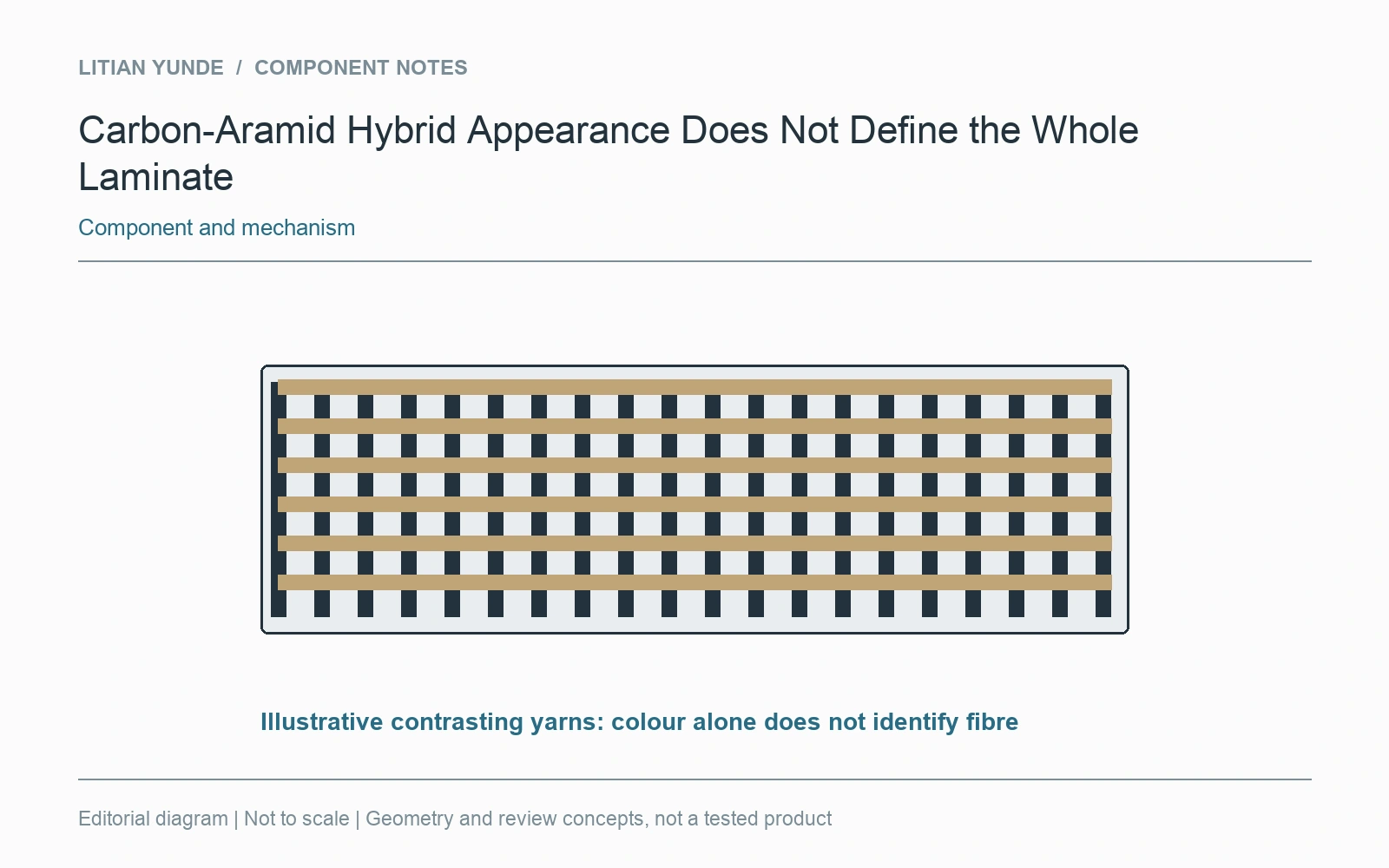
Carbon-Aramid Hybrid Appearance Does Not Define the Whole Laminate
A hybrid reinforcement contains more than one fibre type in its defined construction. A contrasting surface pattern does not establish which fibres are present, where they…
Read guide →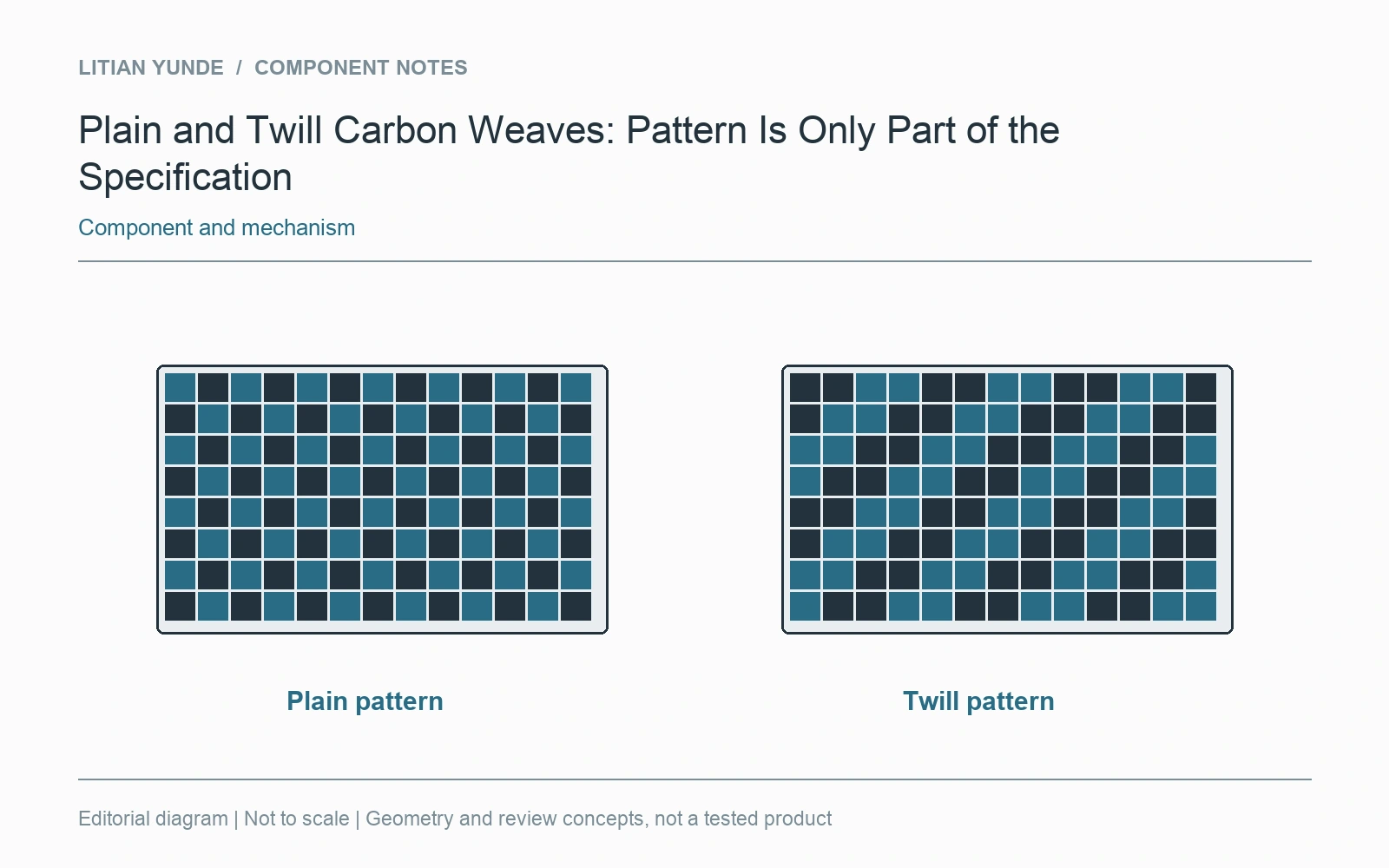
Plain and Twill Carbon Weaves: Pattern Is Only Part of the Specification
Plain and twill identify weave constructions, not complete carbon fiber component specifications. Their visible patterns can help an appearance discussion, but a fabric…
Read guide →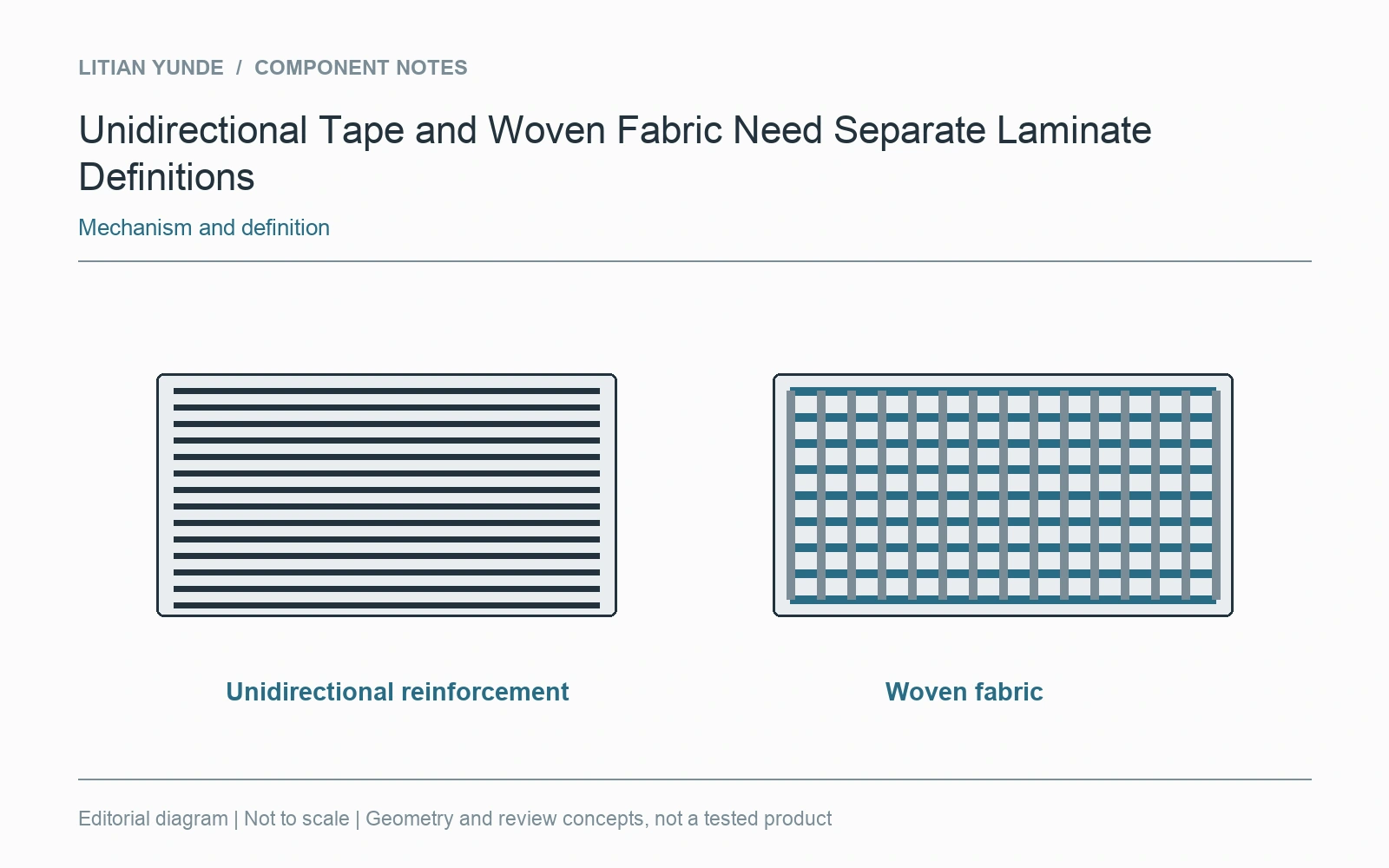
Unidirectional Tape and Woven Fabric Need Separate Laminate Definitions
Unidirectional reinforcement and woven fabric arrange fibres differently. Selecting either form changes the laminate description; it is not simply a choice between two…
Read guide →
Open-Hole and Unnotched Composite Strength Are Different Results
A strength result for an unnotched coupon does not directly establish the strength of a laminate containing a hole. Open-hole tests examine a defined specimen with a defined…
Read guide →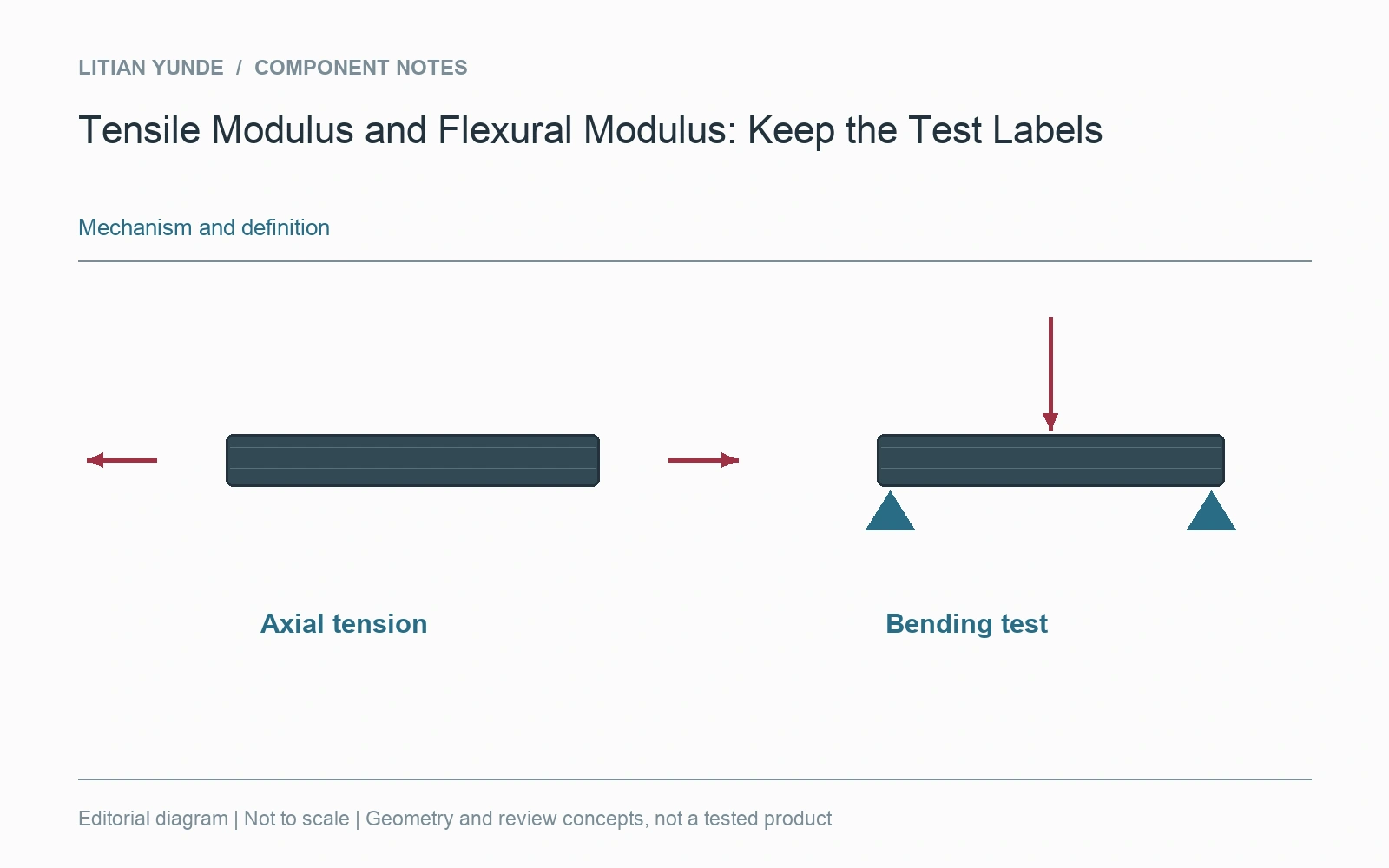
Tensile Modulus and Flexural Modulus: Keep the Test Labels
Tensile modulus and flexural modulus come from different loading arrangements. A carbon fiber datasheet should retain those labels, the laminate direction and the test…
Read guide →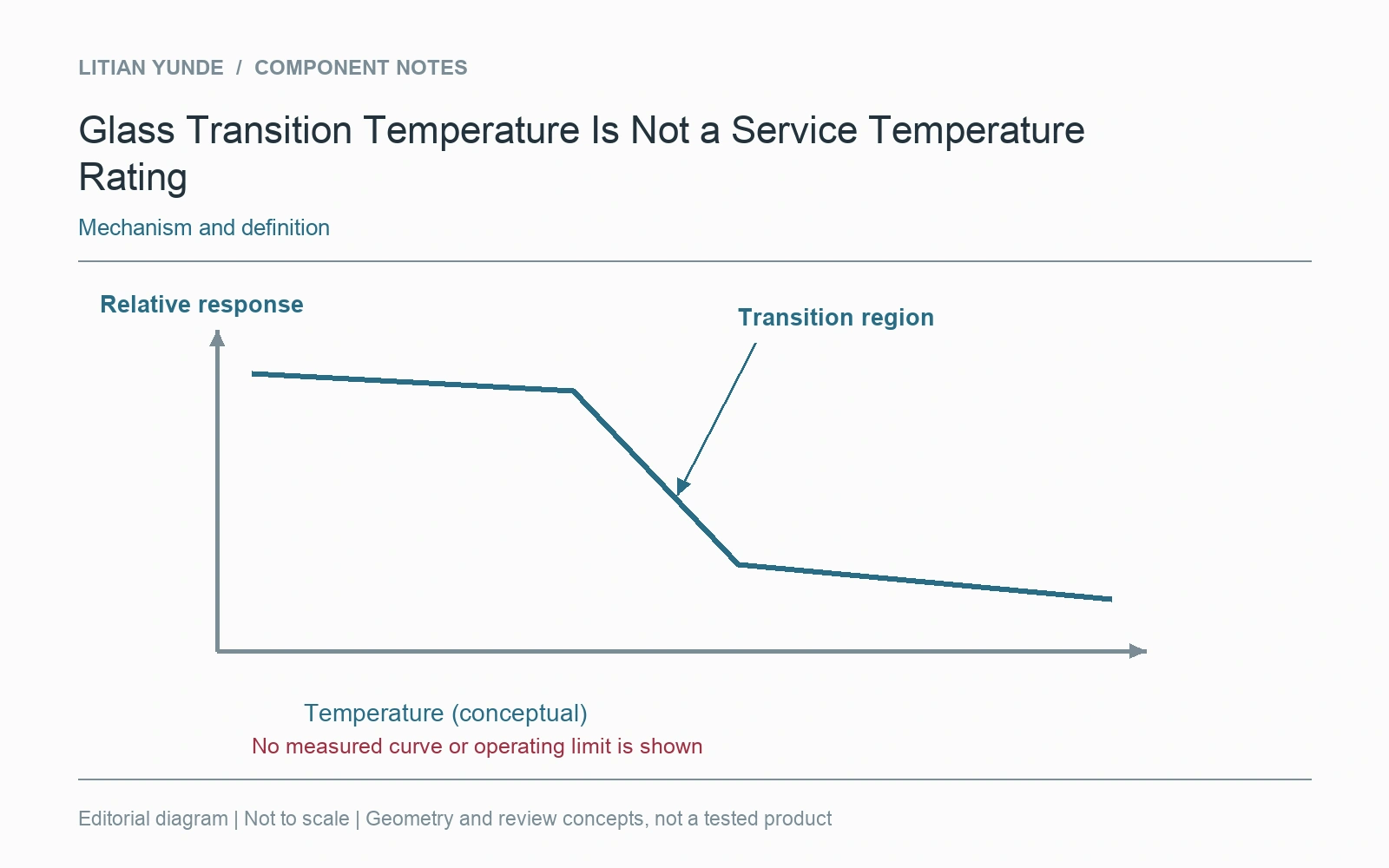
Glass Transition Temperature Is Not a Service Temperature Rating
A resin’s glass transition temperature describes a material transition under a particular measurement method. It is not, by itself, the temperature rating of a finished…
Read guide →
Balanced and Symmetric Carbon Fiber Laminates Are Different Descriptions
Symmetric and balanced describe different aspects of a laminate. Symmetry concerns the arrangement about the laminate mid-plane. Balance concerns matching positive and…
Read guide →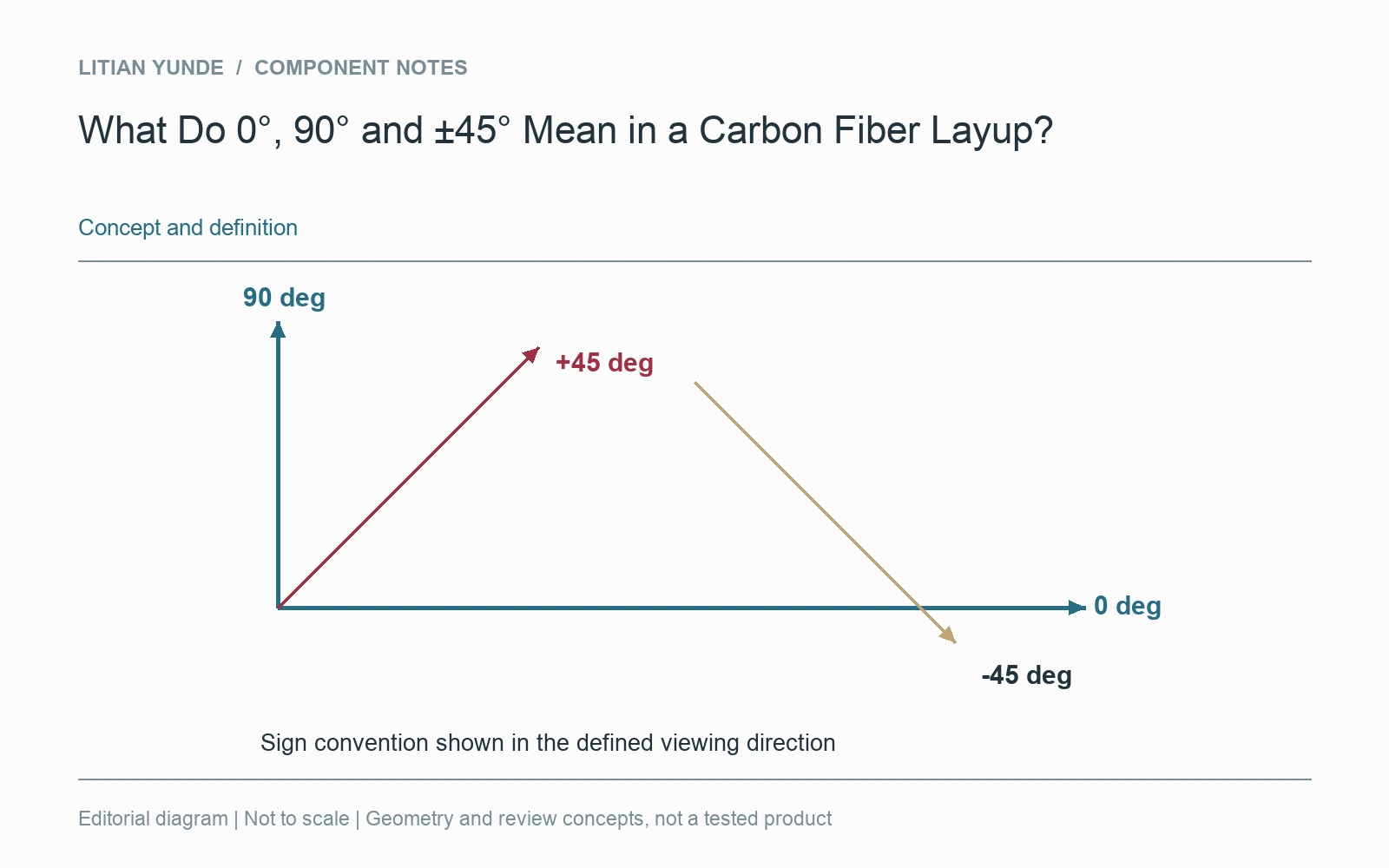
What Do 0°, 90° and ±45° Mean in a Carbon Fiber Layup?
A ply angle only makes sense relative to an identified direction. In a laminate definition, 0°, 90° and ±45° describe orientations measured from that reference. They are not…
Read guide →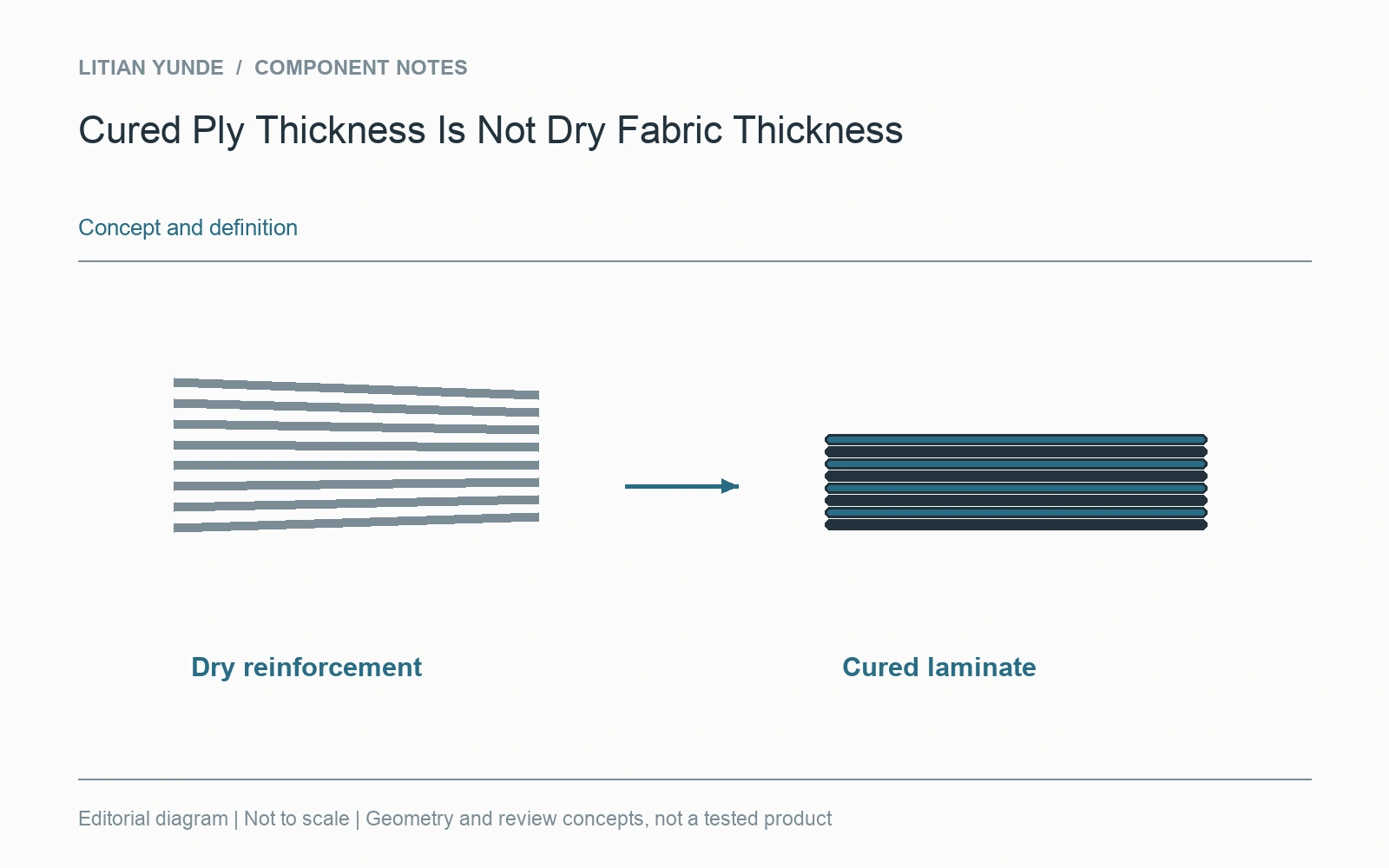
Cured Ply Thickness Is Not Dry Fabric Thickness
A fabric thickness listed before impregnation is not automatically the thickness one ply will occupy in a cured part. Cured ply thickness belongs to a defined material and…
Read guide →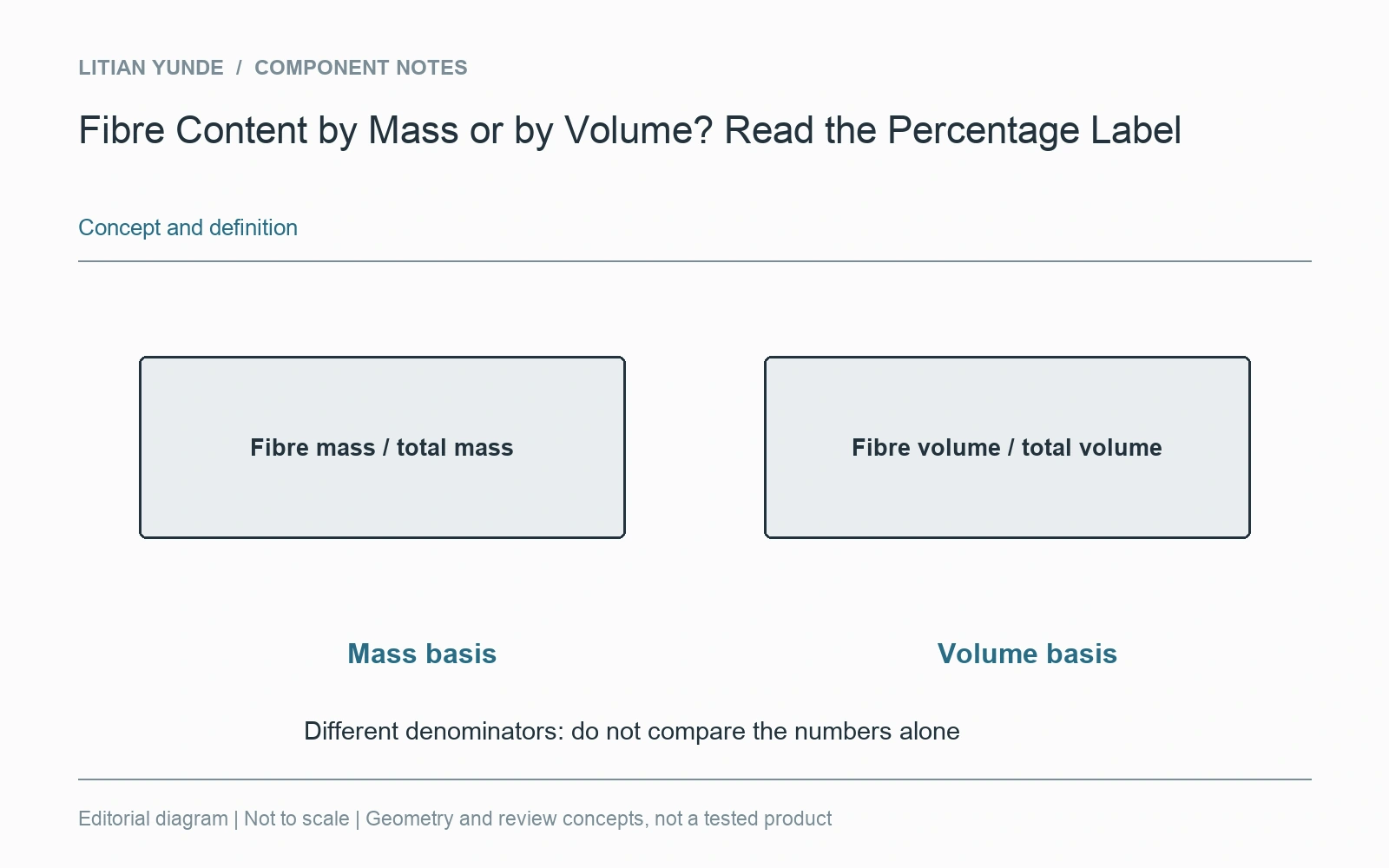
Fibre Content by Mass or by Volume? Read the Percentage Label
A fibre-content percentage is incomplete without its basis. Mass fraction compares fibre mass with total mass; volume fraction compares fibre volume with total volume. Equal…
Read guide →
3K Carbon Fabric and Fabric Weight Describe Different Things
“3K” describes a bundle of 3,000 carbon filaments. Fabric weight describes the mass of fabric over a stated area, commonly in grams per square metre. One is a yarn…
Read guide →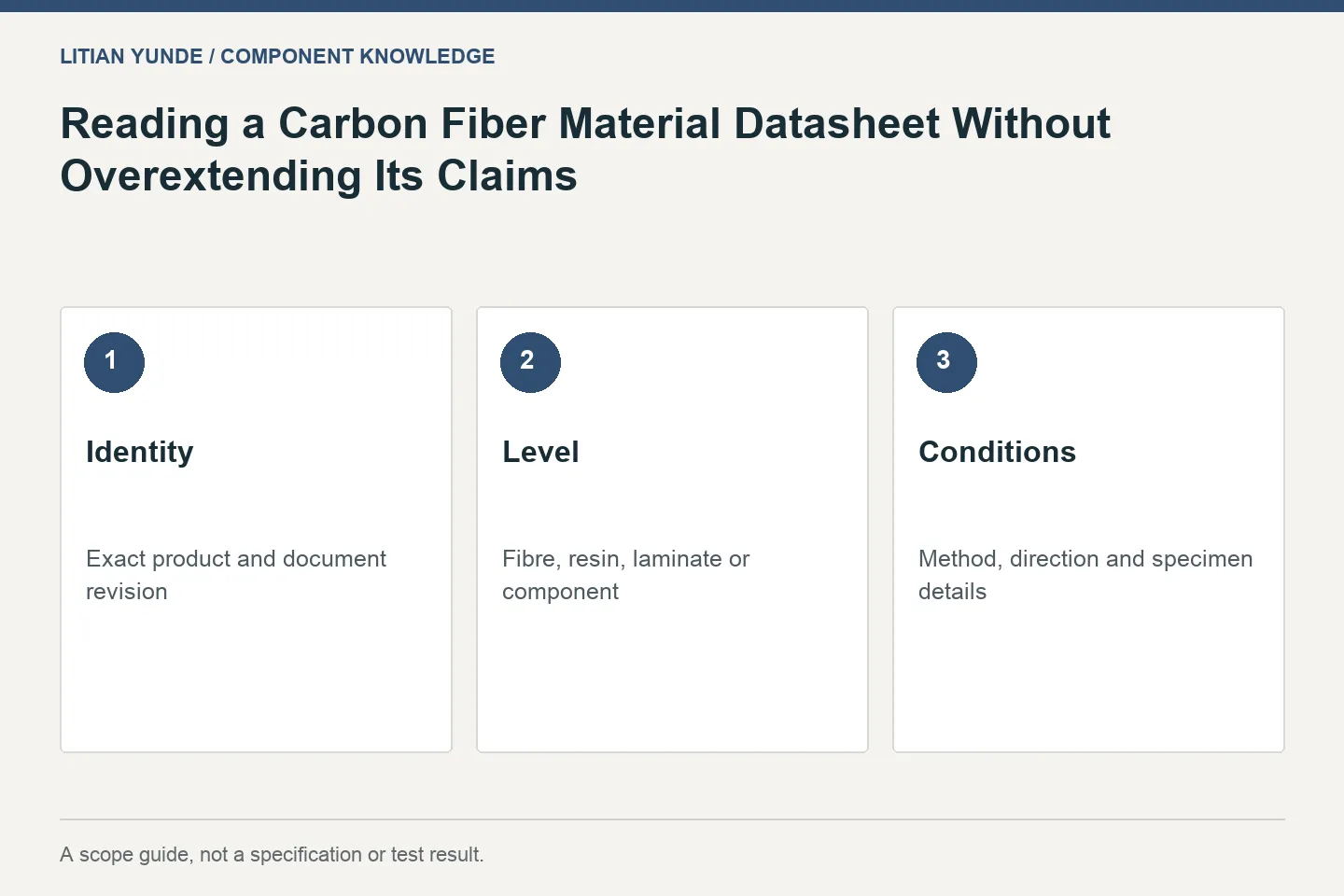
如何阅读碳纤维材料数据表,避免对其性能过度夸大
A datasheet must be read with its product identity, specimen definition and test conditions.
Read guide →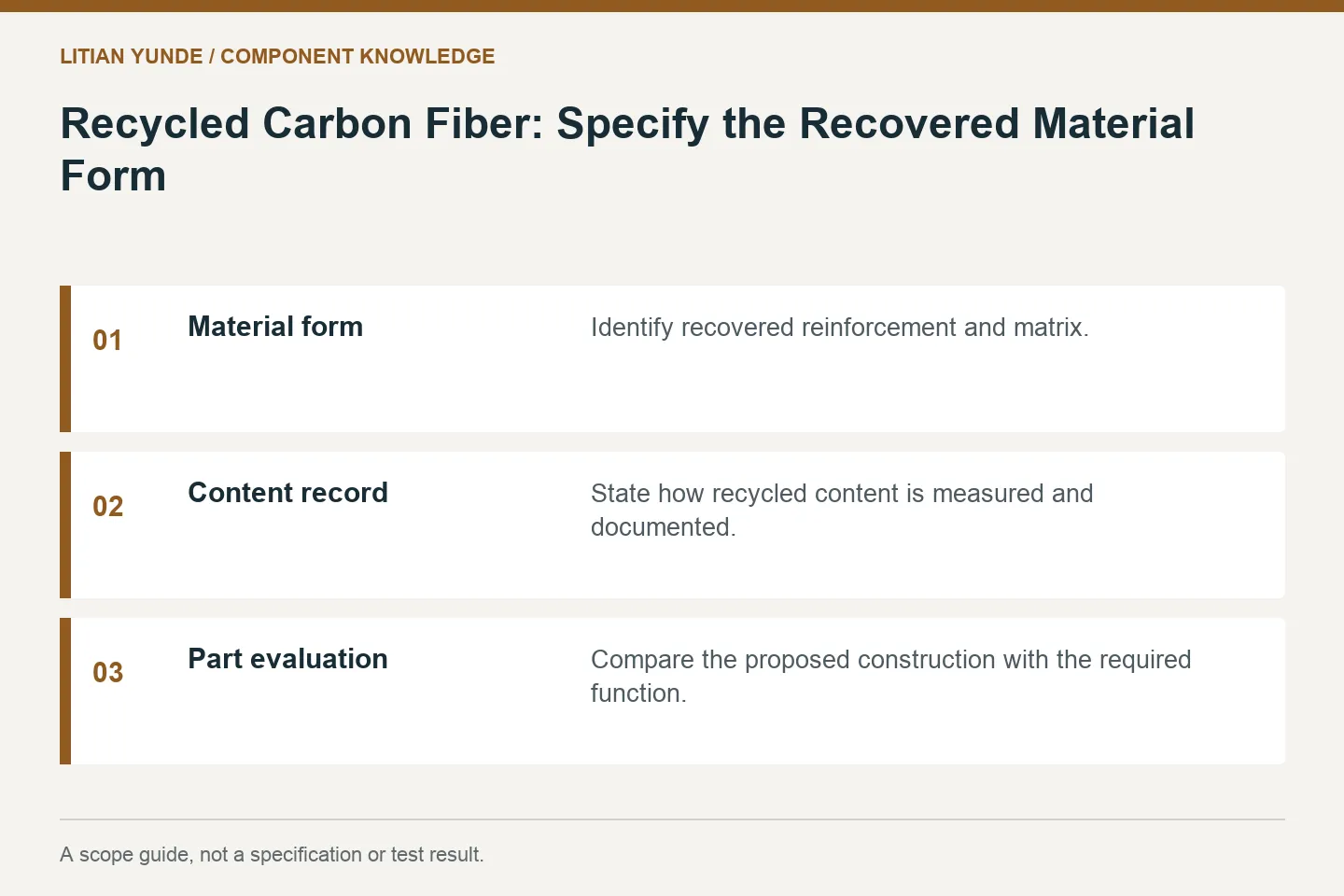
再生碳纤维:指定回收材料的形态
Recycled carbon fiber is not a single interchangeable material. An enquiry should identify the recovered form and the proposed composite construction before comparing it with…
Read guide →
碳纤维、碳纤维织物和碳纤维层压板:三种不同的东西
Carbon fibre is the reinforcement; fabric is one way of arranging it; a cured laminate combines reinforcement with a matrix into a part. Keeping these terms separate makes a…
Read guide →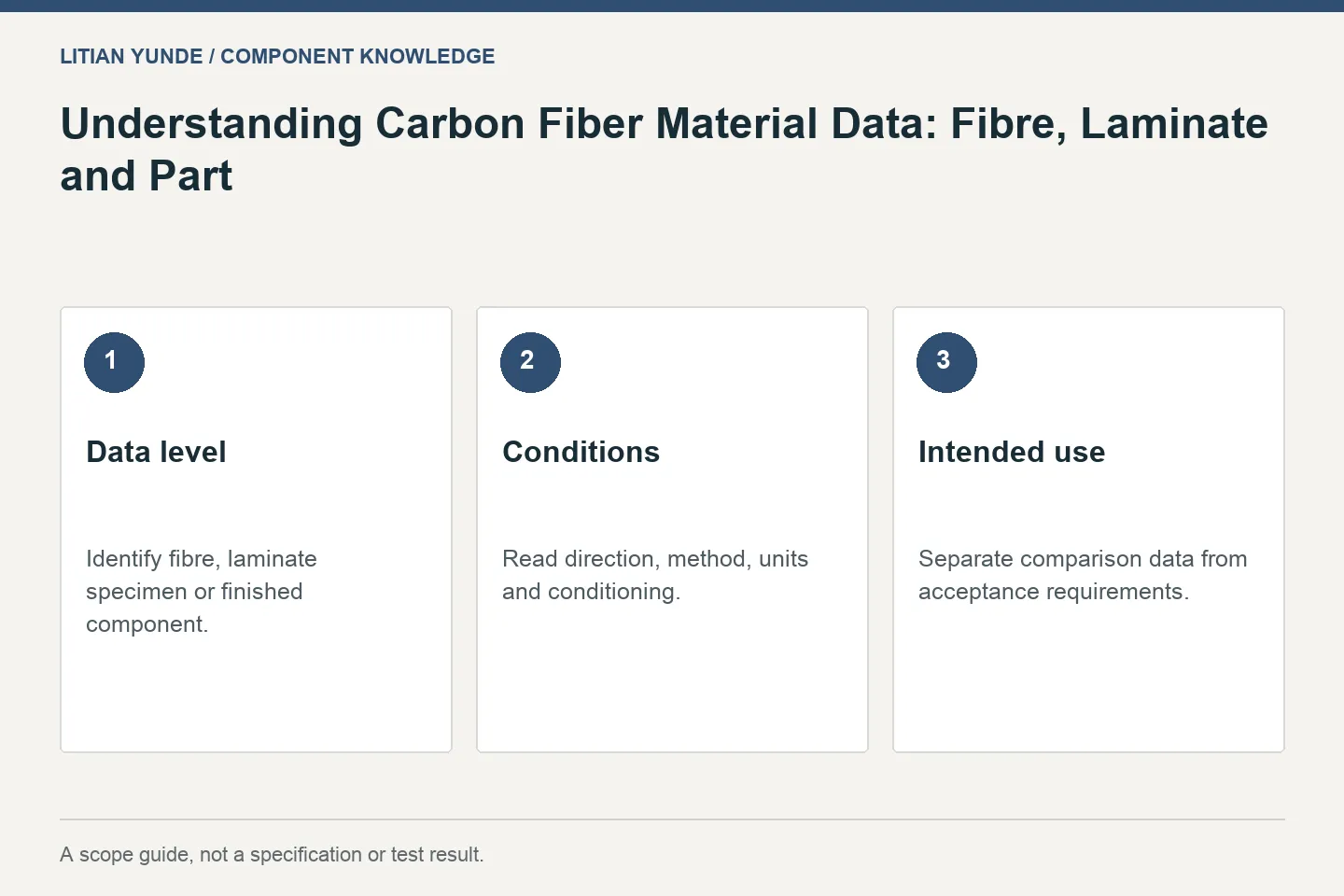
理解碳纤维材料数据:纤维、层压板和部件
Before comparing carbon fiber values, check whether they describe the fibre, a laminate specimen or a finished component. Numbers at these three levels answer different…
Read guide →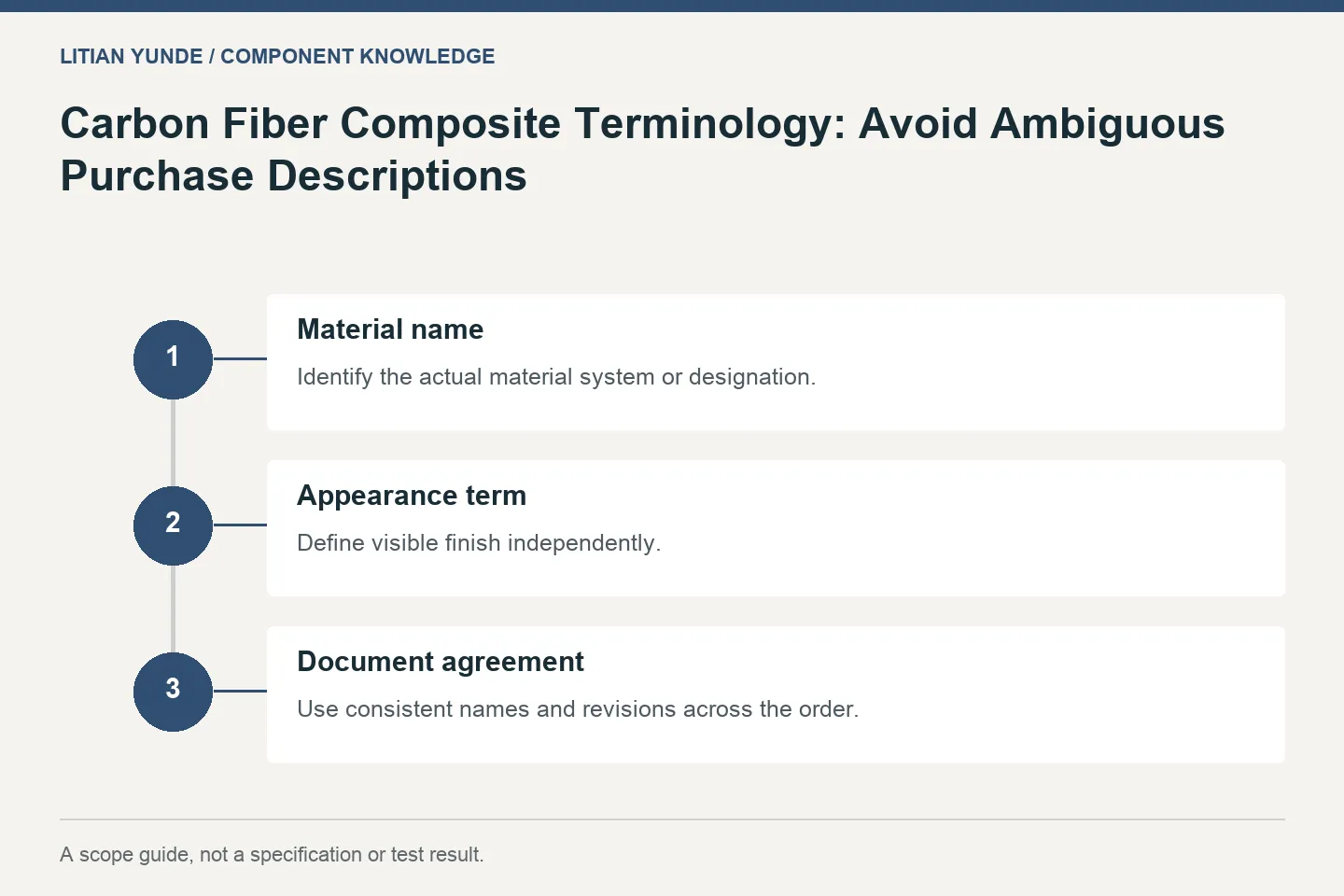
碳纤维复合材料术语:避免采购描述中的歧义
A clear purchase description distinguishes the material, the manufacturing form and the finished component. Broad phrases such as aerospace carbon or premium composite should…
Read guide →板材与面板
Selecting and specifying flat carbon fiber components: panel construction, finished geometry, cutouts, contact faces and installed behaviour.

Bonded Stiffeners on Carbon Fiber Panels: Specify the Complete Section
A bonded stiffener changes a flat panel into a built-up section. Its shape, position, bond interface and connection to the supports belong in the definition. Quoting only the…
Read guide →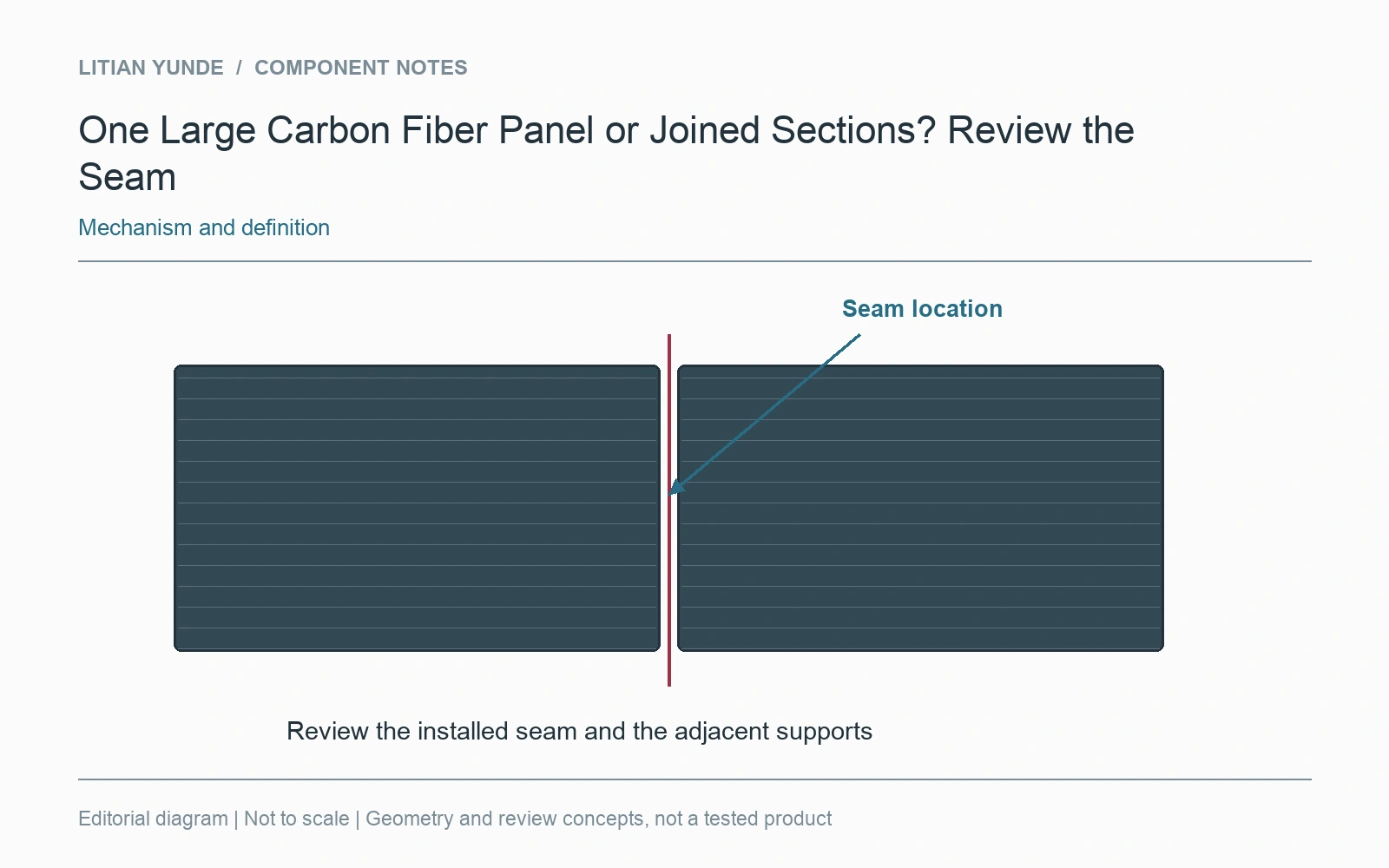
One Large Carbon Fiber Panel or Joined Sections? Review the Seam
Splitting a large panel into sections introduces a joint with its own fit, access and appearance requirements. Review the seam before comparing the proposal with a one-piece…
Read guide →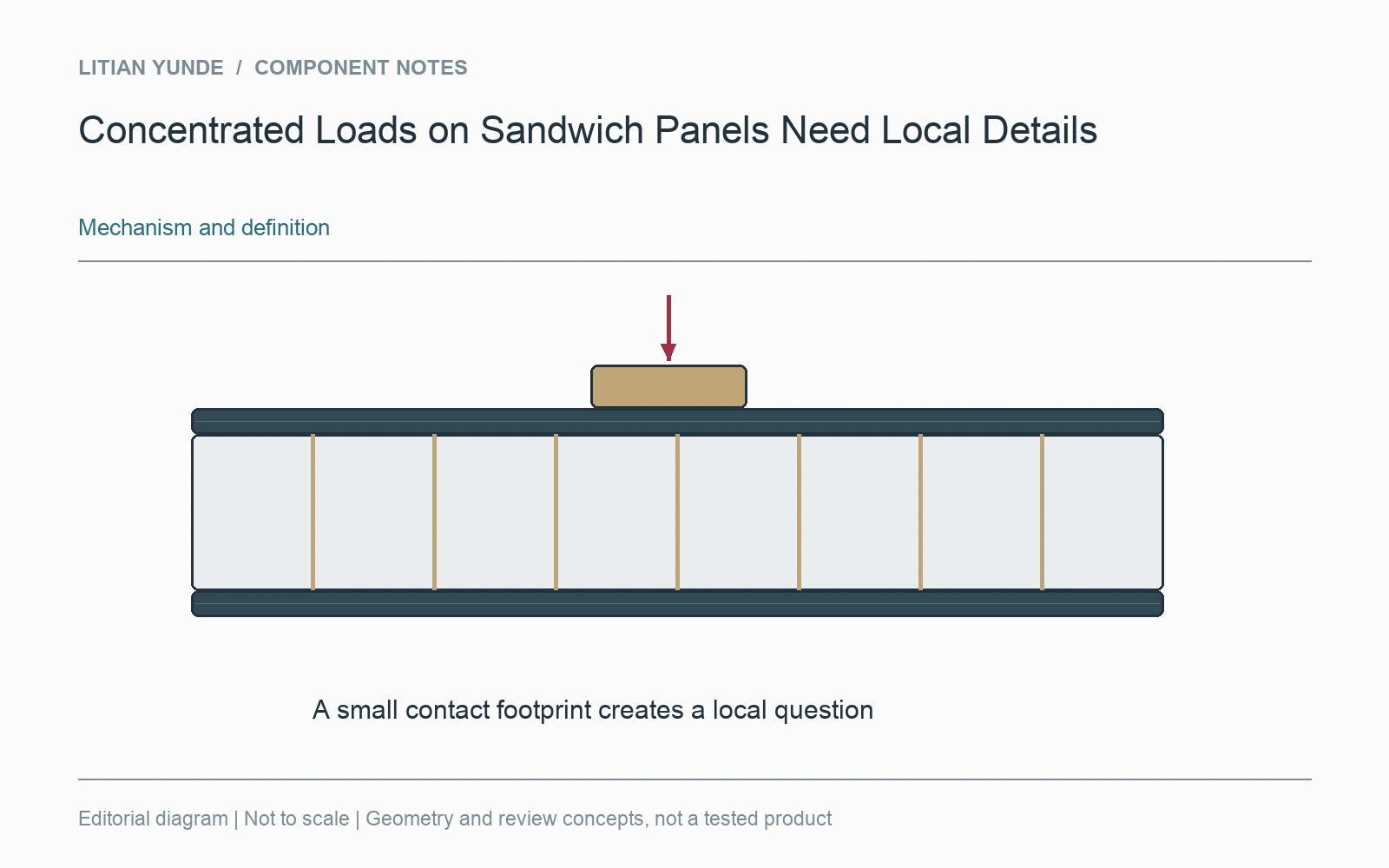
Concentrated Loads on Sandwich Panels Need Local Details
A sandwich panel that spans an area still needs a local design for a foot, bracket or fastening point. Describe where the force enters the panel and how the local…
Read guide →
Sandwich Core Density Alone Does Not Define Panel Stiffness
A core density figure does not define the stiffness of a complete sandwich panel. The skins, core thickness, material properties and their connection form the panel…
Read guide →
平整的碳纤维板能否被拉伸到弯曲的框架上?
A flat panel and a curved frame are not automatically a compatible pair. Tightening the fasteners may close the gap, but it also changes the panel shape and the forces in the…
Read guide →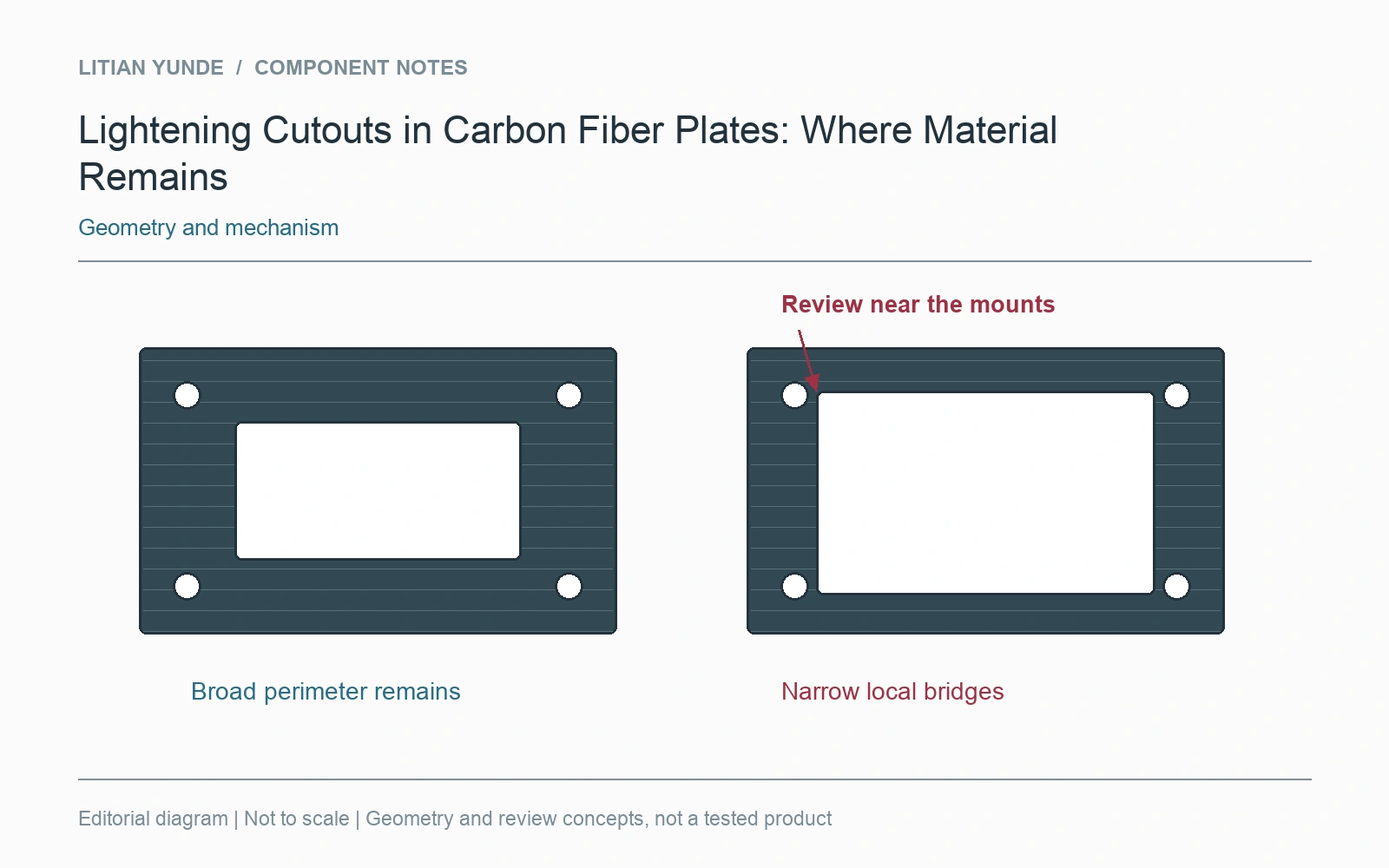
碳纤维板上的减重镂空:材料保留区域
Two plate layouts can remove the same area and leave very different paths between their mounting points. When lightening a carbon fiber plate, the useful question is where…
Read guide →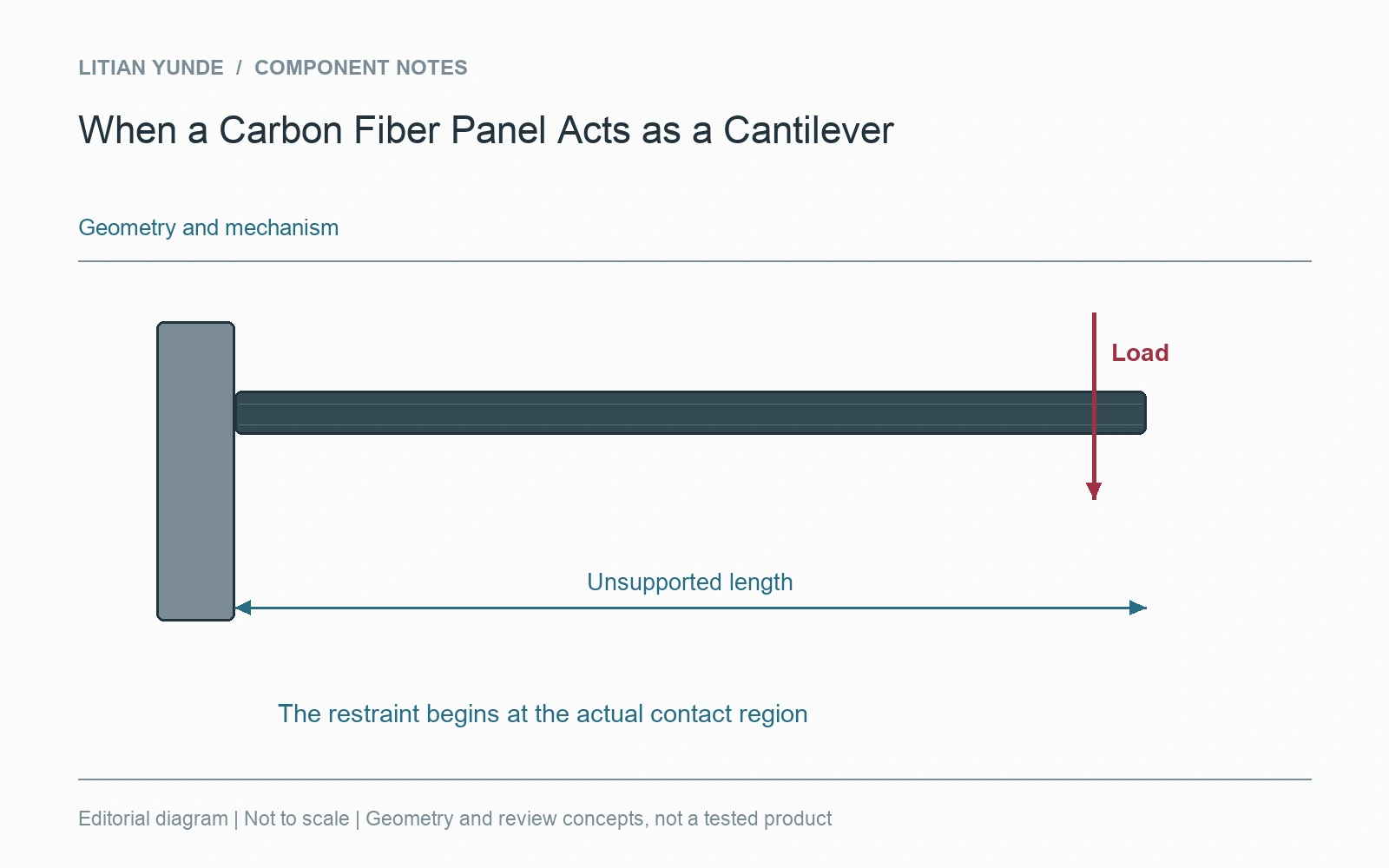
当碳纤维板作为悬臂时
A panel that feels rigid on a workbench can bend noticeably when it projects beyond a mounting bracket. The unsupported length, load position and restraint at the bracket all…
Read guide →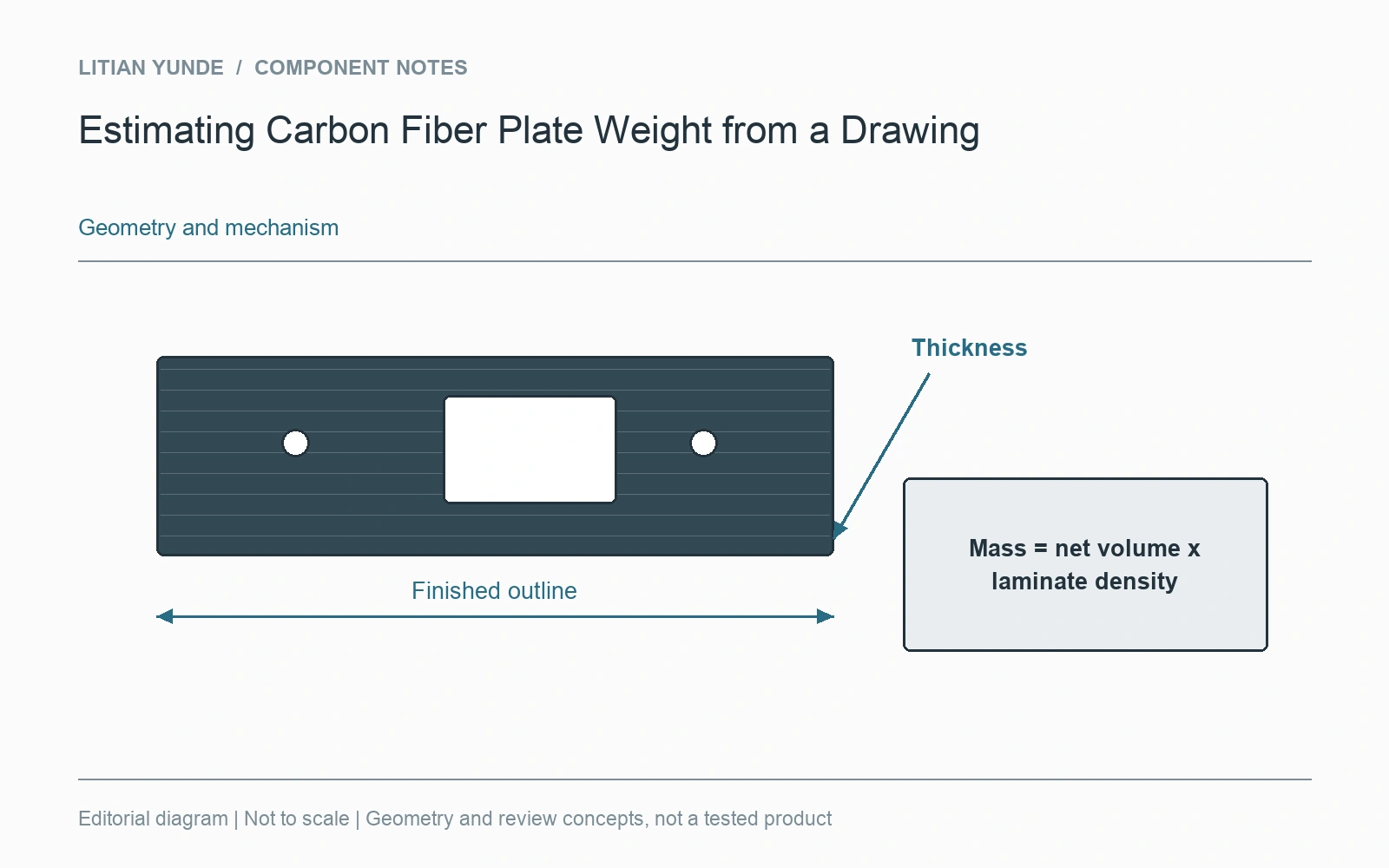
根据图纸估算碳纤维板的重量
A plate weight estimate starts with the finished material volume and a density for the proposed laminate. The weight of a sheet bought for machining answers a different…
Read guide →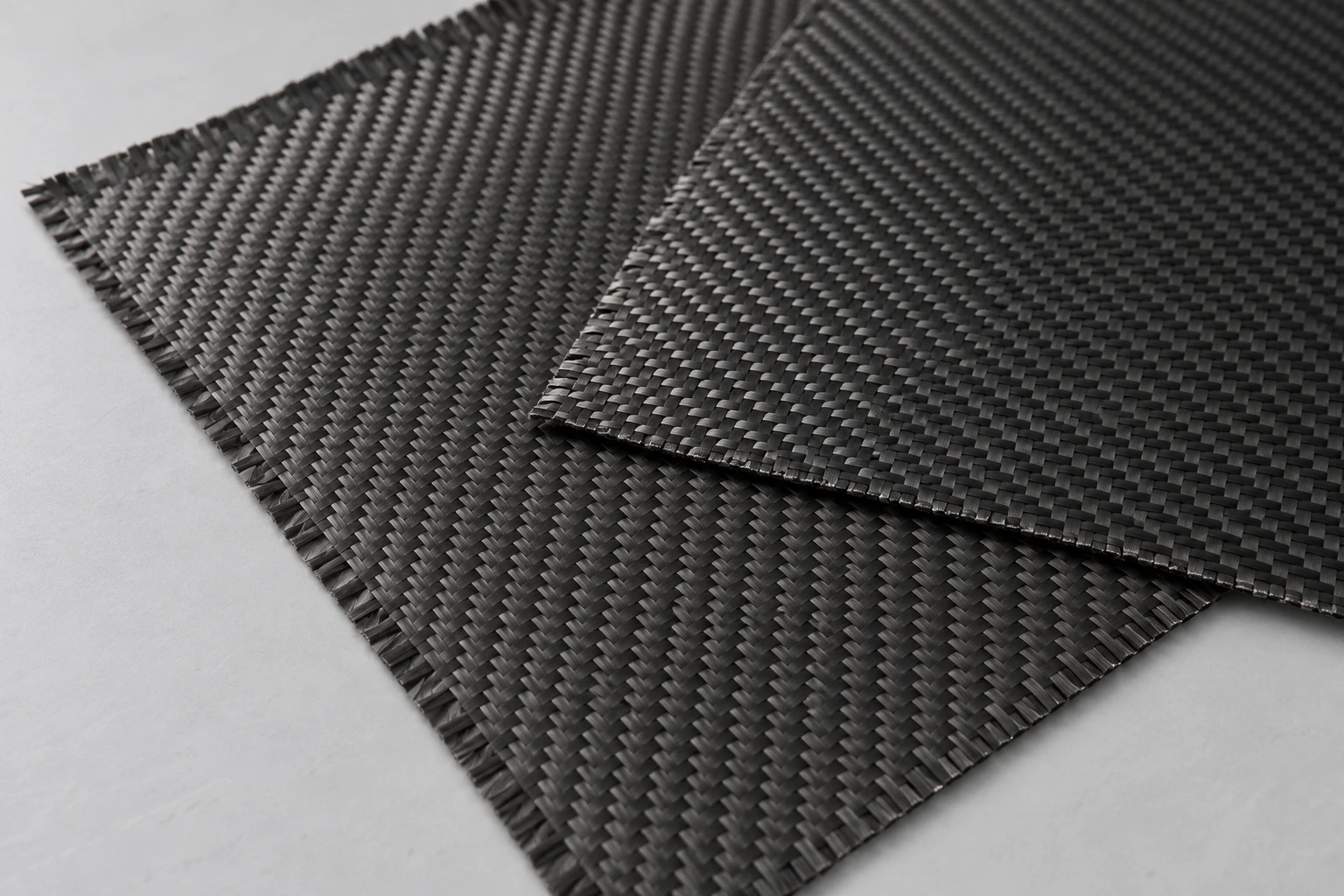
碳纤维部件中的织物接缝:在模具成型前确定接缝位置
A carbon fiber fabric splice needs a defined role and location in the proposed laminate. Discuss where pieces meet or overlap before moulding, including any visible-face…
Read guide →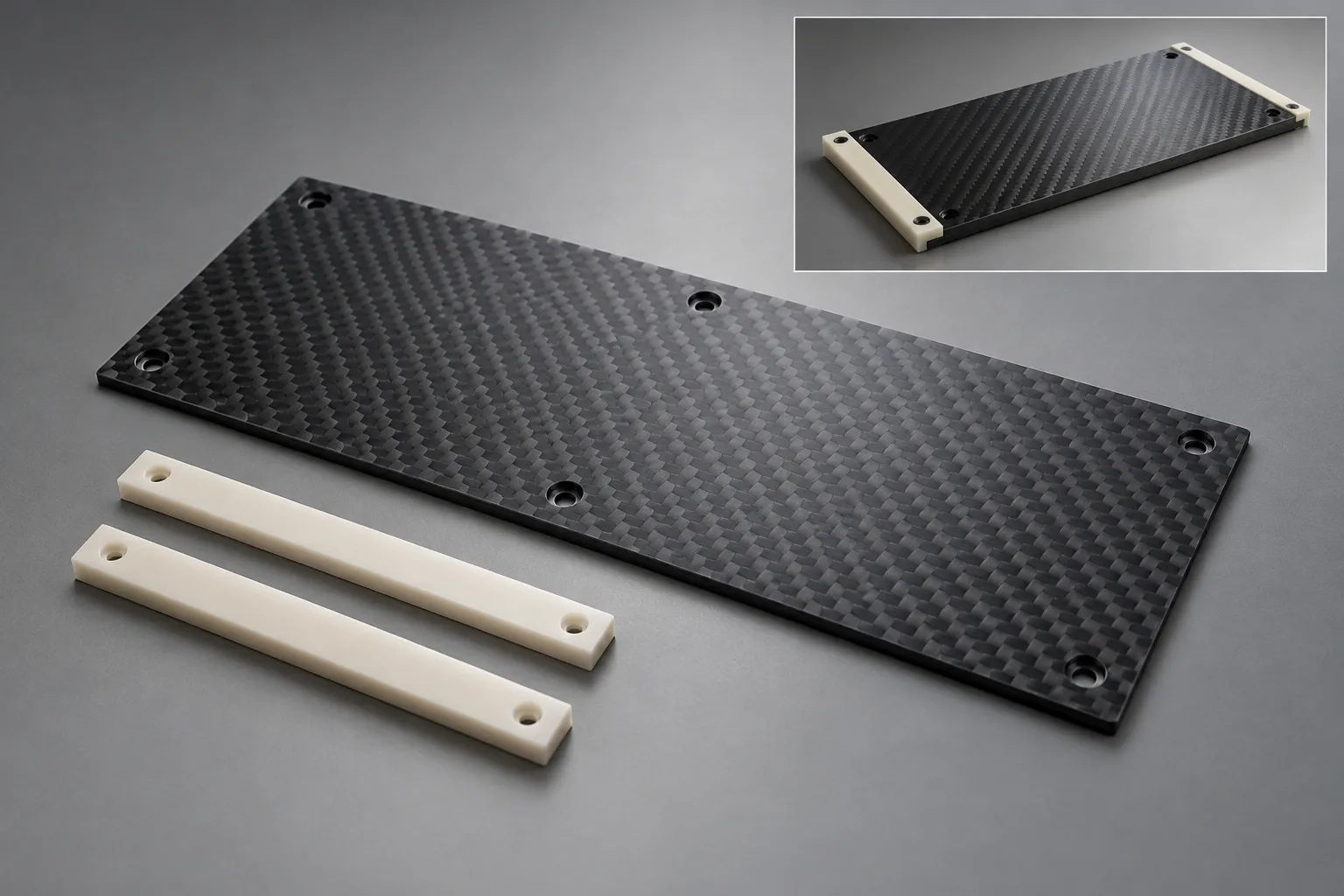
带耐磨垫片的碳纤维面板:指定可更换的接触部件
If repeated contact occurs on a carbon fiber panel, define the contacting pad or strip as a separate part of the assembly. Specify its material, location, attachment and…
Read guide →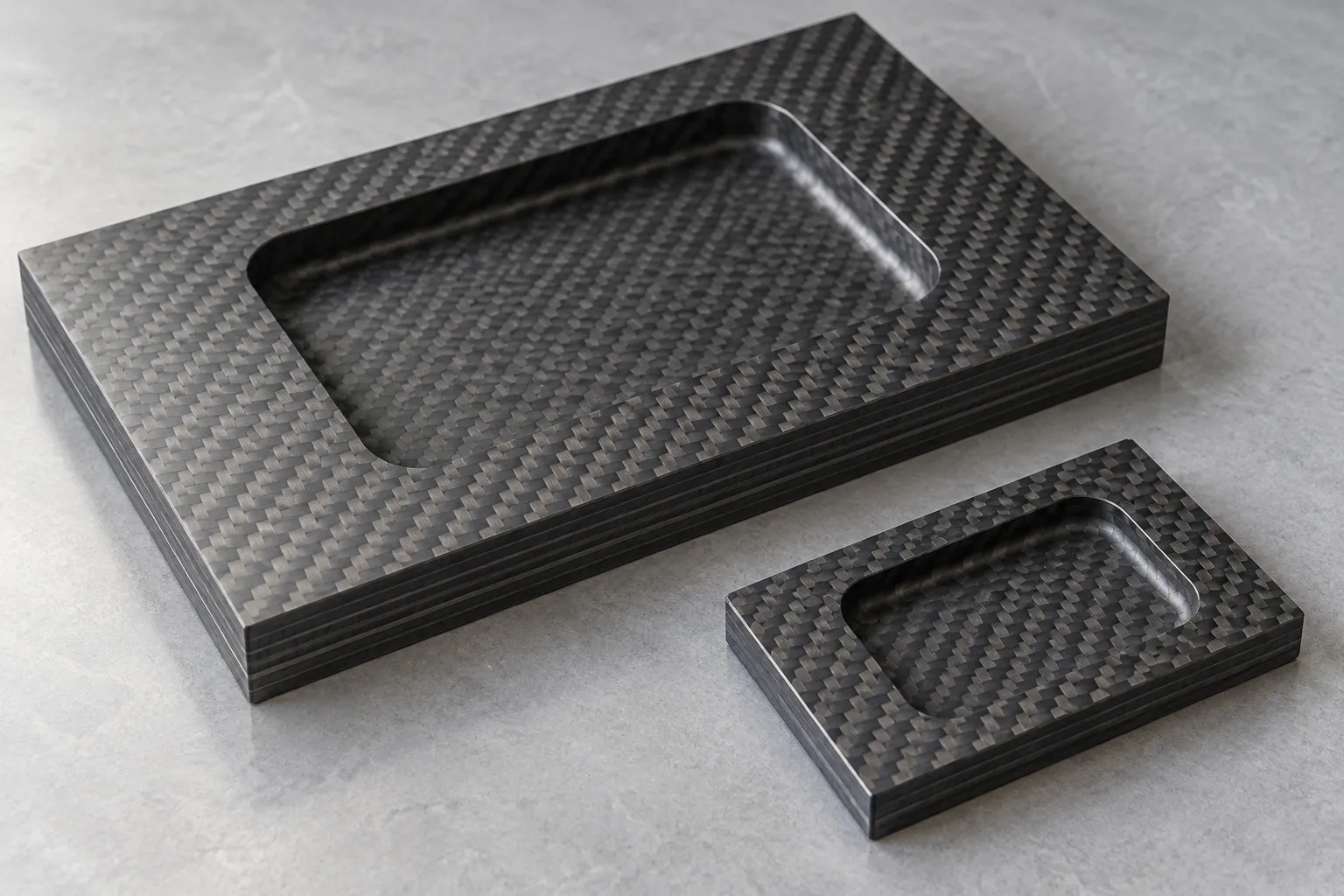
碳纤维板上的机加工凹槽:指定剩余壁厚
A pocket depth does not describe the material left beneath a recess. Define the local finished plate thickness, the depth reference and the required remaining wall together.…
Read guide →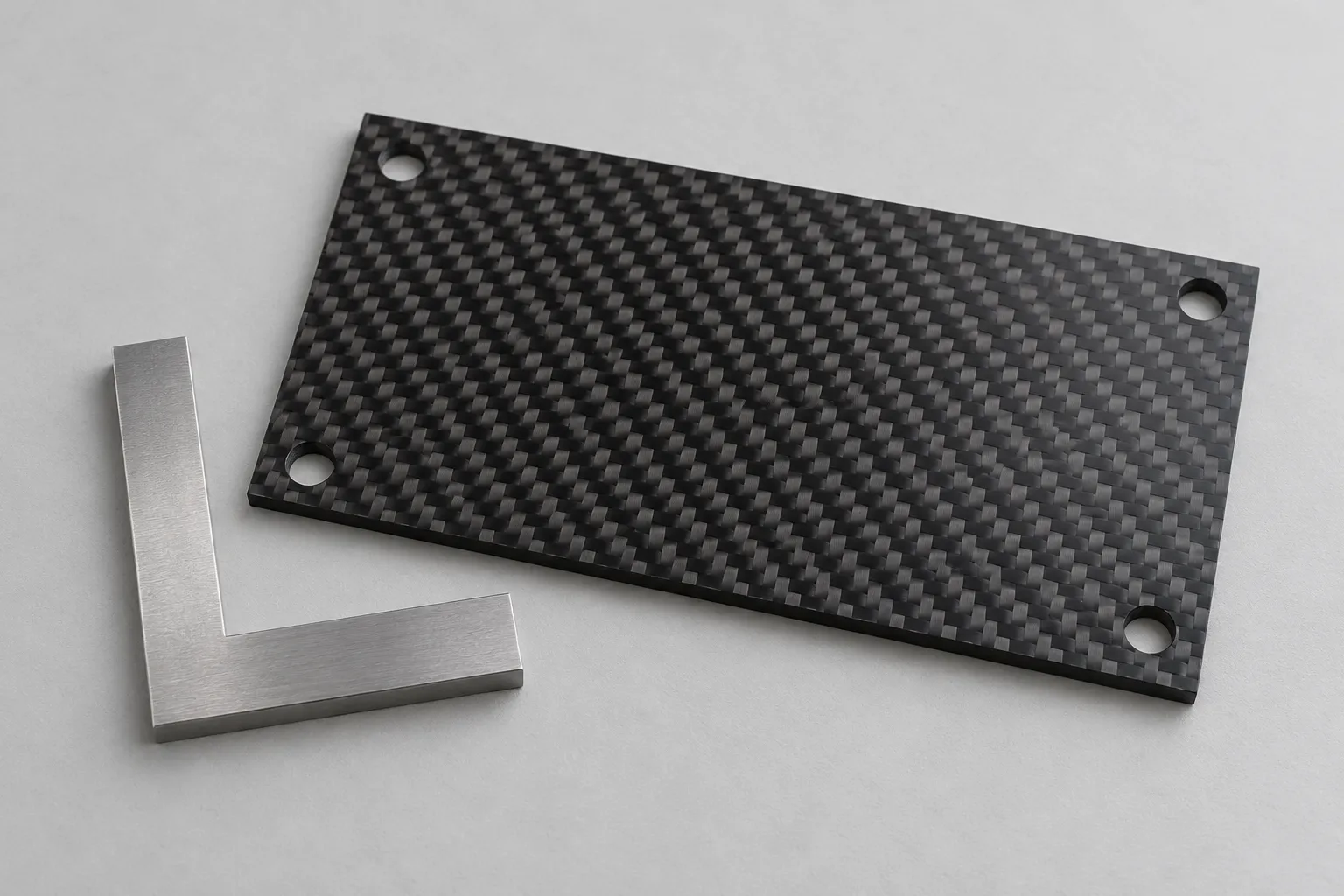
碳纤维板上的基准面:在比较孔位之前,先确定参考基准
A hole-position report is meaningful only when the reference system is clear. For a carbon fiber plate, identify the locating face, reference edges or holes, and the…
Read guide →
夹芯板开孔:加工前需明确芯材封口方式
A cutout in a composite sandwich panel exposes more than the outer skin. The design needs to identify the core boundary, edge closeout and any local attachment region. A…
Read guide →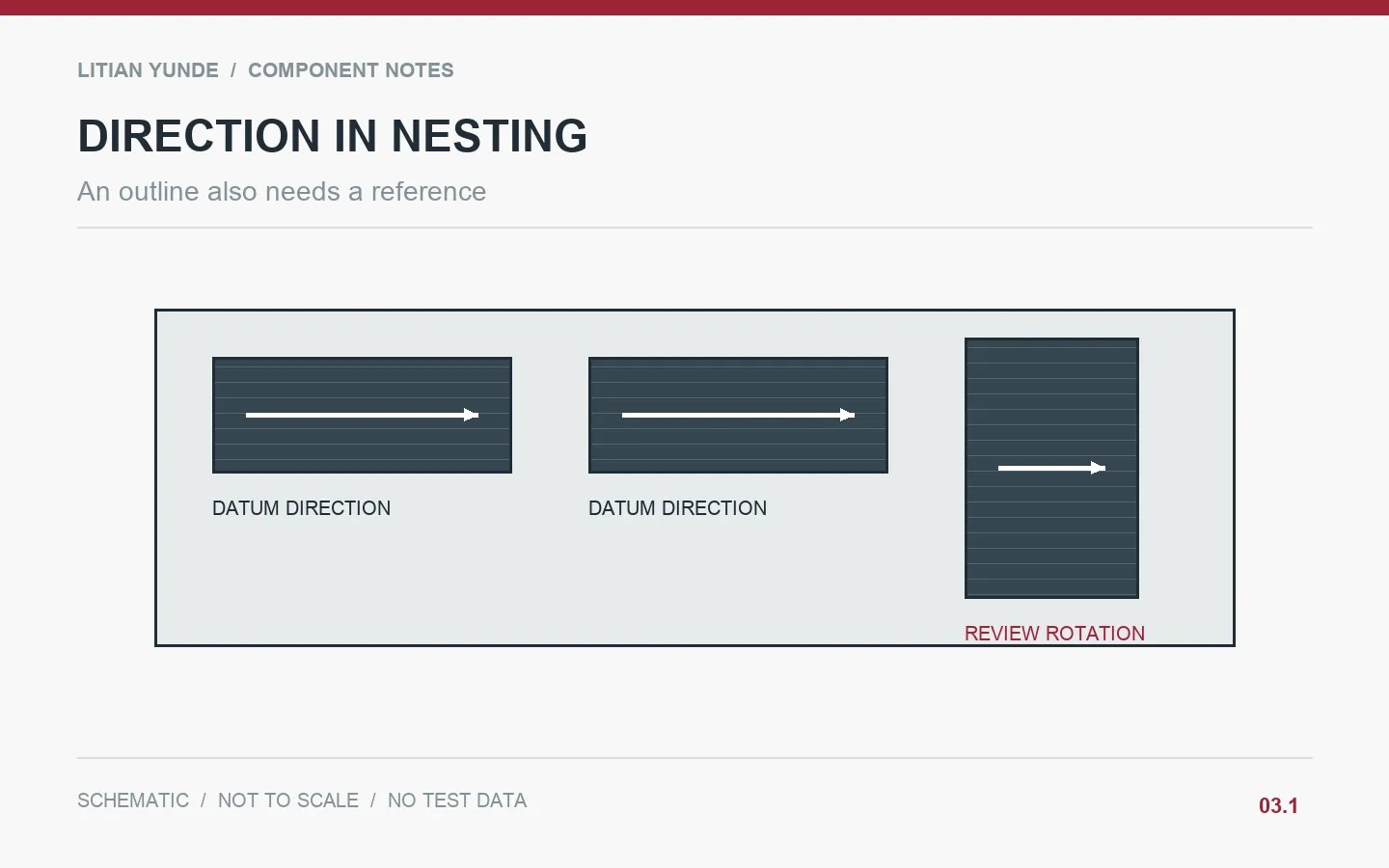
碳纤维板零件的排版:保持图纸上的材料方向
Before rotating a carbon fiber part to improve sheet utilisation, check whether material direction is controlled. A nesting layout should preserve the specified orientation…
Read guide →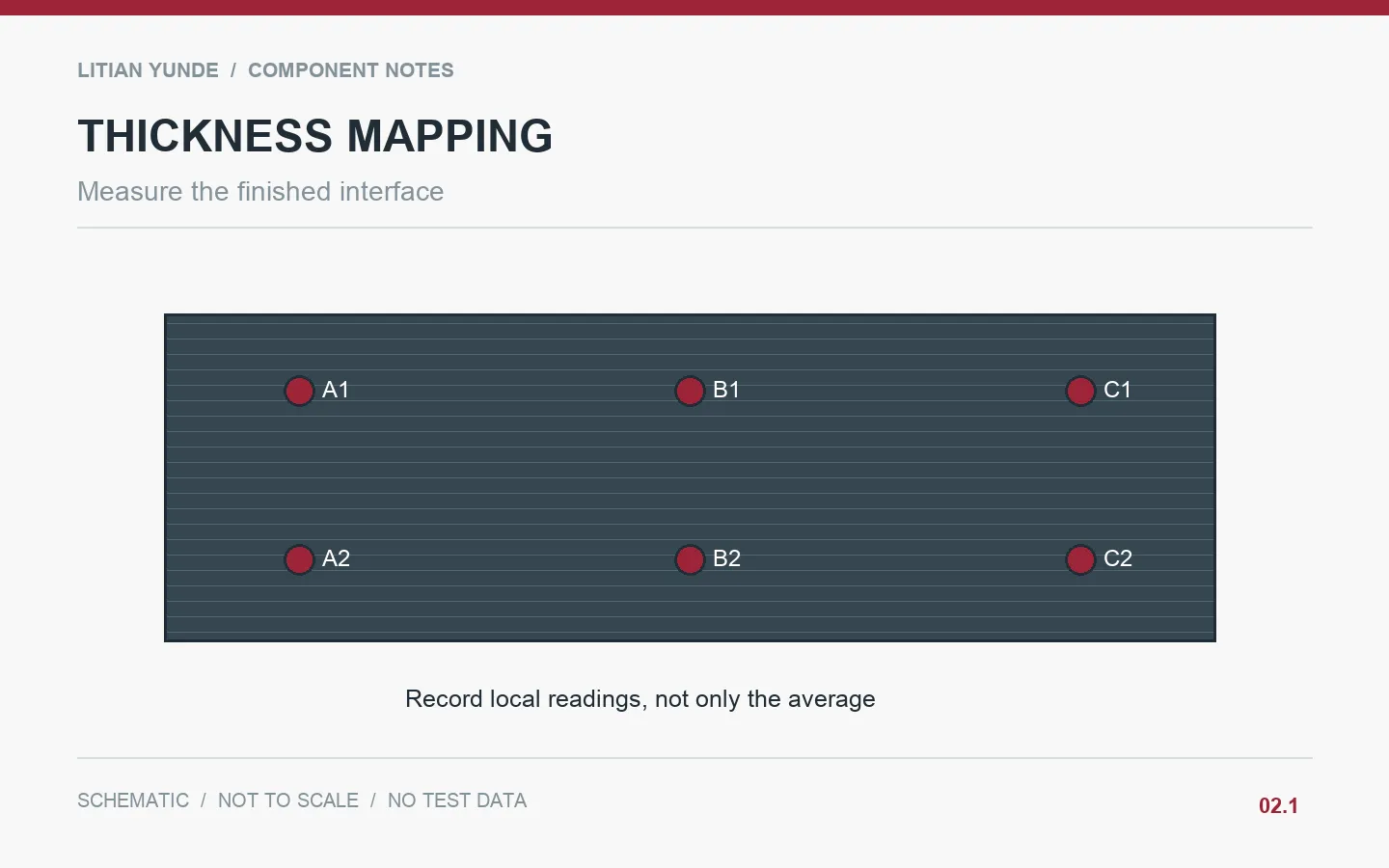
碳纤维板厚度分布图:测量位置及应包含的内容
A single thickness reading does not describe every location on a carbon fiber panel. Agree a measurement map and state whether coating, local reinforcement and edge treatment…
Read guide →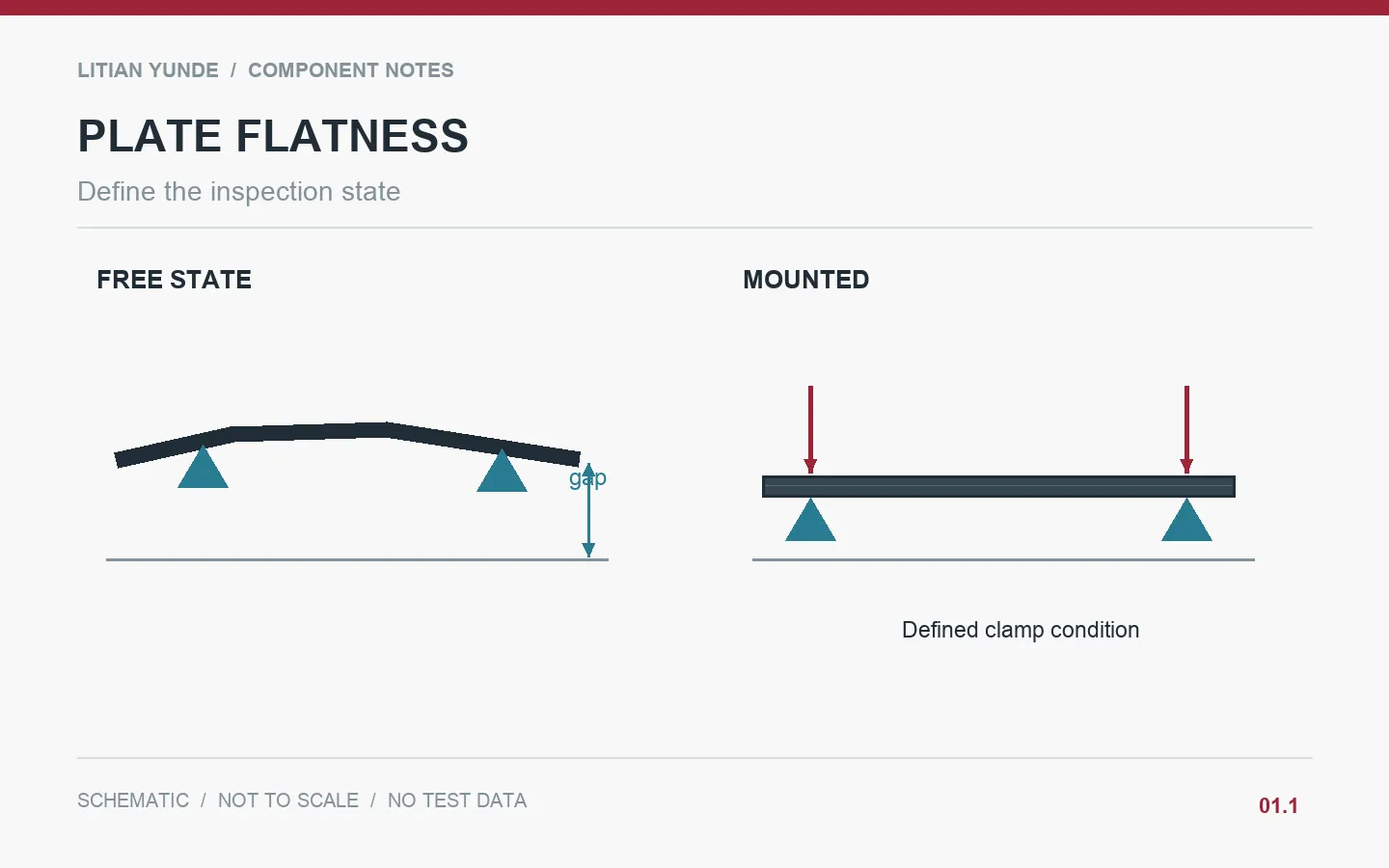
碳纤维板的平整度:自由状态和安装状态下的测量
A carbon fiber plate needs a defined inspection condition before a flatness result can be compared. State whether it is measured without restraint or installed on specified…
Read guide →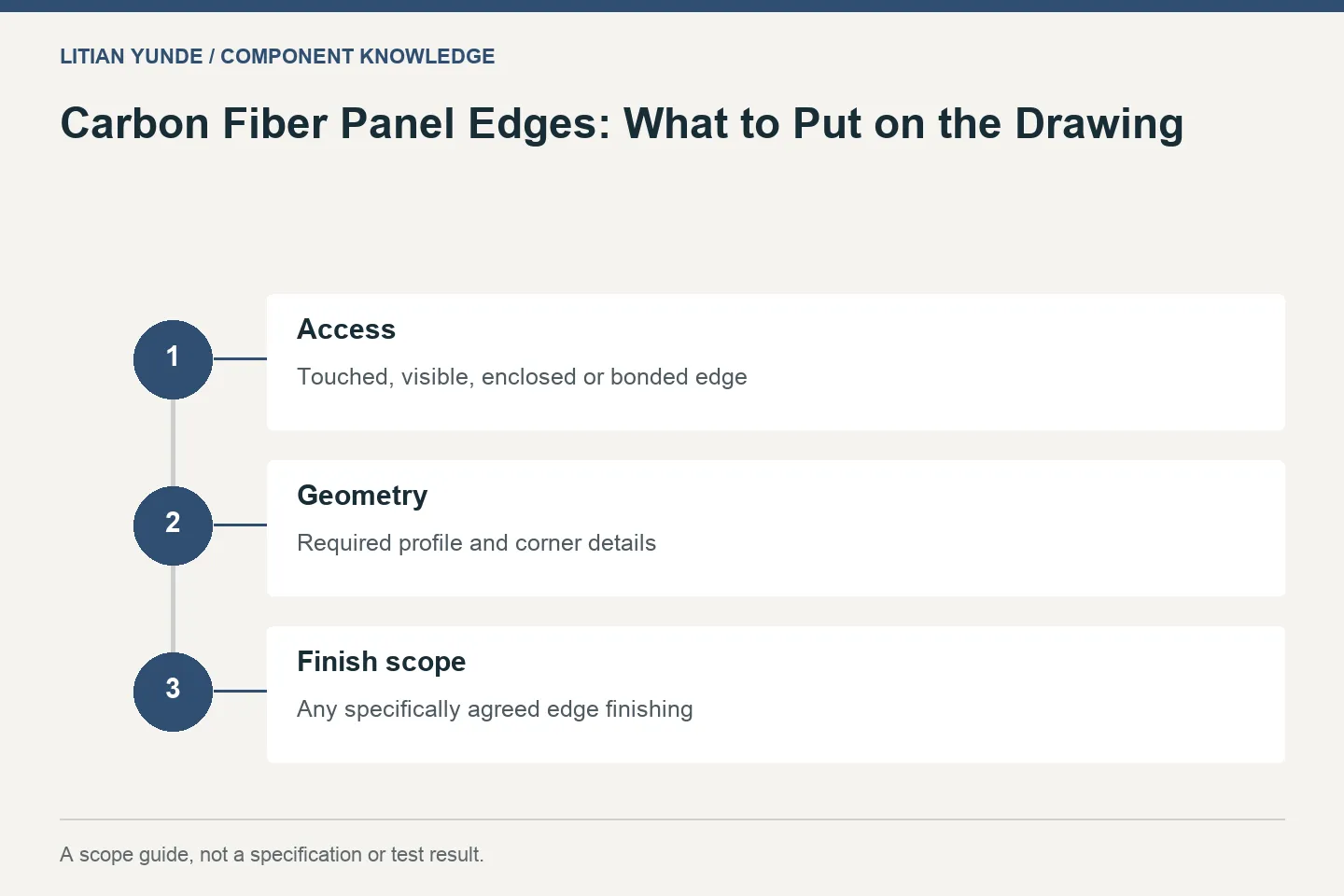
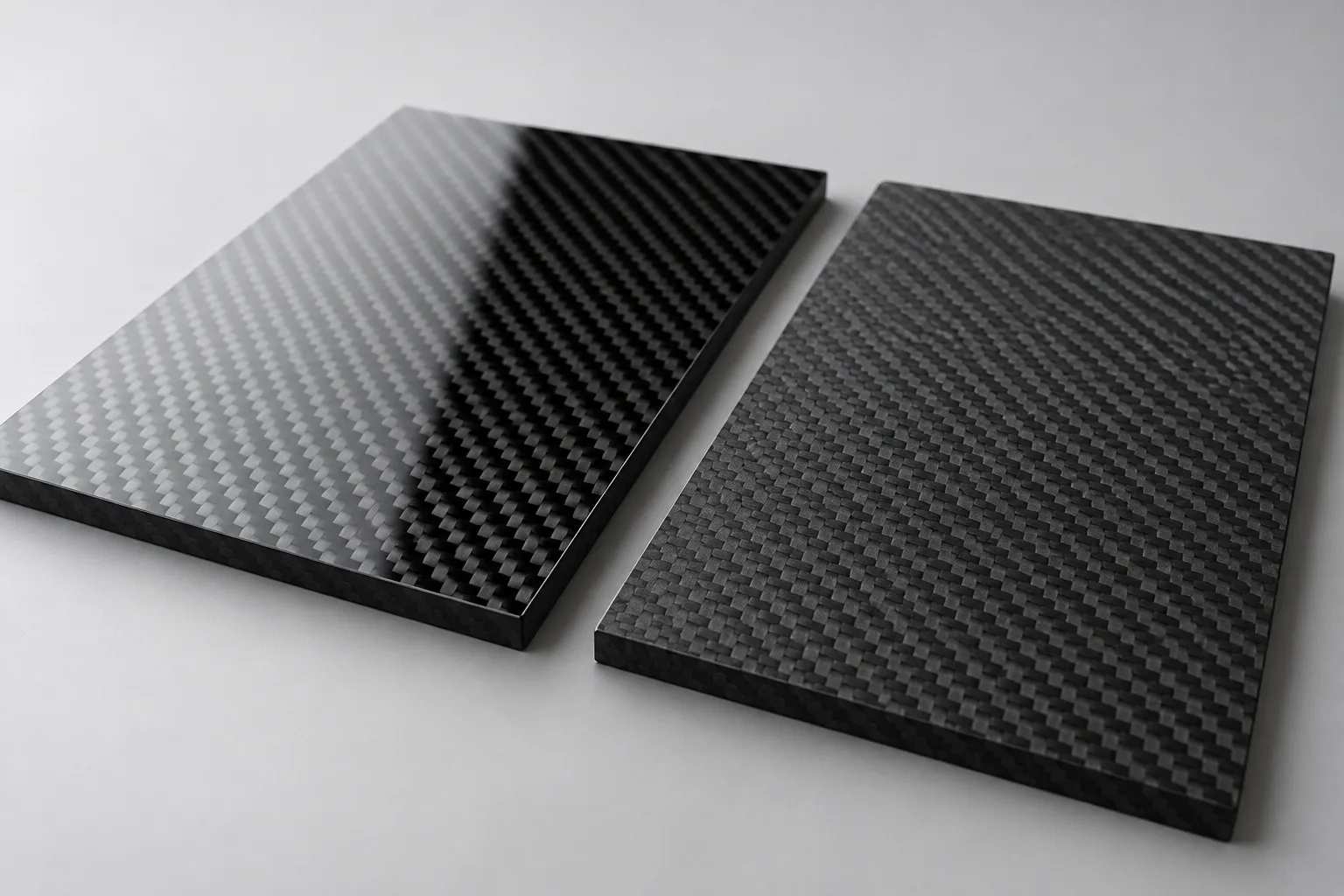

如何明确指定碳纤维板的孔位布局
A clear hole-pattern drawing defines hole size, position, orientation and the reference system used to inspect them.
Read guide →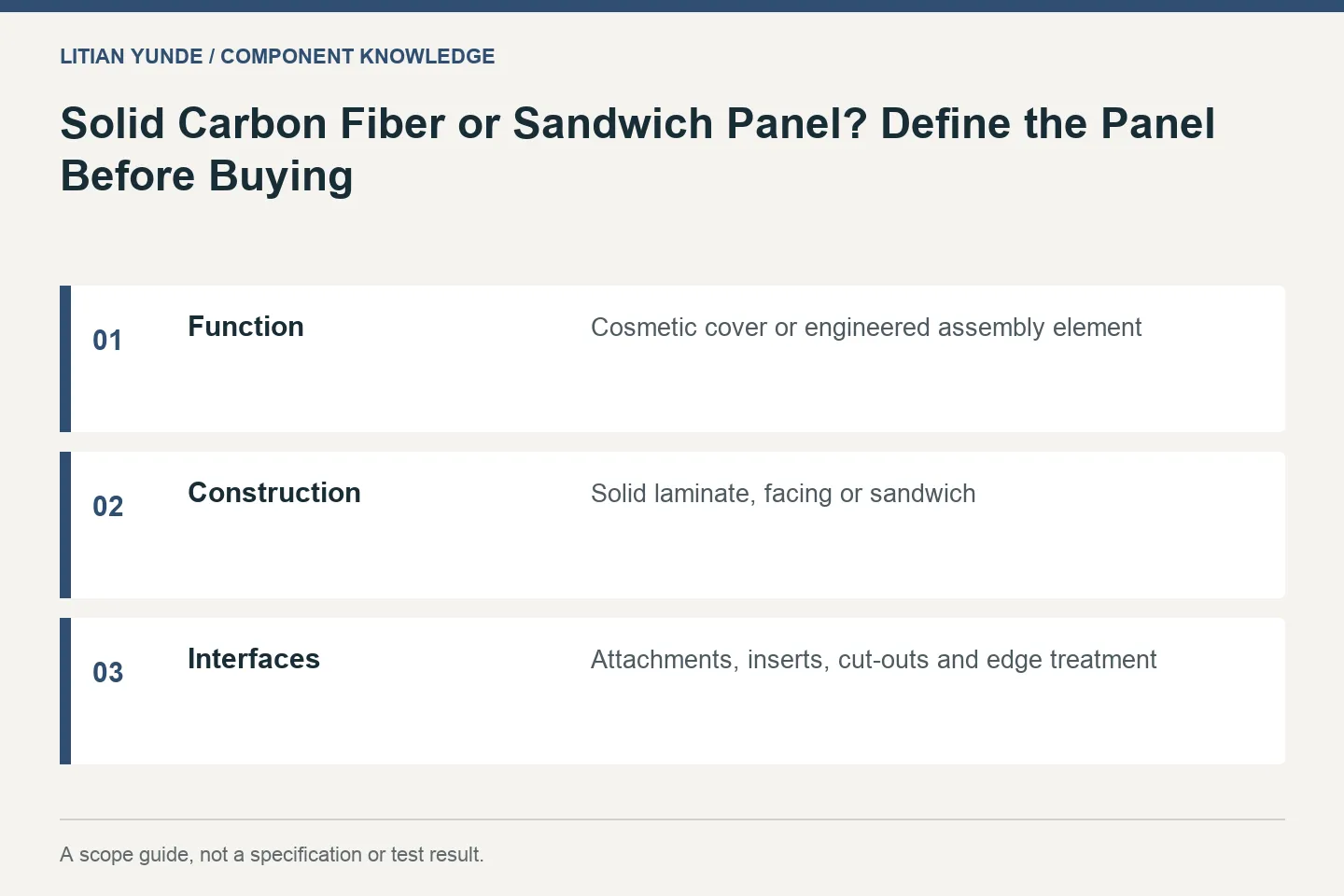
实心碳纤维还是夹层板?购买前先确定板材类型
Do not use “carbon fiber panel” as a complete material specification.
Read guide →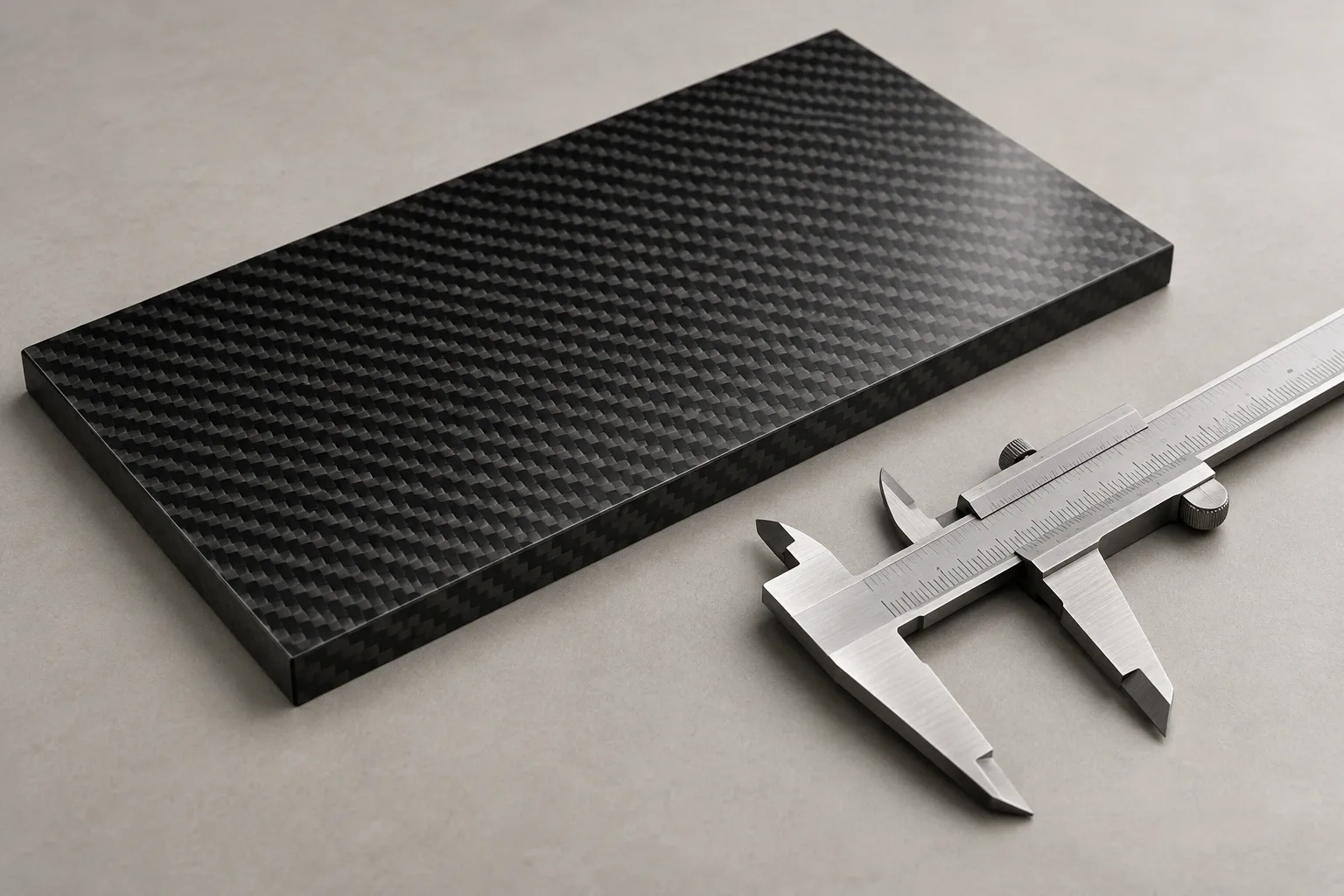
碳纤维板询价:真正重要的尺寸
A useful carbon fiber plate enquiry identifies the finished outline, thickness, critical features and inspection conditions.
Read guide →
选择复合板:首先明确其用途
Before comparing materials, define what the panel must do: close an opening, carry an attachment, provide a visible surface or span between supports. Different duties can…
Read guide →管材与连接接口
Carbon fiber tube selection and connection details: cross-sections, fits, bores, end fittings and the behaviour of the installed member.

Thermal Movement at Carbon Fiber Tube and Metal Interfaces
A carbon fiber tube and its metal fittings can respond differently to temperature changes. The laminate definition and the restrained assembly matter. “Low thermal expansion”…
Read guide →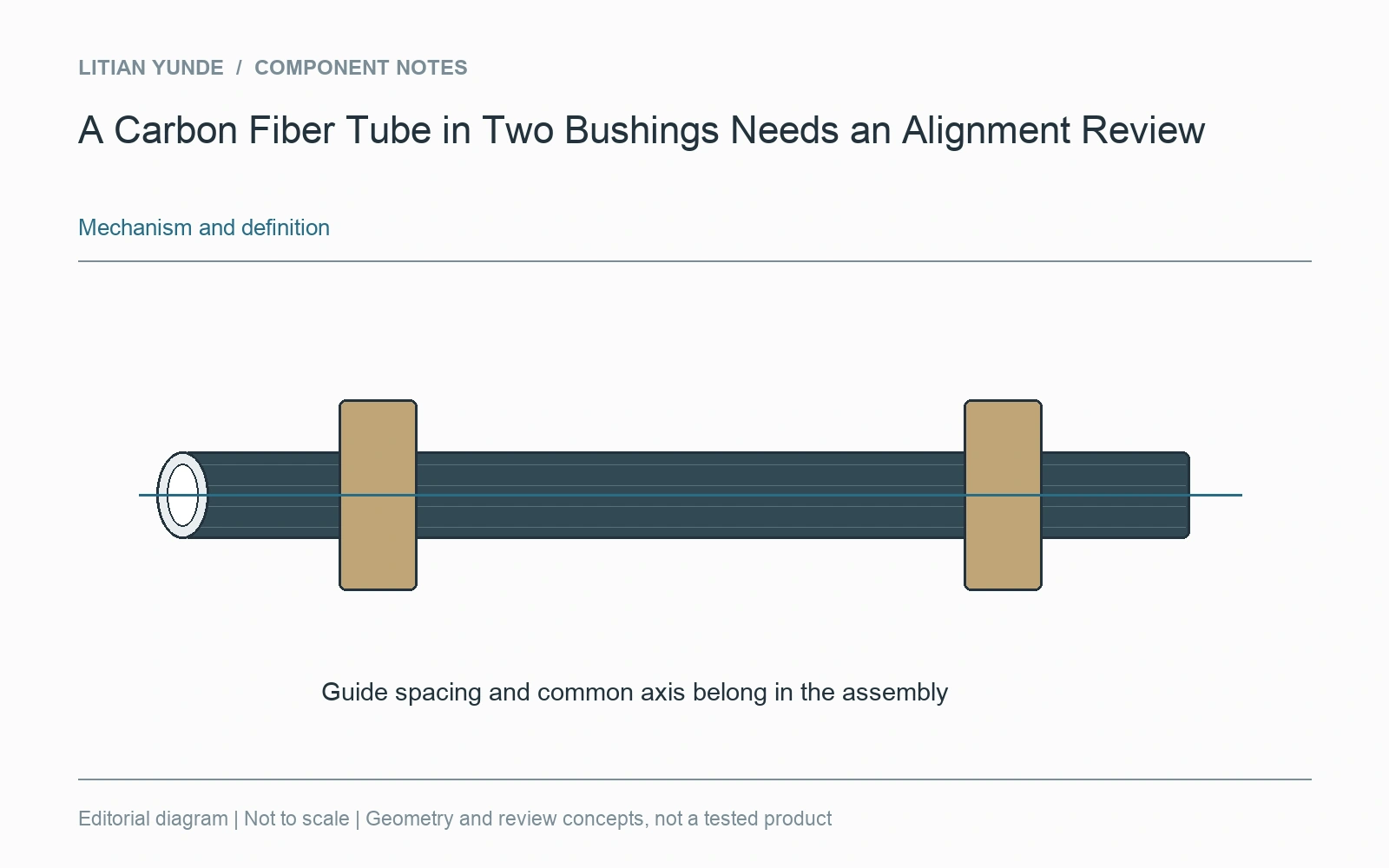
A Carbon Fiber Tube in Two Bushings Needs an Alignment Review
Two guide bushings define an alignment condition for the tube passing through them. Bore size alone does not describe that condition. Review the guides, their spacing and the…
Read guide →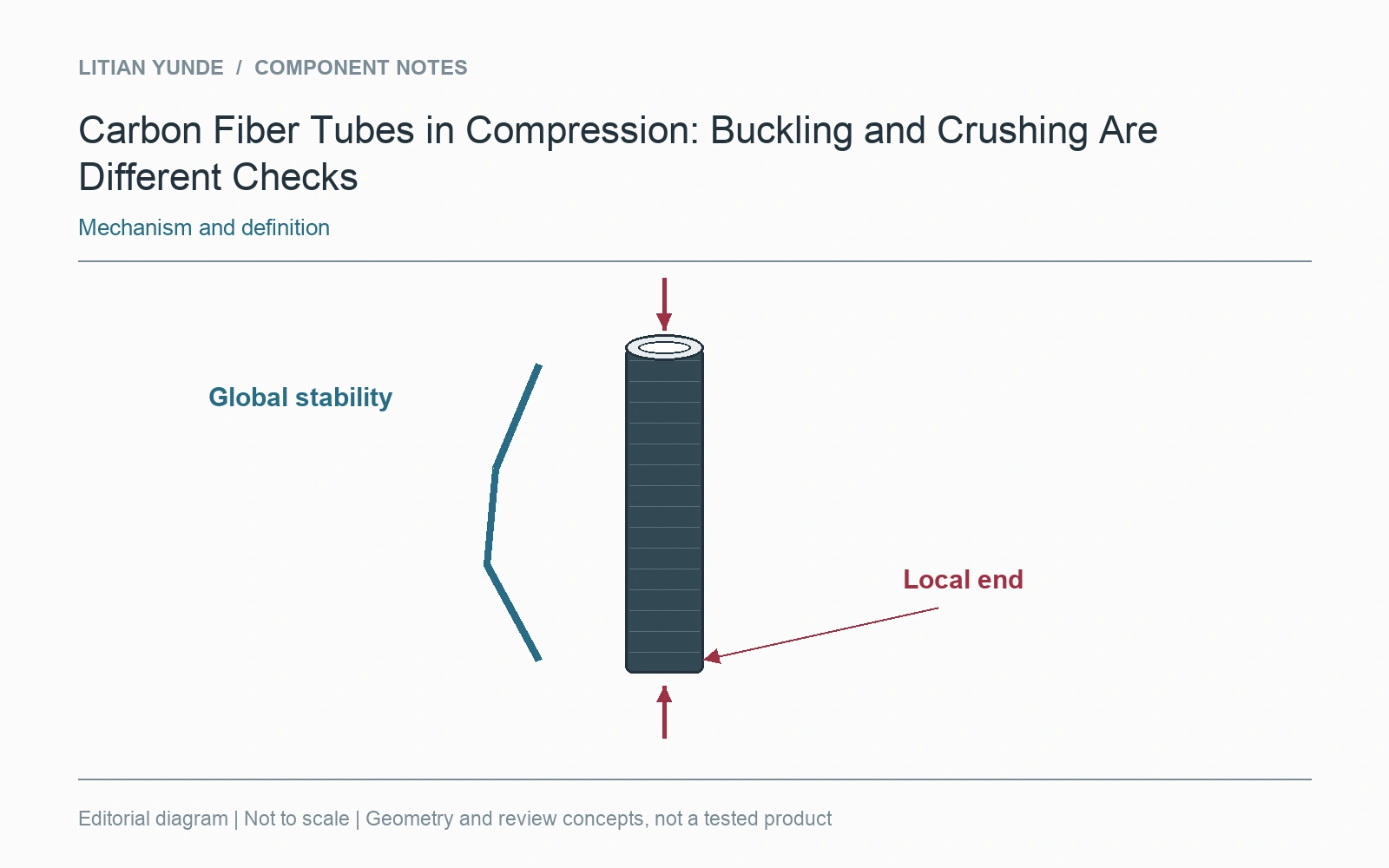
Carbon Fiber Tubes in Compression: Buckling and Crushing Are Different Checks
A tube under compression can be limited by instability as well as by local material failure. Tube length, section, construction, end restraint and load introduction belong in…
Read guide →
锥形碳纤维管:根据其实际位置选择合适的接头
A fitting on a tapered tube needs a location as well as a diameter. Move the fitting along the member and the local section changes. A dimension taken at the small end does…
Read guide →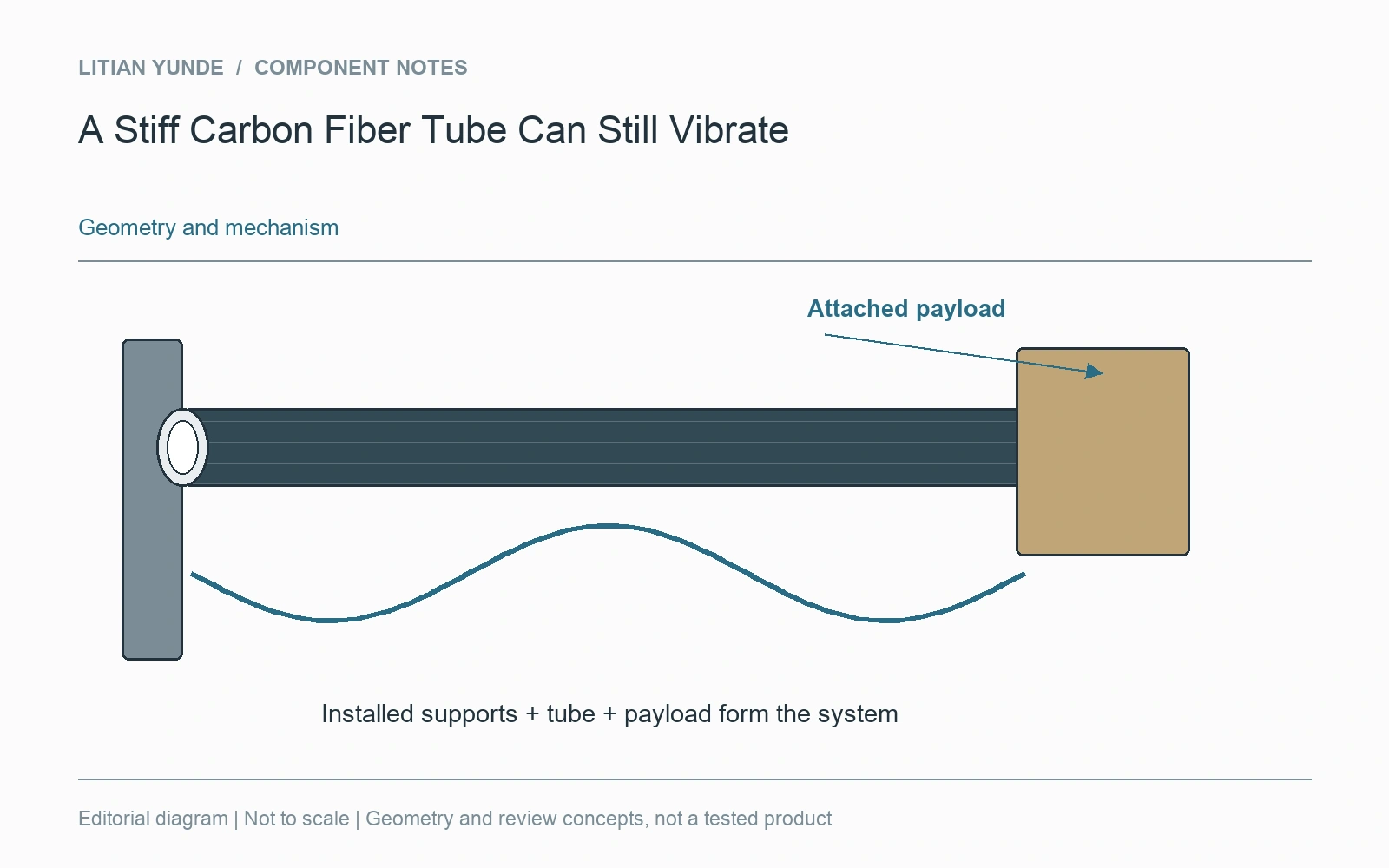
一根刚性的碳纤维管仍然会振动
Static stiffness and vibration behaviour are related, but they are not the same requirement. A tube can show little movement under a slow load and still respond strongly to a…
Read guide →
传递扭矩的碳纤维管:沿整个接头方向
A carbon fiber tube carrying torque needs more than a diameter specification. The tube laminate and both end connections form one load path. A fitting that turns relative to…
Read guide →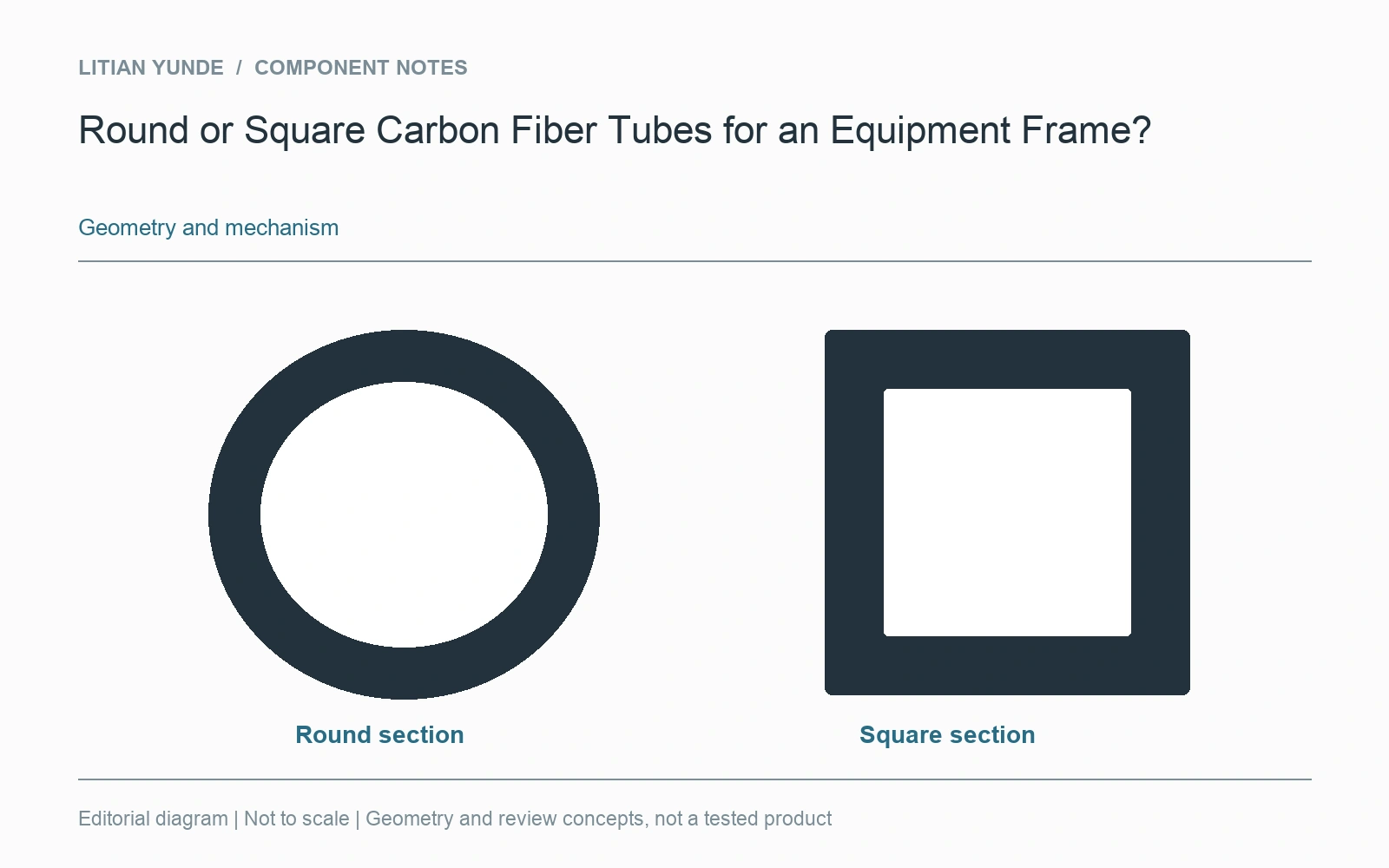
设备框架应选用圆形还是方形碳纤维管?
Choose a tube shape around the frame interfaces and the way the member is loaded. Square tubes offer identifiable faces; round tubes suit circular collars and rotated…
Read guide →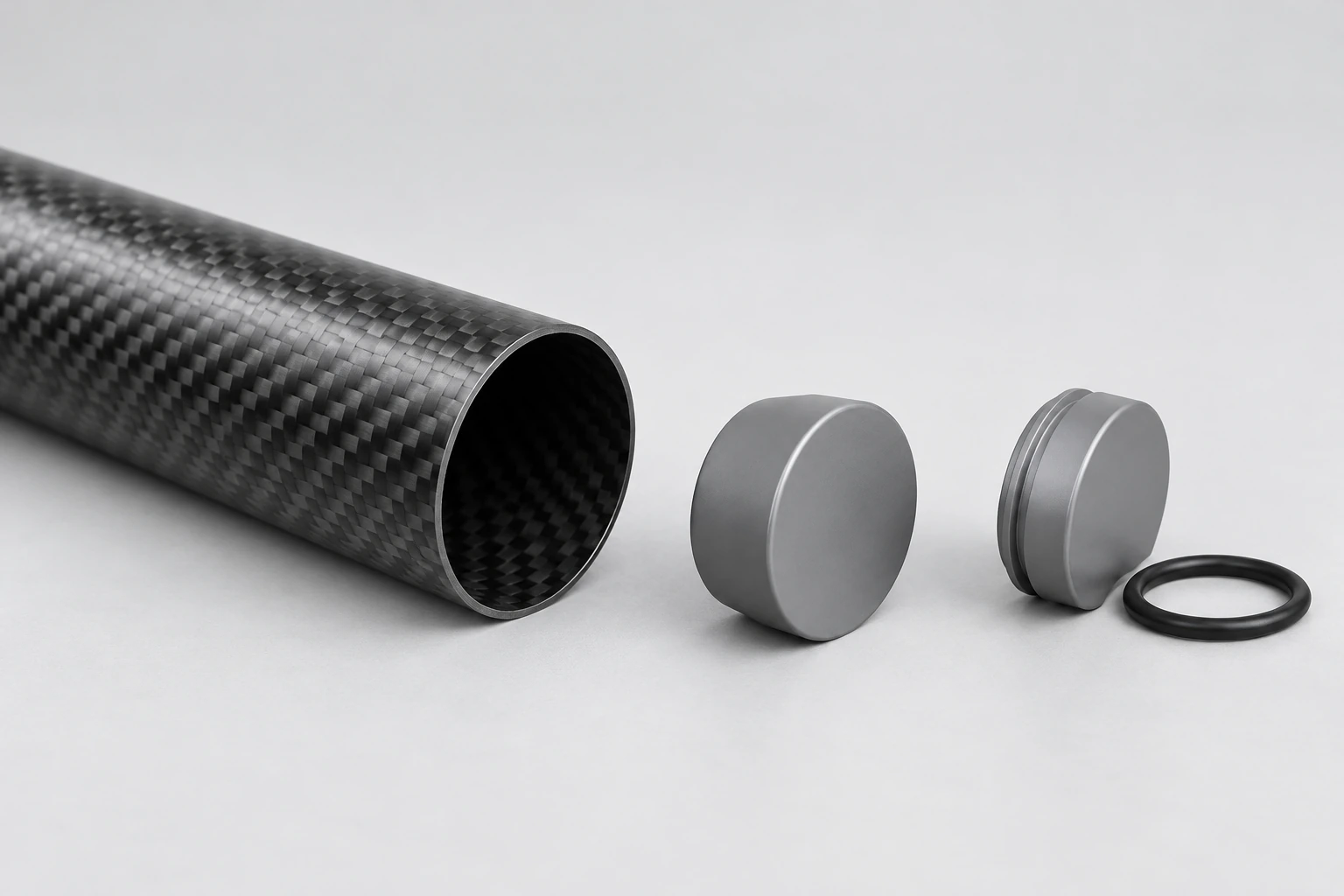
碳纤维管的端盖:封闭、固定与密封功能各不相同
A tube end cap can close an opening without providing a verified seal or structural connection. Define the function before choosing its fit and retention. For a carbon fiber…
Read guide →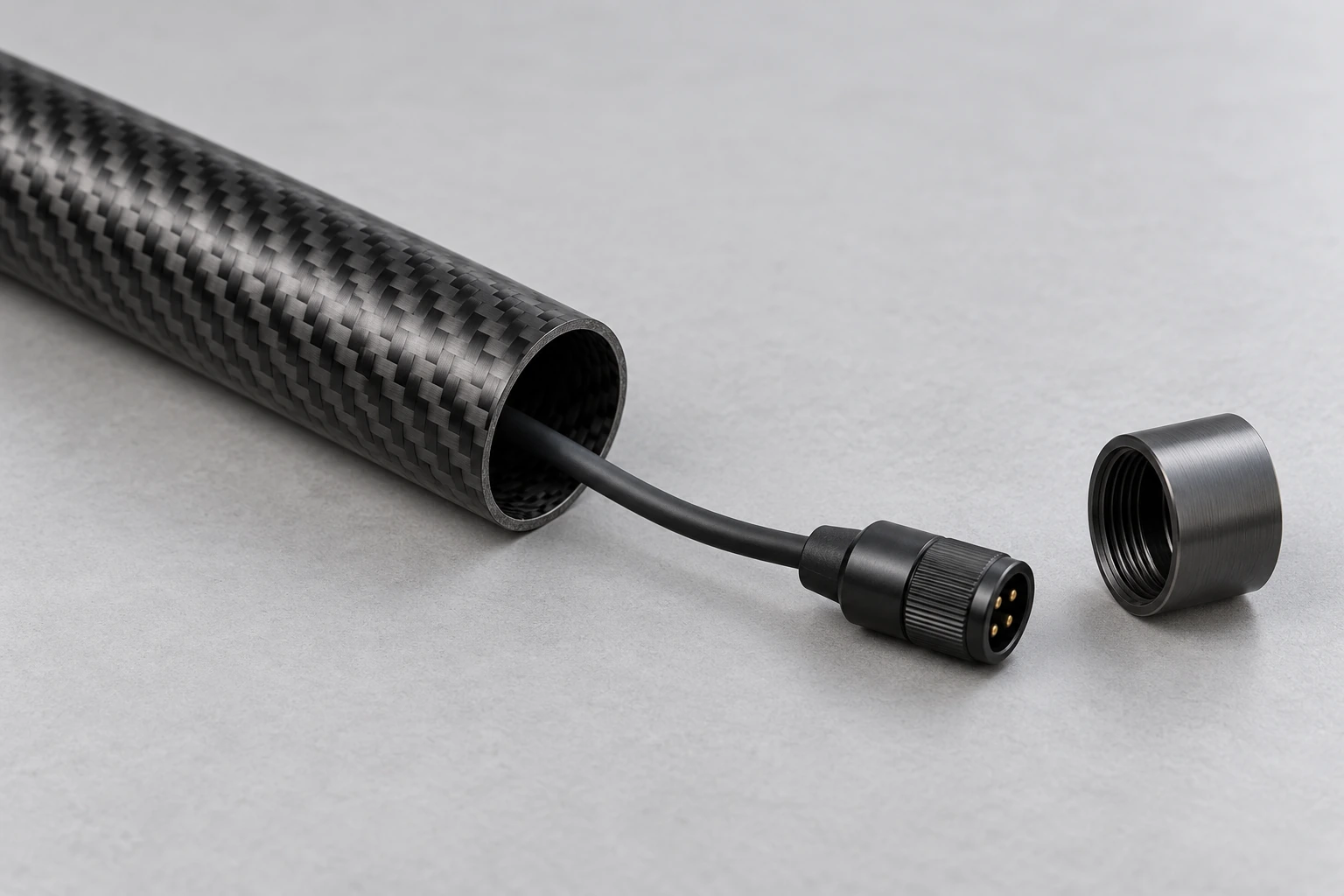
通过碳纤维管布线:检查完整的安装路径
A cable route through a carbon fiber tube must work for installation and service, not only for the cable’s bare diameter. Check the connector envelope, internal route, exits…
Read guide →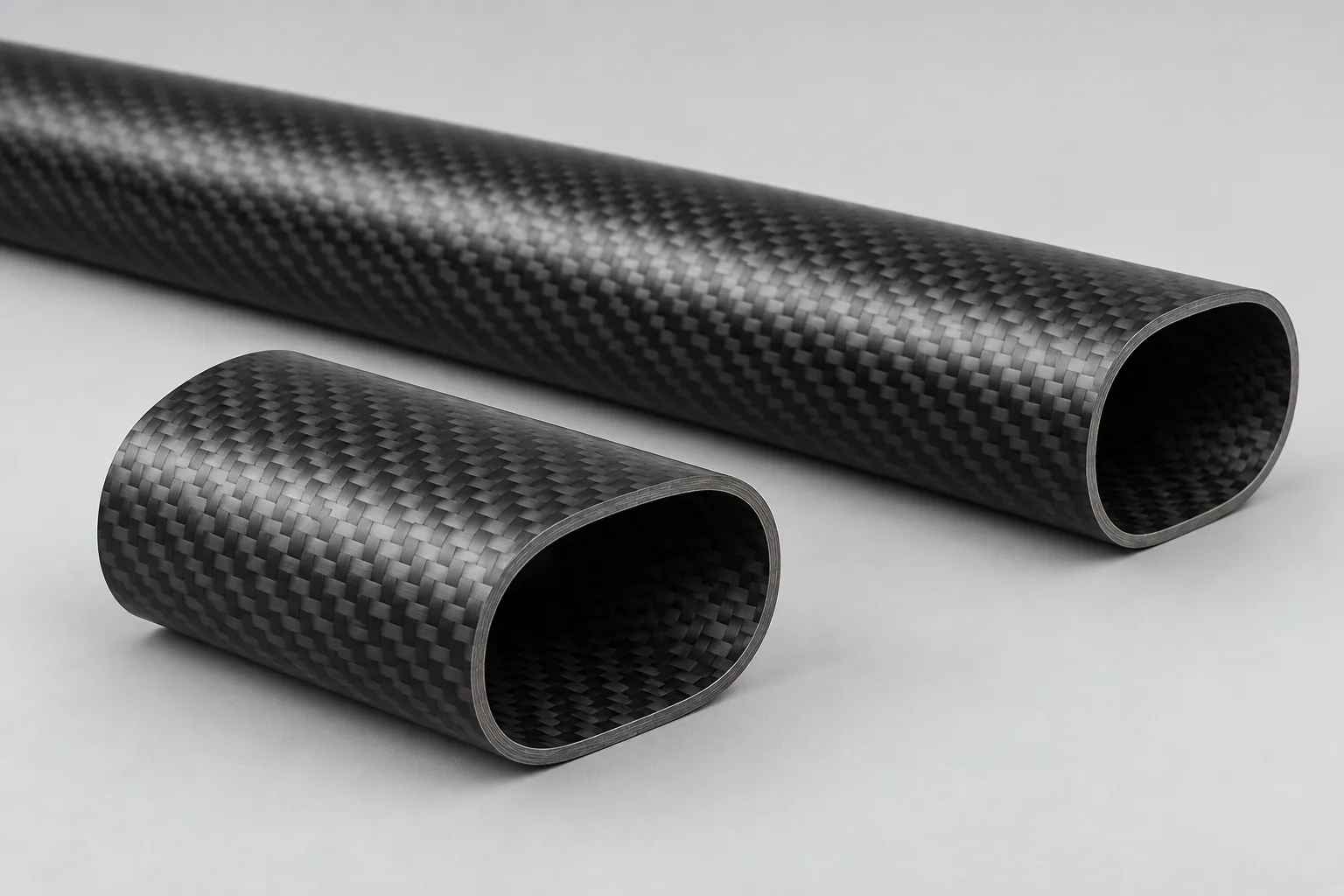
椭圆形碳纤维管:标出主轴和安装方向
An intentionally oval carbon fiber tube needs major and minor dimensions plus an orientation reference. Do not describe it using one diameter or treat its intended profile as…
Read guide →
碳纤维管内径:端部测量值无法完全反映管腔全长
Measuring a carbon fiber tube bore at each end does not establish the condition of every section between them. State what the bore must do, where measurements are required…
Read guide →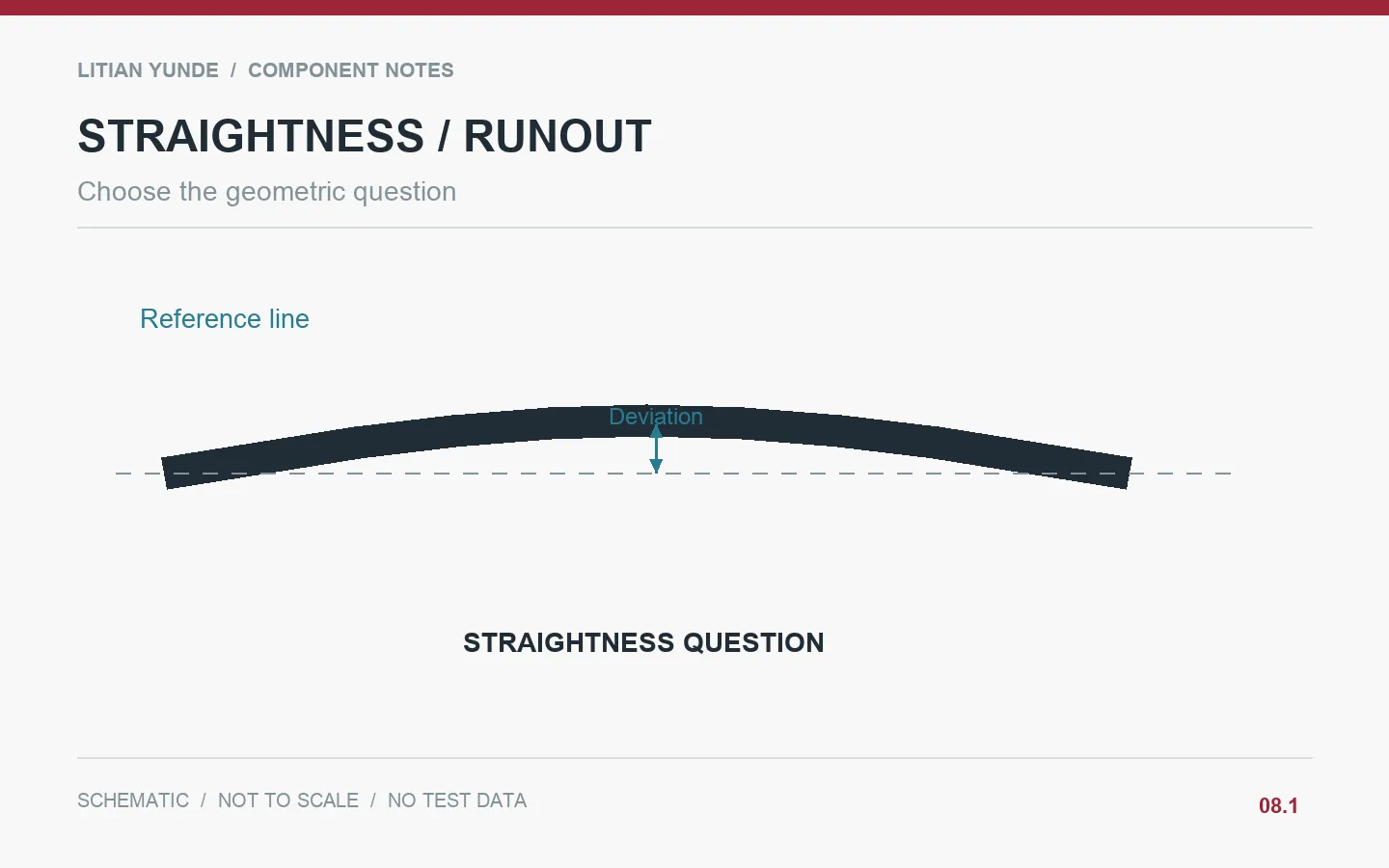
碳纤维管的直线度和偏心度:两个不同的检测问题
Straightness and rotational runout are not interchangeable tube measurements. Straightness concerns a defined line or axis; runout is measured while the part rotates about a…
Read guide →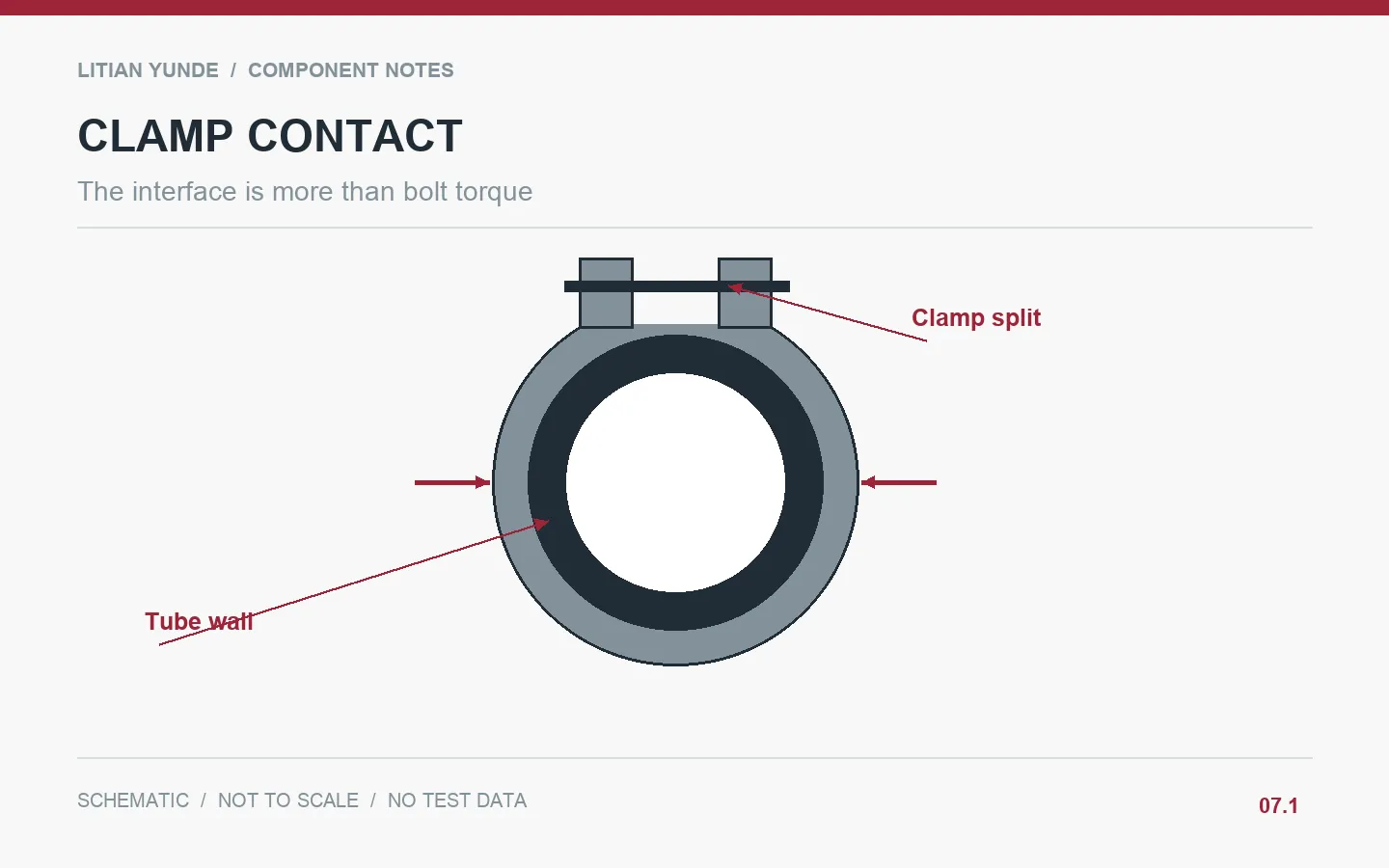
碳纤维管的夹紧:应确定接触区域,而不仅仅是螺栓扭矩
A carbon fiber tube clamp needs a defined contact geometry and an application-specific validation plan. Bolt torque alone does not describe contact pressure, slip resistance…
Read guide →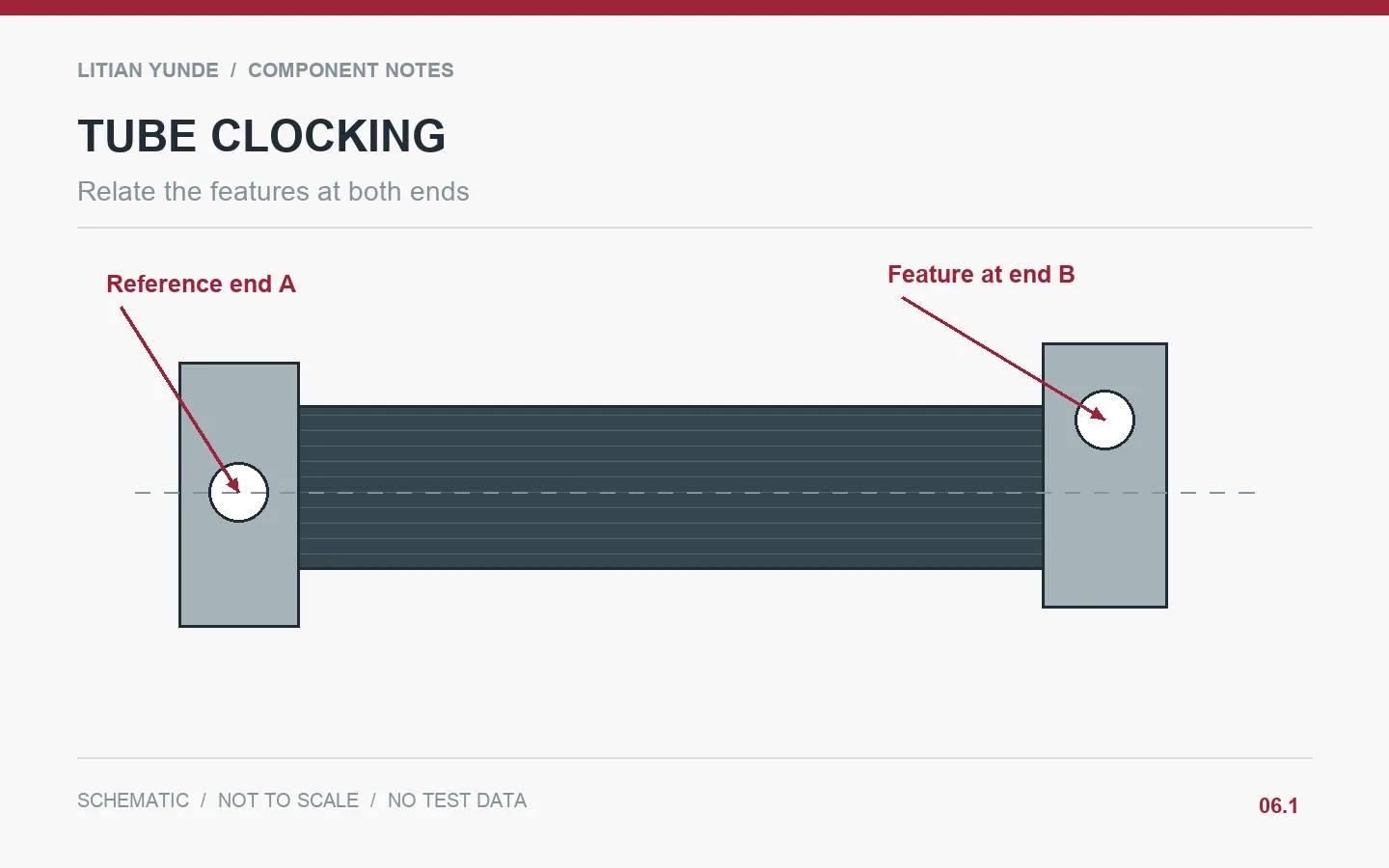
碳纤维管对准:对齐两端特征点
Clocking defines the angular relationship between features on a tube. If two end fittings, slots or holes must align, specify a common rotational reference and viewing…
Read guide →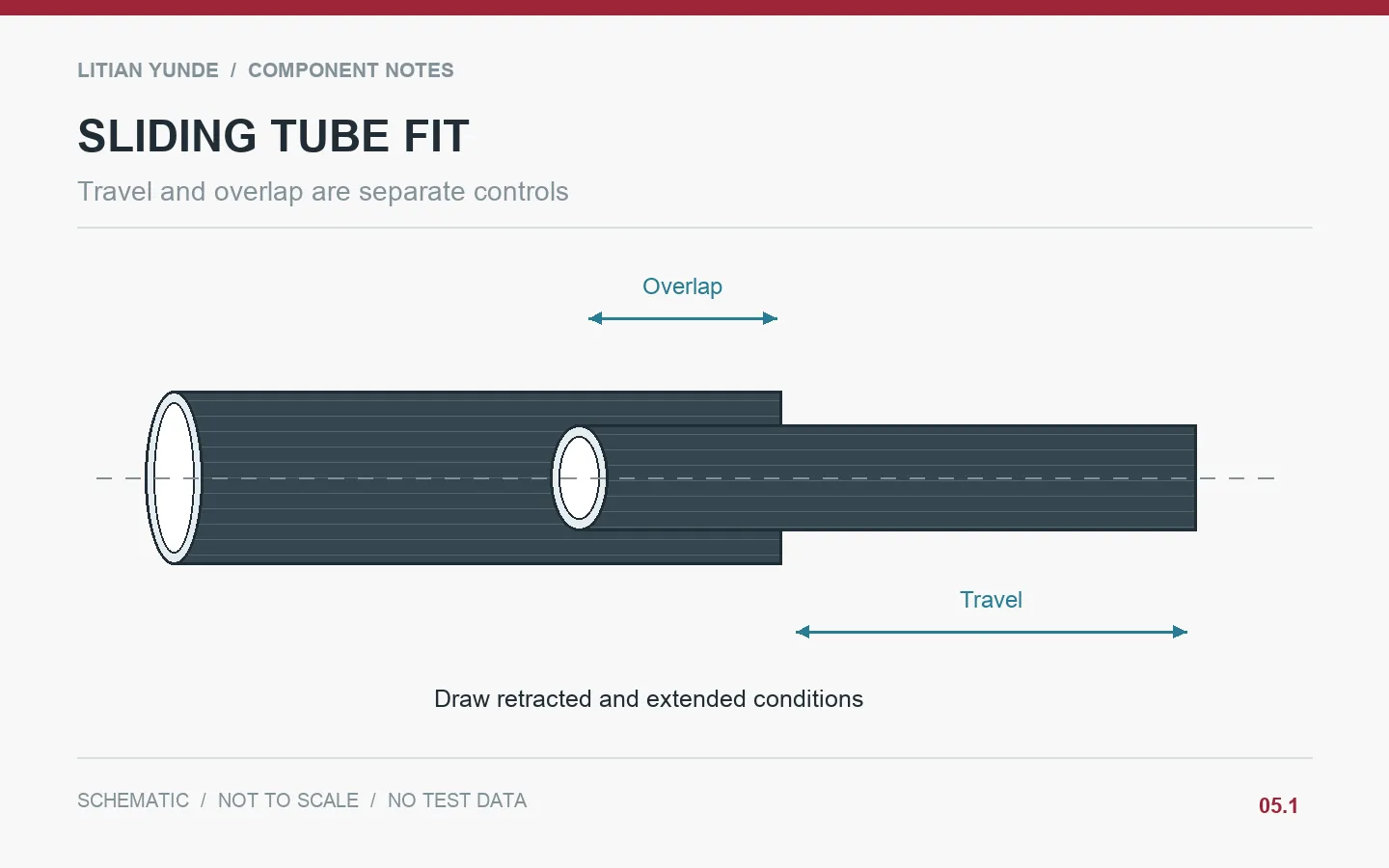
伸缩式碳纤维管:指定在整个行程范围内采用滑动配合
Telescoping carbon fiber tubes should be reviewed as a matched sliding assembly, not as two nominal diameters. Define the stroke, overlap, guide elements, surface condition…
Read guide →
购买碳纤维管:关注结构,而不仅仅是编织方式
The visible weave on a tube is an appearance feature, not a complete definition of its construction.
Read guide →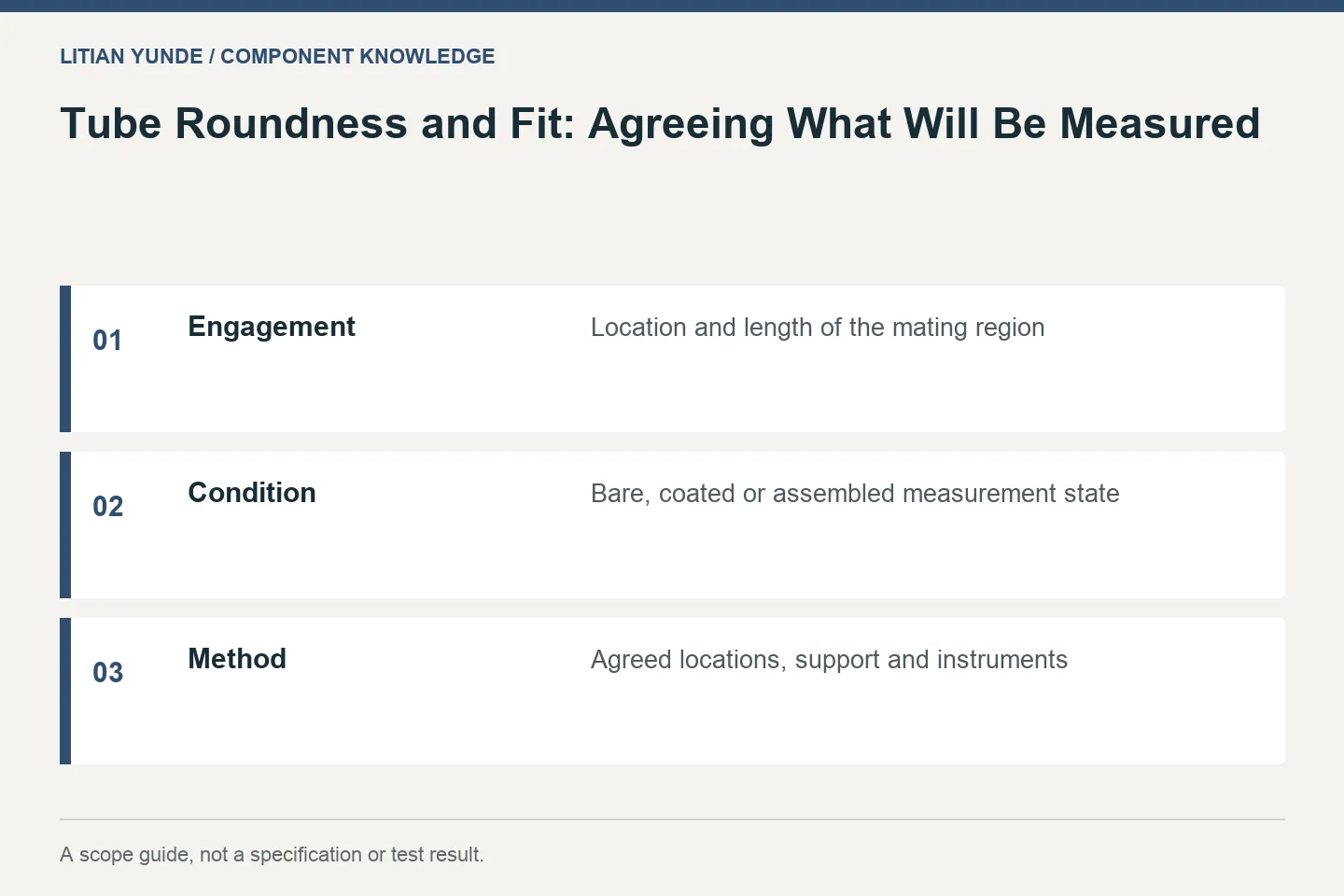
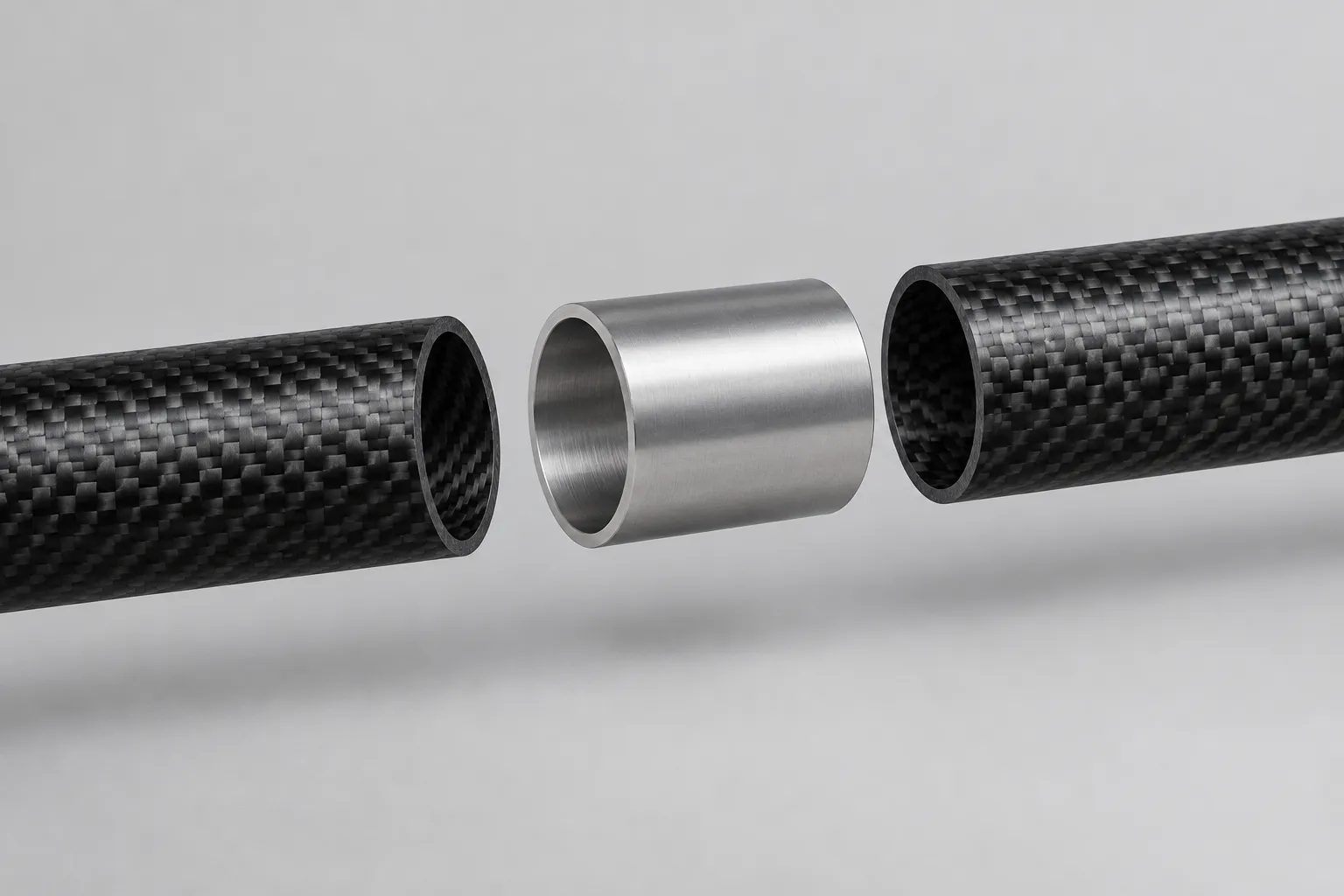
碳纤维管接头:为供应商审查准备接口
A tube-joint enquiry needs more than the name of an adhesive or fastener.
Read guide →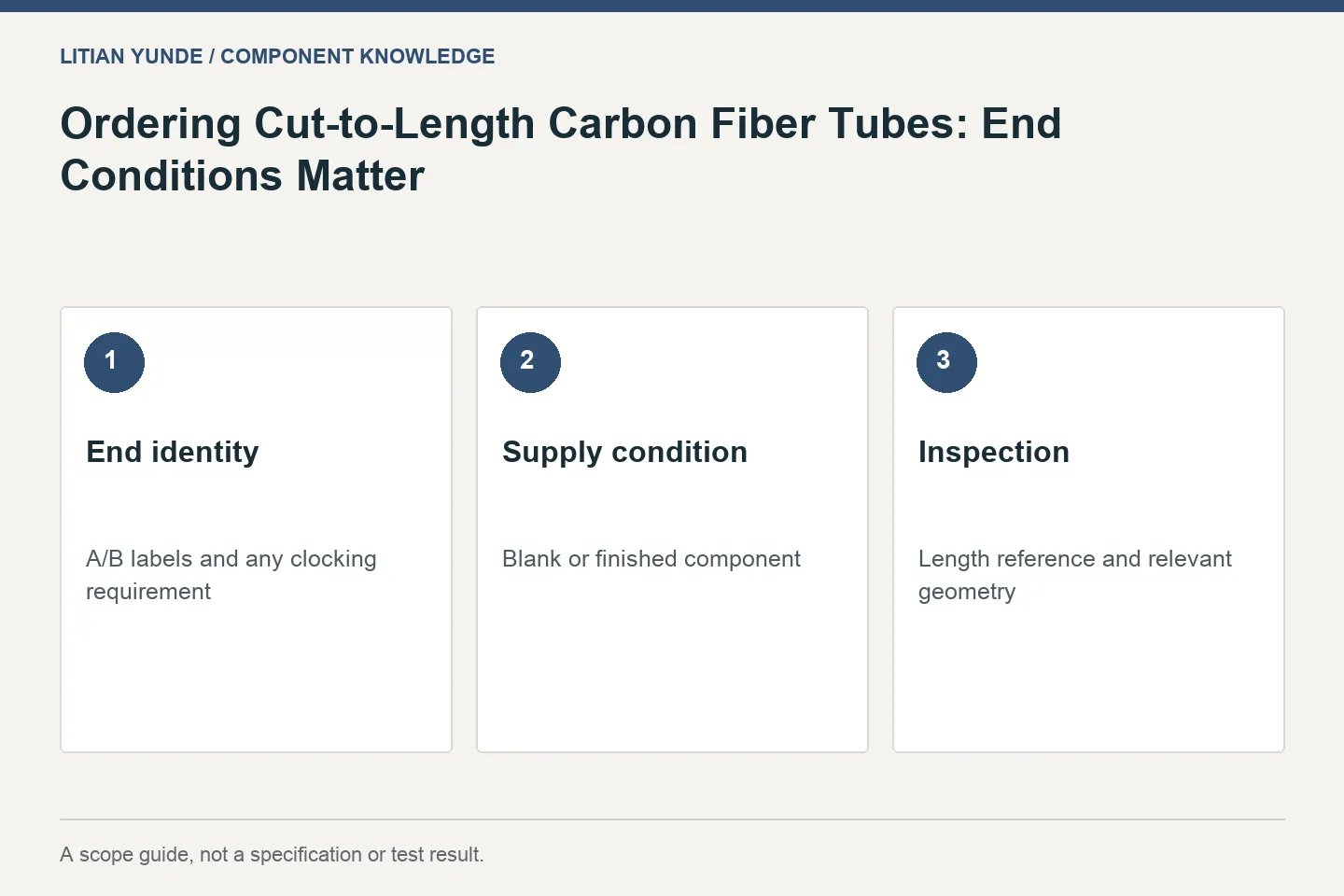
订购定尺碳纤维管:管端处理至关重要
A cut-to-length order should define the finished length and the condition of both ends.
Read guide →

碳纤维自行车内胎:外形并非层压结构的决定因素
Two bicycle tubes can have similar outer shapes while using different internal constructions. A surface photograph is useful for appearance, but it cannot specify the…
Read guide →机械加工与装配
Machined features and composite joints: holes, inserts, adhesive processes, fasteners, fixtures and assembly access.
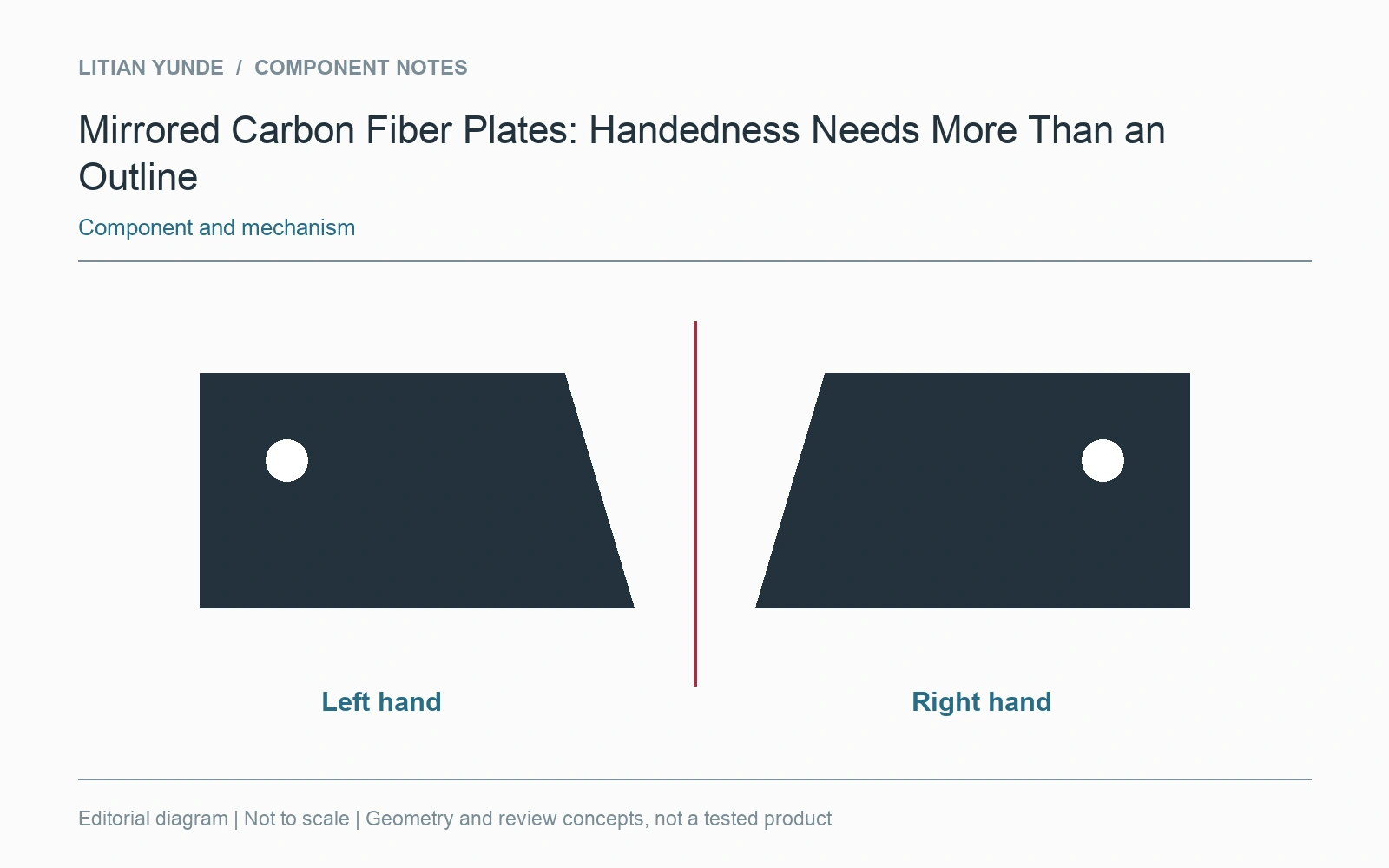
Mirrored Carbon Fiber Plates: Handedness Needs More Than an Outline
Two carbon fiber plates can share a mirrored outline while differing in visible face, counterside features or material direction. Identify the left-hand and right-hand…
Read guide →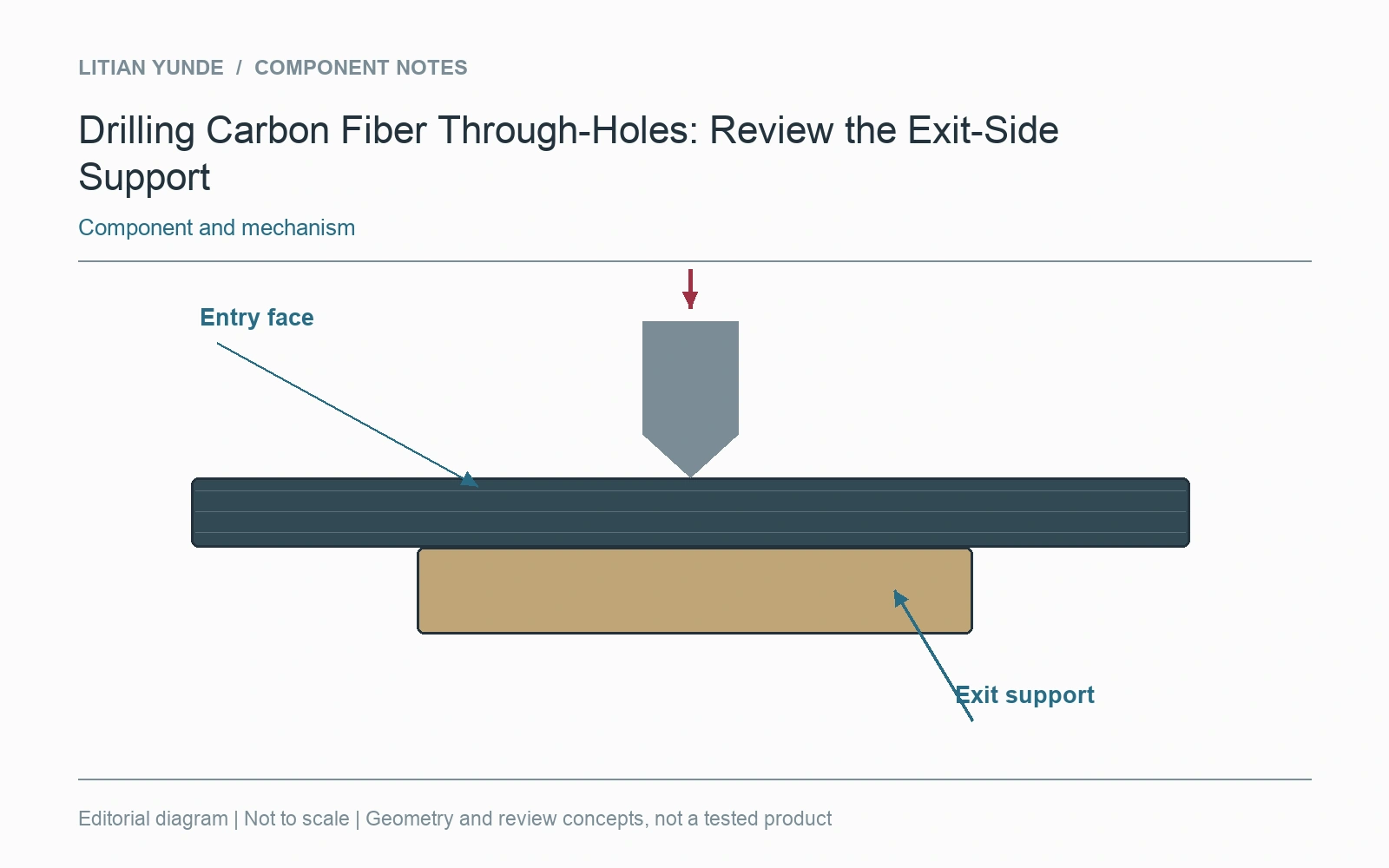
Drilling Carbon Fiber Through-Holes: Review the Exit-Side Support
The exit side of a through-hole is part of the machining setup even when it is hidden from the operator’s main view. Describe access, supporting contact and required final…
Read guide →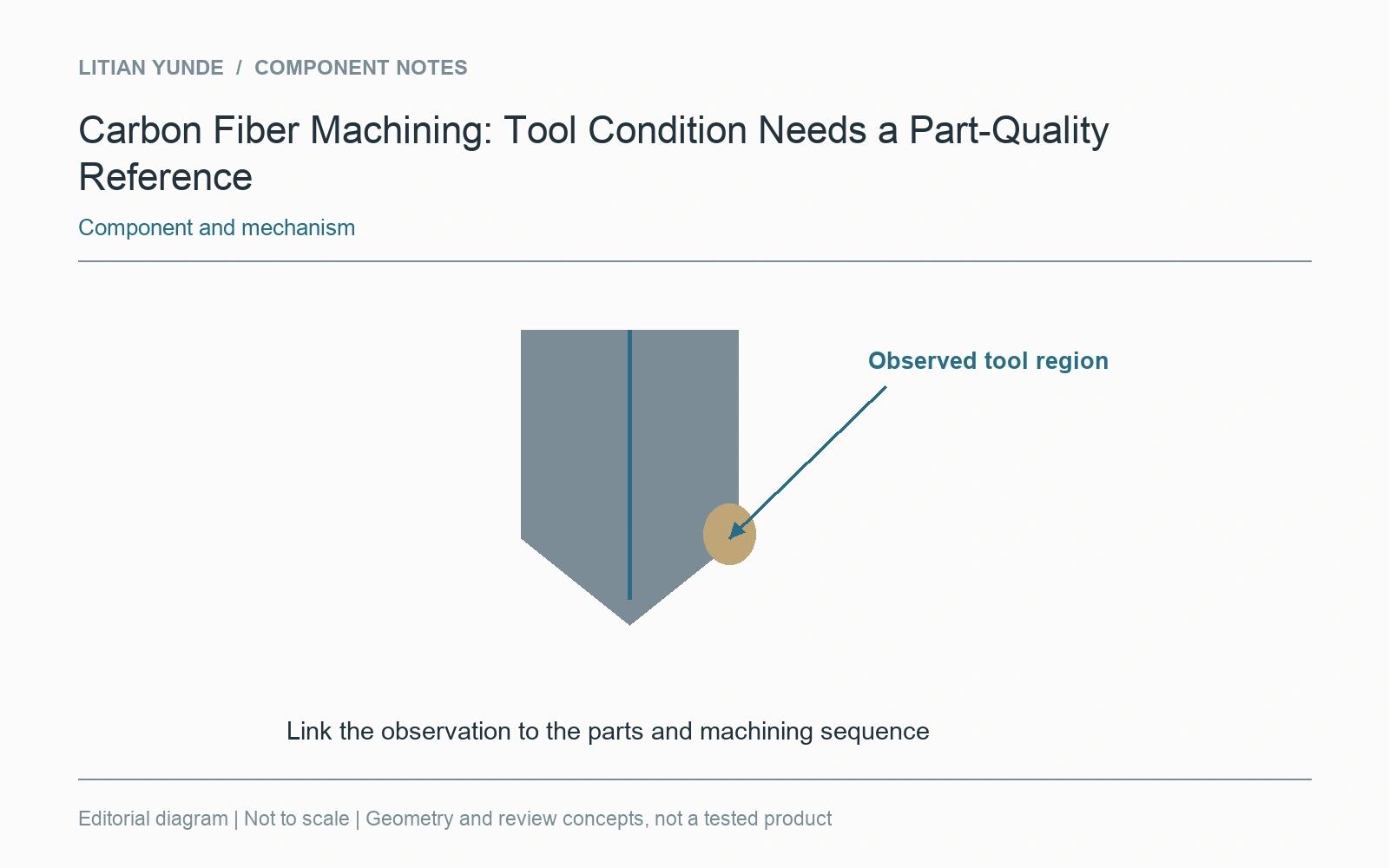
Carbon Fiber Machining: Tool Condition Needs a Part-Quality Reference
A tool-condition record is useful when it is connected to the machined feature and its acceptance requirement. For carbon fiber work, define the part-quality checks that…
Read guide →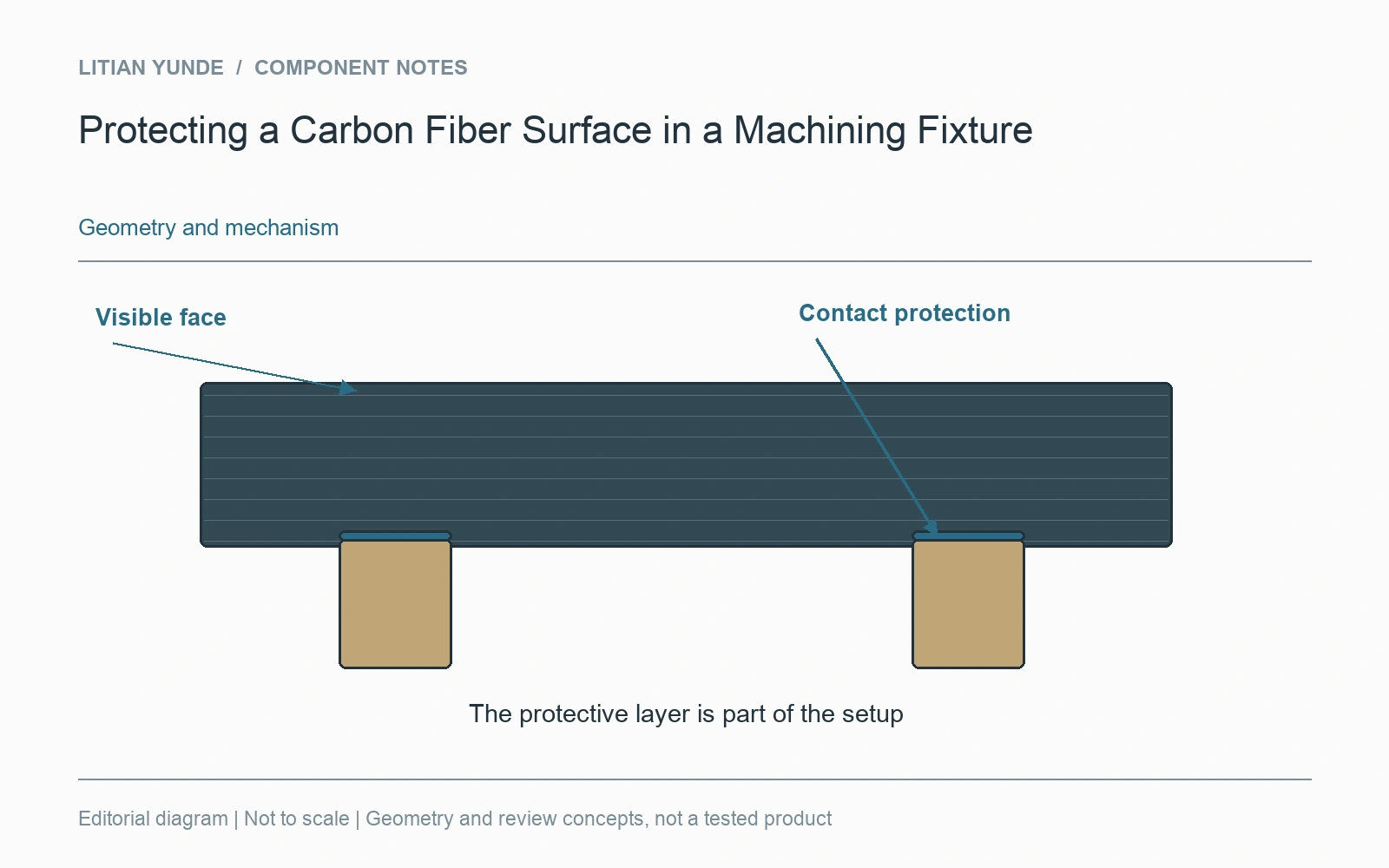
在加工夹具中保护碳纤维表面
A fixture has to hold a component, and its contact with the surface can leave evidence. If a carbon fiber face will remain visible, discuss the contact regions and any…
Read guide →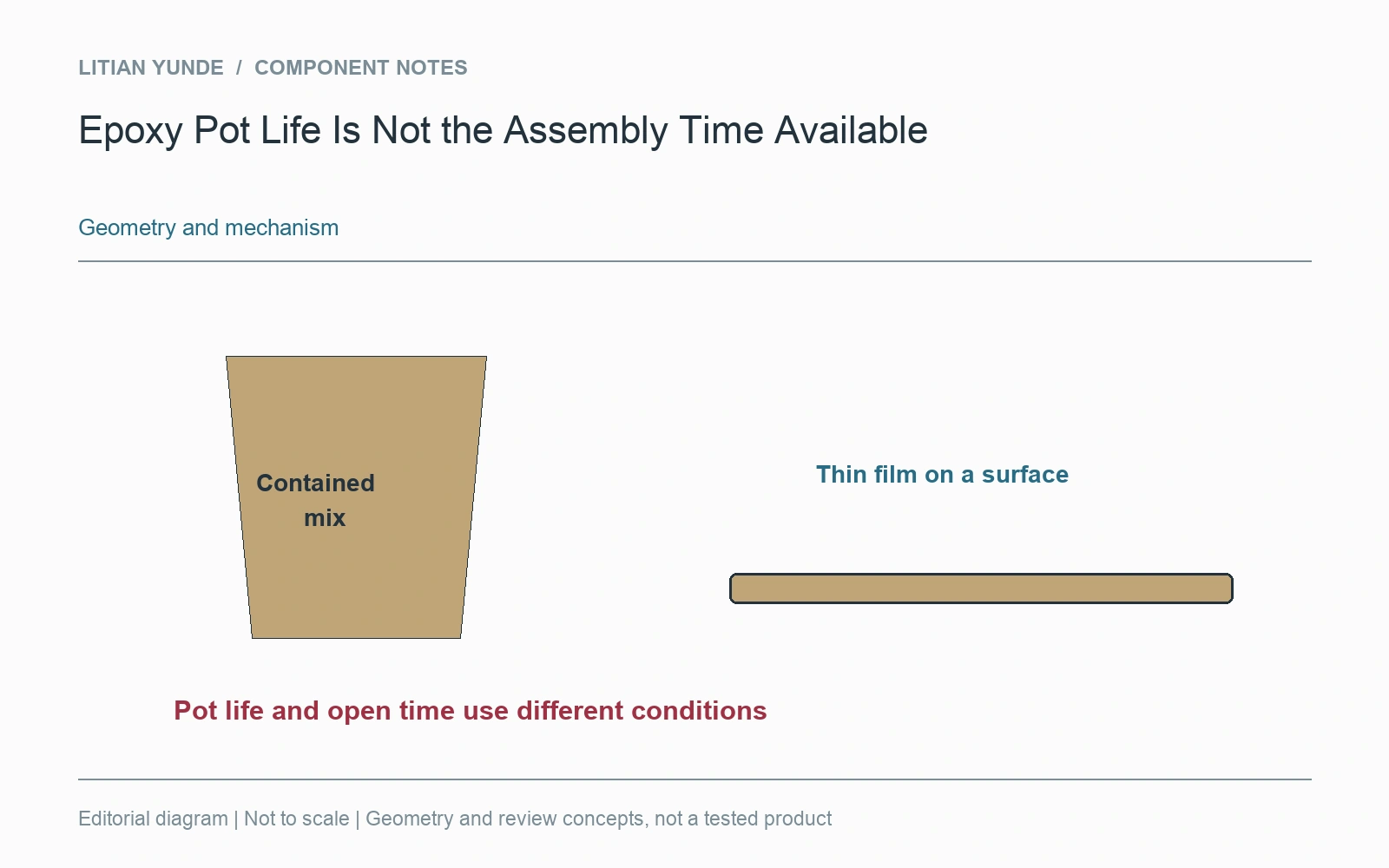
环氧树脂的适用期不等于可用的组装时间
An adhesive pot-life figure is not a promise that a complete assembly can take that long. Mixing, application, positioning and clamping consume the usable working period, and…
Read guide →
当碳纤维部件仅有一侧可接触时如何进行紧固
When the back of a carbon fiber part cannot be reached, the fastening concept has to address installation and later removal from the accessible side. Choosing a familiar…
Read guide →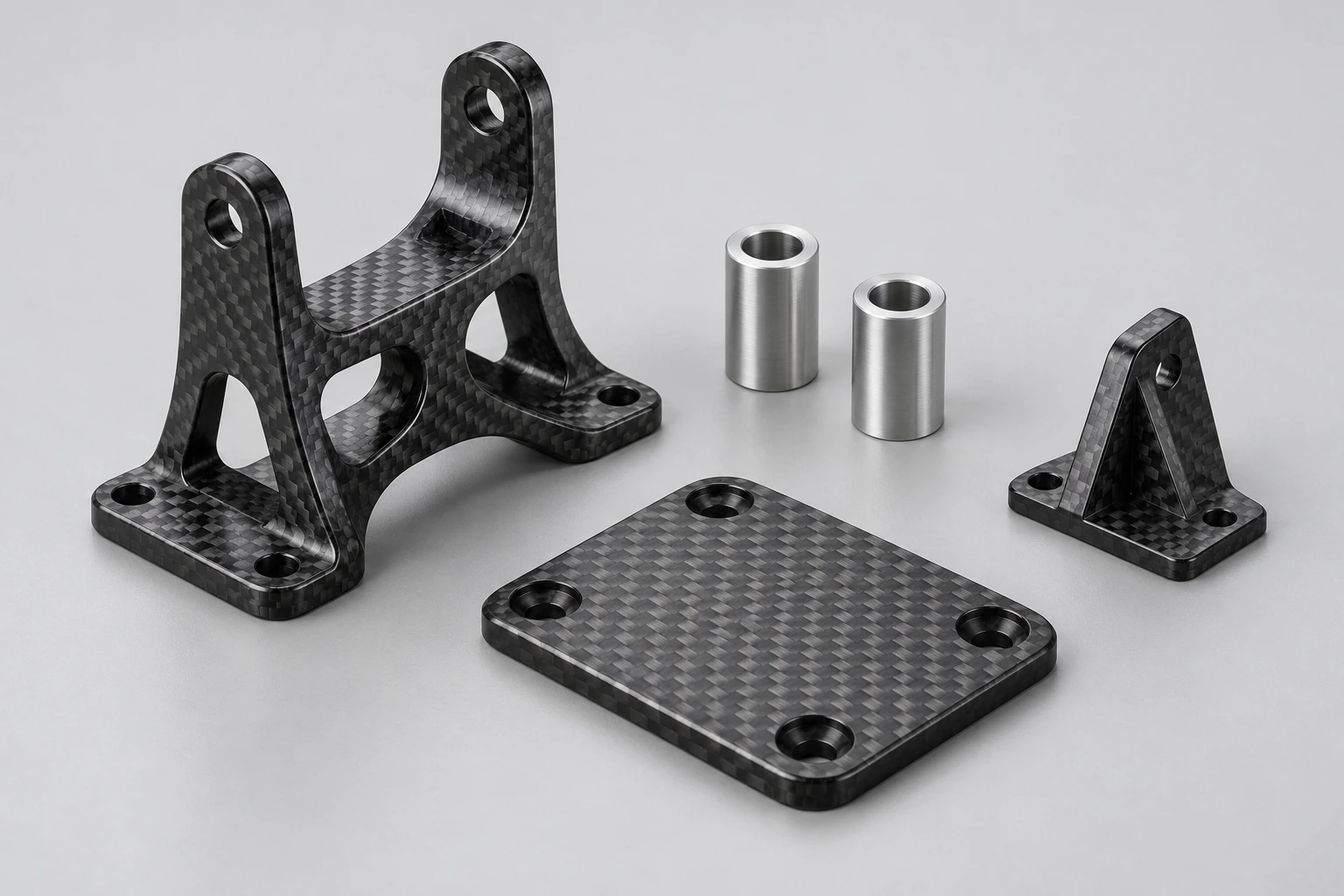
碳纤维子组件:在确定最终设计方案前,请核对安装顺序
An assembly can fit in its completed state yet be impossible to build in the proposed order. Review the sequence for the carbon component, hardware, cables and neighbouring…
Read guide →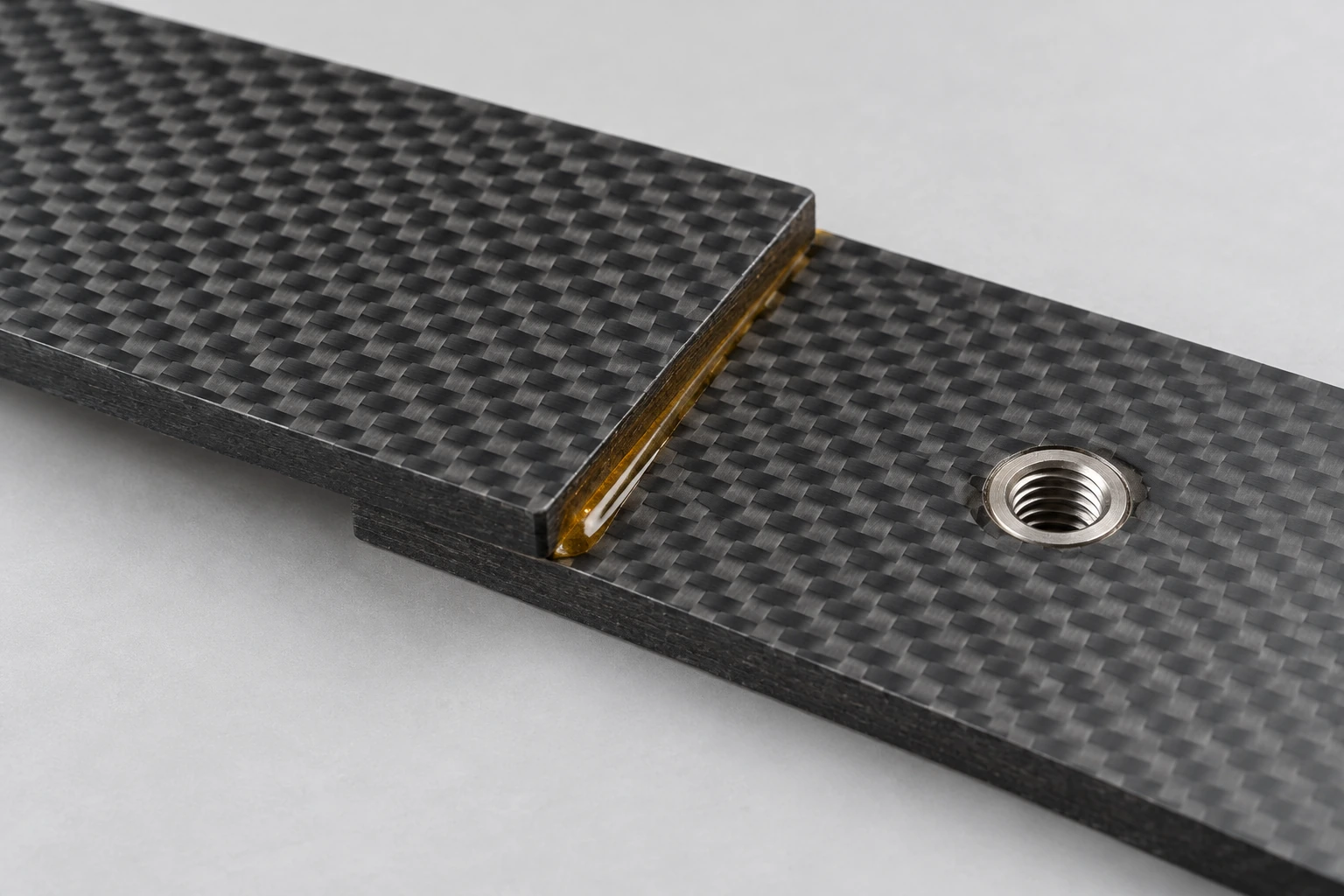
粘合碳纤维组件:绘制粘合剂挤出区和清理区
Adhesive displaced during assembly can reach holes, visible surfaces or service interfaces. Define where squeeze-out is permitted, where surfaces must remain clear and how…
Read guide →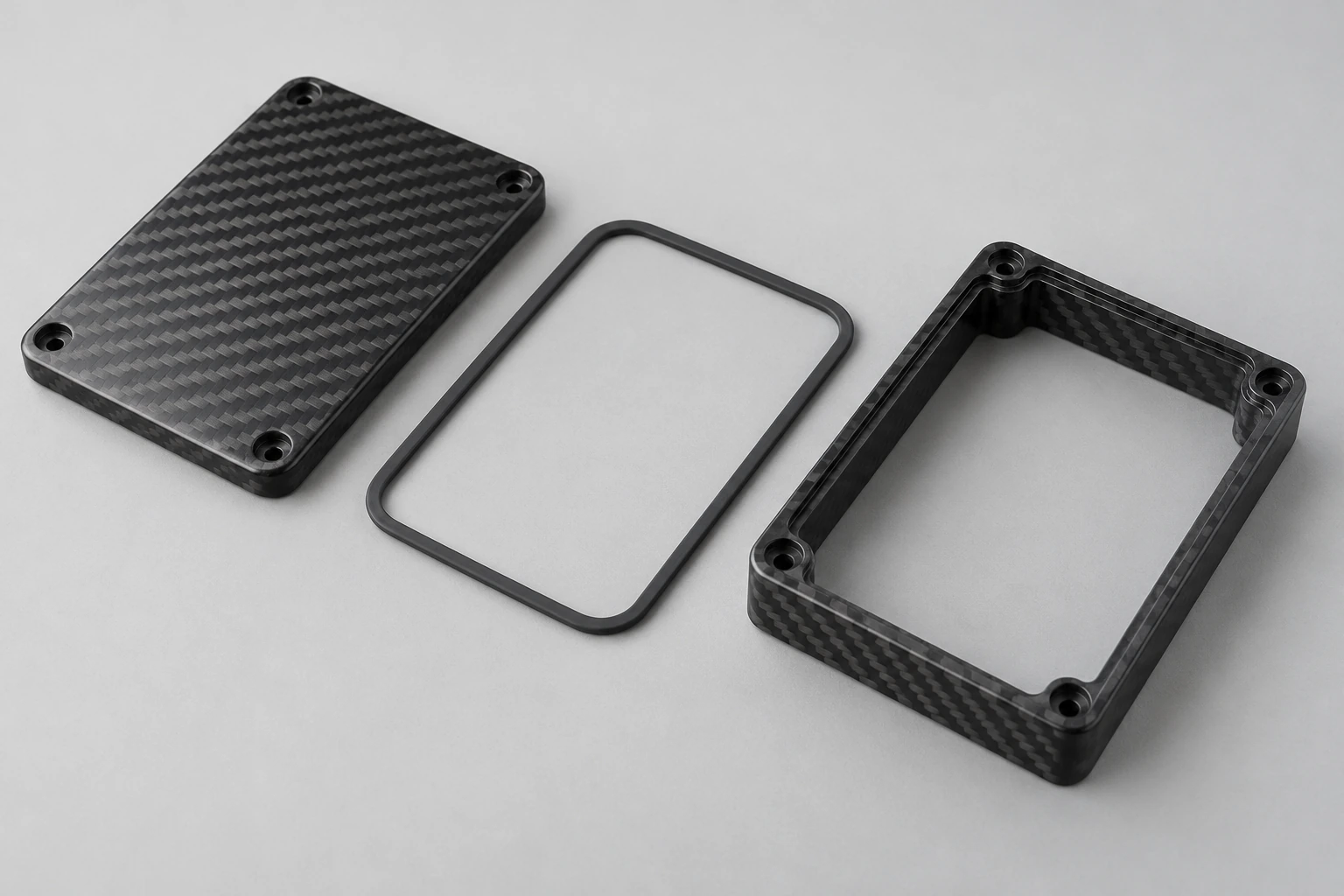
带密封件的碳纤维盖:确定安装后的压缩状态
A seal fitted to a carbon fiber cover needs a defined installed condition. Specify the seal section, seating geometry, closure features and the requirements set by the seal…
Read guide →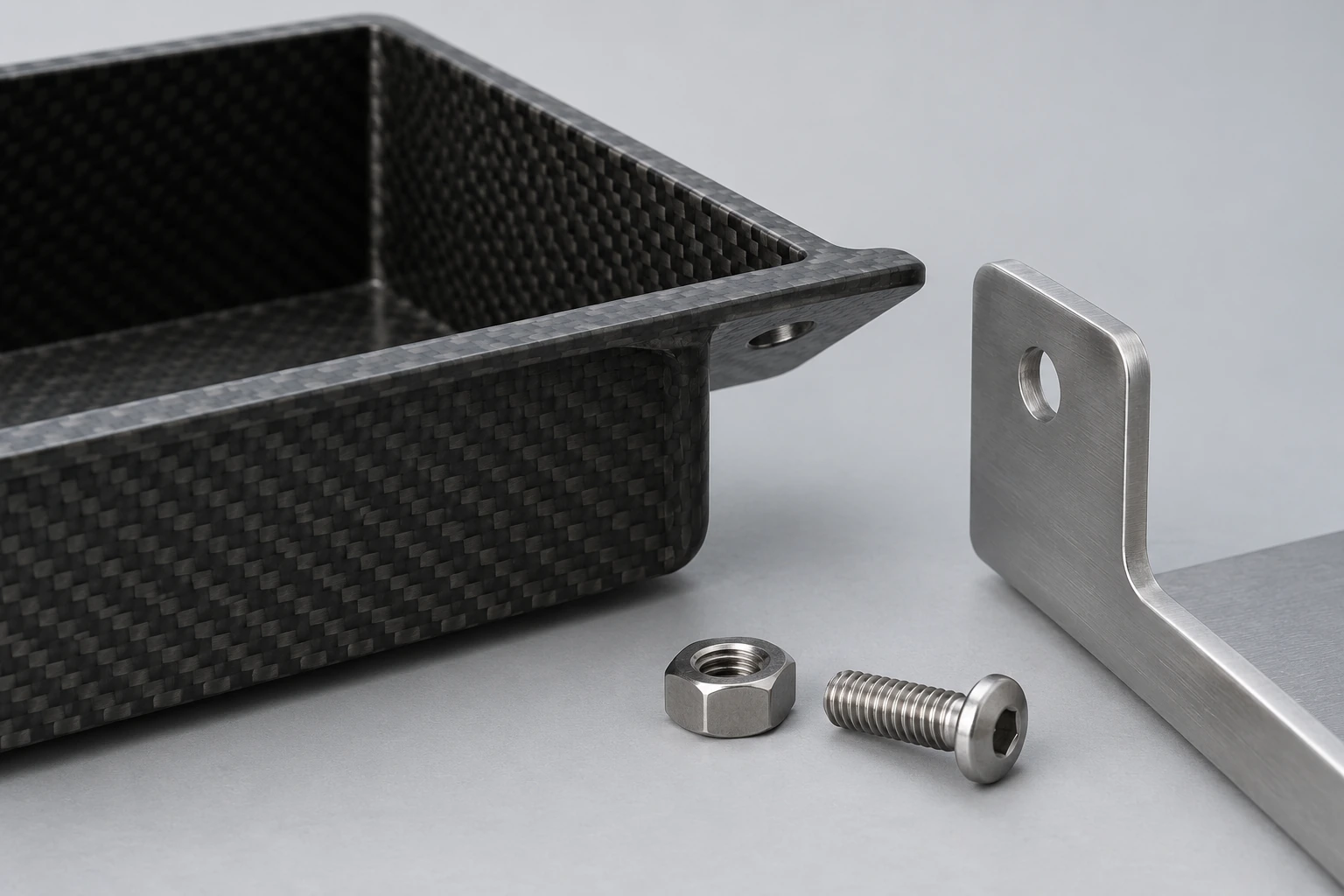
碳纤维壳体法兰:检查紧固件背面的可 접근性
A visible fastener hole does not prove a shell flange can be assembled. Check where the nut or retainer sits, how a tool reaches it and whether neighbouring parts block…
Read guide →
碳纤维零件的喷漆和粘接遮蔽:确定避让区域
A finishing drawing should identify the areas to coat, bond, mask or leave untouched. A single colour or gloss instruction cannot describe every functional surface. Use a…
Read guide →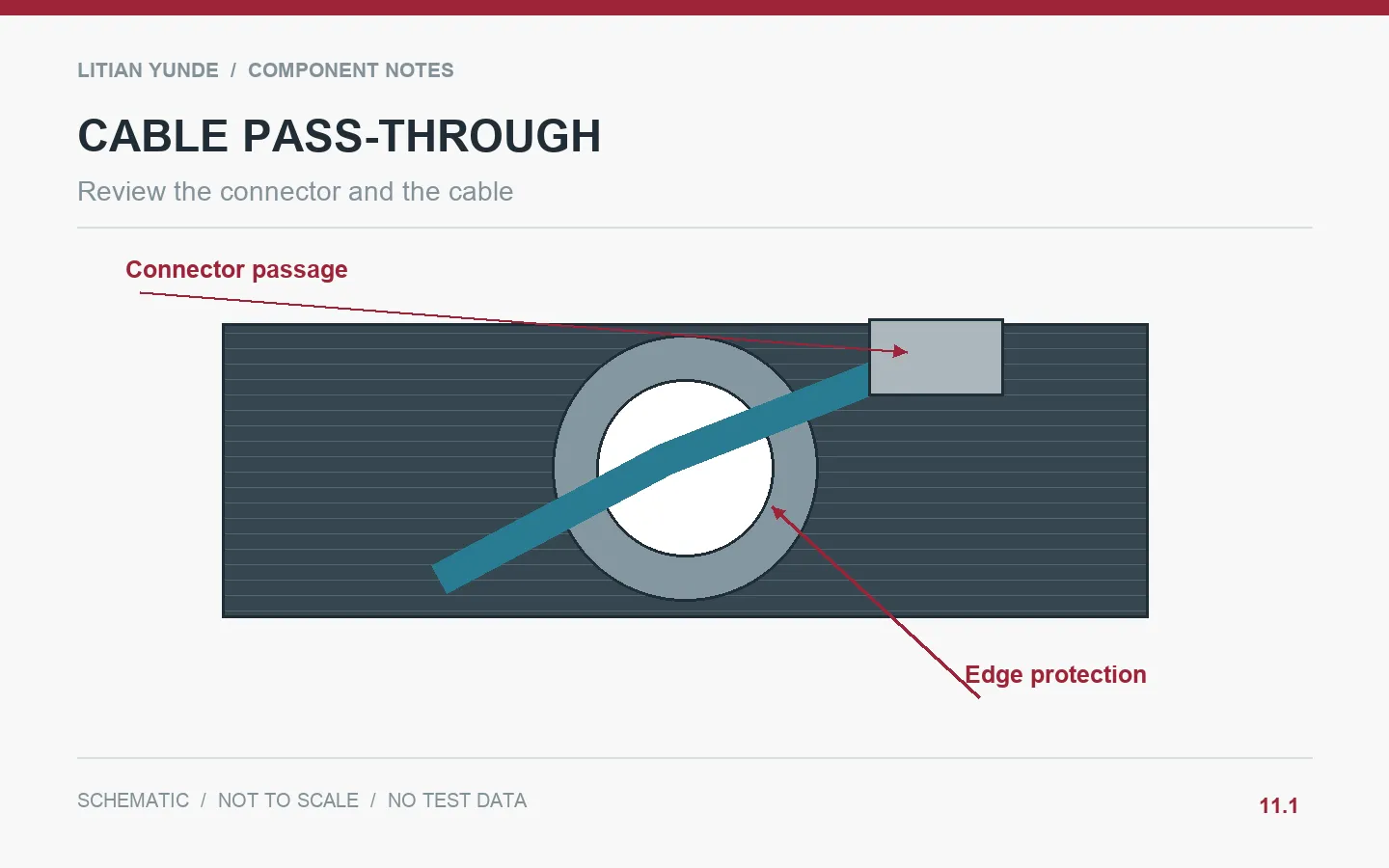
碳纤维盖板中的电缆开口:护套和边缘间隙细节
A cable opening needs more than a hole diameter. Specify the grommet or edge protection, panel thickness range, connector passage and cable movement envelope. Treat…
Read guide →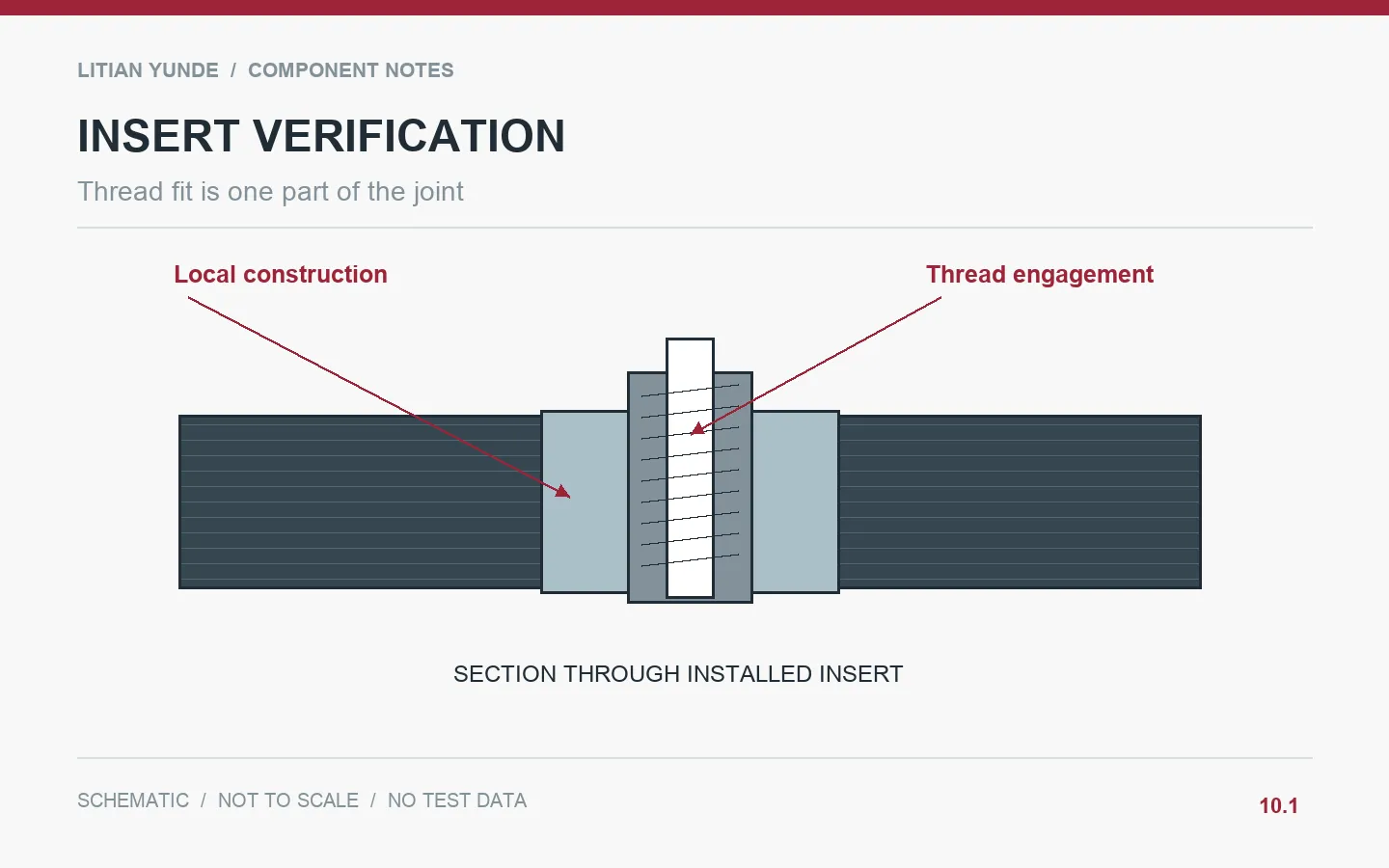
碳纤维中的螺纹嵌件:扭矩、拔出力和使用周期
Tightening torque, pull-out resistance and repeated assembly performance describe different aspects of a threaded insert. Specify which loads and service conditions matter,…
Read guide →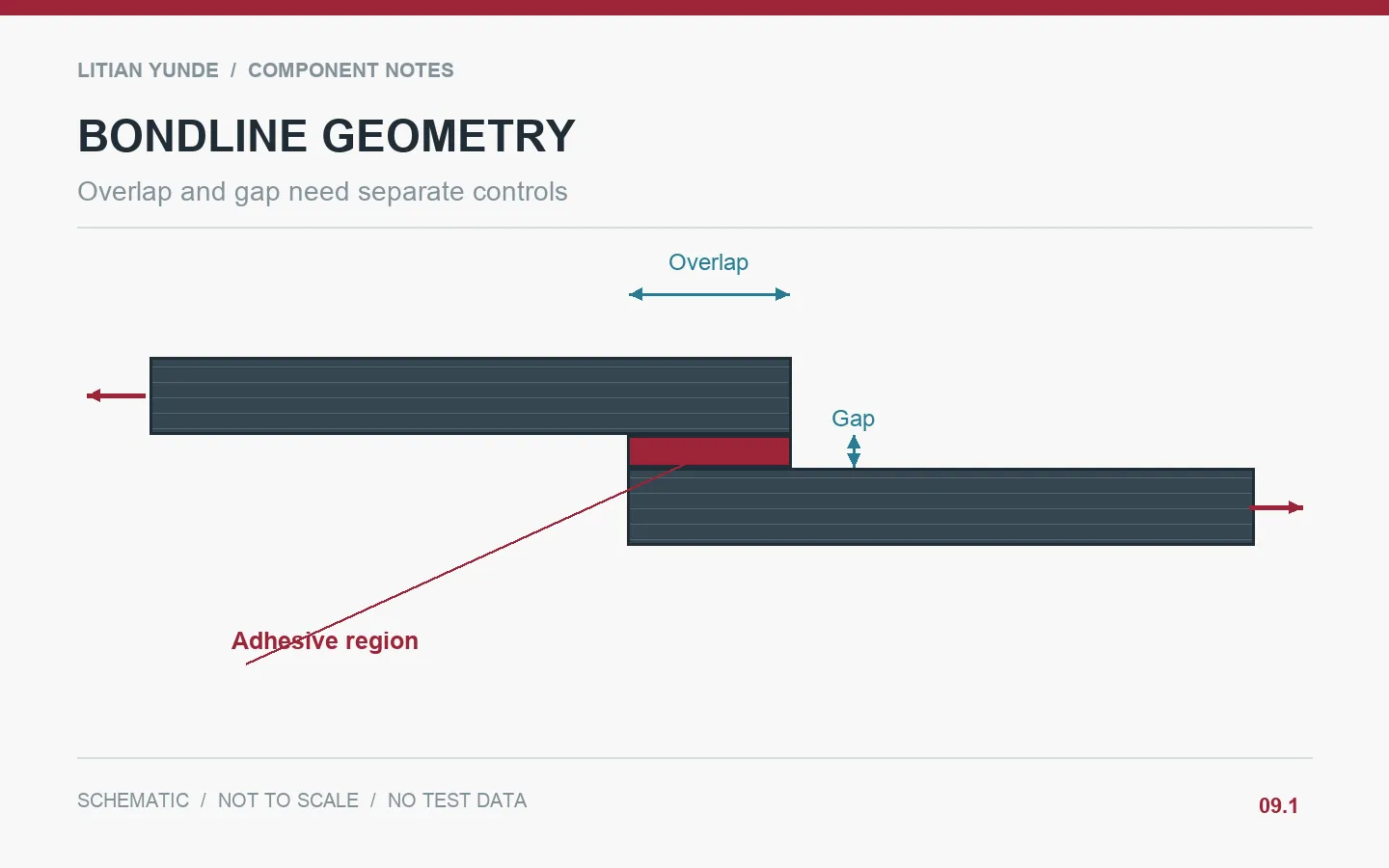
碳纤维粘接接头:控制搭接量和粘接线几何形状
A bonded carbon fiber joint should define both overlap and the adhesive gap. More overlap is not a complete joint specification, and a visually thin glue line is not…
Read guide →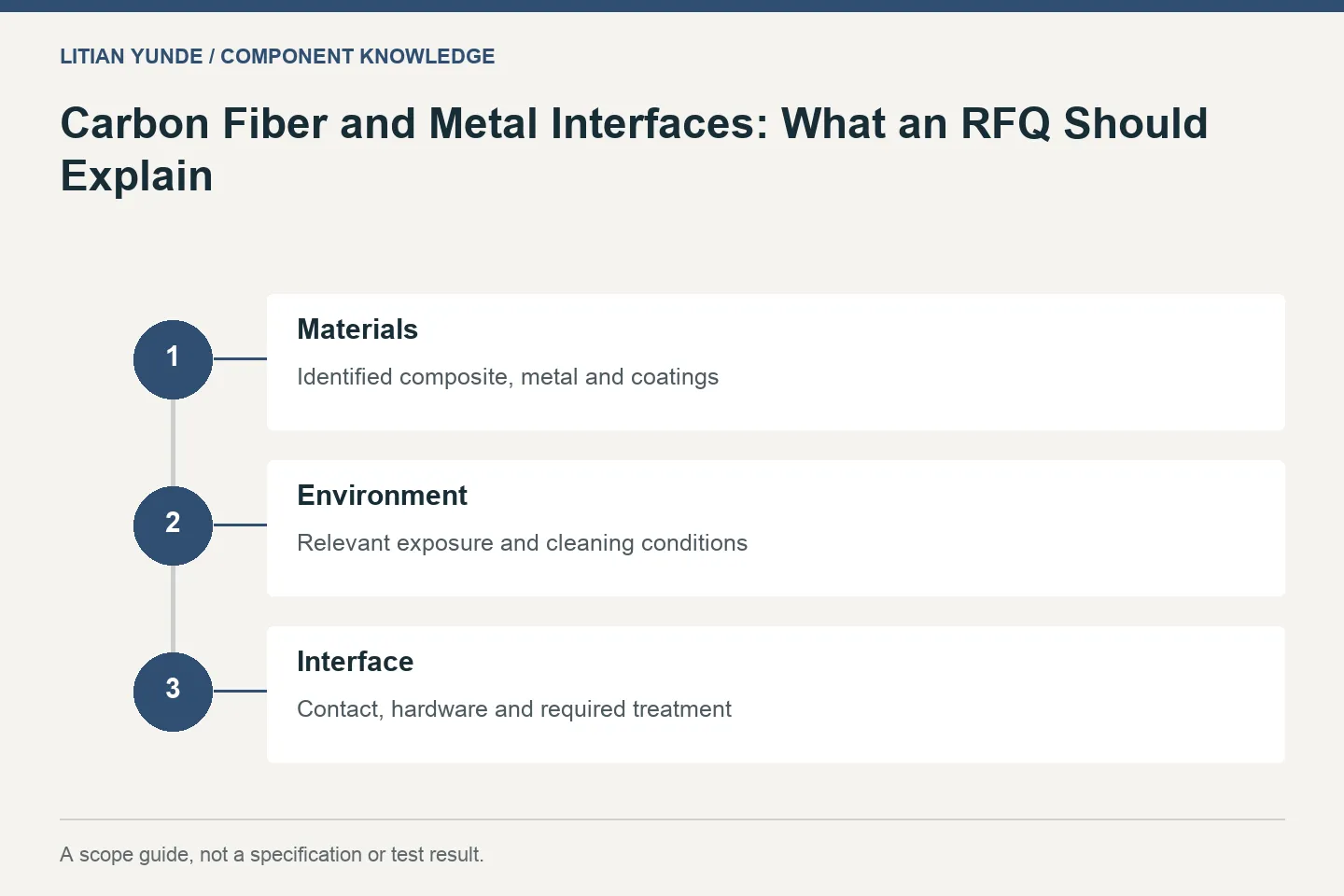
碳纤维与金属的界面:询价单应说明的内容
When a carbon fiber component contacts metal, describe the whole interface: the metal grade, contact area, environment, hardware and any intended isolation or surface…
Read guide →
粘接还是机械紧固?复合材料组件框架结构综述
Choosing between bonding, mechanical fastening or a combined joint requires an assembly review.
Read guide →
槽口与内角:关于碳纤维加工咨询的说明
Slots and internal corners deserve explicit attention because their function may be hidden in a complex outline.
Read guide →
碳纤维中的通孔和沉头孔:定义硬件接口
A fastener hole should be specified as part of its hardware interface.
Read guide →
定制碳纤维部件的数控加工图纸核对清单
A CNC quotation becomes easier to assess when the drawing separates geometry, material, finish and acceptance requirements.
Read guide →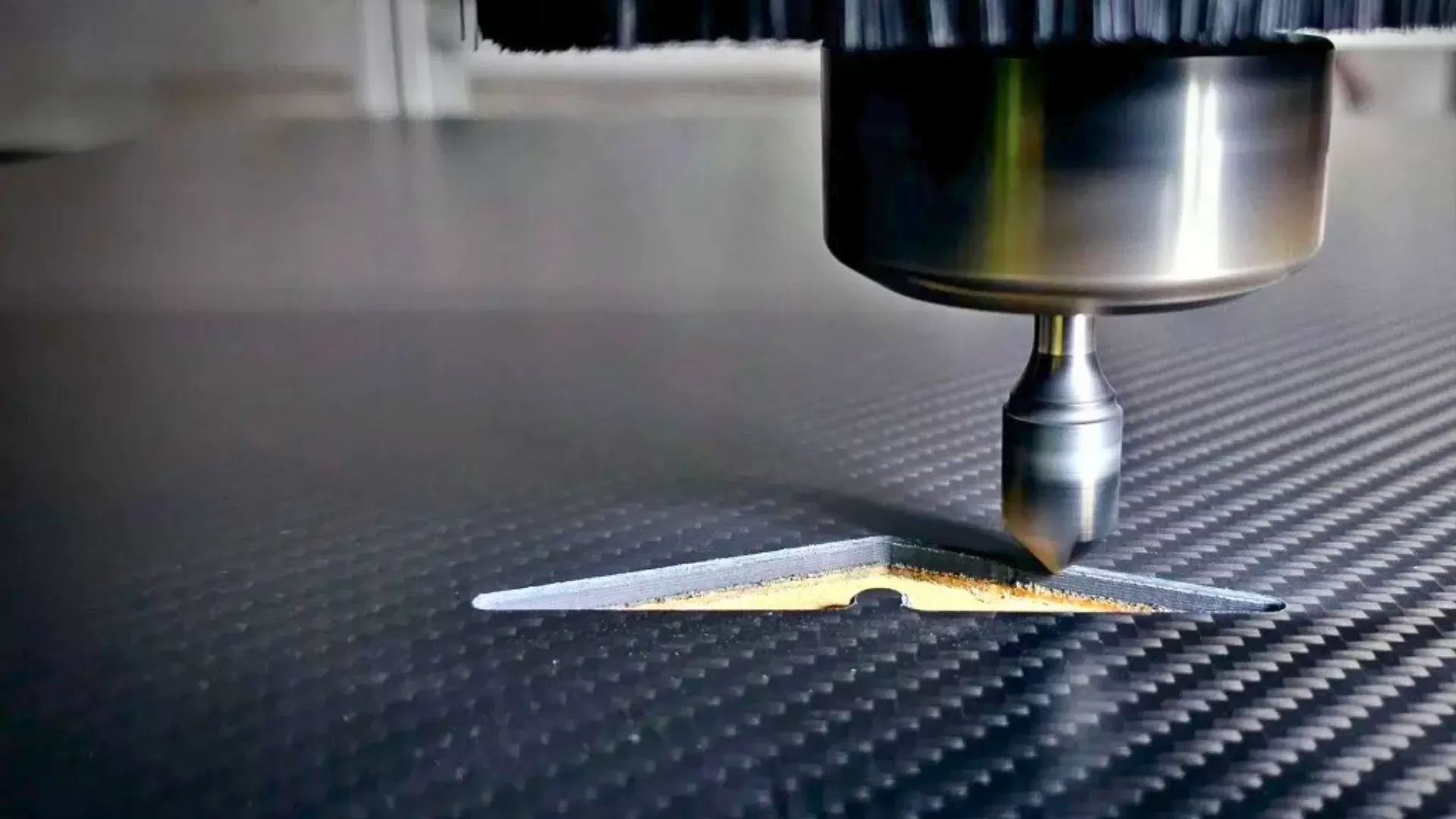
CNC碳纤维零件:毛坯、加工和精加工分开进行
A machined carbon fiber part begins with a defined stock material and ends with an agreed edge and surface condition. Quoting only the outline leaves important parts of the…
Read guide →Manufacturing & Tooling
Composite manufacturing and tooling development: mould geometry, fabric forming, process surfaces, sample preparation and controlled production changes.

Prepreg Tack and Drape Describe Different Handling Behaviour
Tack concerns how a prepreg adheres during handling; drape concerns how it accommodates a shape. A material can be described on both bases. Neither term alone establishes the…
Read guide →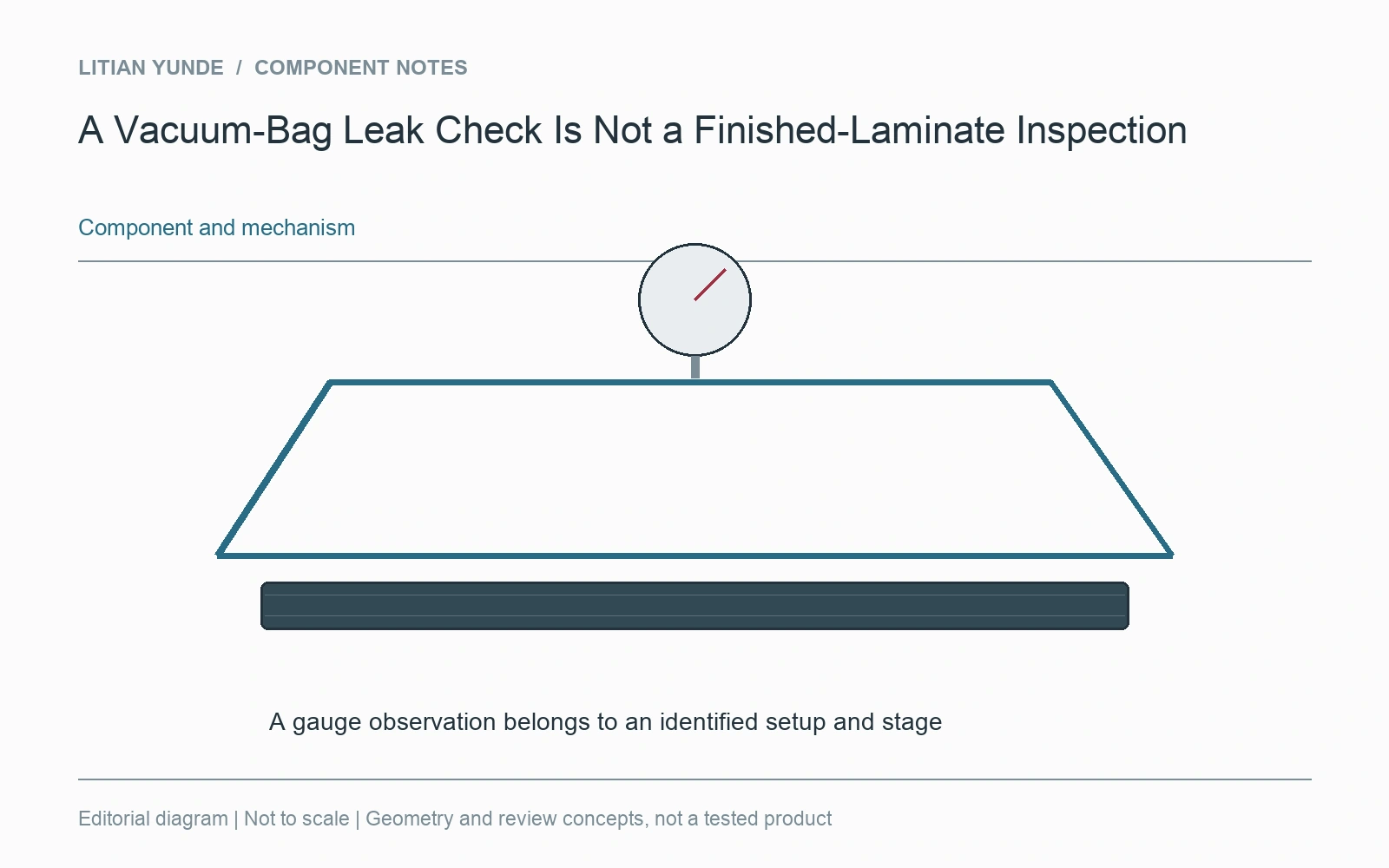
A Vacuum-Bag Leak Check Is Not a Finished-Laminate Inspection
A vacuum-bag leak check evaluates a process setup under its defined procedure. It does not directly measure the void content, mechanical properties or acceptance of the cured…
Read guide →
Breather and Bleeder Materials: Identify Their Role in the Composite Process
Breathing and bleeding describe different process functions: providing an air-evacuation path and absorbing resin where the process requires it. A process consumable can have…
Read guide →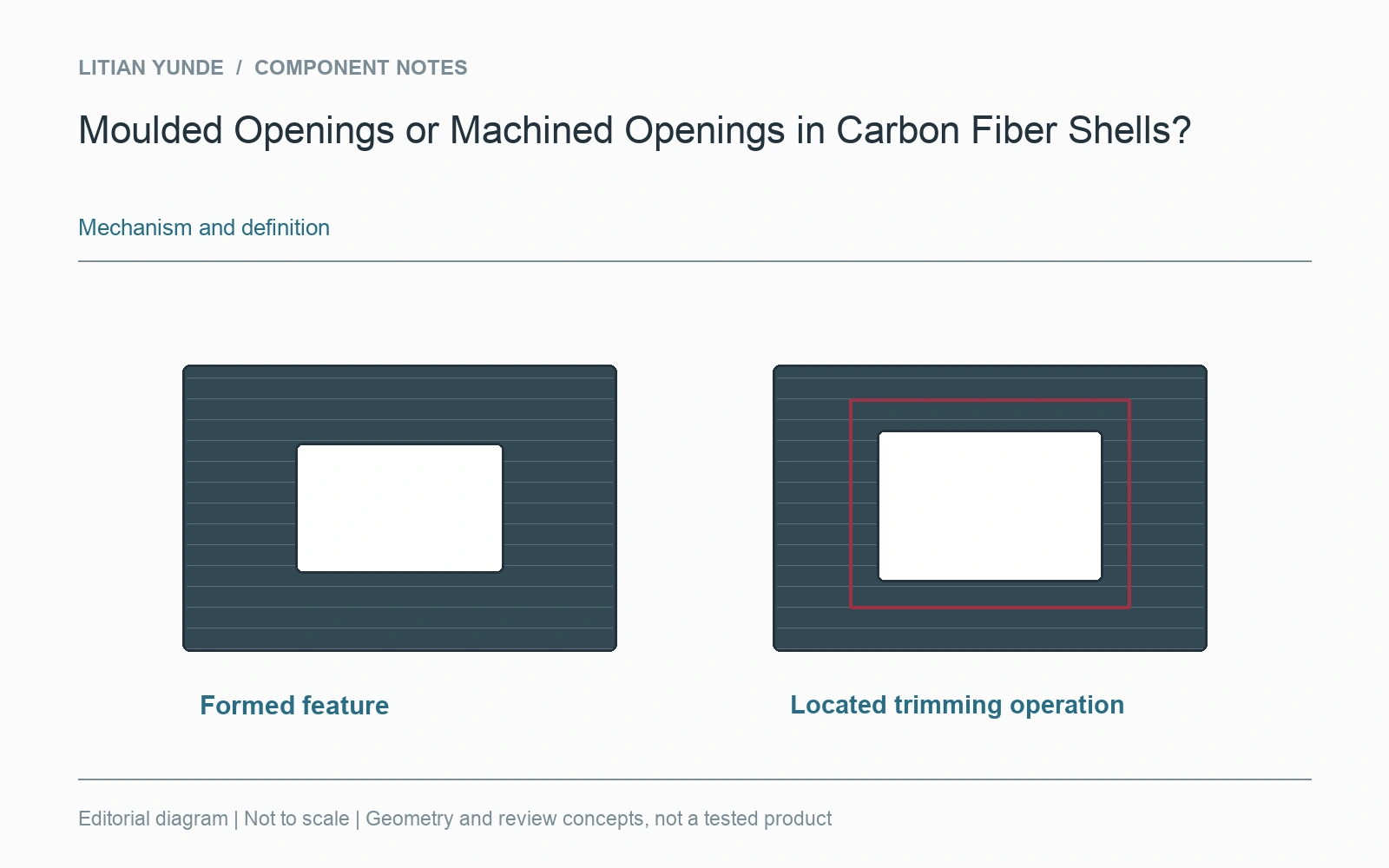
Moulded Openings or Machined Openings in Carbon Fiber Shells?
An opening in a carbon fiber shell may be formed during moulding, trimmed afterward or made through a combined route. The finished opening still needs a dimensional and…
Read guide →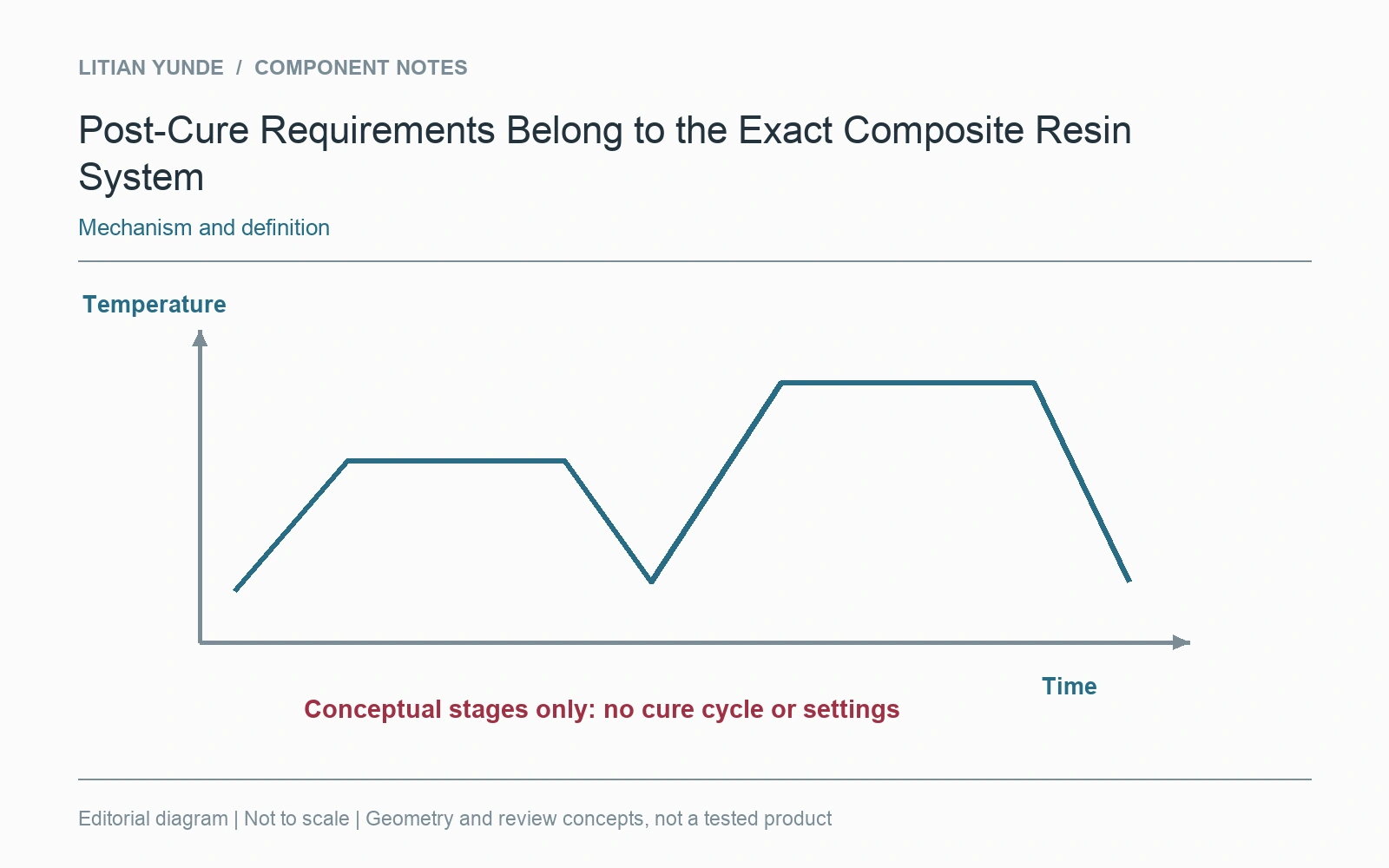
Post-Cure Requirements Belong to the Exact Composite Resin System
A post-cure is a specified additional stage in a material’s processing definition, not a generic improvement to apply to every carbon fiber part. Review it against the exact…
Read guide →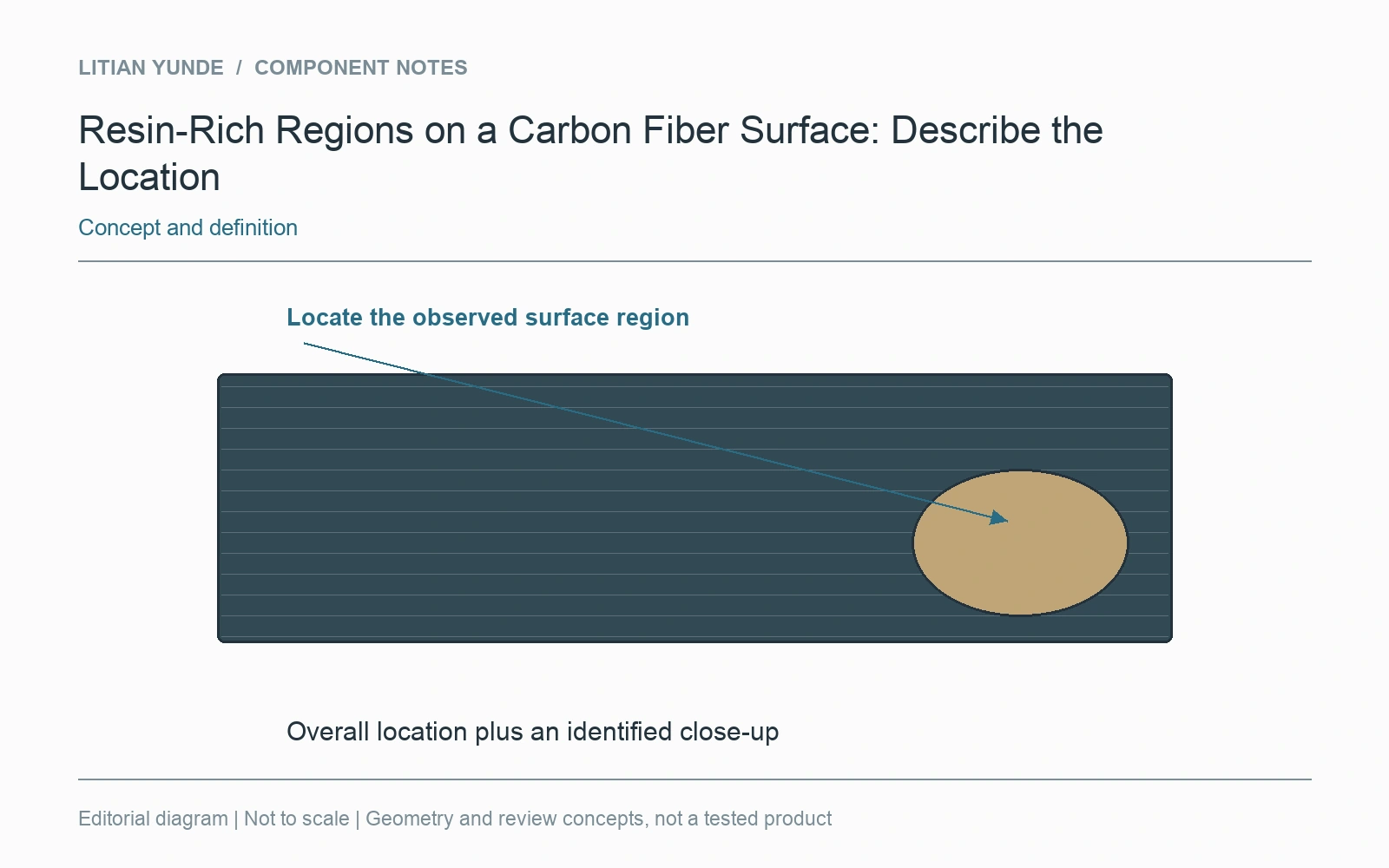
Resin-Rich Regions on a Carbon Fiber Surface: Describe the Location
A local area dominated by resin is not the same observation as an empty region inside a laminate. When discussing a surface feature, describe its location and appearance…
Read guide →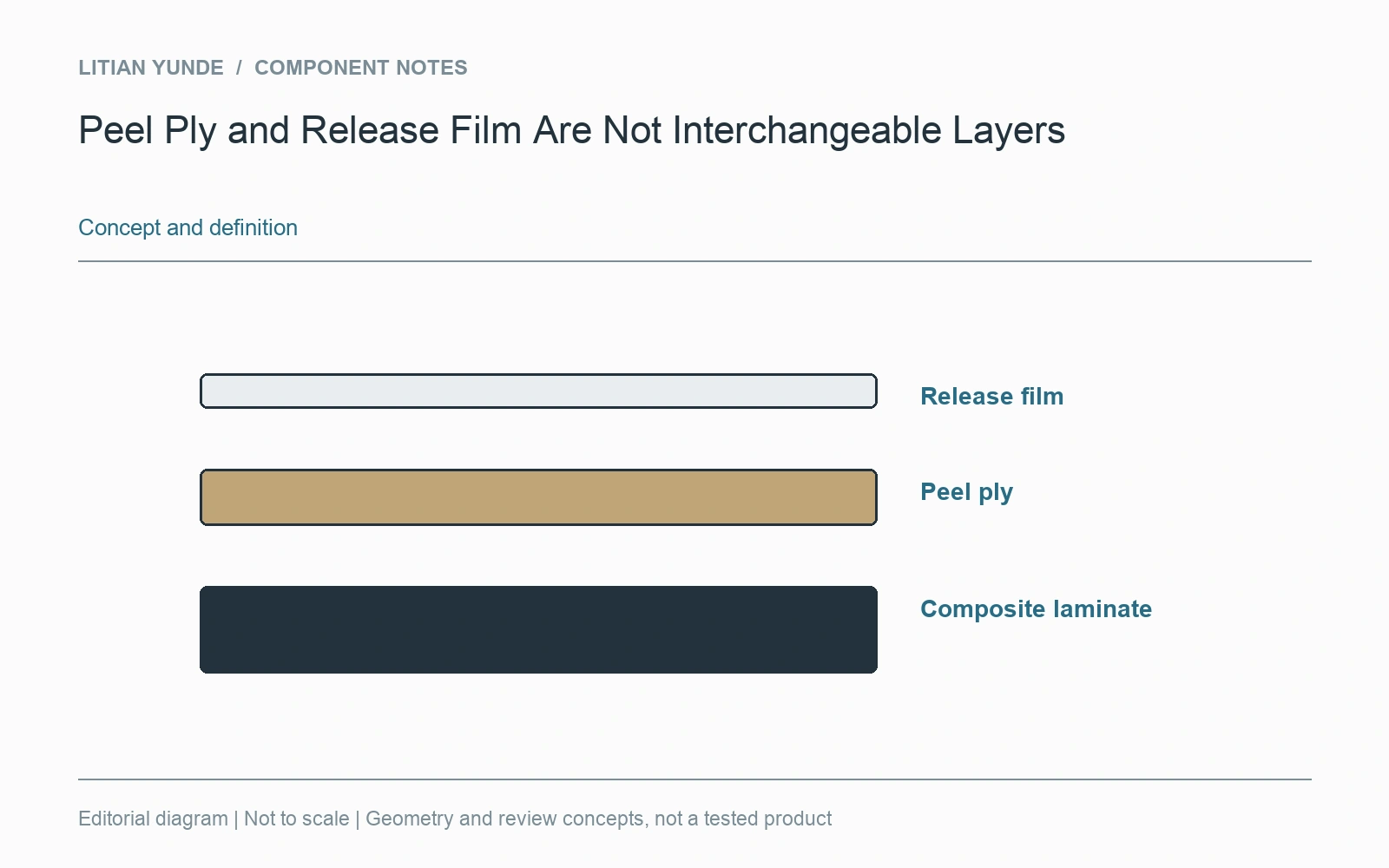
Peel Ply and Release Film Are Not Interchangeable Layers
Peel ply is a removable fabric that can leave a textured composite surface. Release film separates process layers and may have a defined perforation pattern. They have…
Read guide →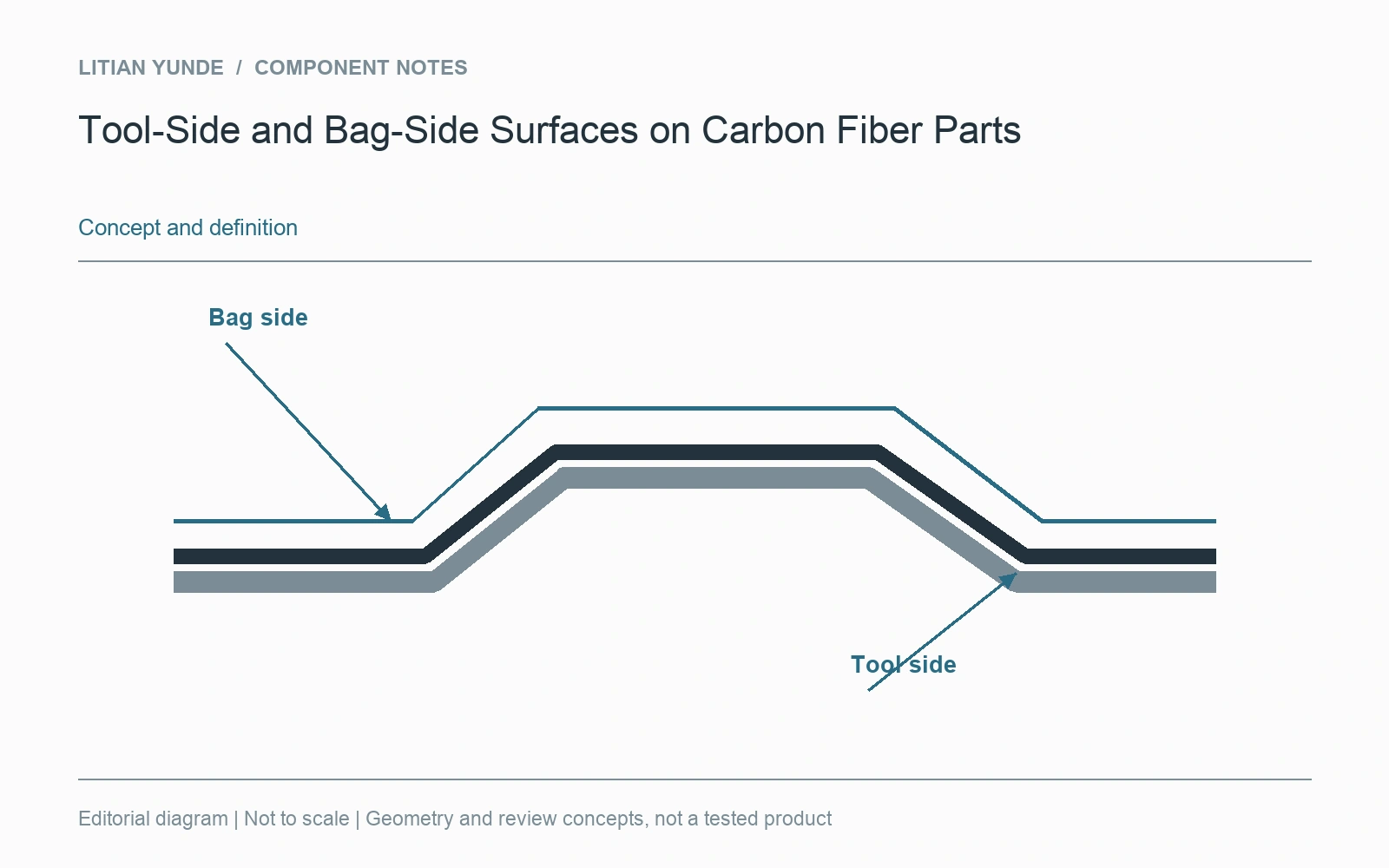
Tool-Side and Bag-Side Surfaces on Carbon Fiber Parts
In a process using a rigid mould on one side and a vacuum bag on the other, the two faces experience different contact conditions. Calling both faces “carbon finish” can hide…
Read guide →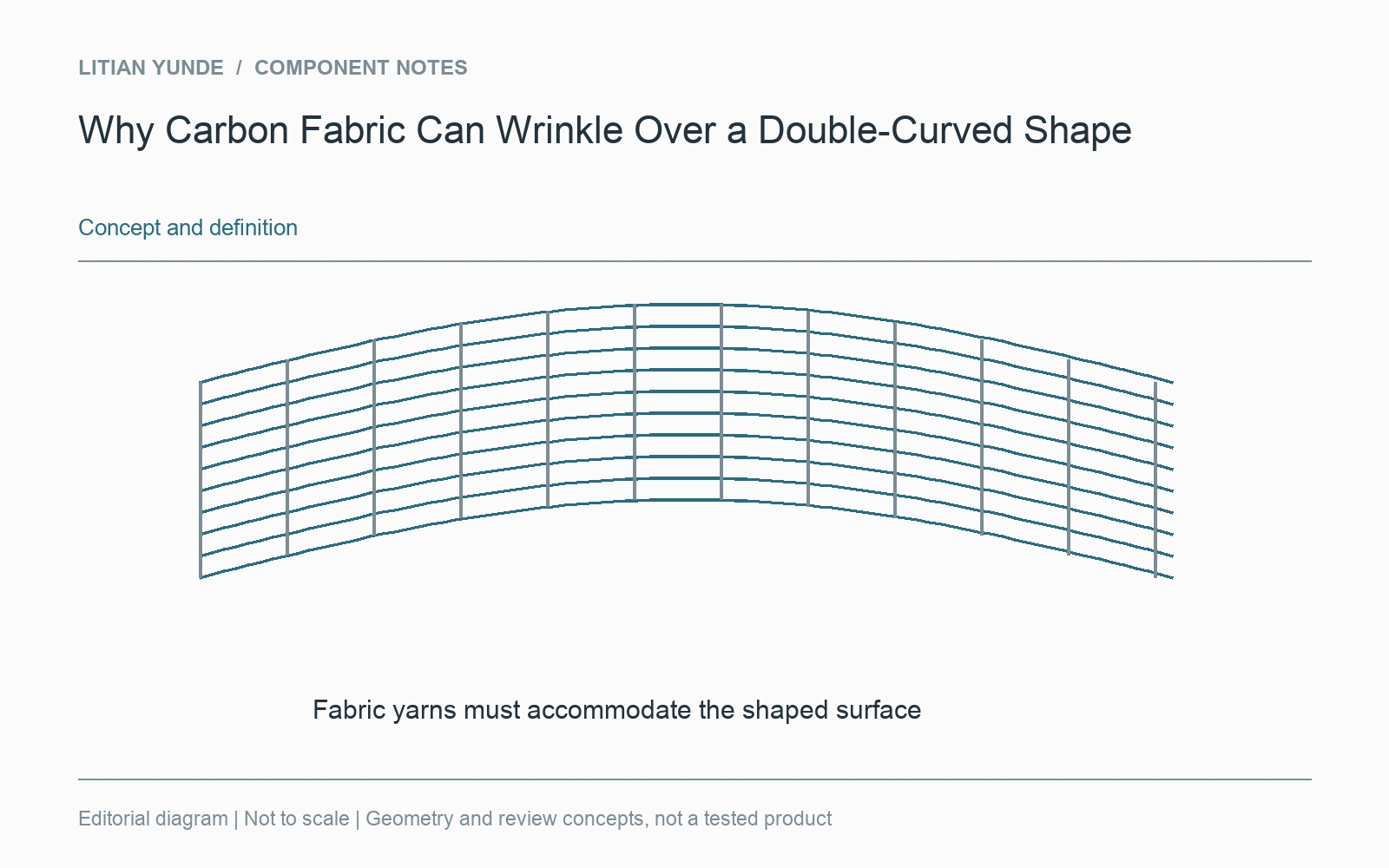
Why Carbon Fabric Can Wrinkle Over a Double-Curved Shape
A piece of fabric that lies flat on a table does not automatically follow every double-curved surface without changing its yarn arrangement. Tight corners and changing…
Read guide →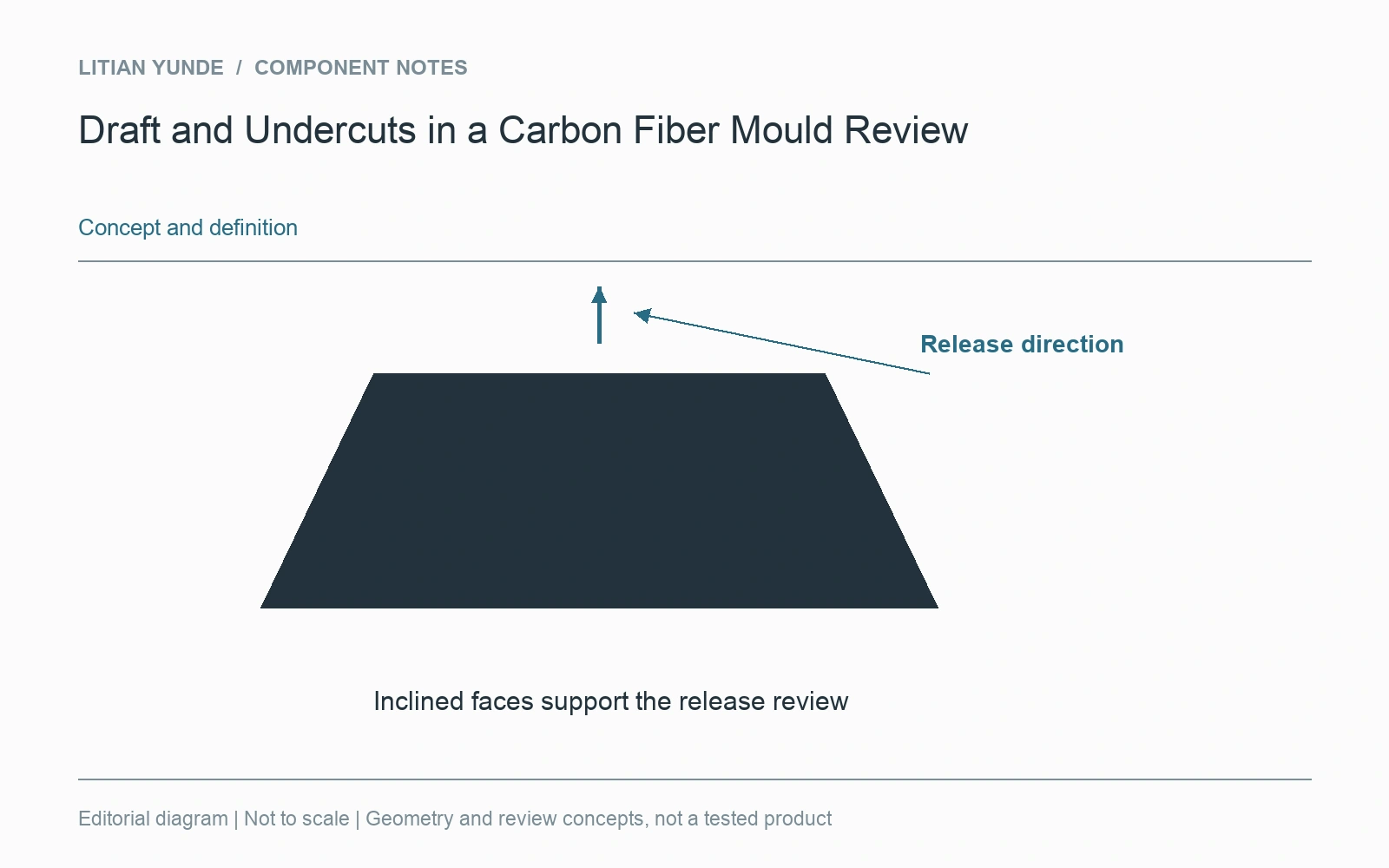
Draft and Undercuts in a Carbon Fiber Mould Review
A finished shape has to leave its manufacturing tool. Draft is a geometric feature related to that release direction; an undercut can obstruct the path. Review the proposed…
Read guide →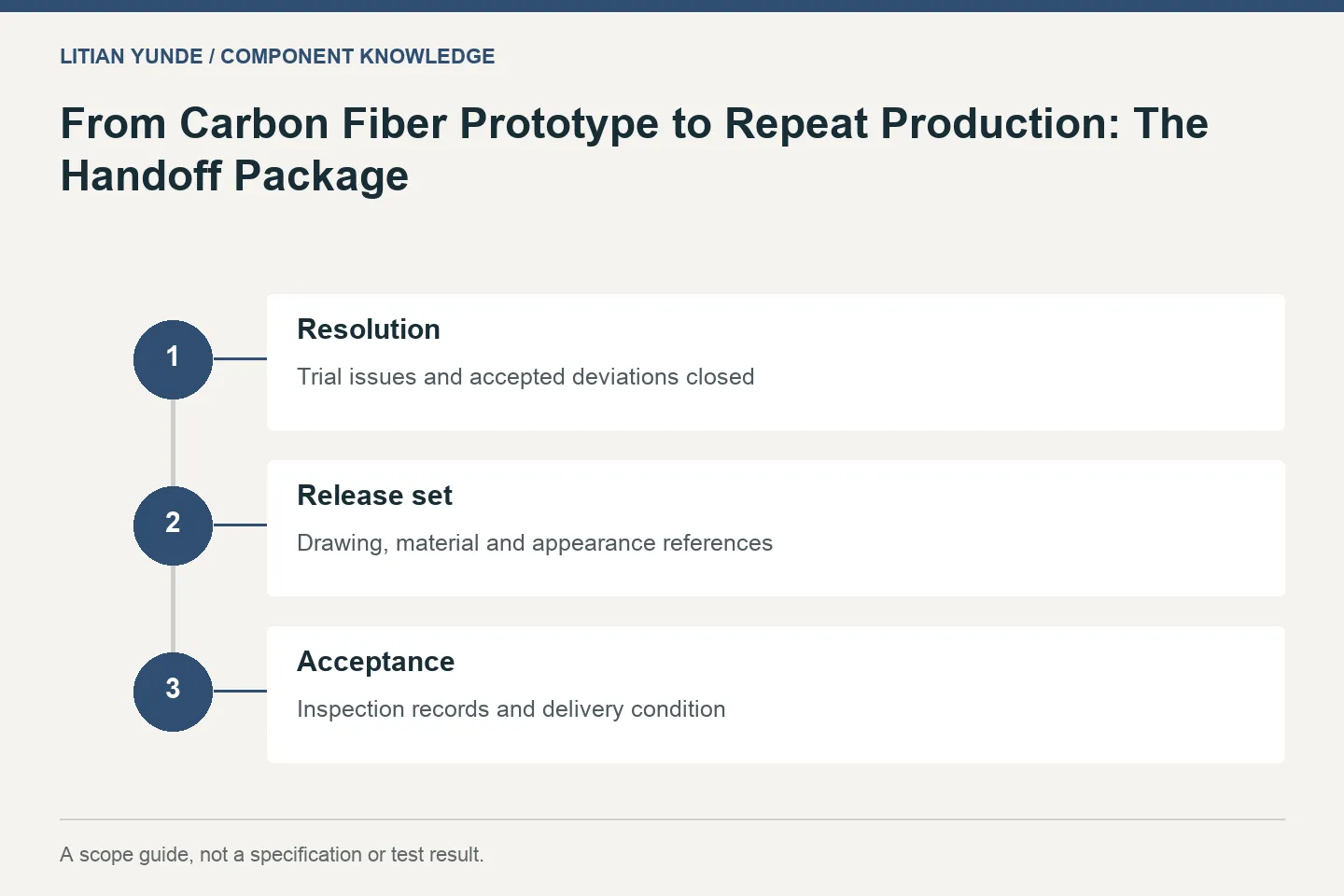
从碳纤维原型到批量生产:交接方案
A successful prototype is a starting point for production release, not a complete handoff package by itself.
Read guide →
批准碳纤维表面样品以供重复订购
A surface sample becomes useful when it has an identity, an agreed purpose and defined viewing conditions.
Read guide →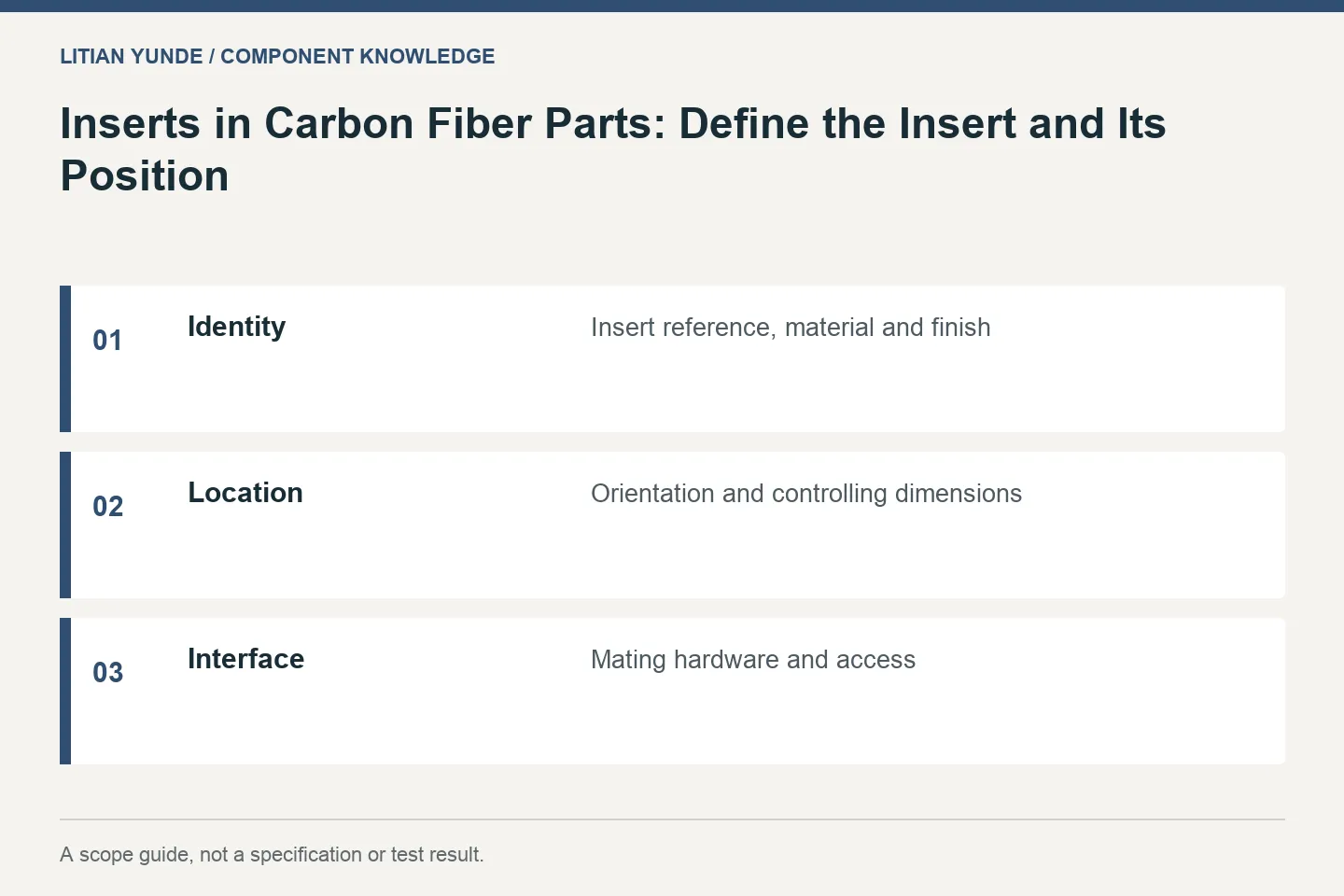
碳纤维零件中的嵌件:定义嵌件及其位置
An insert requirement should identify the insert itself, its position, the mating hardware and how the completed interface will be accepted.
Read guide →
分型线与模压边缘:一款定制碳纤维外壳的评测
A custom shell drawing should identify more than the outside appearance.
Read guide →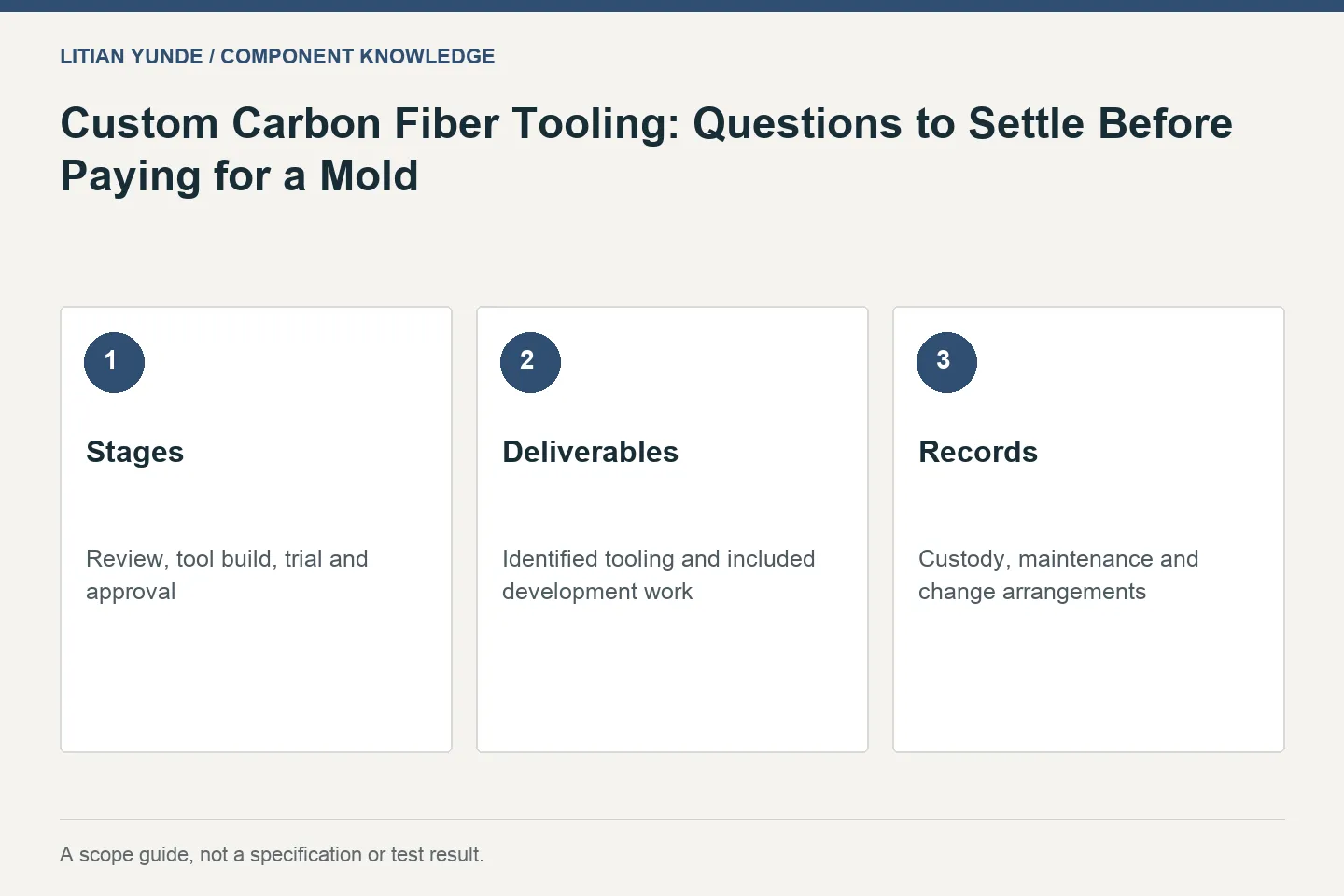
定制碳纤维模具:付款前需明确的问题
Before ordering tooling, agree what the tooling deliverable includes and how the approved part geometry will be controlled.
Read guide →
碳纤维废料:将干纤维、预浸料和固化部件分开
Composite scrap should be described by its actual form. Dry reinforcement offcuts, uncured prepreg and cured laminate are different waste streams, and a recovery route that…
Read guide →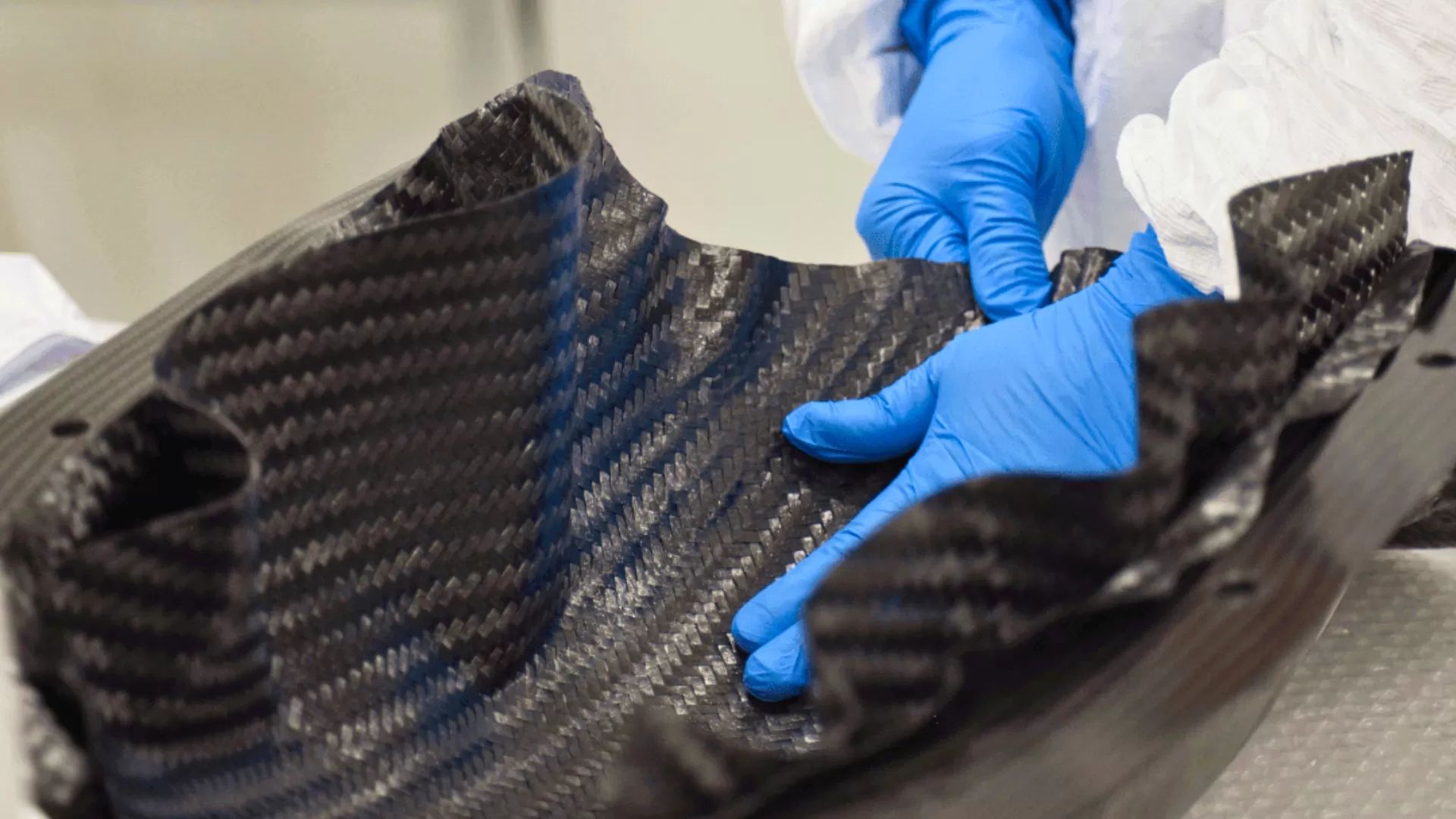
评估一种新的碳纤维工艺:从制定比较计划开始
A new carbon fiber process is worth evaluating when it solves a defined production or part problem. Start with a comparison plan rather than a broad promise of innovation.
Read guide →
复合材料制造废料:在提出索赔前先确认回收率
A manufacturing-waste claim needs a defined input and output record. Measure the actual material stream before describing a process as low-waste or comparing it with another…
Read guide →
碳纤维汽车原型:一份实用的样机评测
A prototype review should answer specific questions about the proposed automotive part. Decide those questions before ordering the sample so the result leads to a clear next…
Read guide →
碳纤维自行车车架的制造:工艺审查应涵盖哪些内容
A bicycle-frame manufacturing review should connect the drawing, material specification and process records. Photographs of moulding or finishing can explain a process stage,…
Read guide →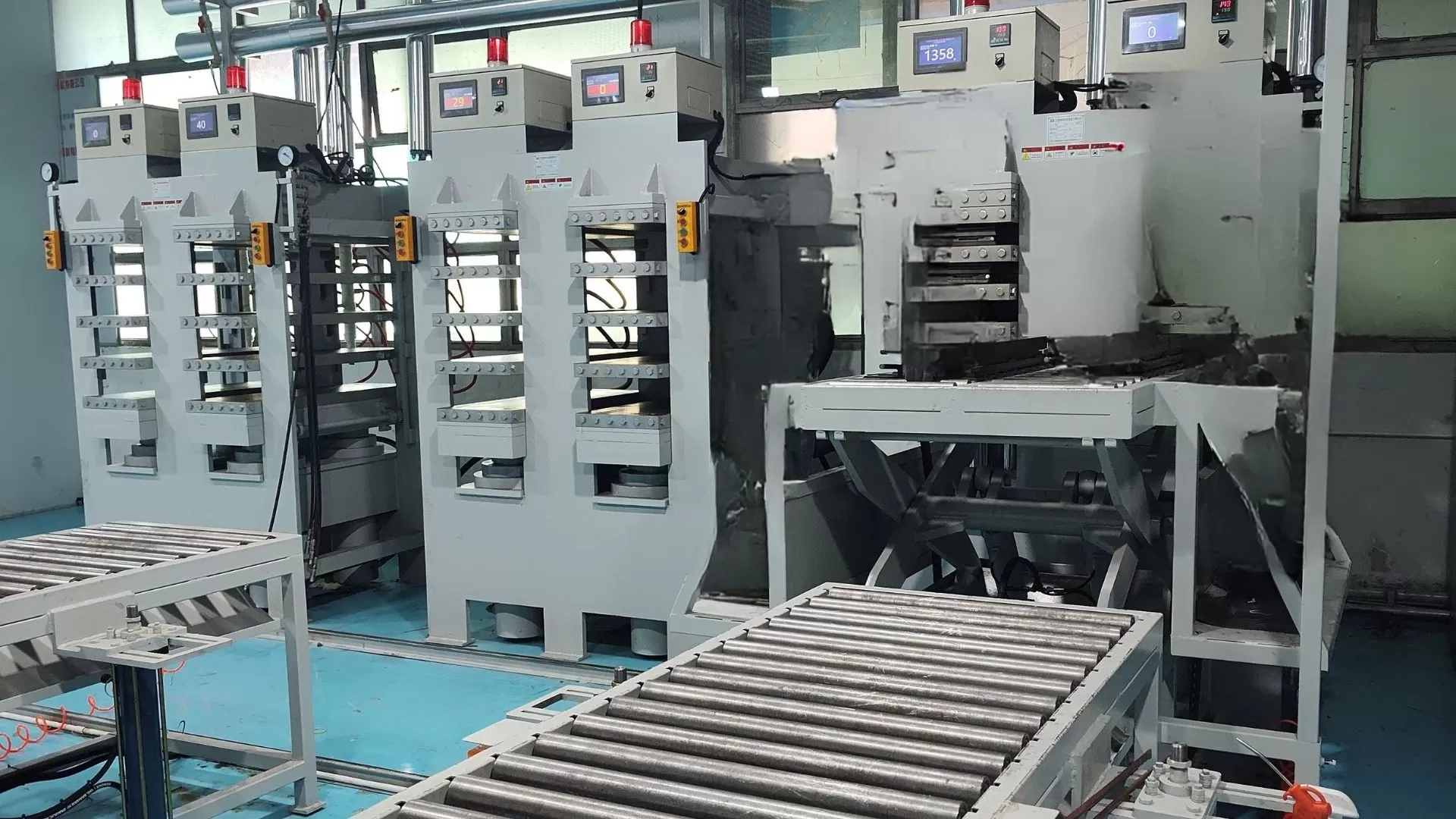
碳纤维制造工艺路线:请问拟采用哪种工艺?
A carbon fiber manufacturing enquiry should name the proposed process and the supplied part, rather than assuming that all carbon components are made in the same way. The…
Read guide →检查和测试
Inspection and test methods for composite parts: method coverage, specimen condition, reference standards, limitations and reporting of actual results.
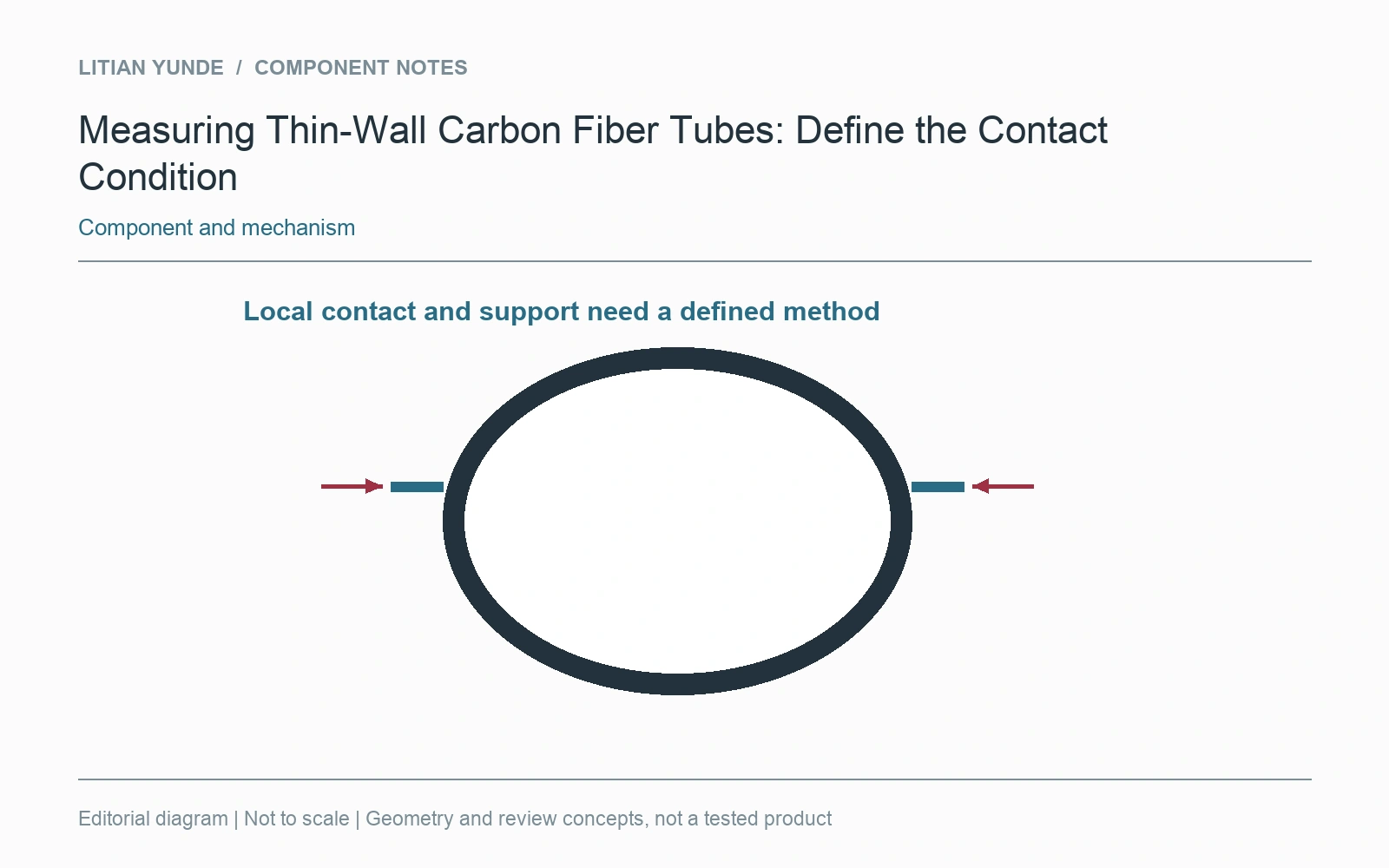
Measuring Thin-Wall Carbon Fiber Tubes: Define the Contact Condition
A thin-wall tube can be sensitive to how it is supported and contacted during measurement. Define the measured feature and the intended part condition before comparing…
Read guide →
Measurement Uncertainty and Drawing Tolerance Have Different Jobs
A drawing tolerance defines an allowed requirement. Measurement uncertainty describes the dispersion associated with values attributed to the measured quantity. They should…
Read guide →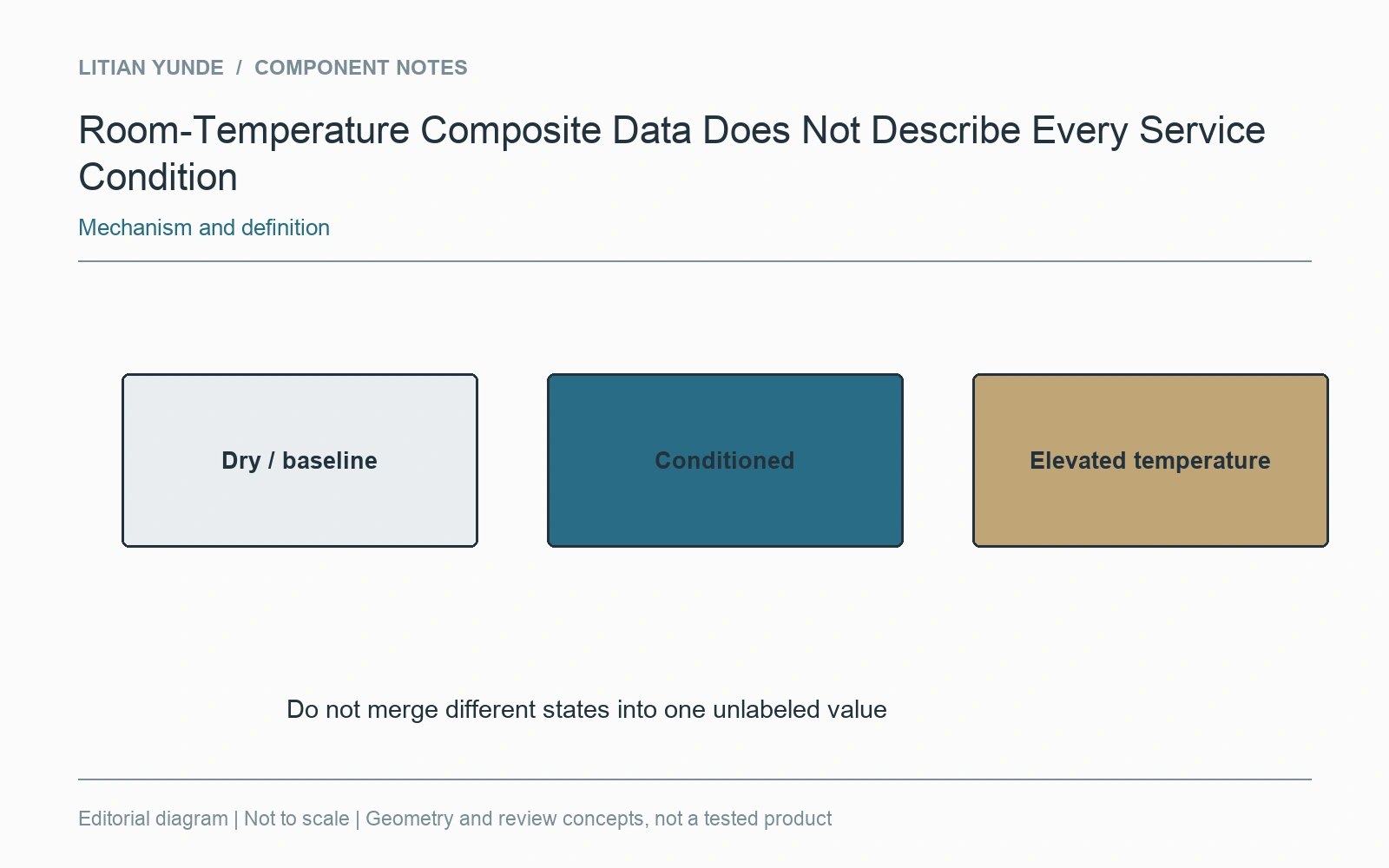
Room-Temperature Composite Data Does Not Describe Every Service Condition
A material result measured in one condition should retain that condition when it is reused. Temperature, moisture history and specimen state can matter to a composite…
Read guide →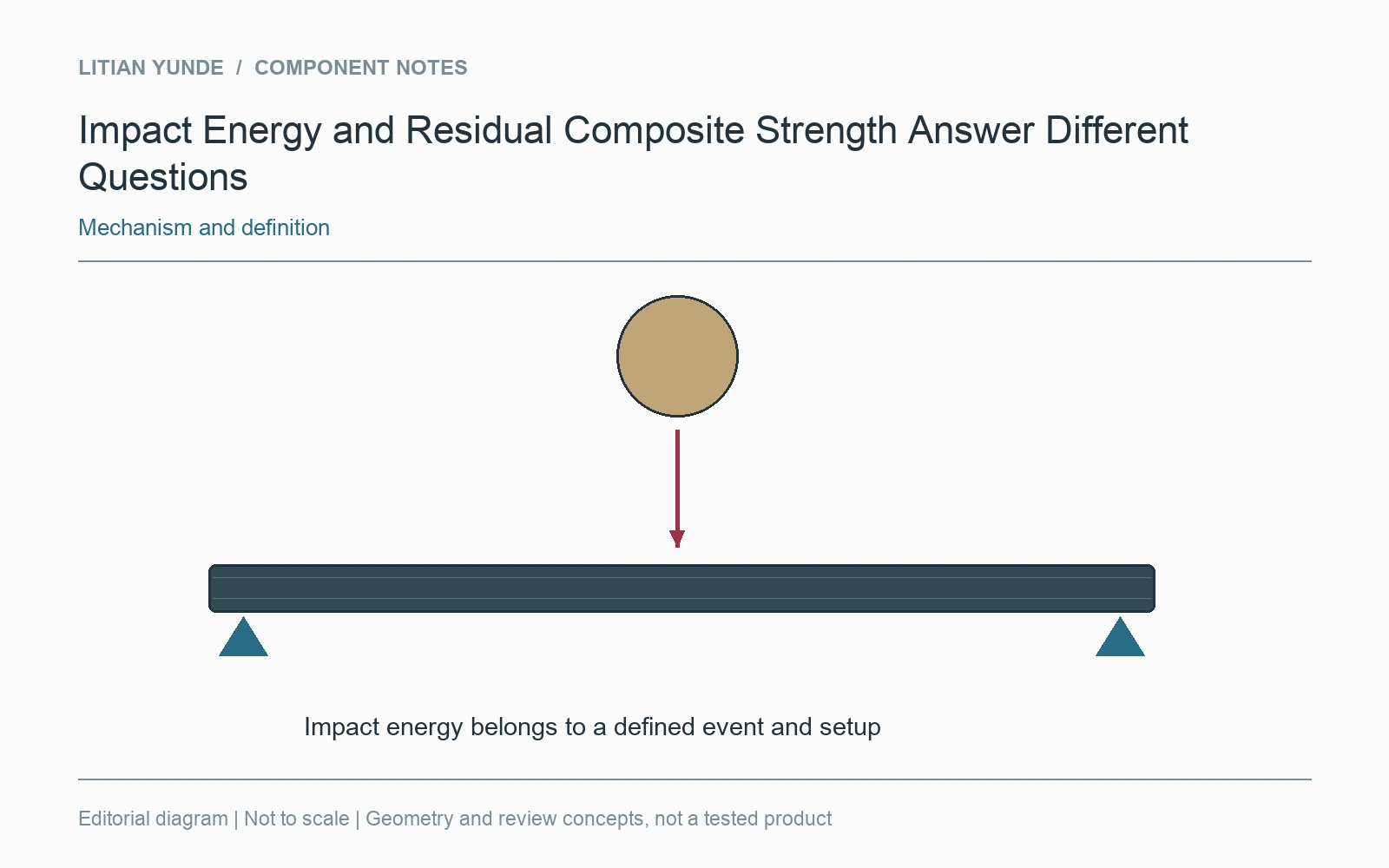
Impact Energy and Residual Composite Strength Answer Different Questions
An impact event and a later strength test describe different stages of an evaluation. Recording the impact energy does not, by itself, state how much load the damaged…
Read guide →
Three-Point or Four-Point Bending? Name the Composite Test
Three-point and four-point bending use different loading arrangements. A flexural result should identify the method, span, specimen and procedure. Keep those details when…
Read guide →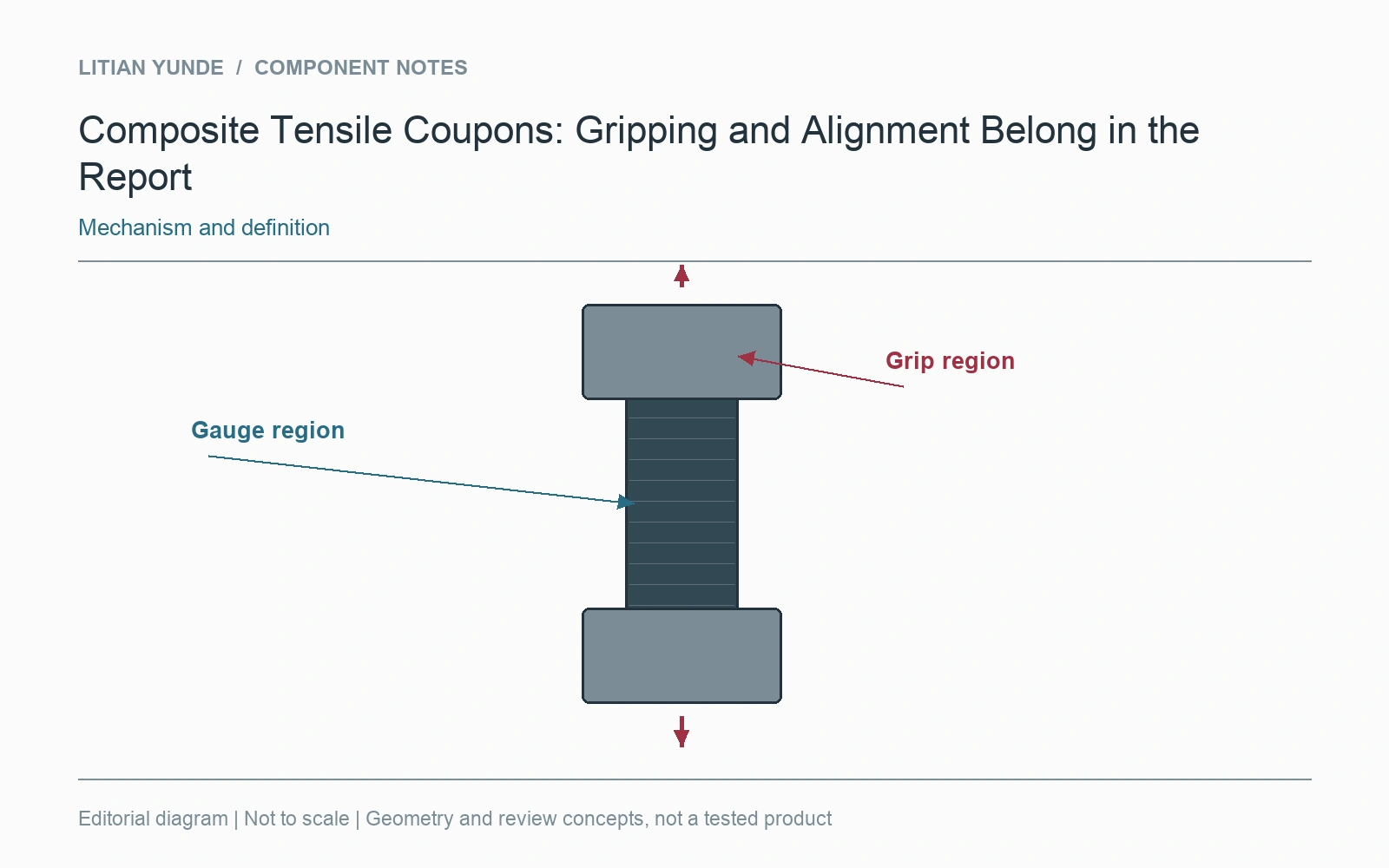
Composite Tensile Coupons: Gripping and Alignment Belong in the Report
A tensile coupon test needs a controlled loading and measurement arrangement. Grip configuration, alignment and the observed failure location help explain the result. They…
Read guide →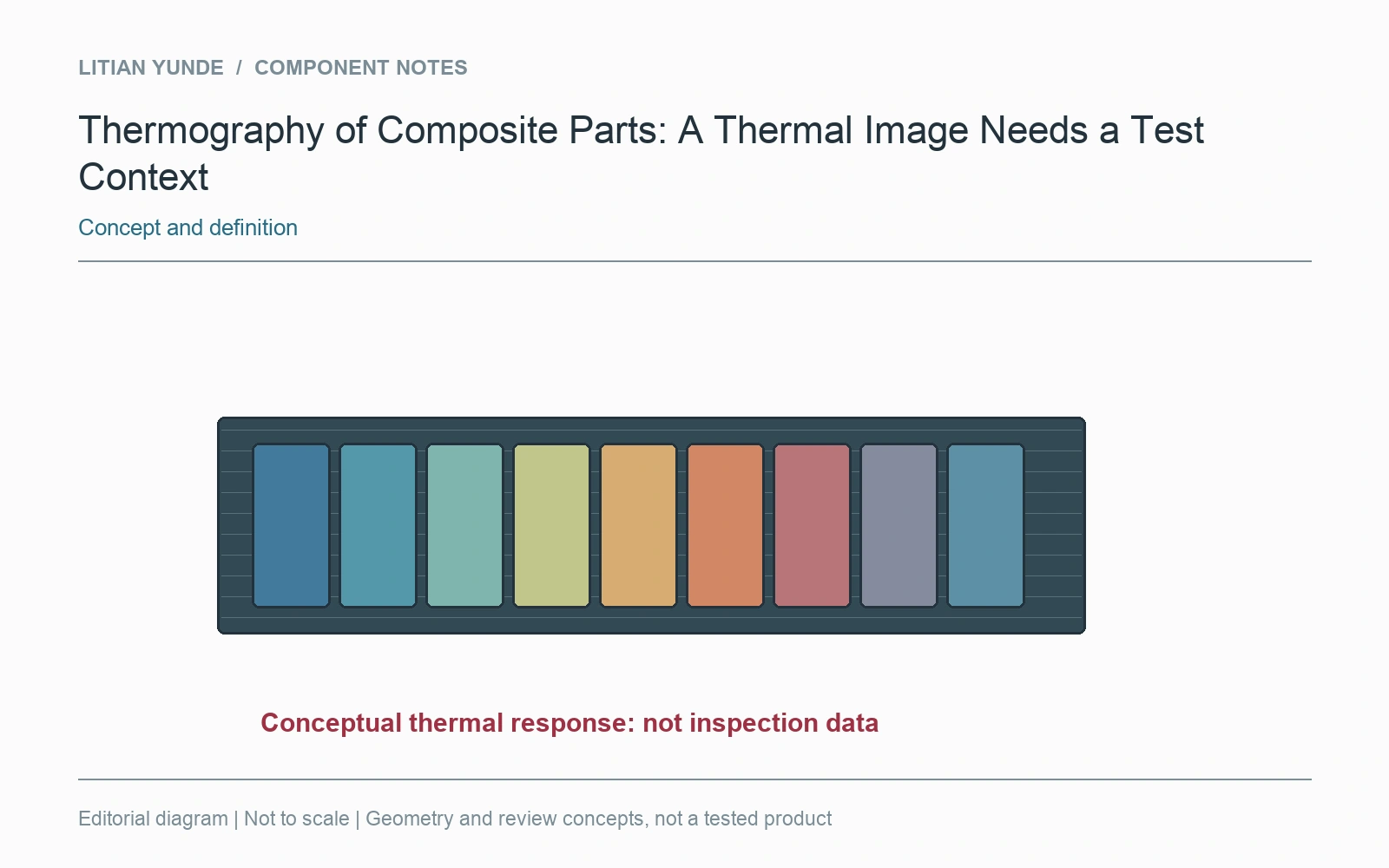
Thermography of Composite Parts: A Thermal Image Needs a Test Context
A colourful thermal image is a record of a surface thermal response, not a self-explanatory map of internal defects. To understand an inspection result, the reader needs to…
Read guide →
What a Composite Tap Test Can and Cannot Establish
A tap test compares the acoustic response of a region with an expected response. It can be useful in a suitable, defined inspection task, but a normal sound does not…
Read guide →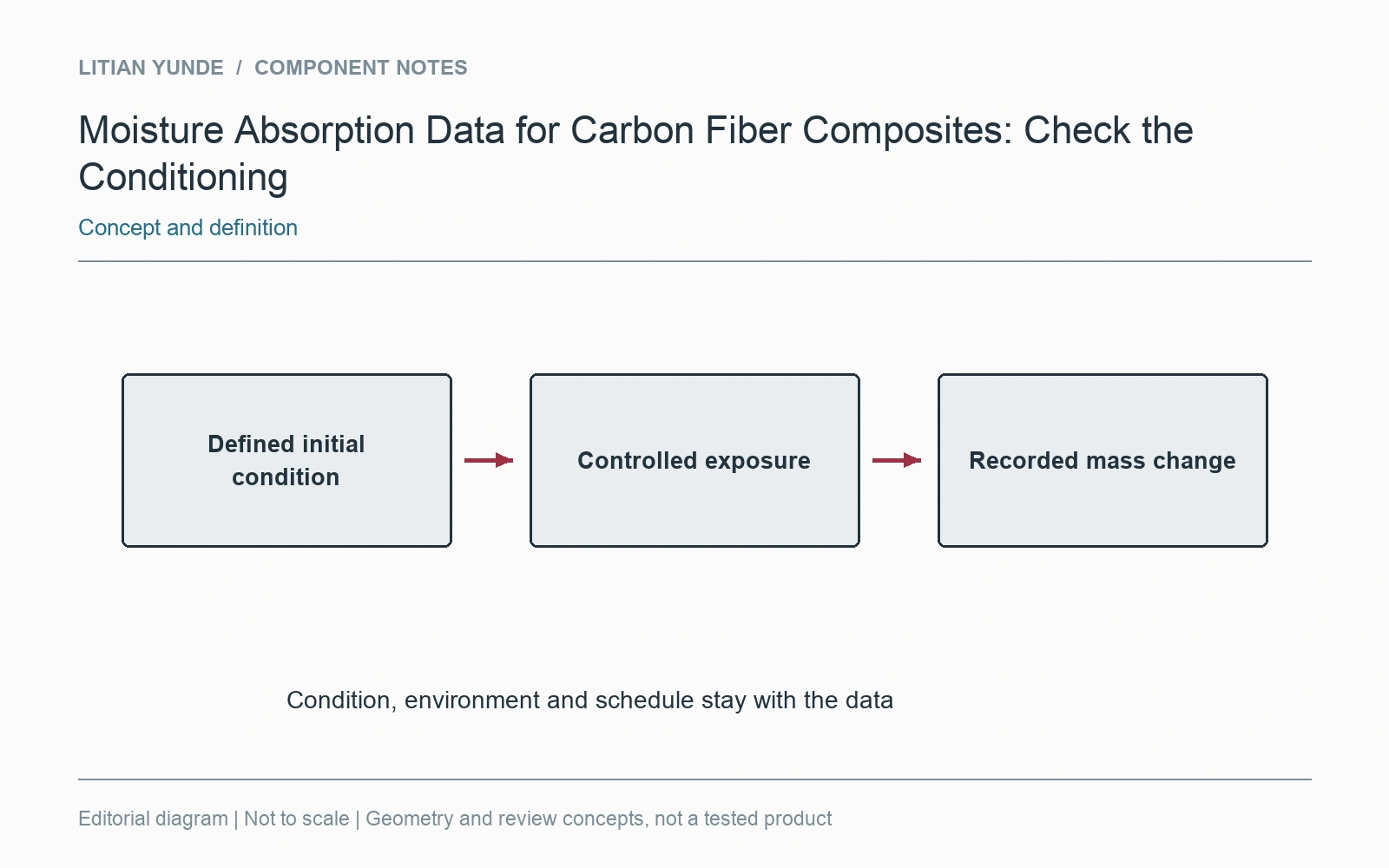
Moisture Absorption Data for Carbon Fiber Composites: Check the Conditioning
A moisture absorption value belongs to a specimen and a conditioning history. It is not a stand-alone promise that a finished component will behave the same way in every…
Read guide →
Ultrasonic Inspection of Carbon Fiber Parts: Define the Coverage
“Ultrasonic tested” is incomplete unless the report identifies the method, examined regions and evaluation criteria. Composite geometry and direction-dependent acoustic…
Read guide →
Composite Porosity: Ask What the Measurement Actually Represents
A porosity result needs a method and a defined sample. A surface photograph, a local section and a non-destructive scan do not describe the same evidence. Before comparing…
Read guide →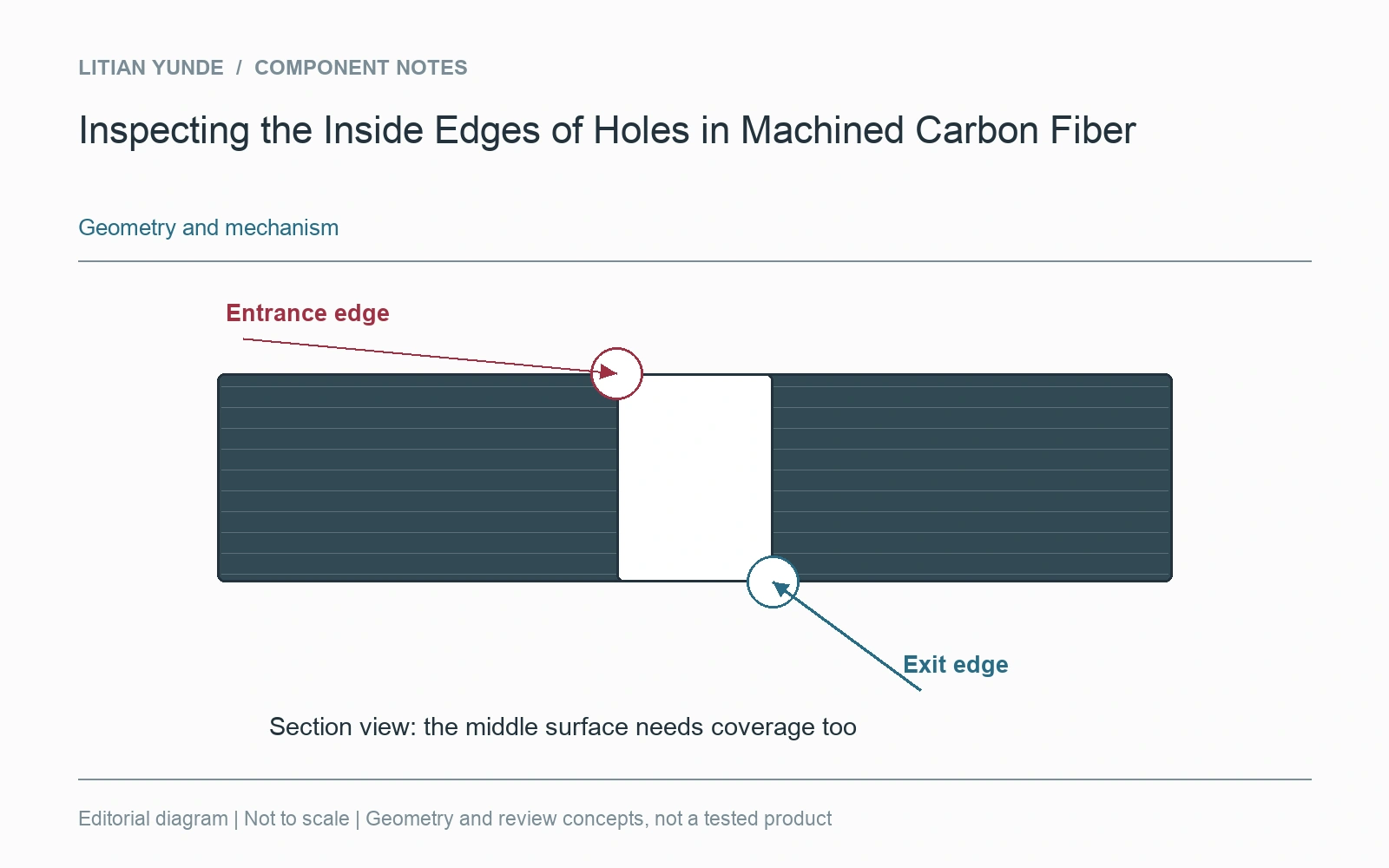
对机加工碳纤维孔的内边缘进行检测
A neat hole entrance is useful evidence, but it says little about an exit edge hidden against a fixture. For a machined carbon fiber part, make the inside surface and both…
Read guide →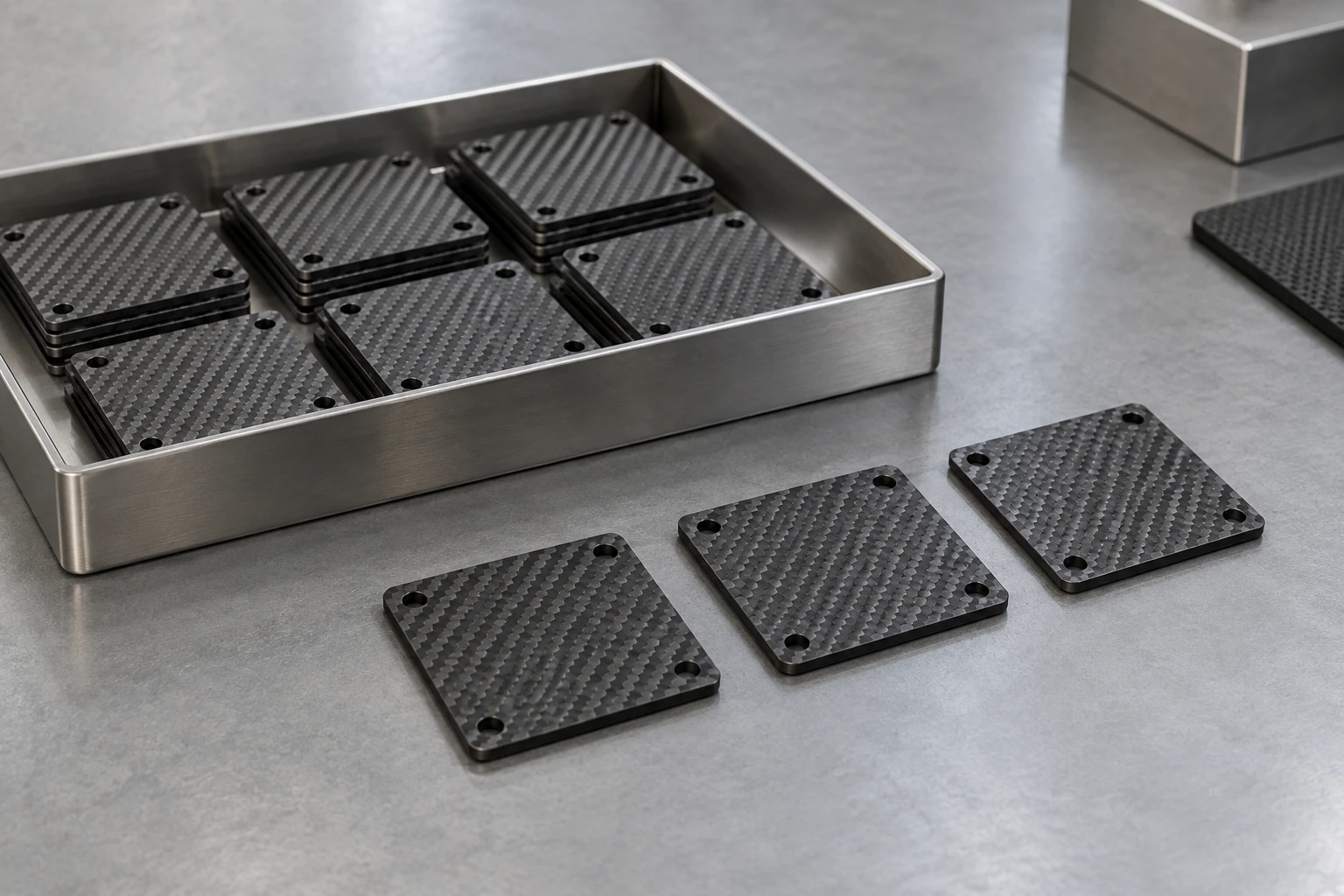
碳纤维货物的抽样检查:在选取零件前先确定批次
Acceptance sampling needs an identified lot, a specified characteristic and an agreed decision plan. For a carbon fiber shipment, define the population before selecting…
Read guide →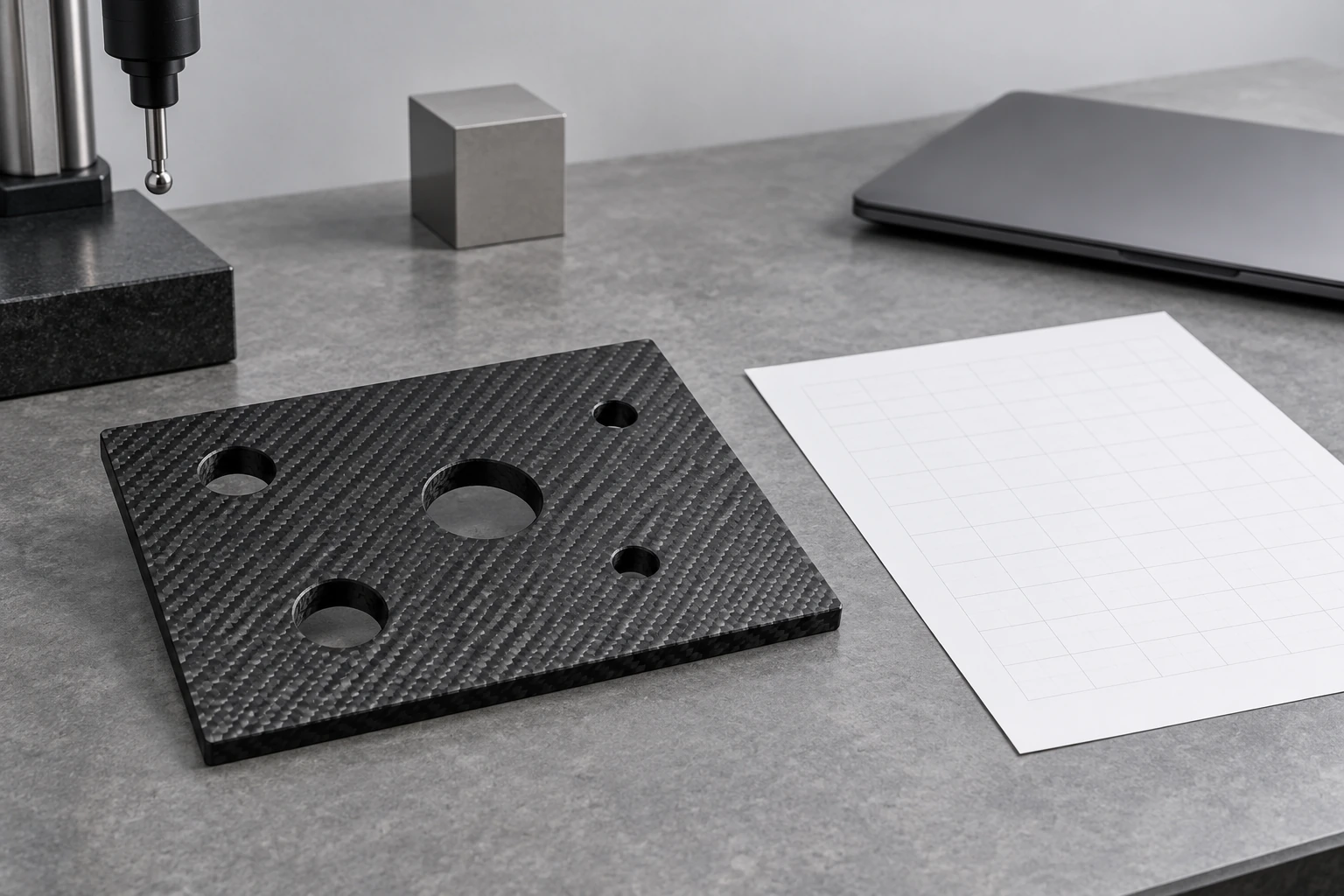
碳纤维检测坐标:确定单位、坐标轴和文件格式
A coordinate file needs enough context to reproduce its interpretation. Agree units, origin, axis directions, feature names and file format before comparing carbon fiber…
Read guide →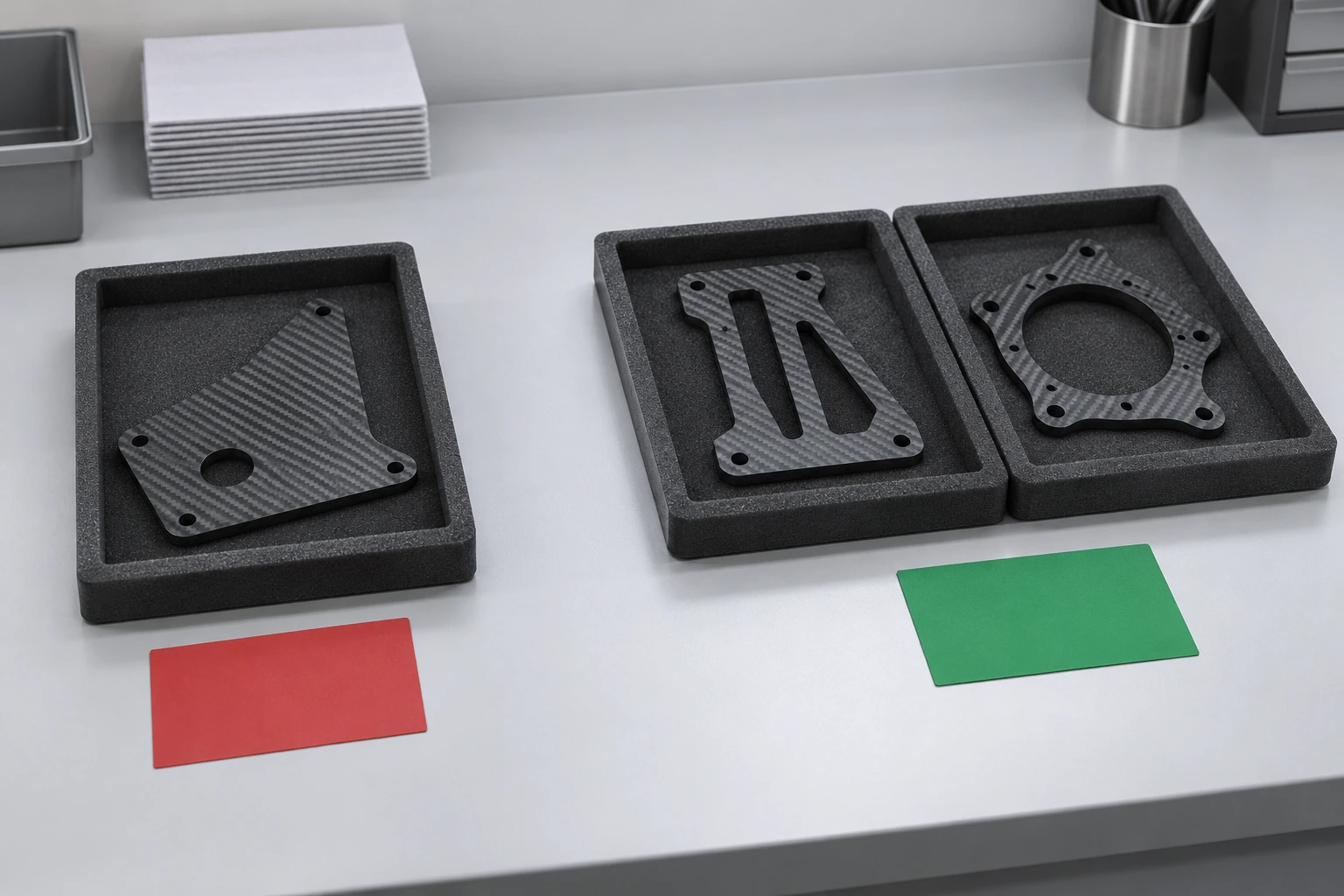
即将到货的碳纤维零件:设置“暂存与释放”工作流
Incoming carbon fiber components should have a clear receiving status before they become available for assembly. Identify the shipment, separate items awaiting inspection or…
Read guide →
复合材料试样与成品:了解测试结果的含义
A composite test coupon provides evidence for the specimen and test conditions recorded. It does not automatically qualify every finished part made from similarly named…
Read guide →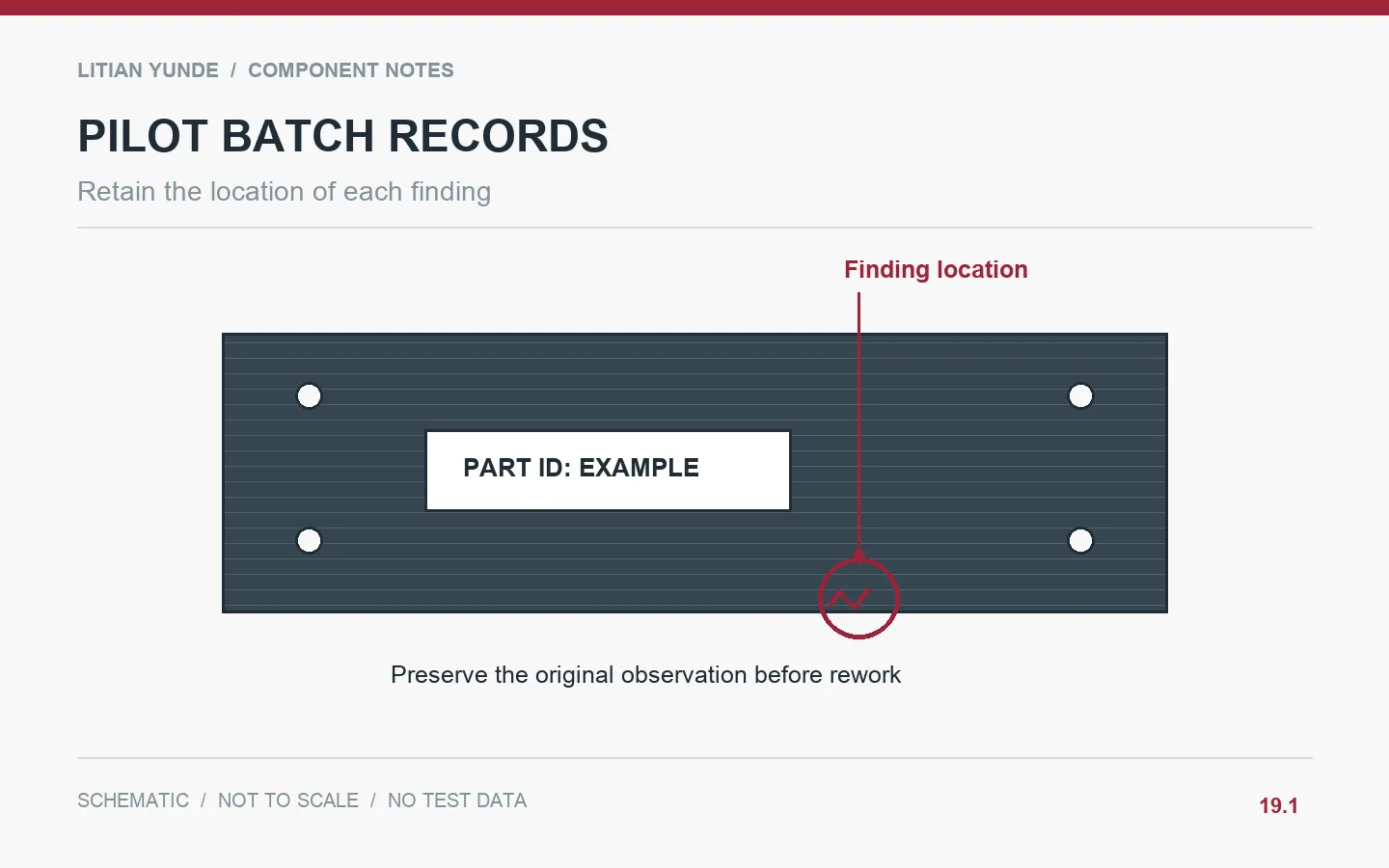
碳纤维试生产批次:在不丢失零件历史信息的情况下记录缺陷
A pilot-batch report should connect each observed issue to a specific part, feature and disposition. Keep first-pass results separate from results after rework. Otherwise a…
Read guide →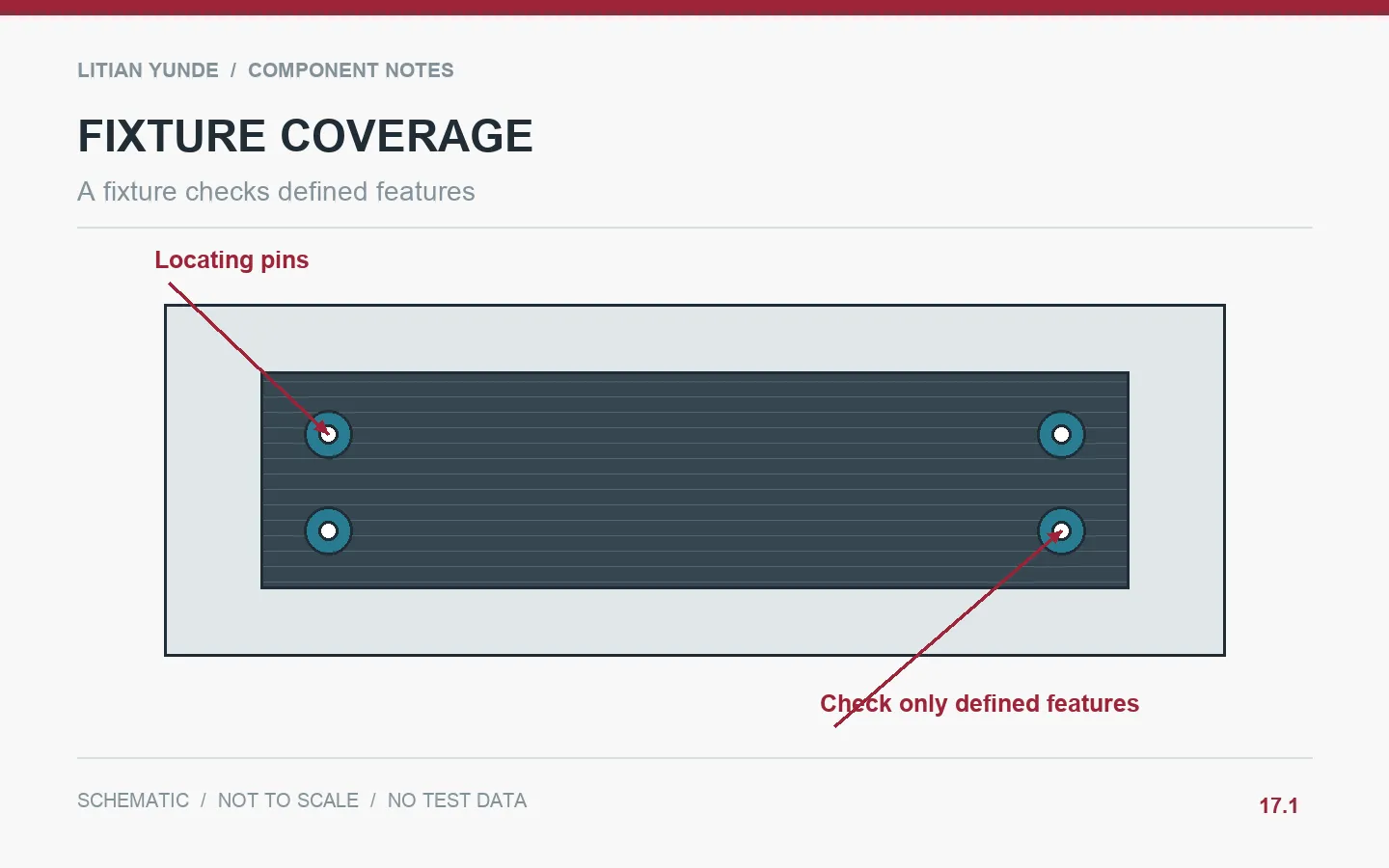
碳纤维零件的检测夹具:通/不通结果的含义
A checking fixture proves only the features and conditions it was designed to evaluate. Define the locating points, contact rules and pass/fail criteria before using it to…
Read guide →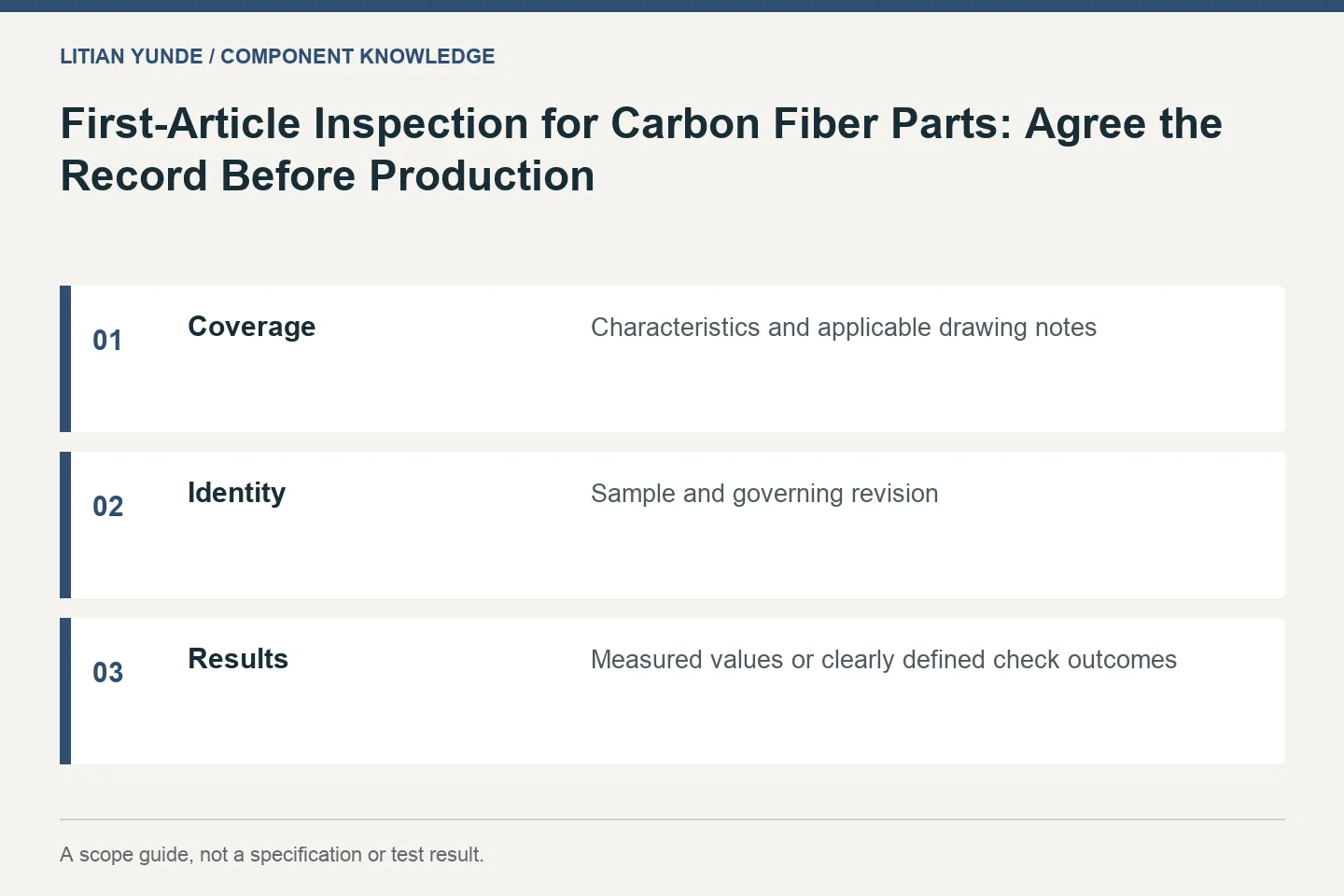
碳纤维零件的首件检验:在投产前确认检验记录
A first-article inspection record should show which identified part was checked, against which drawing revision, by which agreed methods and with what results.
Read guide →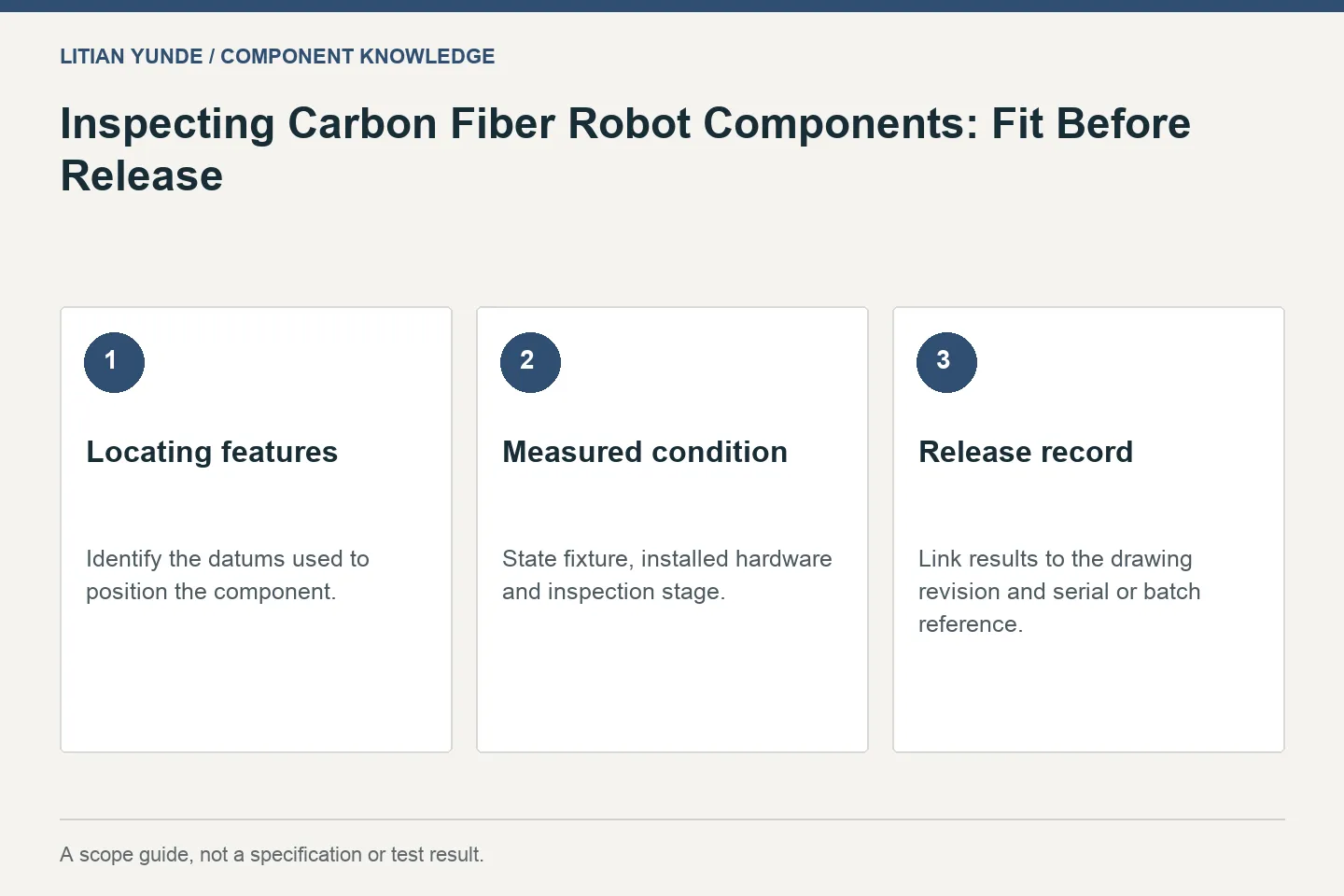
碳纤维机器人部件的检验:出厂前的装配检查
For a robot component, an inspection report is most useful when it identifies the mounting features and clearances that affect the assembly. A photograph of an attractive…
Read guide →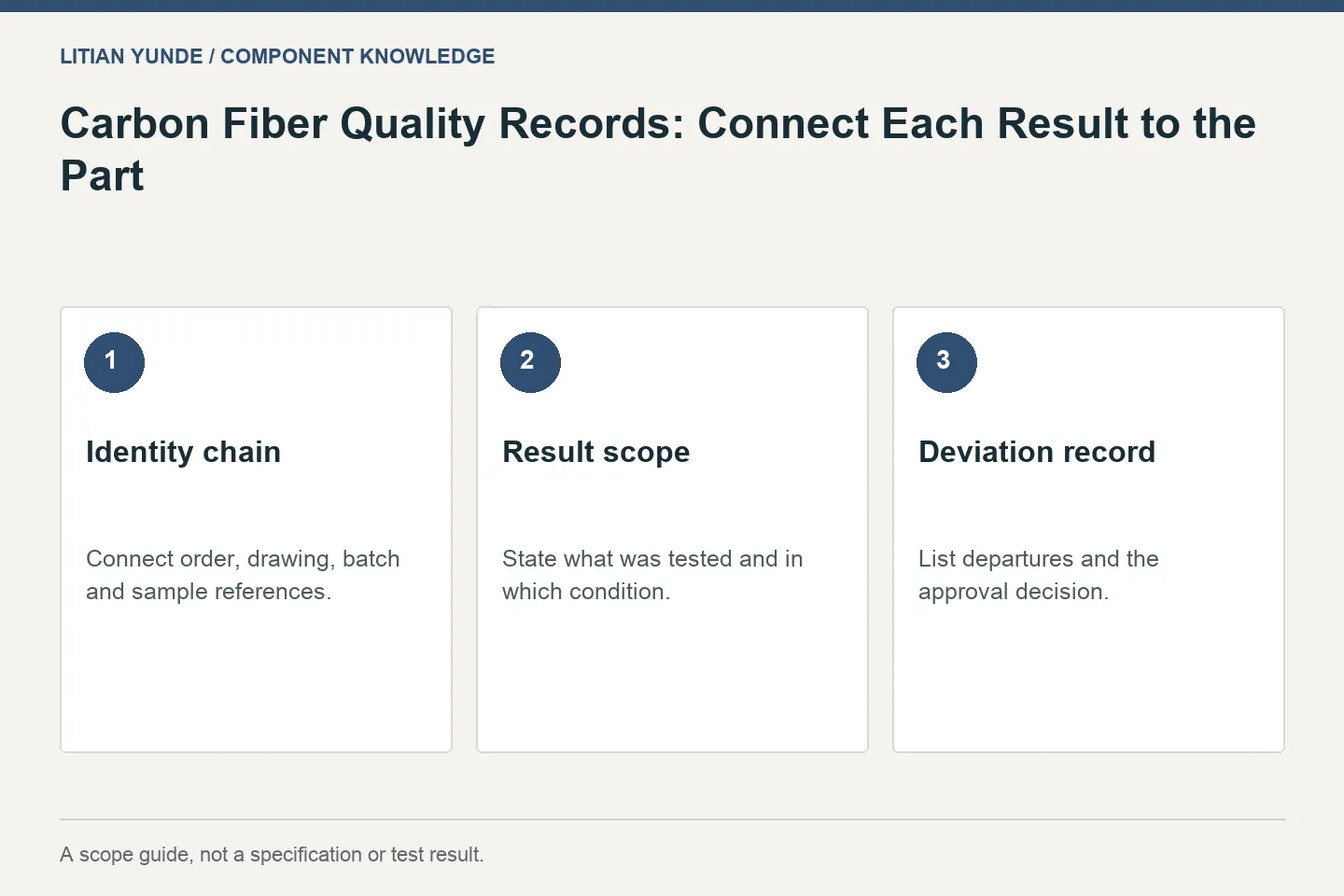
碳纤维质量记录:将每项结果与相应零件关联起来
A test or inspection result is useful only when it can be linked to the material, part and configuration being supplied. A report with impressive values but no identifiable…
Read guide →
碳纤维车身面板:编制样品适配报告
A useful vehicle-panel fit report records the platform, attachment configuration and specific observations. A single photograph of a fitted panel rarely explains what was…
Read guide →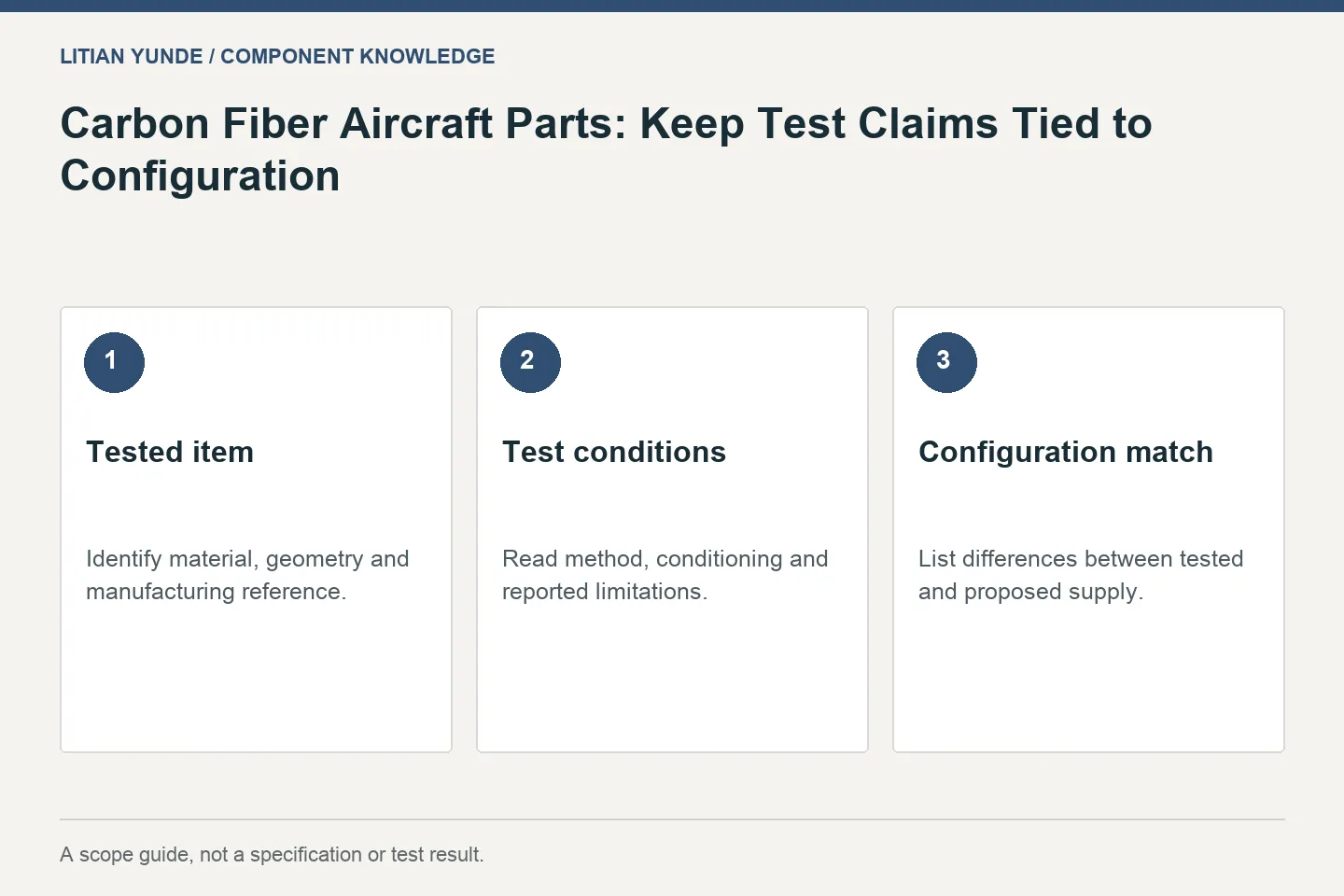
碳纤维飞机零部件:测试结论应与具体配置挂钩
A test result describes a particular specimen or component under stated conditions. Before using it in an aircraft-related enquiry, establish exactly what was tested and…
Read guide →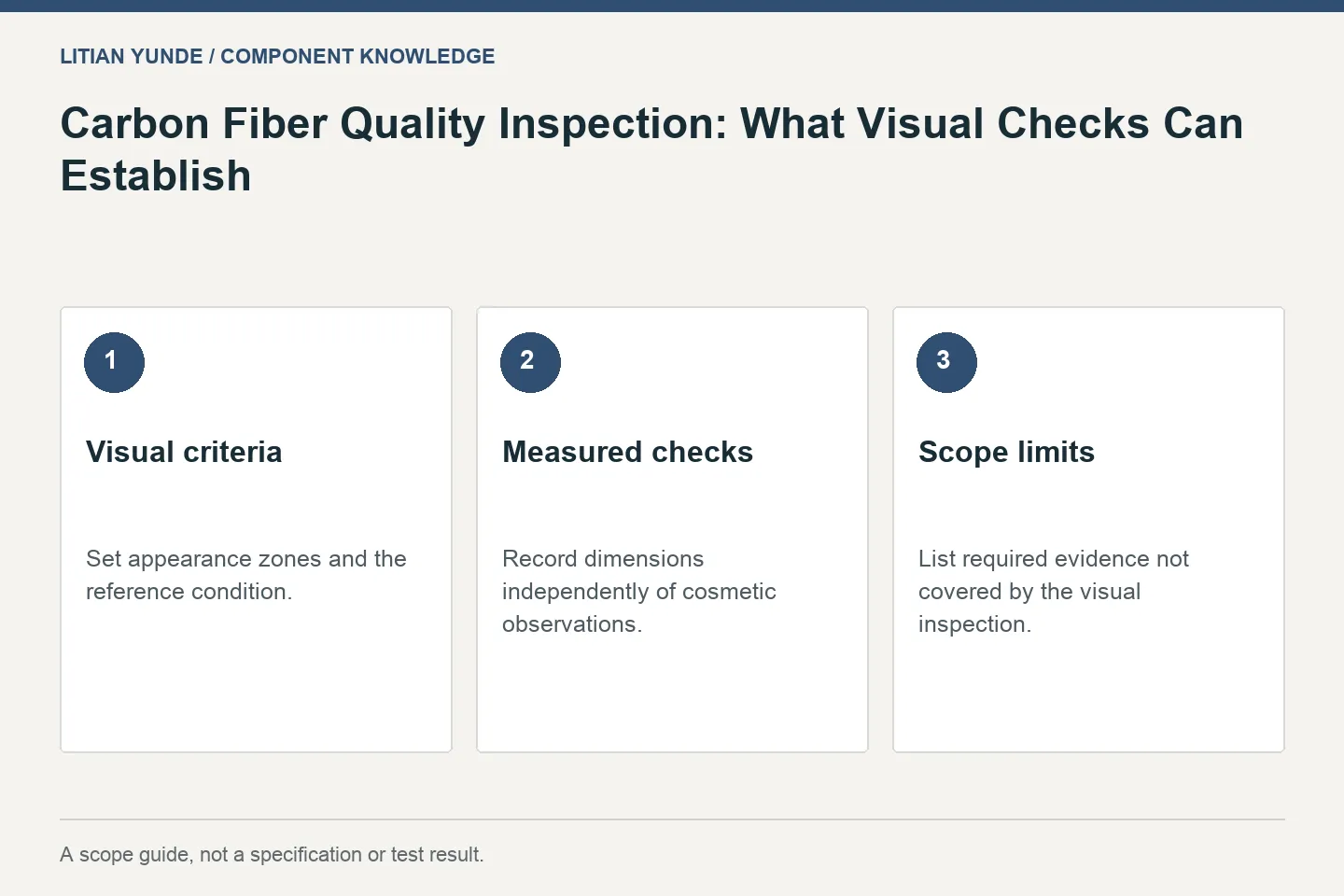
碳纤维质量检验:目视检查能确认哪些内容
Visual inspection can document appearance and visible workmanship, but it does not establish every internal or mechanical characteristic of a composite part. Define what each…
Read guide →
碳纤维自行车零部件:撞击后应进行检查
After an impact or suspected damage to a bicycle component, stop using it and seek the applicable manufacturer or qualified service guidance. Document the event; an…
Read guide →应用工程
Using carbon fiber components in vehicles, UAVs, robotics, sport and equipment: interfaces, operating conditions, maintenance and application evidence.
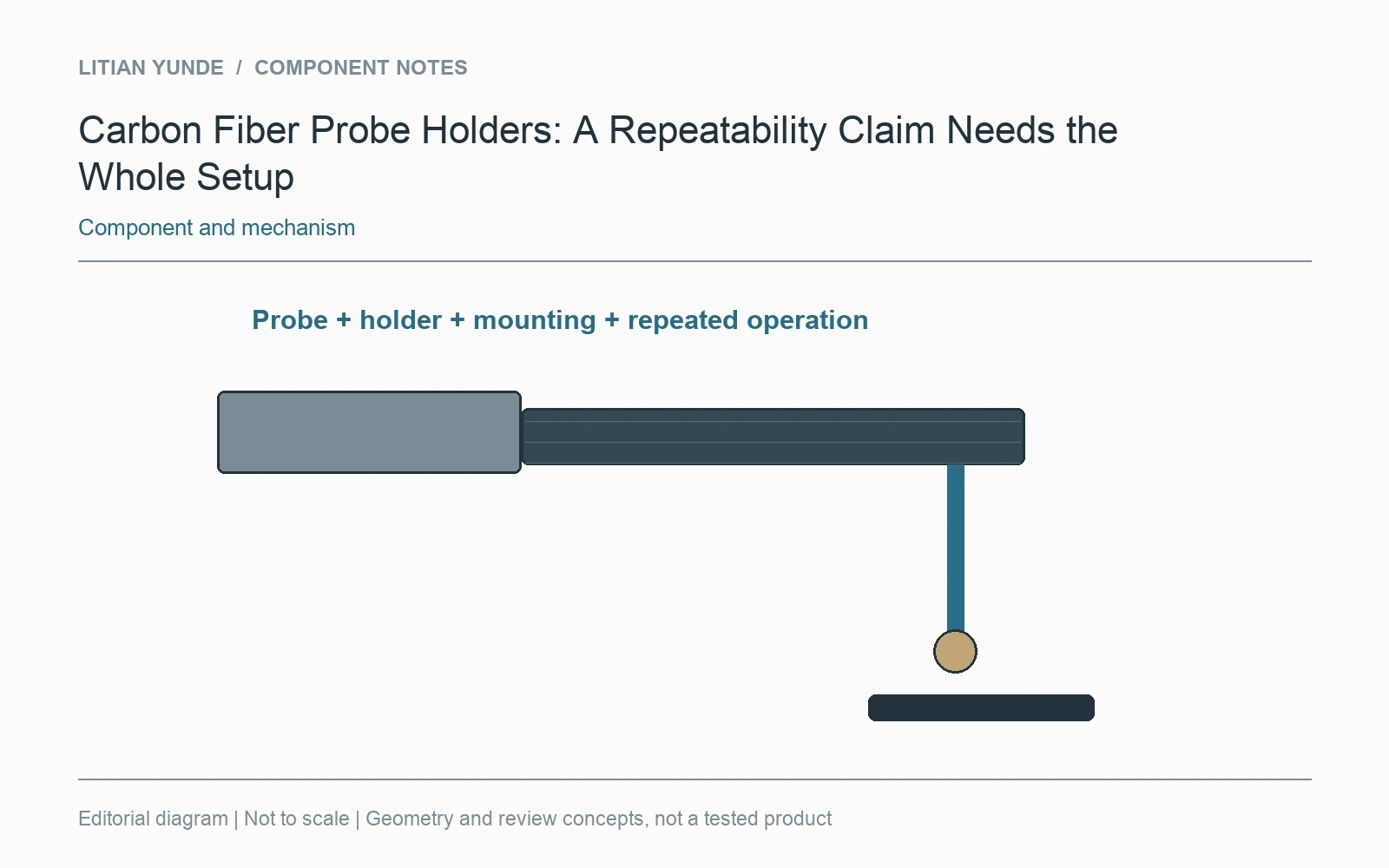
Carbon Fiber Probe Holders: A Repeatability Claim Needs the Whole Setup
A carbon fiber probe holder is one part of a measurement setup. A repeatability claim needs to identify the probe, holder, mounting arrangement and repeated operation. It…
Read guide →
Carbon Fiber Vision-System Bridges: Define the Camera-to-Object Reference
A vision-system bridge positions a camera or sensor relative to the object being inspected. Specify that relationship through the mounts, supports and operating movement. A…
Read guide →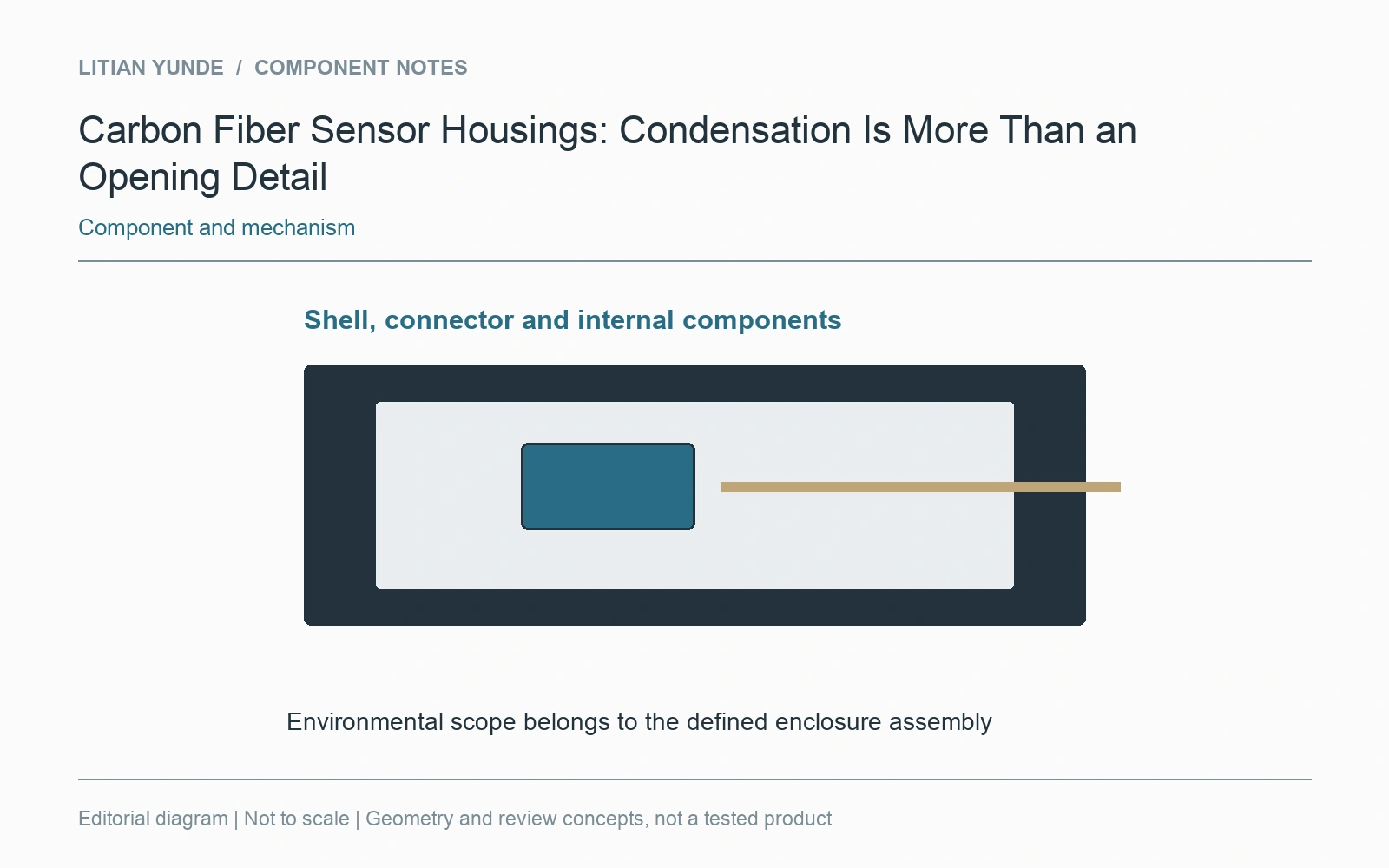
Carbon Fiber Sensor Housings: Condensation Is More Than an Opening Detail
A sensor housing can experience moisture internally even when an external opening appears well protected. The enclosure, seals, internal components and operating environment…
Read guide →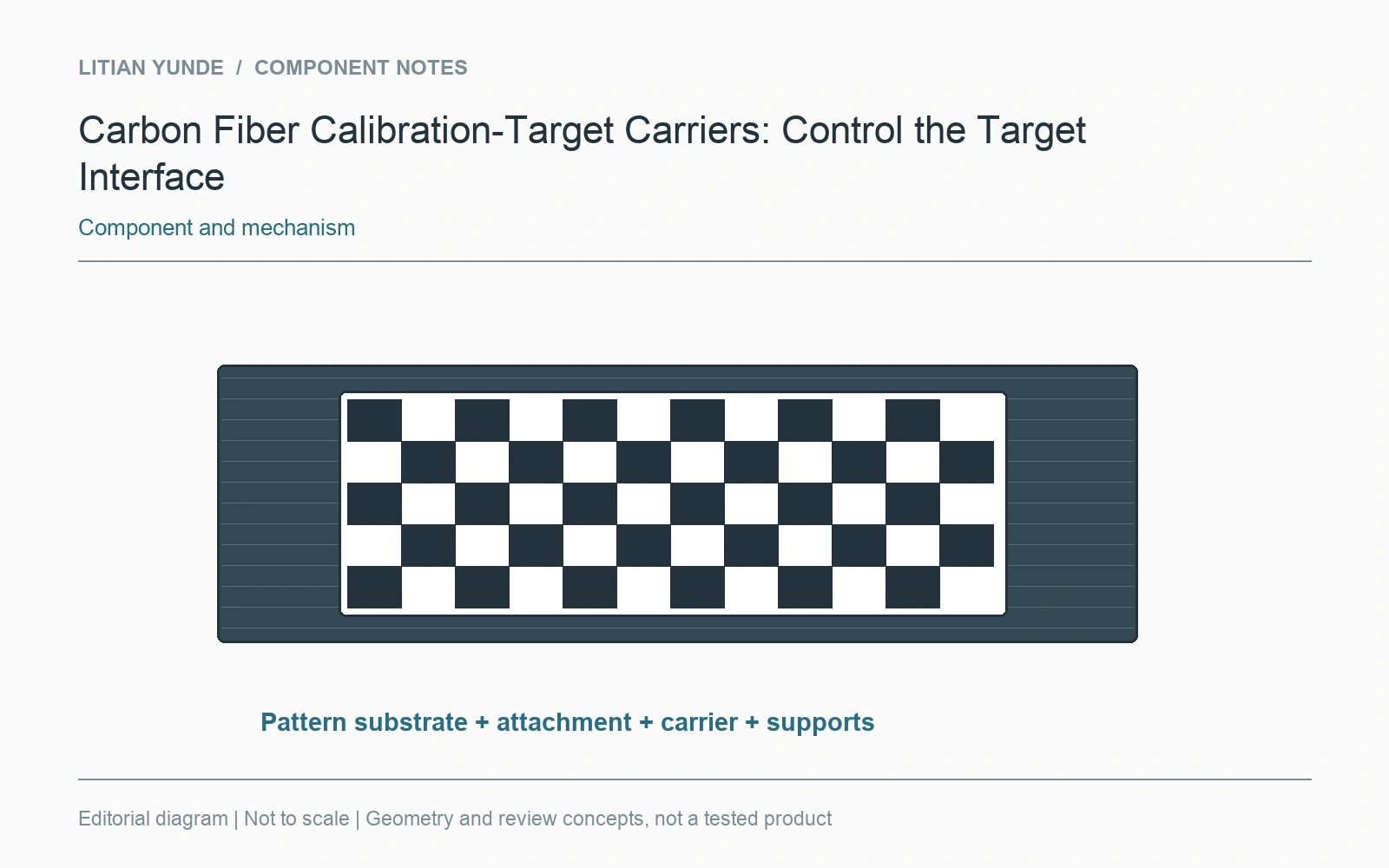
Carbon Fiber Calibration-Target Carriers: Control the Target Interface
A calibration target mounted on a carbon fiber carrier is an assembly. The target pattern, its substrate, attachment and support condition all belong in the definition. A…
Read guide →
Carbon Fiber Vacuum-Gripper Supports: Separate Structure from Vacuum Functions
A carbon fiber support can carry a vacuum-gripper assembly without being the vacuum manifold or sealing surface. Define what the proposed component actually supplies. The…
Read guide →
Carbon Fiber Robot Gripper Fingers: Define the Replaceable Contact
A robot gripper finger has at least two interfaces: the connection to the actuator and the contact with the handled item. A carbon fiber finger enquiry should define both. If…
Read guide →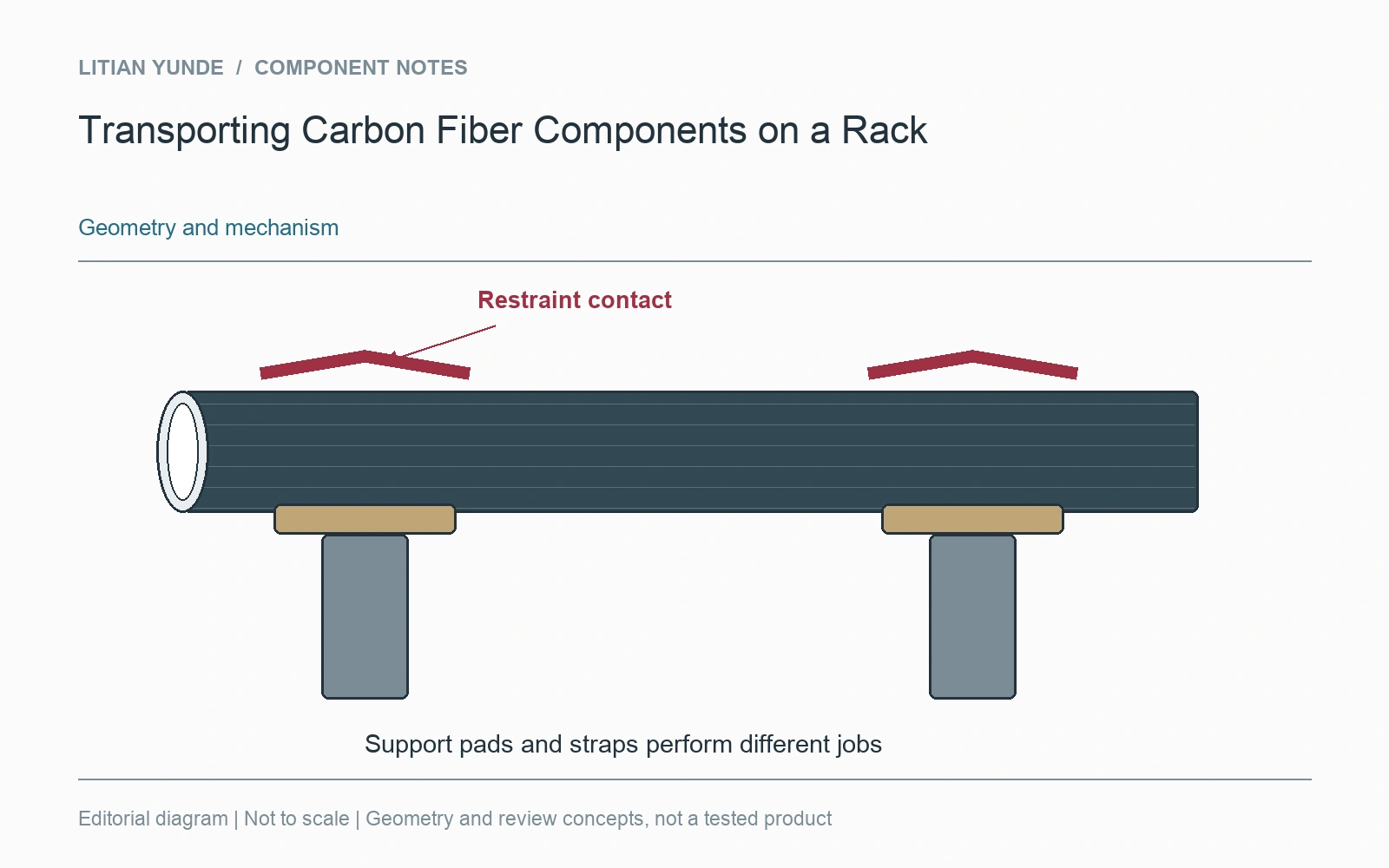
在货架上运输碳纤维部件
A transport rack introduces its own contact and restraint conditions. A carbon fiber component supported correctly in service may meet a small pad or a strap in a very…
Read guide →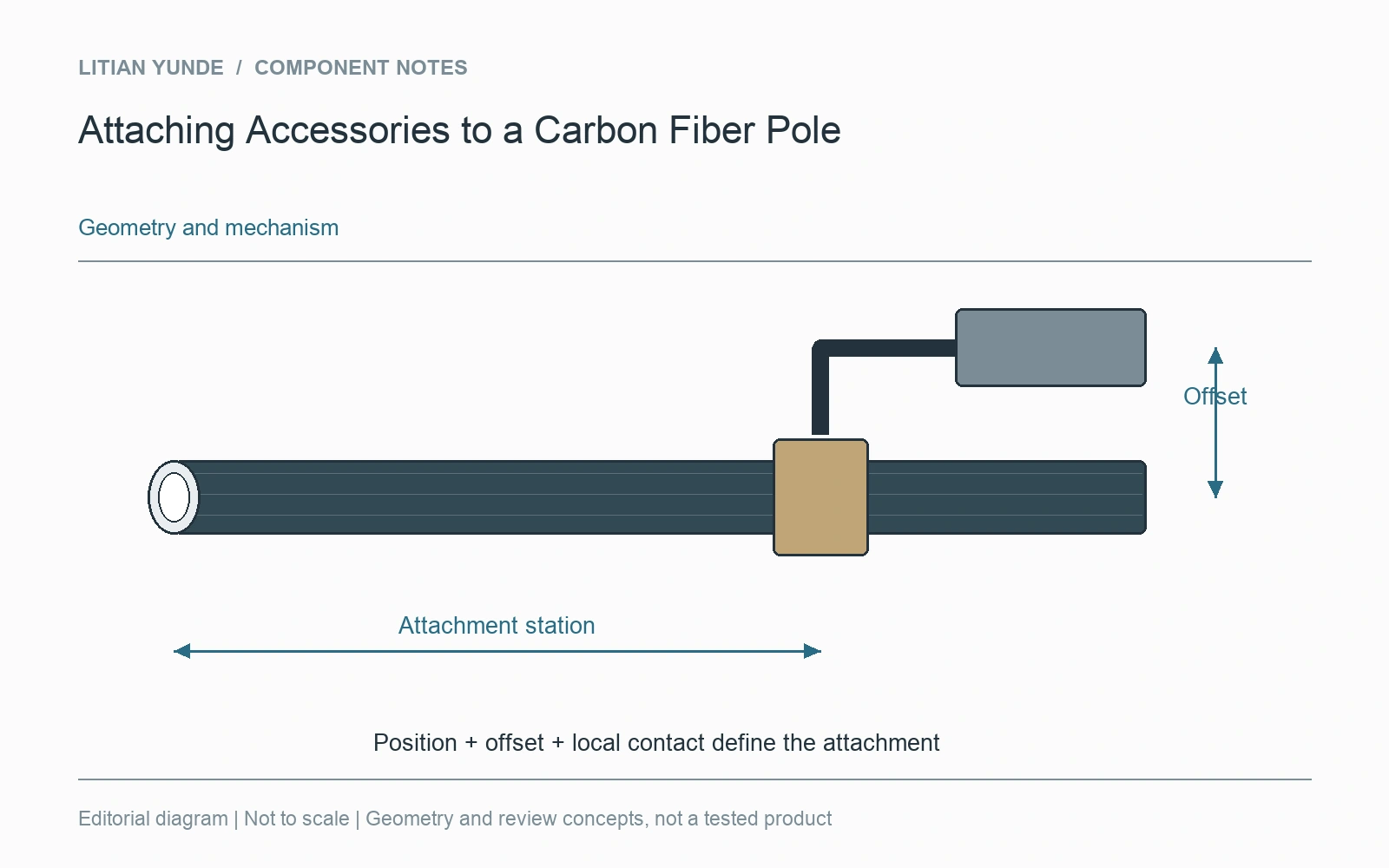
将配件安装到碳纤维杆上
An accessory fitted to a long pole adds more than its own weight. Its position, offset and contact with the pole affect the assembled tool. Start with the complete…
Read guide →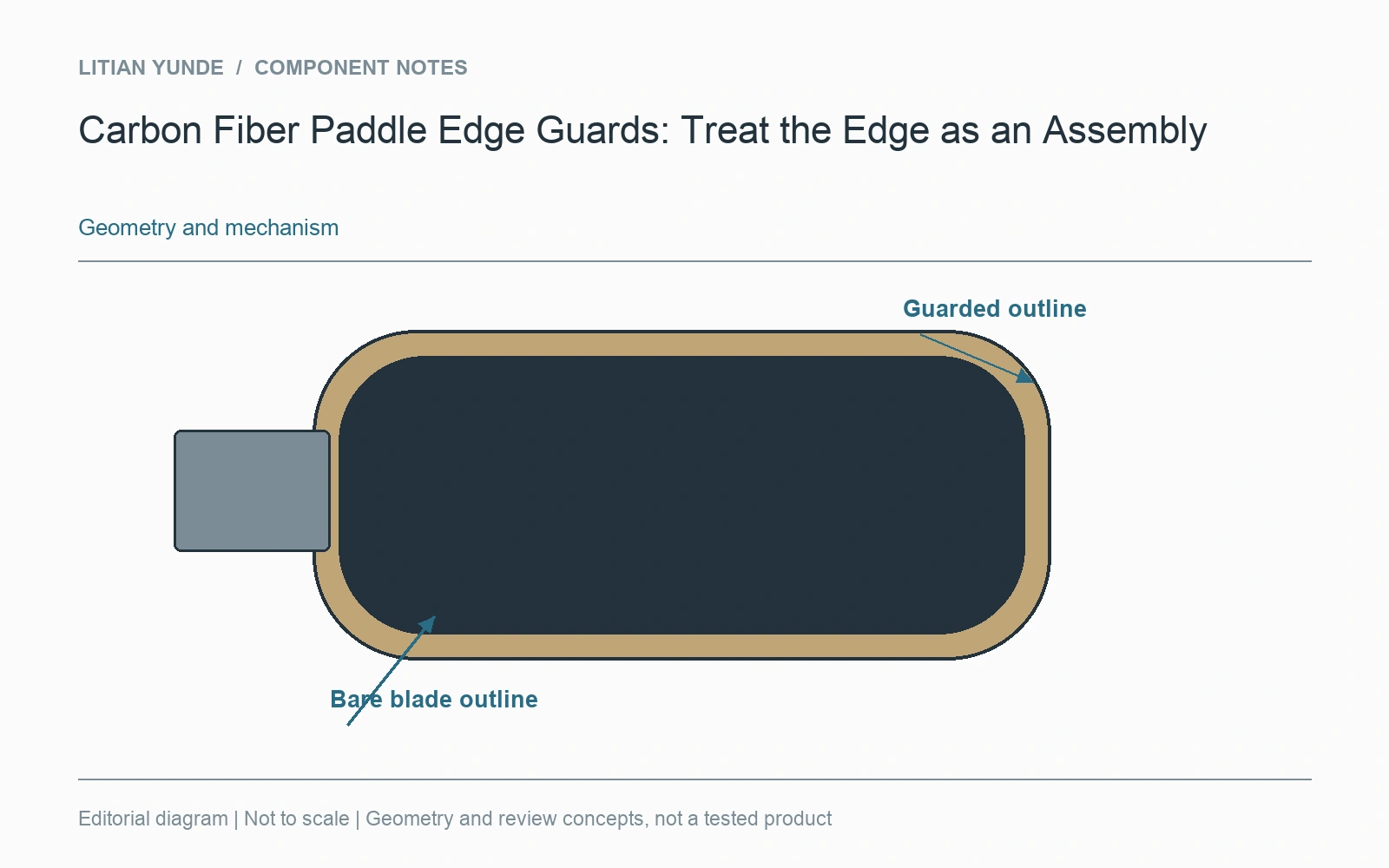
碳纤维桨叶边缘保护套:将边缘视为一个整体
An edge guard is another component in a paddle assembly, not merely a finishing detail. It changes the outside outline and may add local thickness and mass. Review it with…
Read guide →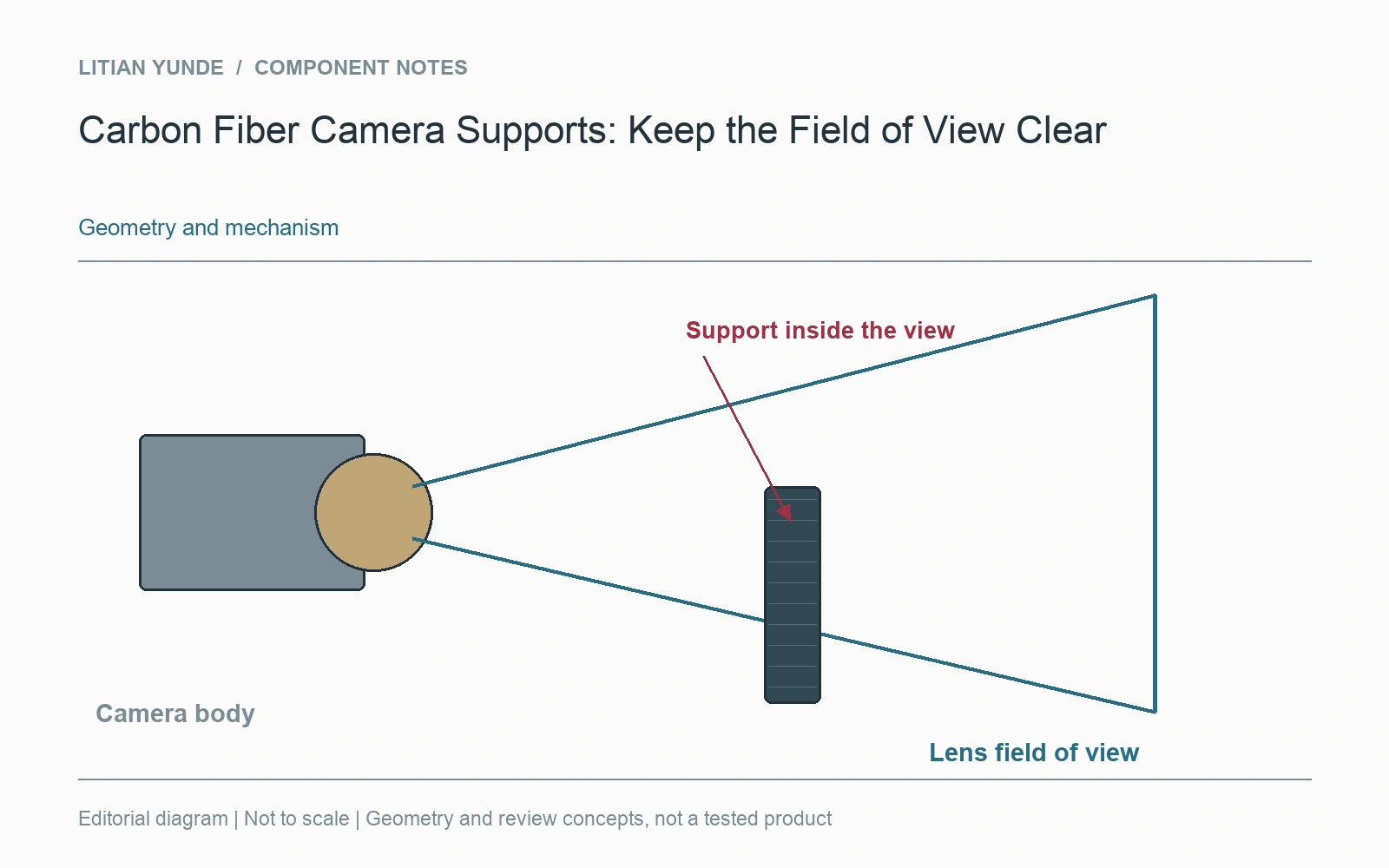
碳纤维摄像机支架:确保视野清晰
A camera support can hold the camera in the right place and still appear in the image. Before refining a carbon fiber bracket or support arm, check the lens field of view…
Read guide →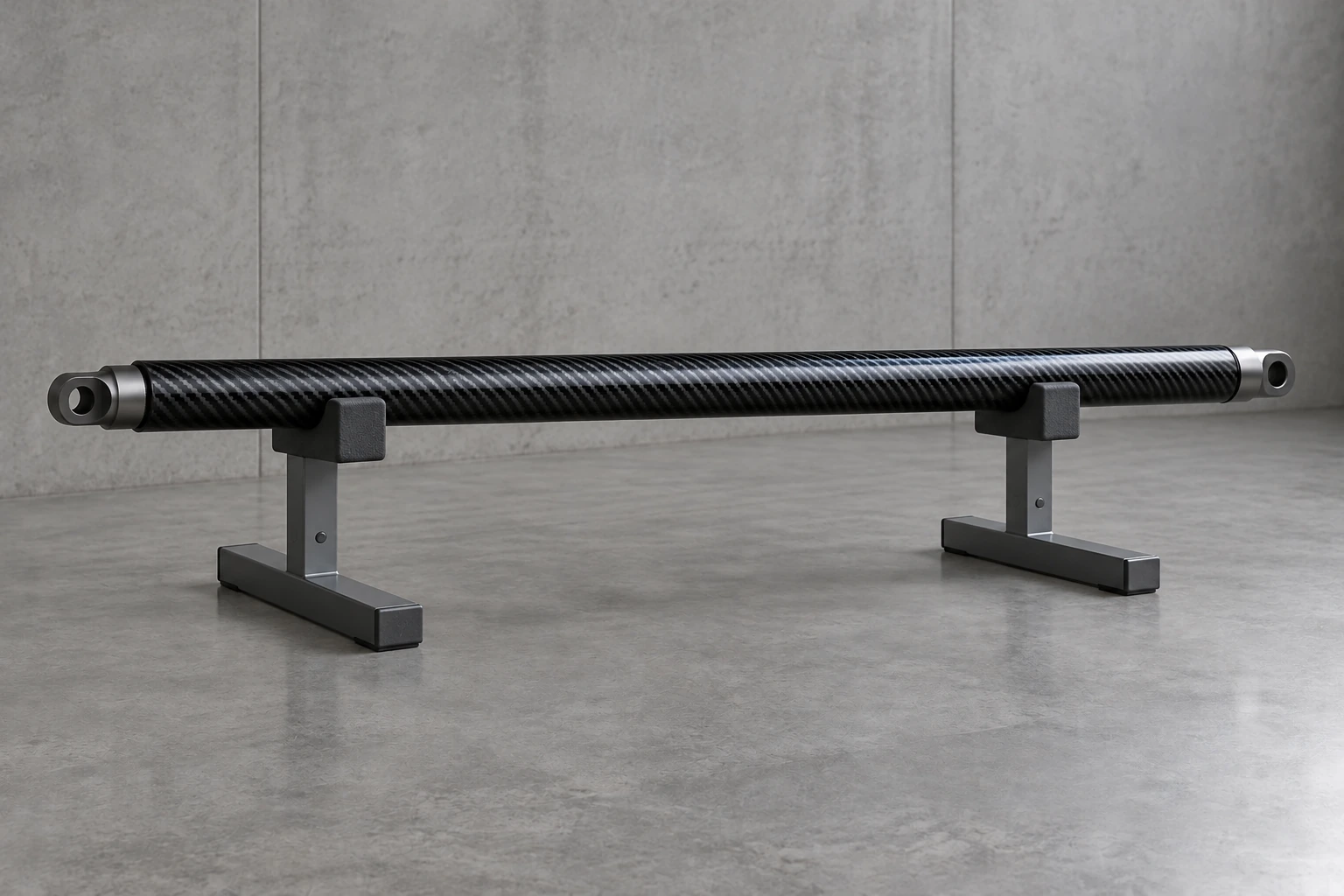
长碳纤维部件的存储:Agree 提供发货前的支撑和搬运服务
Long carbon fiber parts need a documented storage and handling arrangement appropriate to their construction and use. Agree support locations, separation and access before…
Read guide →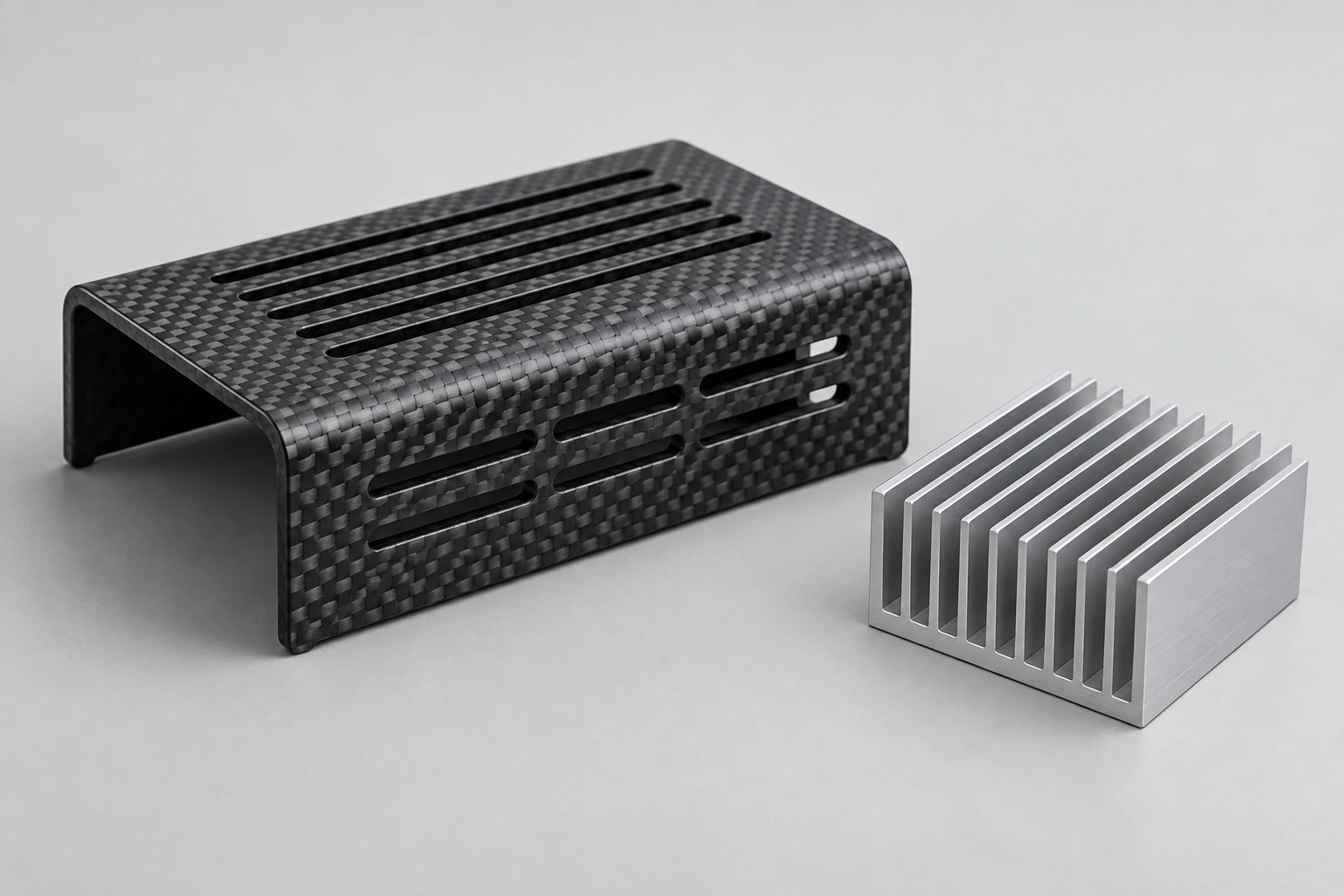
带通风孔的碳纤维盖板:开孔区域并非用于散热
Vent slots define an opening geometry, not a verified cooling performance. Review the heat sources, airflow route, installed orientation and nearby components before…
Read guide →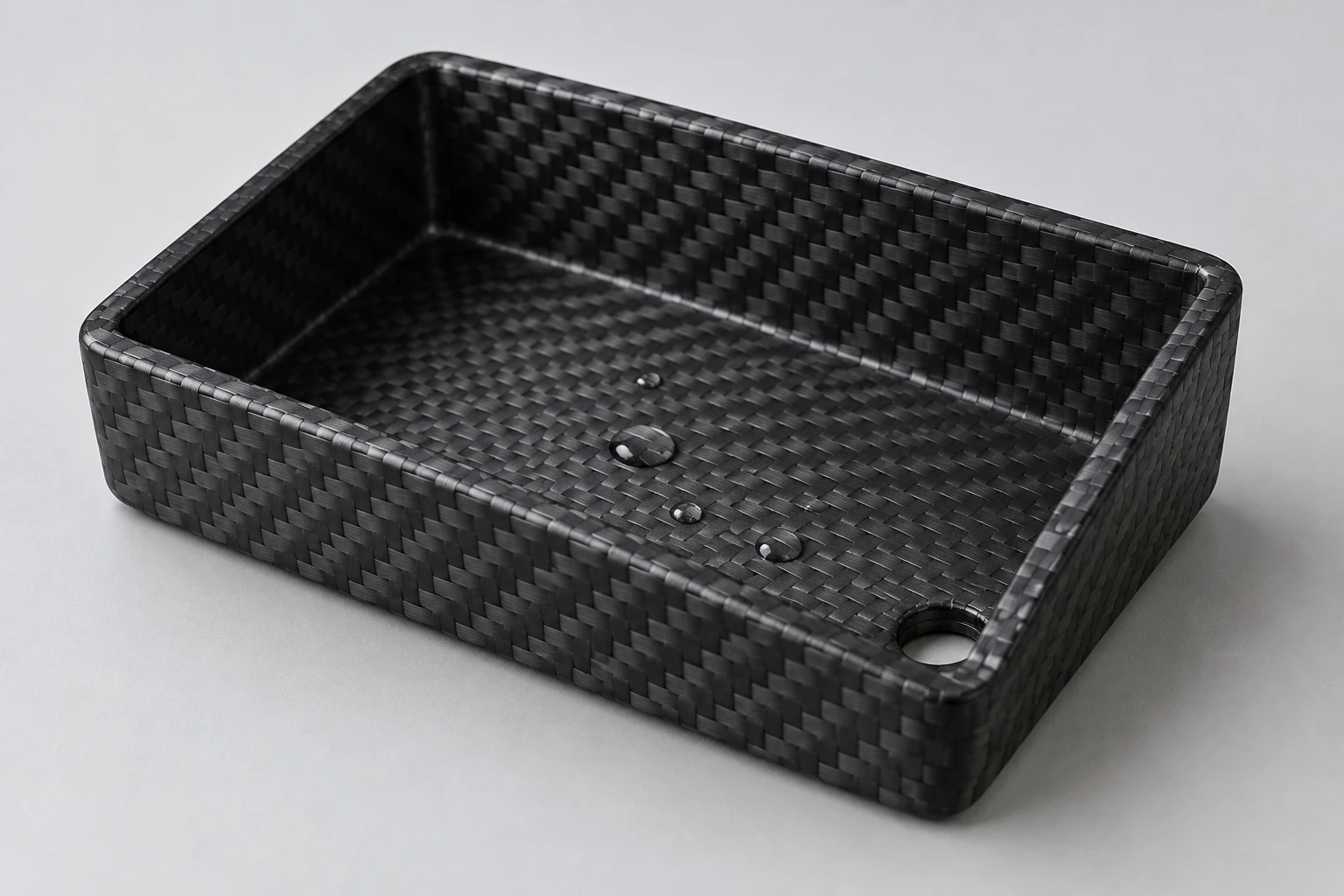
碳纤维保护罩:在安装位置检查排水路径
A drain opening is useful only when water can reach it and leave the installed assembly. Review the cover’s actual orientation, low points, nearby supports and service…
Read guide →
碳纤维组件:在移交前准备一份备件清单
A carbon fiber assembly should be handed over with a list of the parts needed to maintain its agreed supplied scope. Identify the composite component, hardware, seals, pads…
Read guide →
碳纤维组件公差叠加:检查零件之间的间隙
A carbon fiber component can meet its own drawing and still leave too much or too little clearance in an assembly. A tolerance stack relates the contributing dimensions to a…
Read guide →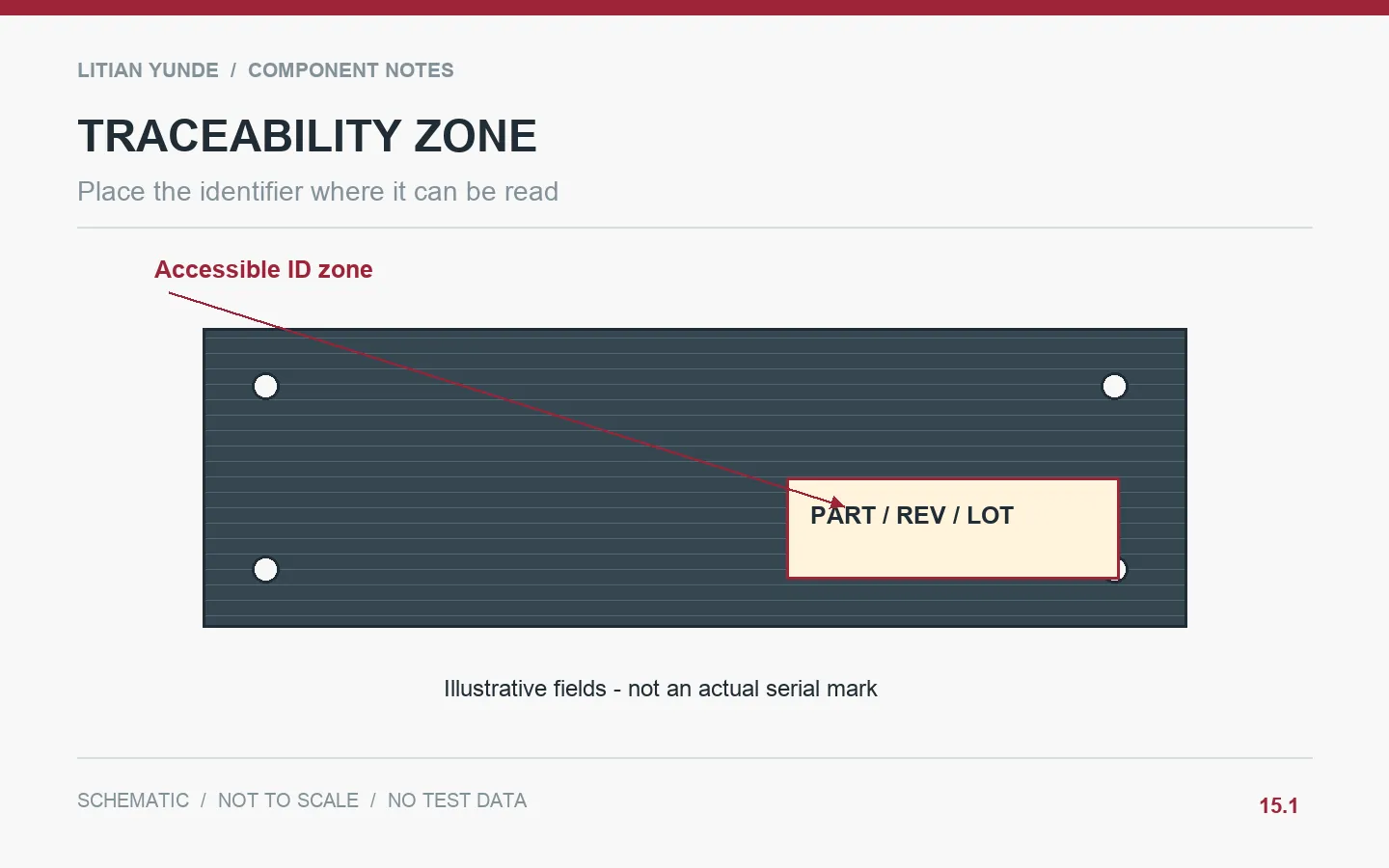
碳纤维零件的标记:在生产前选择可追溯区域
A traceability mark needs an agreed location, method and readable content. Select a zone that remains accessible and does not conflict with bonding, clamping or critical…
Read guide →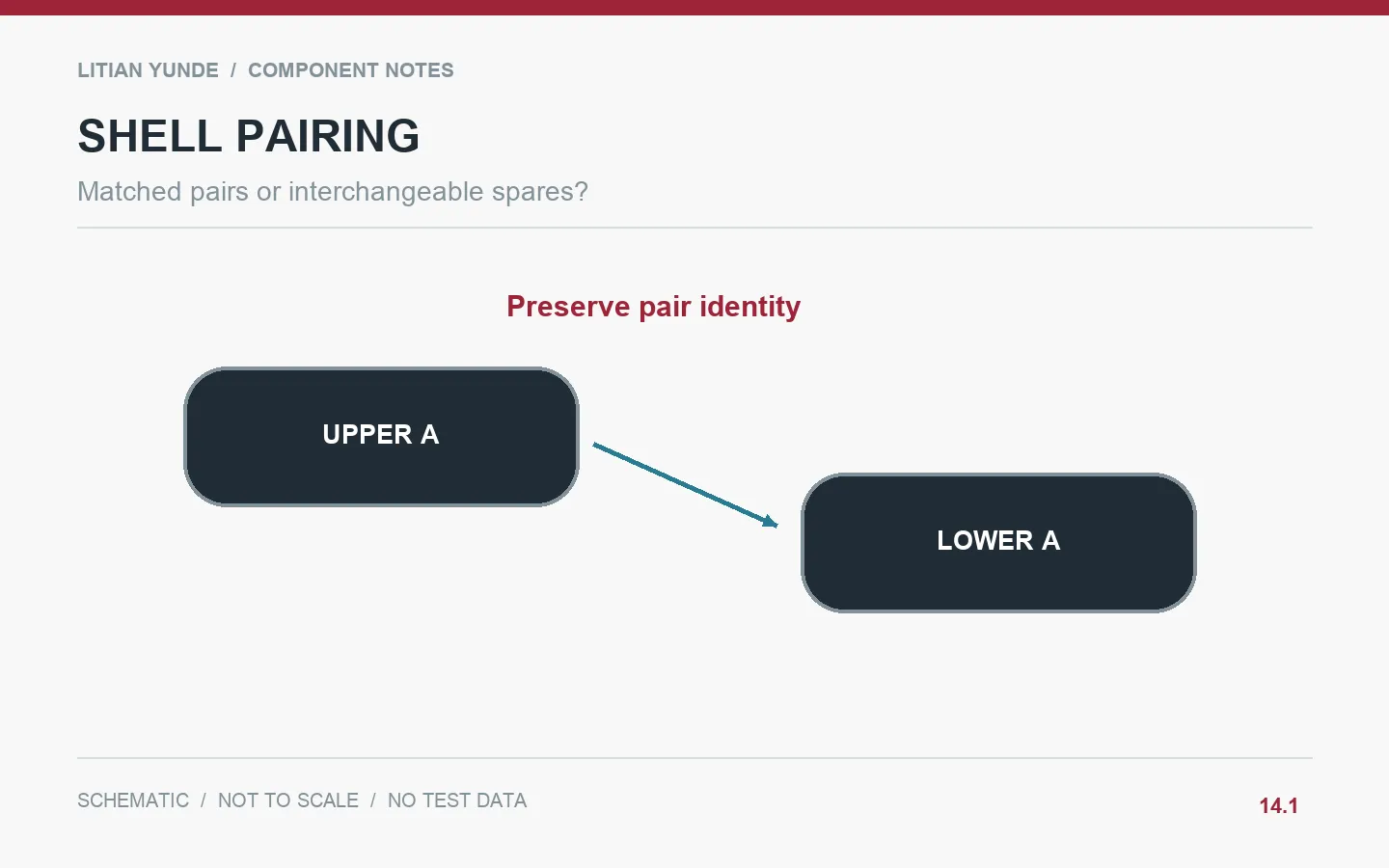
匹配的碳纤维壳体两半:更换方案与互换性
Two shell halves that fit as one sample are not automatically interchangeable across a production batch. Decide whether halves are supplied as matched pairs or as…
Read guide →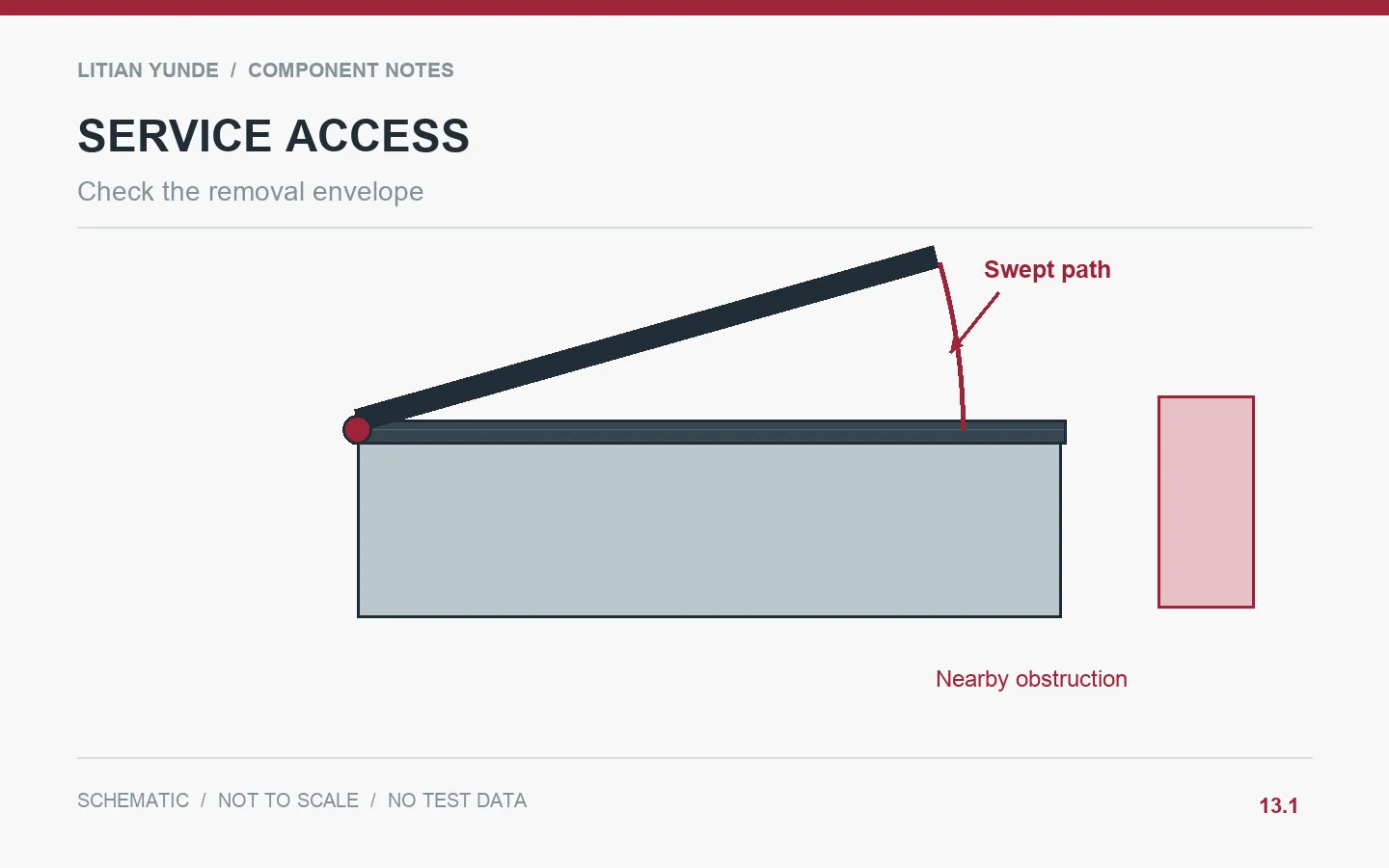
碳纤维检修盖:检查拆卸路径,而不仅仅是是否紧密贴合
An access panel can fit perfectly when closed and still be difficult to remove. Review the swept path, fastener access, hand clearance and nearby cables. The sample…
Read guide →

碳纤维桨的部件:指定桨叶与桨杆的连接处
A paddle-component enquiry should identify the blade, shaft and any connection hardware as an assembly.
Read guide →
碳纤维仿排气管外观部件:界定实际范围
A carbon-look exhaust component may be a decorative outer sleeve, a trim tip, a guard or another part of an assembly.
Read guide →
碳纤维后视镜罩:形状、贴合度与表面处理的区别
A mirror-cover enquiry has three distinct parts: the shell geometry, the attachment interface and the visible finish.
Read guide →
汽车碳纤维饰件:供应商所需的安装信息
A trim enquiry should identify the exact mating surface and installation method.
Read guide →
碳纤维车把:在询价前制定一份接口检查清单
A handlebar enquiry should identify the complete cockpit configuration rather than only the preferred shape.
Read guide →
碳纤维自行车车架咨询:整理接口数据
A bicycle-frame enquiry should start with a controlled geometry and interface package.
Read guide →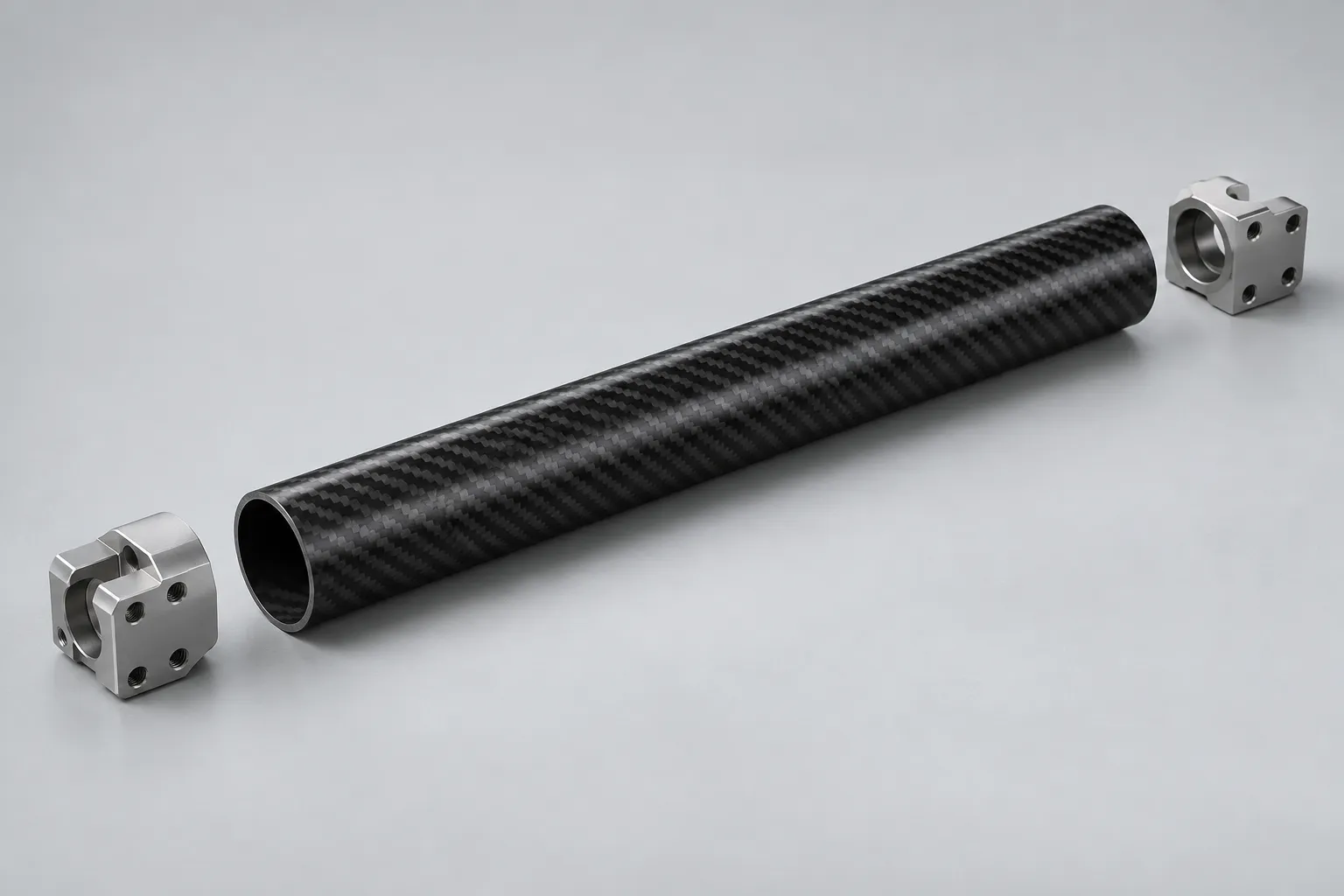
碳纤维无人机机臂管:端部接口规格
For a UAV arm tube, the end interfaces are as important to the enquiry as the tube length.
Read guide →
无人机电子托盘设计咨询:便捷性至上
An electronics tray needs a clear equipment layout and service-access plan.
Read guide →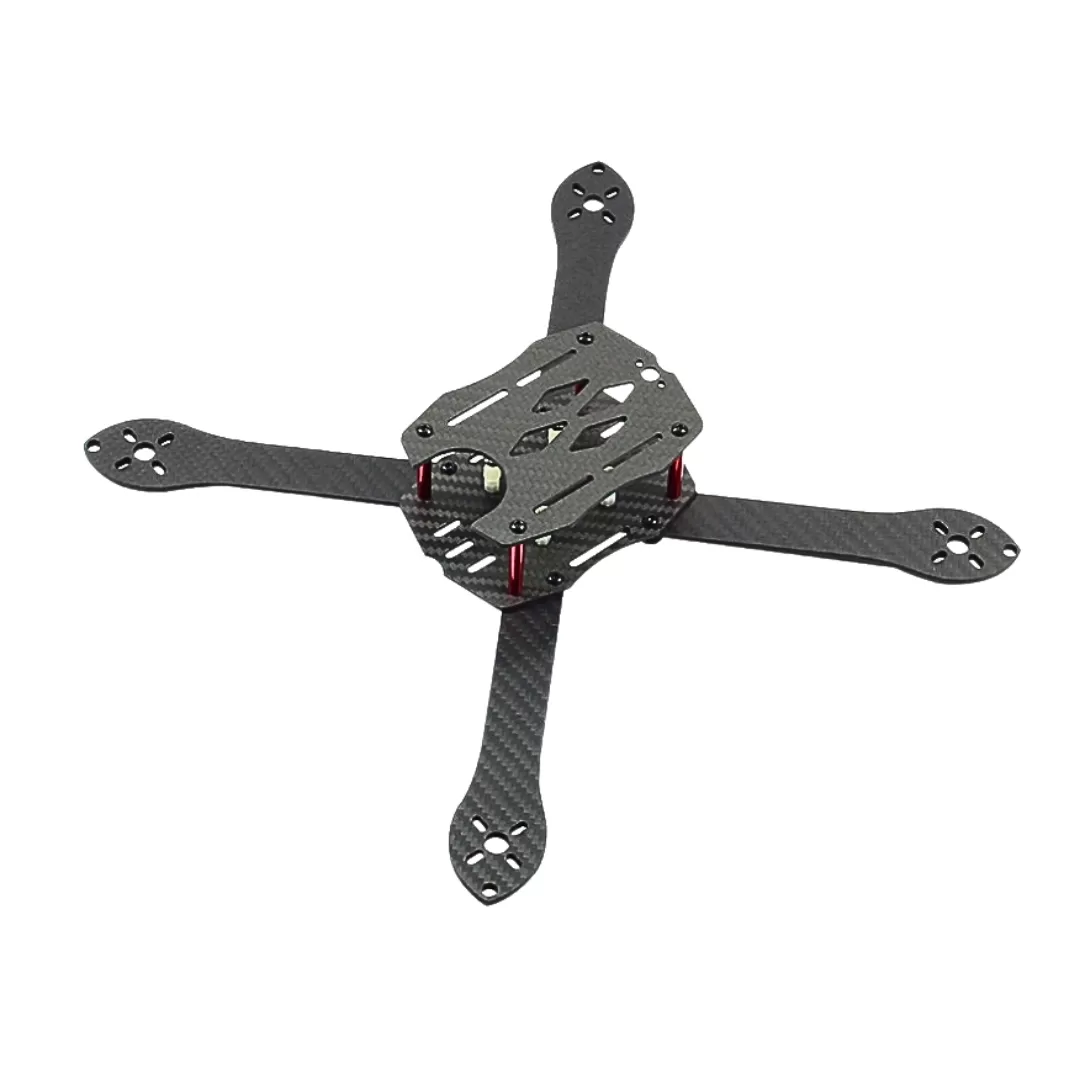
无人机安装板:实用图纸与接口检查清单
A UAV mounting plate enquiry should identify the component being mounted, the attachment pattern, available space and the conditions the design must address.
Read guide →
碳纤维轻量化:比较完整总成
A lighter component does not automatically produce a lighter assembly. Compare the finished part together with its brackets, inserts, fasteners and protective layers before…
Read guide →
碳纤维汽车面板的设计:形状与连接方式
For a custom automotive panel, the external surface and the attachment geometry need separate definition. A smooth rendered shape is not enough to quote a part that must fit…
Read guide →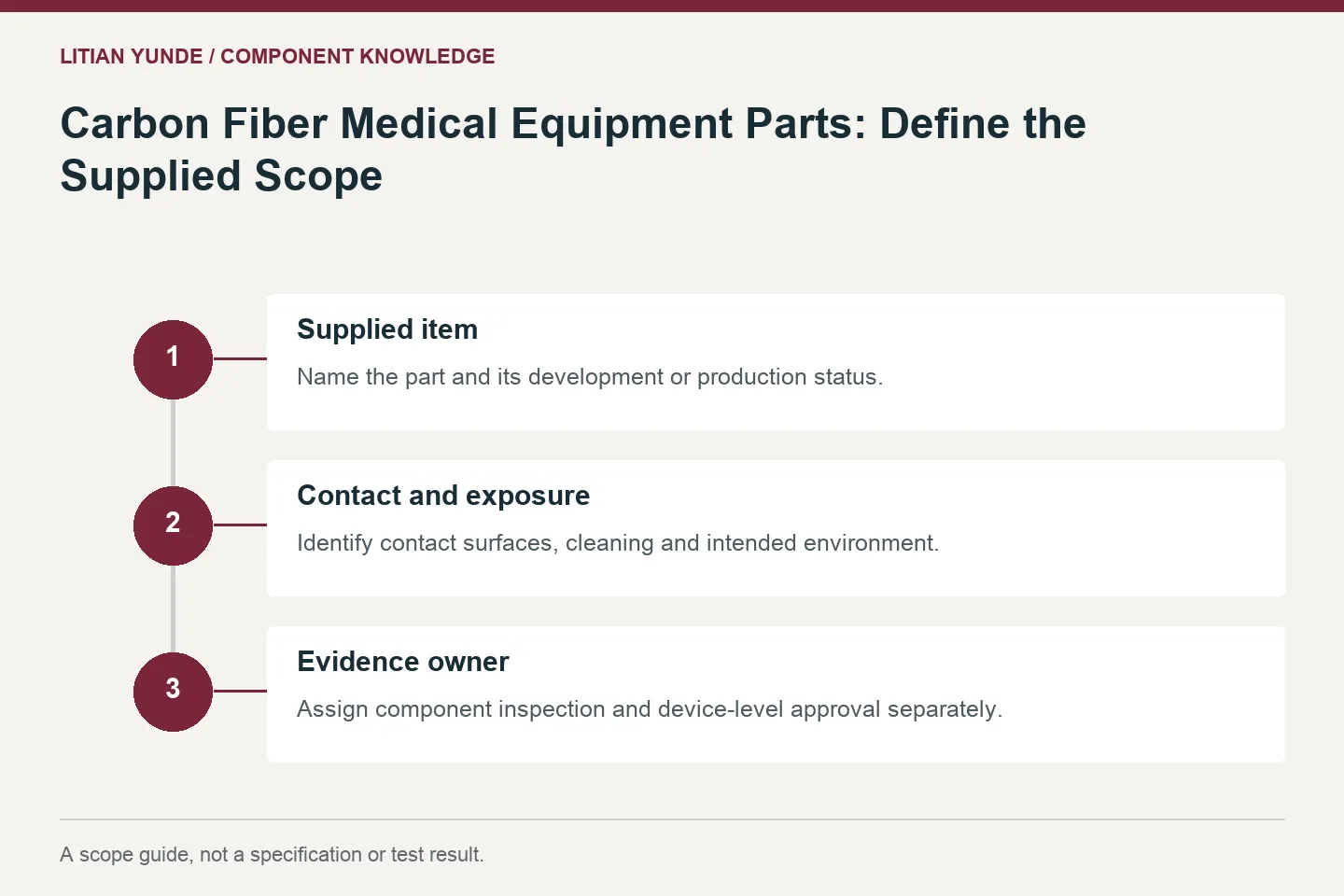
碳纤维医疗设备零部件:明确供货范围
An enquiry for a carbon fiber medical-equipment component should identify exactly what is being supplied: a prototype shell, a mechanical support or a finished device. These…
Read guide →
碳纤维机器人外壳:可访问性、线缆及可维护性
A robot cover needs more than a matching outer shape. Its openings, fixing points and removal path should allow the equipment to be assembled and serviced without damaging…
Read guide →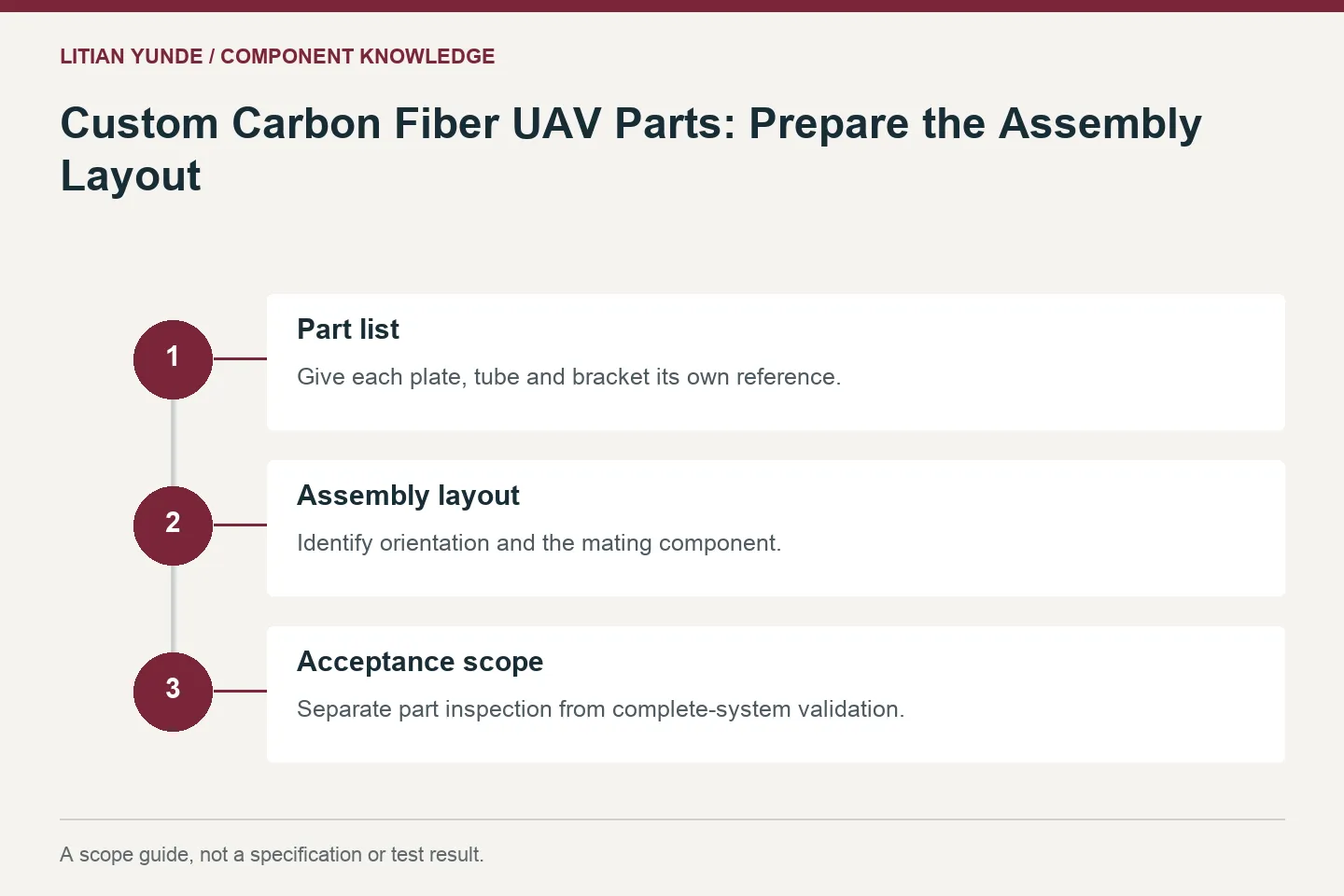
定制碳纤维无人机部件:准备装配布局
A useful UAV component enquiry starts with the assembly layout: what each plate, tube or bracket connects to and which spaces must remain clear. This helps separate a…
Read guide →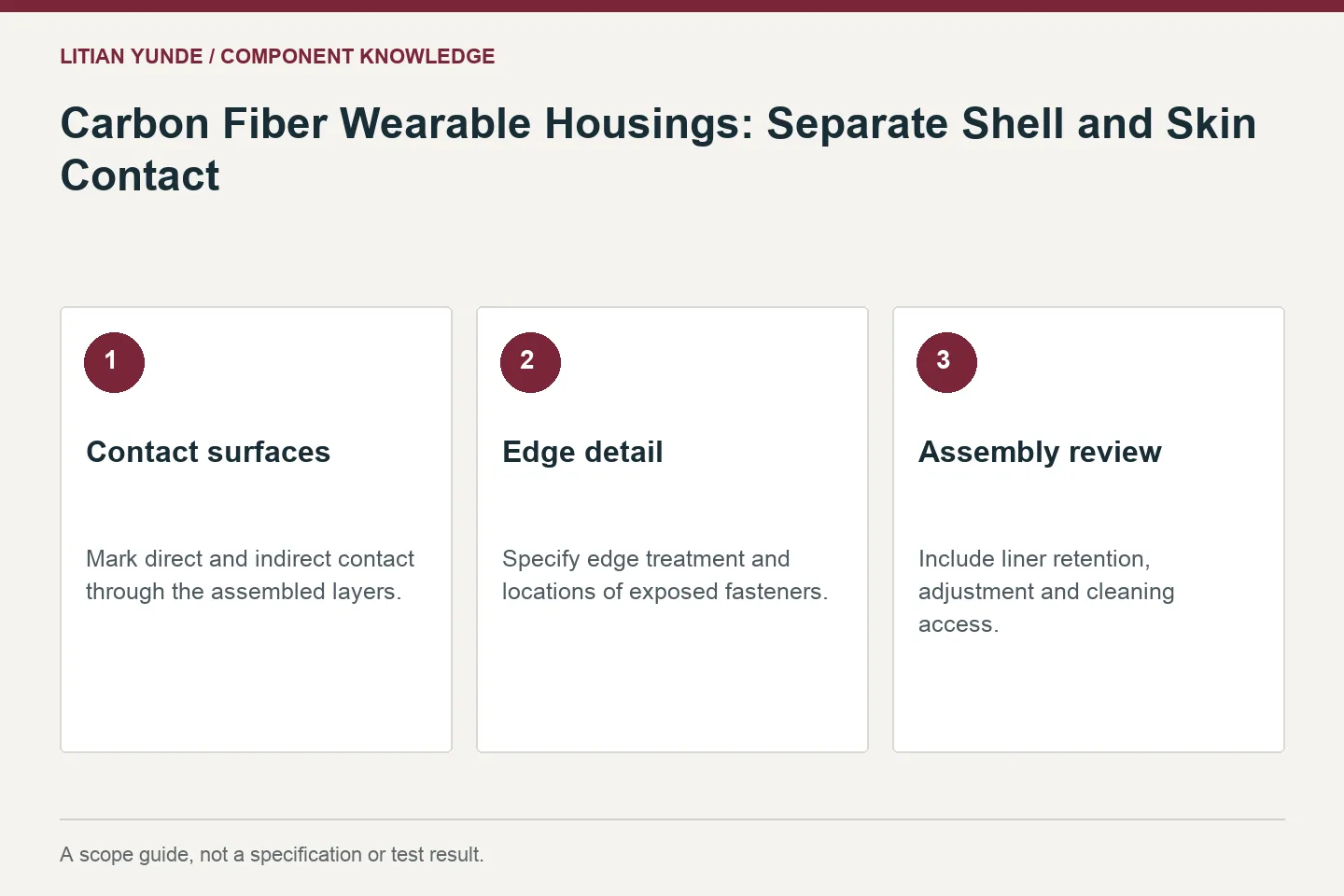
碳纤维可穿戴外壳:外壳与皮肤接触分离
A carbon fiber outer housing and a surface that touches the wearer should be specified separately. The shell material name does not describe the complete contact surface,…
Read guide →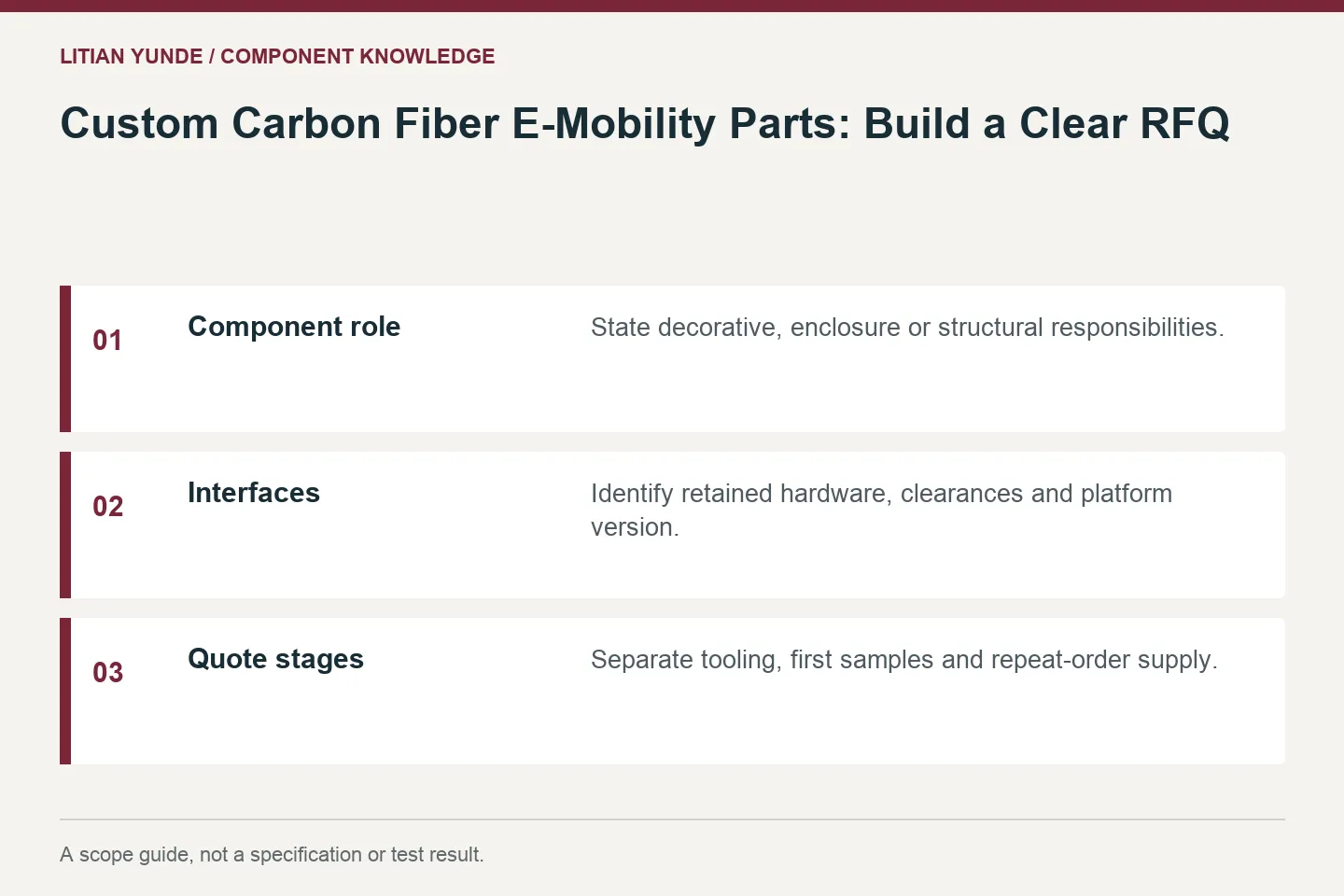
定制碳纤维电动出行零部件:编写清晰的询价单
For an e-mobility project, specify the component’s role before asking for a carbon fiber quotation. A cosmetic panel, an electronics cover and a load-carrying member need…
Read guide →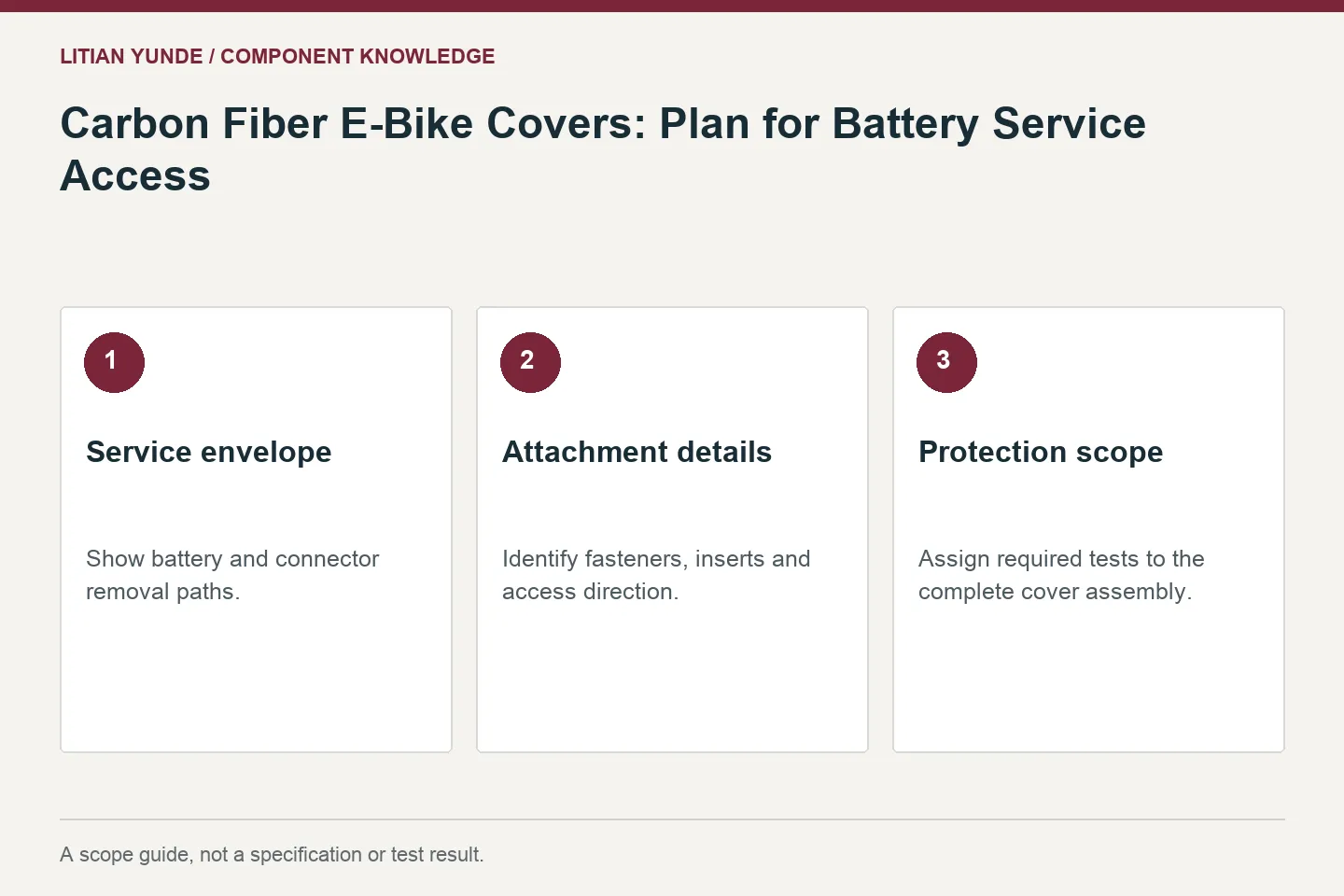
碳纤维电动自行车罩:预留电池检修通道
An e-bike cover should be reviewed with the battery, connectors and attachment hardware in place. A good external fit does not establish that the battery can be removed or…
Read guide →
碳纤维外饰板:指定暴露部位和表面处理
For an exterior carbon fiber panel, describe the finish and the exposure it must withstand as separate requirements. A glossy photograph records appearance, not weathering…
Read guide →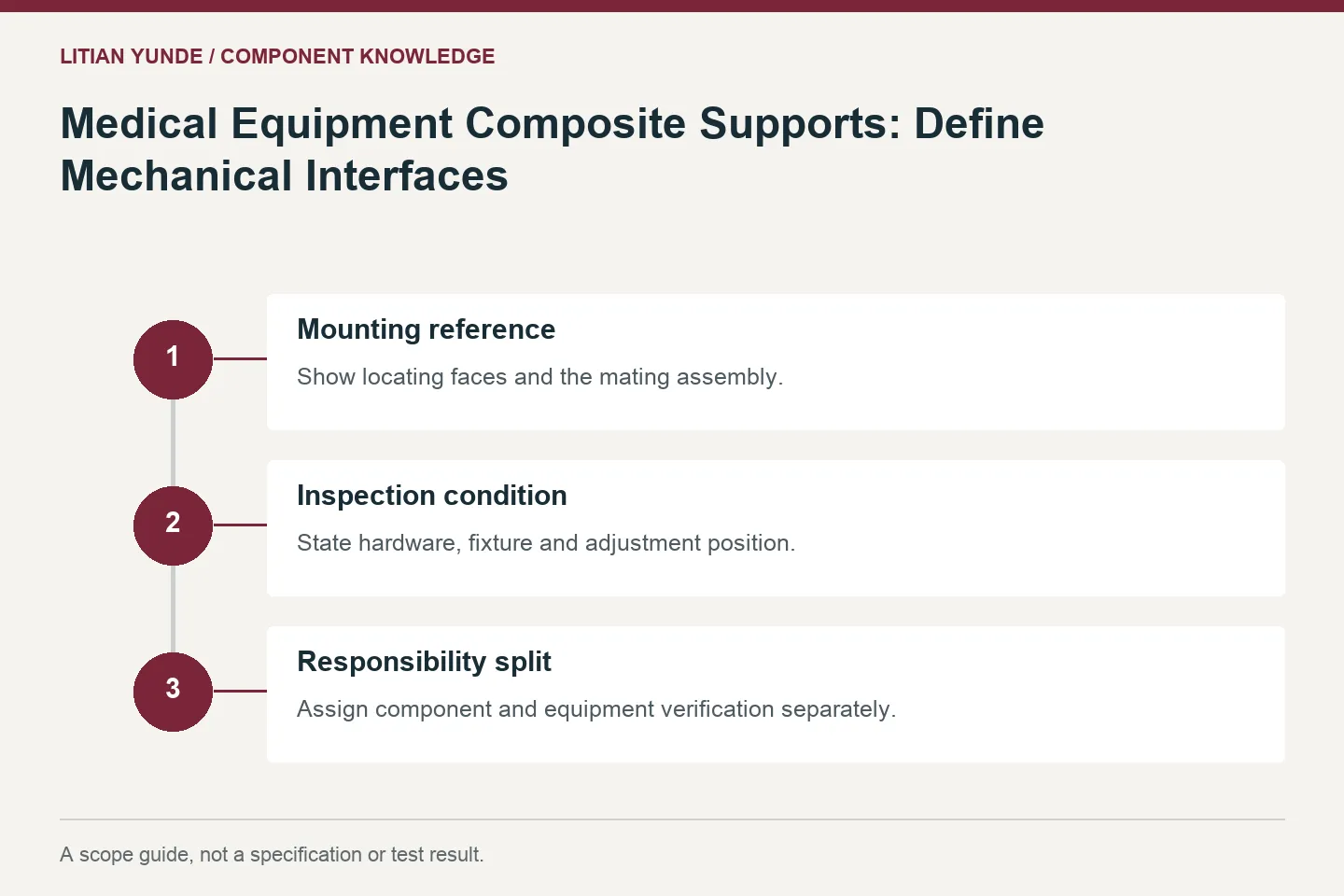
医疗设备复合材料支撑件:定义机械接口
For a composite support used in medical equipment, the enquiry should make mounting and positioning requirements explicit. Mechanical fit can be reviewed without assuming…
Read guide →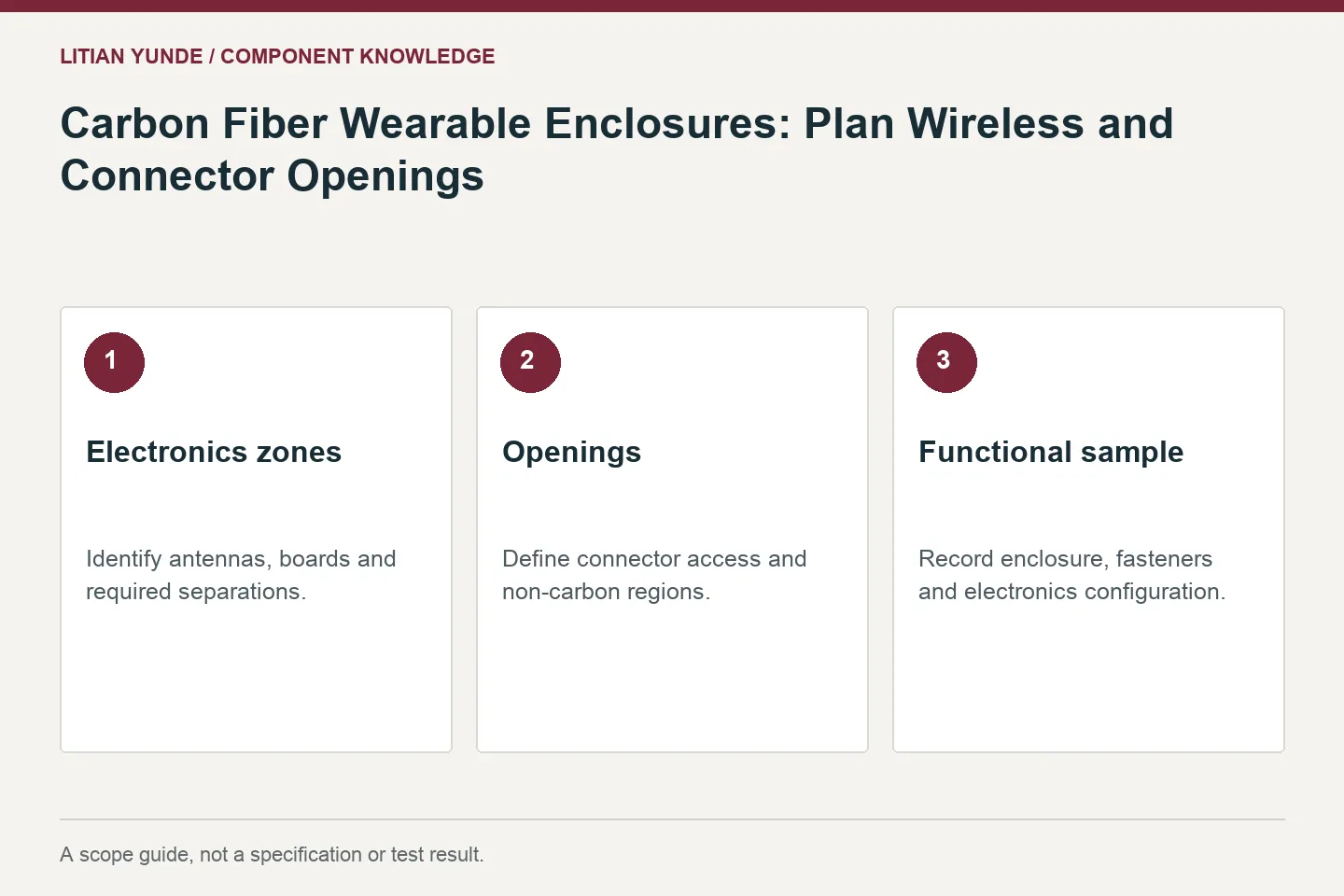
碳纤维可穿戴外壳:规划无线模块和连接器开孔
An enclosure layout should identify antenna regions, connectors and service openings before the carbon fiber shell is frozen. The enclosure material and the electronics…
Read guide →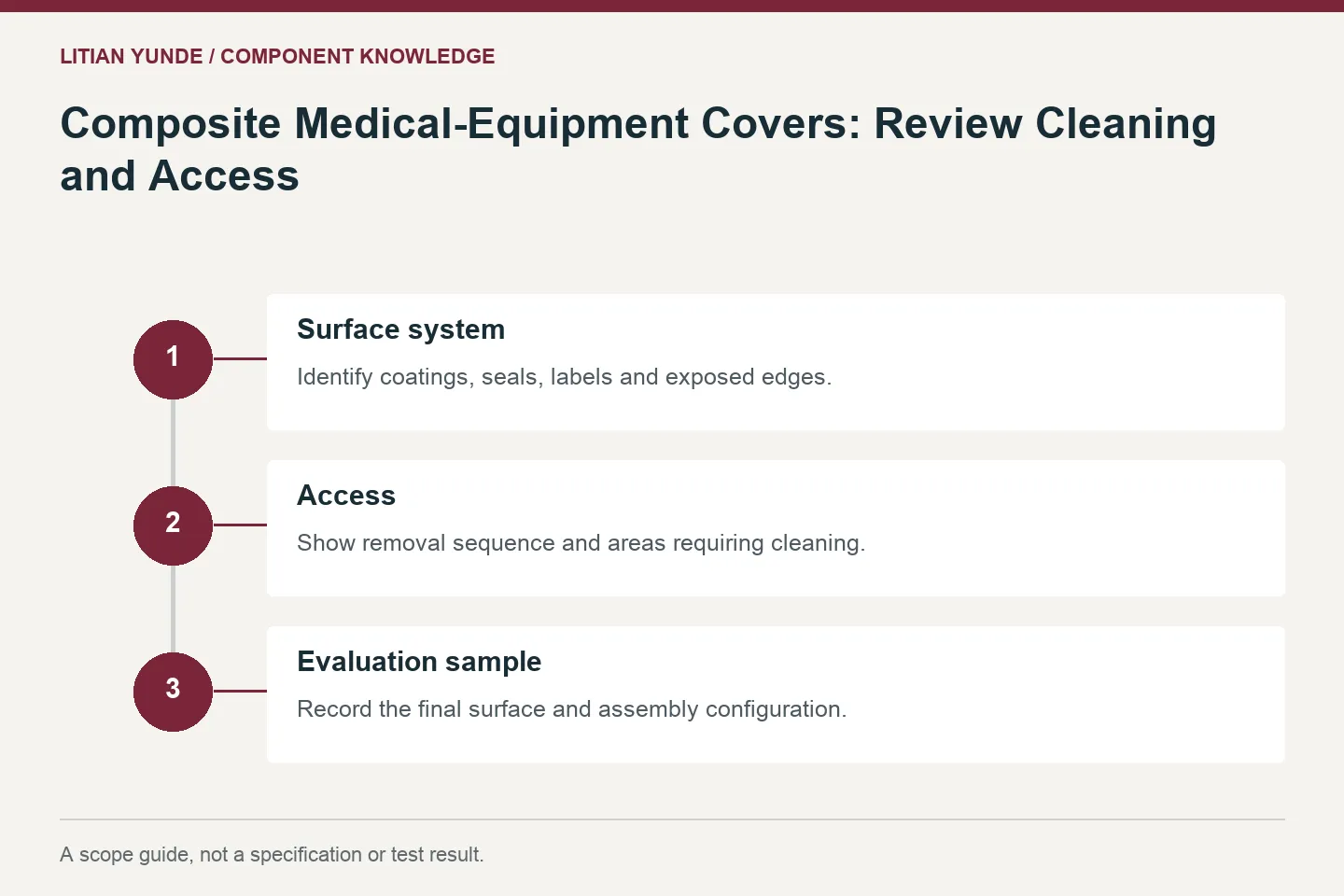
复合材料医疗设备罩:清洁与操作指南
A cover for medical equipment needs a defined cleaning and service brief. Material selection alone does not establish compatibility with a cleaning process or suitability for…
Read guide →
碳纤维无人机机架:布线规划与维护通道设计
An accessible UAV frame leaves room for wiring, connector insertion and component replacement. These spaces should be reviewed alongside the plate geometry, not improvised…
Read guide →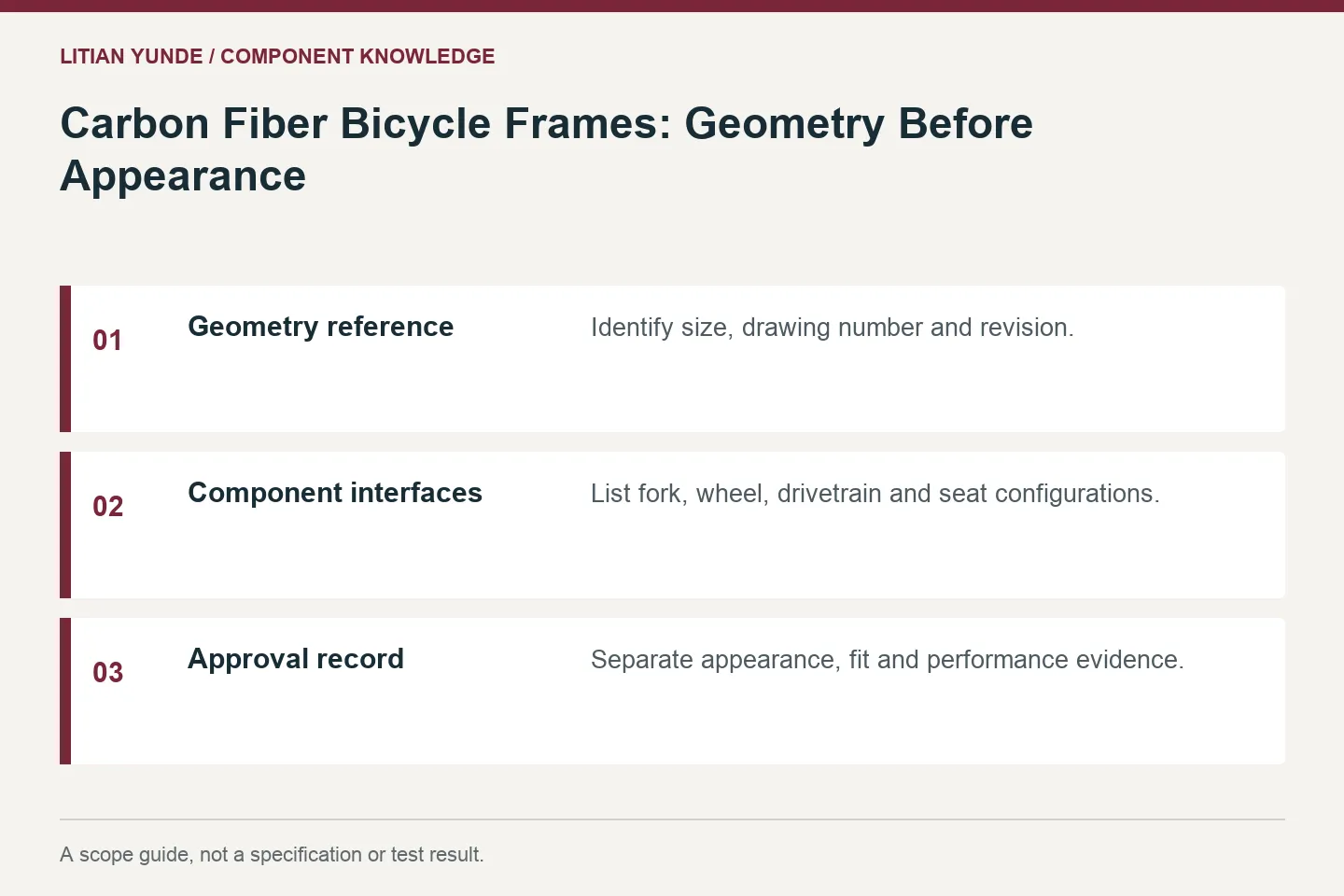
碳纤维自行车车架:几何结构重于外观
When reviewing a carbon fiber bicycle frame, distinguish the visual shape from the geometry that defines the bicycle. A catalogue silhouette cannot confirm size, clearances…
Read guide →
碳纤维汽车零部件:区分装饰件与结构件
Carbon fiber trim and a structural replacement can share a similar surface pattern but have different responsibilities. State the part’s function explicitly before comparing…
Read guide →
碳纤维自行车配件:指定安装接口
For a bicycle accessory, start with the mounting interface and the item it must hold. A small lightweight component still needs a clear fit and retention requirement.
Read guide →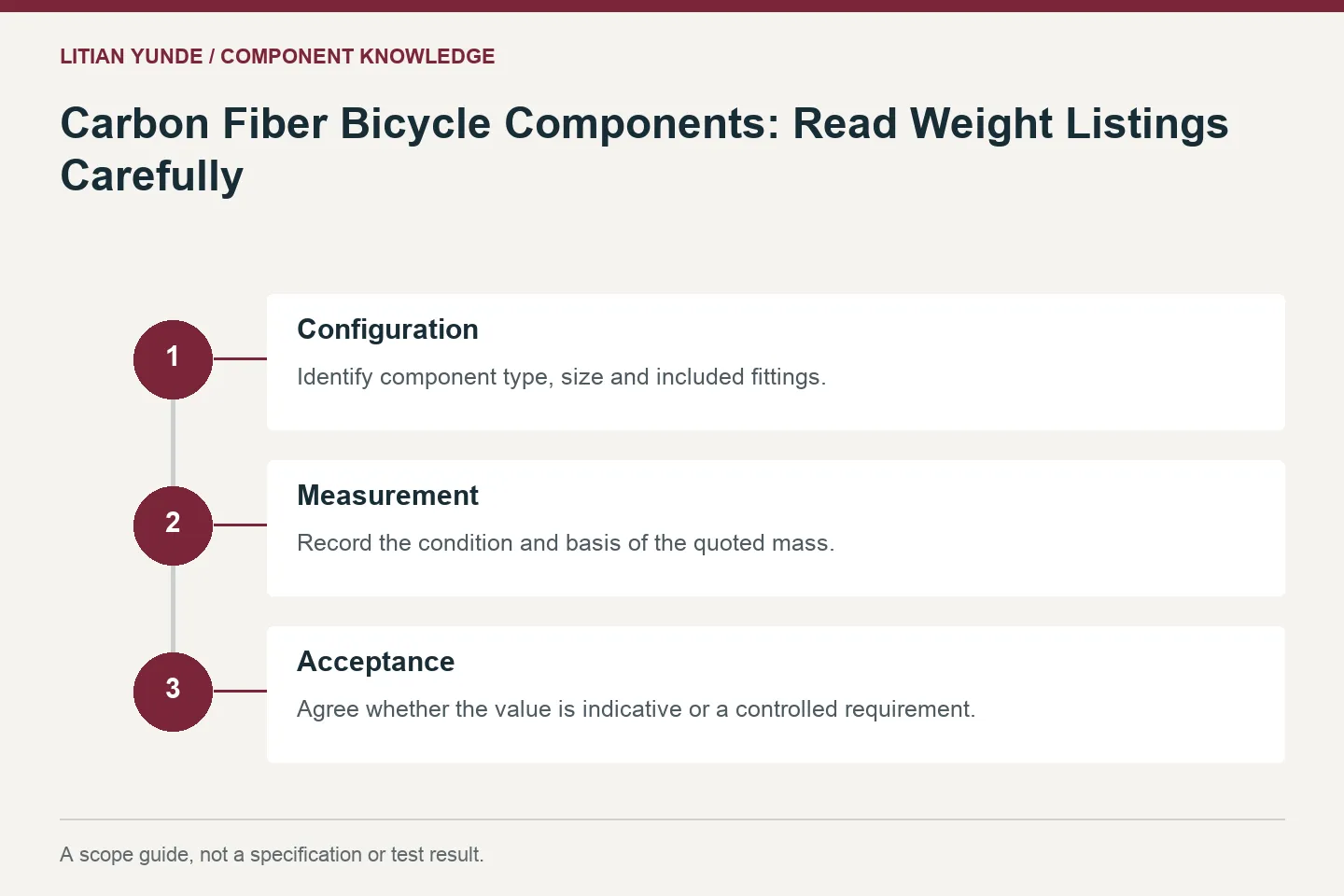
碳纤维自行车零部件:请仔细阅读重量信息
A component weight is meaningful only when the size and supplied configuration are identified. Compare like-for-like assemblies before deciding whether one bicycle component…
Read guide →
碳纤维电子设备外壳:请单独指定电气隔离要求
A carbon fiber cover should not be assumed to provide electrical insulation. Define the isolation requirements and the complete assembly arrangement with the electronics team…
Read guide →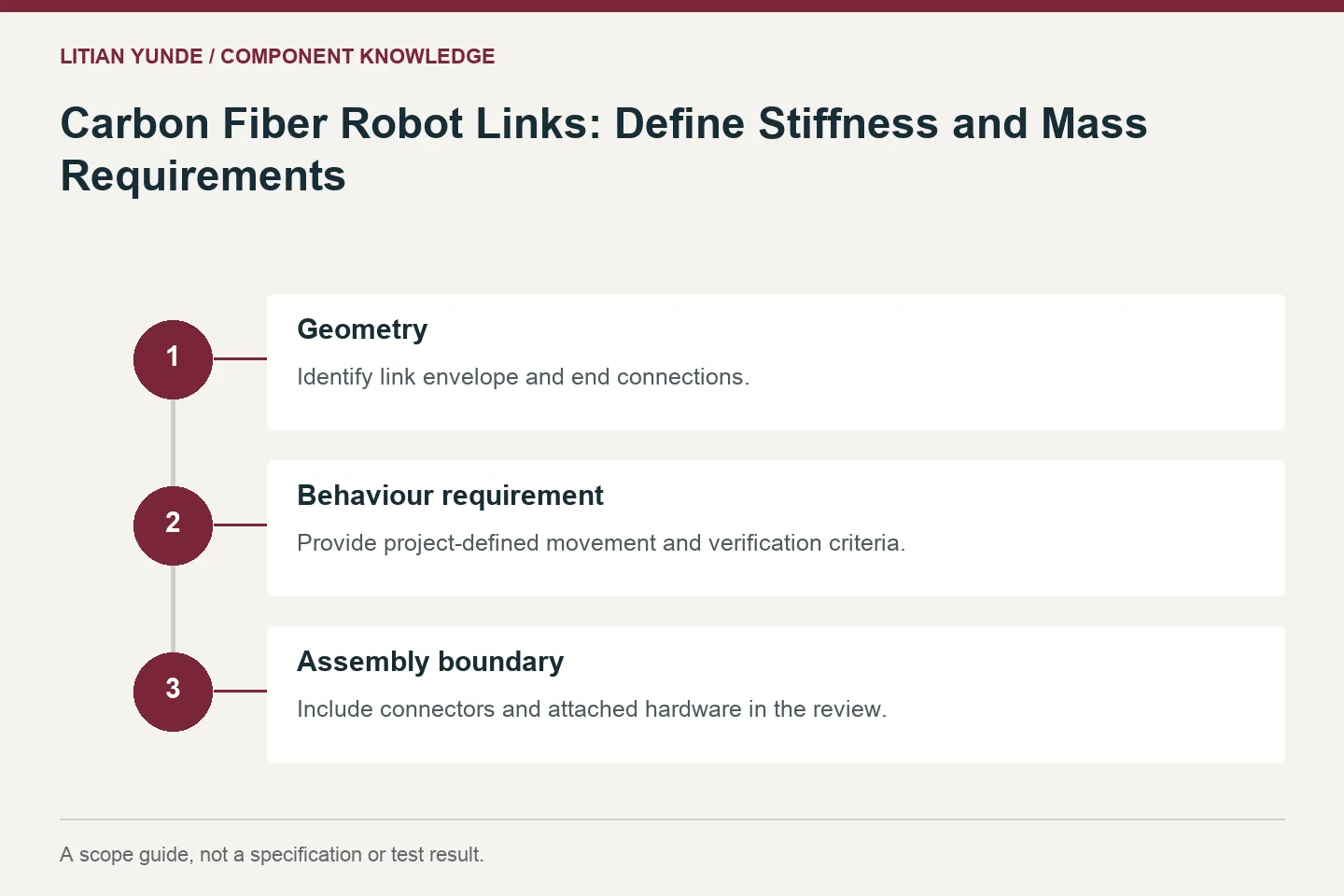
碳纤维机器人连杆:定义刚度和质量要求
A robot-link brief should describe the geometry and the required behaviour separately. Asking for a light carbon fiber tube does not specify how the installed link must…
Read guide →
碳纤维自行车操控区:检查部件兼容性
A bicycle cockpit enquiry should identify the handlebar, stem and steering interfaces as an assembly. A matching appearance does not prove that the chosen parts are…
Read guide →
碳纤维自行车轮圈:指定轮组配置
For a carbon fiber rim, identify the intended wheel build before comparing a product image or quoted mass. A rim is one component of a system that includes the tyre, spokes,…
Read guide →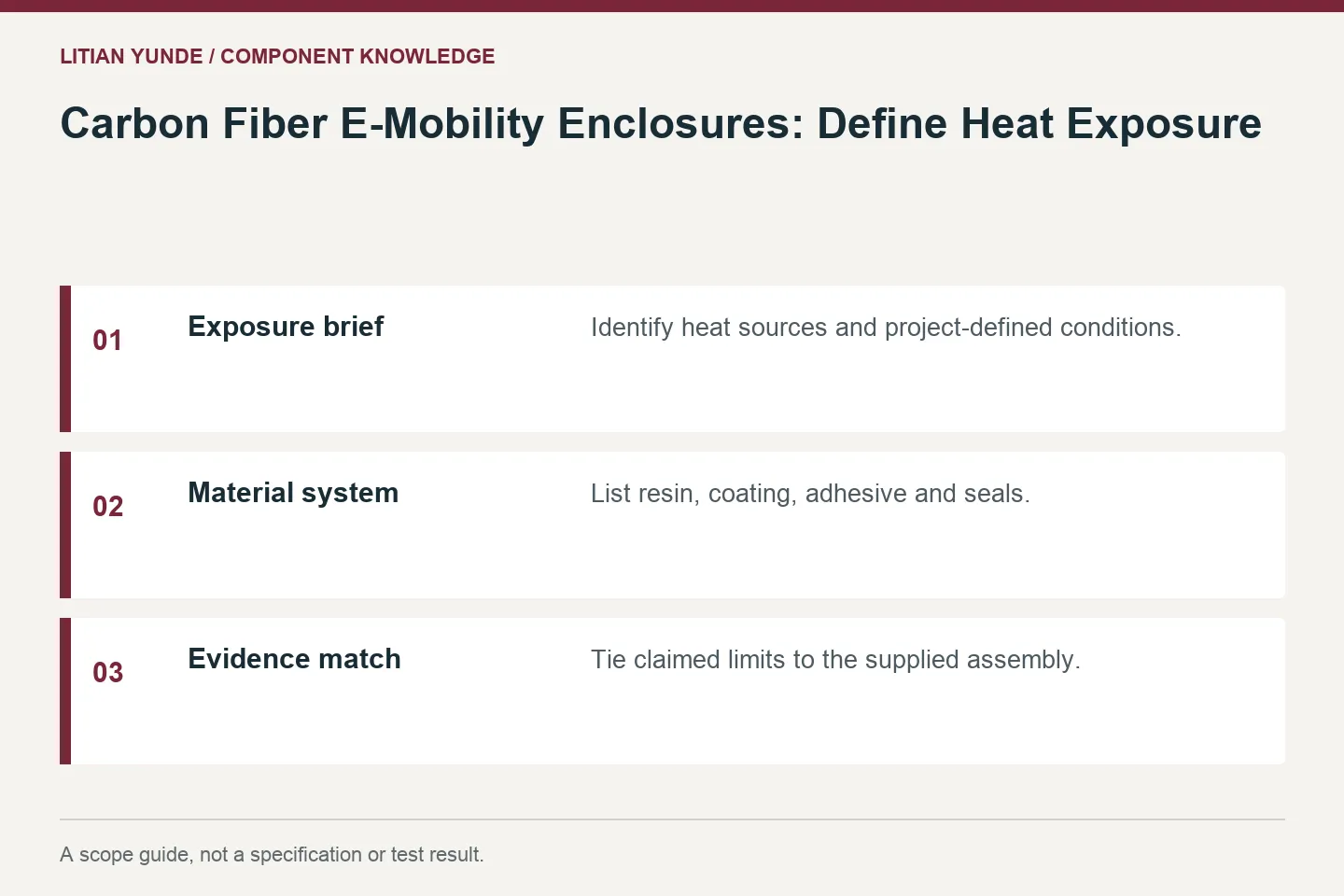
碳纤维电动汽车外壳:定义热暴露
For an e-mobility enclosure, describe the actual heat exposure before selecting a laminate or coating. The words carbon fiber do not establish a temperature rating or a…
Read guide →
复合运输面板:确保安装和维护的实用性
A lightweight panel still needs to be installed, removed and replaced. Include the service procedure in the design brief so an attractive component does not create…
Read guide →
碳纤维内饰件:同时检查表面和安装情况
Interior trim should be assessed for both its visible finish and its installation arrangement. A weave pattern that looks right in isolation may not align with adjacent parts…
Read guide →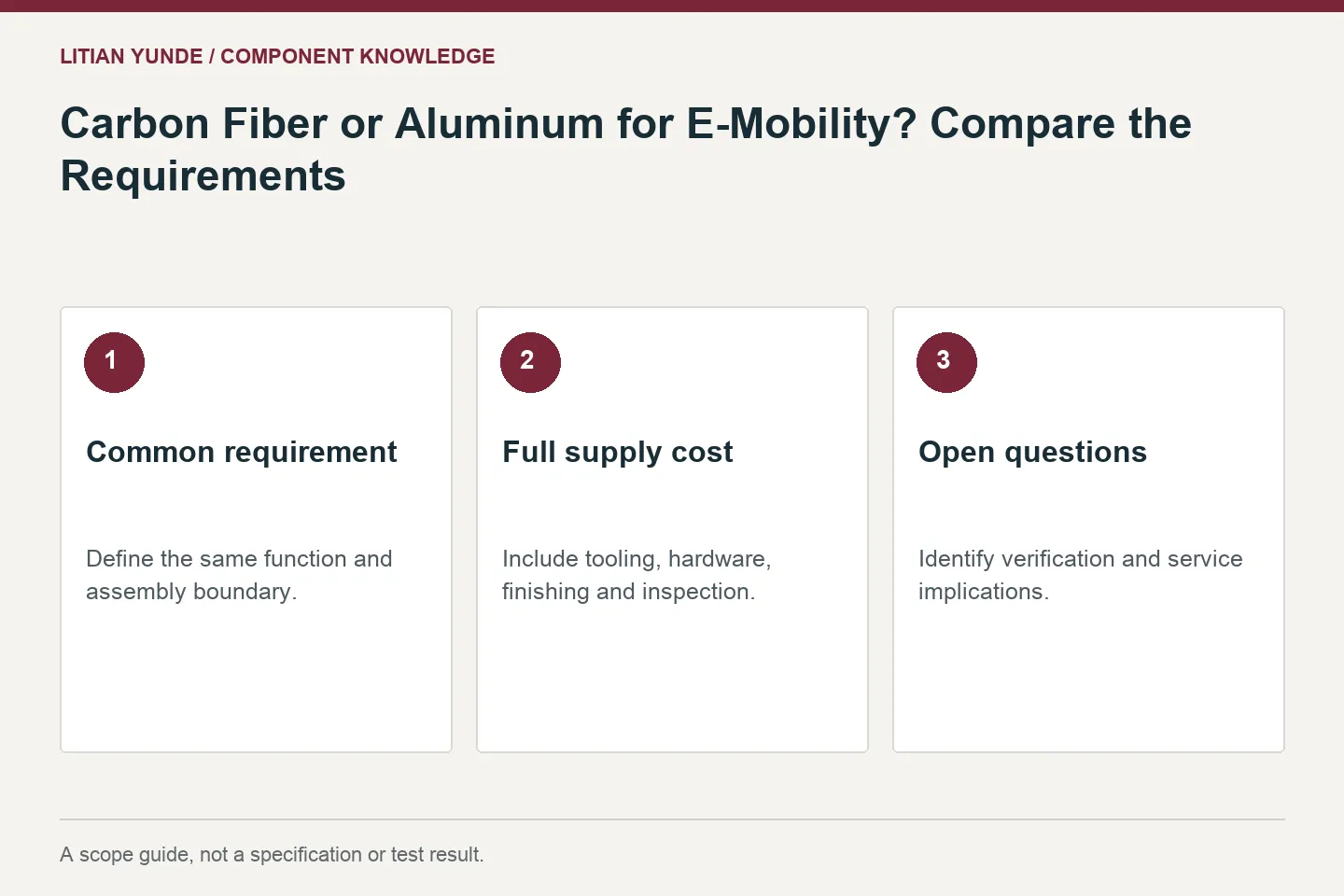
电动出行该选碳纤维还是铝合金?对比各项要求
The useful comparison between carbon fiber and aluminum starts with the component requirements. Weight, geometry, joining, production quantity and service arrangements all…
Read guide →Purchasing & Project Control
Buying and managing custom composite components: quotations, material documents, approved definitions, handovers, logistics and repeat-order control.
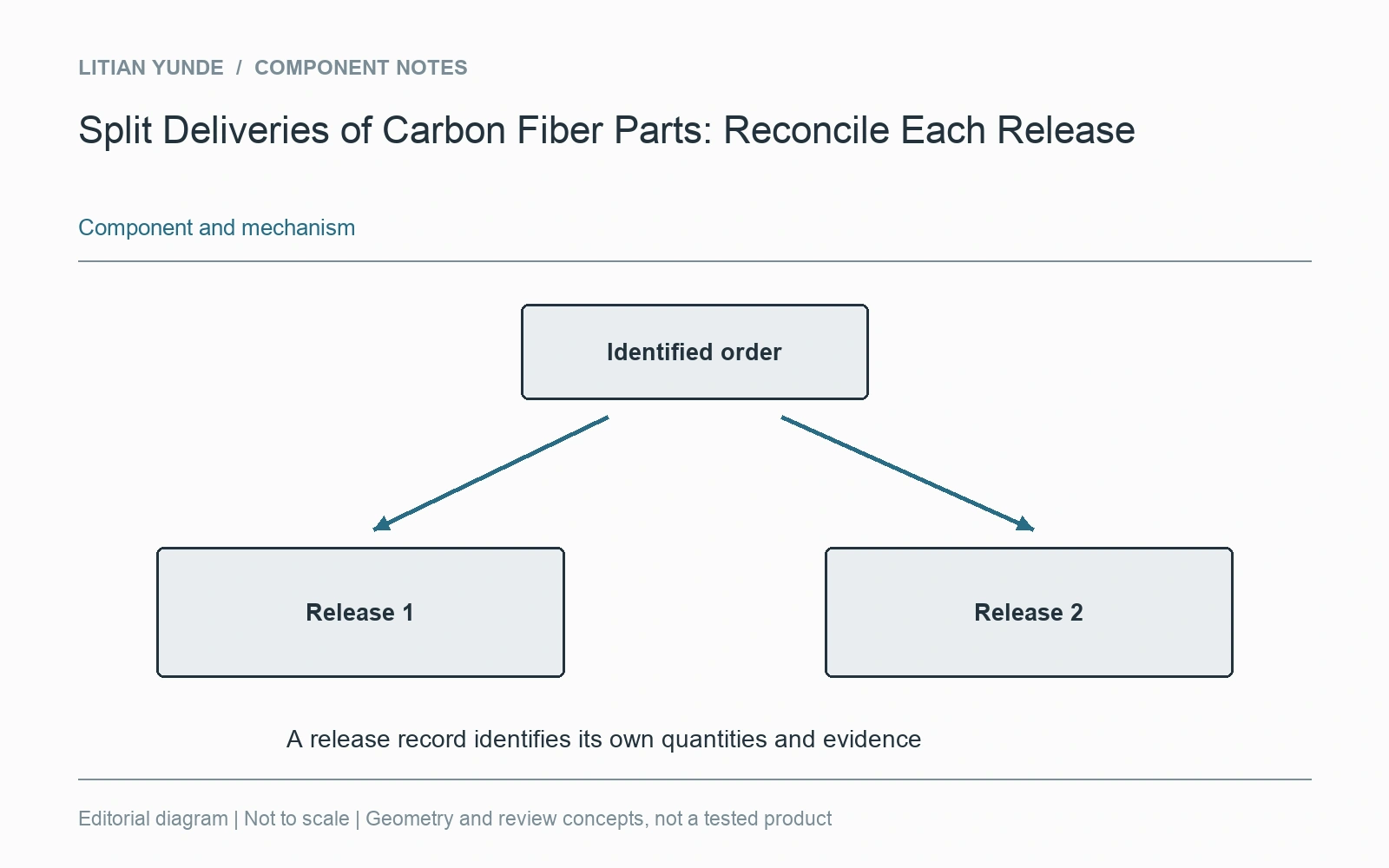
Split Deliveries of Carbon Fiber Parts: Reconcile Each Release
A split delivery divides one order into more than one release. Keep the quantities, part identities and required records tied to each shipment. An accepted first release…
Read guide →
Carbon Fiber Assembly Kits: Count Sets and Individual Parts Separately
An order for ten kits is not an order for ten of every listed item unless the kit definition says so. A carbon fiber assembly-kit enquiry should state the quantity of each…
Read guide →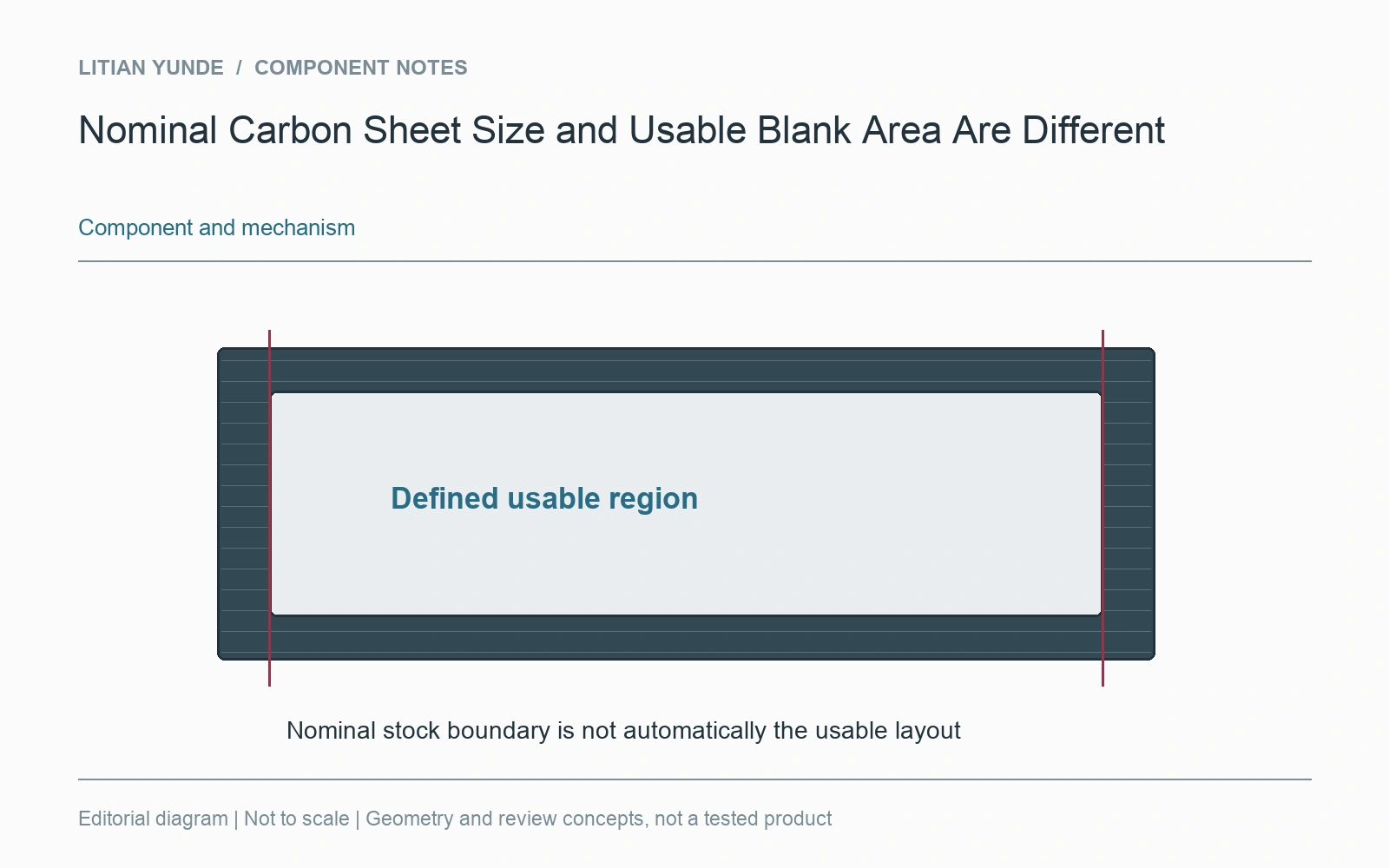
Nominal Carbon Sheet Size and Usable Blank Area Are Different
A nominal carbon sheet size does not necessarily define the usable area for a finished blank layout. Clarify edge allowances, excluded regions and the required orientation…
Read guide →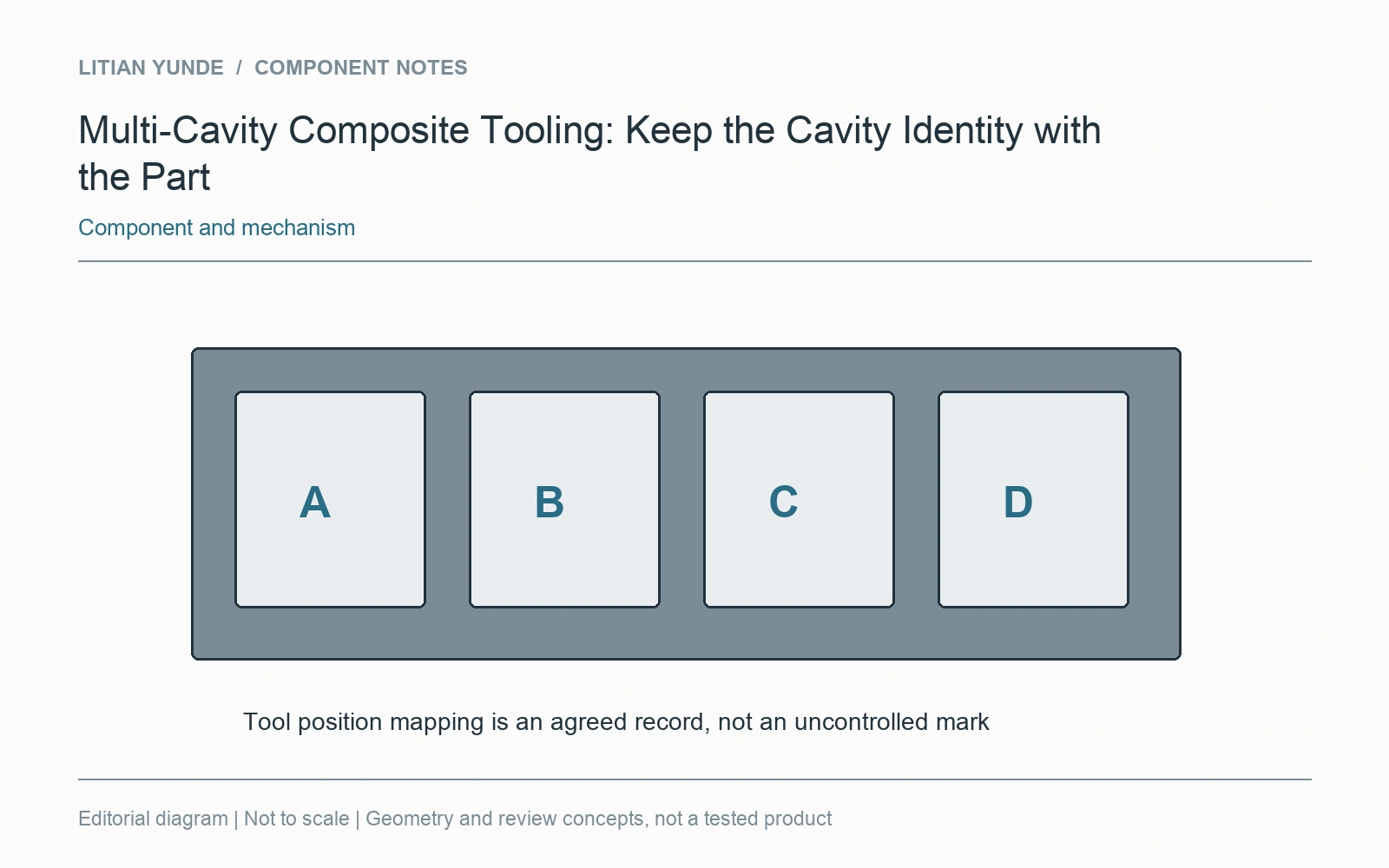
Multi-Cavity Composite Tooling: Keep the Cavity Identity with the Part
When a tool produces more than one part per cycle, cavity identity can be useful traceability information. Define whether the order requires it and how it will be recorded. A…
Read guide →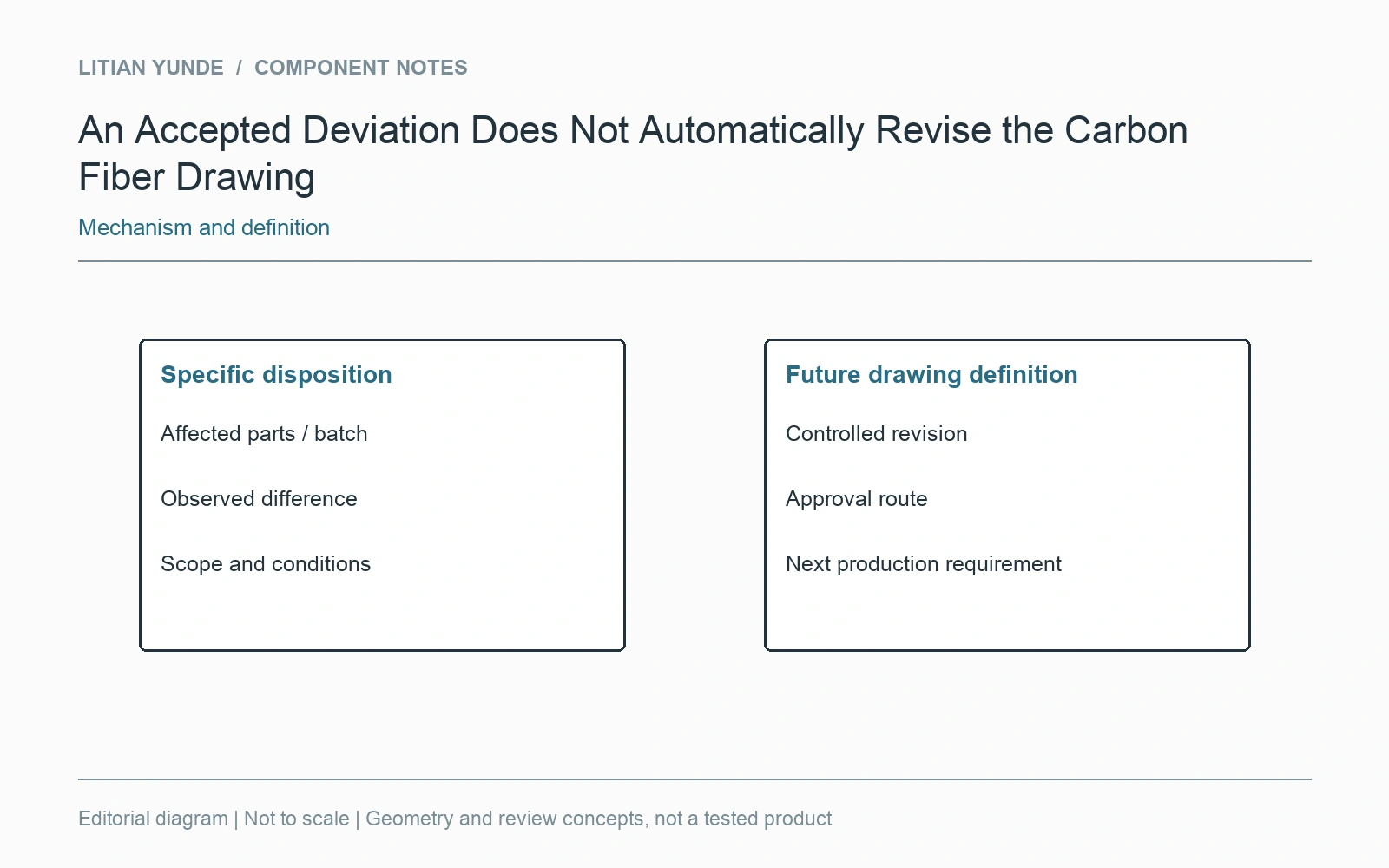
An Accepted Deviation Does Not Automatically Revise the Carbon Fiber Drawing
A decision to accept a specific deviation should identify the affected parts and requirement. It does not automatically change the drawing for future production. Keep the…
Read guide →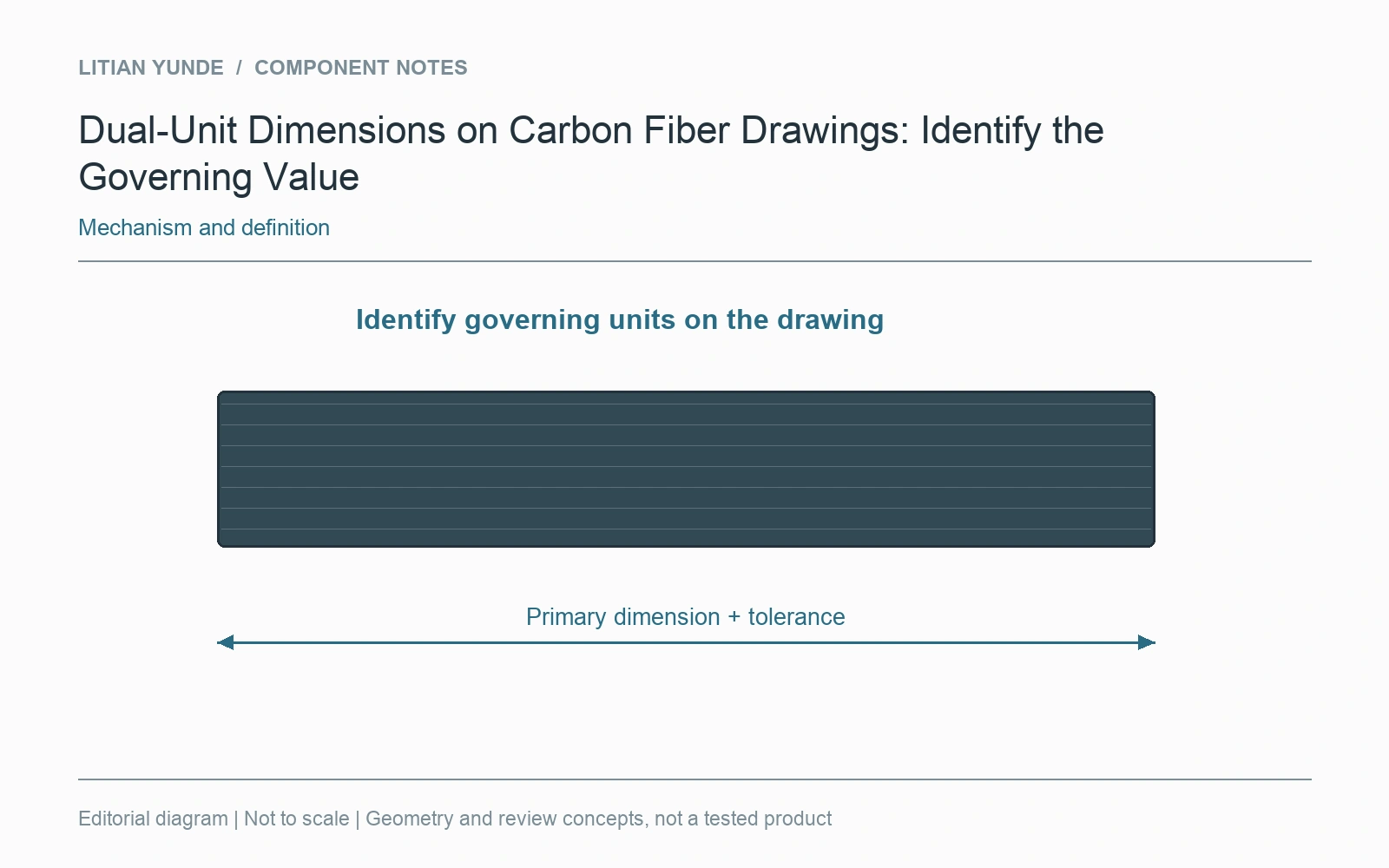
Dual-Unit Dimensions on Carbon Fiber Drawings: Identify the Governing Value
A drawing showing both millimetres and inches needs a clear rule for which value governs. Rounded secondary dimensions should not become a second, conflicting acceptance…
Read guide →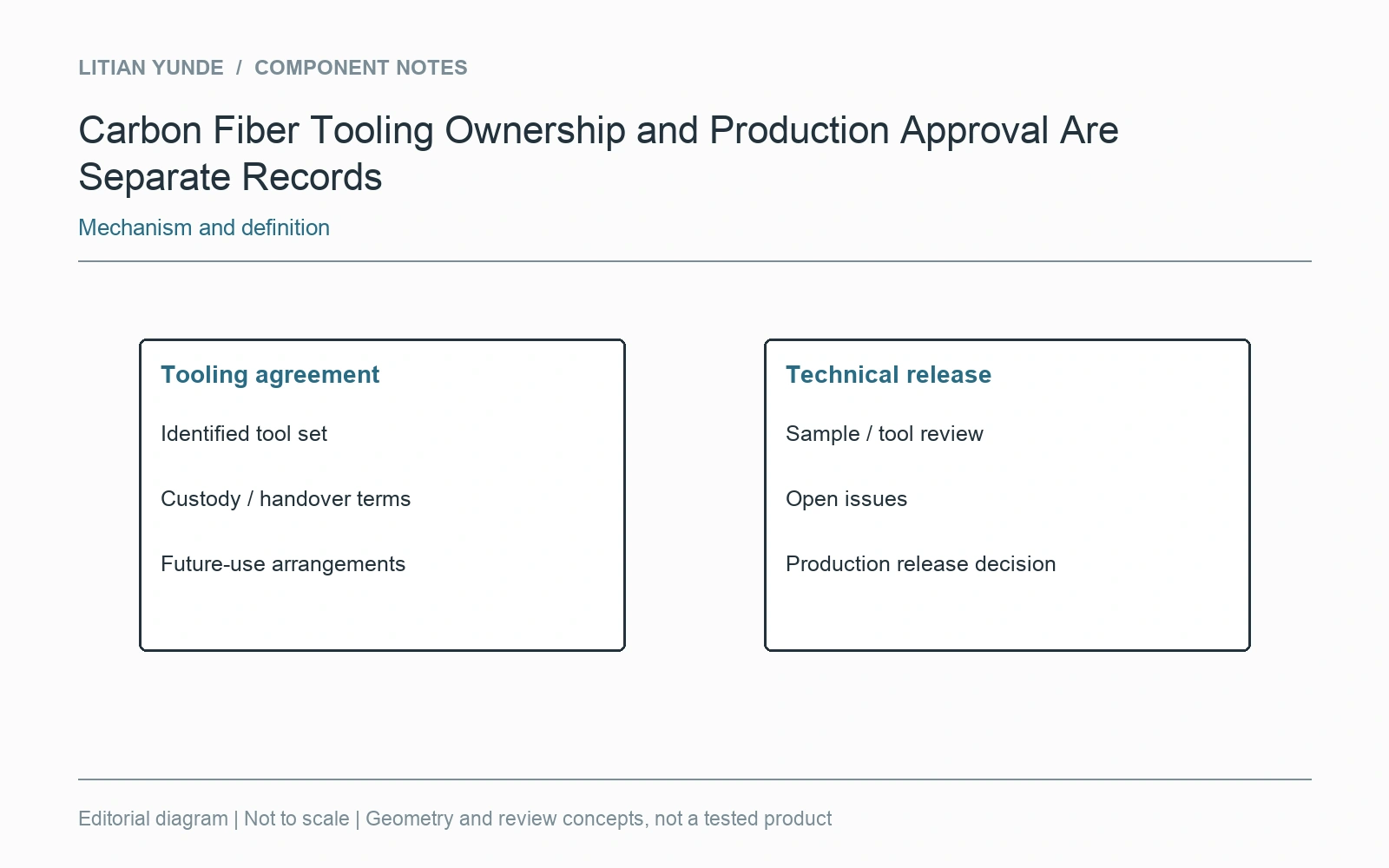
Carbon Fiber Tooling Ownership and Production Approval Are Separate Records
Paying for a mould does not, on its own, define its ownership, storage arrangements or production-release status. Put those commercial and technical questions into separate…
Read guide →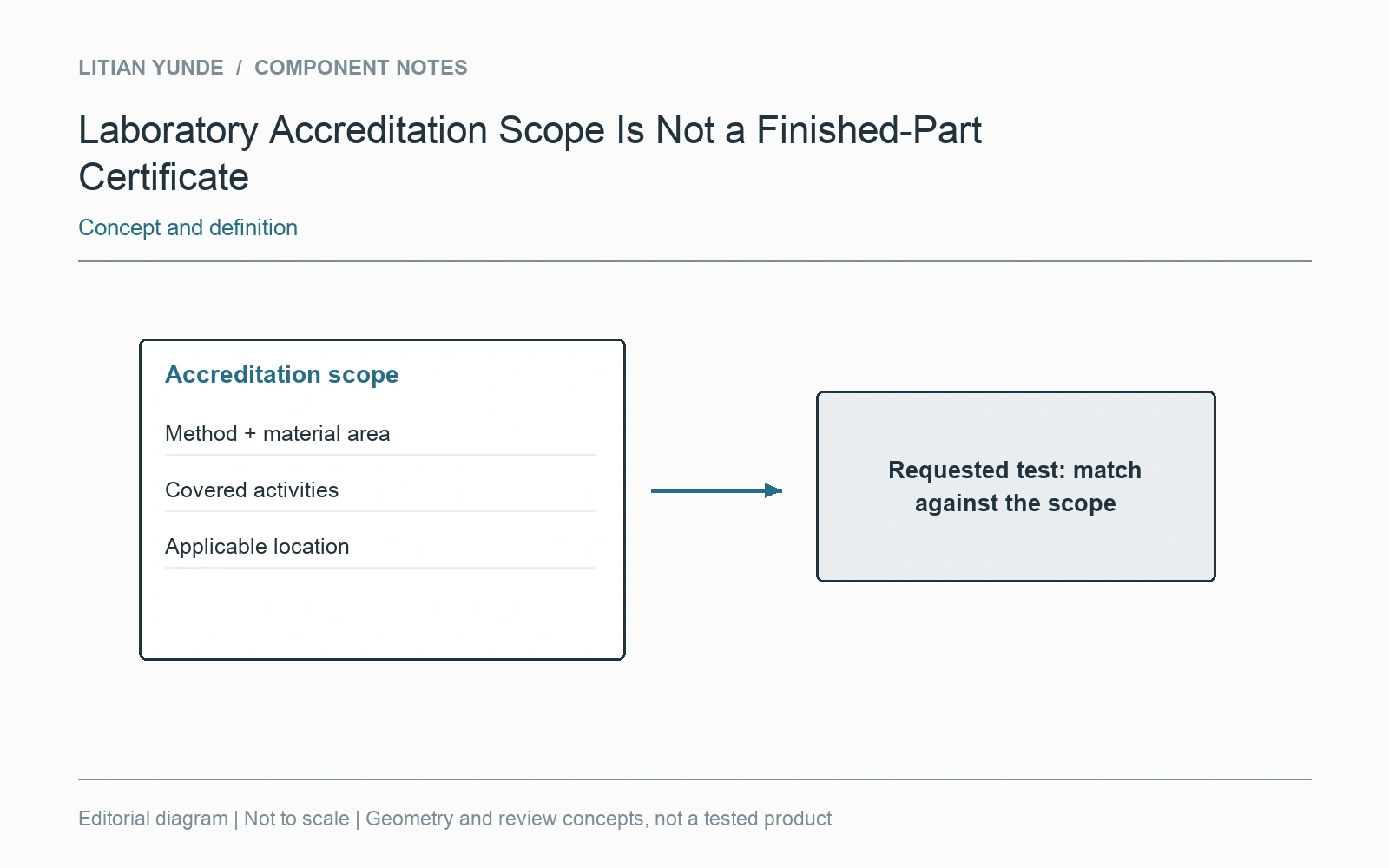
Laboratory Accreditation Scope Is Not a Finished-Part Certificate
An accredited laboratory is assessed for activities within its accreditation scope. That does not turn every test it offers into an accredited result, or make the tested…
Read guide →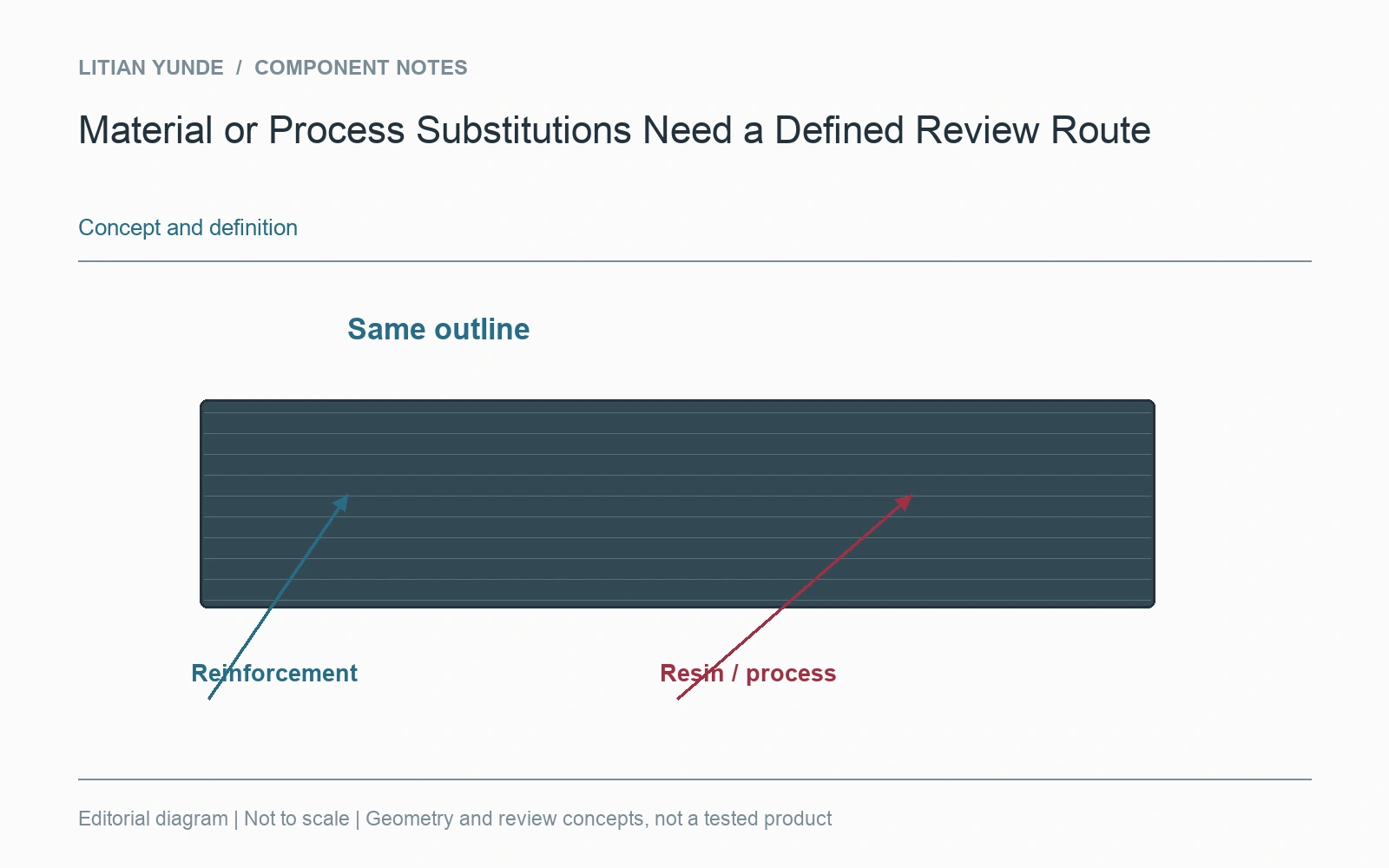
Material or Process Substitutions Need a Defined Review Route
A carbon fiber component can retain the same outline while its reinforcement, resin system or manufacturing route changes. A controlled substitution review identifies the…
Read guide →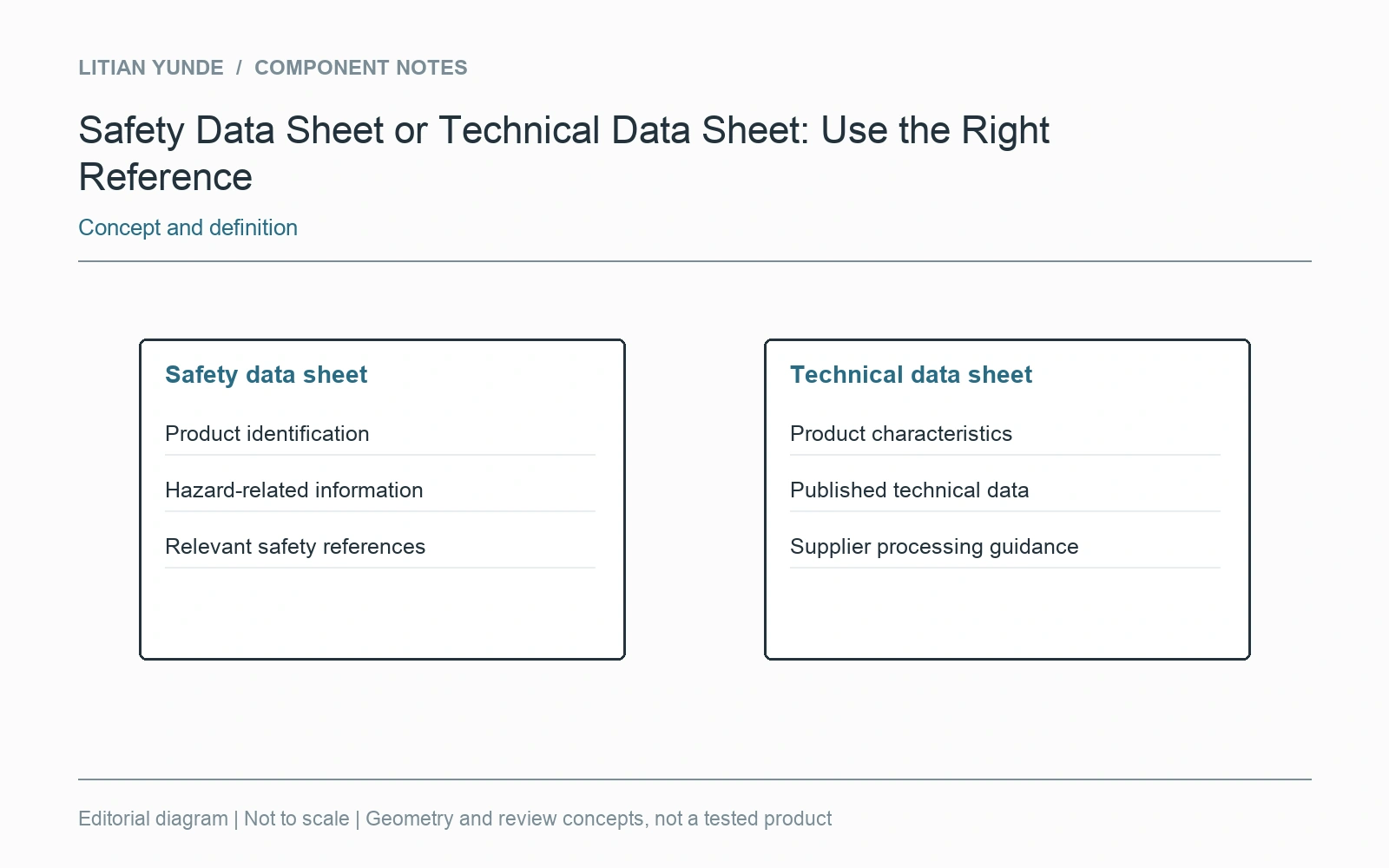
Safety Data Sheet or Technical Data Sheet: Use the Right Reference
A safety data sheet explains hazard-related information for an identified material. A technical data sheet describes product characteristics and, where supplied, processing…
Read guide →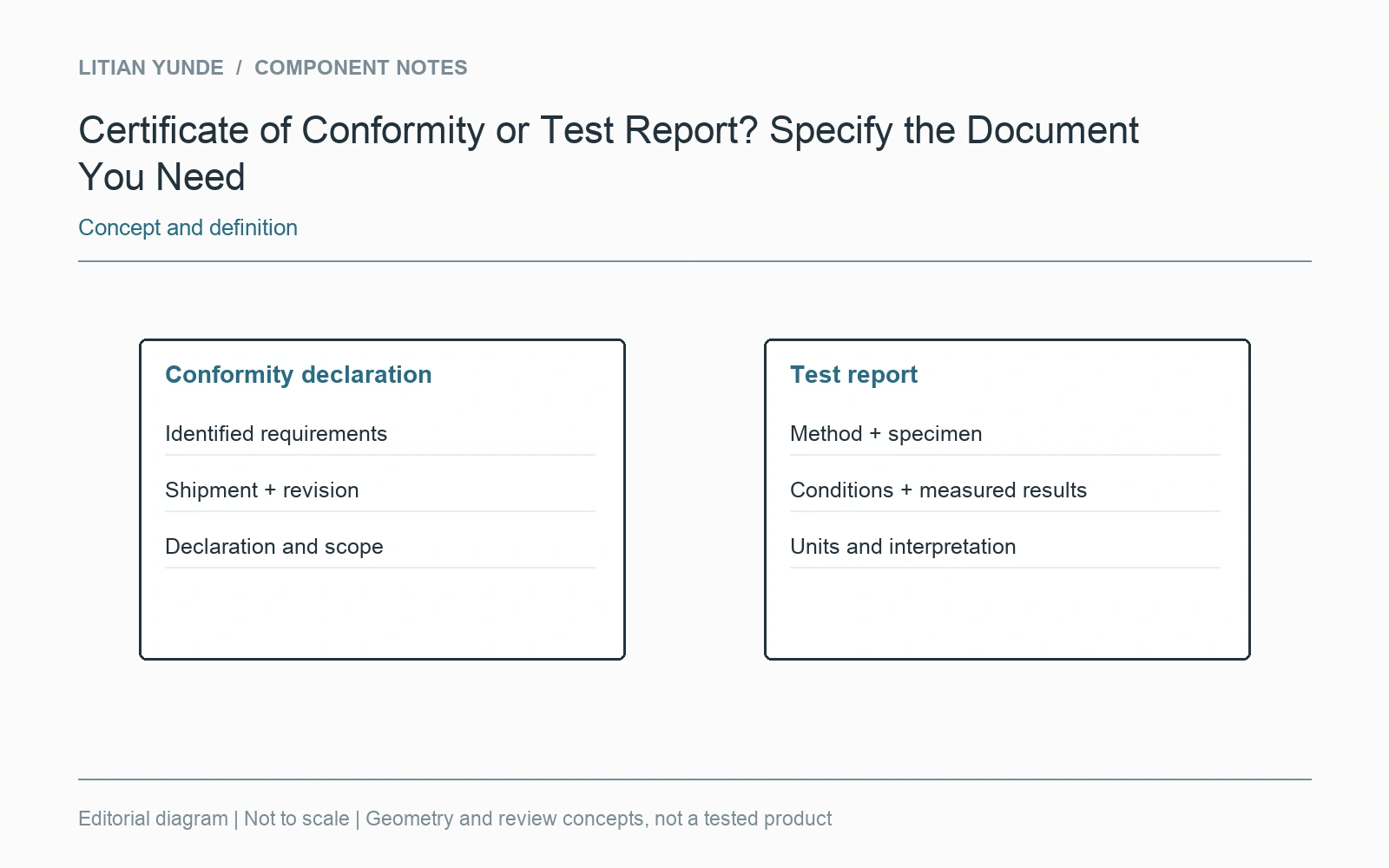
Certificate of Conformity or Test Report? Specify the Document You Need
A certificate of conformity records a declaration against identified requirements. A test report records a particular test and its results. One document may refer to the…
Read guide →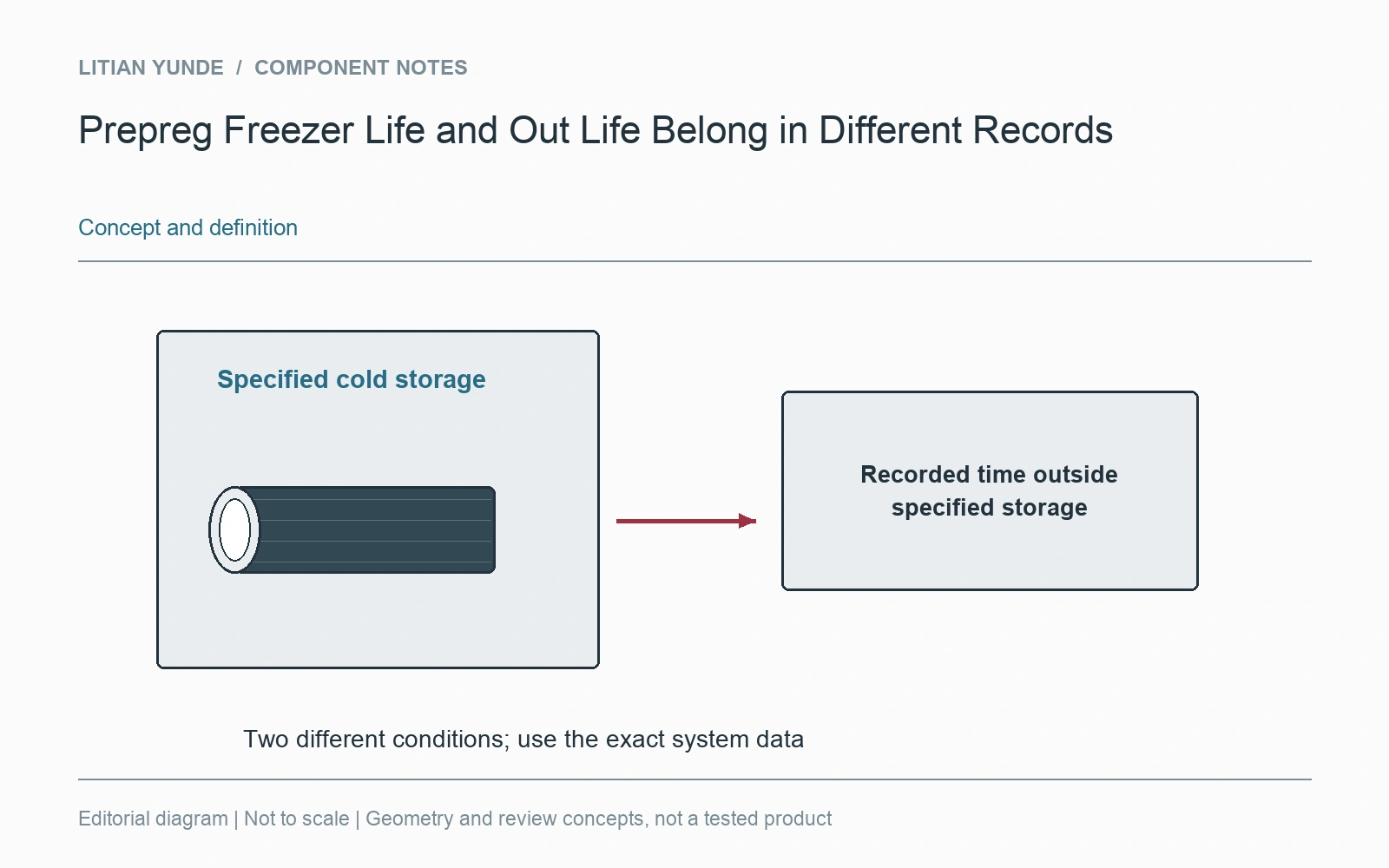
Prepreg Freezer Life and Out Life Belong in Different Records
Freezer life and out life are different material-control terms. Their limits and conditions come from the specific prepreg supplier documentation. A remaining freezer-life…
Read guide →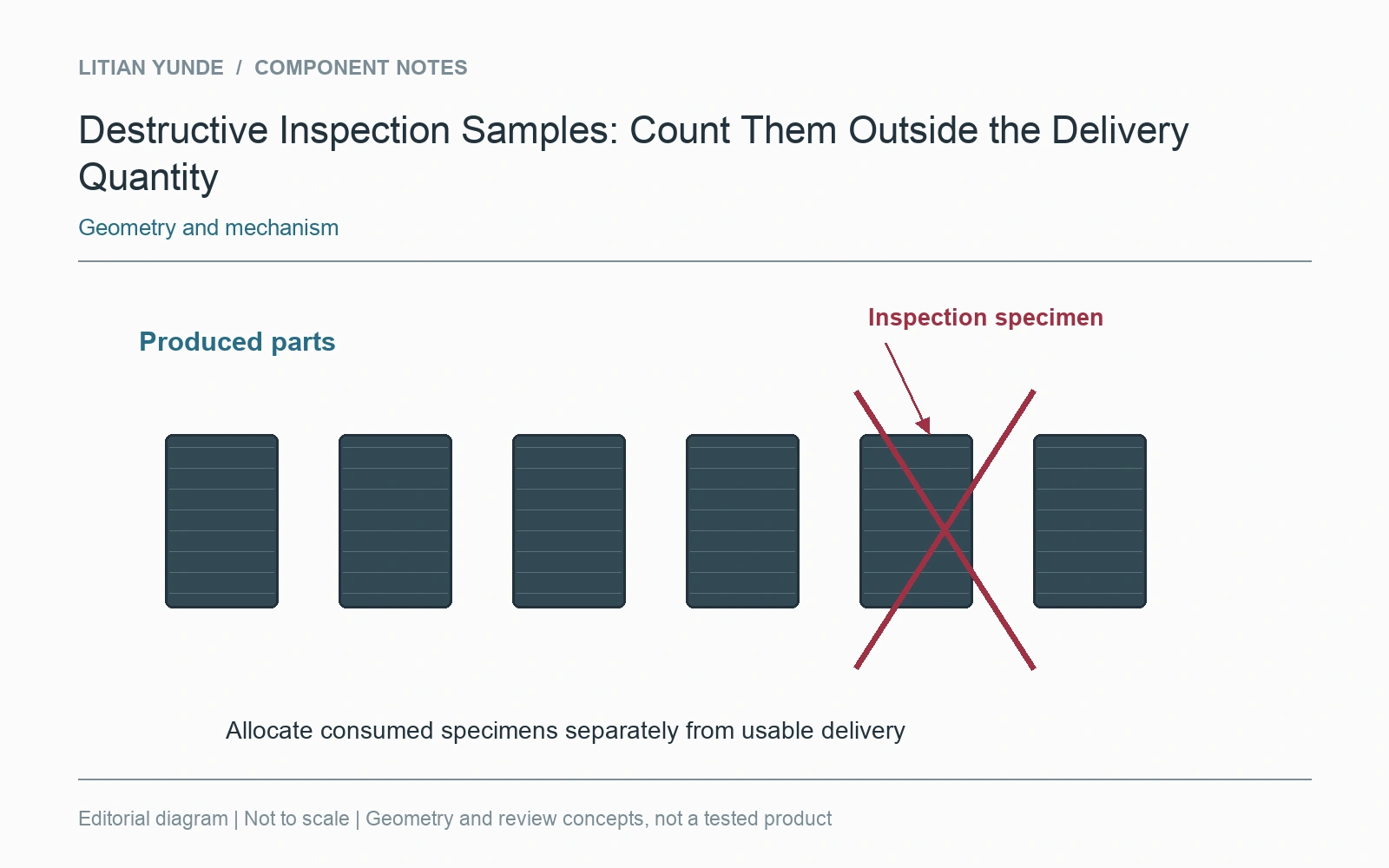
破坏性检测样品:将其从交货数量中扣除
A component used for a destructive check may no longer be available for installation. If an order needs both test pieces and usable parts, put those quantities on separate…
Read guide →
定制碳纤维订单的交货期究竟从何时开始计算?
A lead-time estimate is only useful when both parties mean the same start and finish. For a custom carbon fiber component, an enquiry date, drawing release, tooling approval…
Read guide →
在碳纤维零件图纸上标注装饰区域
“Good appearance” is difficult to inspect consistently. A cosmetic-zone drawing identifies where the surface matters most and where a different agreed condition is…
Read guide →
咨询定制碳纤维零件时应提供STEP还是STL格式文件?
For a custom component enquiry, send the model format the supplier can work with and a drawing that states the requirements. STEP and STL are not interchangeable…
Read guide →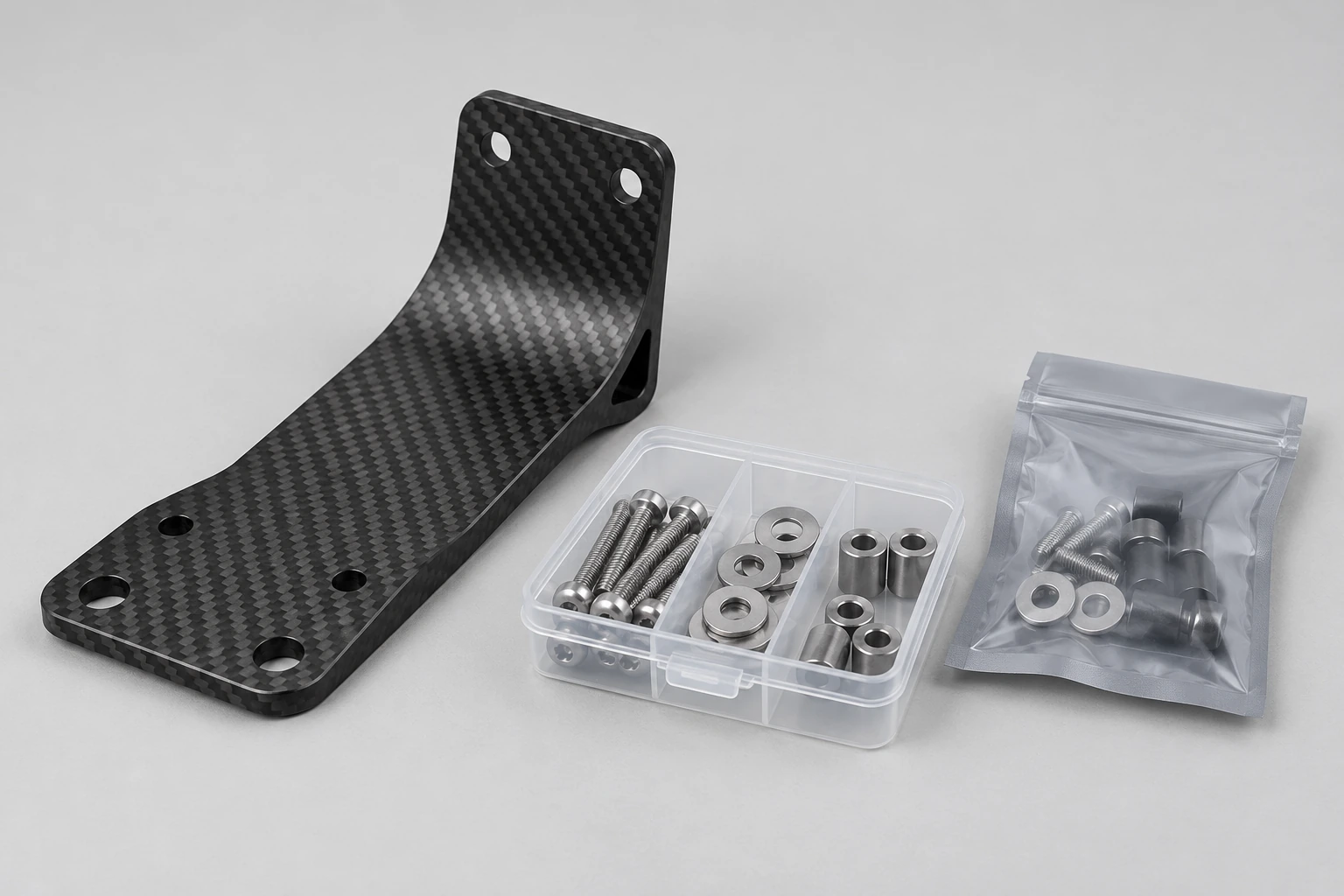
碳纤维部件的客户自备硬件:明确交接要求
When a customer supplies hardware for a carbon fiber assembly, record exactly what is handed over, what the supplier is expected to do with it and how unused or unsuitable…
Read guide →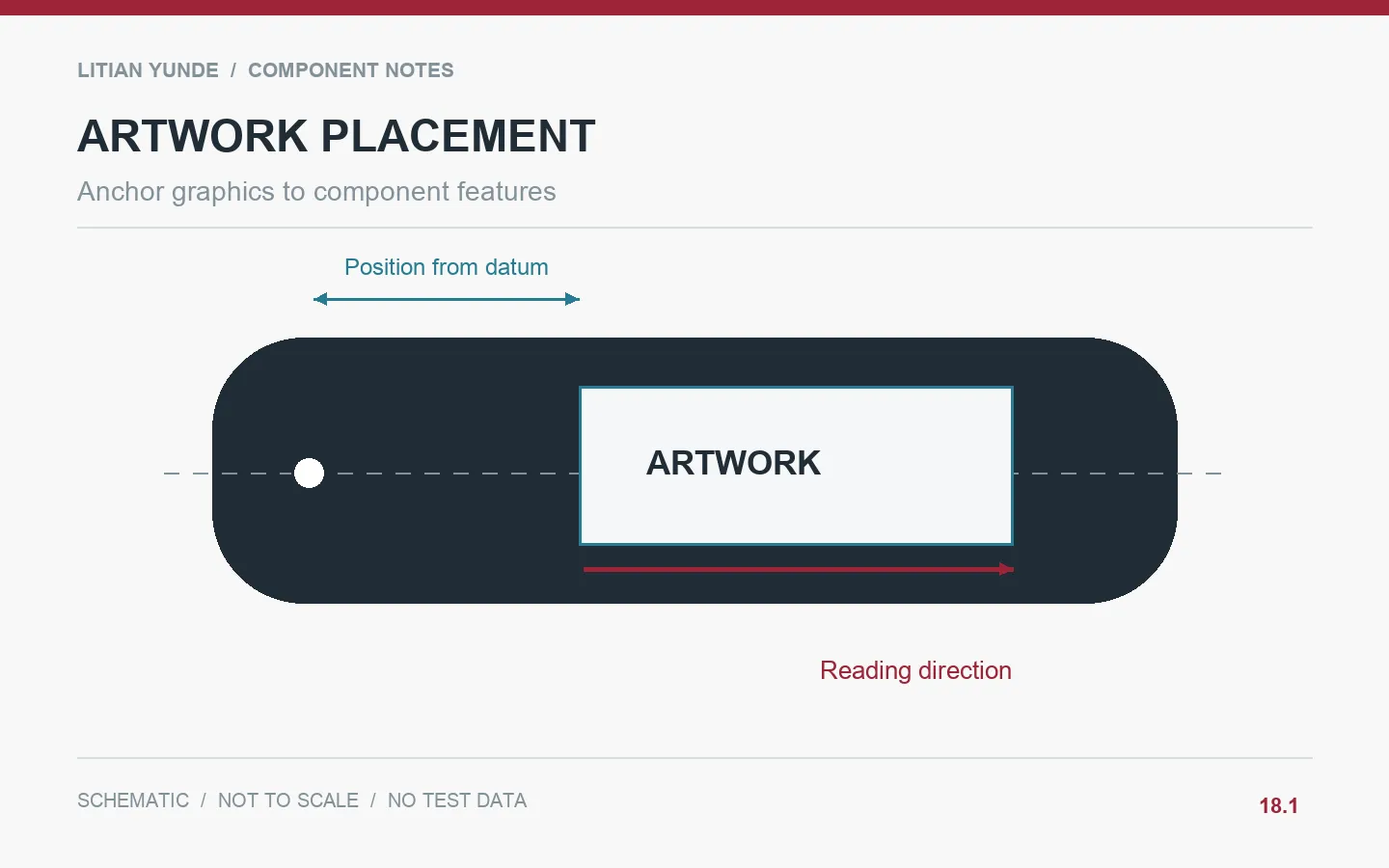
曲面碳纤维部件上的图案:确认位置和观察方向
Artwork approval on a curved carbon fiber part should cover orientation, location and the viewing condition, not just the flat graphic file. Identify the supplied finish and…
Read guide →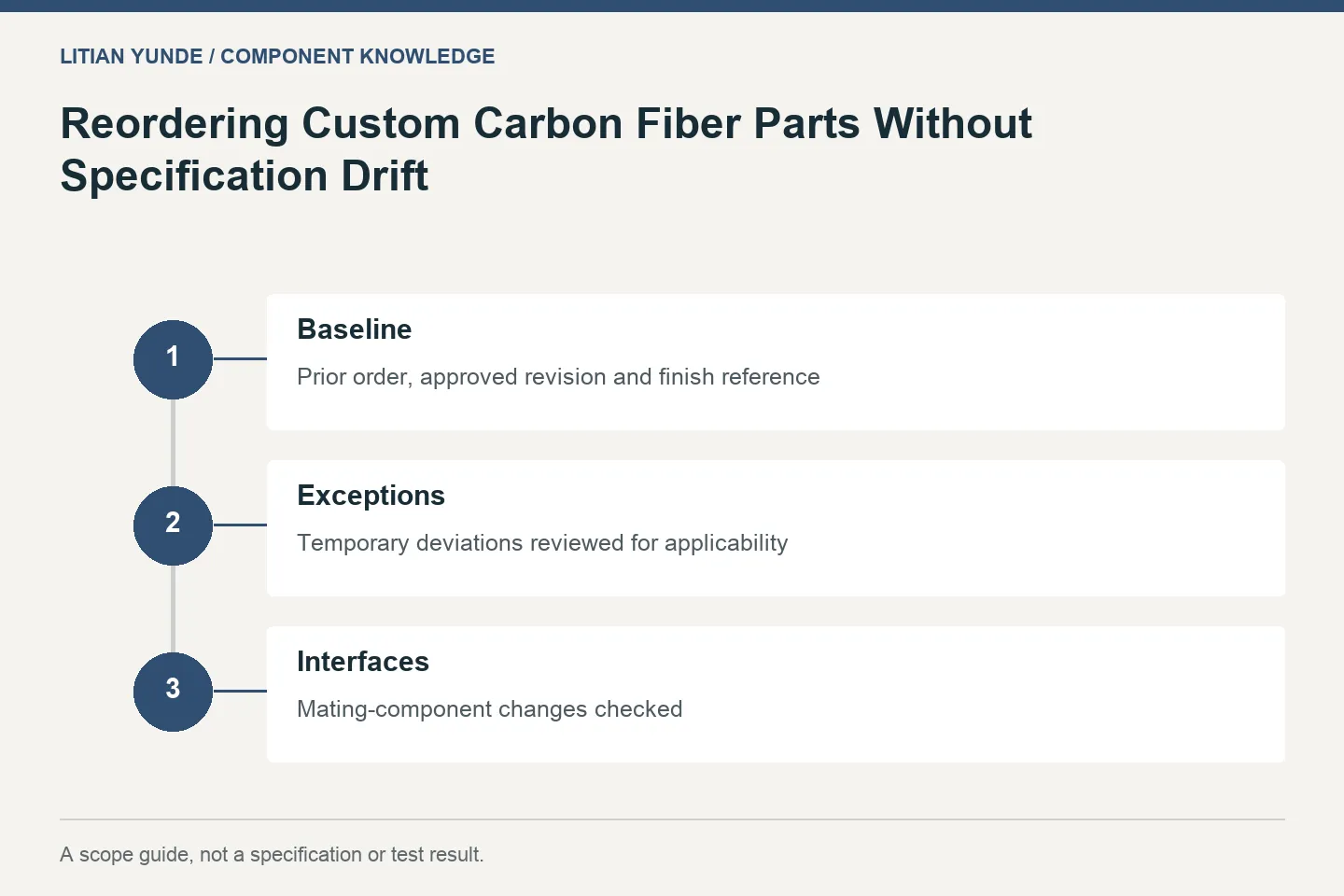
在不改变规格的情况下重新订购定制碳纤维零件
A repeat order should reference the approved definition, not simply ask for “the same as last time.” Confirm the drawing revision, material identity, finish reference and any…
Read guide →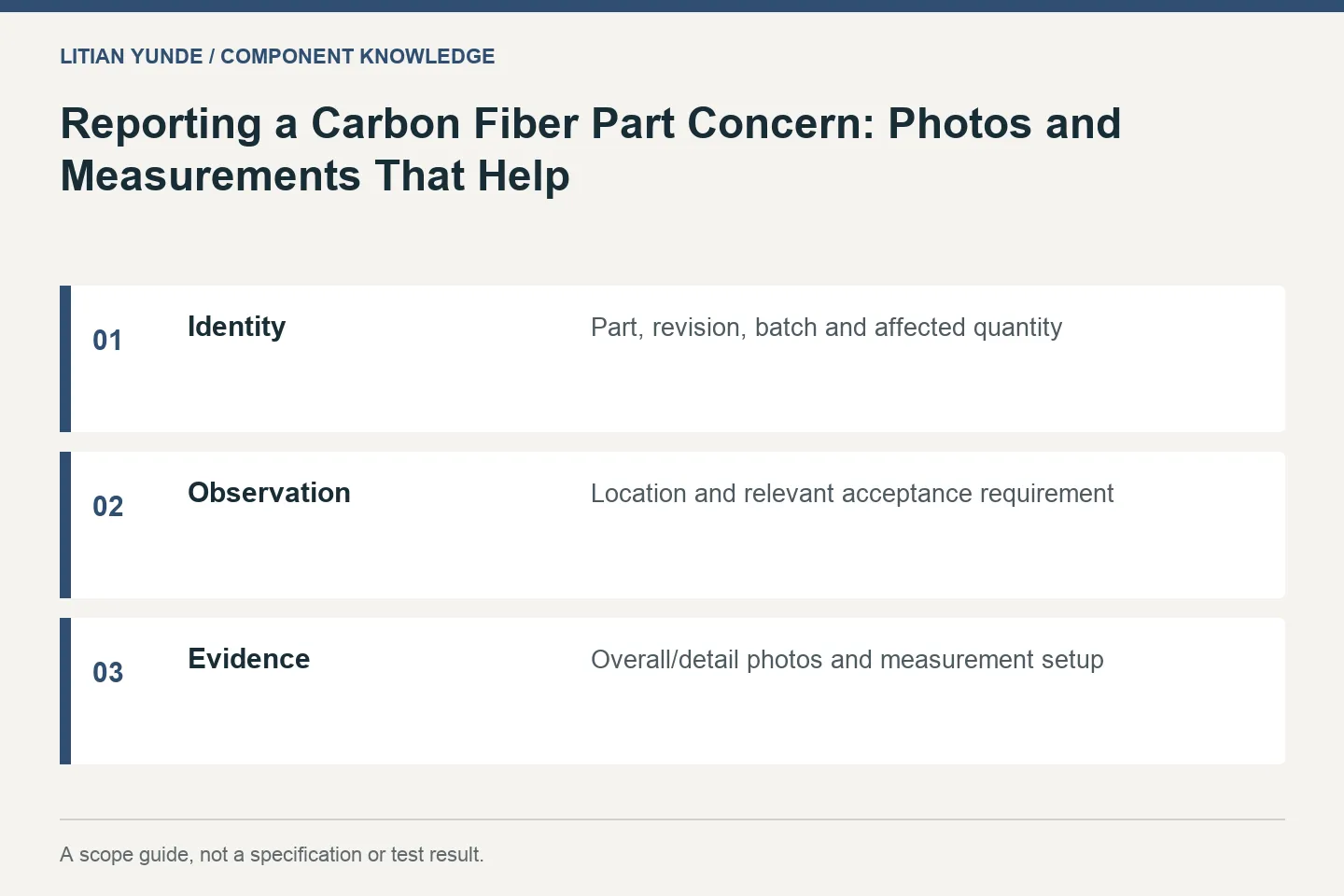
报告碳纤维部件问题:有帮助的照片和测量数据
A useful quality report identifies the part, its revision and the requirement in question, then provides clear evidence of the concern.
Read guide →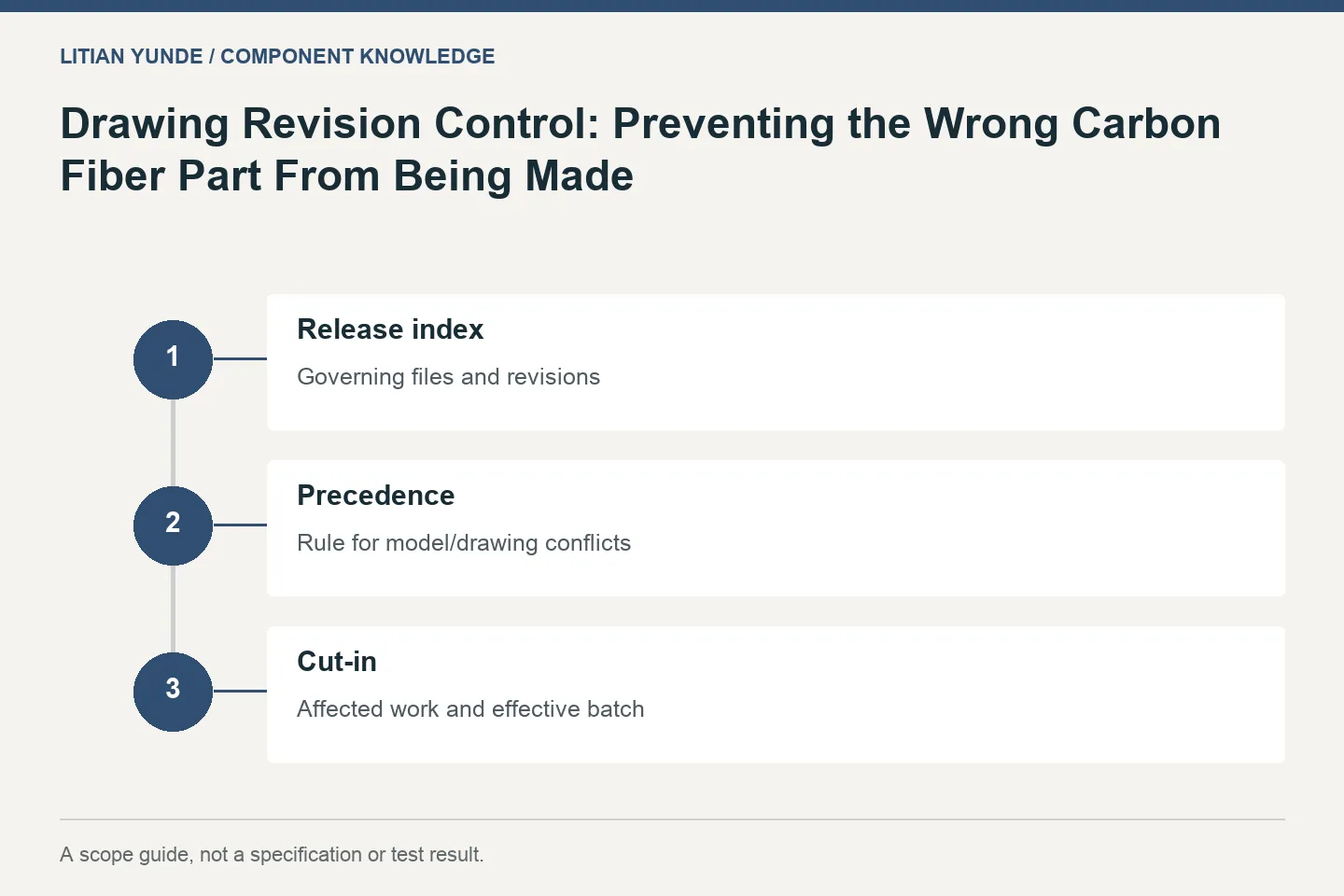
图纸版本控制:防止制造错误的碳纤维零件
A clear revision process tells everyone which definition is current and when a change takes effect.
Read guide →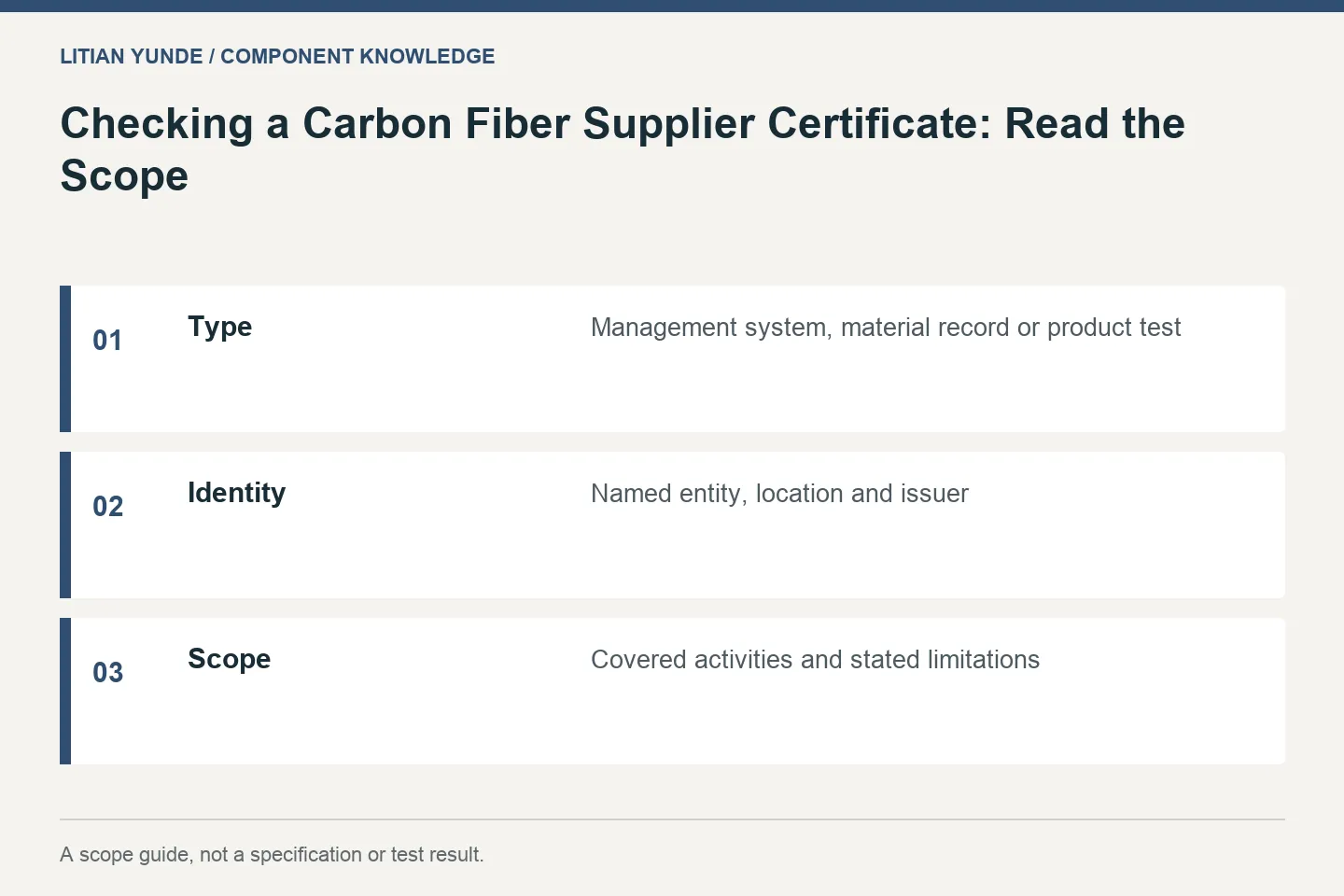
核查碳纤维供应商证书:阅读适用范围
A certificate is useful only when its identity, scope and relevance to the purchasing requirement are understood.
Read guide →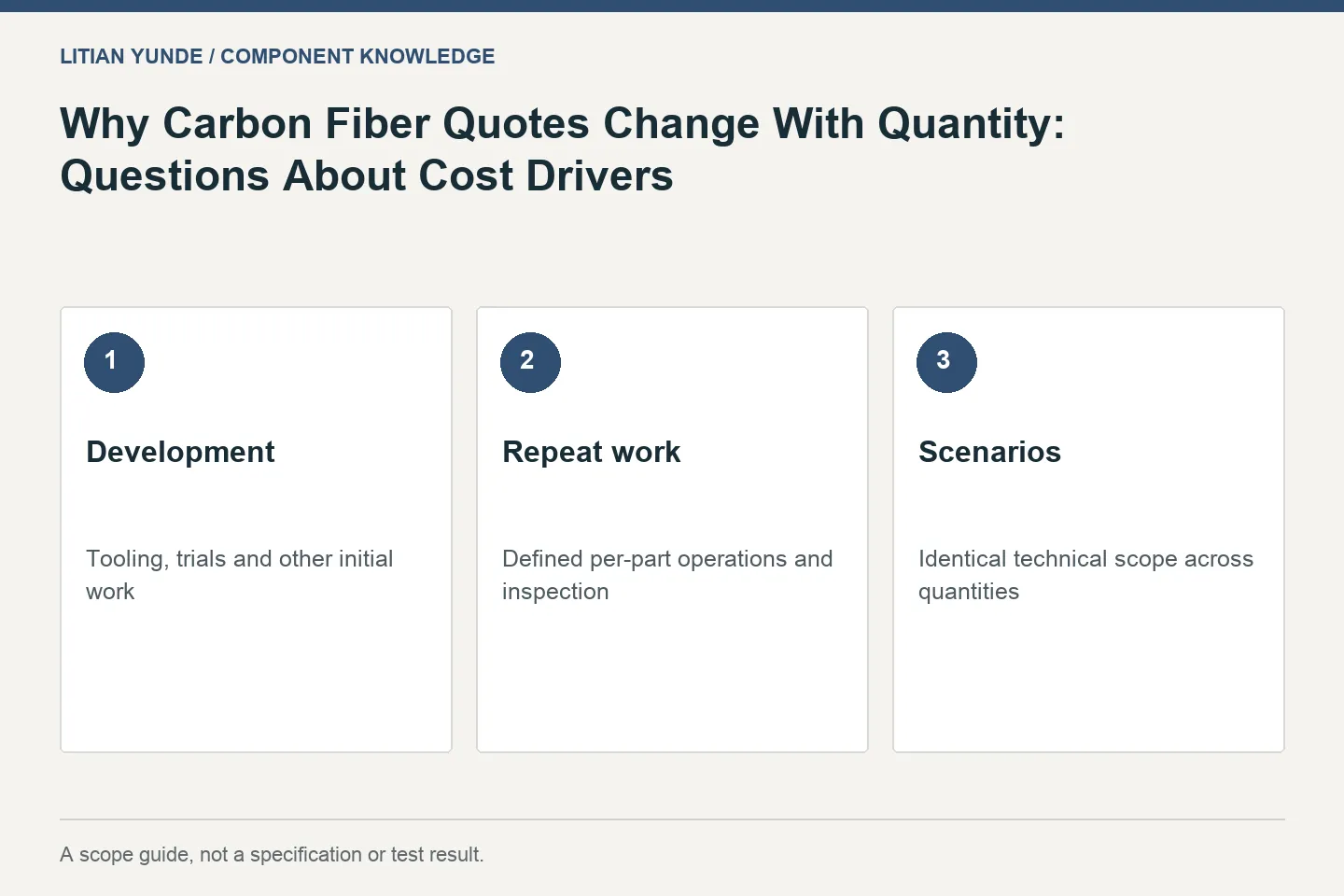
为何碳纤维报价会随数量变化:关于成本驱动因素的疑问
When a quotation changes with quantity, ask which costs are fixed, which repeat per part and which depend on the chosen production approach.
Read guide →
碳纤维部件的包装:保护关键特征
Packaging requirements should follow the geometry and acceptance criteria of the part.
Read guide →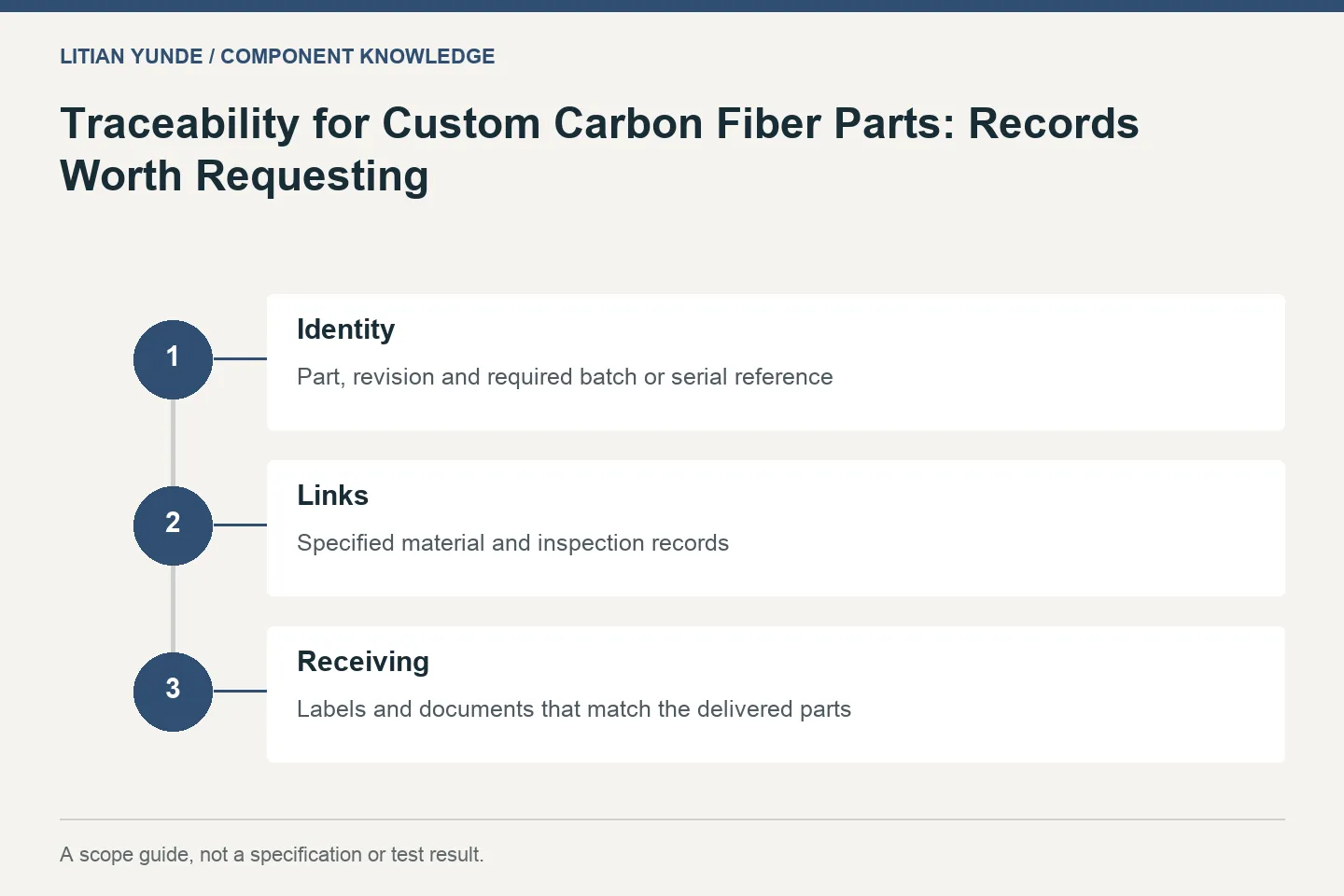
定制碳纤维零件的可追溯性:值得索取的记录
Useful traceability connects the supplied part to its agreed specification and relevant production or inspection records.
Read guide →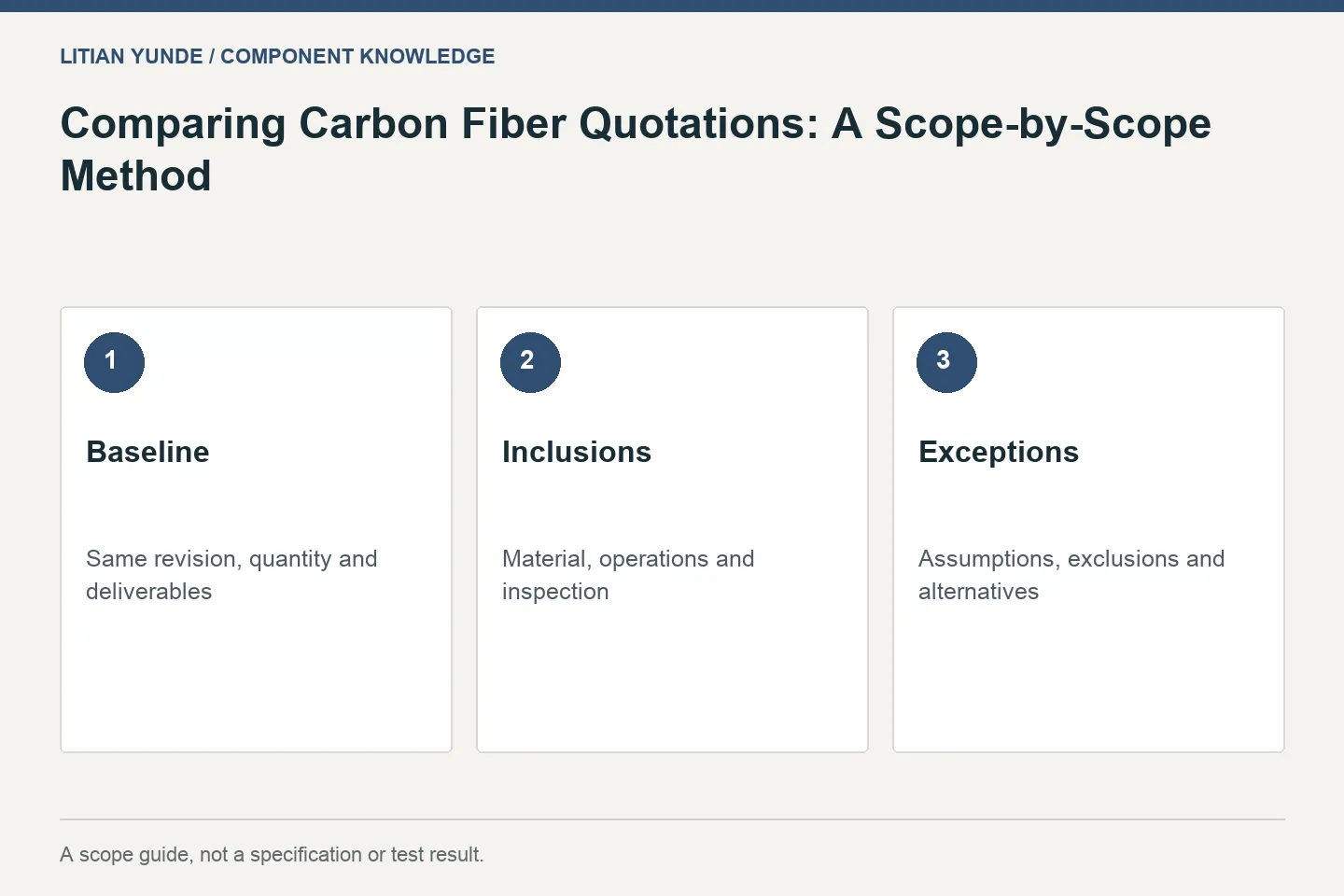
碳纤维报价比较:按项目范围逐一比较的方法
Compare quotations against a common scope before comparing the totals.
Read guide →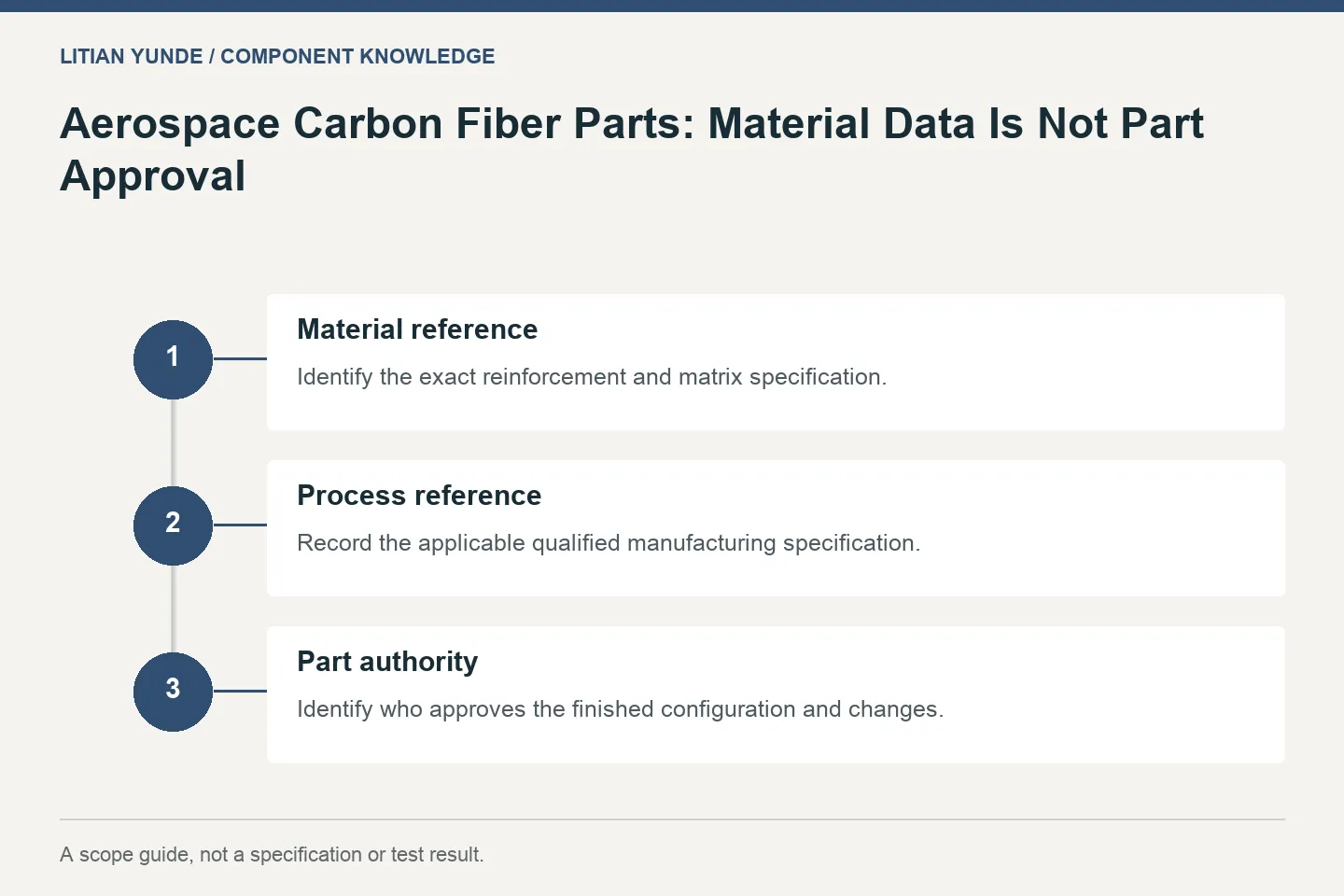
航空航天碳纤维部件:材料数据不等同于部件认证
A material datasheet and an approved aircraft component are different things. When discussing aerospace use, identify the part specification, qualified process and acceptance…
Read guide →
专用设备的碳纤维部件:明确合同范围
A specialist-equipment enquiry should define the component and the required records before using broad industry labels. A material or sector name does not tell a supplier…
Read guide →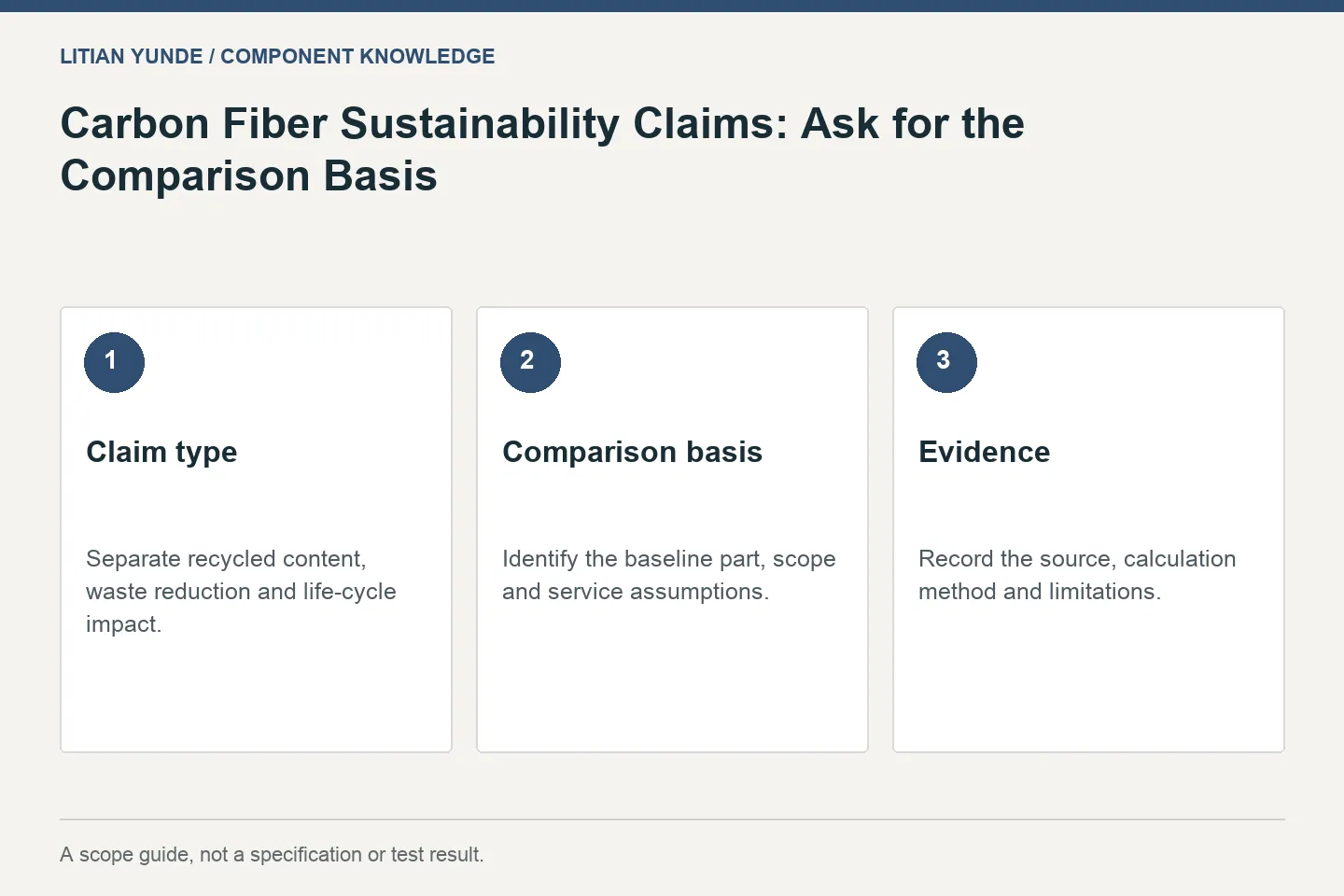
关于碳纤维可持续性的主张:请询问比较依据
A carbon fiber part should not be labelled sustainable solely because it is light. Ask what is being compared, which life-cycle stages are included and what evidence supports…
Read guide →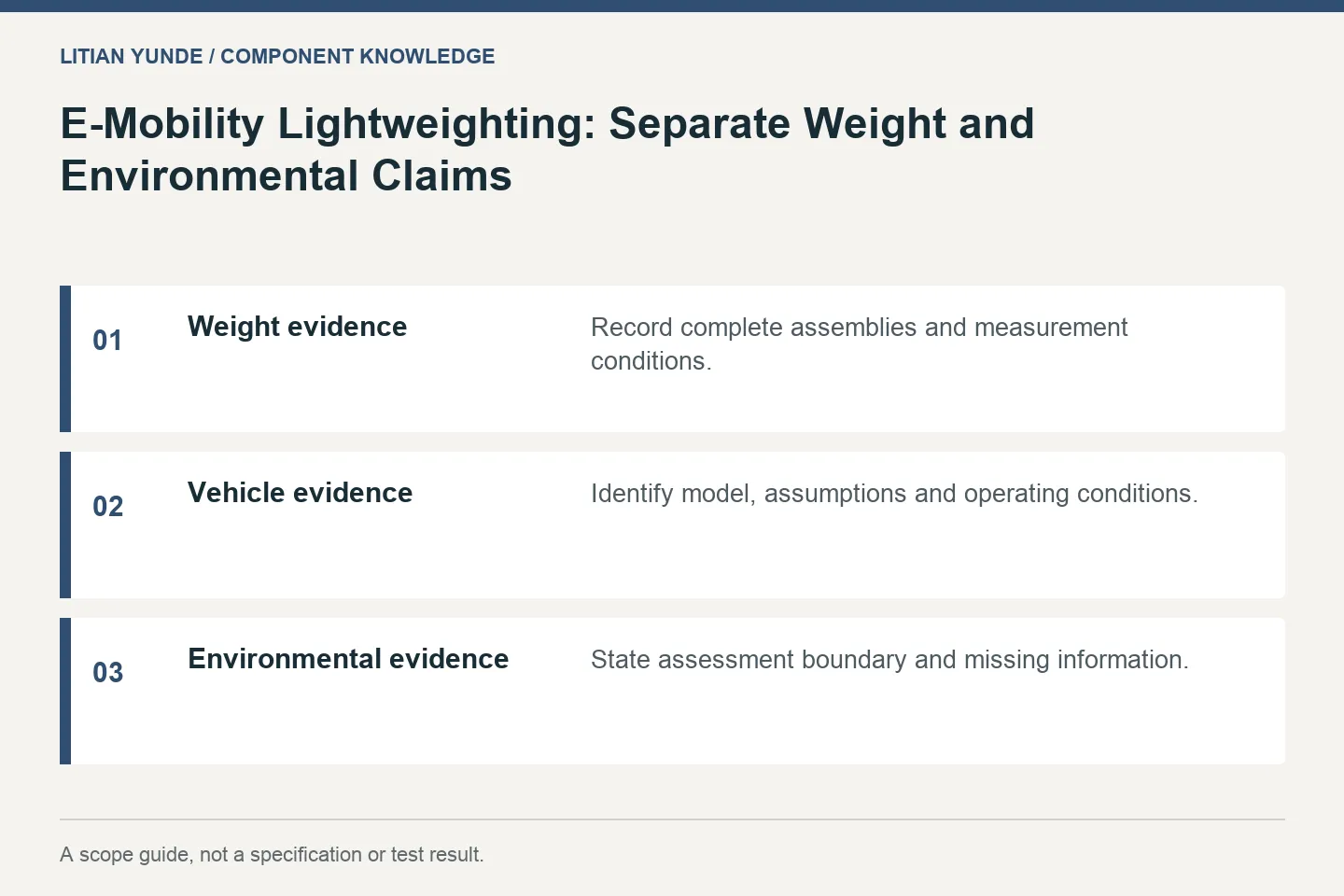
电动汽车轻量化:区分重量与环保主张
A measured weight reduction and a lower environmental impact are different claims. Keep the evidence for each separate when assessing carbon fiber components for an…
Read guide →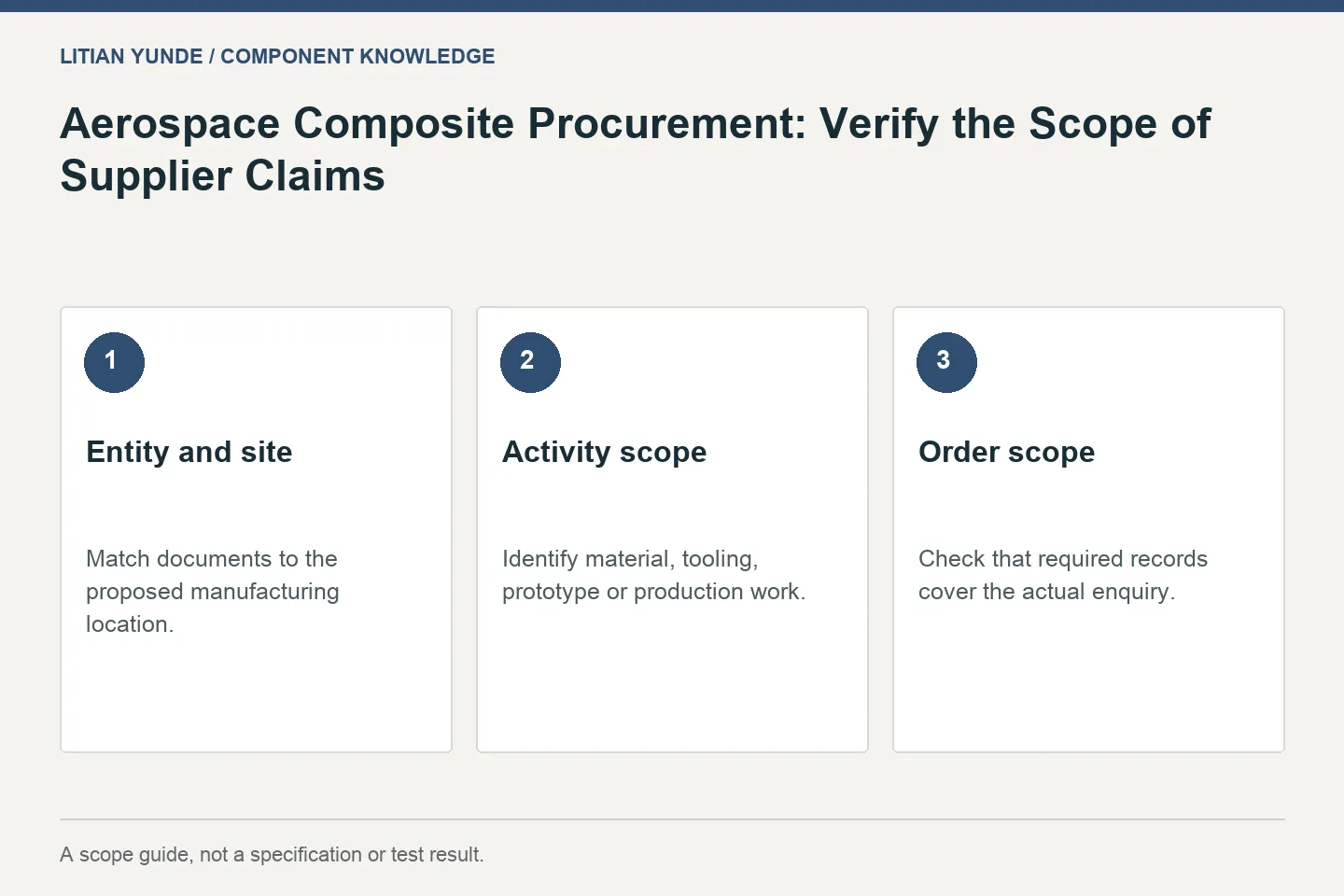
航空航天复合材料采购:核实供应商索赔范围
When a supplier mentions aerospace experience, ask which documented activity and scope that statement refers to. Experience, a management-system certificate and approval of a…
Read guide →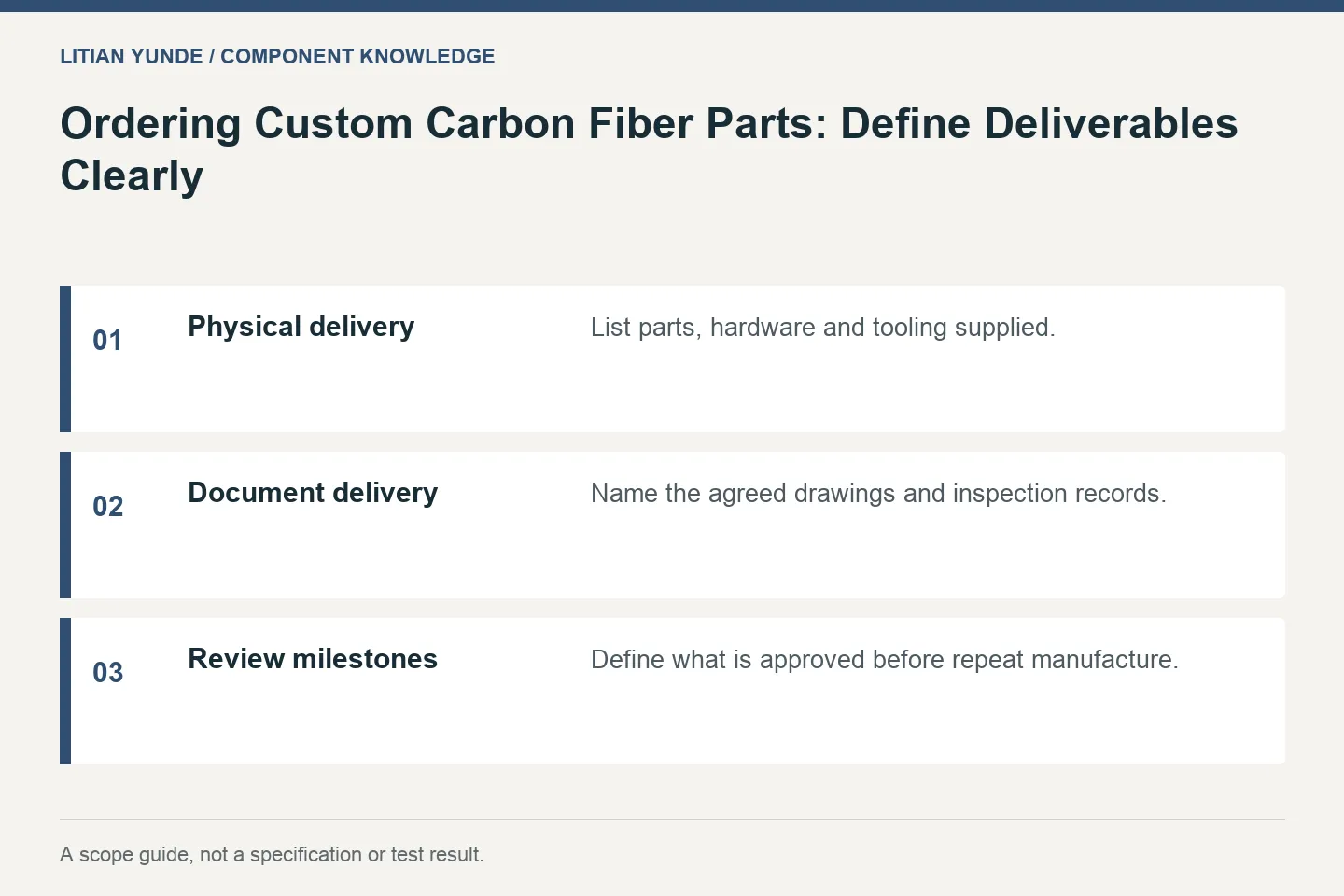
订购定制碳纤维零件:明确交付内容
A custom-part order should say whether it buys a component, an assembled item, tooling or development work. Clear deliverables prevent a reasonable supplier quotation from…
Read guide →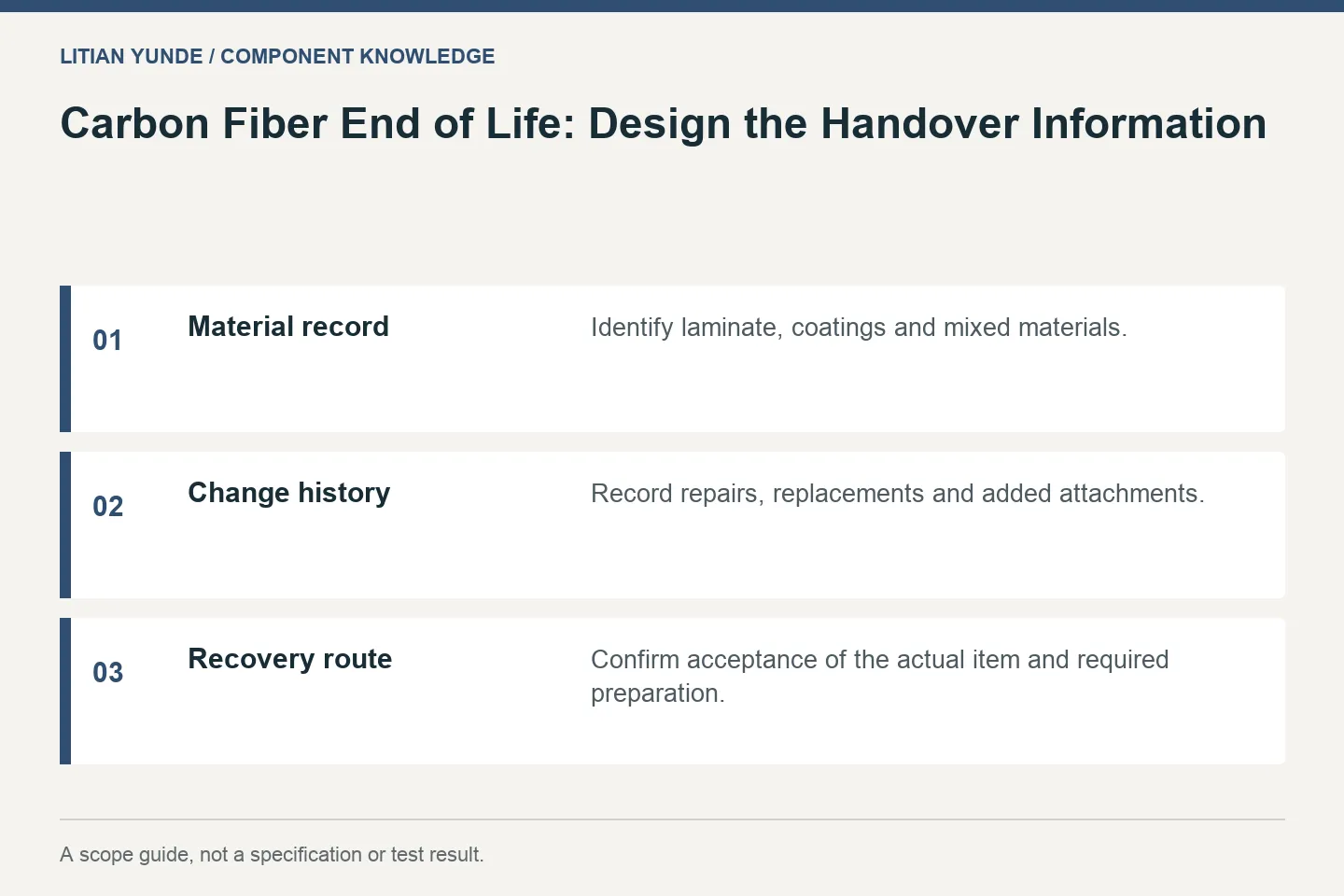
碳纤维产品生命周期结束:设计移交信息
End-of-life planning starts with knowing what the part contains. Preserve information about the laminate, coatings and attached materials so a future owner can identify…
Read guide →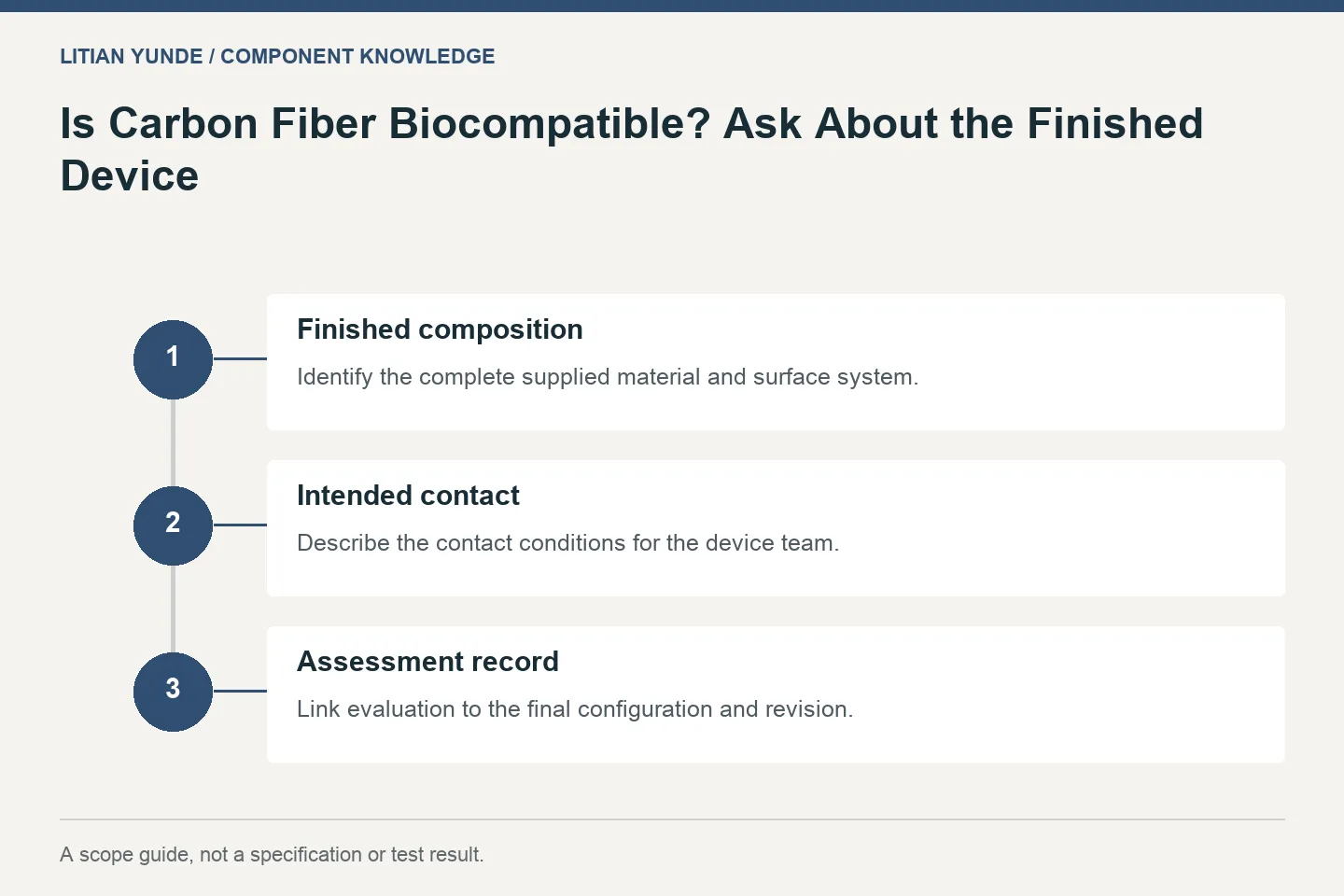
碳纤维具有生物相容性吗?请咨询成品设备的情况
The phrase carbon fiber does not establish biocompatibility. A device assessment must consider the finished configuration and its intended contact conditions, including the…
Read guide →All foundation and application notes are now included in the eight topics above.
准备好审核您的组件了吗?
Share the drawing, intended use and project requirements so our team can review the supplied scope with you.
咨询定制需求