
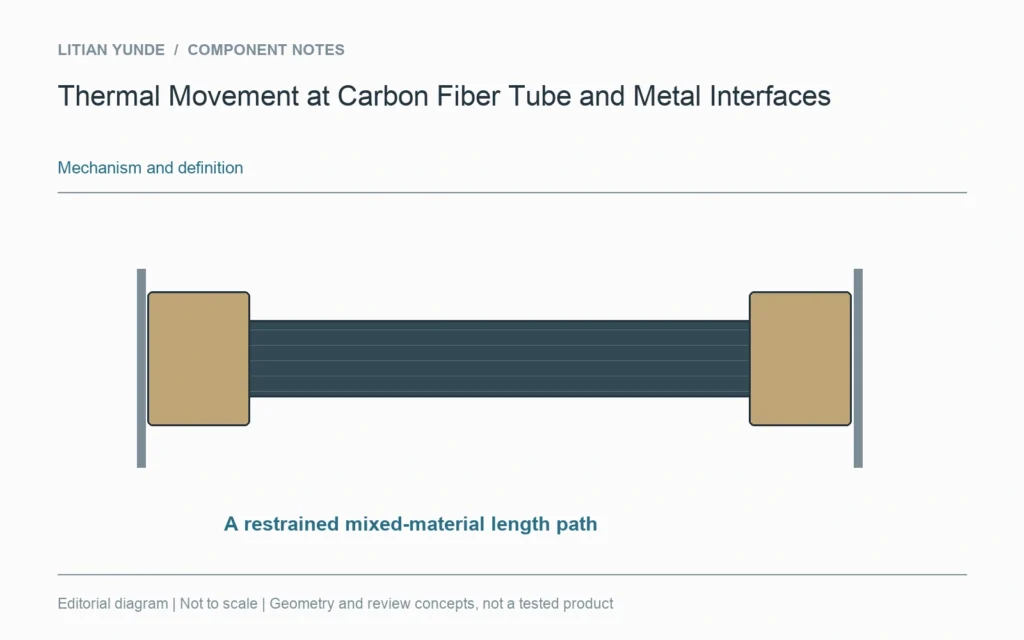
A carbon fiber tube and its metal fittings can respond differently to temperature changes. The laminate definition and the restrained assembly matter. “Low thermal expansion” is not enough information to decide whether the connection needs movement allowance.
Identify the complete length path
Show which members are connected and where movement is restrained or permitted. An assembly fixed at both ends is a different problem from a member with one sliding interface. Include fittings, adhesives and adjacent structure in the discussion where they participate in that path.
Use directional material information
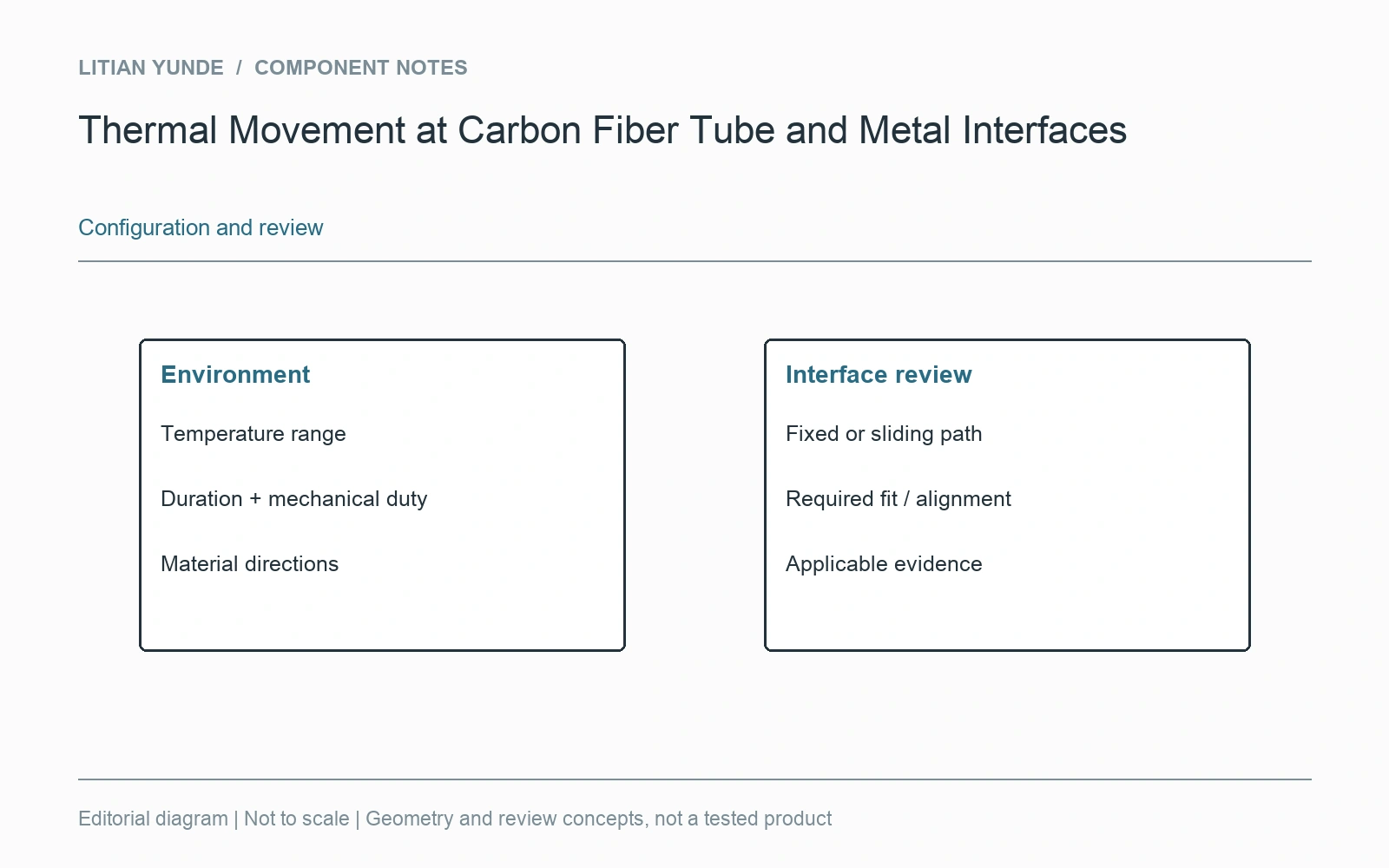
Composite expansion behaviour belongs to a defined material and direction. Do not assign a single universal value to every carbon fiber tube based on its visible weave. If a calculation is required, identify the material data and temperature range used, including uncertainty in the proposed construction.
Review fit across the operating condition
Describe the expected environment and the functional requirement, such as clearance, alignment or retained position. The supplier can then flag which interface details need engineering review. A room-temperature sample fit does not, by itself, establish the behaviour of a restrained mixed-material assembly at another temperature. Keep the agreed condition with the inspection or qualification record.
Further reading: Gurit: guide to composites.