
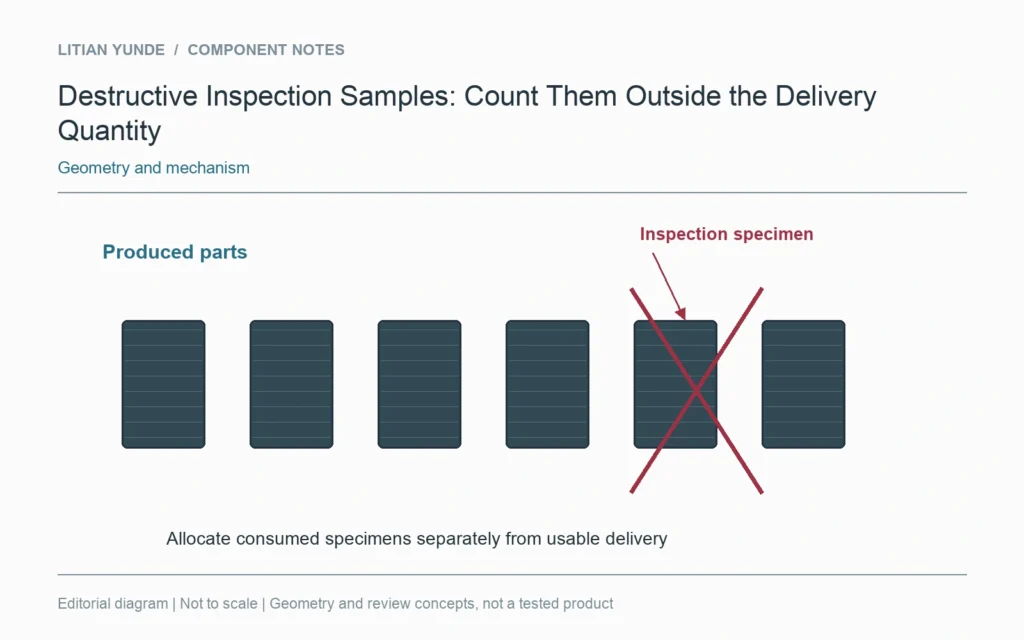
用于破坏性检验的部件可能已无法用于安装。如果订单同时需要试件和可用零件,请将这两类零件的数量分别列在不同的行中。否则,已完成的生产统计数据可能会掩盖交货短缺的情况。.
Three counts can exist in one order
The manufactured quantity, the quantity allocated to inspection and the quantity released for delivery need not be the same. Some checks consume a component; others leave it intact but may change its condition or release status. State the required usable delivery quantity explicitly, then identify any additional pieces required by the agreed inspection plan.
Name the item that will be tested
A coupon, a separate test article and a finished production component are different items. Identify which one the test plan calls for and how it is related to the order. A coupon should not silently replace a specified whole-part test, and a whole part should not be removed from the delivery batch without an agreed allocation. Keep the specimen identity connected with the resulting record.
Decide what happens after the check
A destructively tested piece may be retained for review, returned as a marked sample or handled through an agreed disposal route. It should not re-enter the usable delivery stock. Record that disposition alongside its identity. For a non-destructive check, release still depends on the relevant acceptance decision rather than simply on the part remaining in one piece.
Make replacement and resampling visible
If a failed or inconclusive result requires another specimen, the inspection plan should explain how that decision is authorised and where the additional sample comes from. It can affect the available delivery quantity and schedule. Retain those decisions rather than quietly taking more pieces from the finished batch. A concise quantity reconciliation gives the buyer a clear view of what was produced, used for inspection and actually supplied.
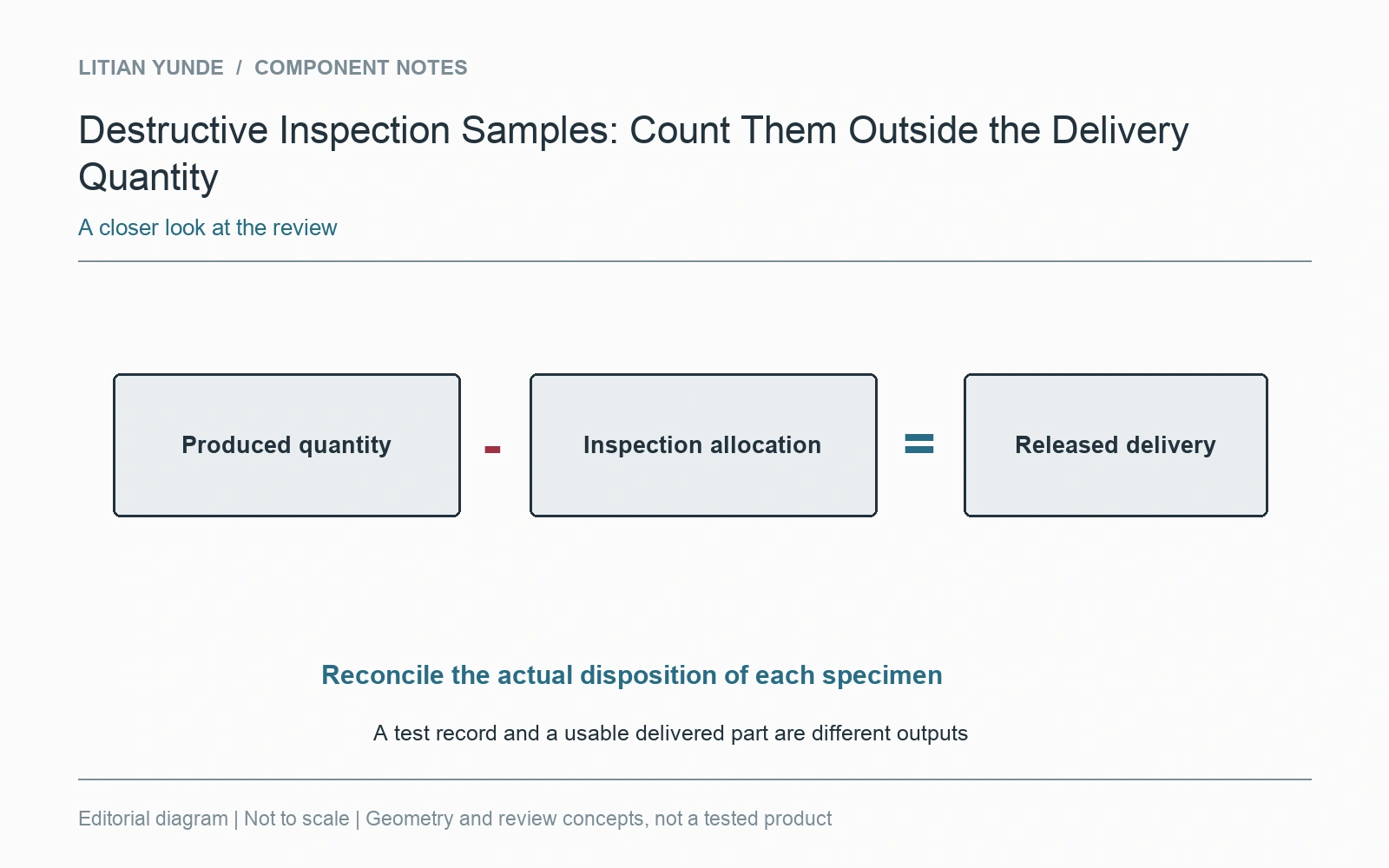
For the project review: usable delivery quantity; separate specimen type and allocation; specimen identity and disposition; additional sampling decisions.