
Litian Yunde / Knowledge hub
Carbon fiber knowledge centre.
312 practical guides across eight topics. Find material definitions, component design questions, manufacturing considerations and the records needed for a clear purchase enquiry.
Browse by topic, or search all 312 guides.
Matériaux et stratifiés
Comprendre les descriptions relatives aux renforts en fibre de carbone et aux stratifiés : taille des fils, grammage du tissu, proportion de fibres, épaisseur des couches, orientation et structure.
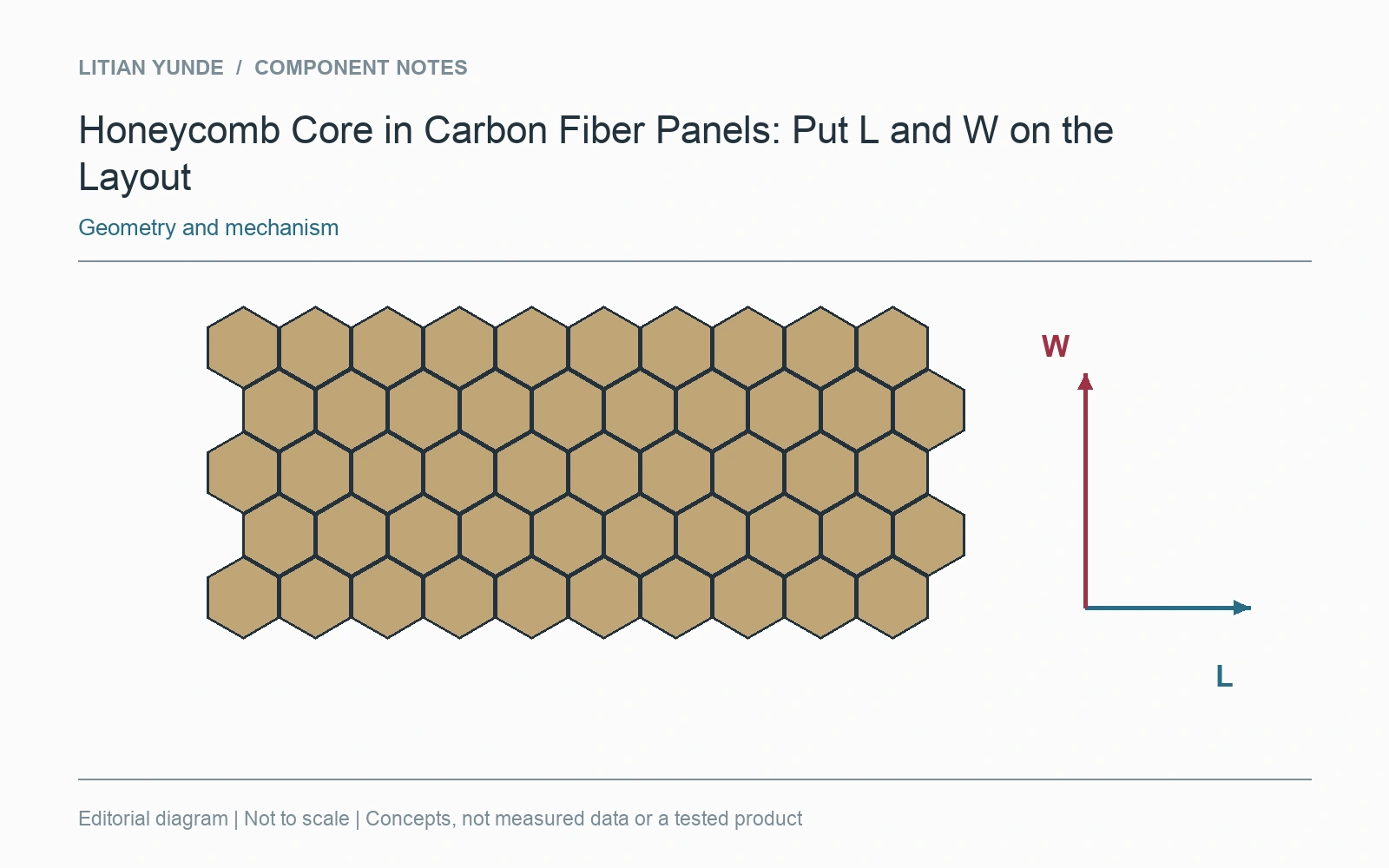
Noyau en nid d'abeille dans les panneaux en fibre de carbone : inscrire « L » et « W » sur le schéma
Honeycomb core has its own direction labels. Show how the supplier’s L, W and thickness directions relate to the carbon fiber panel drawing. Core density and cell size do not…
Read guide →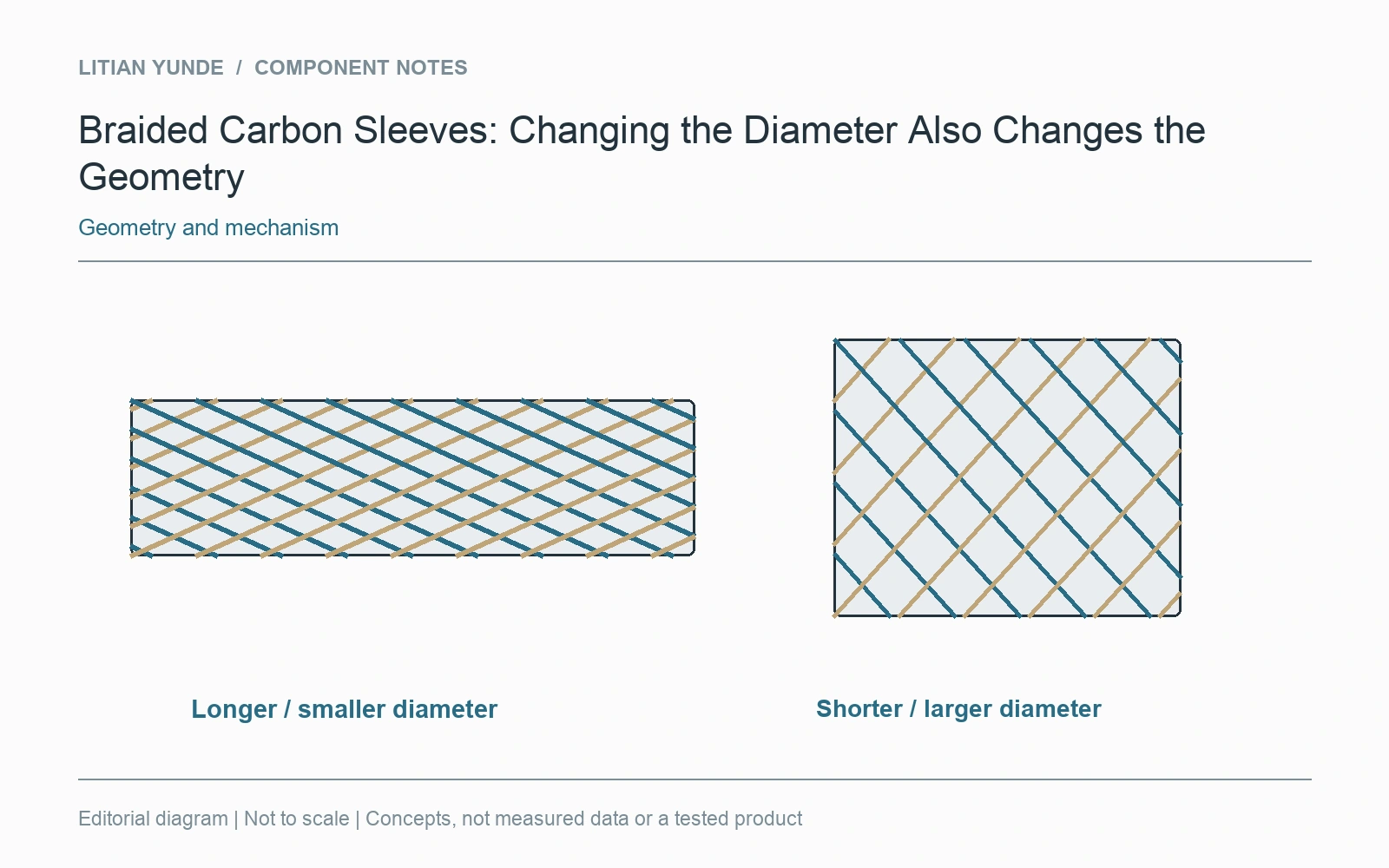
Manchons en carbone tressé : la modification du diamètre entraîne également une modification de la géométrie
A dry braided sleeve can expand or contract to fit a shape, but its fiber angle and occupied length change with that adjustment. Specify the sleeve product and the geometry…
Read guide →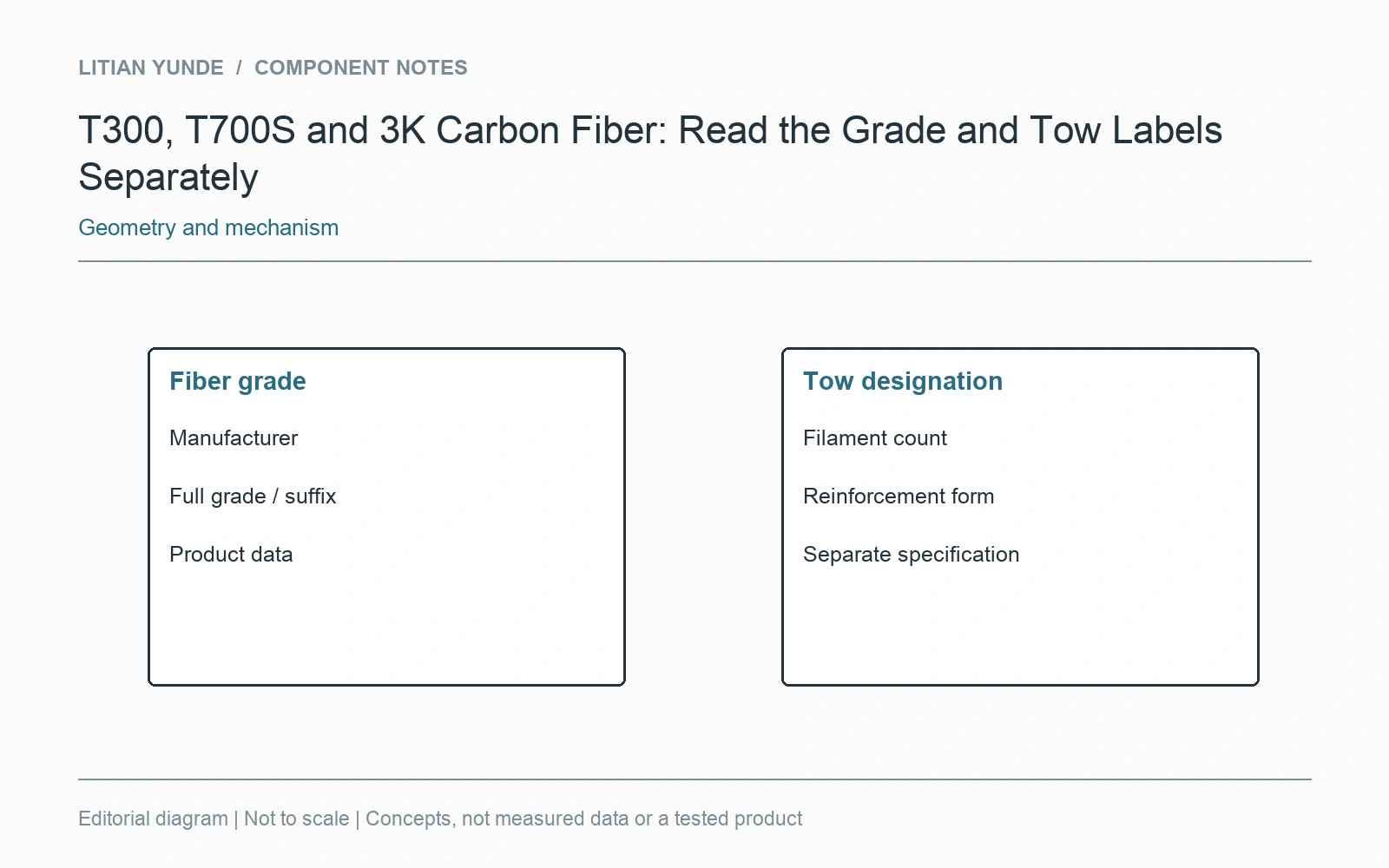
T300, T700S et fibre de carbone 3K : lisez séparément les étiquettes indiquant la qualité et le type de filament
A fiber grade and a tow designation describe different things. T300 or T700S identifies a particular manufacturer’s fiber grade; a label such as 3K describes a filament count…
Read guide →
Clear Coating or In-Mould Gelcoat on Carbon Fiber? Describe the Surface System
A transparent finish can be formed through different surface systems. Identify whether the quoted part includes an in-mould surface layer, a coating applied after moulding,…
Read guide →
Mélange de résine époxy pour les travaux sur fibre de carbone : les rapports pondéraux et volumétriques doivent être indiqués sur les étiquettes
Use the mixing ratio and measurement basis specified for the exact resin and hardener. A ratio by weight cannot simply be treated as the same ratio by volume. The two…
Read guide →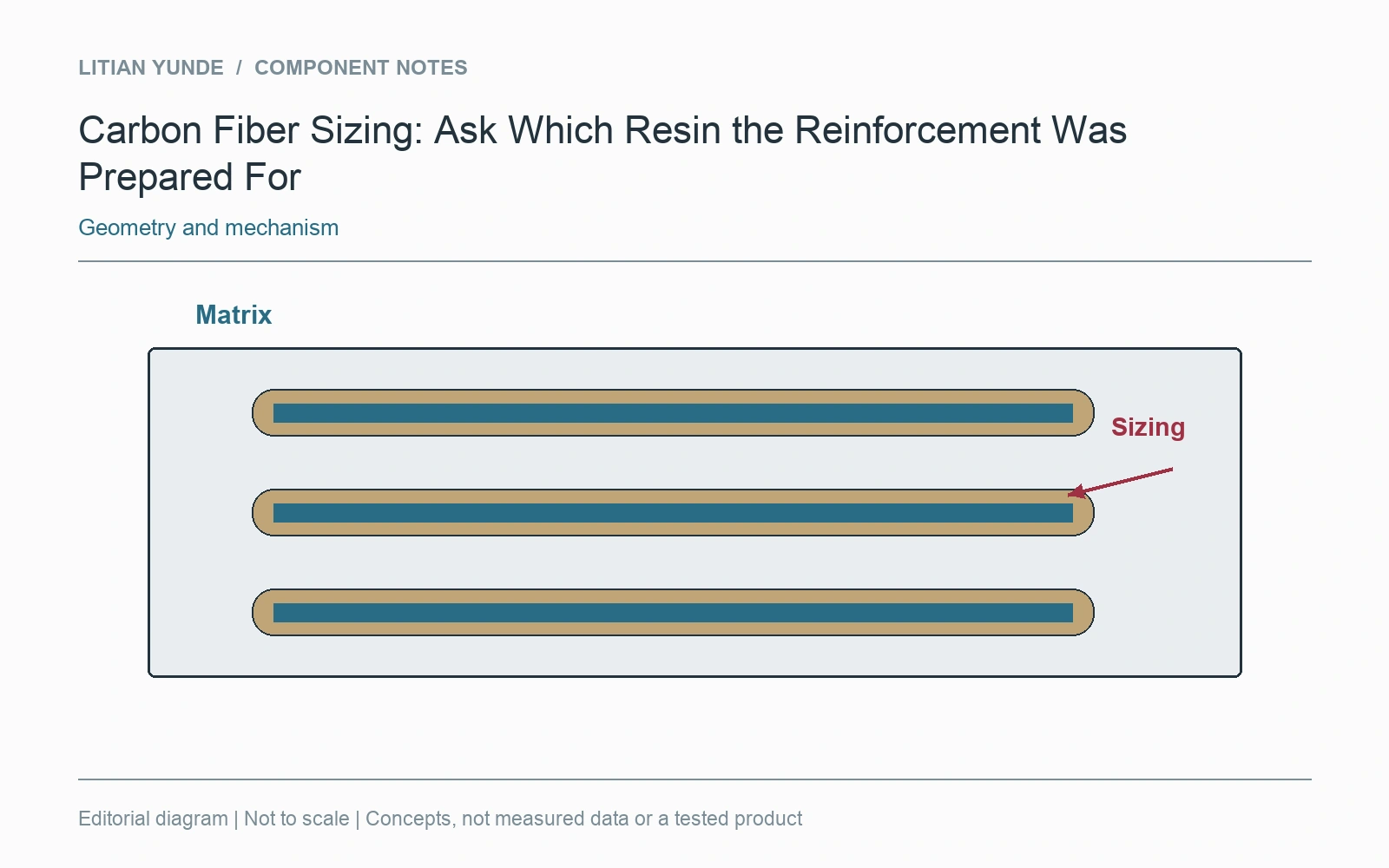
Carbon Fiber Sizing: Ask Which Resin the Reinforcement Was Prepared For
Sizing is a surface treatment on the reinforcement fibers. Its compatibility with the proposed matrix belongs in the material review. Matching the carbon fiber name or tow…
Read guide →
Film or Paste Adhesive for Carbon Fiber Assembly? Specify the Exact Product
Film and paste describe adhesive supply forms. They do not identify a complete bonding process or guarantee equivalent results. Keep the exact adhesive designation with the…
Read guide →
Stitched Non-Crimp Fabric and Woven Carbon Fabric: Read the Construction
Stitched non-crimp fabric and woven fabric describe different reinforcement constructions. A stitch line is not the same feature as interlaced warp and weft. Specify the…
Read guide →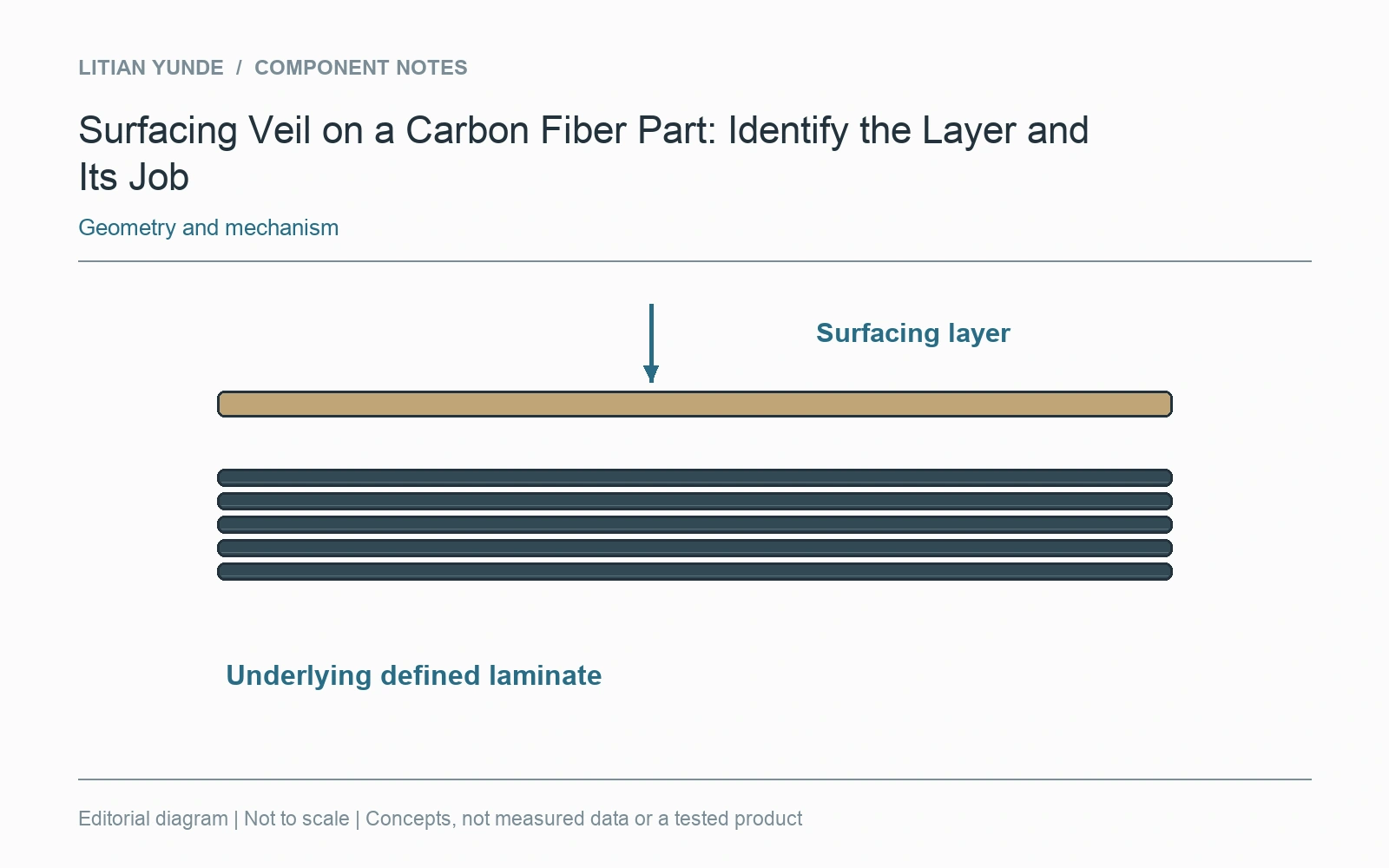
Surfacing Veil on a Carbon Fiber Part: Identify the Layer and Its Job
A surfacing veil is a specified layer near the laminate surface. It should not be counted as a replacement for an unidentified structural fabric ply. In an enquiry, identify…
Read guide →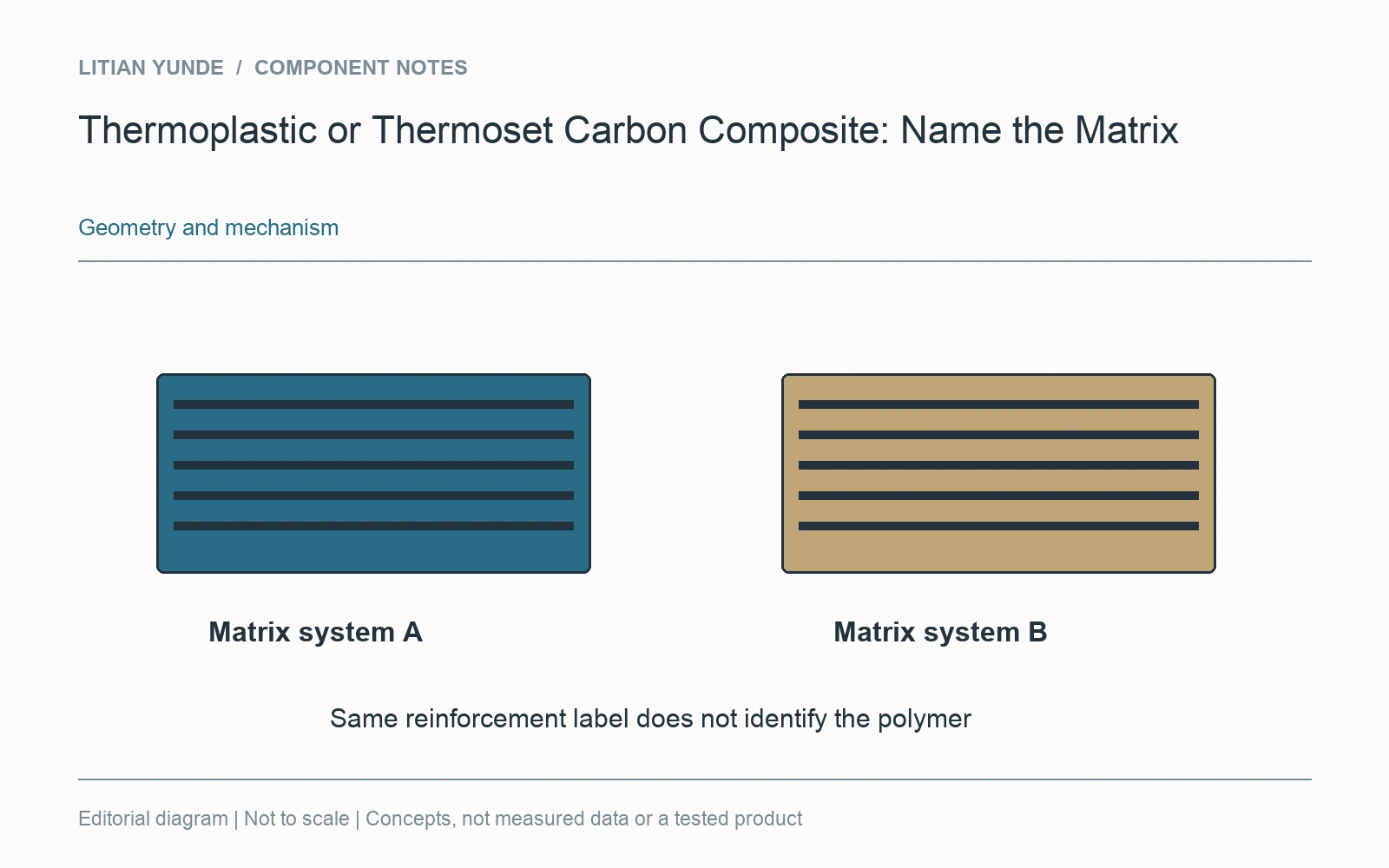
Composite carbone thermoplastique ou thermodurcissable : nommez la matrice
The words “carbon fibre” identify the reinforcement, not the polymer matrix. Include the exact matrix system in the part definition. Thermoplastic and thermoset product…
Read guide →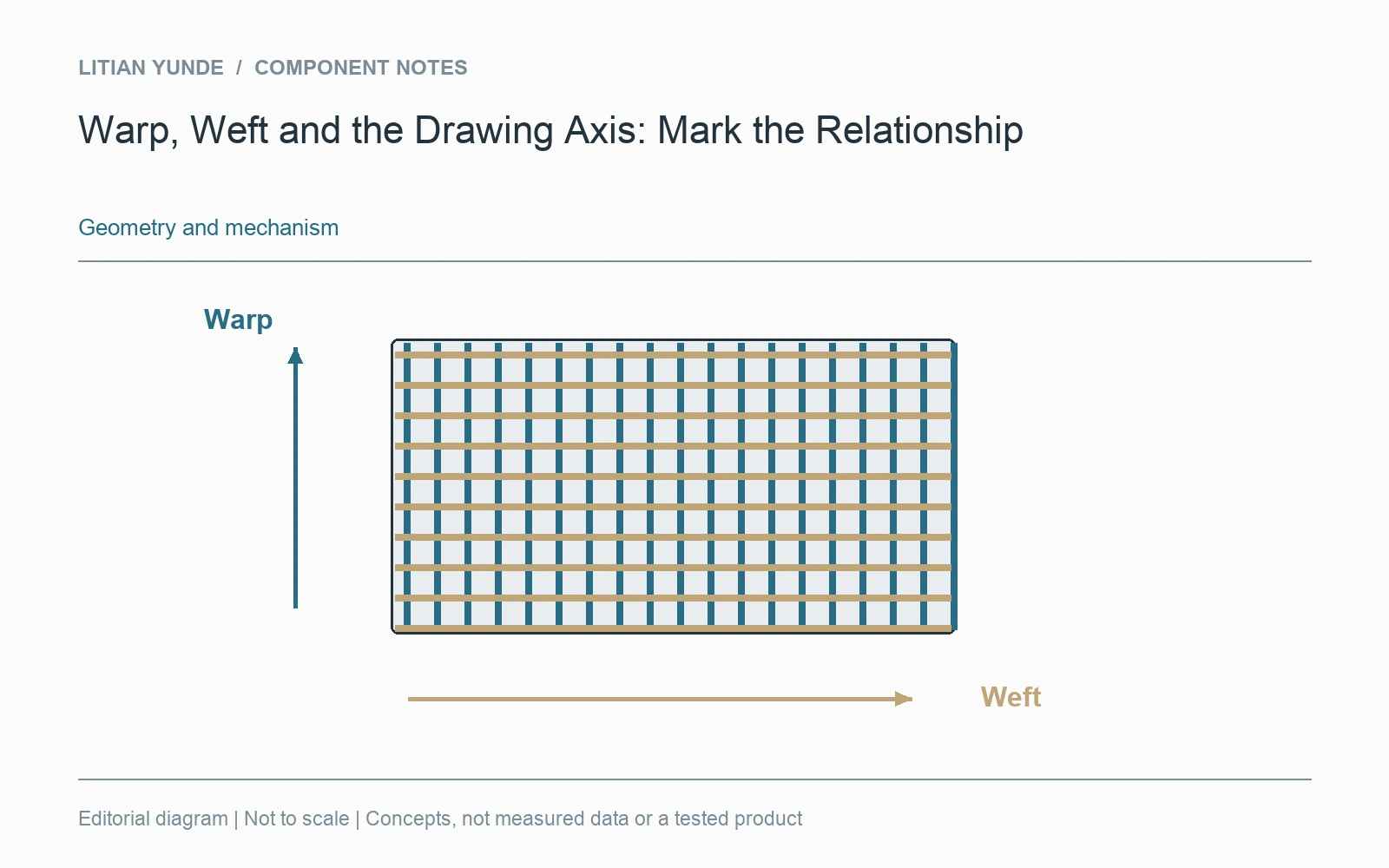
Chaîne, trame et axe de dessin : mettre en évidence la relation
Warp and weft identify yarn directions in a woven fabric. The part drawing uses its own reference axes. Connect those two descriptions explicitly; a photograph of the weave…
Read guide →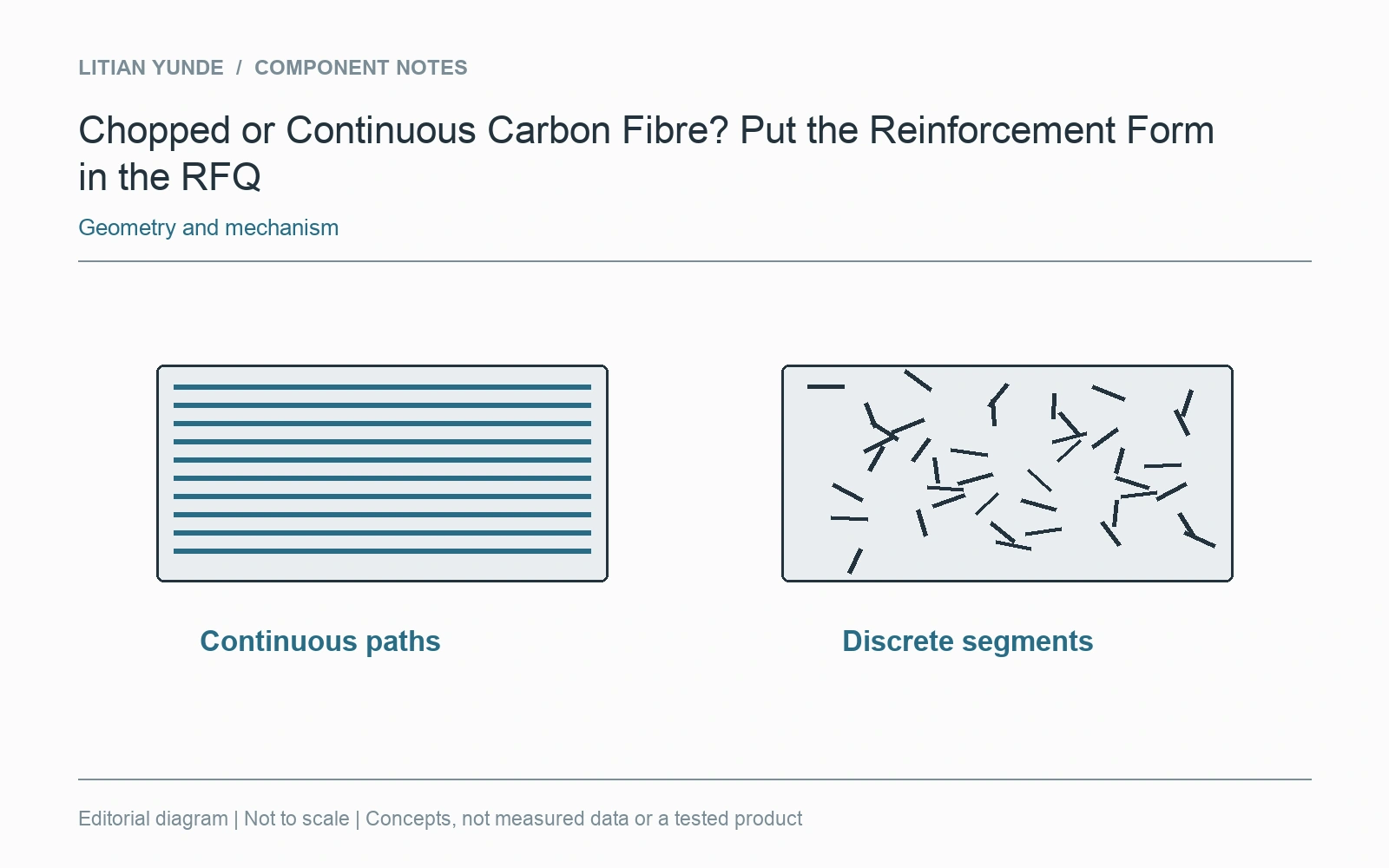
Fibre de carbone coupée ou continue ? Précisez le type de renfort dans l'appel d'offres
Chopped carbon fibre and continuous reinforcement describe different material constructions. A dark, patterned surface does not establish which construction is inside a…
Read guide →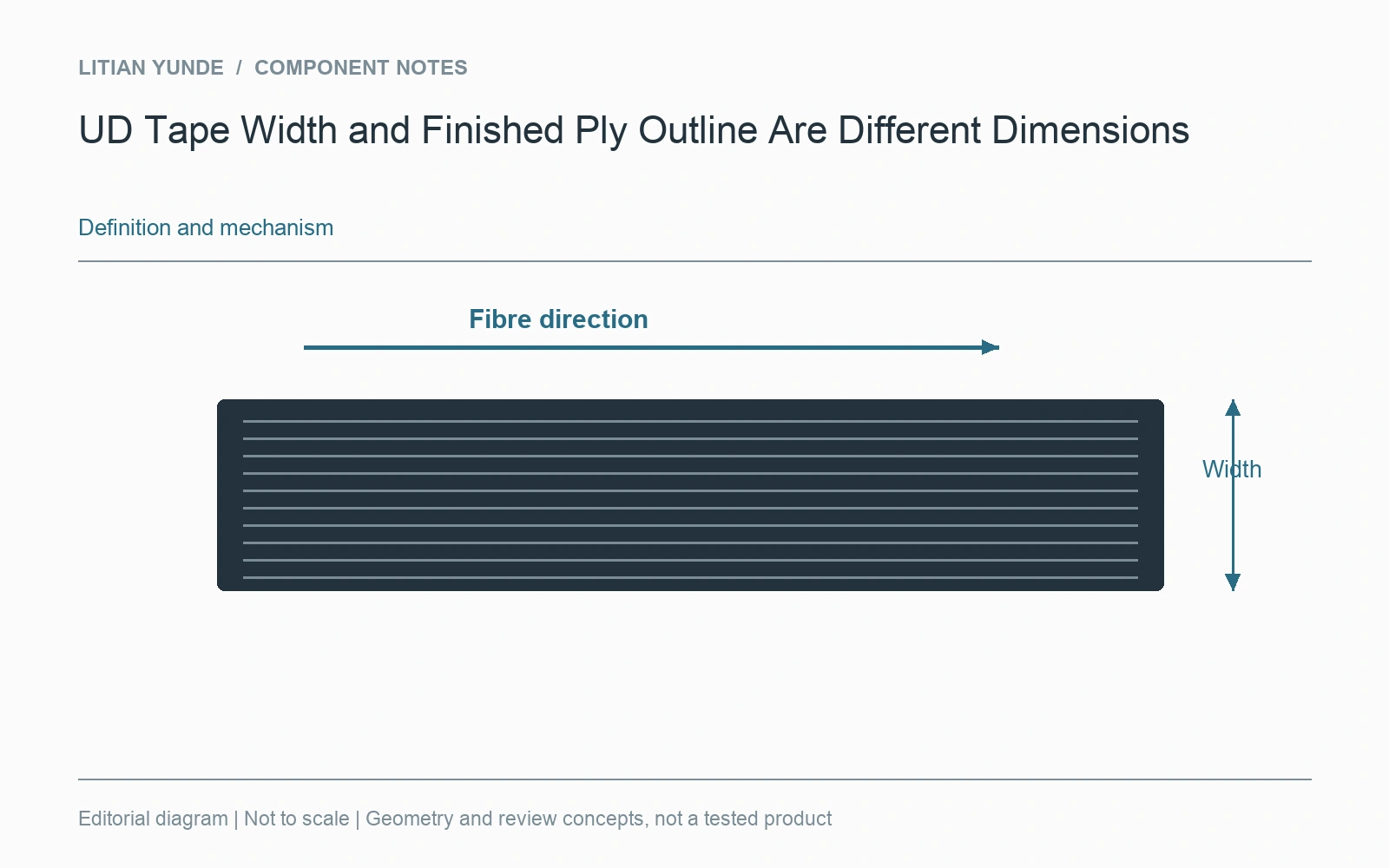
La largeur de la bande UD et le contour du panneau fini correspondent à des dimensions différentes
The width of a unidirectional tape is a material-supply dimension. The outline of a finished cut ply describes a layer prepared for a particular component. Specify which one…
Read guide →
Tissu en carbone « Spread-Tow » : conserver la désignation du tissu associée au motif
Spread-tow fabric uses spread fibre bundles in its reinforcement construction. A wide, flat-looking pattern can help discuss appearance, but the fabric designation still…
Read guide →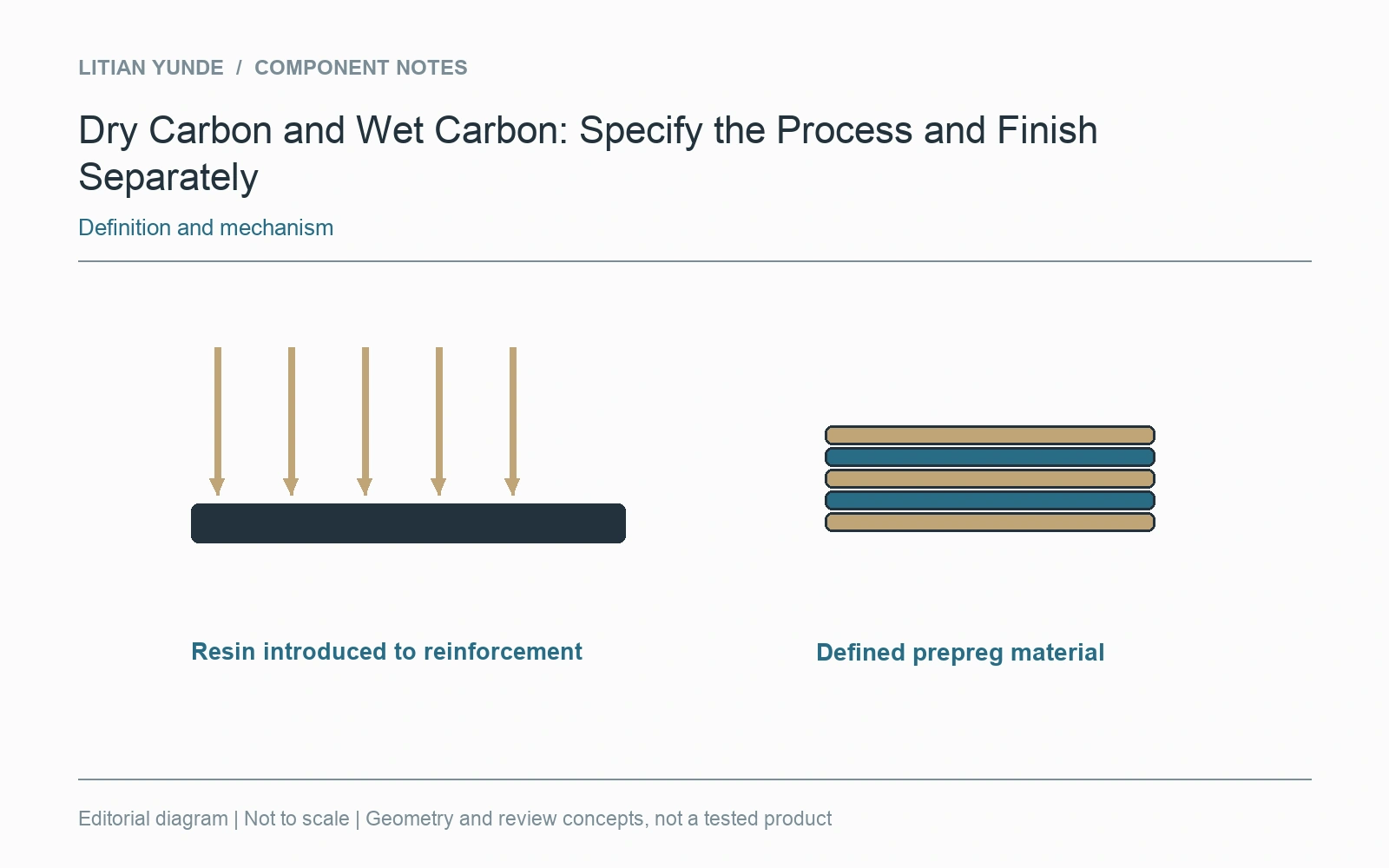
Carbone sec et carbone humide : préciser séparément le procédé et la finition
“Dry carbon” and “wet carbon” are insufficient purchase specifications on their own. Ask what manufacturing route and laminate construction the supplier proposes, then state…
Read guide →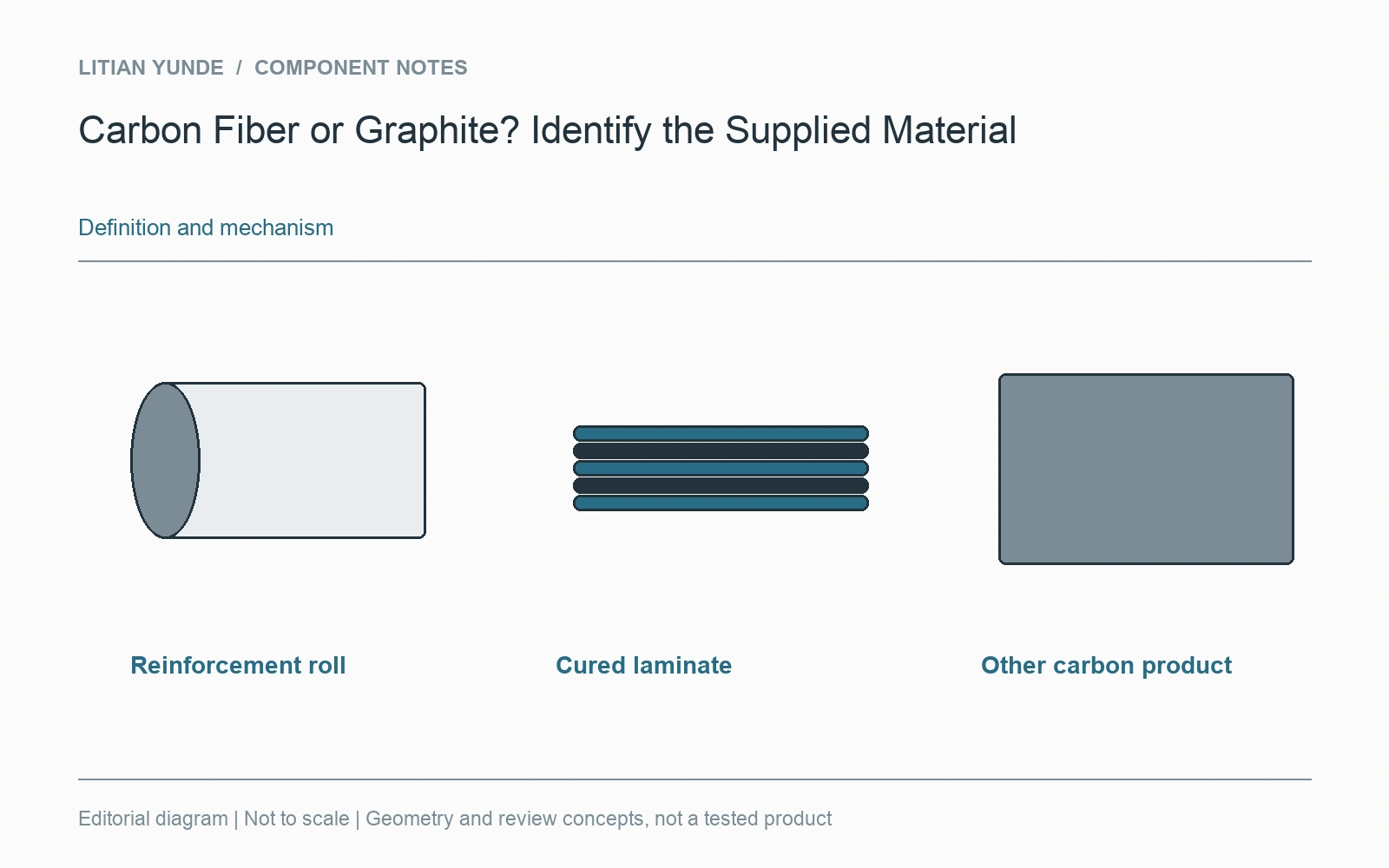
Fibre de carbone ou graphite ? Identifiez le matériau fourni
An enquiry that uses “carbon” and “graphite” interchangeably can leave the supplied material unclear. Identify whether the order concerns reinforcement, a polymer-matrix…
Read guide →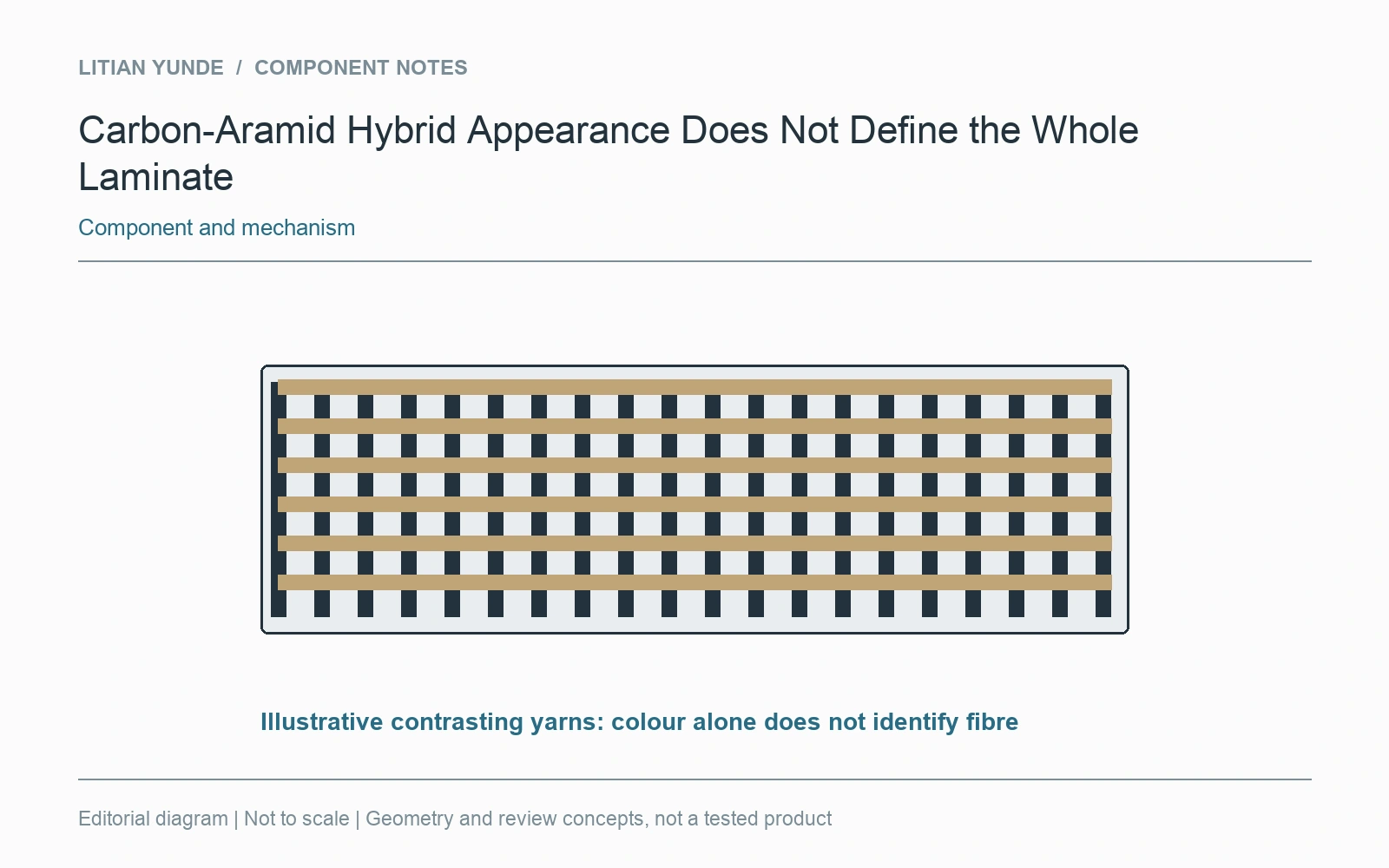
L'aspect hybride carbone-aramide ne définit pas l'ensemble du stratifié
A hybrid reinforcement contains more than one fibre type in its defined construction. A contrasting surface pattern does not establish which fibres are present, where they…
Read guide →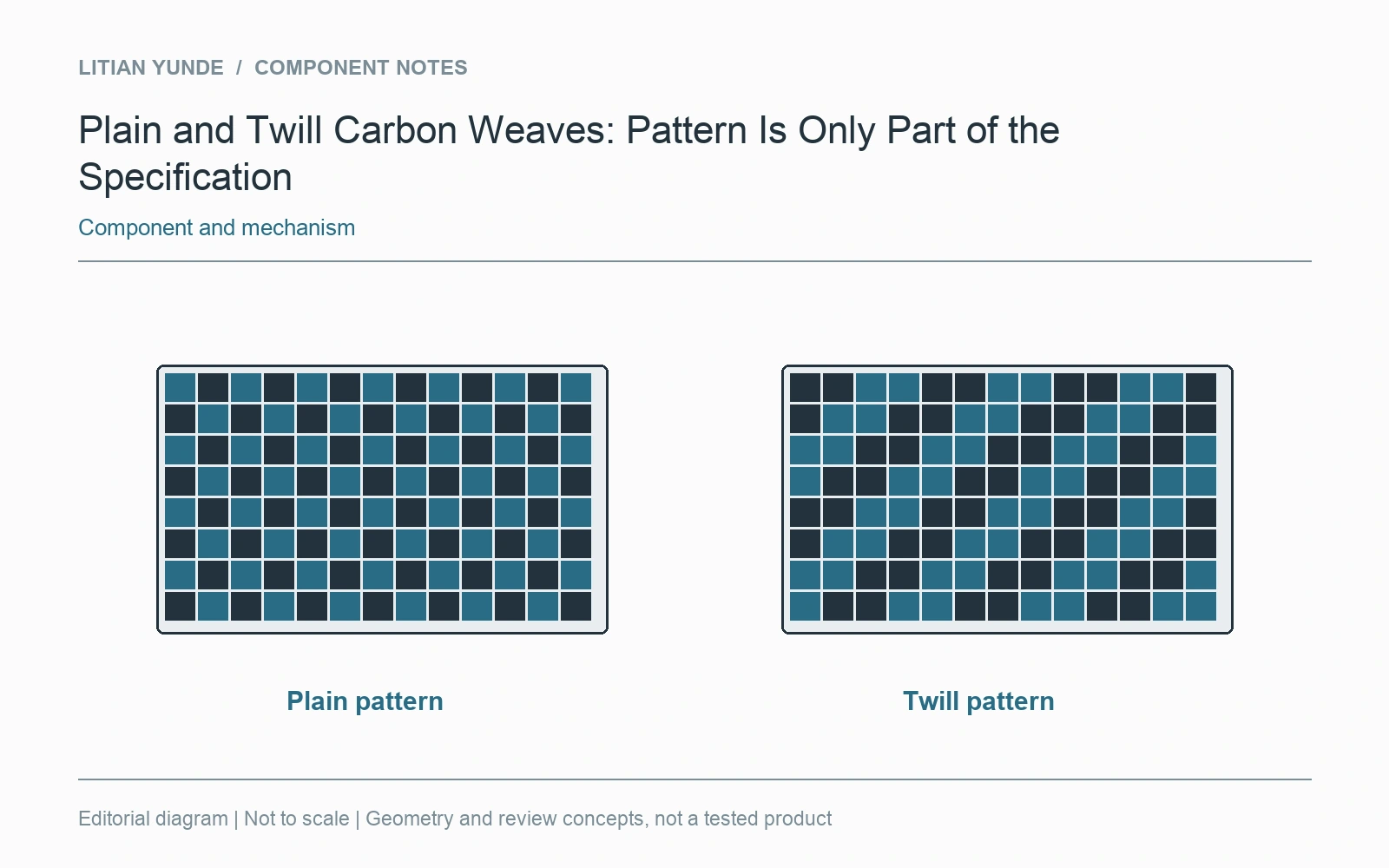
Tissus en carbone à armure unie et à armure sergée : le motif ne constitue qu'une partie des spécifications
Plain and twill identify weave constructions, not complete carbon fiber component specifications. Their visible patterns can help an appearance discussion, but a fabric…
Read guide →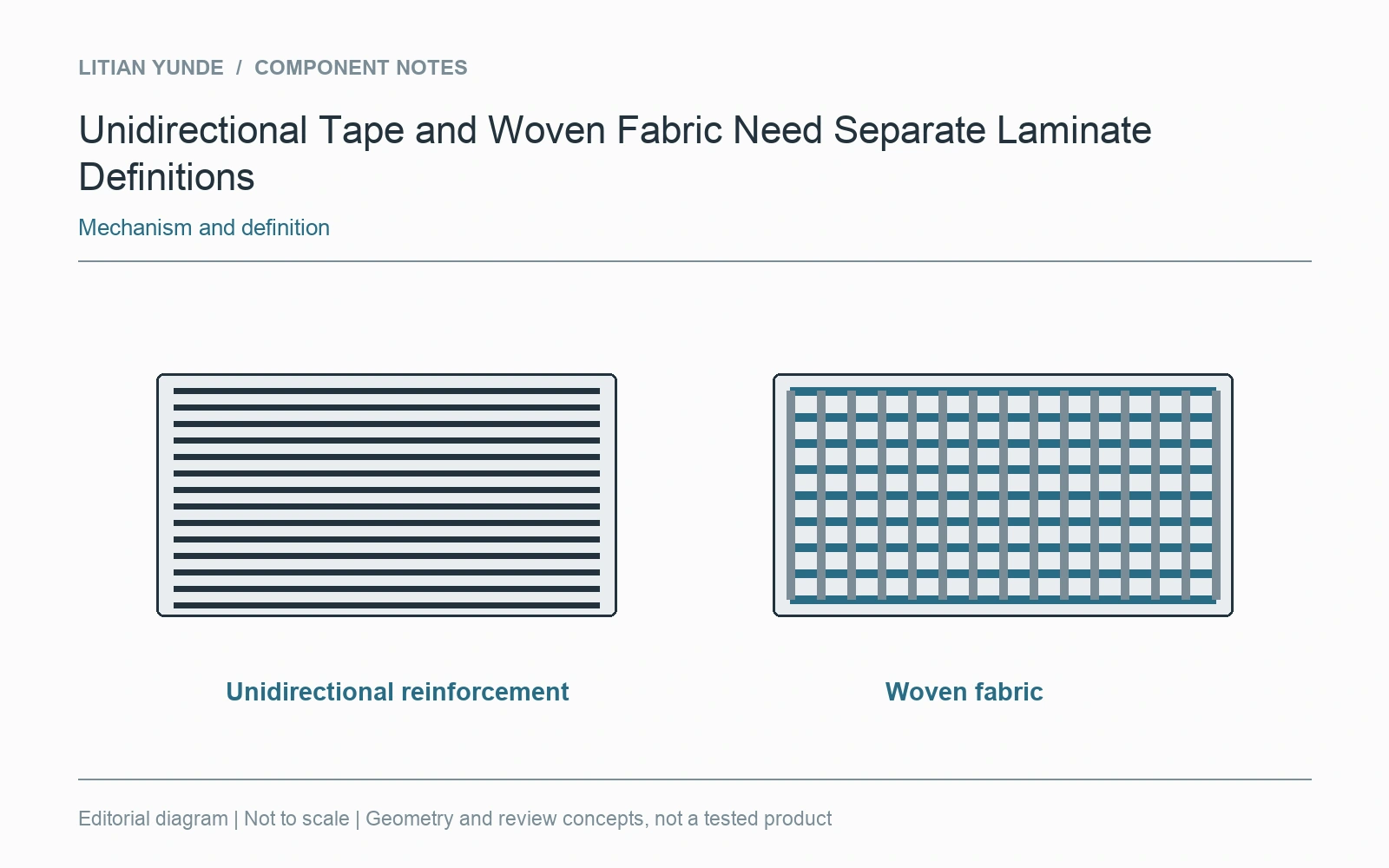
Les rubans unidirectionnels et les tissus tissés nécessitent des définitions distinctes en matière de stratifiés
Unidirectional reinforcement and woven fabric arrange fibres differently. Selecting either form changes the laminate description; it is not simply a choice between two…
Read guide →
La résistance des composites à trou ouvert et sans encoche donne des résultats différents
A strength result for an unnotched coupon does not directly establish the strength of a laminate containing a hole. Open-hole tests examine a defined specimen with a defined…
Read guide →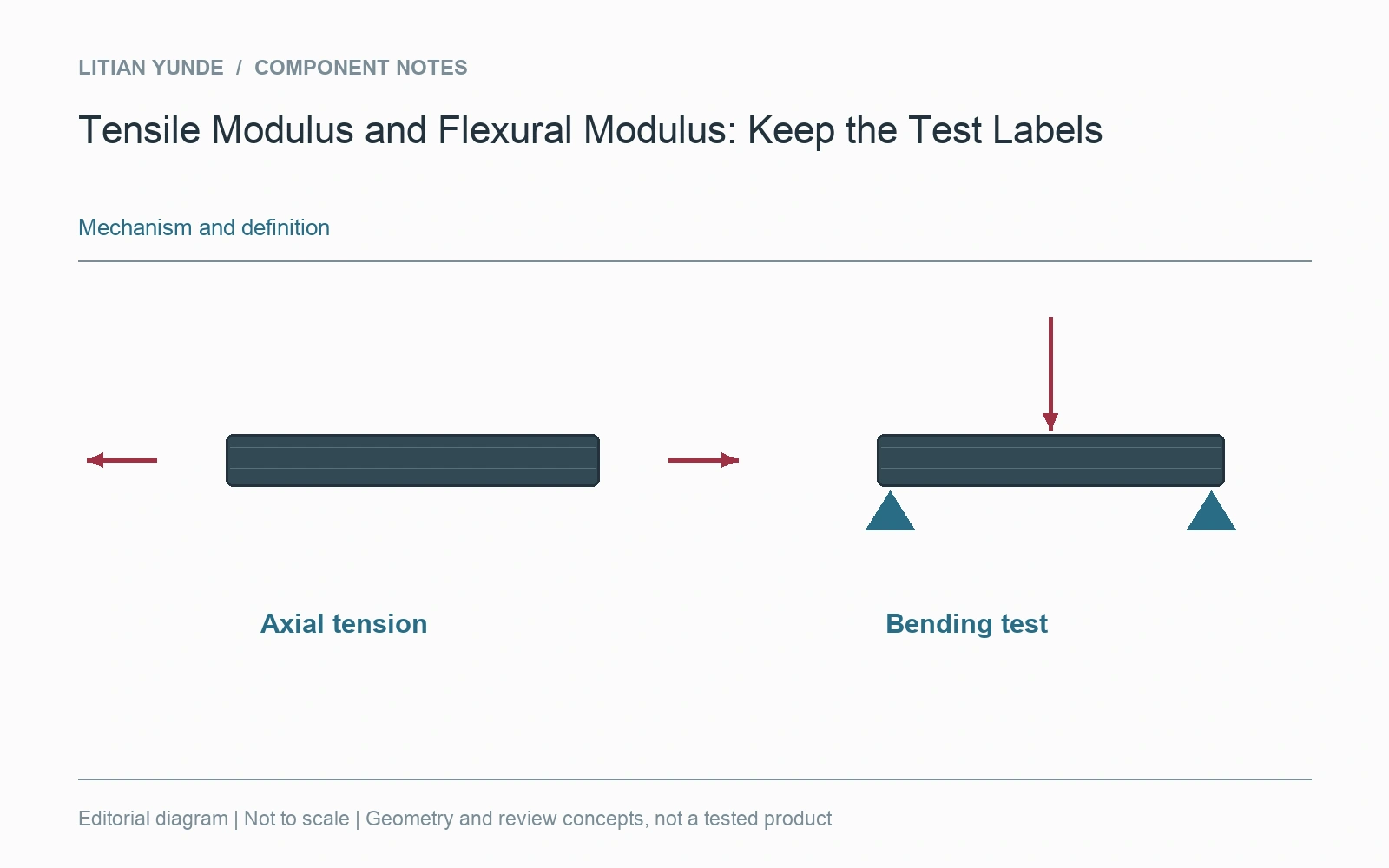
Module de traction et module de flexion : conserver les étiquettes d'essai
Tensile modulus and flexural modulus come from different loading arrangements. A carbon fiber datasheet should retain those labels, the laminate direction and the test…
Read guide →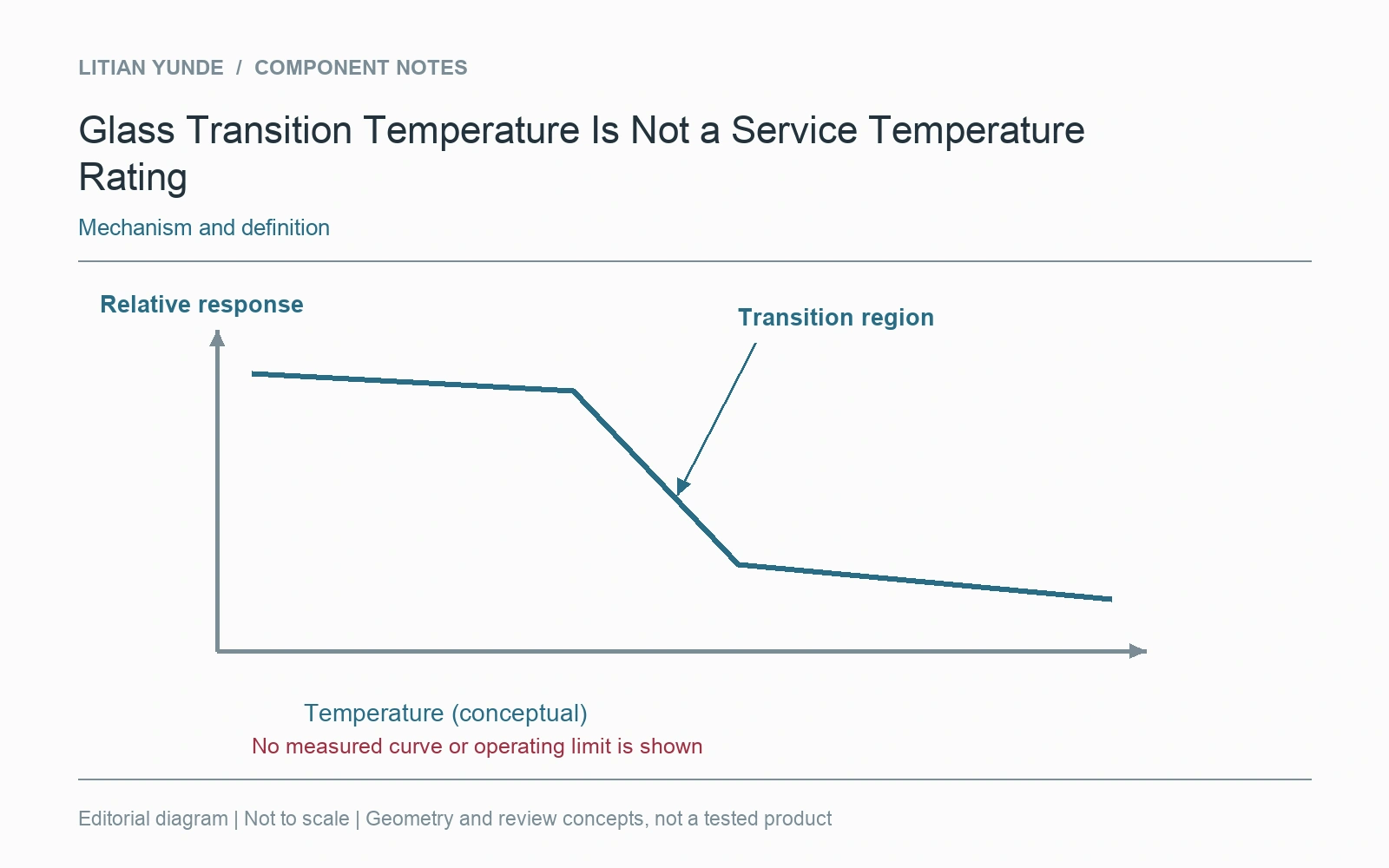
La température de transition vitreuse ne correspond pas à une température nominale d'utilisation
A resin’s glass transition temperature describes a material transition under a particular measurement method. It is not, by itself, the temperature rating of a finished…
Read guide →
Les termes « stratifiés en fibre de carbone équilibrés » et « stratifiés en fibre de carbone symétriques » désignent des concepts différents.
Symmetric and balanced describe different aspects of a laminate. Symmetry concerns the arrangement about the laminate mid-plane. Balance concerns matching positive and…
Read guide →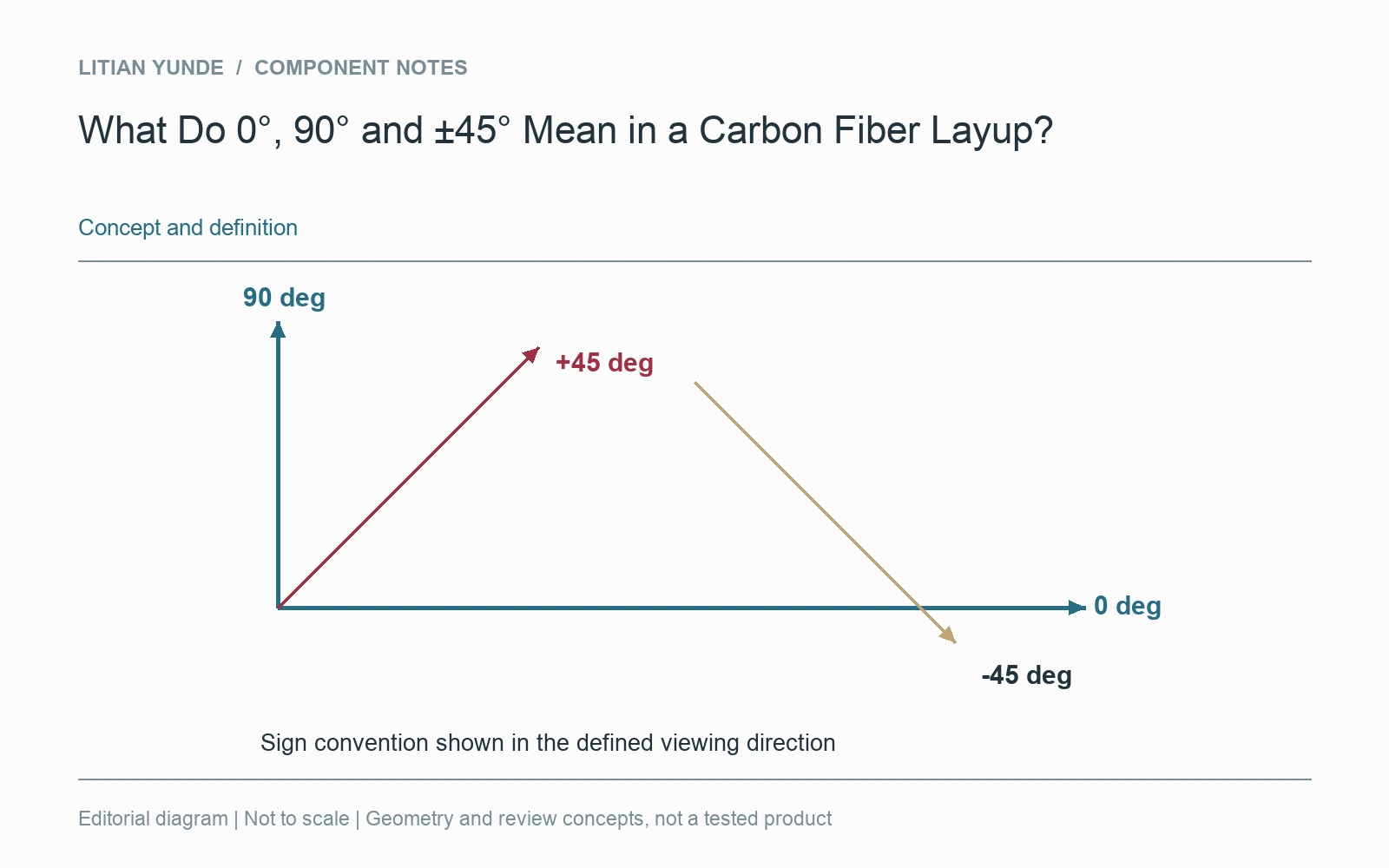
Que signifient les angles de 0°, 90° et ±45° dans un empilement de fibre de carbone ?
A ply angle only makes sense relative to an identified direction. In a laminate definition, 0°, 90° and ±45° describe orientations measured from that reference. They are not…
Read guide →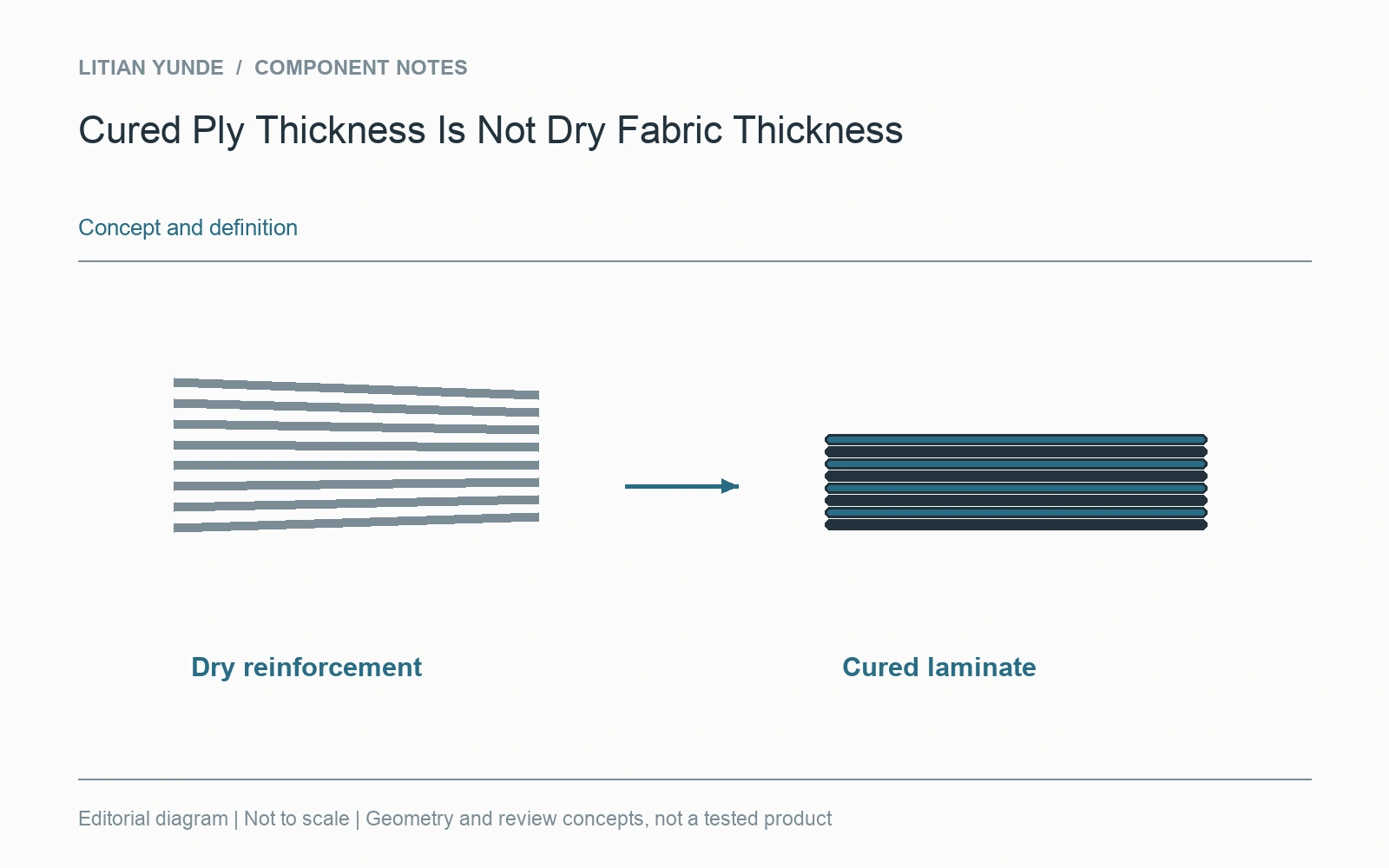
L'épaisseur du contreplaqué durci ne correspond pas à l'épaisseur du tissu sec
A fabric thickness listed before impregnation is not automatically the thickness one ply will occupy in a cured part. Cured ply thickness belongs to a defined material and…
Read guide →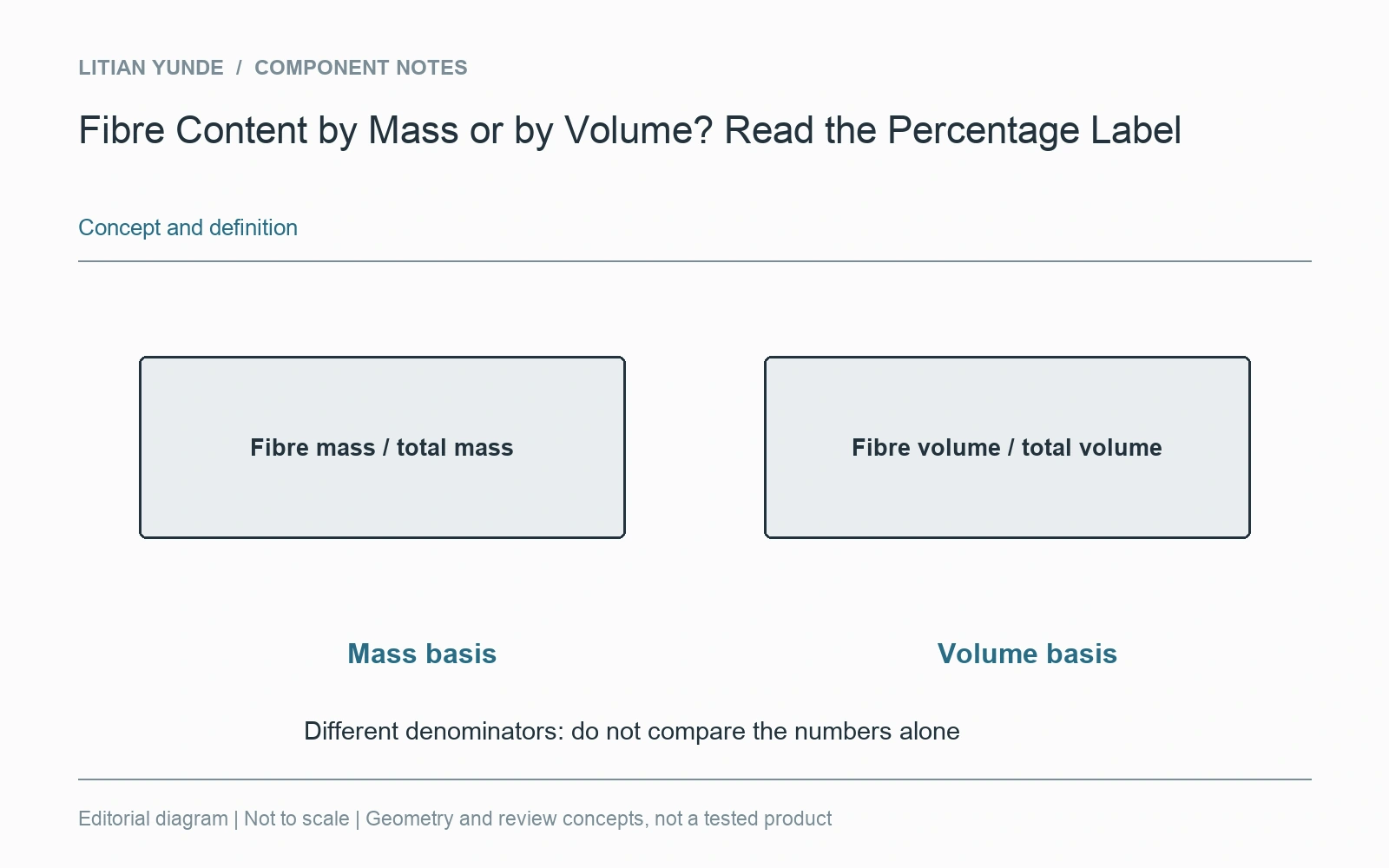
Teneur en fibres en masse ou en volume ? Lisez l'étiquette indiquant le pourcentage
A fibre-content percentage is incomplete without its basis. Mass fraction compares fibre mass with total mass; volume fraction compares fibre volume with total volume. Equal…
Read guide →
Le tissu en carbone 3K et le grammage du tissu désignent deux choses différentes
“3K” describes a bundle of 3,000 carbon filaments. Fabric weight describes the mass of fabric over a stated area, commonly in grams per square metre. One is a yarn…
Read guide →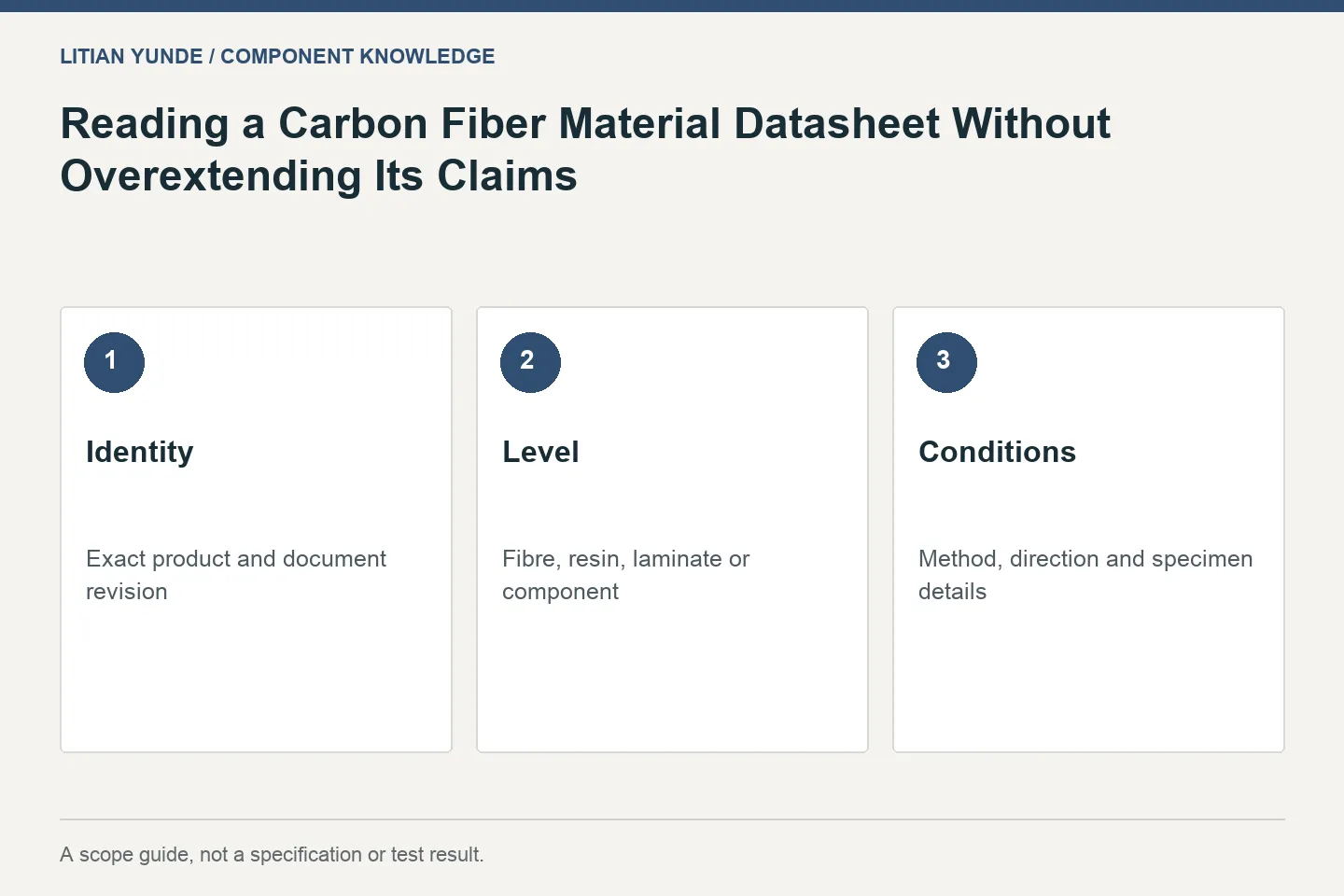
Comment lire la fiche technique d'un matériau en fibre de carbone sans en exagérer les propriétés
A datasheet must be read with its product identity, specimen definition and test conditions.
Read guide →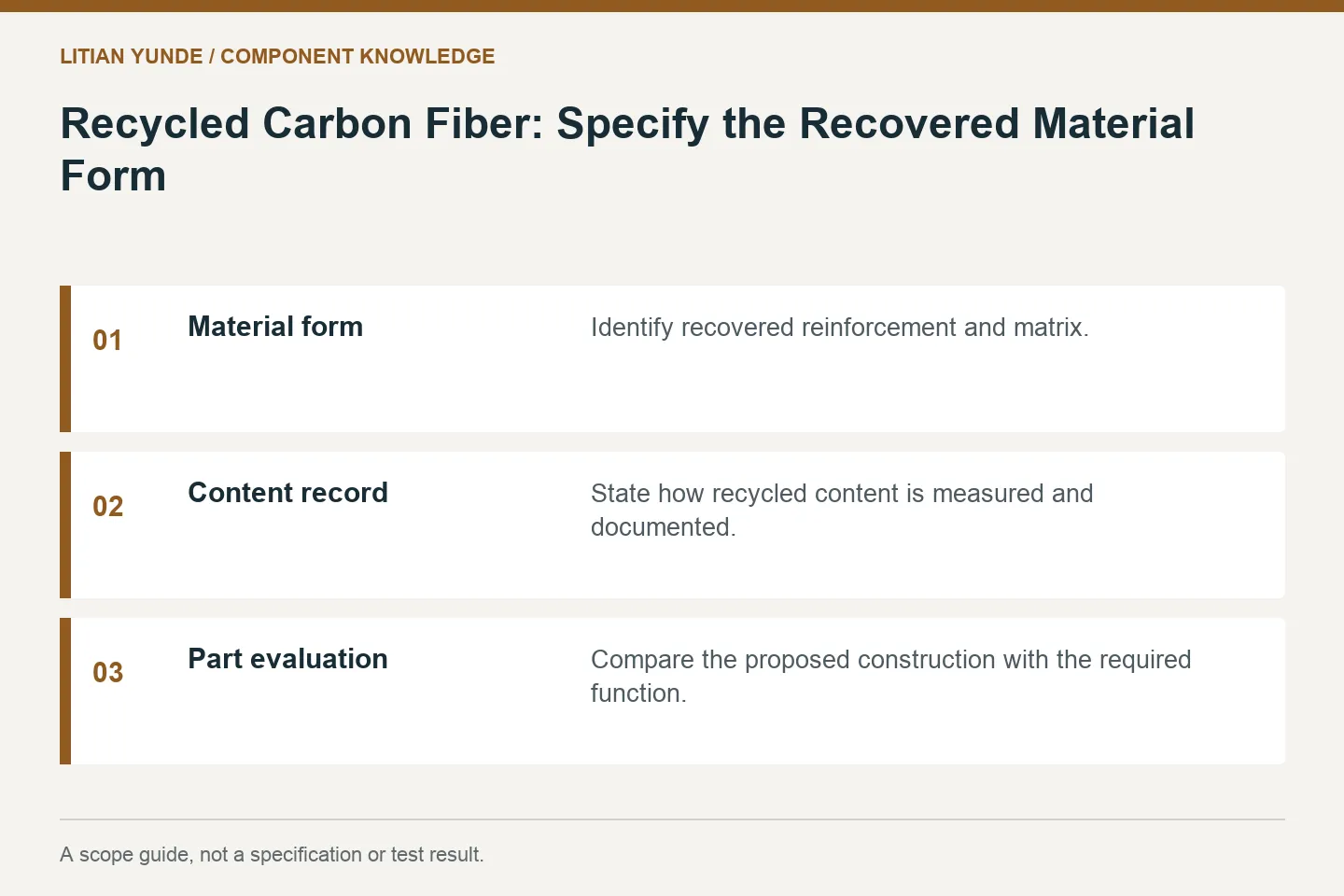
Recycled Carbon Fiber: Specify the Recovered Material Form
Recycled carbon fiber is not a single interchangeable material. An enquiry should identify the recovered form and the proposed composite construction before comparing it with…
Read guide →
Fibre de carbone, tissu et stratifié : trois choses différentes
Carbon fibre is the reinforcement; fabric is one way of arranging it; a cured laminate combines reinforcement with a matrix into a part. Keeping these terms separate makes a…
Read guide →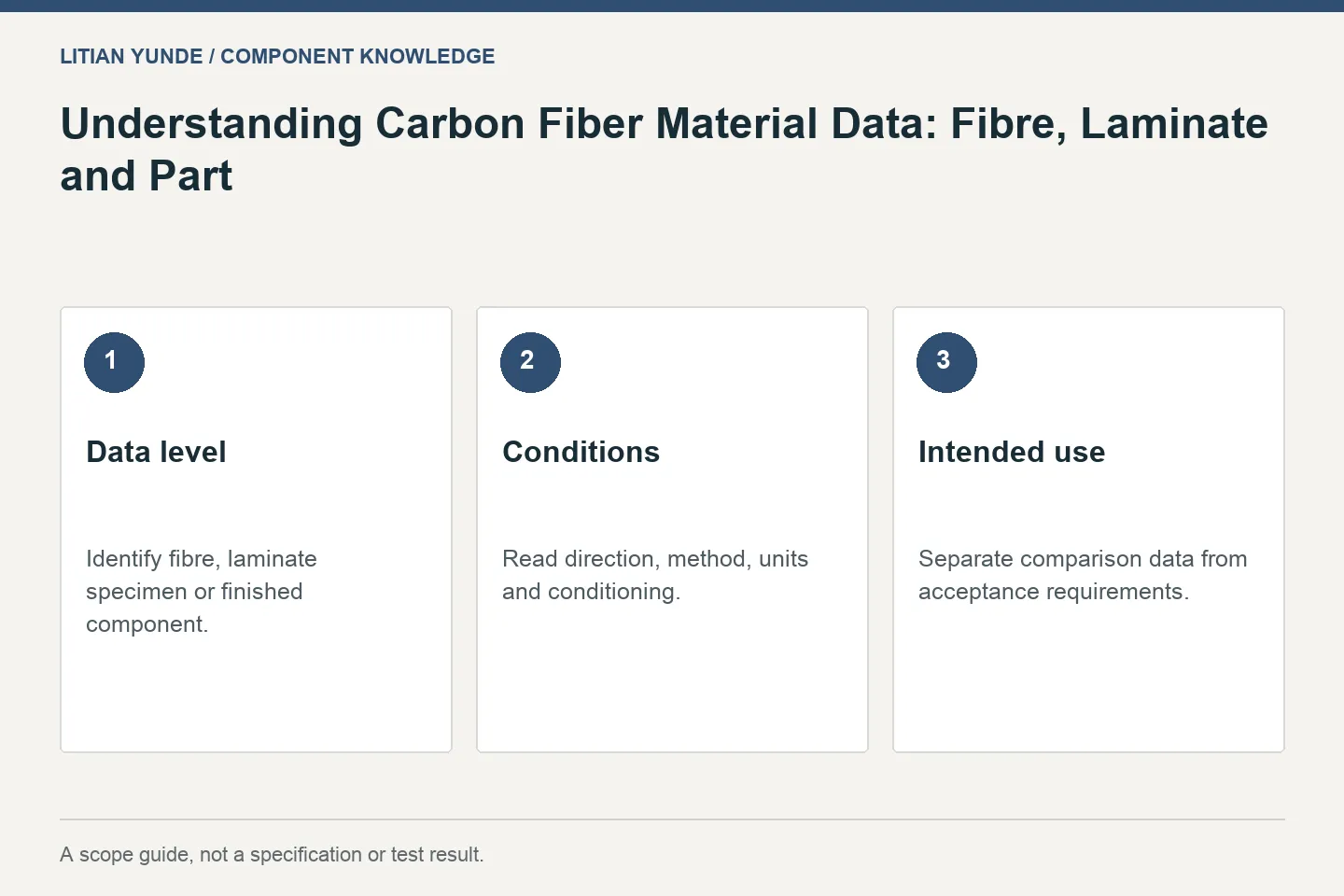
Comprendre les données relatives aux matériaux en fibre de carbone : fibre, stratifié et pièce
Before comparing carbon fiber values, check whether they describe the fibre, a laminate specimen or a finished component. Numbers at these three levels answer different…
Read guide →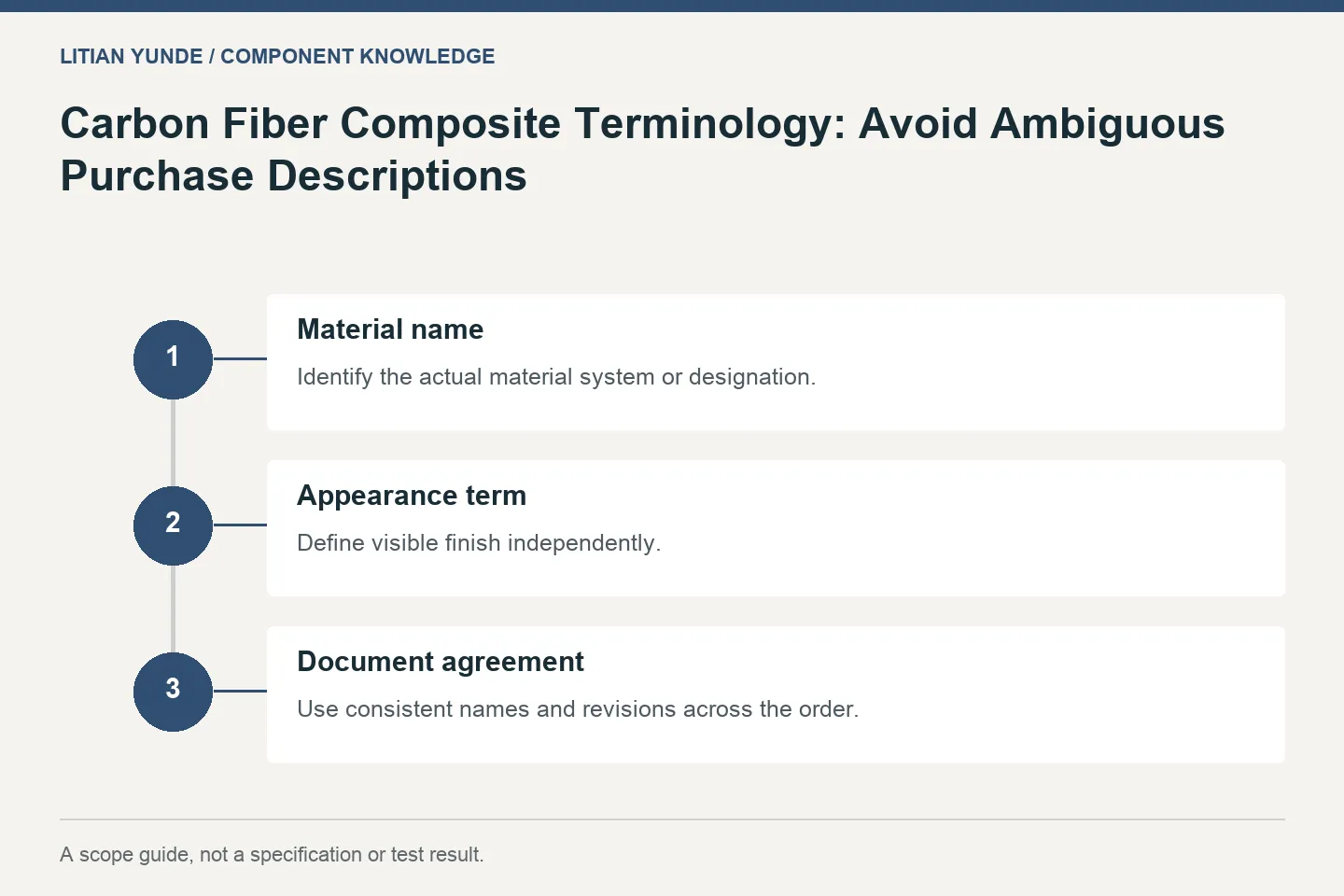
Carbon Fiber Composite Terminology: Avoid Ambiguous Purchase Descriptions
A clear purchase description distinguishes the material, the manufacturing form and the finished component. Broad phrases such as aerospace carbon or premium composite should…
Read guide →Plaques et panneaux
Selecting and specifying flat carbon fiber components: panel construction, finished geometry, cutouts, contact faces and installed behaviour.
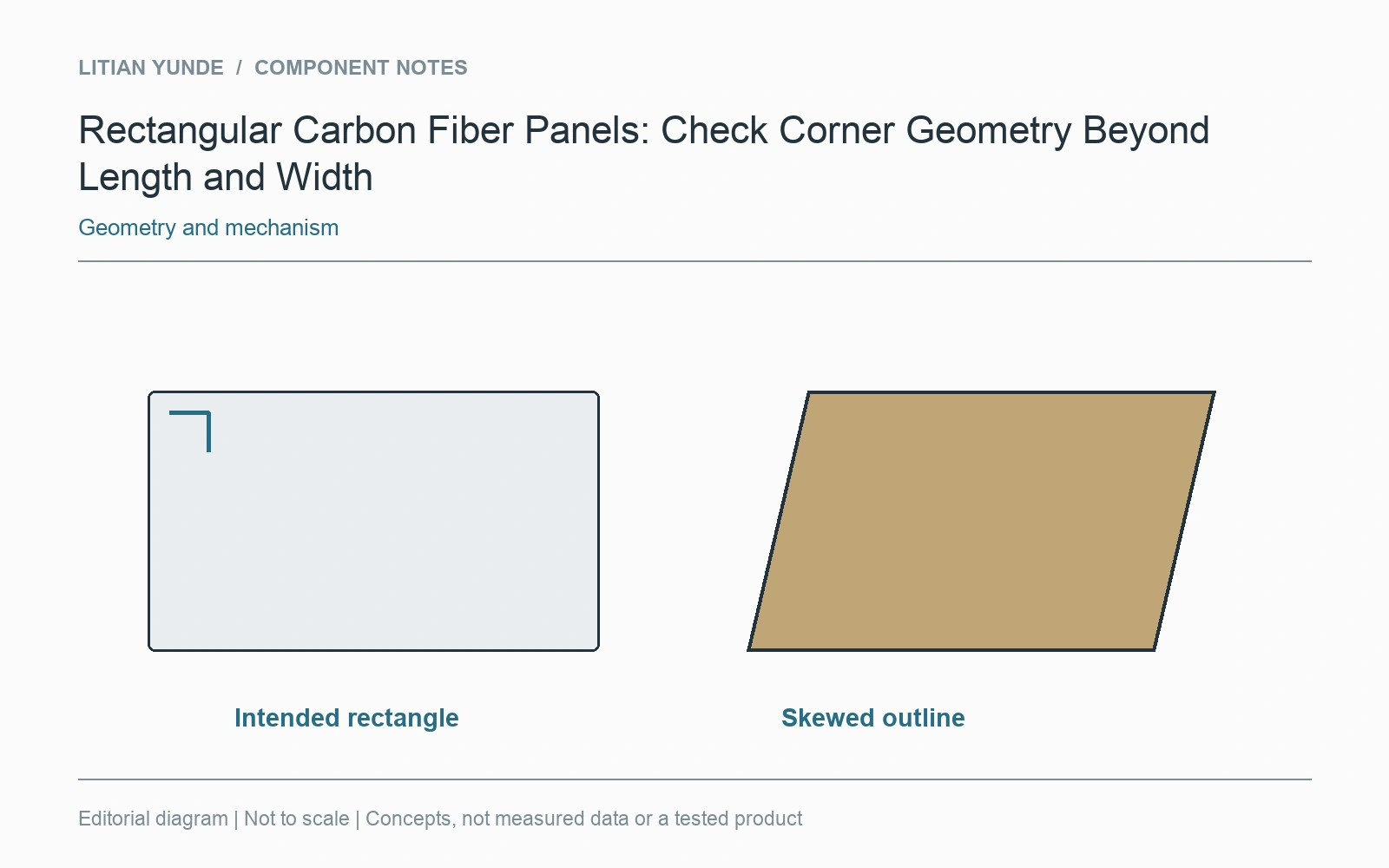
Panneaux rectangulaires en fibre de carbone : vérifier la géométrie des angles au-delà de la longueur et de la largeur
Length and width alone do not fully describe the corner geometry of a rectangular panel. If squareness or diagonal checks matter to the assembly, include them in the agreed…
Read guide →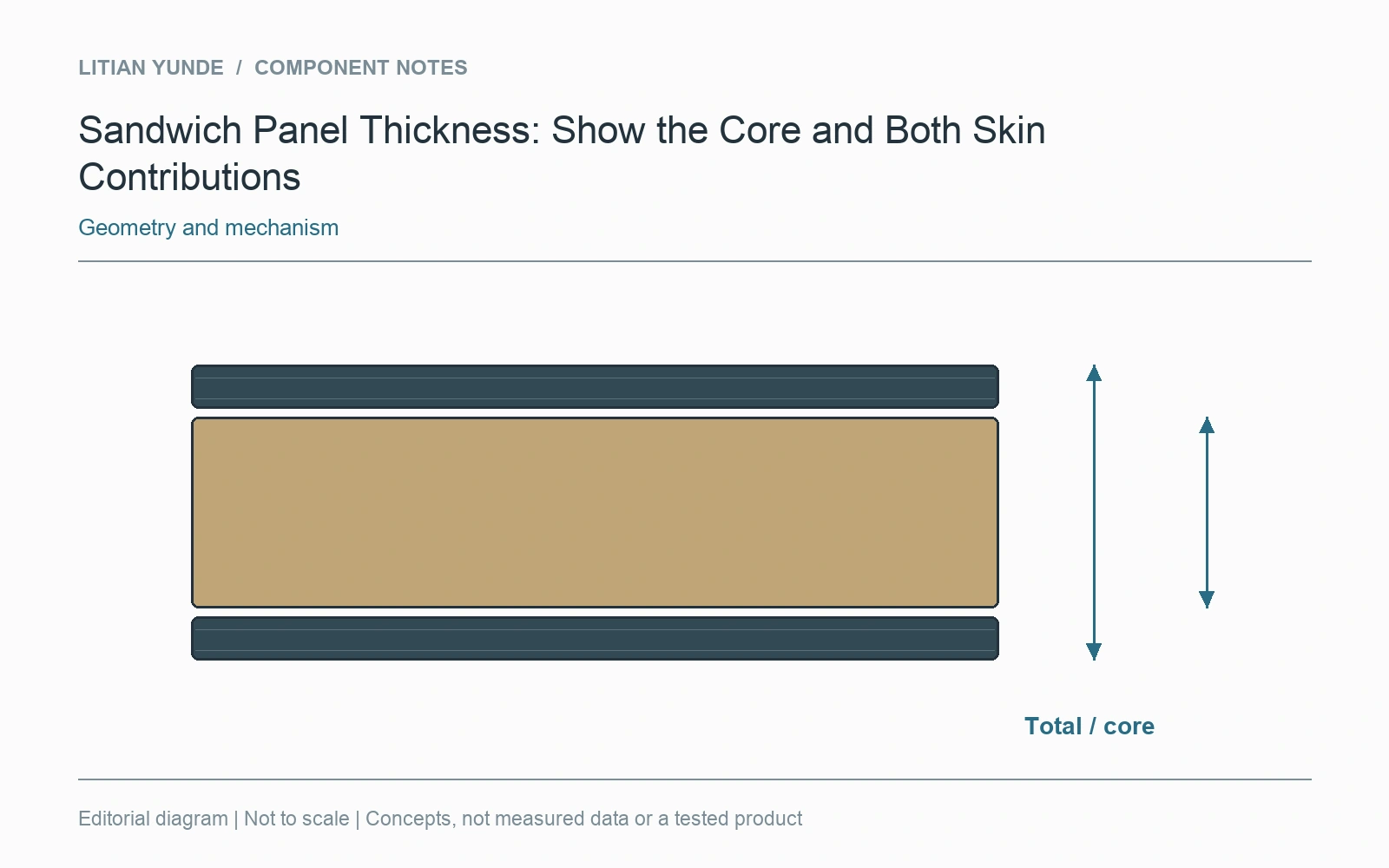
Épaisseur d'un panneau sandwich : indiquer les contributions de l'âme et des deux parements
Core thickness and finished sandwich-panel thickness are different dimensions. Show the skins, core and any included surface layers when stating the delivered thickness. A…
Read guide →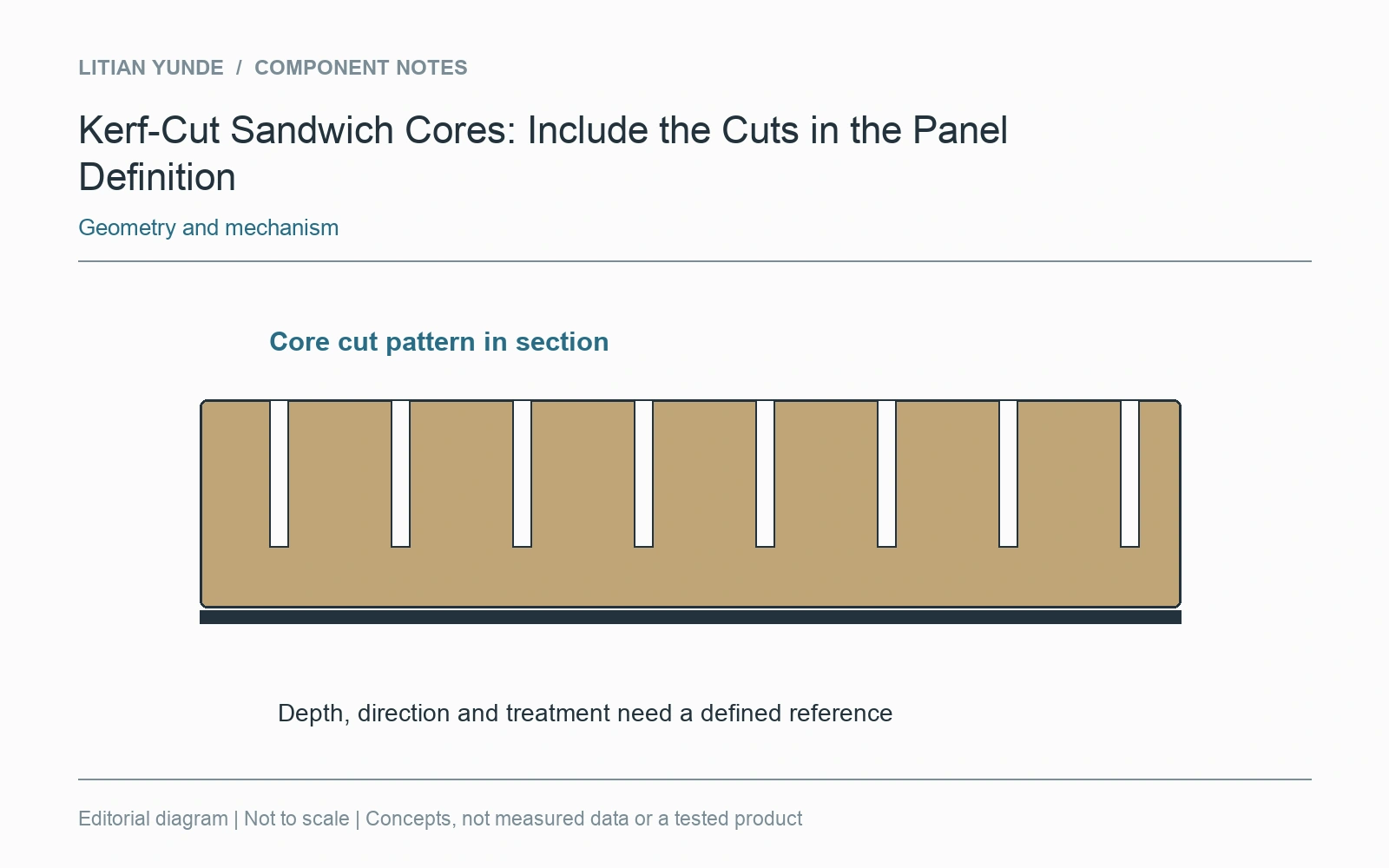
Kerf-Cut Sandwich Cores: Include the Cuts in the Panel Definition
A kerf-cut core has a cut pattern as well as a nominal material and thickness. The cuts help the core accommodate a shape, but they also change the represented construction.…
Read guide →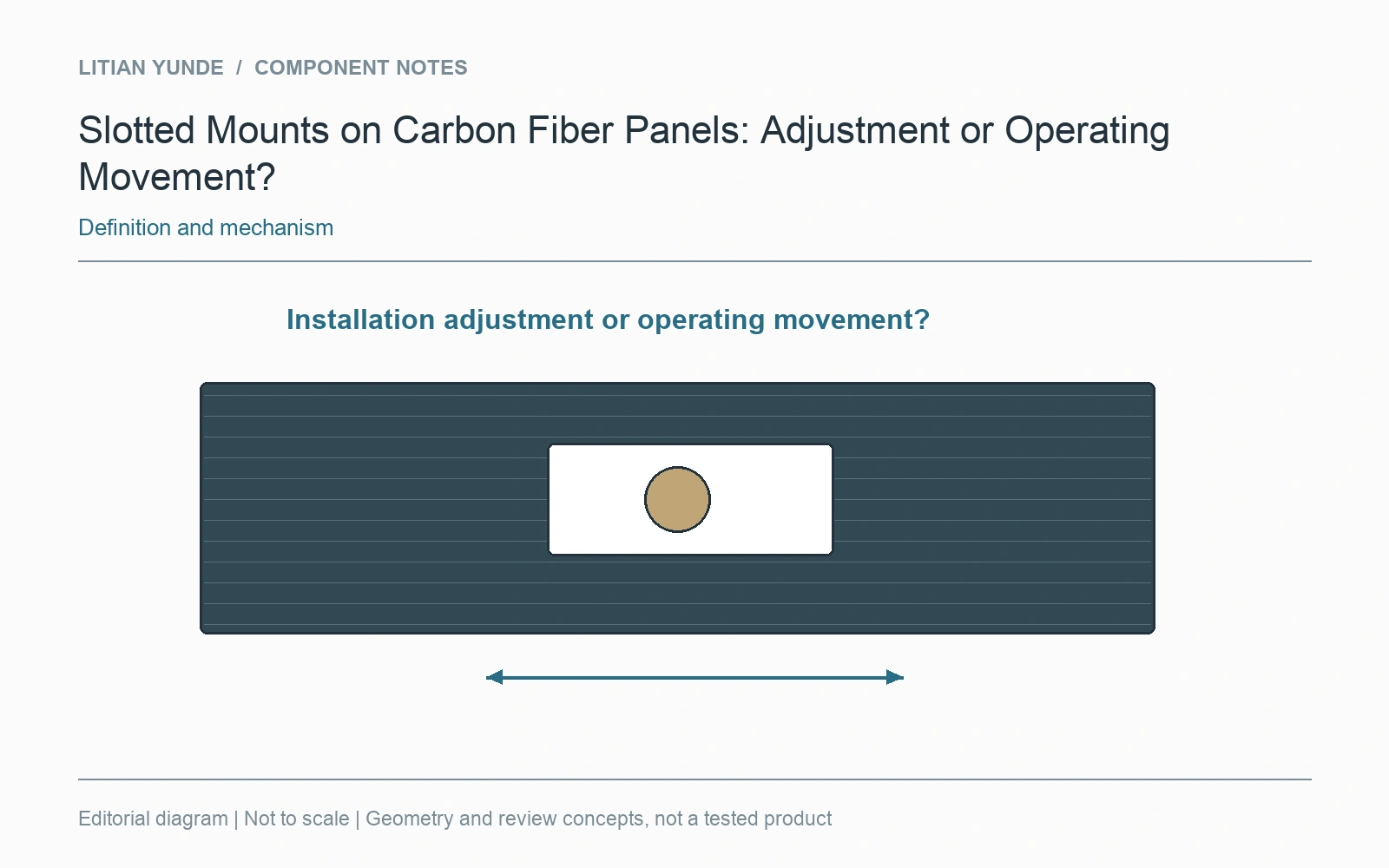
Slotted Mounts on Carbon Fiber Panels: Adjustment or Operating Movement?
A slot used to adjust a panel during installation has a different job from a slot intended to permit movement in service. State the intended function before reviewing the…
Read guide →
Bonded Stiffeners on Carbon Fiber Panels: Specify the Complete Section
A bonded stiffener changes a flat panel into a built-up section. Its shape, position, bond interface and connection to the supports belong in the definition. Quoting only the…
Read guide →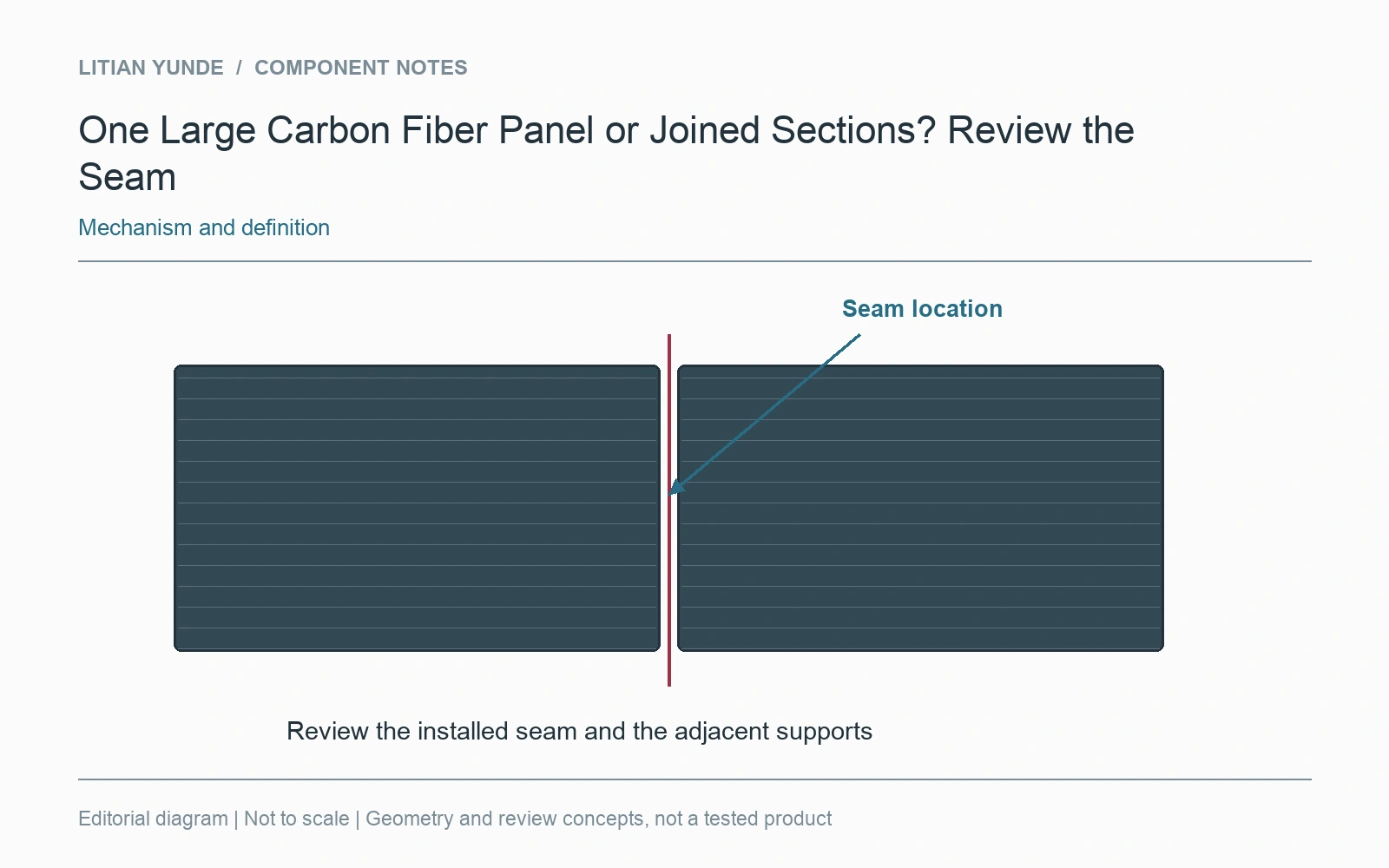
One Large Carbon Fiber Panel or Joined Sections? Review the Seam
Splitting a large panel into sections introduces a joint with its own fit, access and appearance requirements. Review the seam before comparing the proposal with a one-piece…
Read guide →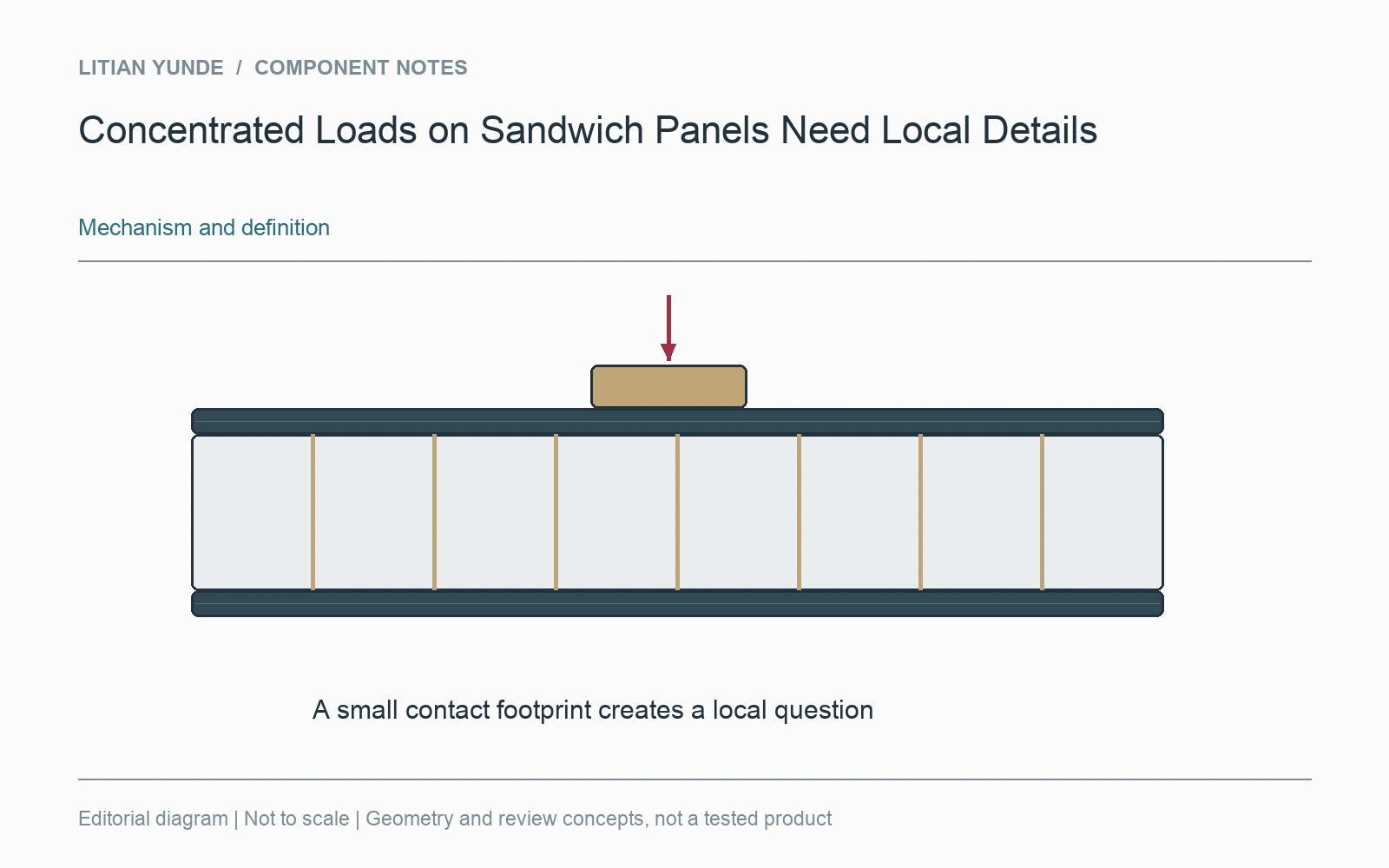
Les charges concentrées sur les panneaux sandwich nécessitent des détails d'exécution spécifiques
A sandwich panel that spans an area still needs a local design for a foot, bracket or fastening point. Describe where the force enters the panel and how the local…
Read guide →
Sandwich Core Density Alone Does Not Define Panel Stiffness
A core density figure does not define the stiffness of a complete sandwich panel. The skins, core thickness, material properties and their connection form the panel…
Read guide →
Can a Flat Carbon Fiber Panel Be Pulled onto a Curved Frame?
A flat panel and a curved frame are not automatically a compatible pair. Tightening the fasteners may close the gap, but it also changes the panel shape and the forces in the…
Read guide →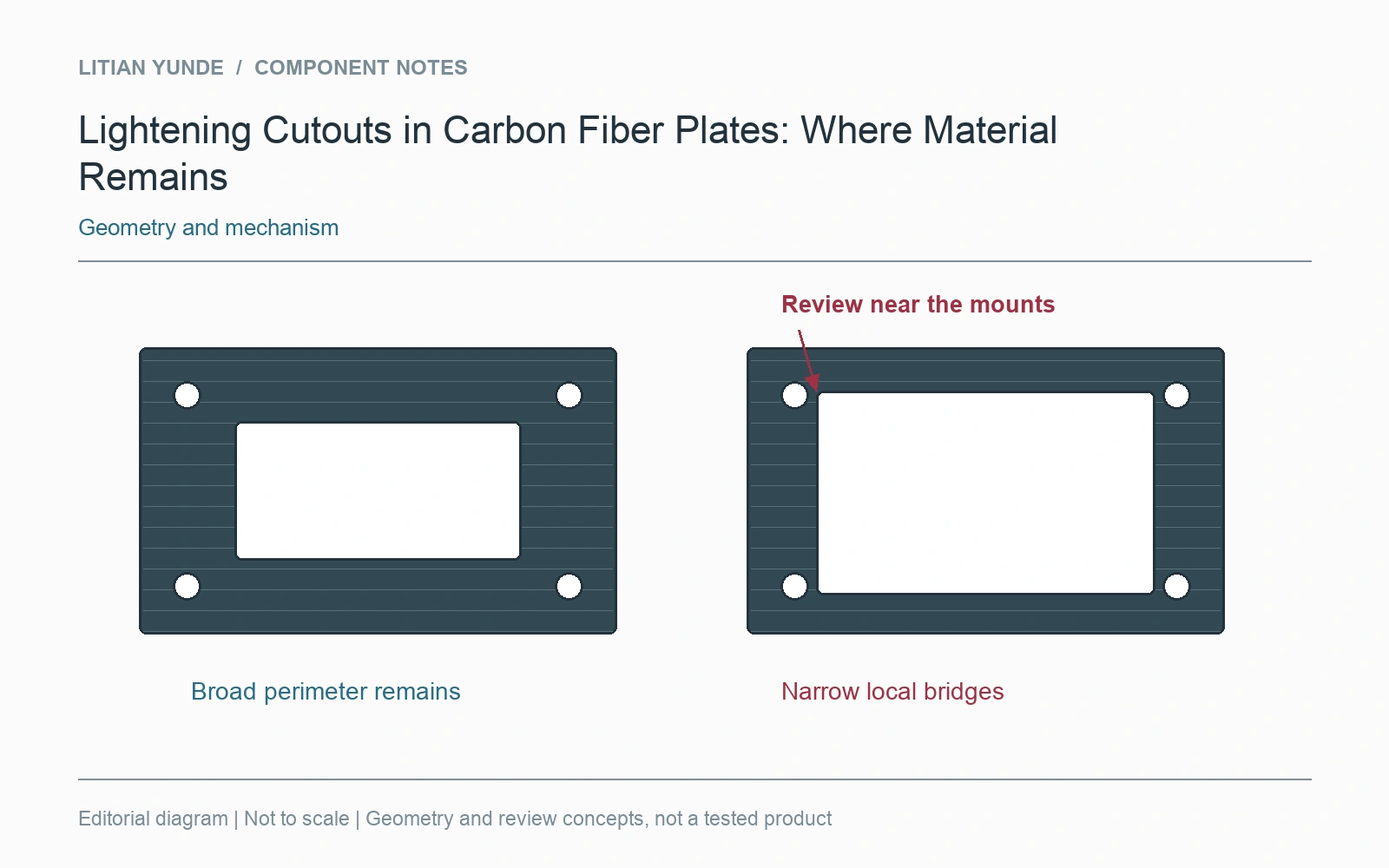
Lightening Cutouts in Carbon Fiber Plates: Where Material Remains
Two plate layouts can remove the same area and leave very different paths between their mounting points. When lightening a carbon fiber plate, the useful question is where…
Read guide →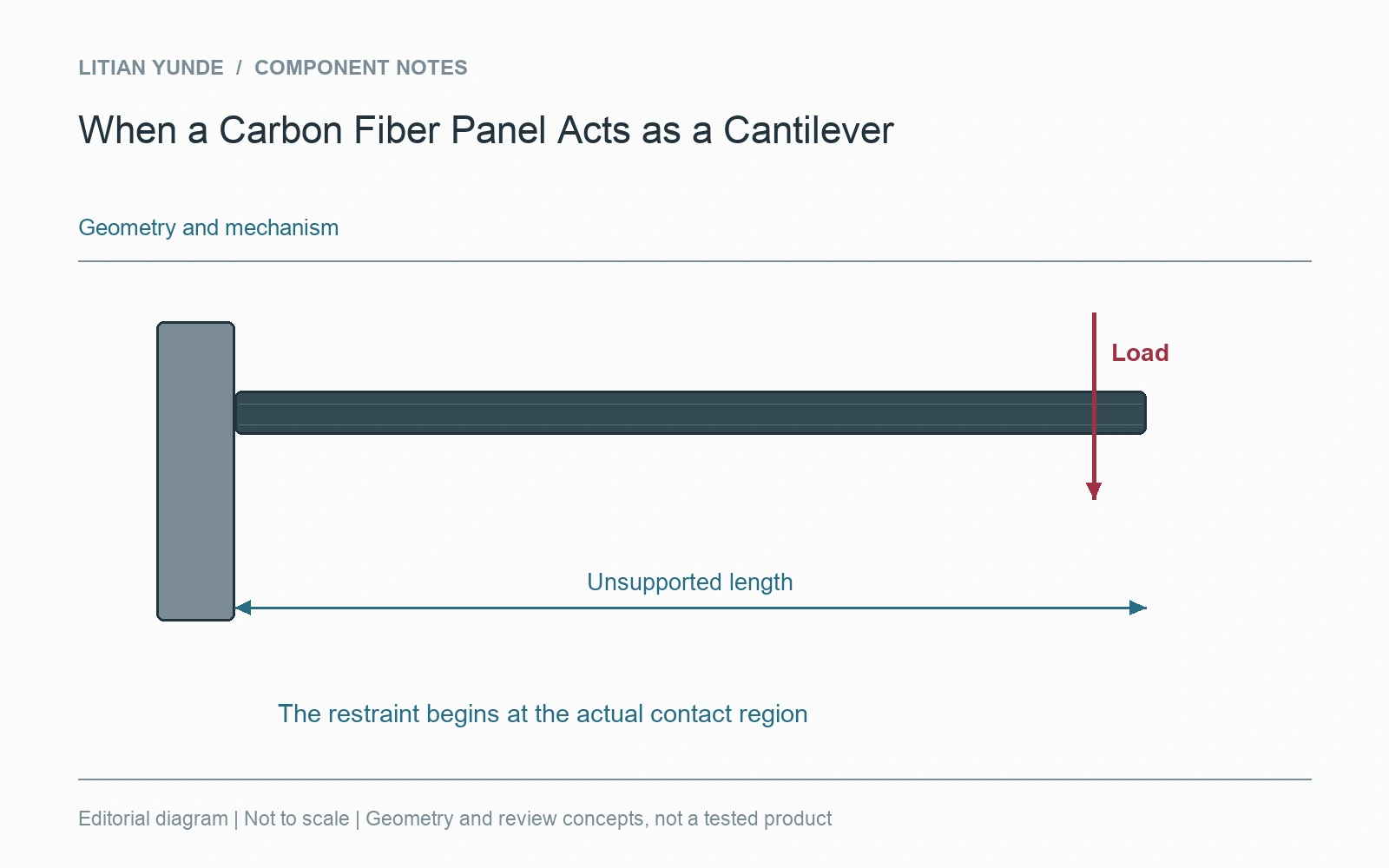
When a Carbon Fiber Panel Acts as a Cantilever
A panel that feels rigid on a workbench can bend noticeably when it projects beyond a mounting bracket. The unsupported length, load position and restraint at the bracket all…
Read guide →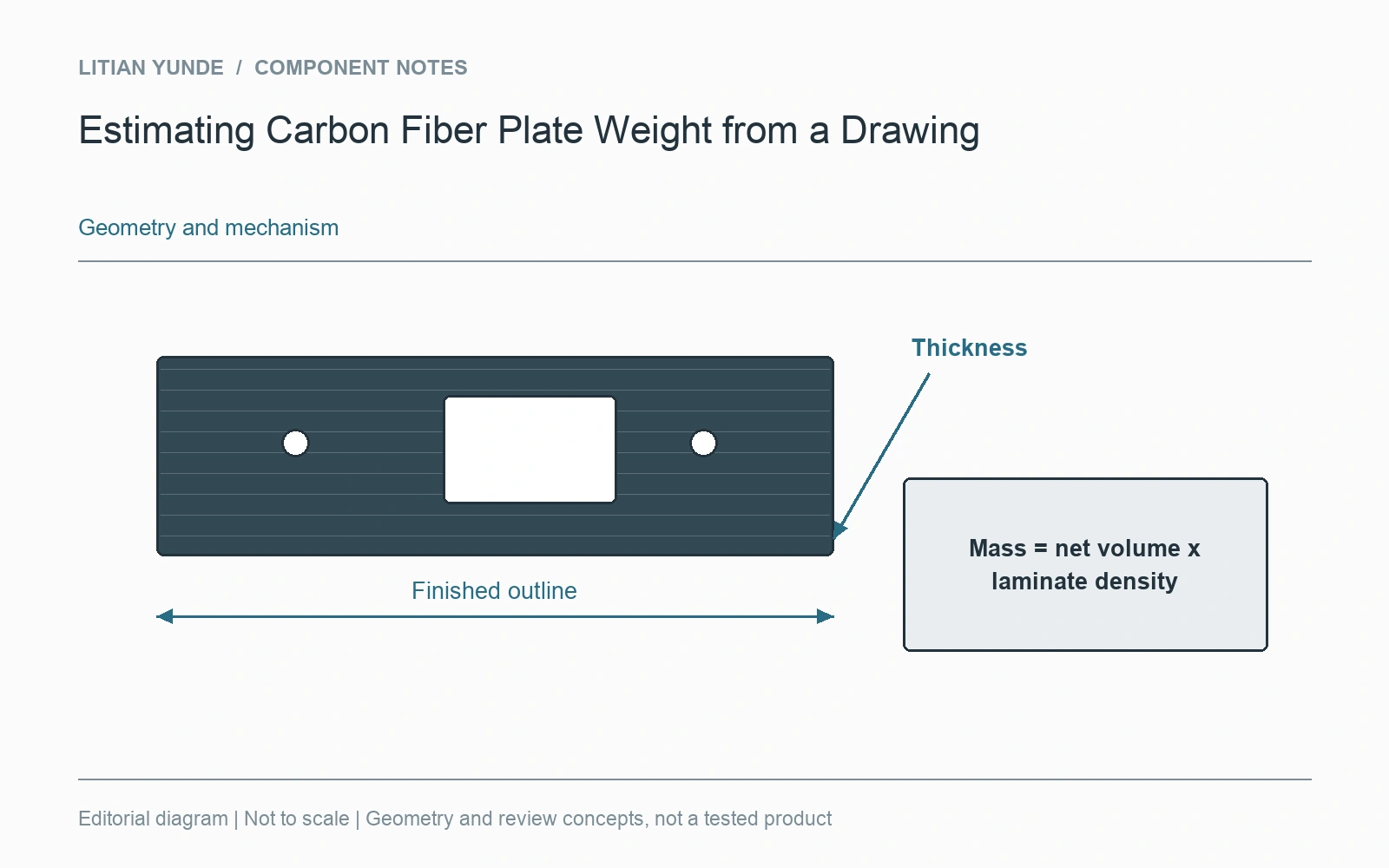
Estimating Carbon Fiber Plate Weight from a Drawing
A plate weight estimate starts with the finished material volume and a density for the proposed laminate. The weight of a sheet bought for machining answers a different…
Read guide →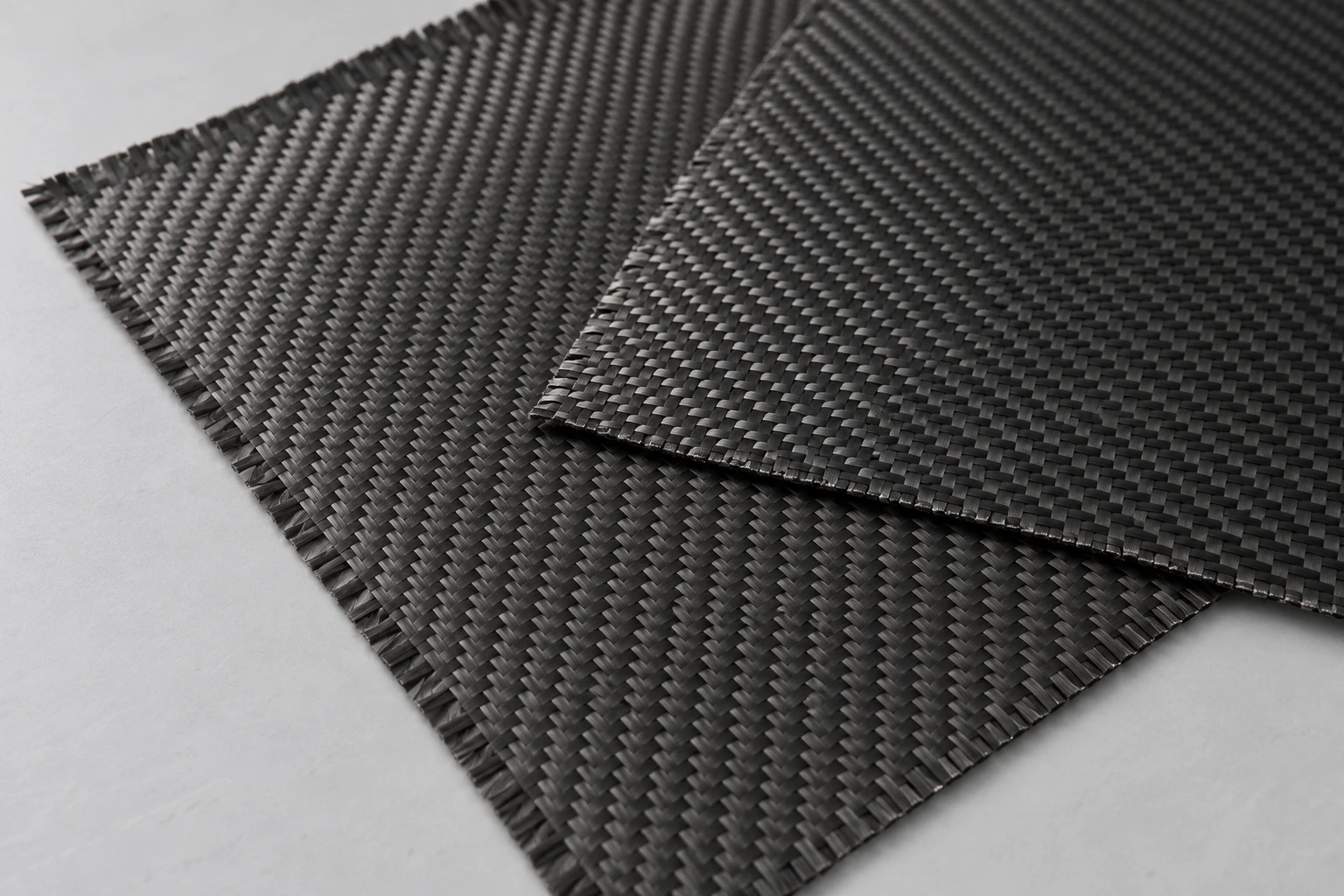
Joints de raccordement dans les pièces en fibre de carbone : convenir des emplacements avant le moulage
A carbon fiber fabric splice needs a defined role and location in the proposed laminate. Discuss where pieces meet or overlap before moulding, including any visible-face…
Read guide →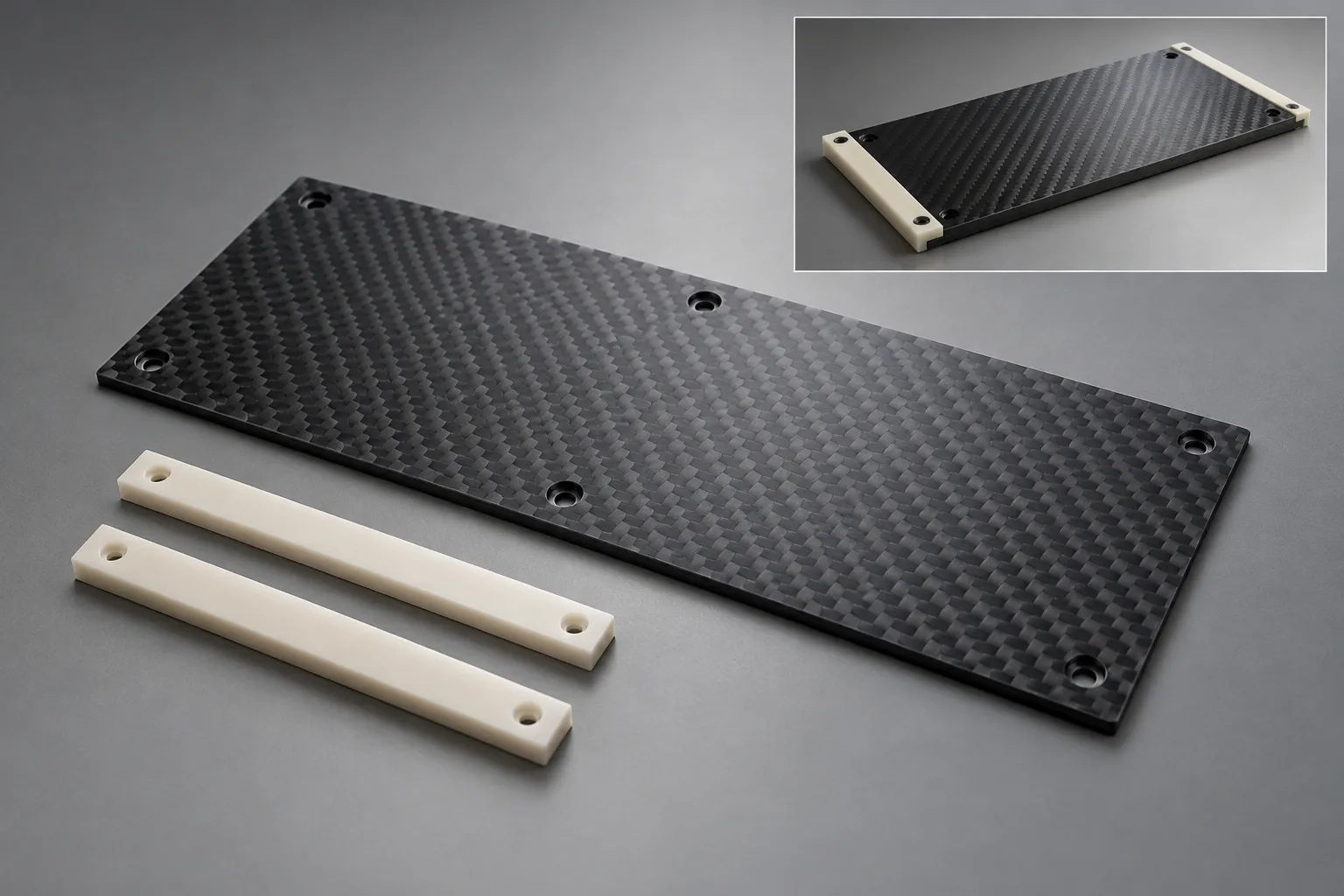
Panneaux en fibre de carbone avec patins d'usure : préciser la pièce de contact remplaçable
If repeated contact occurs on a carbon fiber panel, define the contacting pad or strip as a separate part of the assembly. Specify its material, location, attachment and…
Read guide →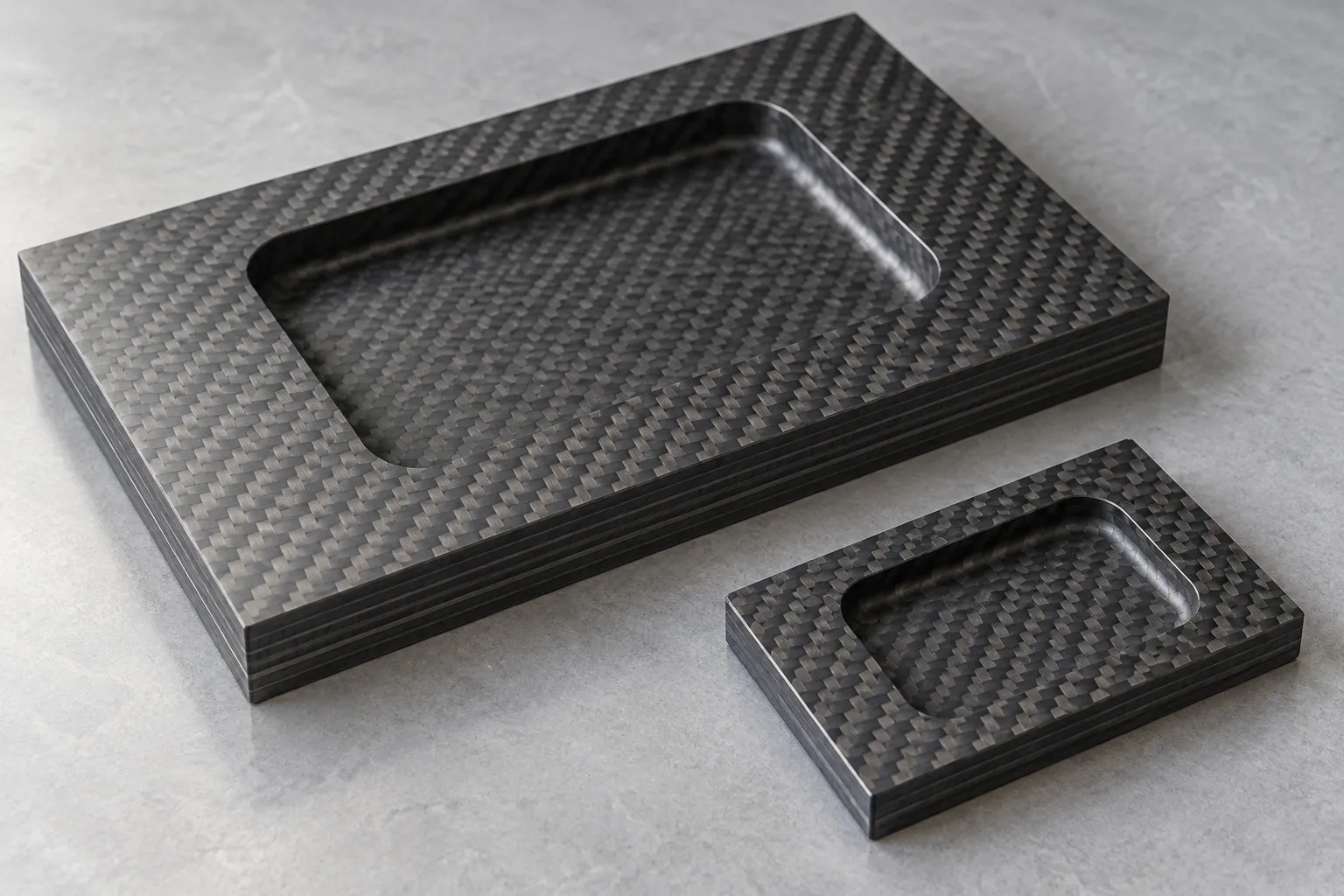
Machined Pockets in Carbon Fiber Plates: Specify the Remaining Wall
A pocket depth does not describe the material left beneath a recess. Define the local finished plate thickness, the depth reference and the required remaining wall together.…
Read guide →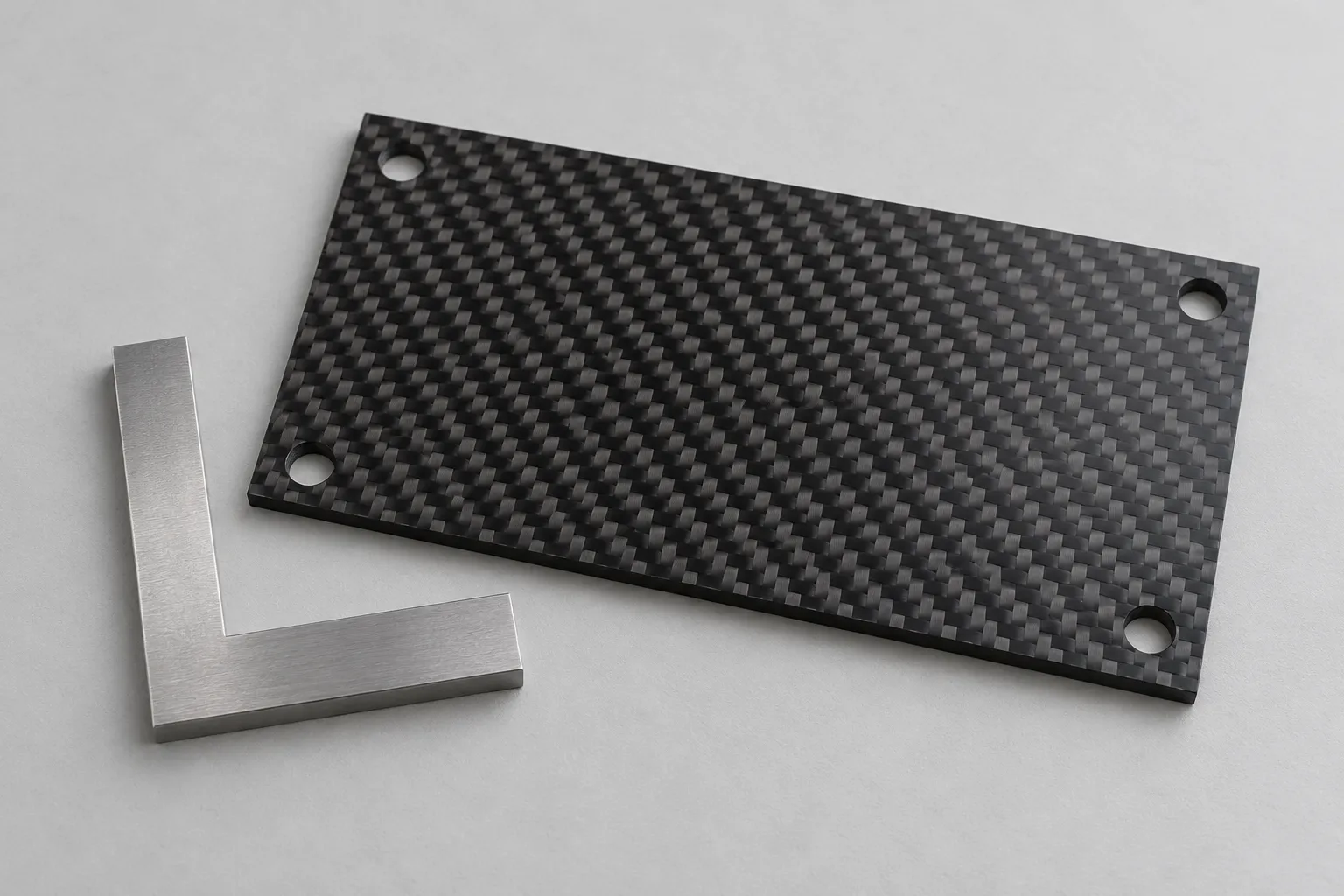
Repères sur les plaques en fibre de carbone : convenir d'un repère commun avant de comparer les positions des trous
A hole-position report is meaningful only when the reference system is clear. For a carbon fiber plate, identify the locating face, reference edges or holes, and the…
Read guide →
Découpes dans les panneaux sandwich : préciser la finition de l'âme avant l'usinage
A cutout in a composite sandwich panel exposes more than the outer skin. The design needs to identify the core boundary, edge closeout and any local attachment region. A…
Read guide →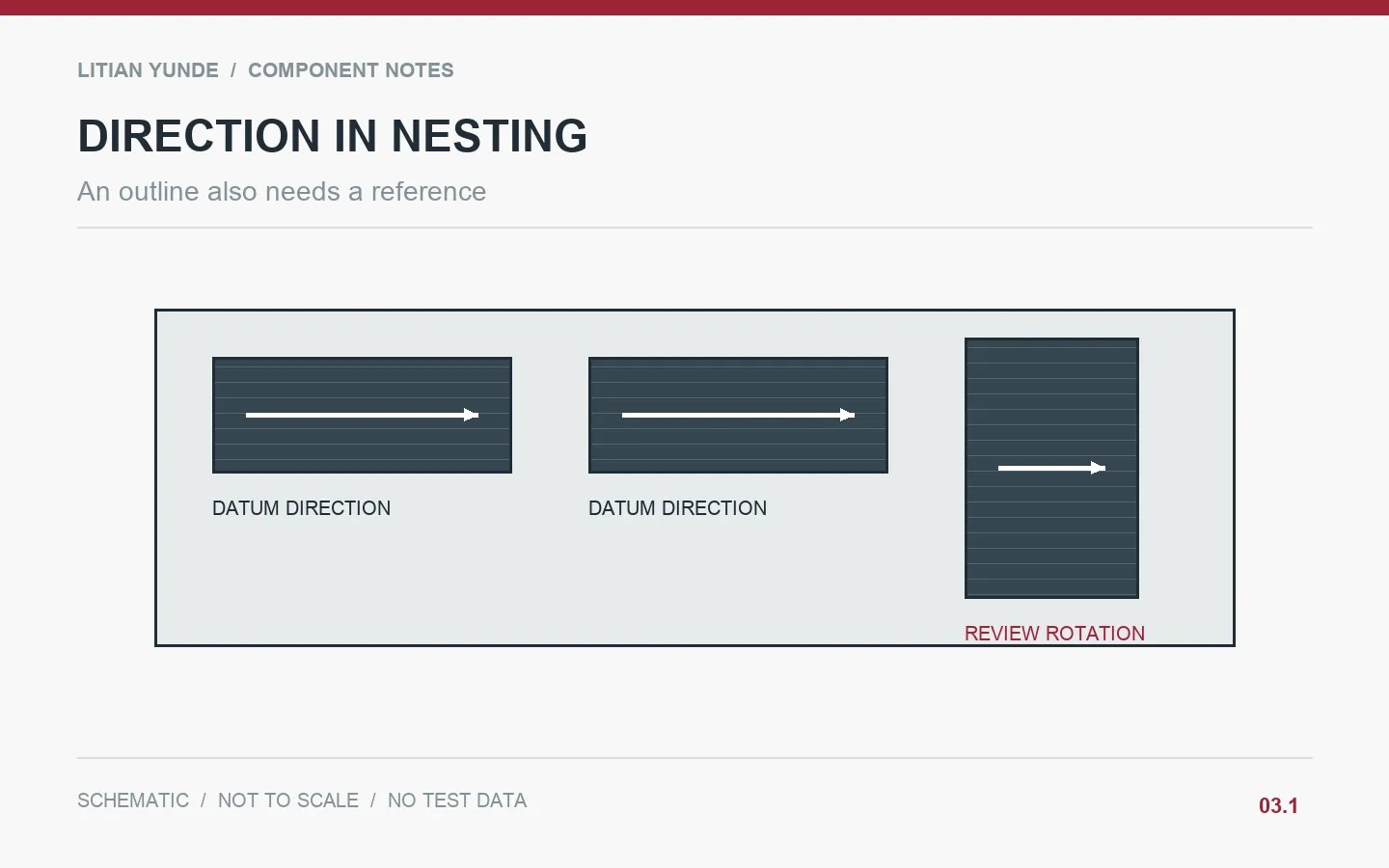
Imbrication des pièces en plaques de fibre de carbone : respecter le sens du matériau indiqué sur le dessin
Before rotating a carbon fiber part to improve sheet utilisation, check whether material direction is controlled. A nesting layout should preserve the specified orientation…
Read guide →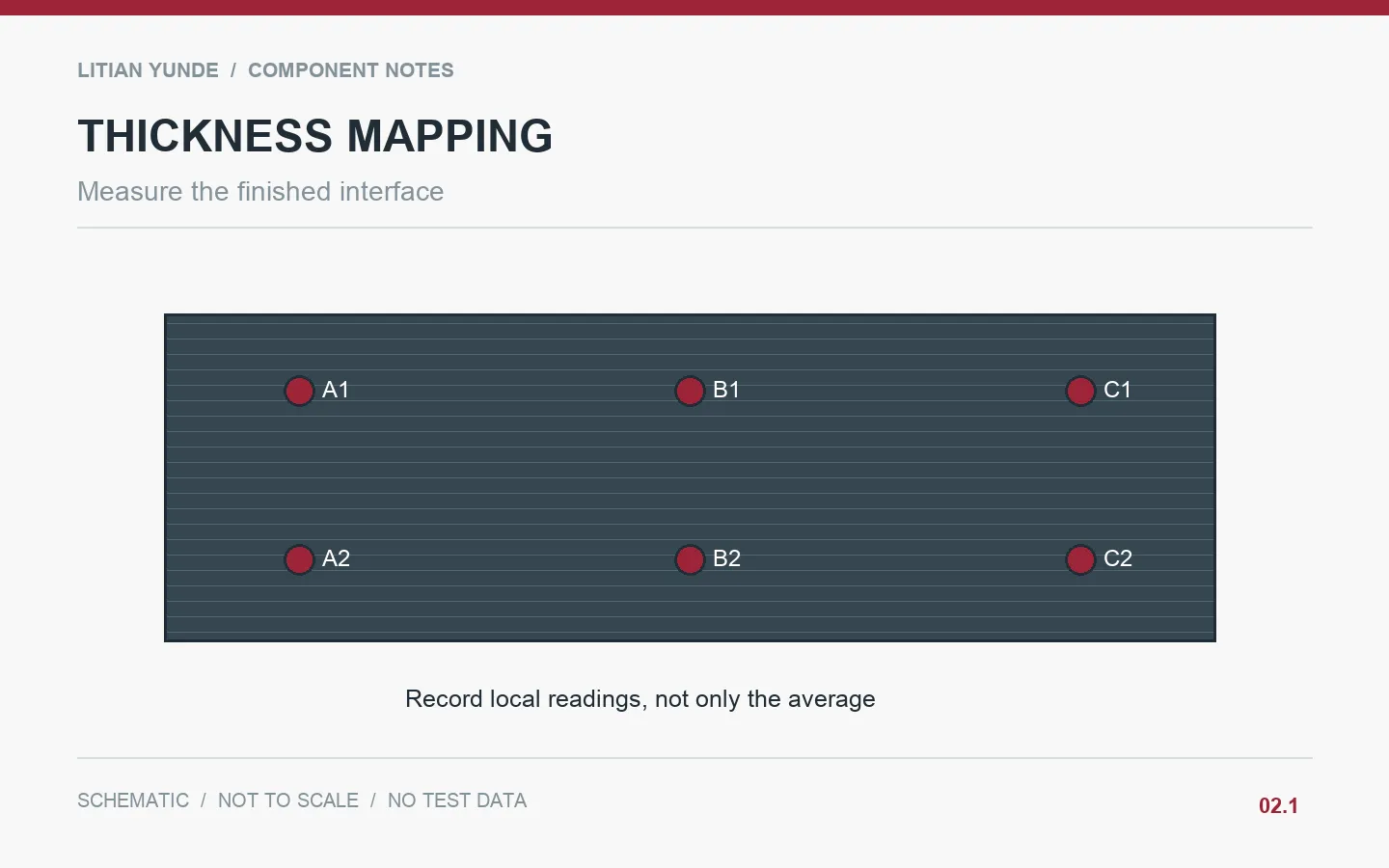
Cartes d'épaisseur des panneaux en fibre de carbone : où effectuer les mesures et quels éléments prendre en compte
A single thickness reading does not describe every location on a carbon fiber panel. Agree a measurement map and state whether coating, local reinforcement and edge treatment…
Read guide →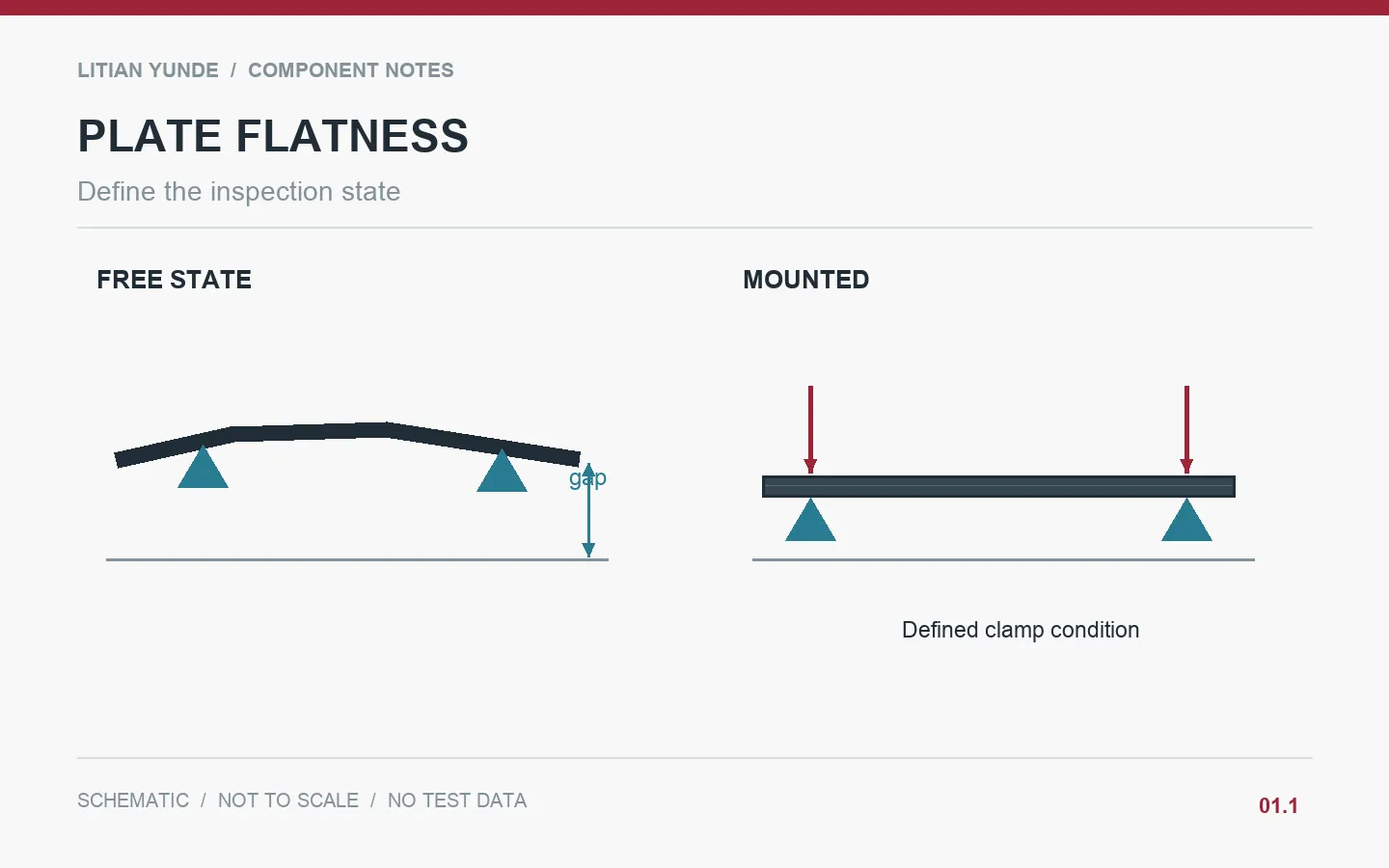
Planéité des plaques en fibre de carbone : mesures à l'état libre et en montage
A carbon fiber plate needs a defined inspection condition before a flatness result can be compared. State whether it is measured without restraint or installed on specified…
Read guide →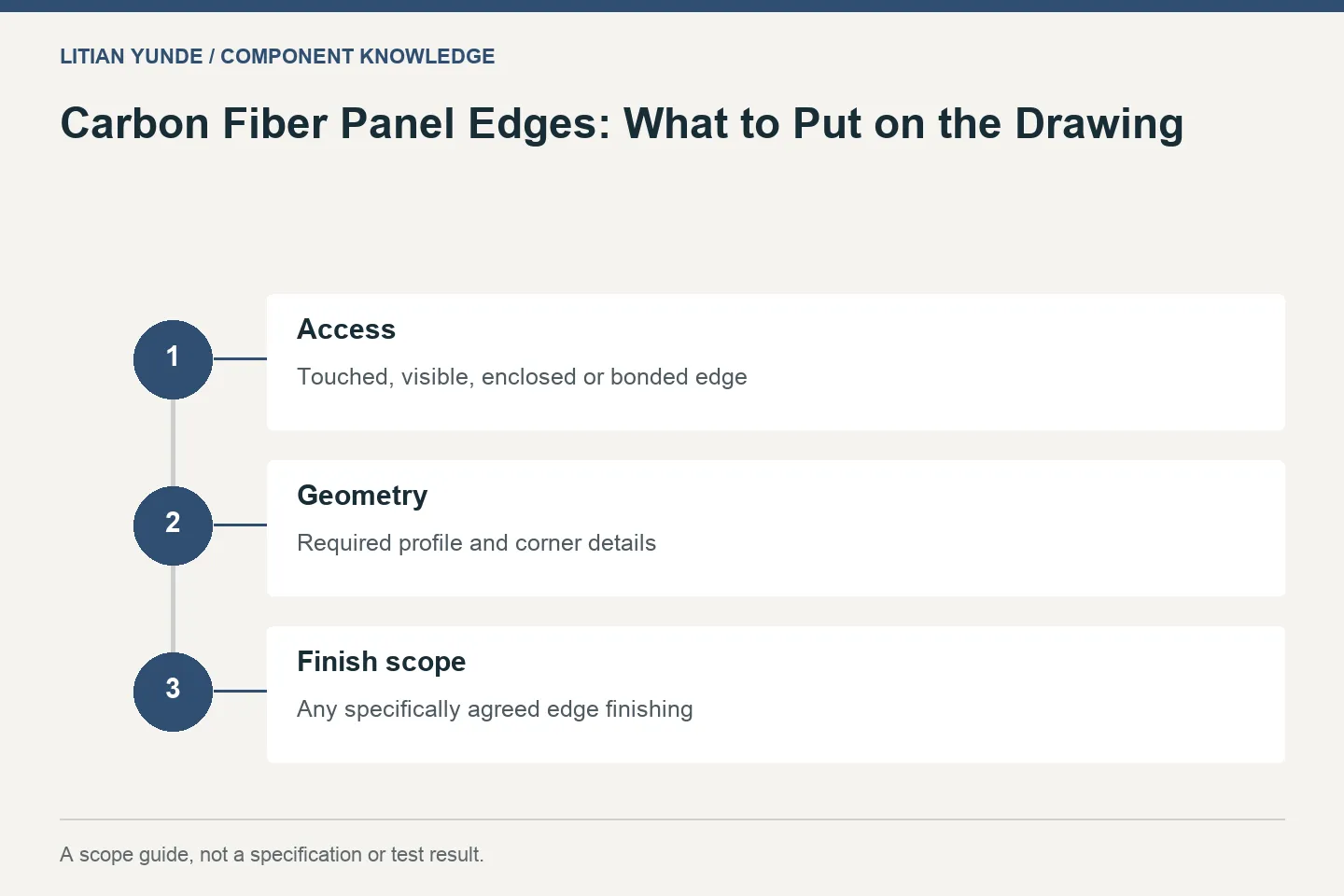
Carbon Fiber Panel Edges: What to Put on the Drawing
The panel outline is only part of an edge specification.
Read guide →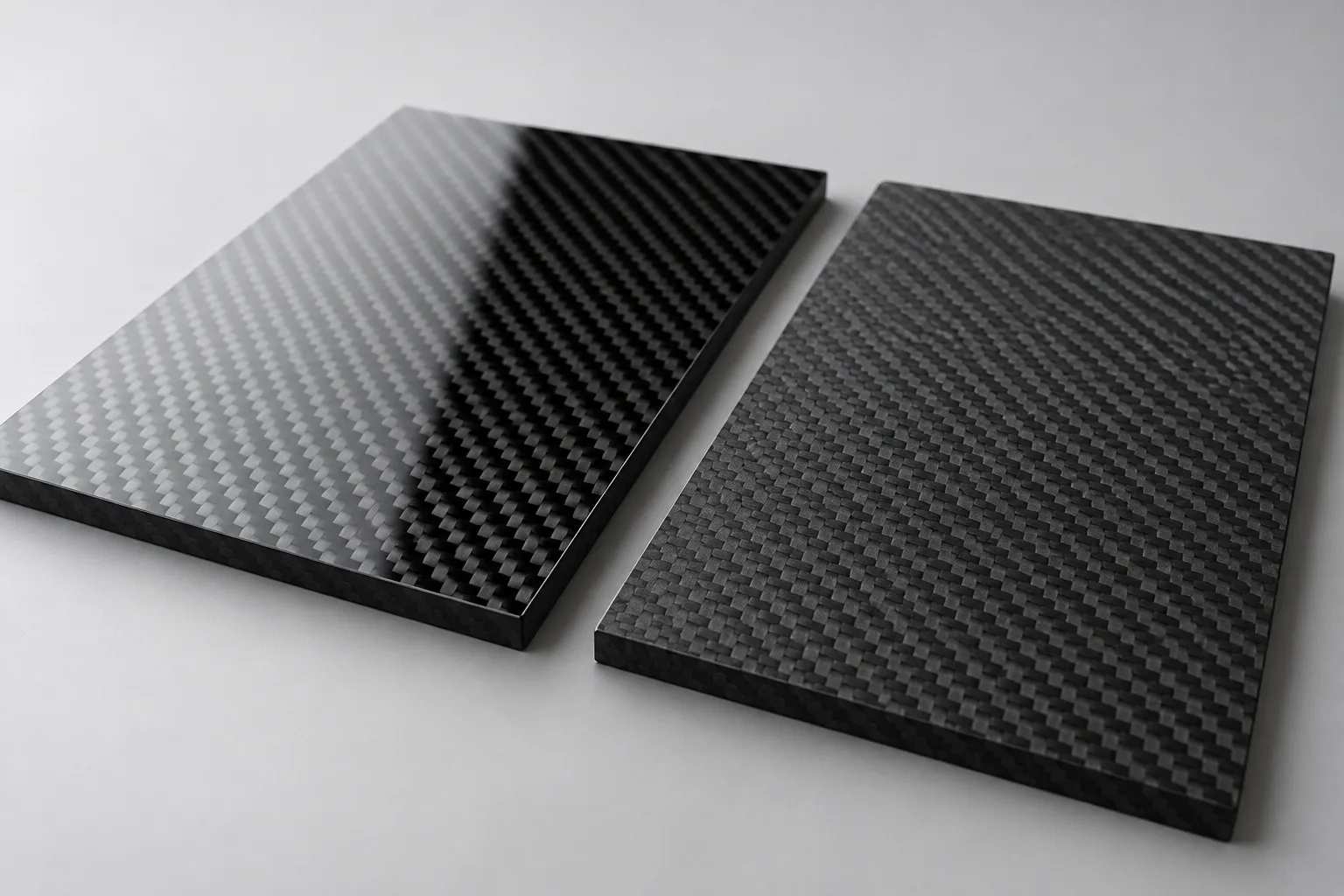
Définition de la face visible d'un panneau en fibre de carbone
An appearance requirement should say which face is visible, how it will be viewed and what reference defines acceptance.
Read guide →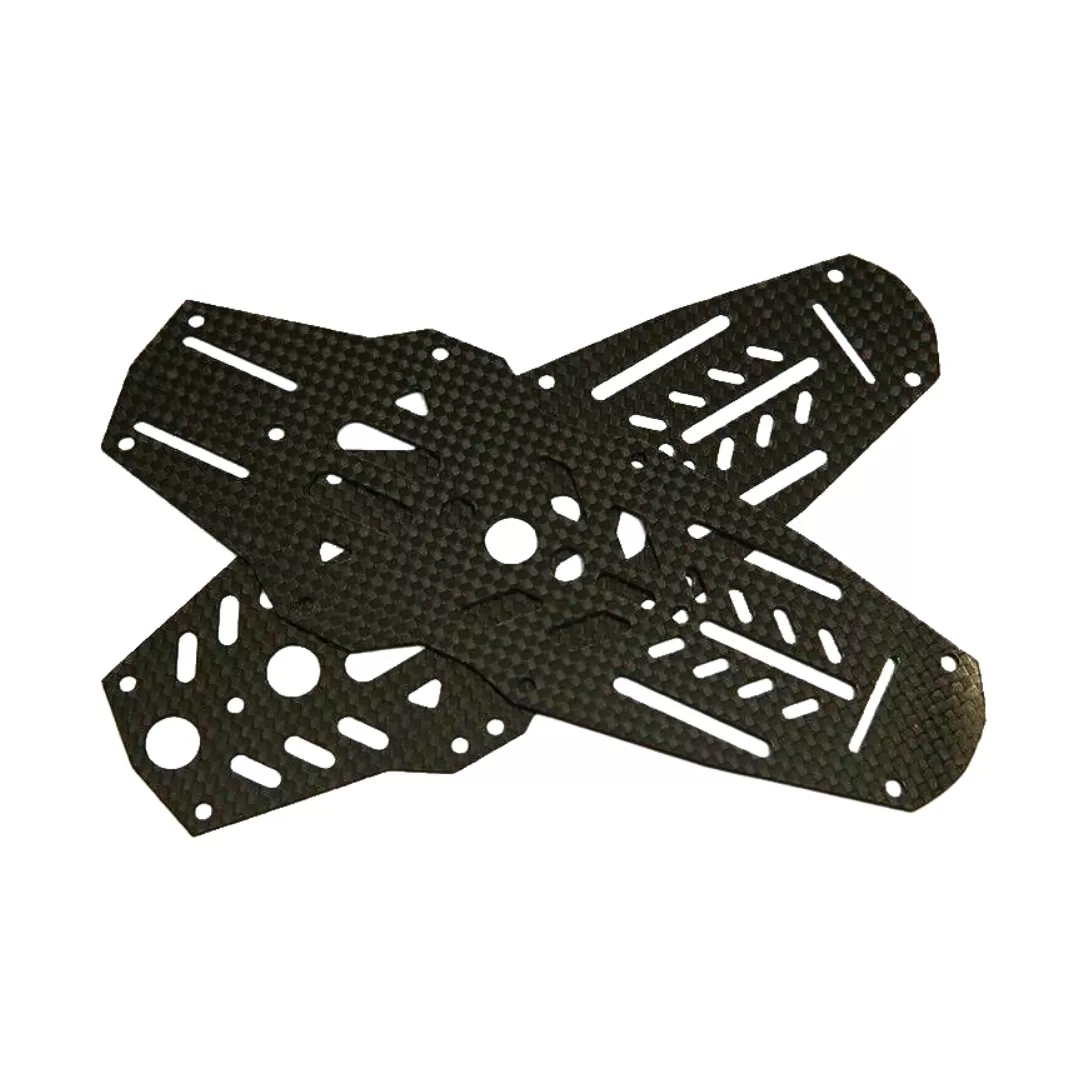
Comment définir sans ambiguïté le schéma de perçage d'une plaque en fibre de carbone
Un plan indiquant clairement la disposition des trous précise leur taille, leur position, leur orientation ainsi que le système de référence utilisé pour les contrôler.
Read guide →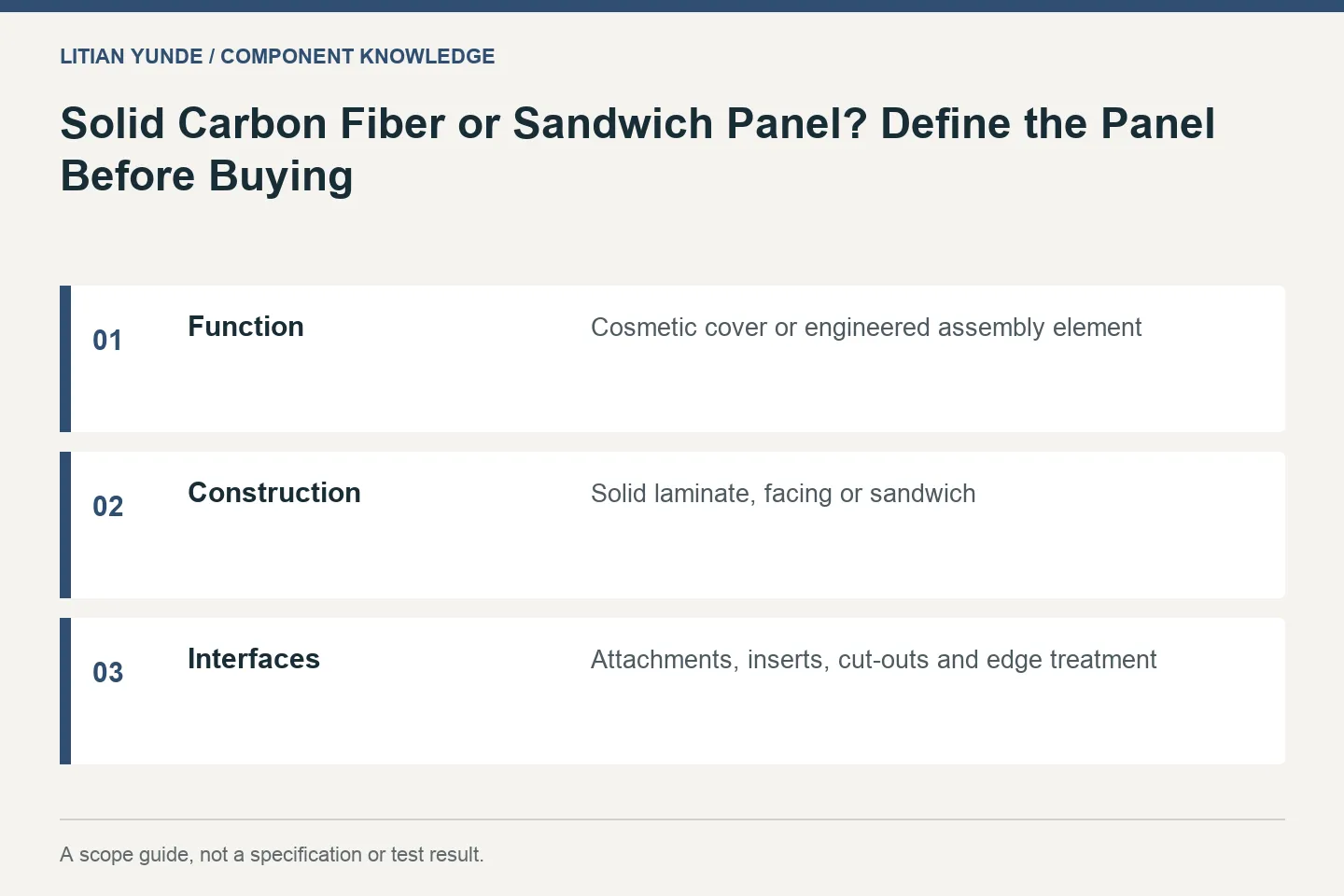
Panneau en fibre de carbone massive ou panneau sandwich ? Déterminez le type de panneau avant de l'acheter
N'utilisez pas l'expression “ panneau en fibre de carbone ” comme spécification complète du matériau.
Read guide →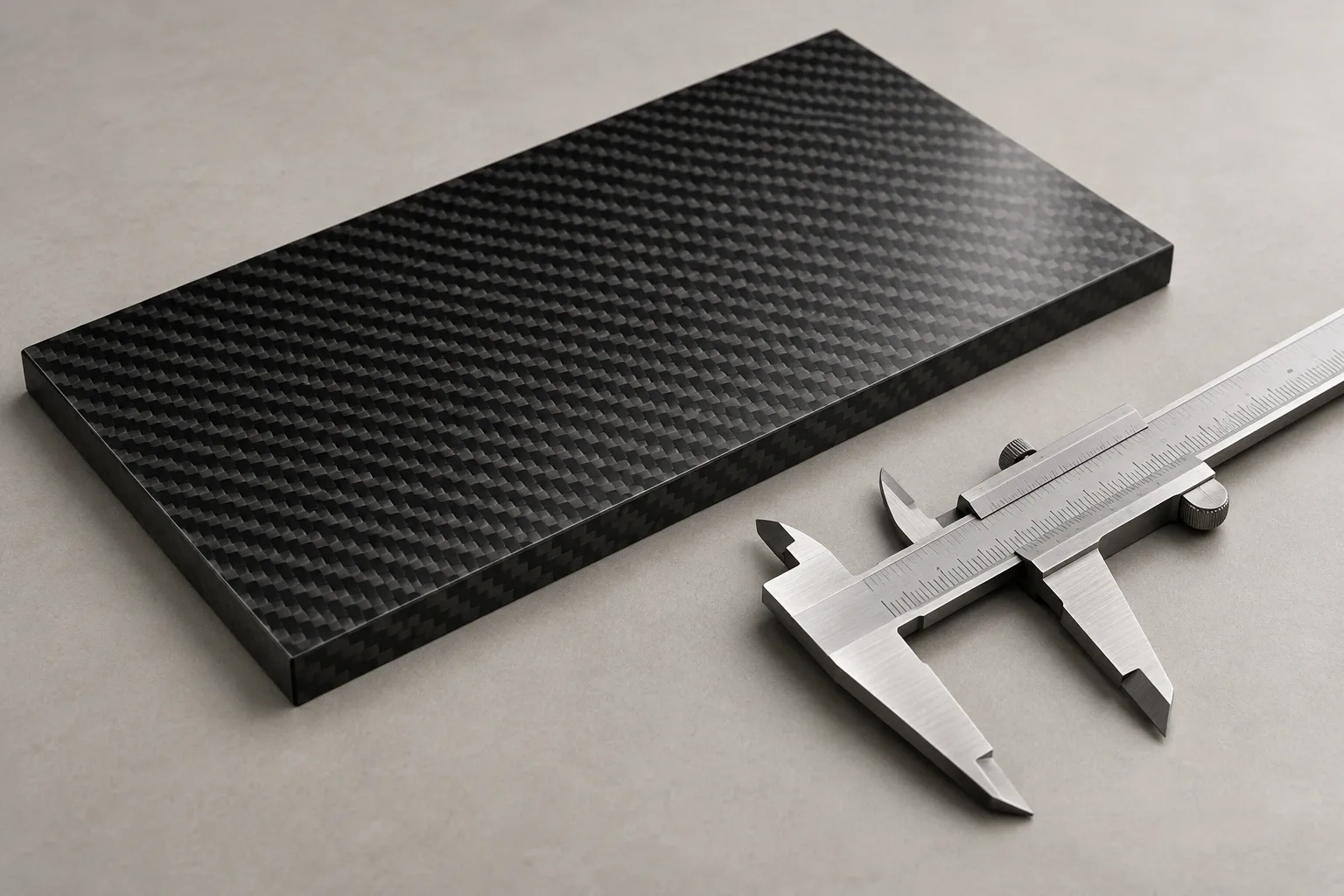
Demande de devis pour des plaques en fibre de carbone : les dimensions qui comptent vraiment
A useful carbon fiber plate enquiry identifies the finished outline, thickness, critical features and inspection conditions.
Read guide →
Choisir un panneau composite : commencez par définir son utilisation
Before comparing materials, define what the panel must do: close an opening, carry an attachment, provide a visible surface or span between supports. Different duties can…
Read guide →Tubes et interfaces
Carbon fiber tube selection and connection details: cross-sections, fits, bores, end fittings and the behaviour of the installed member.
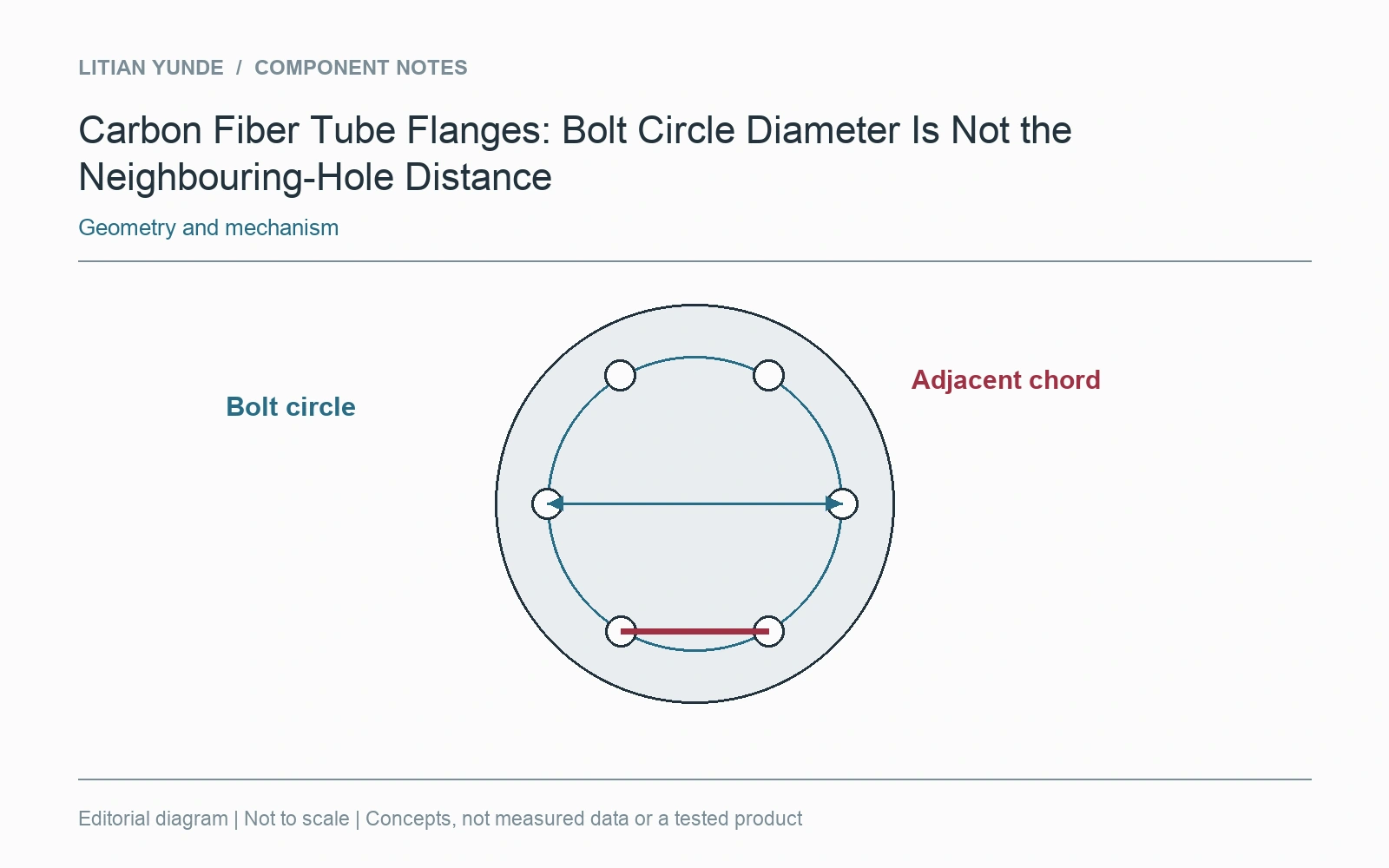
Carbon Fiber Tube Flanges: Bolt Circle Diameter Is Not the Neighbouring-Hole Distance
On a circular flange, bolt circle diameter locates hole centres around a circle. The straight distance between neighbouring hole centres is a chord, not that diameter.…
Read guide →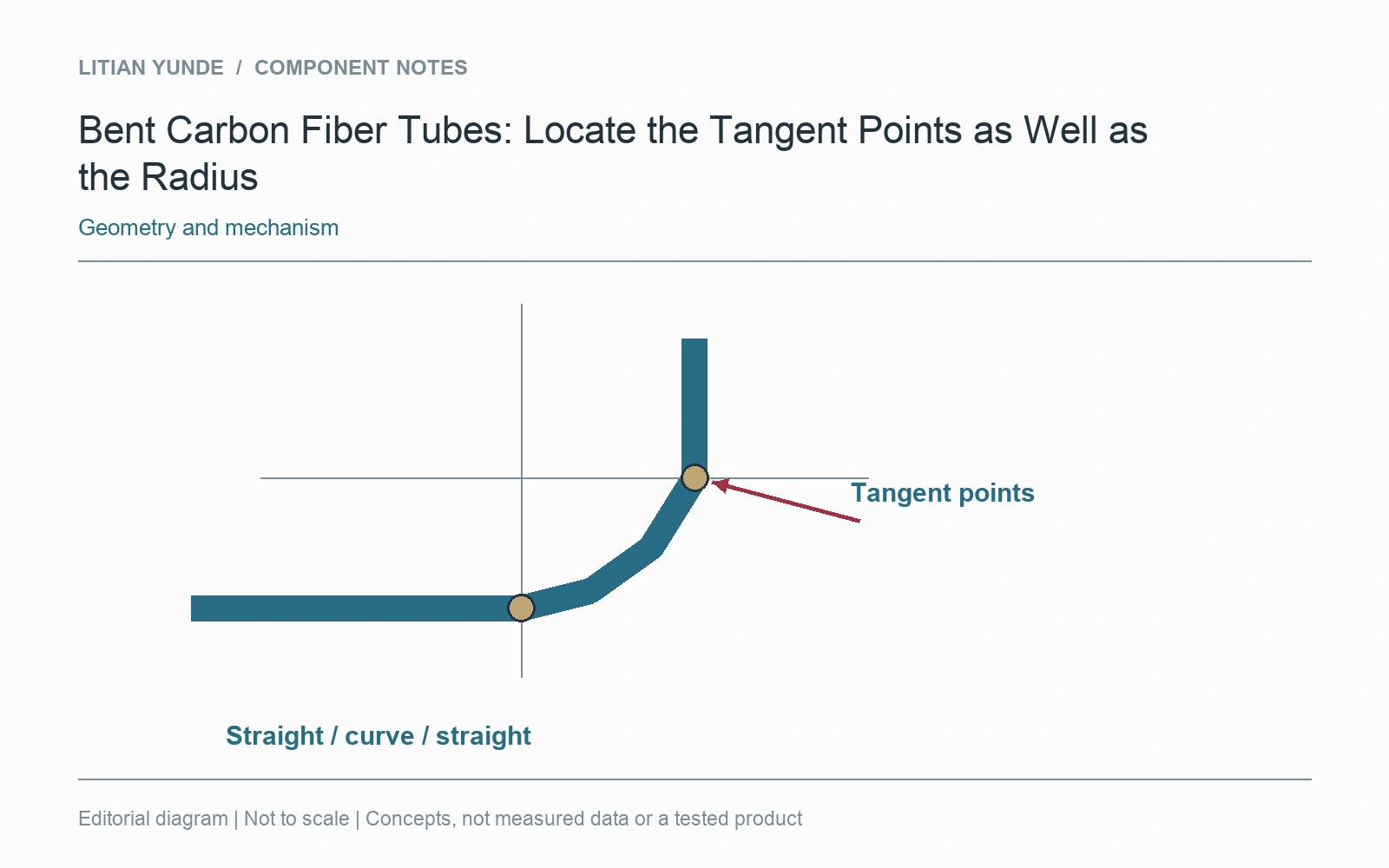
Bent Carbon Fiber Tubes: Locate the Tangent Points as Well as the Radius
A bend radius does not fully locate a bent tube’s straight ends. Identify the tangent points and the straight lengths or other controlled dimensions needed by the assembly.…
Read guide →
Colliers de serrage fendus sur des tubes en fibre de carbone : vérifiez si l'écart entre les mâchoires se referme
A split clamp needs room to close as intended around the tube. If the clamp halves or ears contact each other first, tightening the bolt further does not automatically…
Read guide →
Carbon Fiber Tube Ends: A Length Check Does Not Establish Squareness
Tube length and end-face squareness describe different geometry. A tube can meet a stated length while its end face is angled to the intended axis. Where the end seats…
Read guide →
Shouldered Fittings on Carbon Fiber Tubes: Define the End Contact
A shouldered fitting can contact the end of a carbon fiber tube while another part of the fitting engages inside or outside it. Define that end contact separately from the…
Read guide →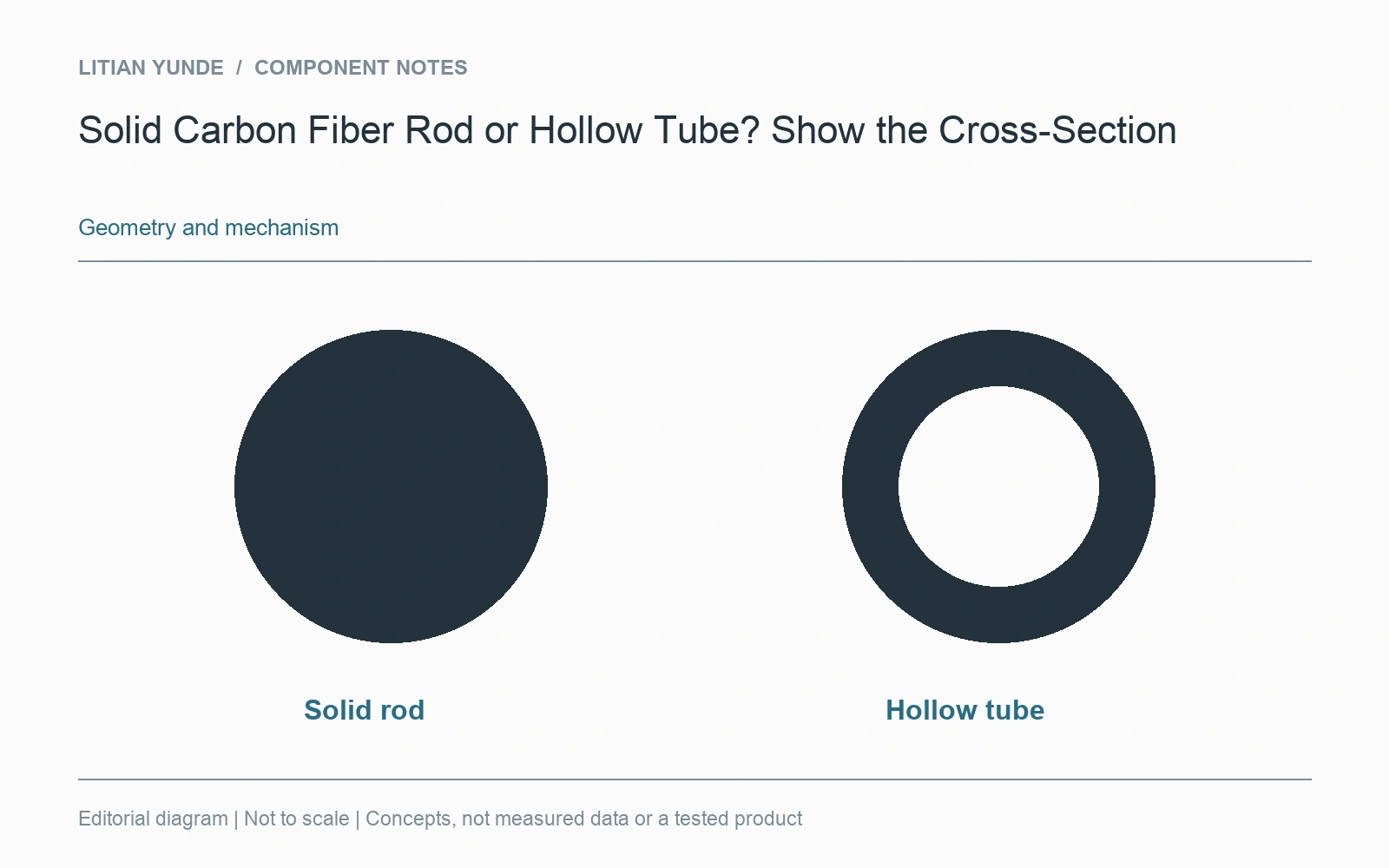
Tige pleine en fibre de carbone ou tube creux ? Montrez la section transversale.
A solid rod and a hollow tube can share an outside diameter while having different cross-sections. State which one is required. An external photograph or a request for a…
Read guide →
Perches en fibre de carbone assemblées : vérifiez l'alignement de l'axe au niveau du raccord
Two straight tube sections do not automatically form a straight assembled pole. The splice can introduce an offset or angular change. Define the assembled reference and…
Read guide →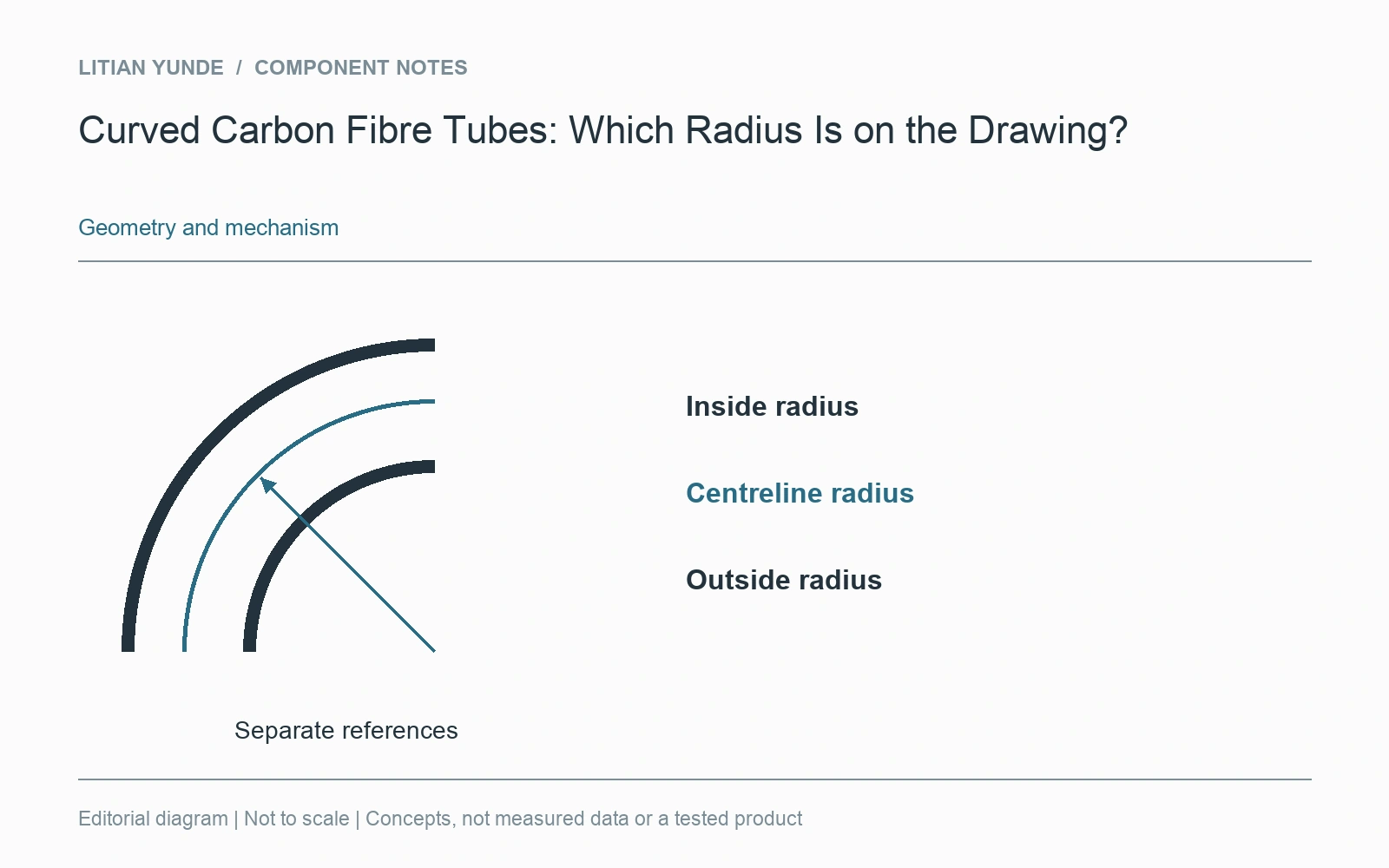
Tubes courbés en fibre de carbone : quel est le rayon indiqué sur le dessin ?
A curved tube has an inside surface, a centreline and an outside surface. A radius needs to identify which reference it describes. Include the bend plane and end directions…
Read guide →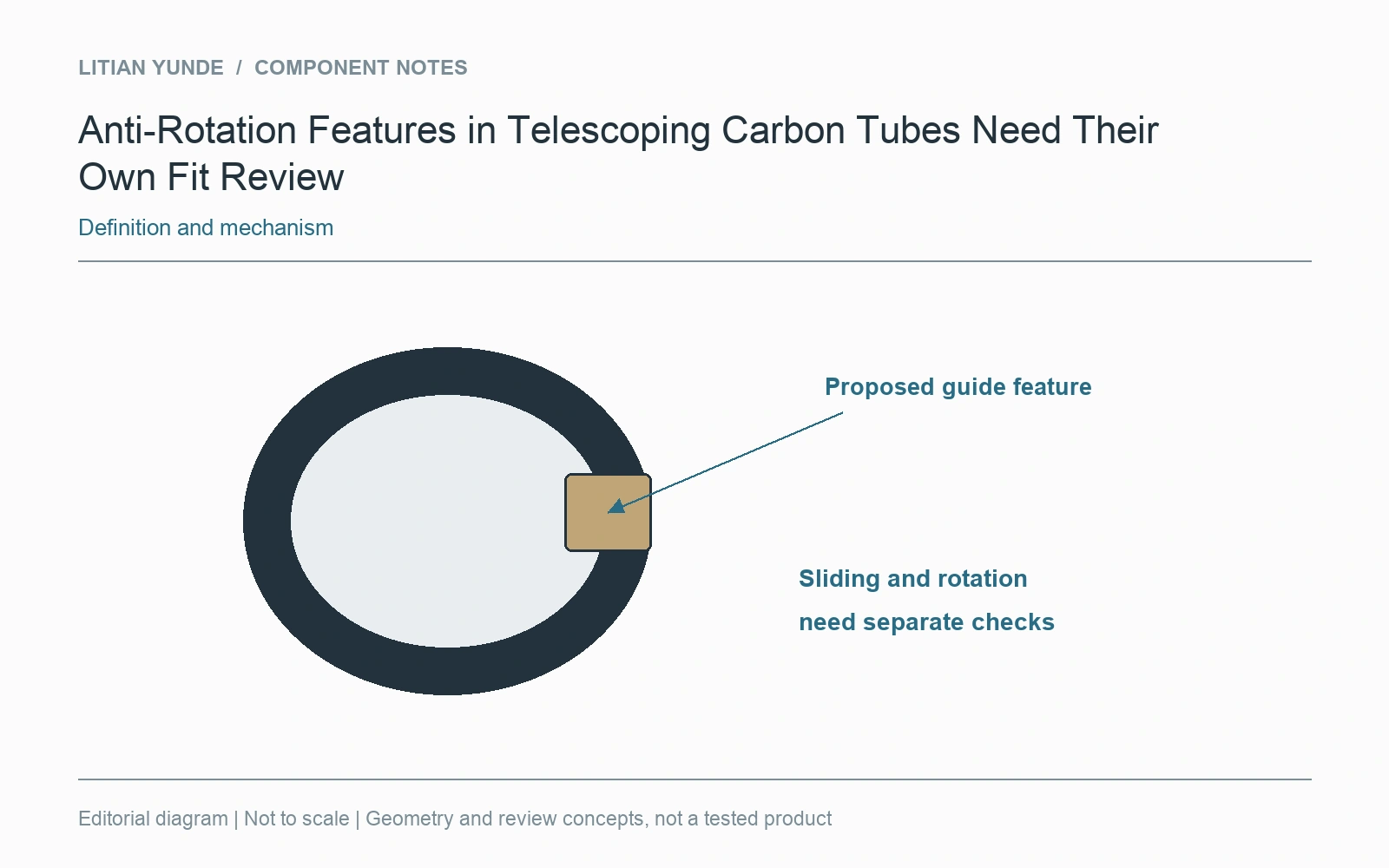
Les dispositifs anti-rotation des tubes télescopiques en carbone doivent faire l'objet d'un contrôle d'ajustement spécifique
A telescoping assembly can need both sliding clearance and resistance to relative rotation. Those are different requirements. If a key, guide or other anti-rotation feature…
Read guide →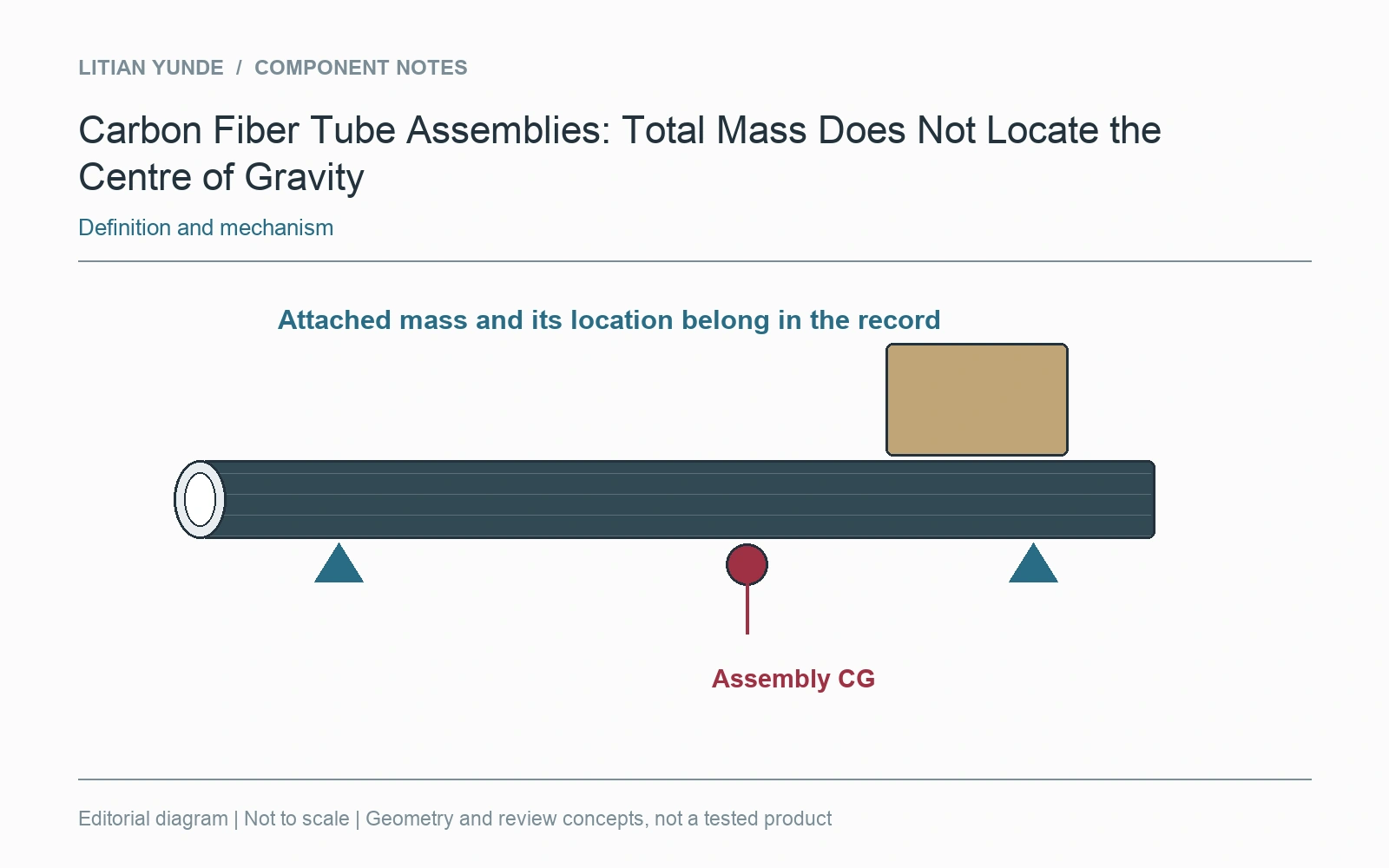
Carbon Fiber Tube Assemblies: Total Mass Does Not Locate the Centre of Gravity
A tube assembly’s total mass does not identify where that mass acts. Fittings and attached equipment can move the centre of gravity even when the bare tube stays unchanged.…
Read guide →
Thermal Movement at Carbon Fiber Tube and Metal Interfaces
A carbon fiber tube and its metal fittings can respond differently to temperature changes. The laminate definition and the restrained assembly matter. “Low thermal expansion”…
Read guide →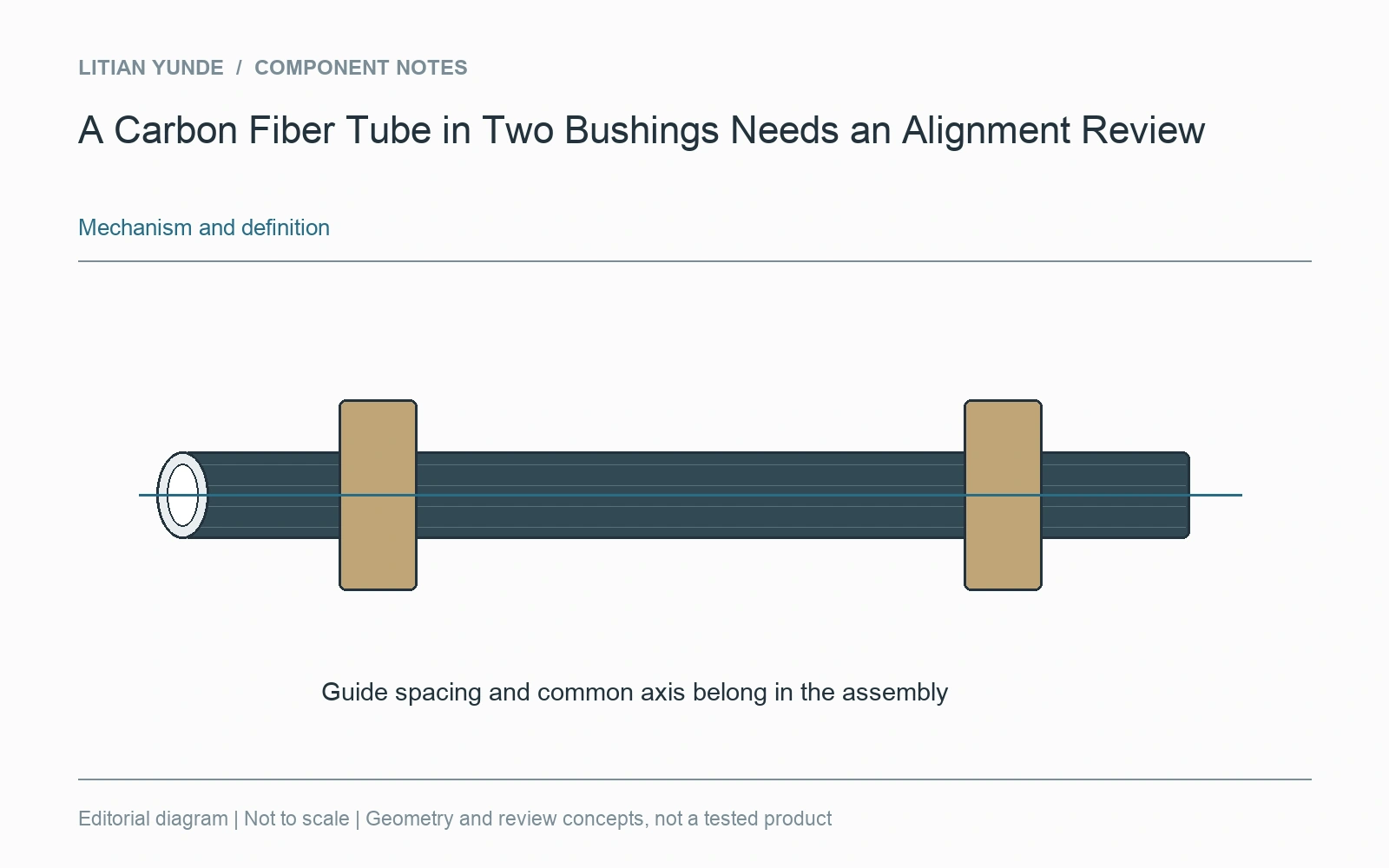
A Carbon Fiber Tube in Two Bushings Needs an Alignment Review
Two guide bushings define an alignment condition for the tube passing through them. Bore size alone does not describe that condition. Review the guides, their spacing and the…
Read guide →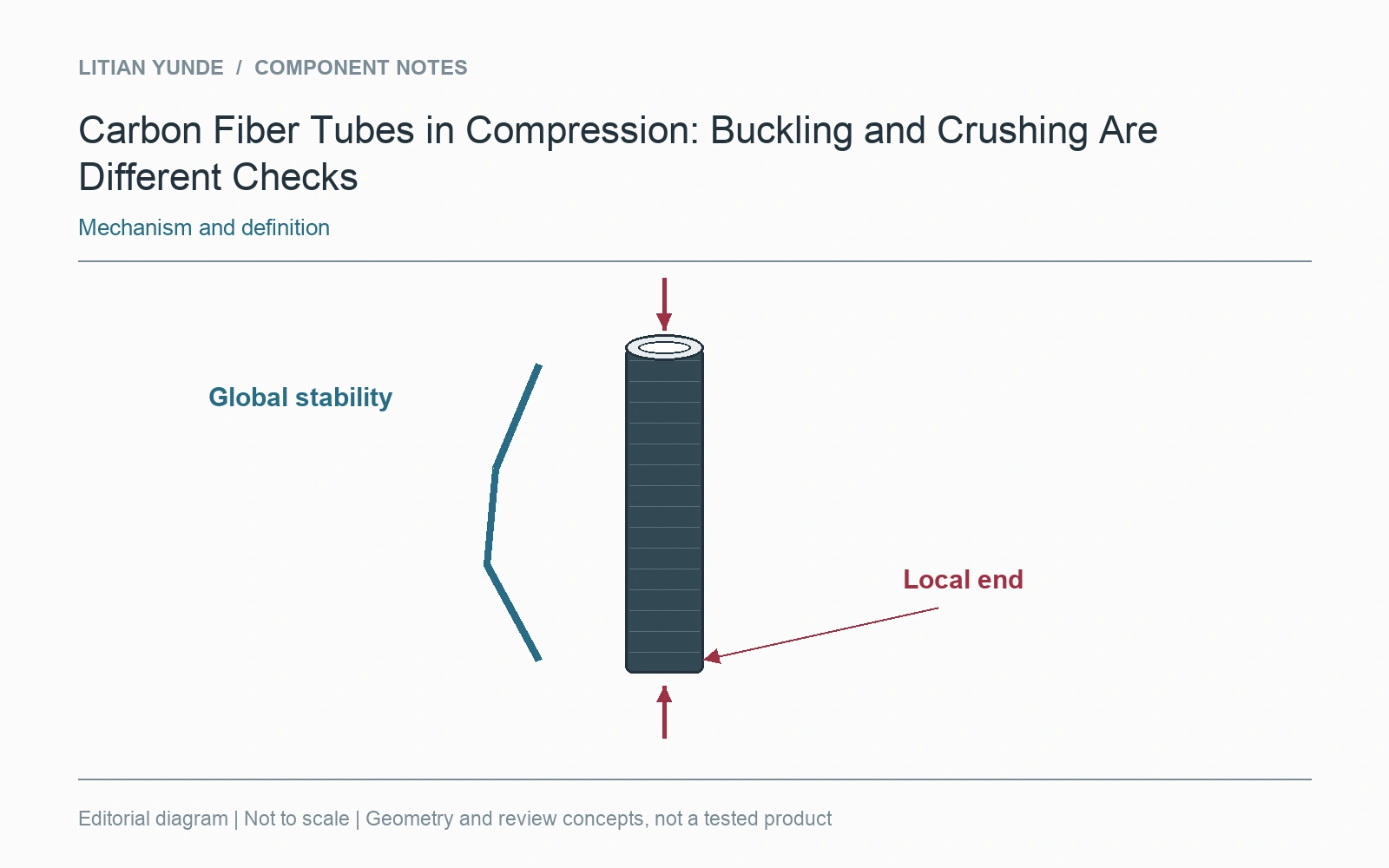
Carbon Fiber Tubes in Compression: Buckling and Crushing Are Different Checks
A tube under compression can be limited by instability as well as by local material failure. Tube length, section, construction, end restraint and load introduction belong in…
Read guide →
Tapered Carbon Fiber Tubes: Match the Fitting at Its Actual Position
A fitting on a tapered tube needs a location as well as a diameter. Move the fitting along the member and the local section changes. A dimension taken at the small end does…
Read guide →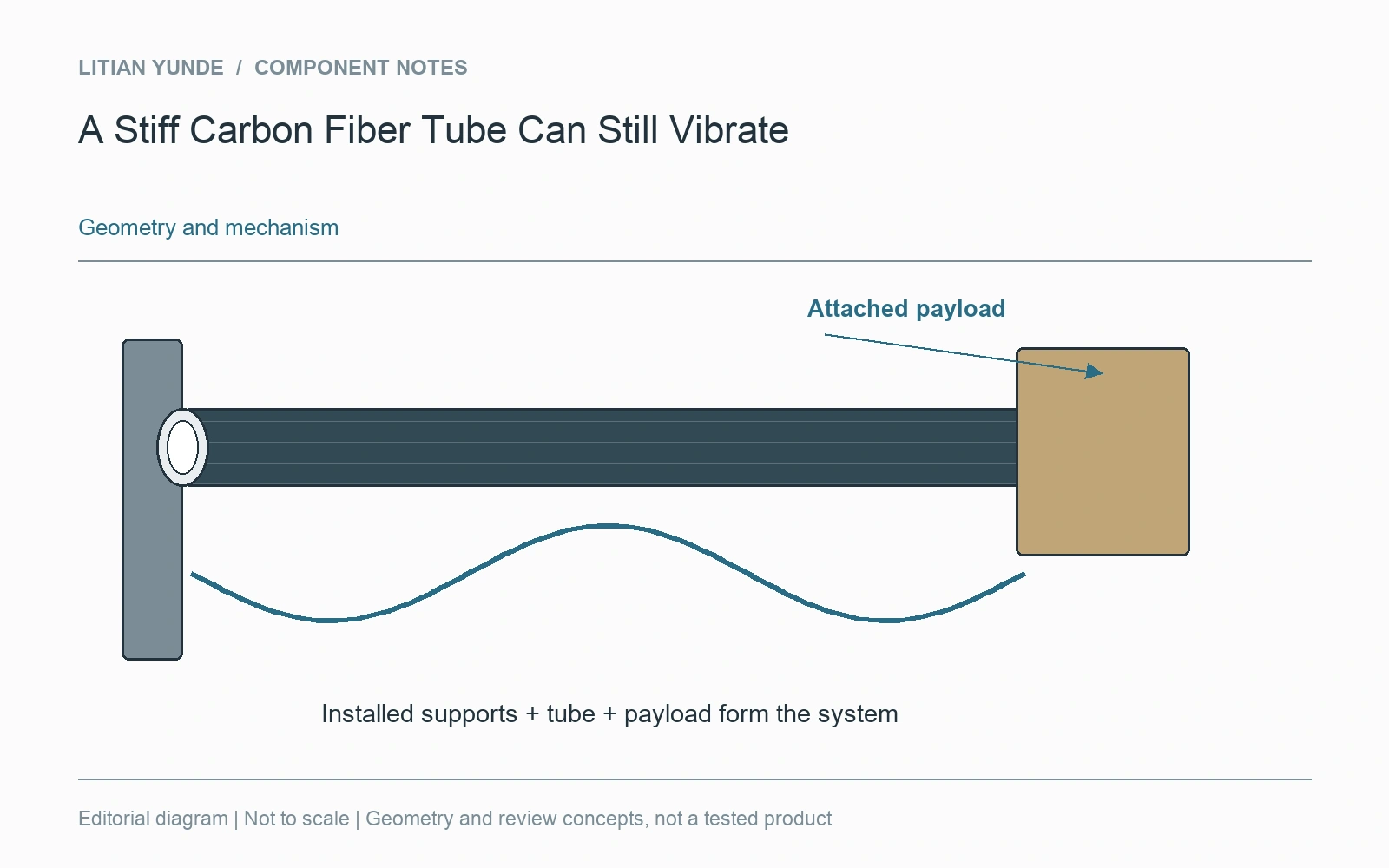
A Stiff Carbon Fiber Tube Can Still Vibrate
Static stiffness and vibration behaviour are related, but they are not the same requirement. A tube can show little movement under a slow load and still respond strongly to a…
Read guide →
Carbon Fiber Tubes Carrying Torque: Follow the Whole Joint
A carbon fiber tube carrying torque needs more than a diameter specification. The tube laminate and both end connections form one load path. A fitting that turns relative to…
Read guide →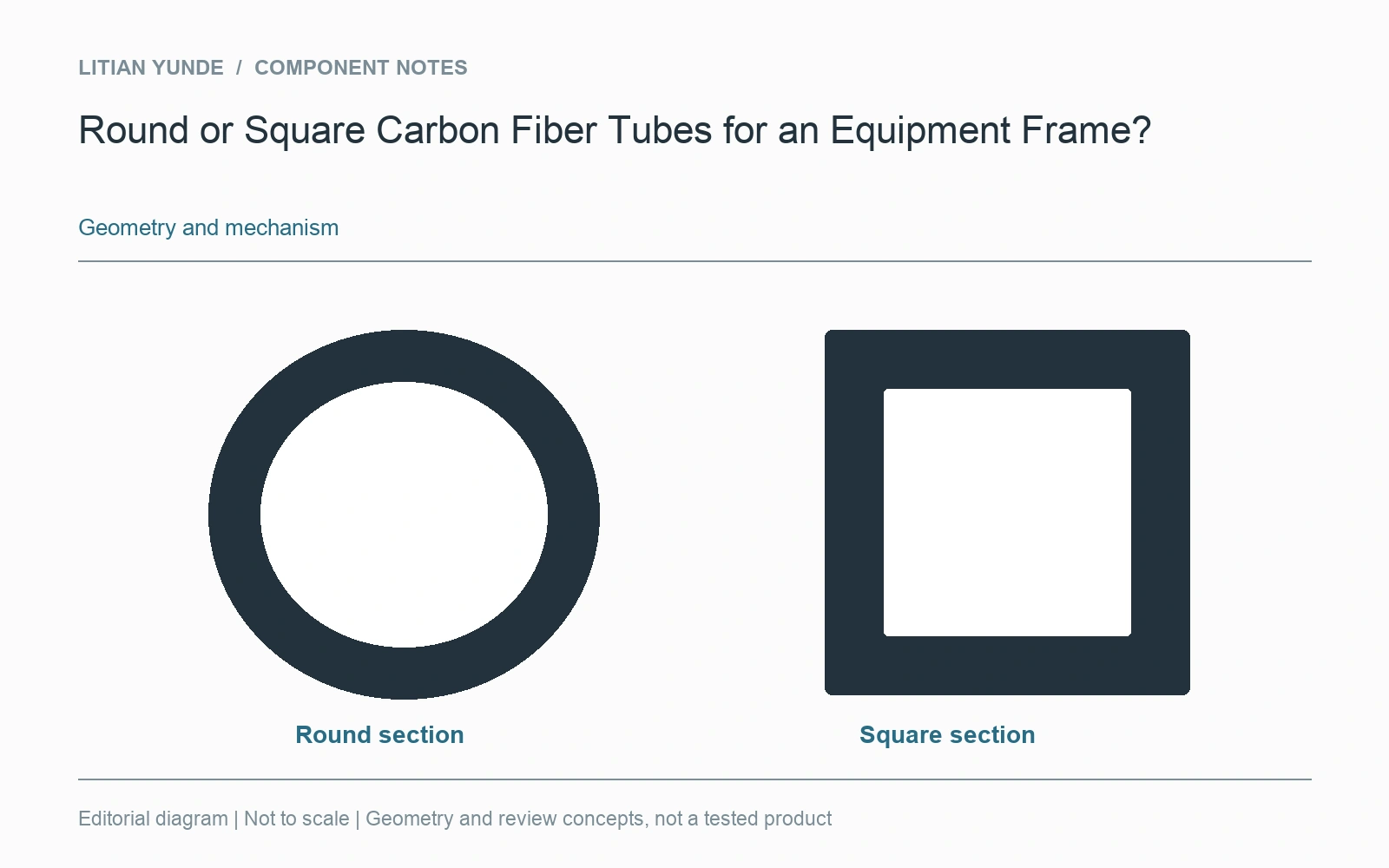
Round or Square Carbon Fiber Tubes for an Equipment Frame?
Choose a tube shape around the frame interfaces and the way the member is loaded. Square tubes offer identifiable faces; round tubes suit circular collars and rotated…
Read guide →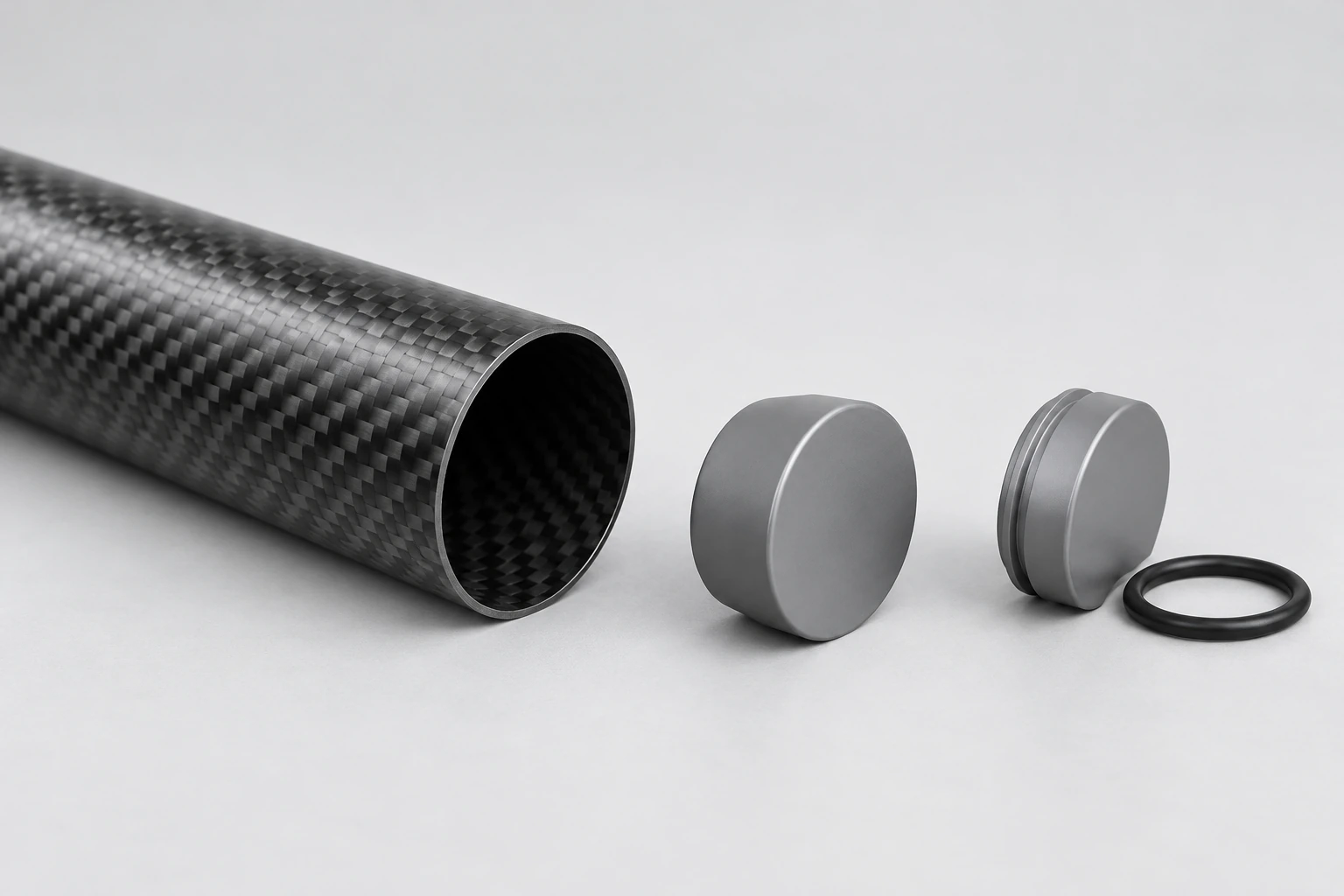
End Caps for Carbon Fiber Tubes: Separate Closure, Retention and Sealing
A tube end cap can close an opening without providing a verified seal or structural connection. Define the function before choosing its fit and retention. For a carbon fiber…
Read guide →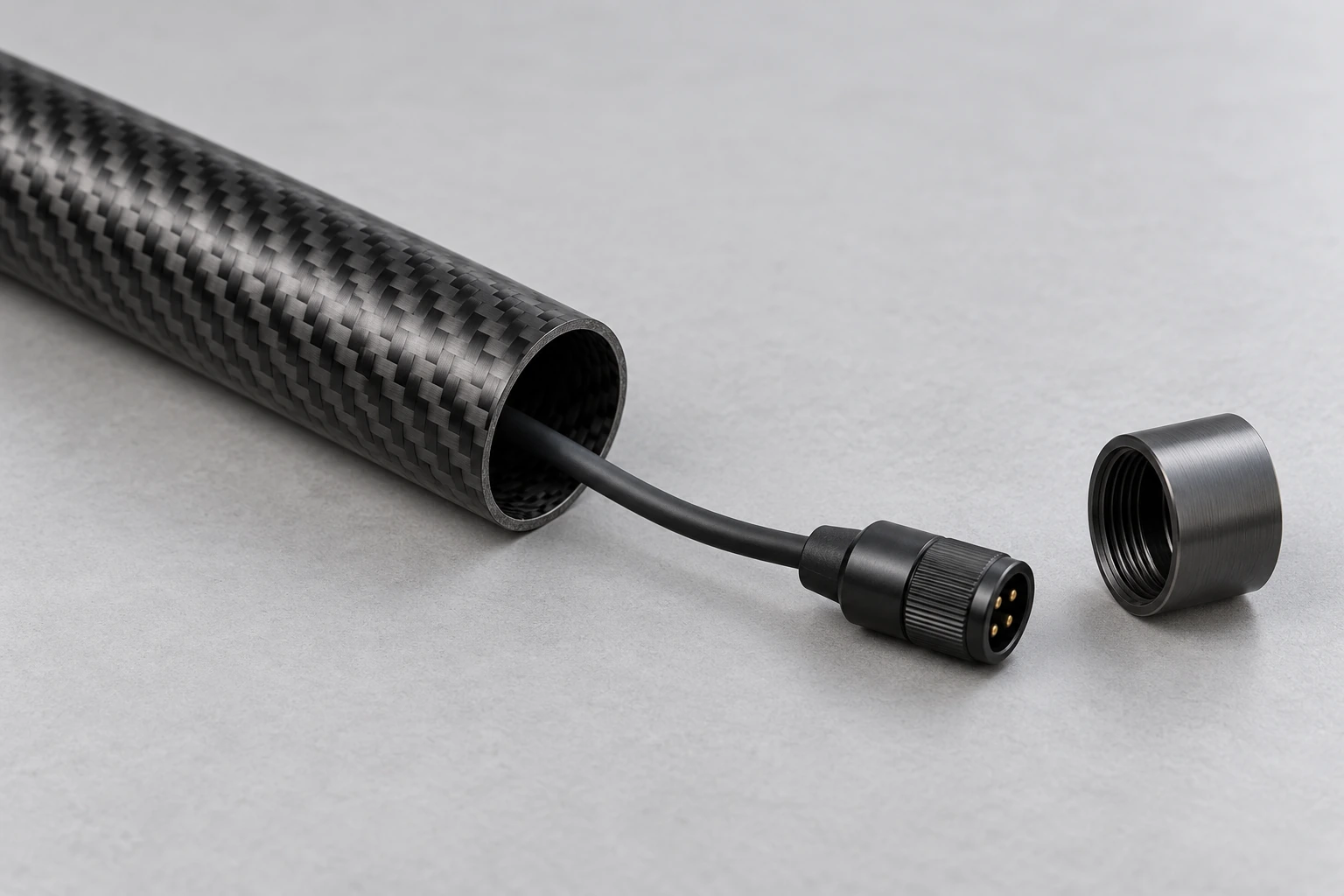
Acheminement des câbles à travers des tubes en fibre de carbone : vérifiez l'ensemble du parcours d'installation
A cable route through a carbon fiber tube must work for installation and service, not only for the cable’s bare diameter. Check the connector envelope, internal route, exits…
Read guide →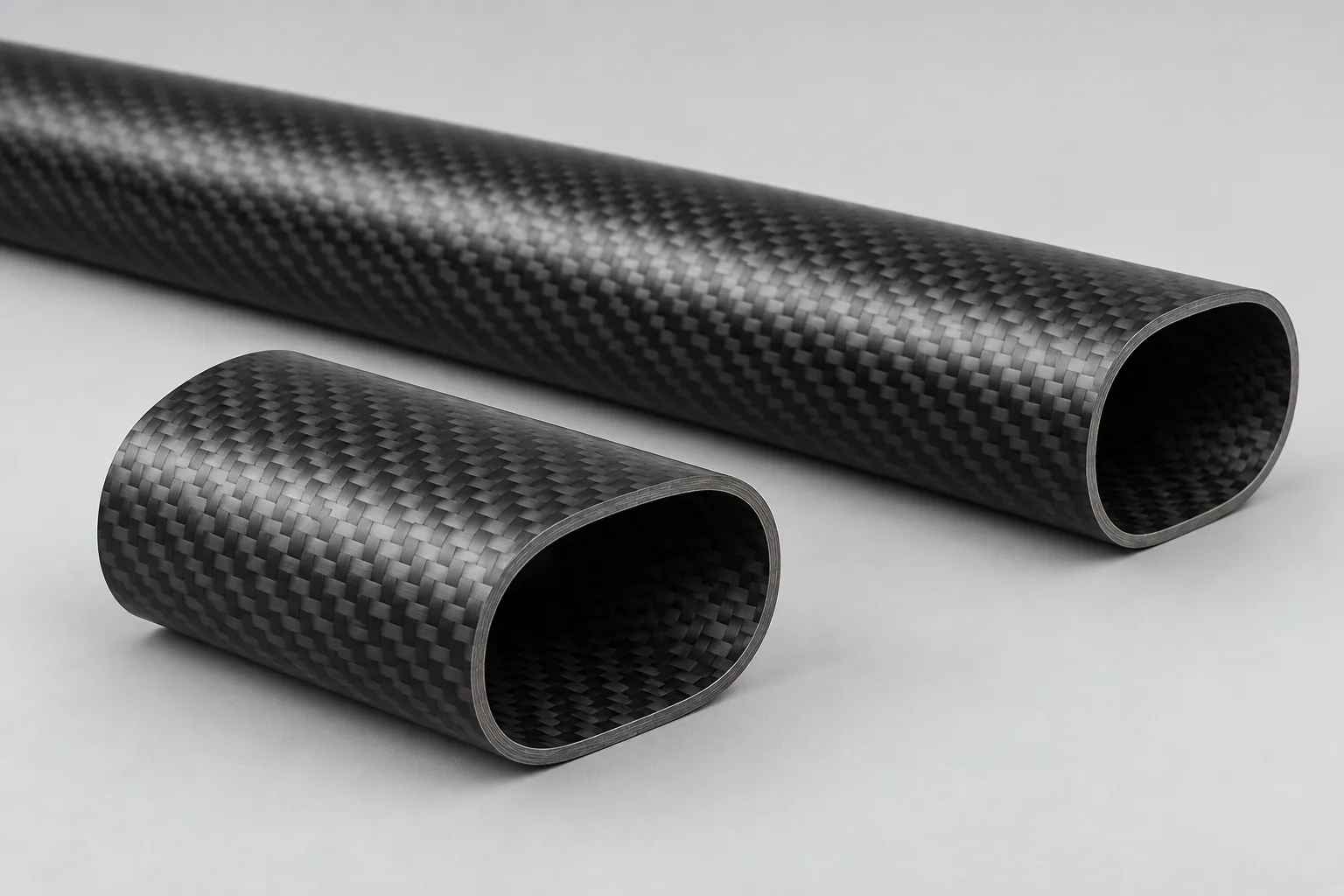
Tubes ovales en fibre de carbone : nommez l'axe principal et le sens de montage
An intentionally oval carbon fiber tube needs major and minor dimensions plus an orientation reference. Do not describe it using one diameter or treat its intended profile as…
Read guide →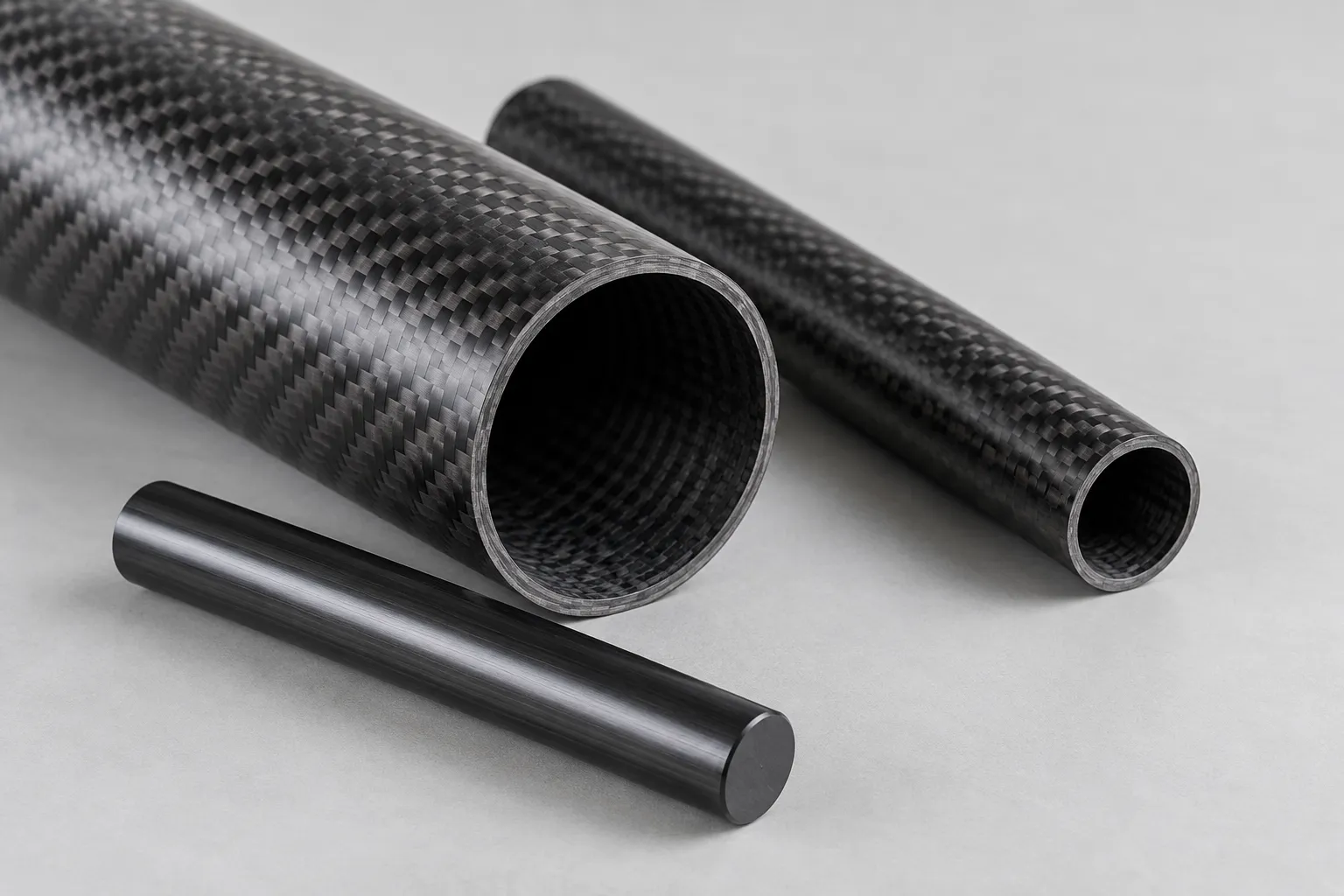
Alésages des tubes en fibre de carbone : les mesures aux extrémités ne reflètent pas la section totale du passage
Measuring a carbon fiber tube bore at each end does not establish the condition of every section between them. State what the bore must do, where measurements are required…
Read guide →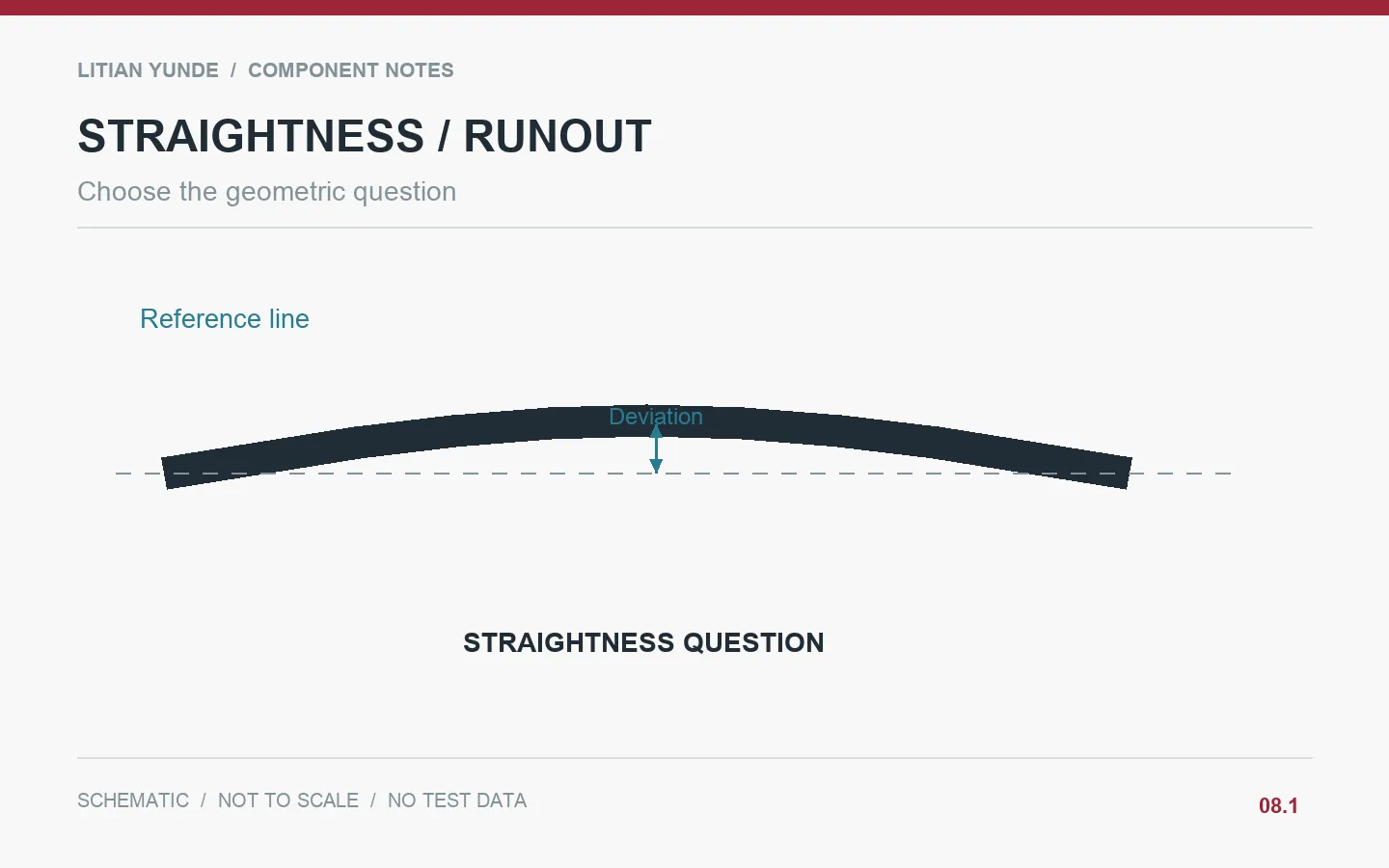
Rectitude et faux-rond des tubes en fibre de carbone : deux problèmes d'inspection distincts
Straightness and rotational runout are not interchangeable tube measurements. Straightness concerns a defined line or axis; runout is measured while the part rotates about a…
Read guide →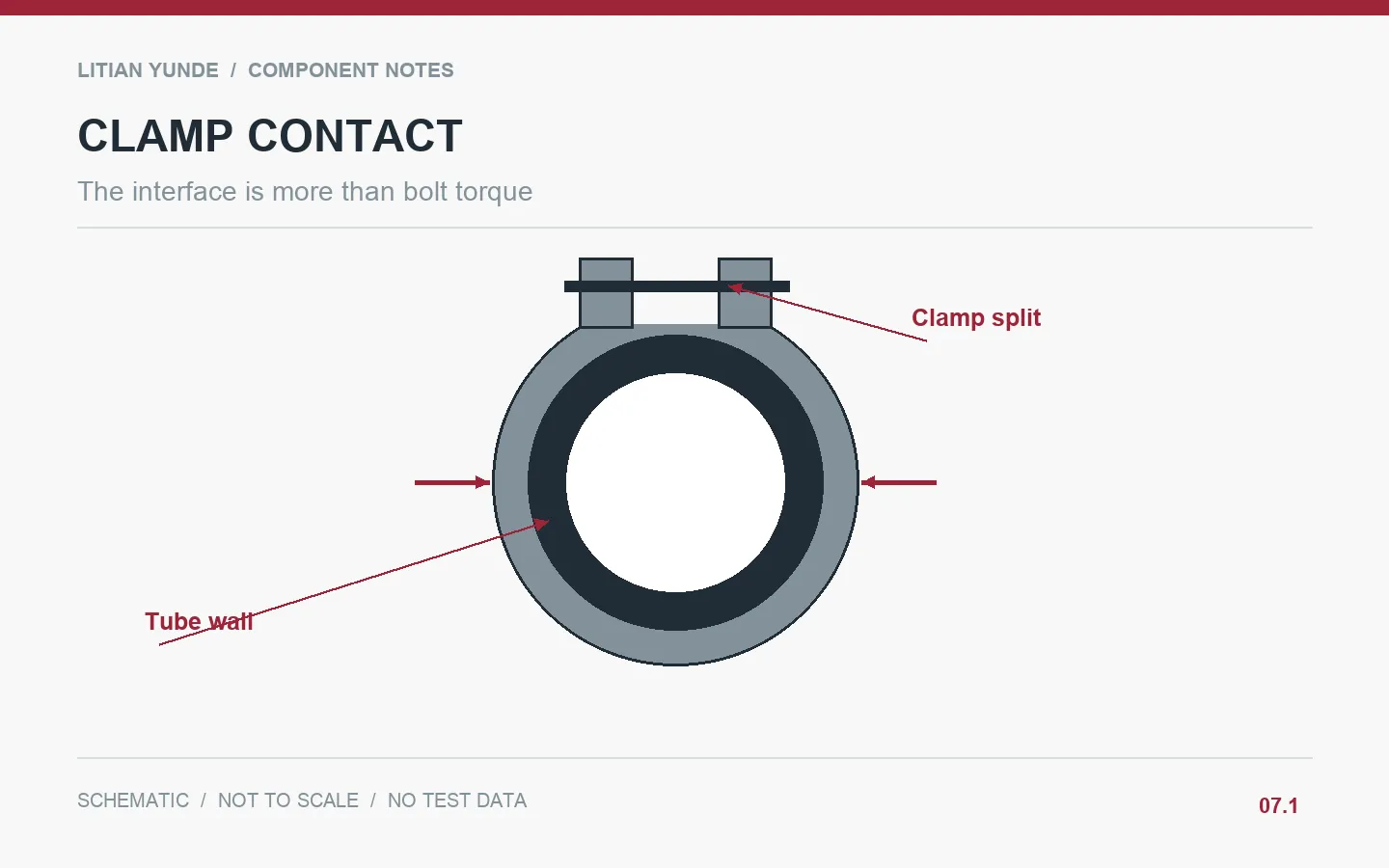
Clamping Carbon Fiber Tubes: Define the Contact Zone, Not Just Bolt Torque
A carbon fiber tube clamp needs a defined contact geometry and an application-specific validation plan. Bolt torque alone does not describe contact pressure, slip resistance…
Read guide →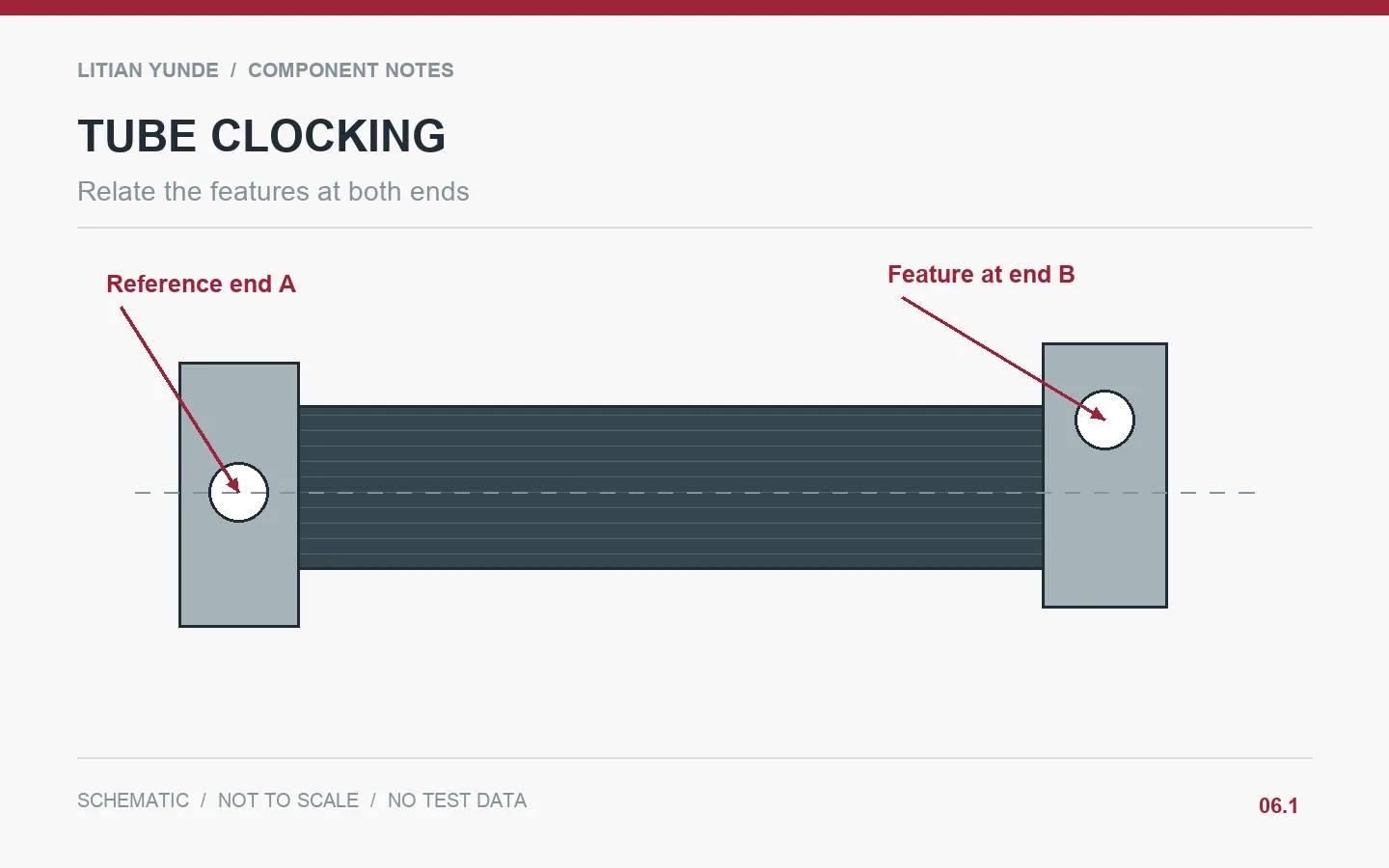
Alignement des tubes en fibre de carbone : alignement des repères aux extrémités opposées
Clocking defines the angular relationship between features on a tube. If two end fittings, slots or holes must align, specify a common rotational reference and viewing…
Read guide →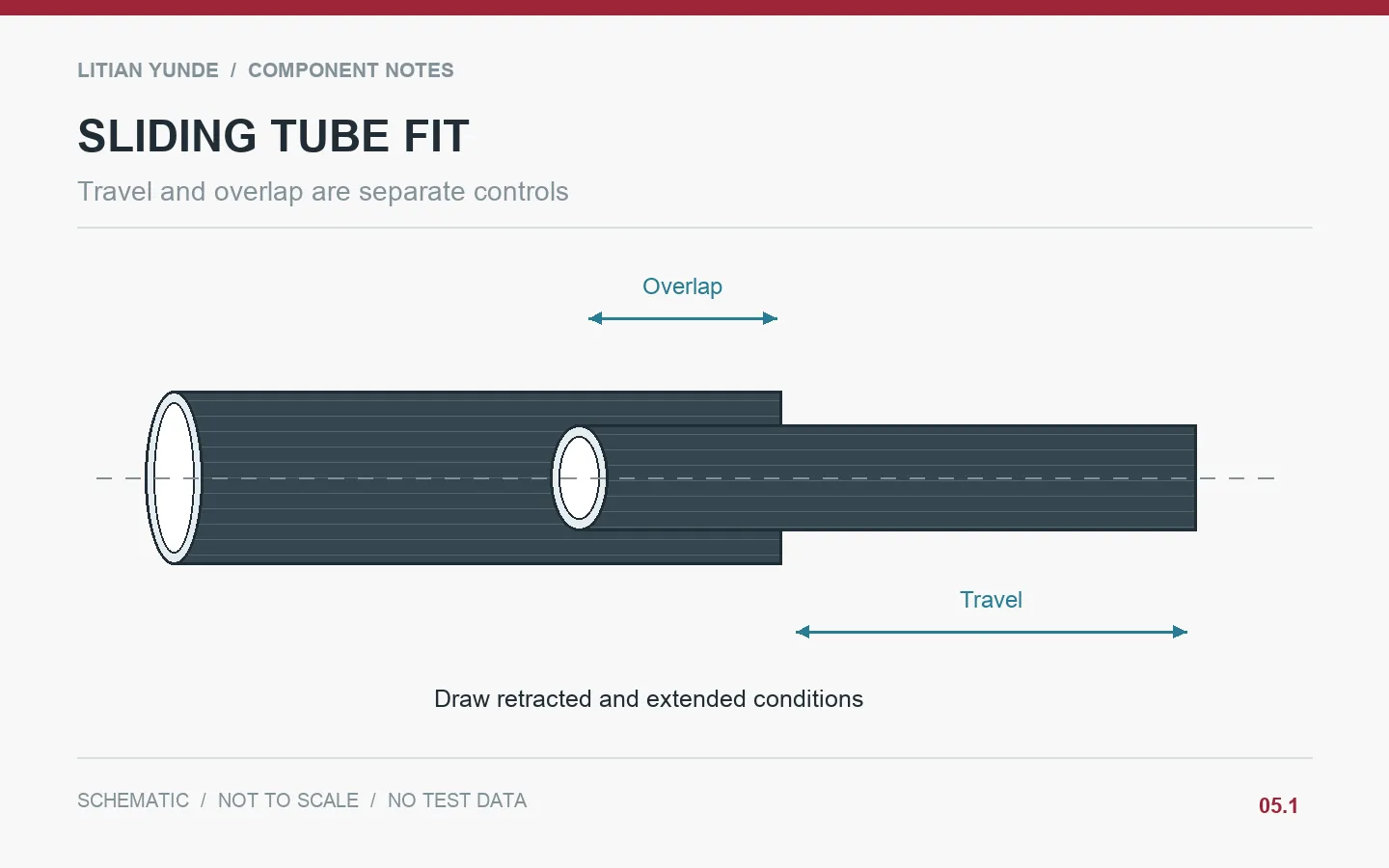
Tubes télescopiques en fibre de carbone : spécifier un ajustement coulissant sur toute la course
Telescoping carbon fiber tubes should be reviewed as a matched sliding assembly, not as two nominal diameters. Define the stroke, overlap, guide elements, surface condition…
Read guide →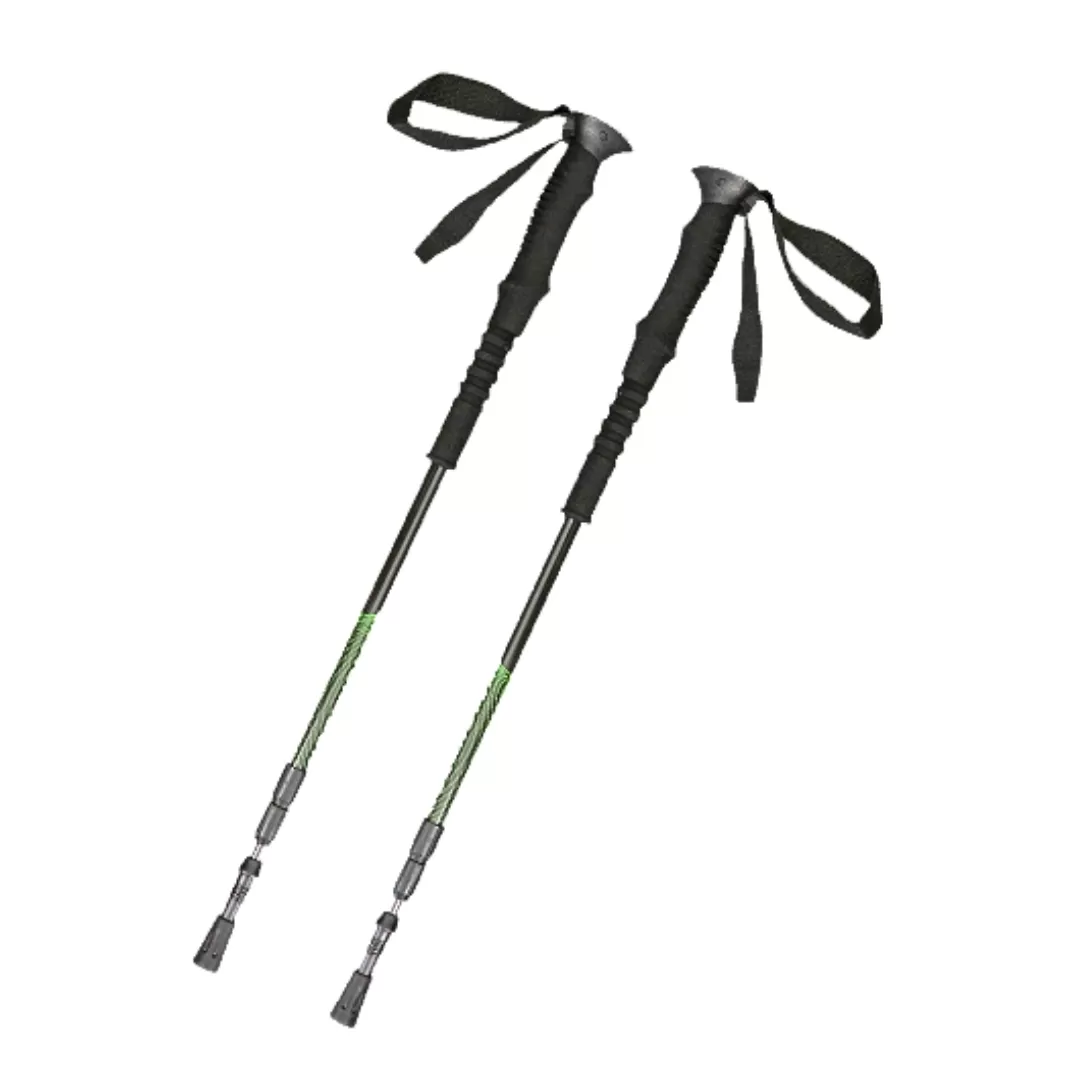
Achat de tubes en fibre de carbone : renseignez-vous sur la fabrication, pas seulement sur le tissage
Le tissage visible sur un tube est un élément esthétique, et non une définition exhaustive de sa structure.
Read guide →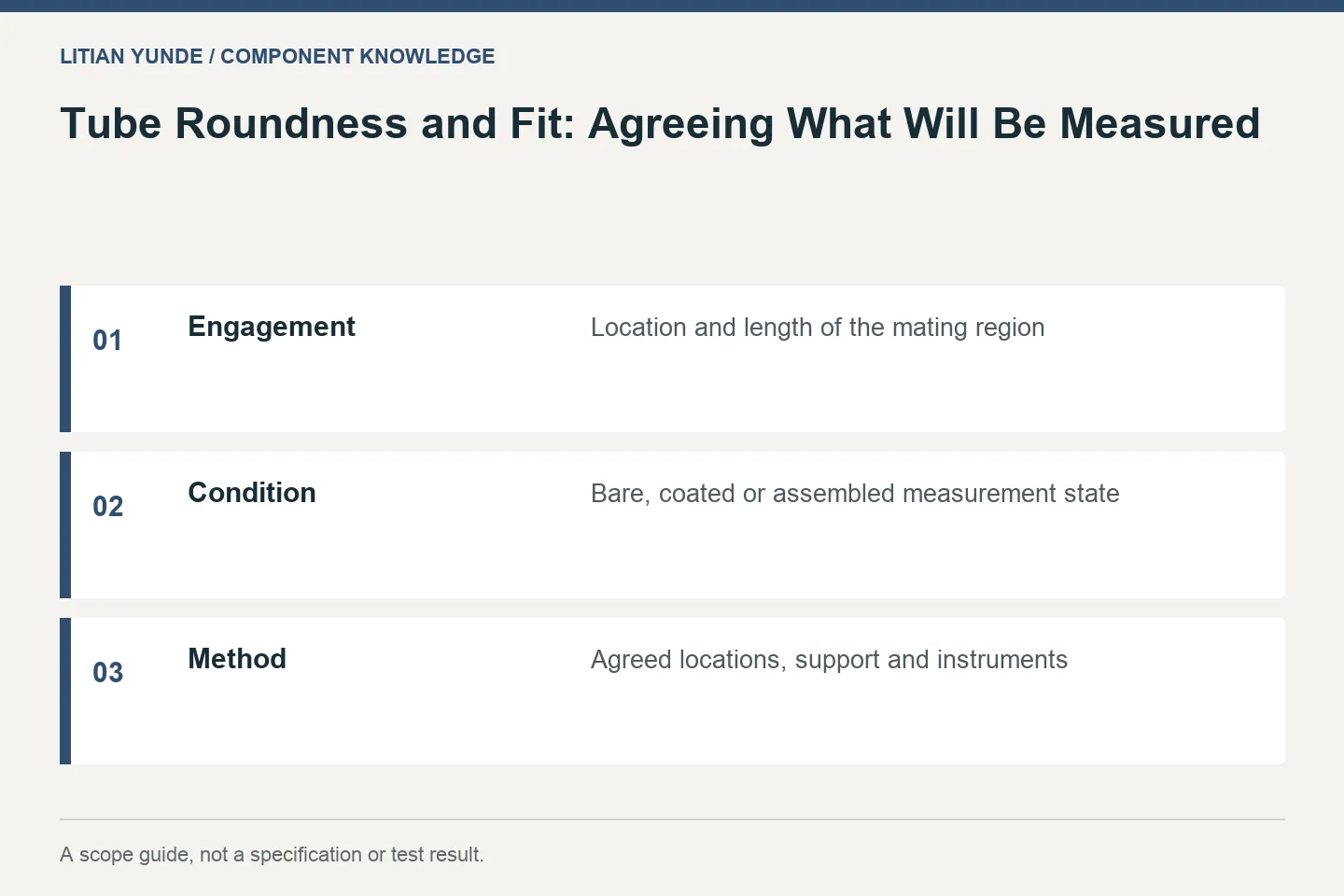
Rondesse et ajustement des tubes : s'accorder sur les paramètres à mesurer
A nominal tube diameter does not describe every aspect of fit.
Read guide →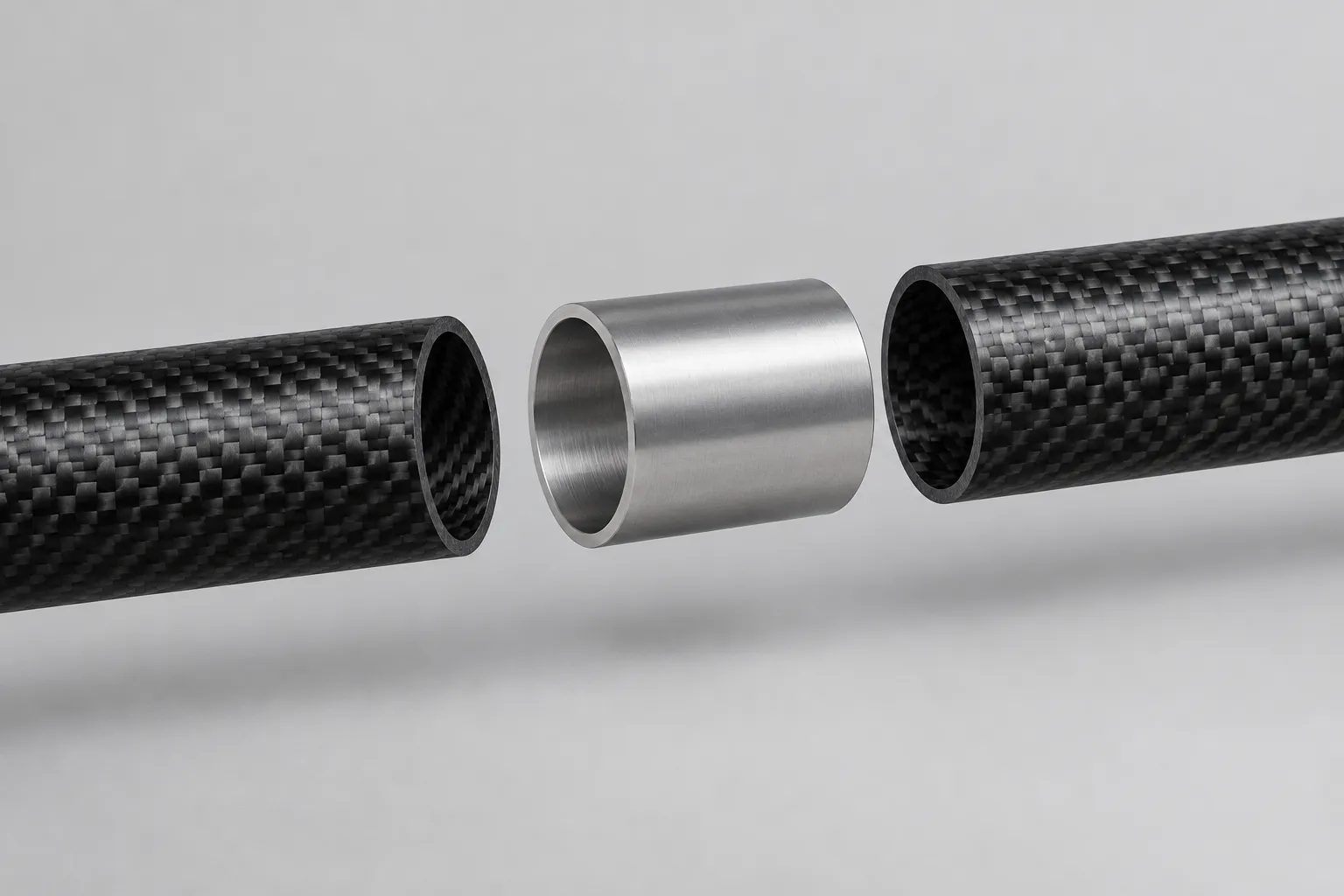
Raccords de tubes en fibre de carbone : préparation de l'interface en vue de l'examen par le fournisseur
Pour une demande concernant un raccord de tuyau, il ne suffit pas d'indiquer le nom d'une colle ou d'une fixation.
Read guide →
Commande de tubes en fibre de carbone coupés à longueur : l'état des extrémités est déterminant
Une commande de découpe à longueur doit préciser la longueur finale et l'état des deux extrémités.
Read guide →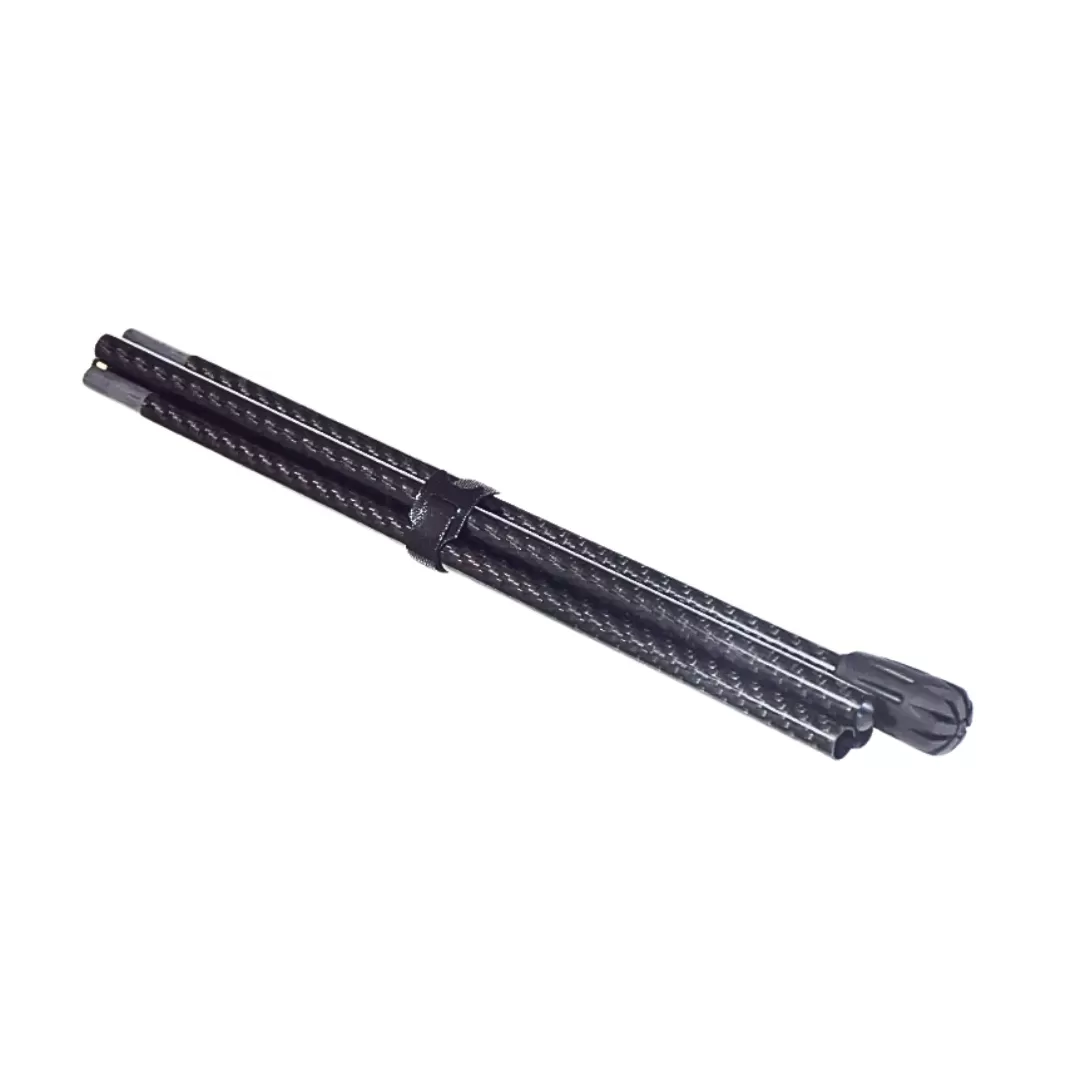
Demande de devis pour des tubes en fibre de carbone : diamètre intérieur, diamètre extérieur et épaisseur de paroi
A tube enquiry should identify which dimensions control the interface.
Read guide →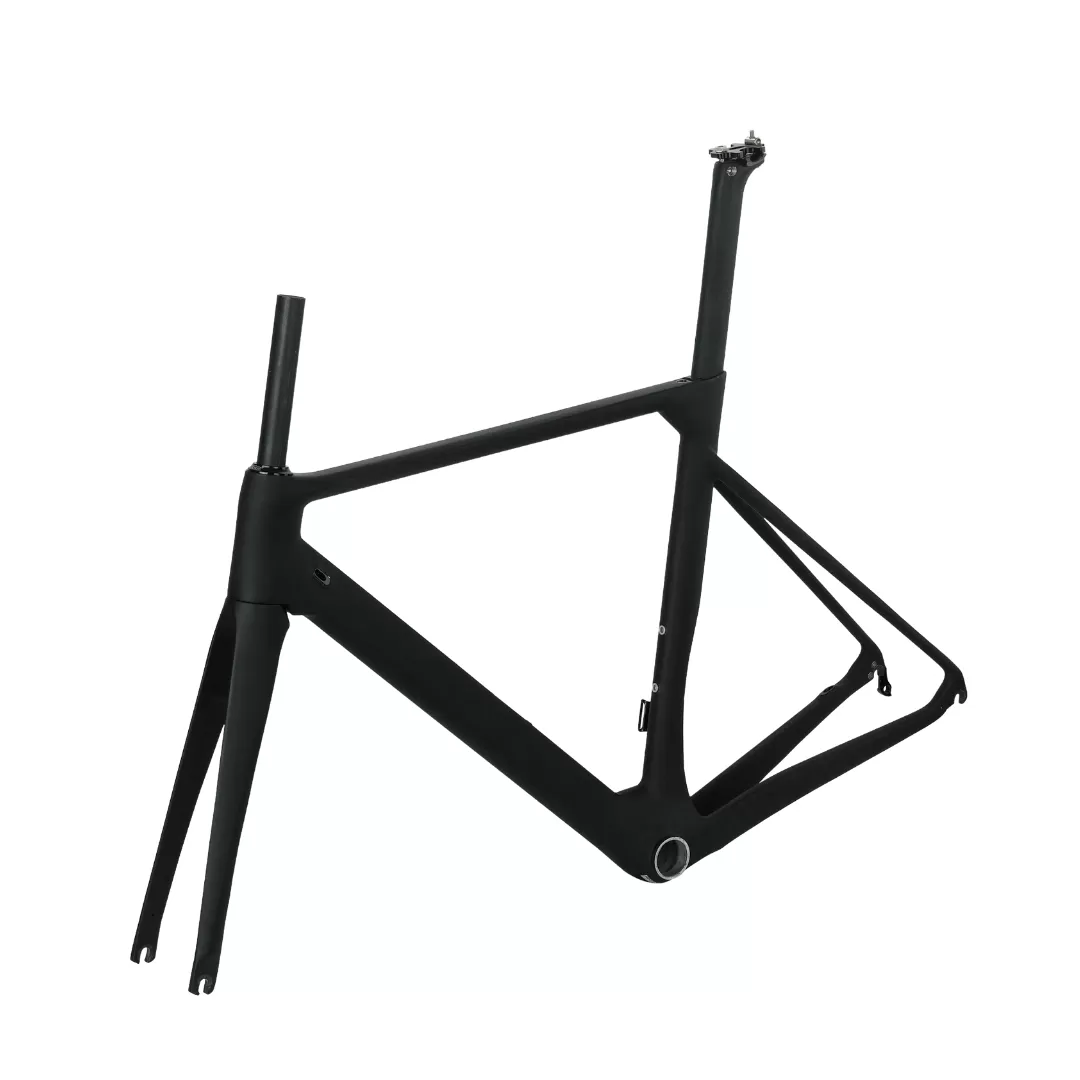
Chambres à air de vélo en fibre de carbone : la forme extérieure ne définit pas le stratifié
Two bicycle tubes can have similar outer shapes while using different internal constructions. A surface photograph is useful for appearance, but it cannot specify the…
Read guide →Usinage et assemblage
Machined features and composite joints: holes, inserts, adhesive processes, fasteners, fixtures and assembly access.

Blind Holes in Carbon Fiber Parts: Define Full-Diameter Depth and Tip Clearance
A drilled blind hole can have a full-diameter depth and a deeper drill-point extent. Show which dimension the part needs and how much material remains beneath the deepest…
Read guide →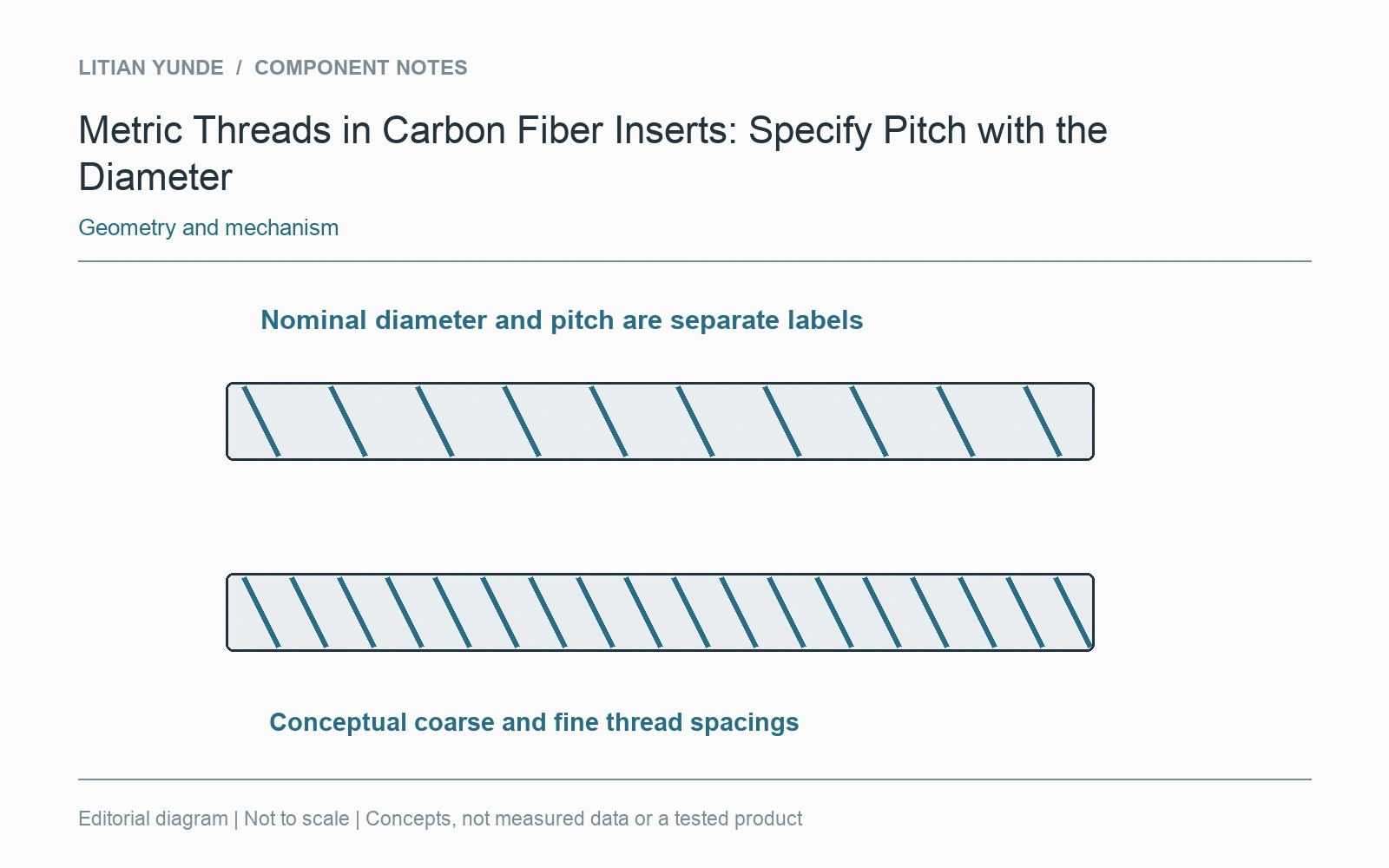
Metric Threads in Carbon Fiber Inserts: Specify Pitch with the Diameter
The mating thread needs a defined pitch as well as a nominal diameter. Where the selected hardware uses a fine thread or another specific form, retain the complete…
Read guide →
Holding Tabs on CNC Carbon Fiber Parts: Agree the Removal and Final Edge
A holding tab is temporary material left to retain a profiled part during machining. If tabs are proposed, agree where they sit, who removes them and what edge is delivered.…
Read guide →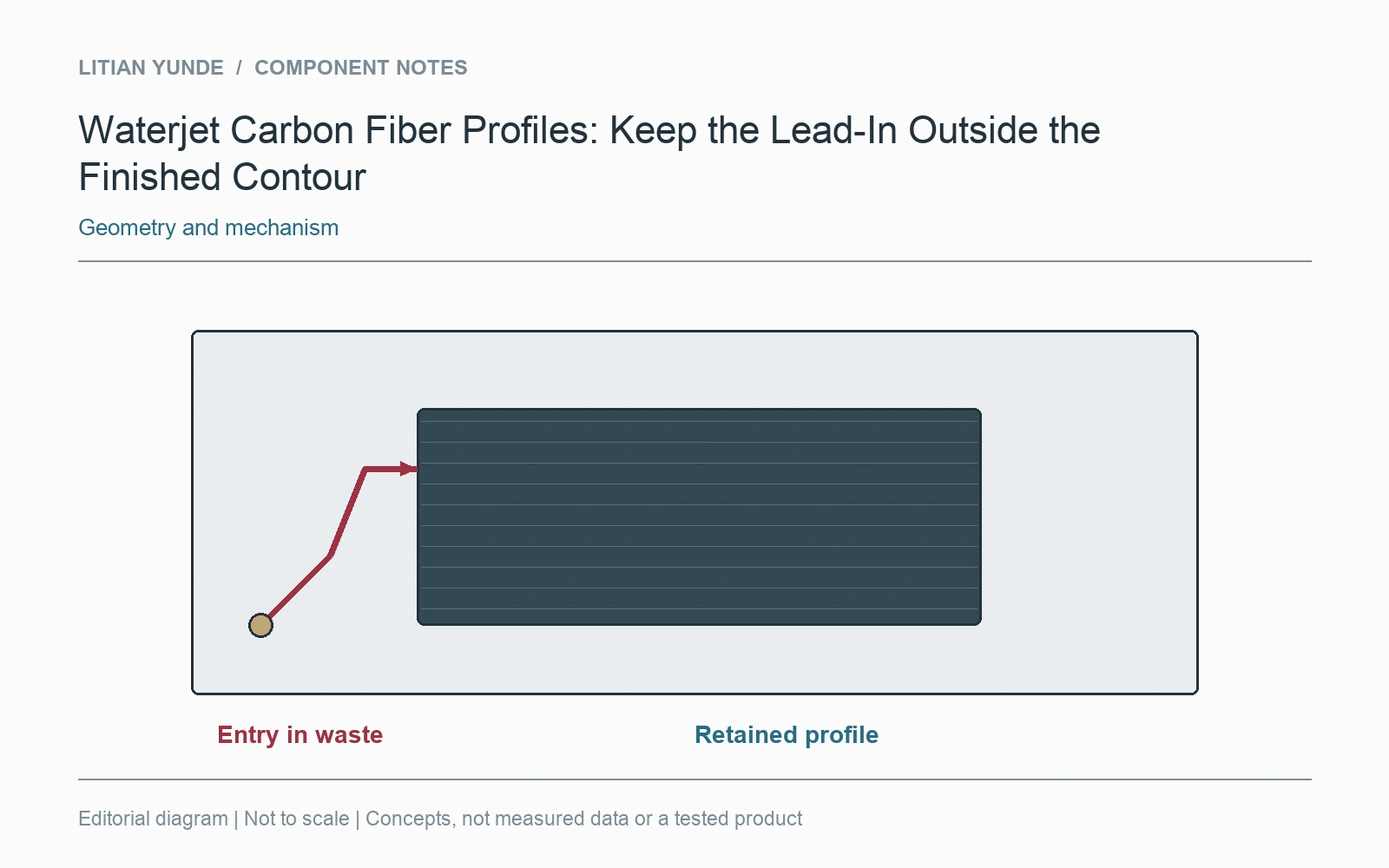
Waterjet Carbon Fiber Profiles: Keep the Lead-In Outside the Finished Contour
A waterjet profile includes an entry strategy as well as a finished contour. Ask the machining supplier to show where the cut starts and how it approaches the part boundary.…
Read guide →
Locating a Carbon Fiber Plate: Dowel Pins and Clearance Bolts Have Different Jobs
A bolt in a clearance hole does not automatically provide the same location as a defined pin interface. If a carbon fiber plate needs repeatable positioning, show how its…
Read guide →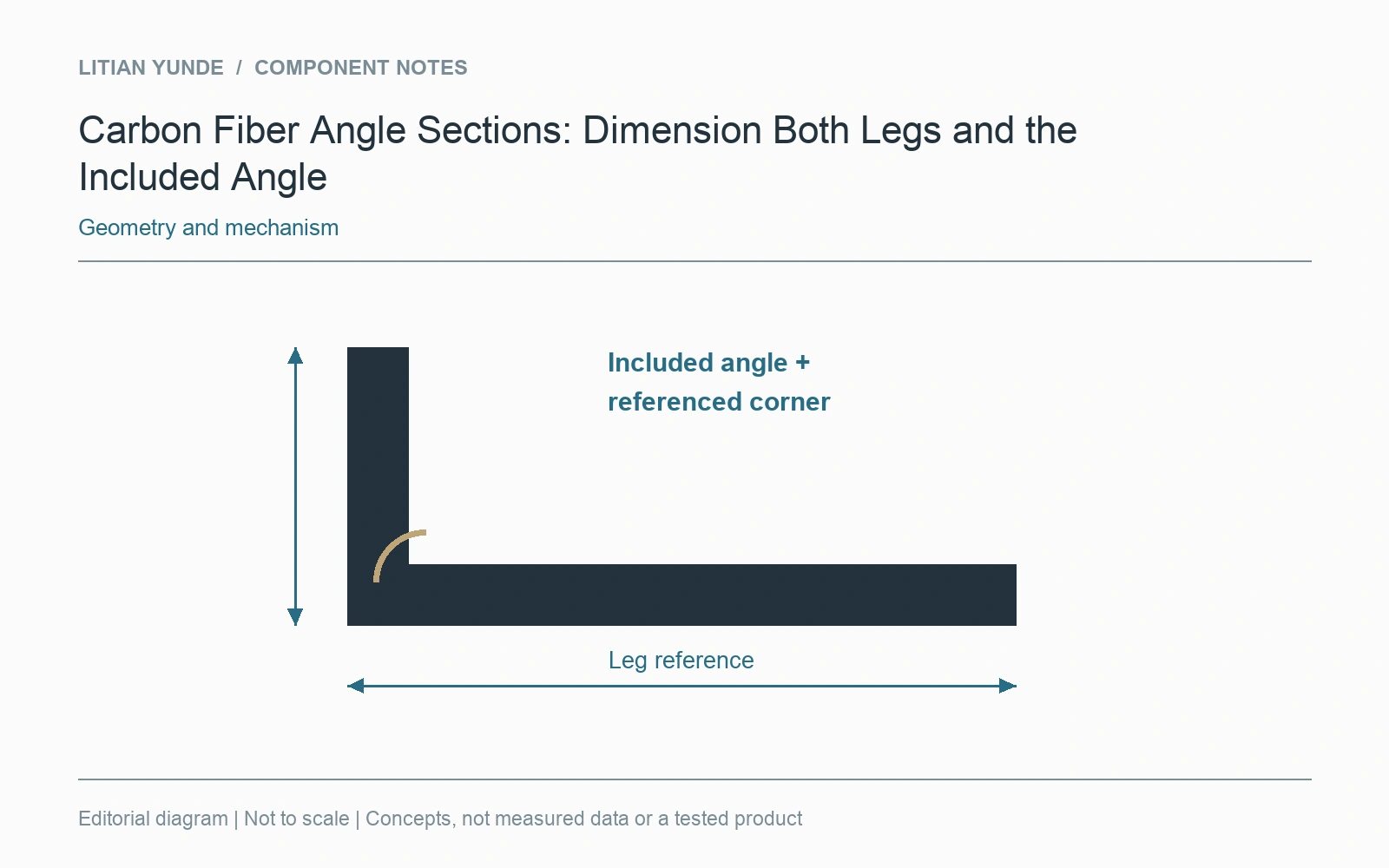
Carbon Fiber Angle Sections: Dimension Both Legs and the Included Angle
A carbon fiber angle needs a section definition, not just two nominal leg widths. Include the included angle, thickness references and inside or outside corner geometry.…
Read guide →
Carbon Fibre Panel Latches: Locate the Striker in the Closed Assembly
A latch on a carbon fibre panel engages a striker or mating feature on another part. Define both sides in the closed assembly. A hole pattern on the panel alone cannot…
Read guide →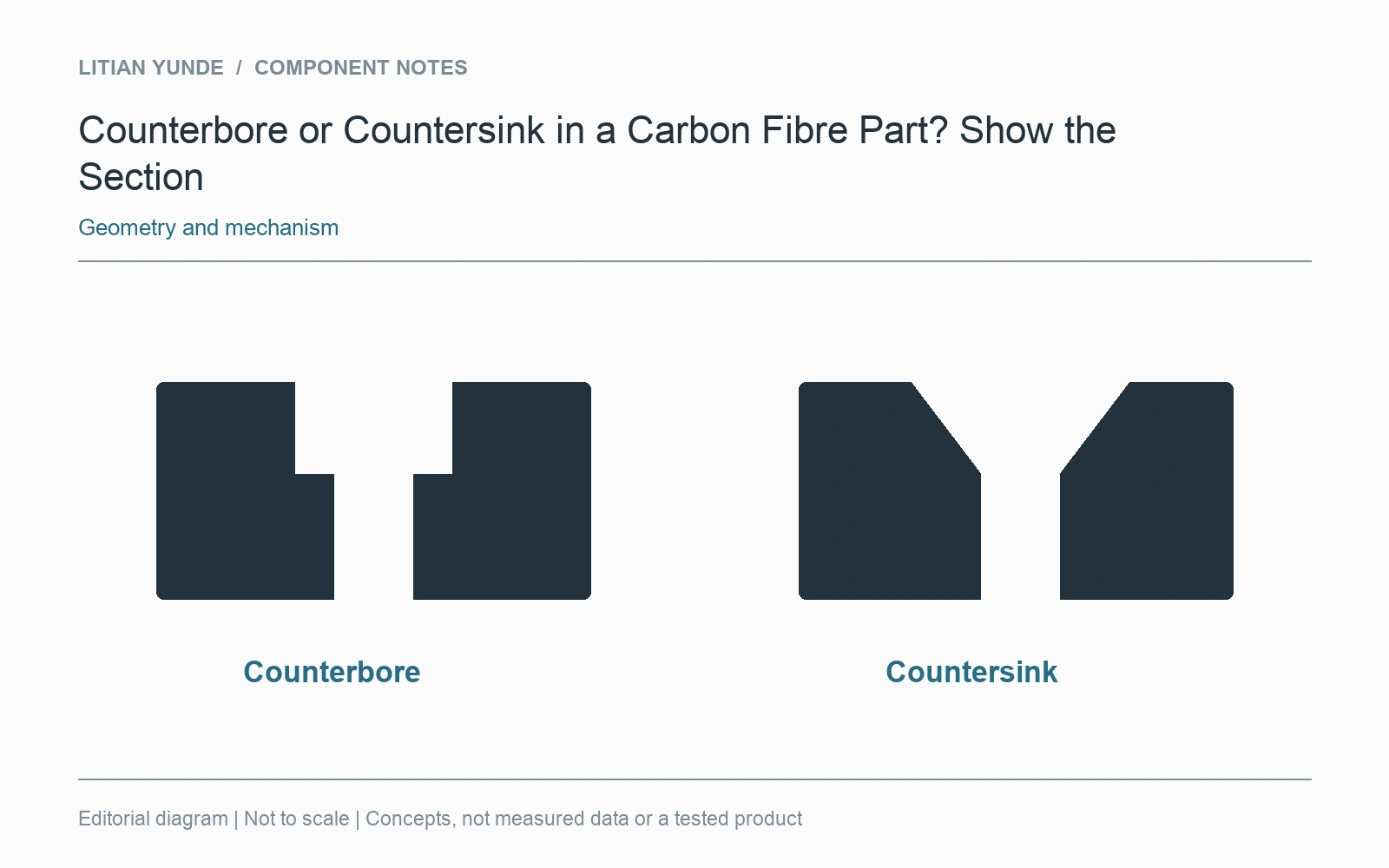
Faire un lamage ou un alésage dans une pièce en fibre de carbone ? Afficher la coupe
A counterbore is a cylindrical recess with a shoulder; a countersink is a conical recess. Name the intended feature and show its section with the actual hardware. “Recess the…
Read guide →
Hinged Carbon Fiber Panels: Keep the Opening Stop Load in the Assembly Review
A hinged panel’s opening stop determines where movement is arrested. Show how that stop force passes through the hardware and supporting structure. A carbon fiber skin should…
Read guide →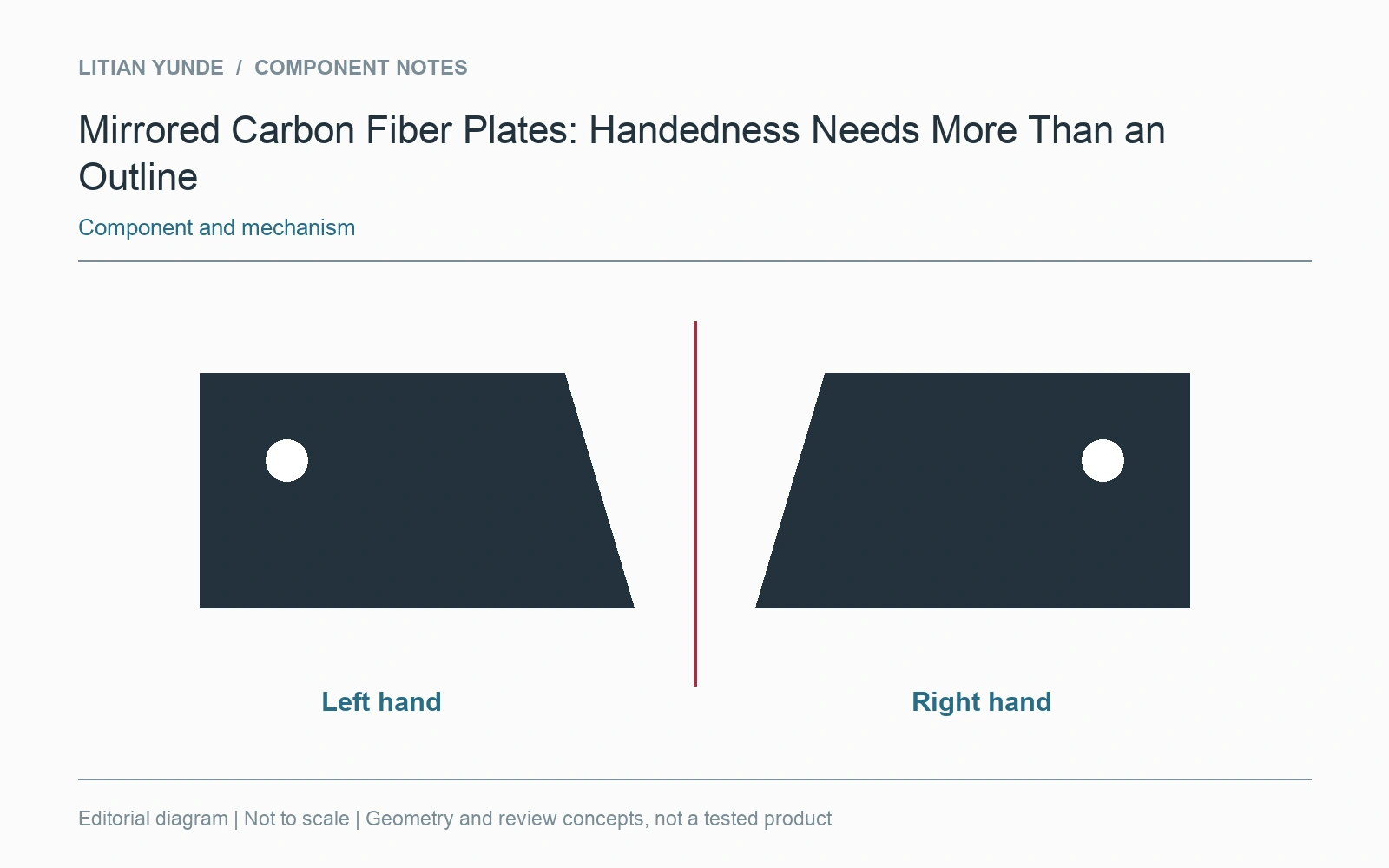
Mirrored Carbon Fiber Plates: Handedness Needs More Than an Outline
Two carbon fiber plates can share a mirrored outline while differing in visible face, counterside features or material direction. Identify the left-hand and right-hand…
Read guide →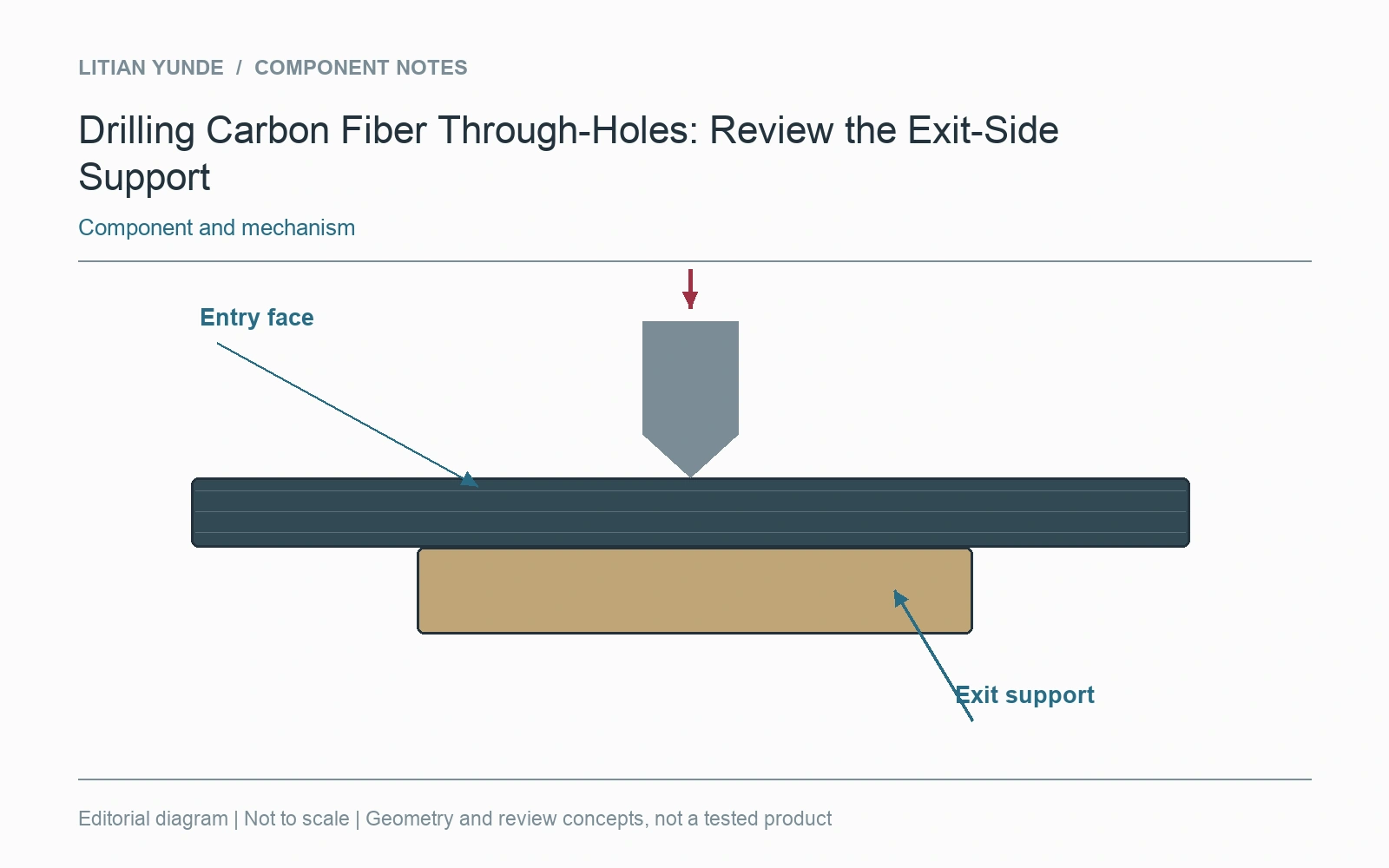
Drilling Carbon Fiber Through-Holes: Review the Exit-Side Support
The exit side of a through-hole is part of the machining setup even when it is hidden from the operator’s main view. Describe access, supporting contact and required final…
Read guide →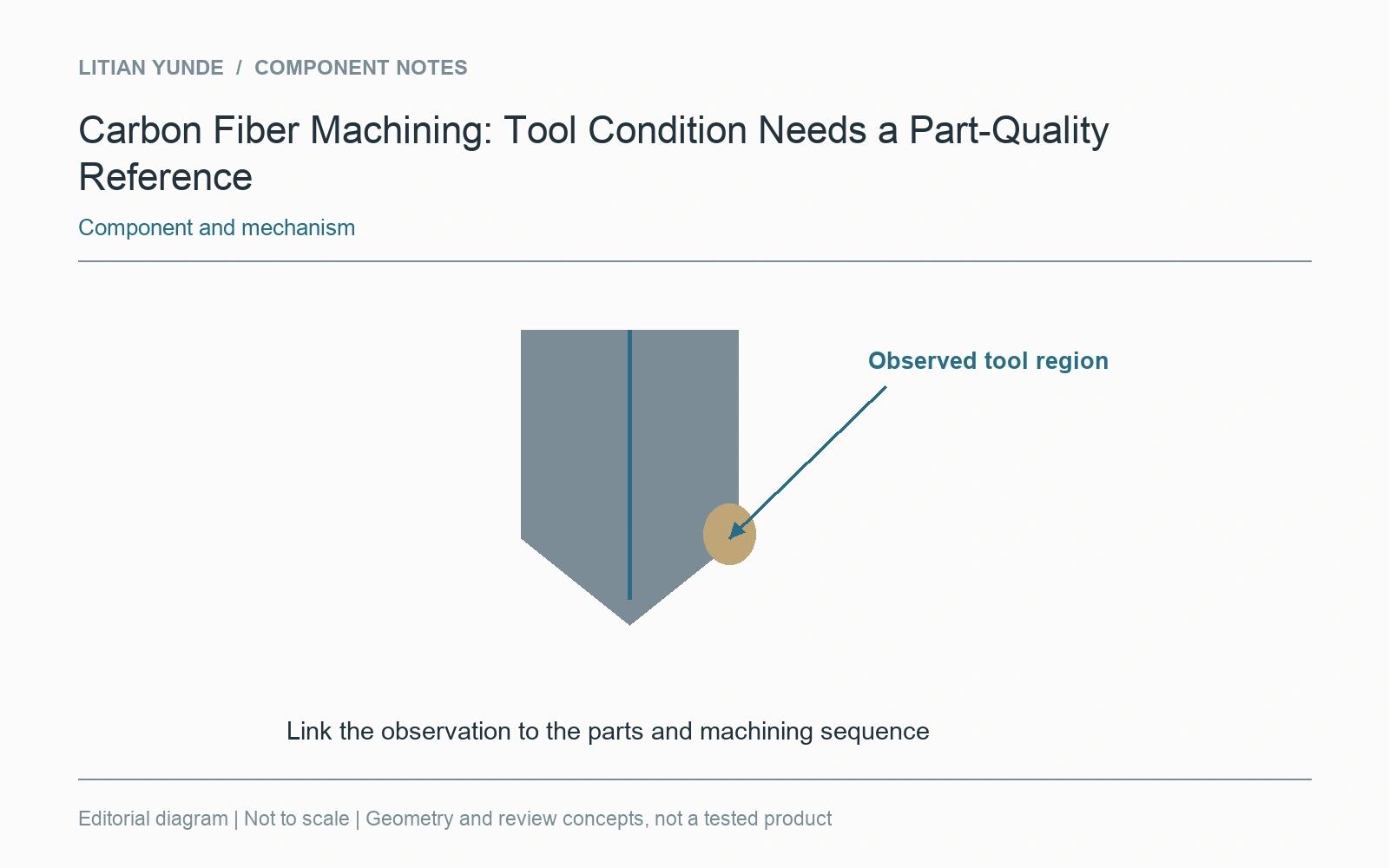
Carbon Fiber Machining: Tool Condition Needs a Part-Quality Reference
A tool-condition record is useful when it is connected to the machined feature and its acceptance requirement. For carbon fiber work, define the part-quality checks that…
Read guide →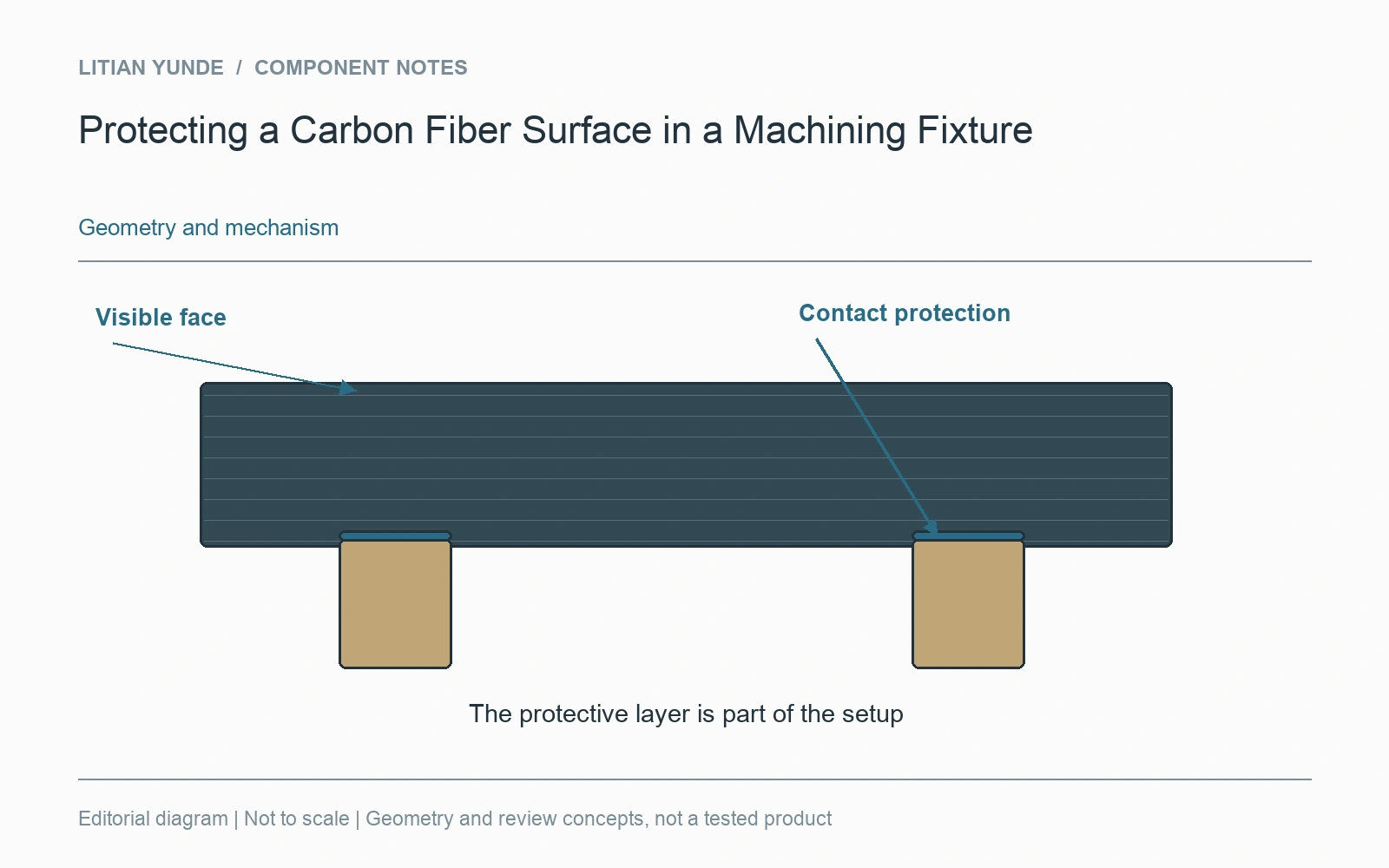
Protection d'une surface en fibre de carbone dans un dispositif de serrage d'usinage
A fixture has to hold a component, and its contact with the surface can leave evidence. If a carbon fiber face will remain visible, discuss the contact regions and any…
Read guide →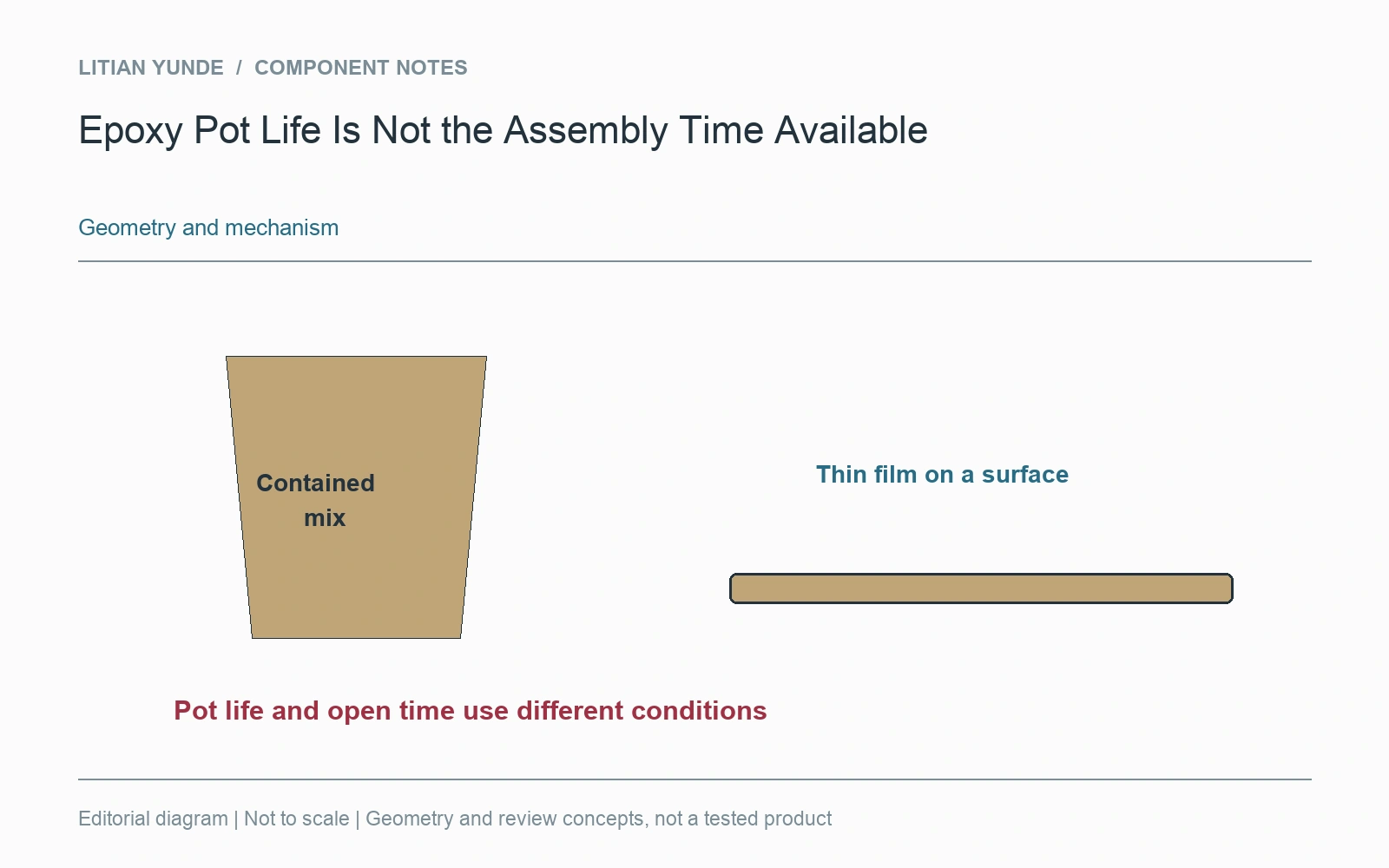
Epoxy Pot Life Is Not the Assembly Time Available
An adhesive pot-life figure is not a promise that a complete assembly can take that long. Mixing, application, positioning and clamping consume the usable working period, and…
Read guide →
Fastening a Carbon Fiber Part When Only One Side Is Accessible
When the back of a carbon fiber part cannot be reached, the fastening concept has to address installation and later removal from the accessible side. Choosing a familiar…
Read guide →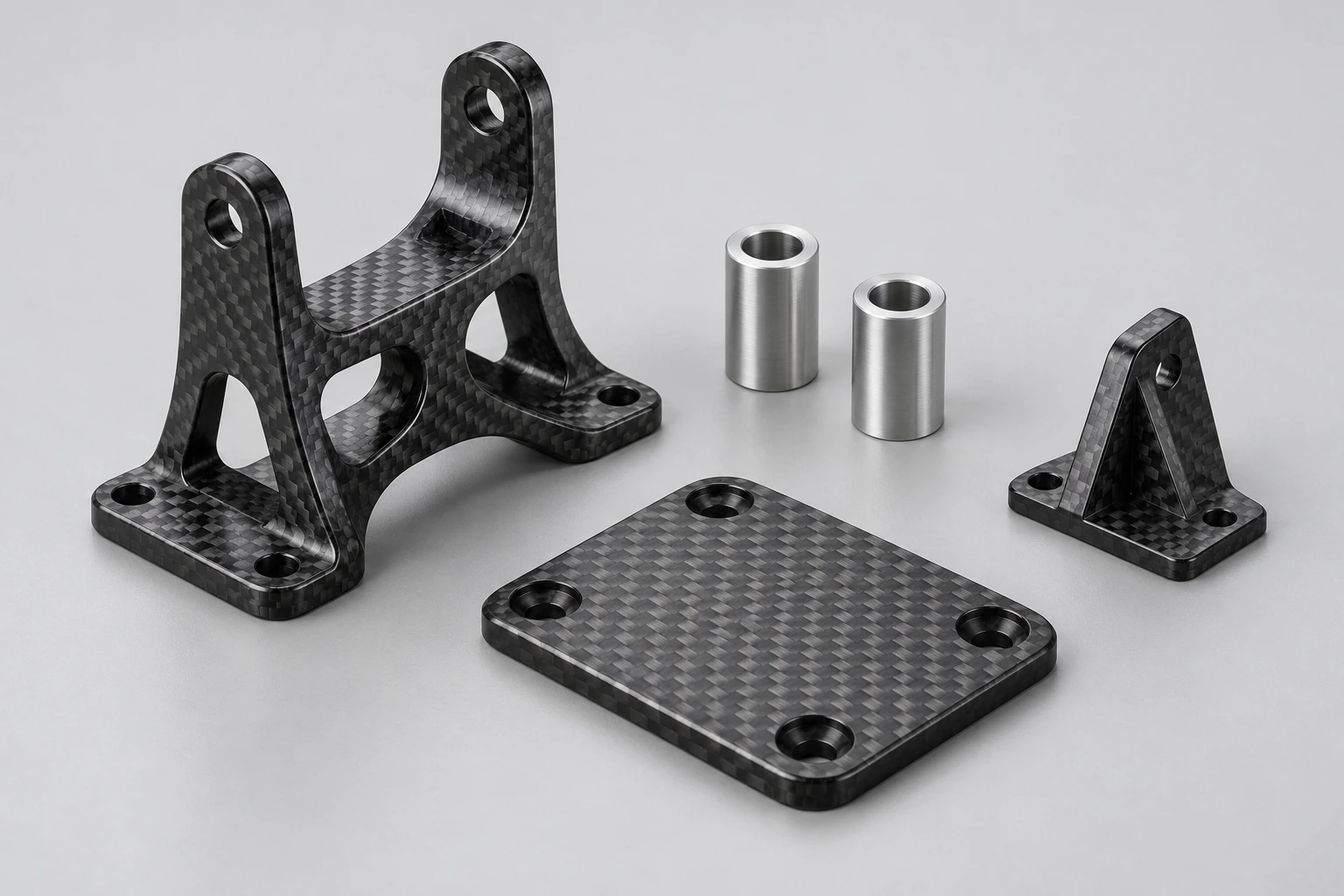
Carbon Fiber Subassemblies: Review the Installation Order Before Freezing the Design
An assembly can fit in its completed state yet be impossible to build in the proposed order. Review the sequence for the carbon component, hardware, cables and neighbouring…
Read guide →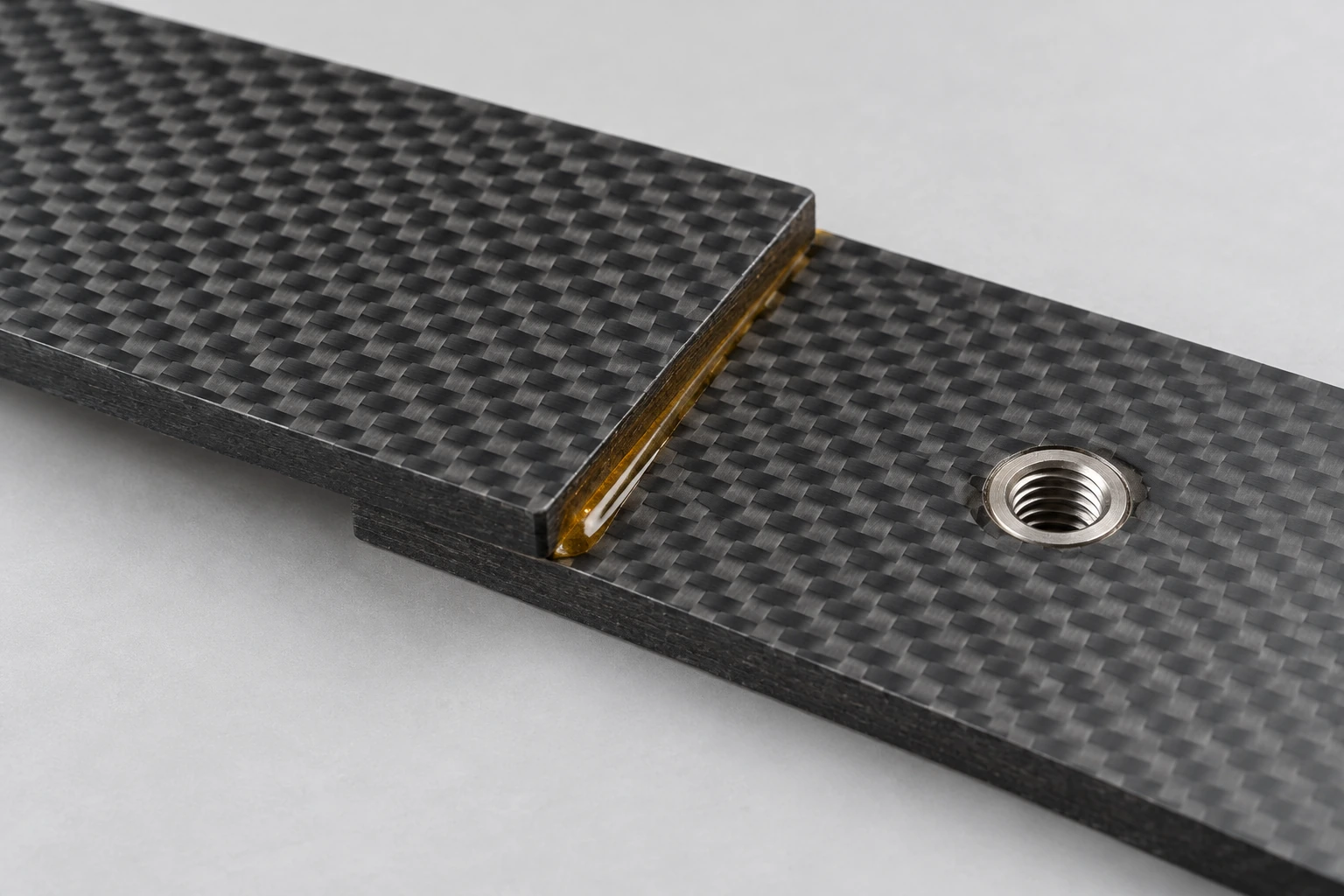
Assemblages en fibre de carbone collés : cartographie des zones d'excès de colle et de nettoyage
Adhesive displaced during assembly can reach holes, visible surfaces or service interfaces. Define where squeeze-out is permitted, where surfaces must remain clear and how…
Read guide →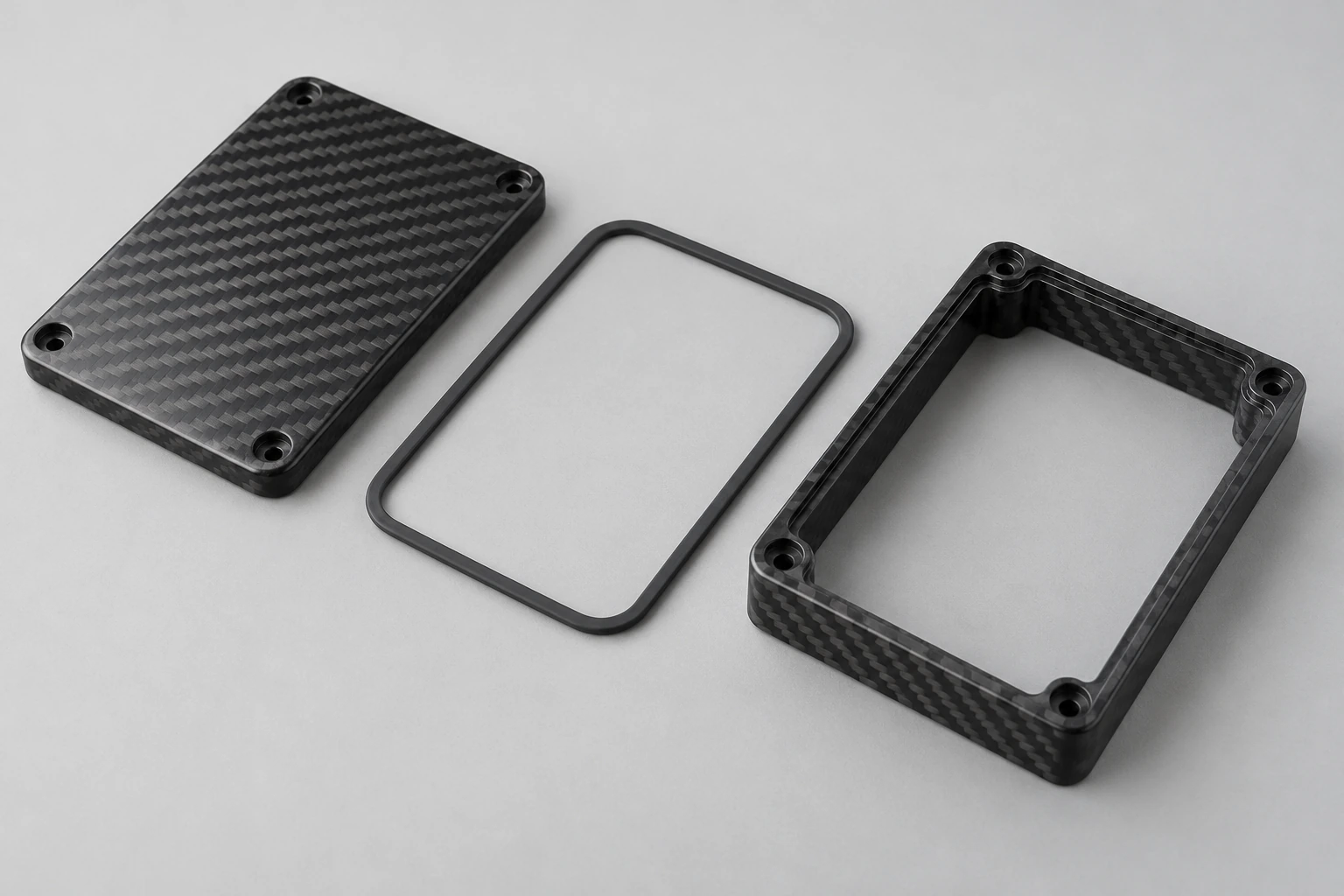
Couvercles en fibre de carbone avec joints d'étanchéité : définir les conditions de compression à l'installation
A seal fitted to a carbon fiber cover needs a defined installed condition. Specify the seal section, seating geometry, closure features and the requirements set by the seal…
Read guide →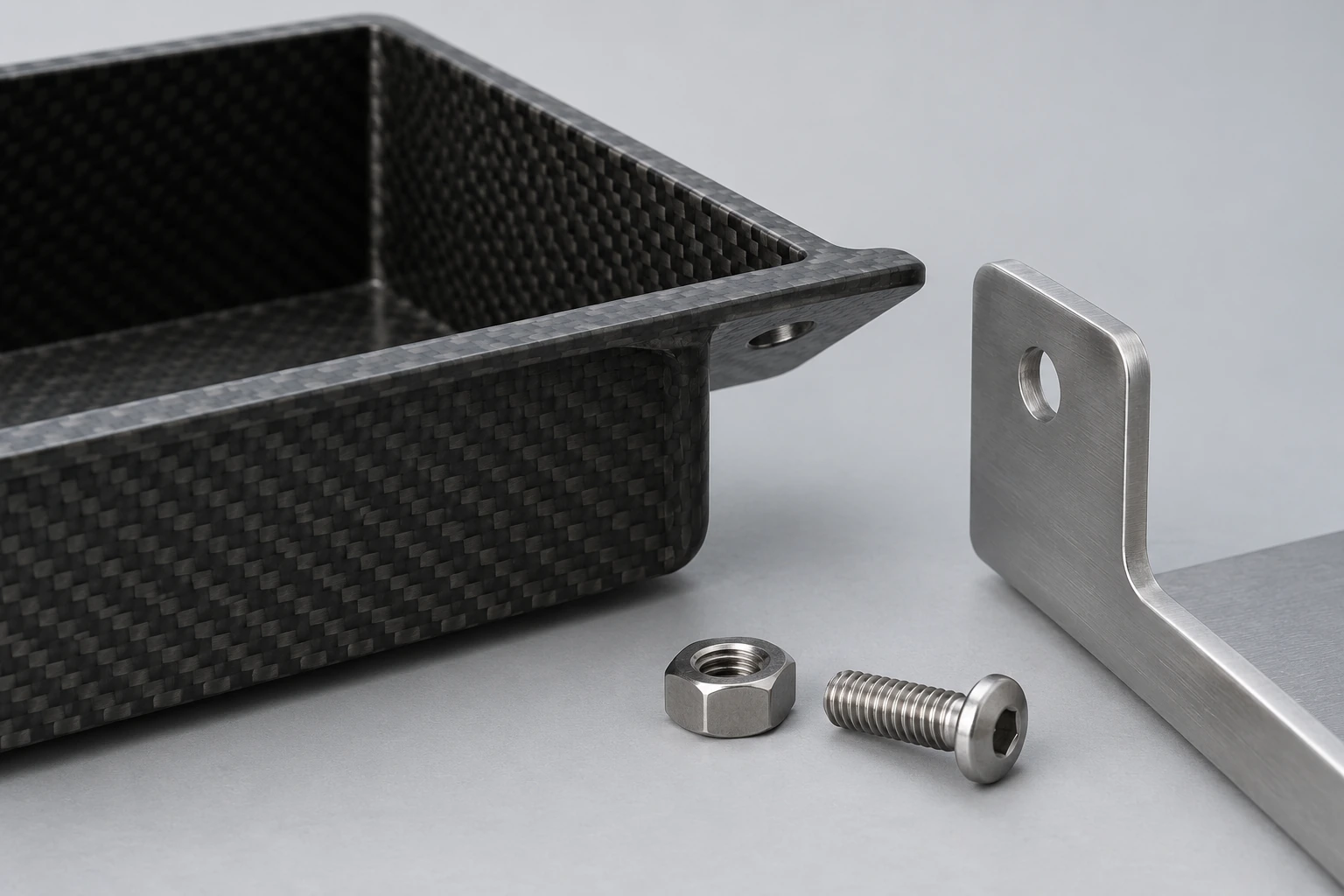
Brides à coque en fibre de carbone : vérifier l'accès à l'arrière de la fixation
A visible fastener hole does not prove a shell flange can be assembled. Check where the nut or retainer sits, how a tool reaches it and whether neighbouring parts block…
Read guide →
Masquage des pièces en fibre de carbone pour la peinture et le collage : définir les zones à ne pas peindre
A finishing drawing should identify the areas to coat, bond, mask or leave untouched. A single colour or gloss instruction cannot describe every functional surface. Use a…
Read guide →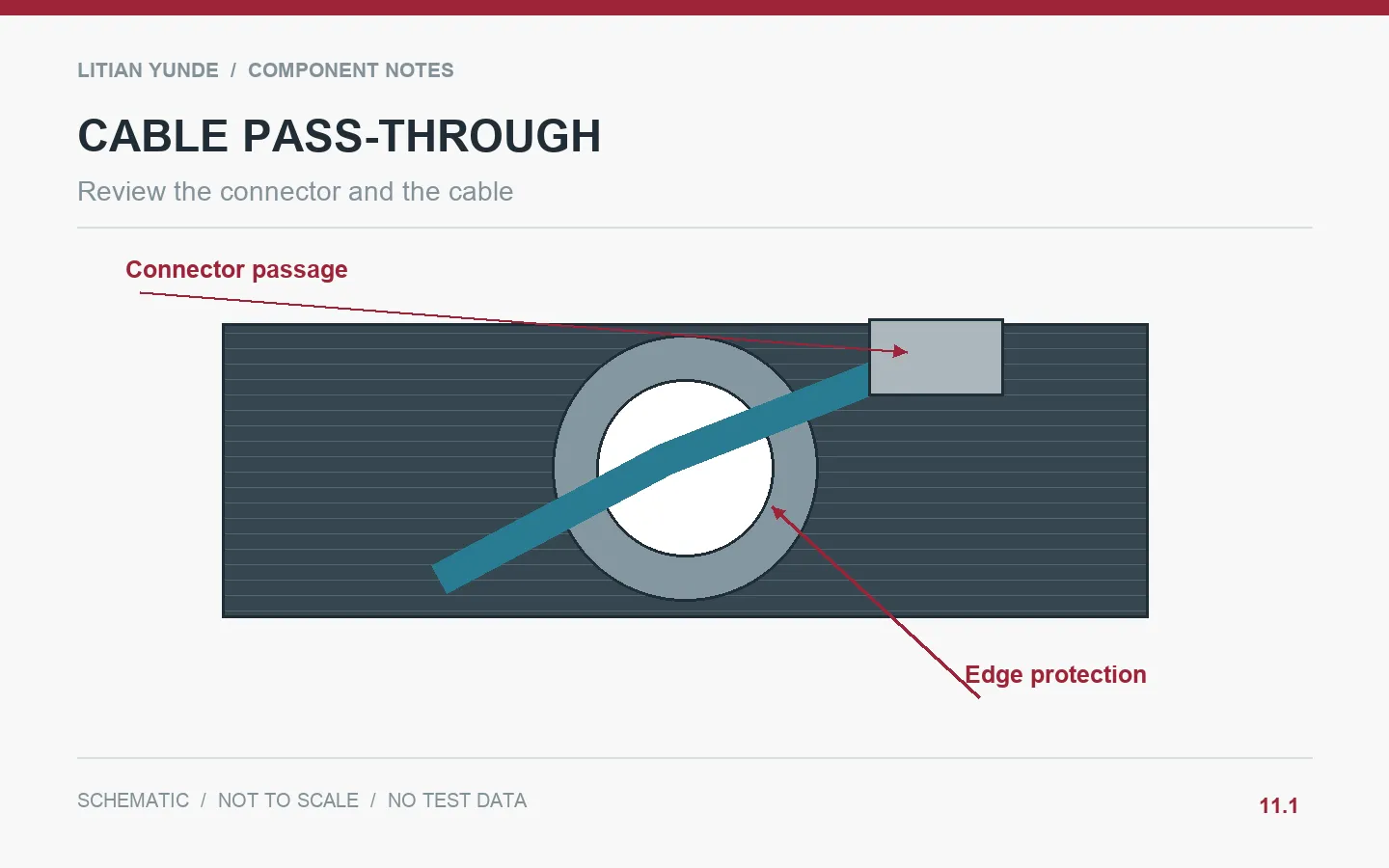
Passages de câbles dans les capots en fibre de carbone : détails concernant les œillets et les jeux au niveau des bords
A cable opening needs more than a hole diameter. Specify the grommet or edge protection, panel thickness range, connector passage and cable movement envelope. Treat…
Read guide →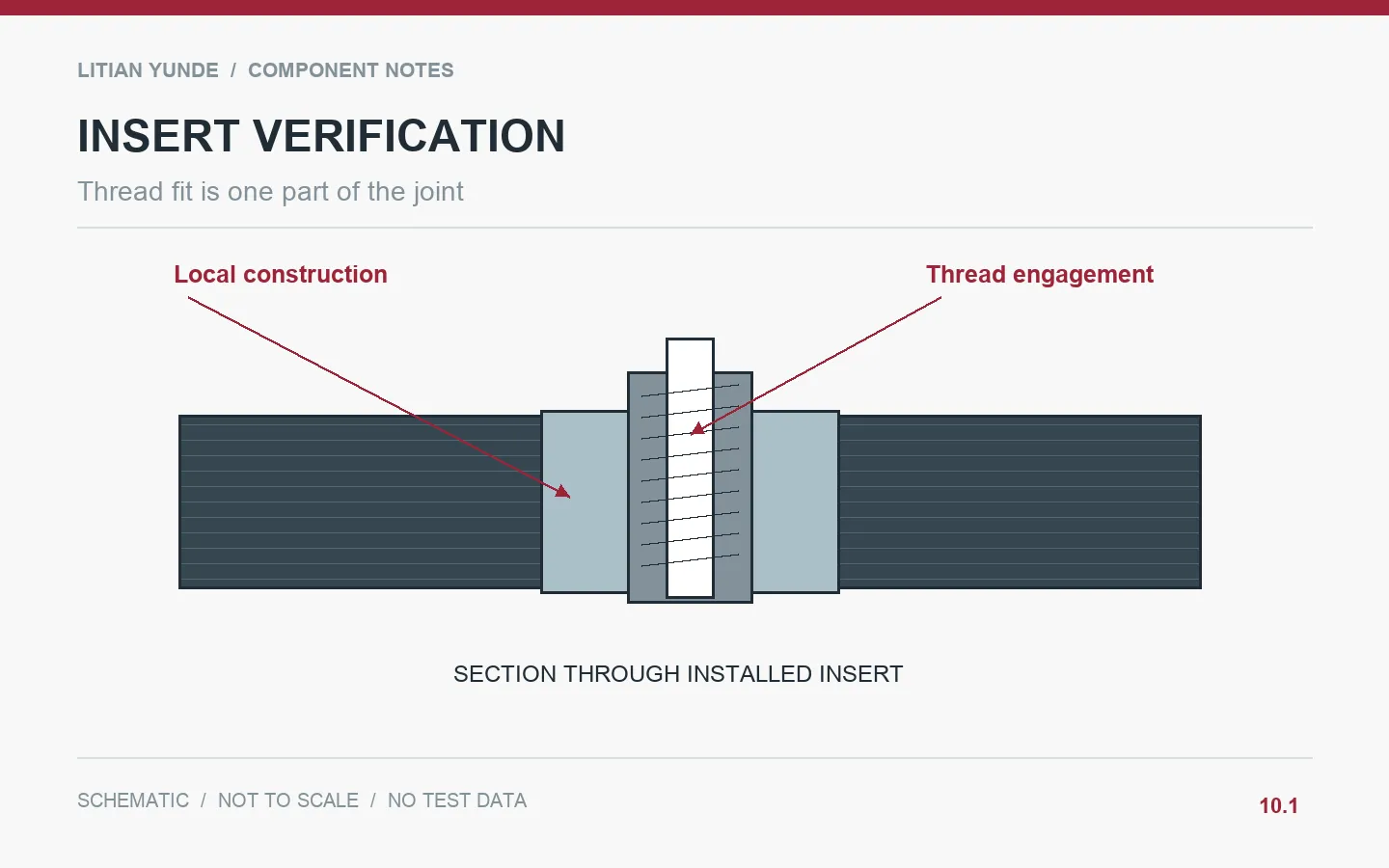
Inserts filetés en fibre de carbone : couple, résistance à l'arrachement et cycles de service
Tightening torque, pull-out resistance and repeated assembly performance describe different aspects of a threaded insert. Specify which loads and service conditions matter,…
Read guide →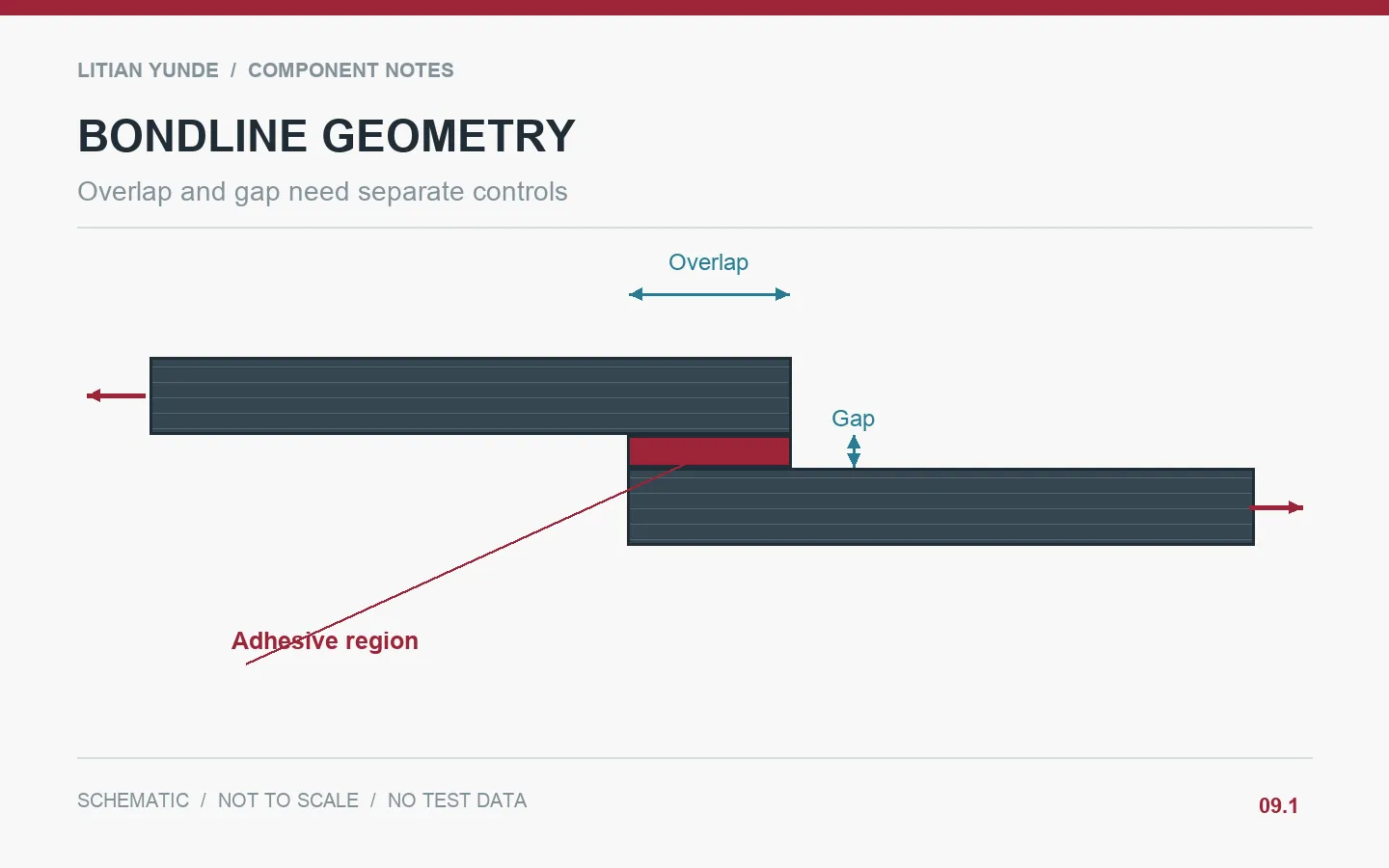
Assemblages collés en fibre de carbone : contrôle du chevauchement et de la géométrie de la ligne de collage
A bonded carbon fiber joint should define both overlap and the adhesive gap. More overlap is not a complete joint specification, and a visually thin glue line is not…
Read guide →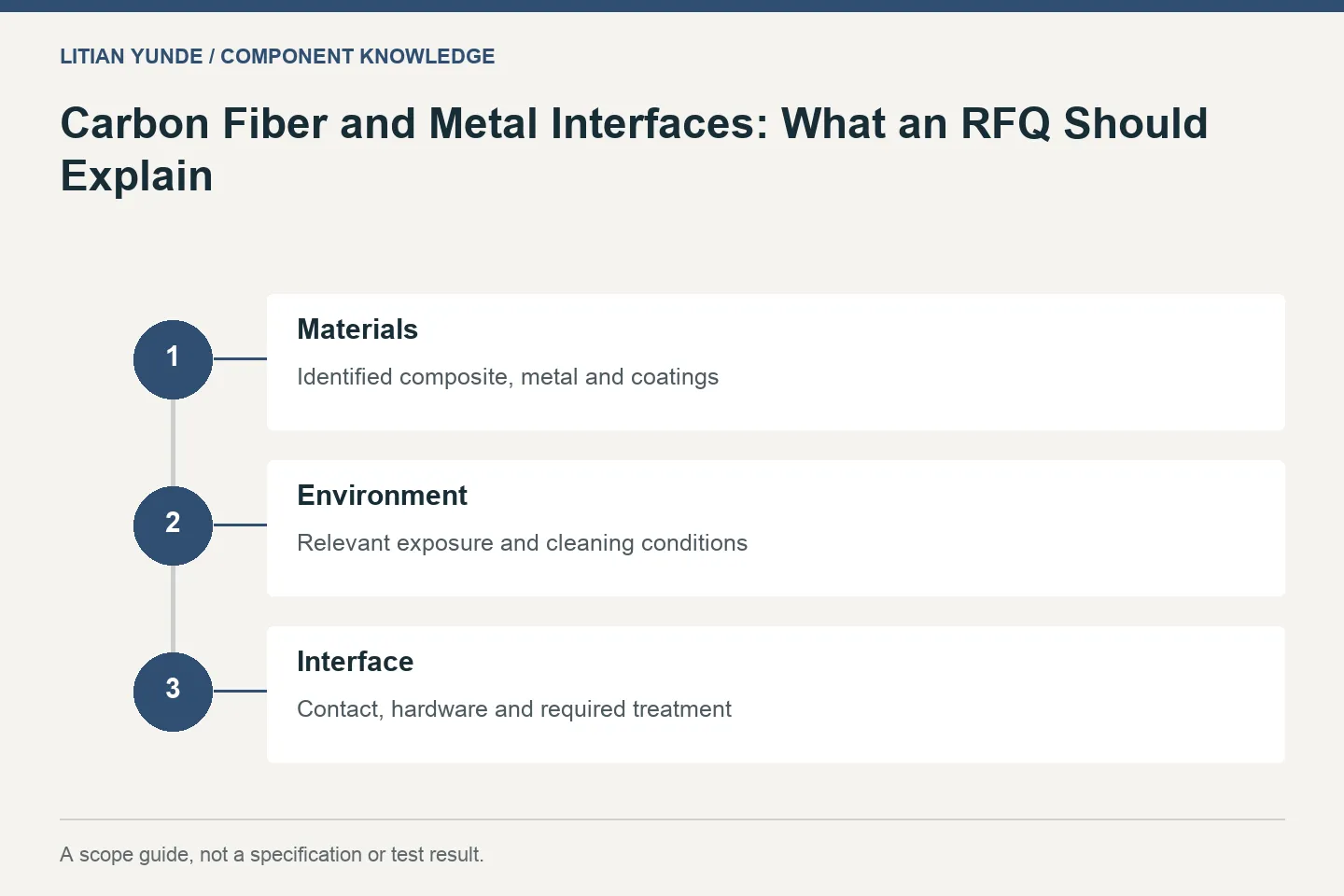
Interfaces entre la fibre de carbone et le métal : ce qu'un appel d'offres doit préciser
When a carbon fiber component contacts metal, describe the whole interface: the metal grade, contact area, environment, hardware and any intended isolation or surface…
Read guide →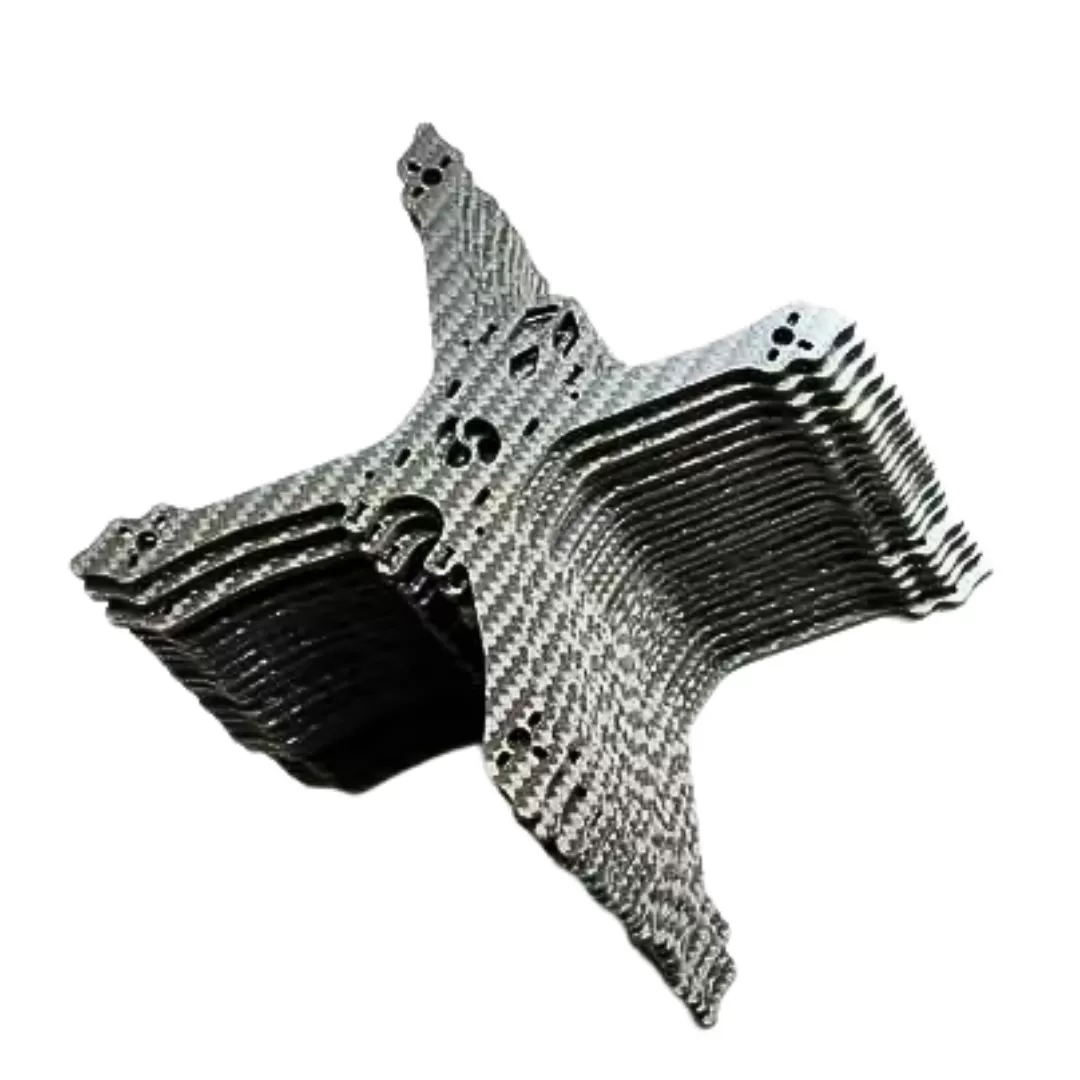
Collage ou fixation mécanique ? Analyse de la mise en place d'un assemblage composite
Choosing between bonding, mechanical fastening or a combined joint requires an assembly review.
Read guide →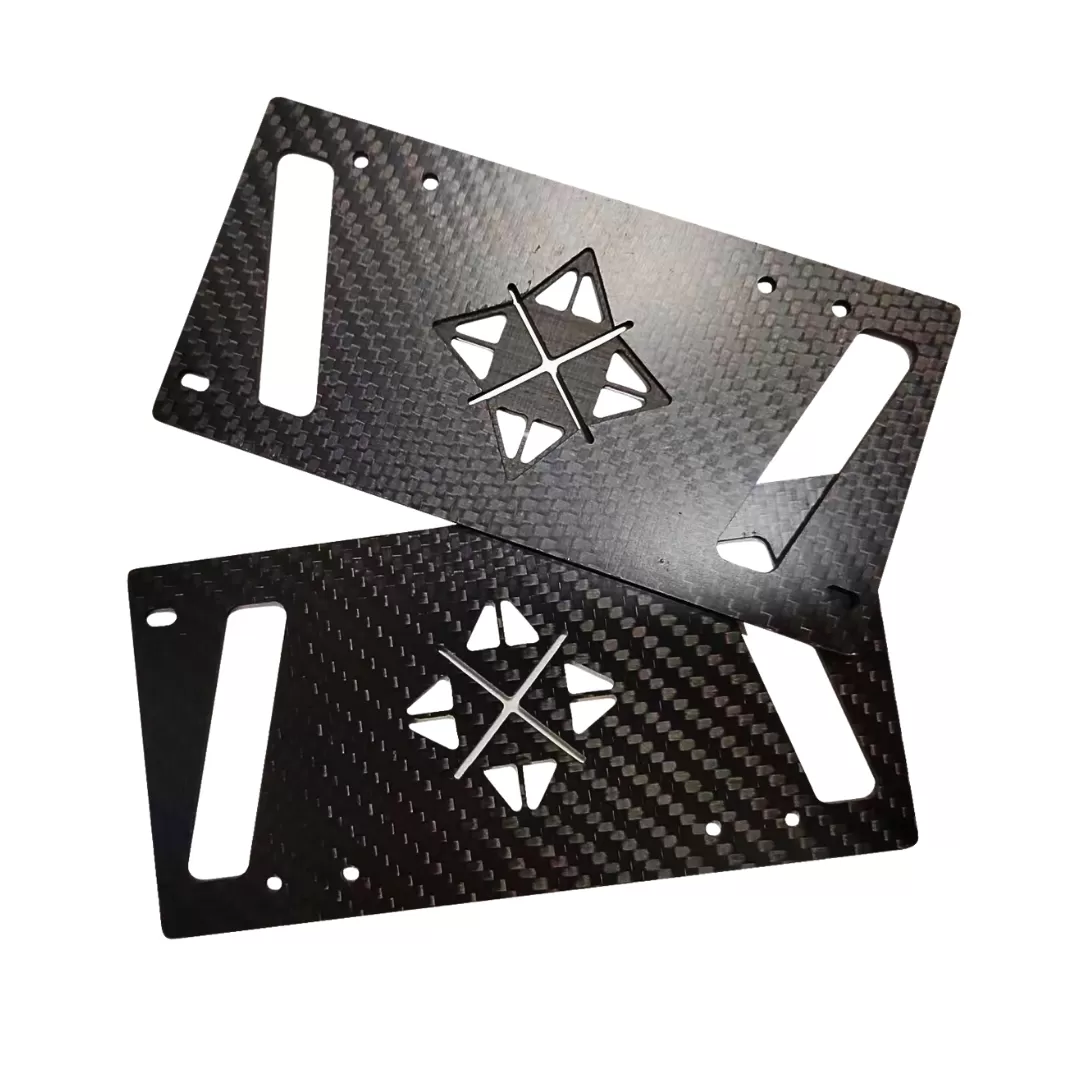
Rainures et angles intérieurs : précisions concernant une demande relative à l'usinage de la fibre de carbone
Les rainures et les angles intérieurs méritent une attention particulière, car leur fonction peut être masquée par un contour complexe.
Read guide →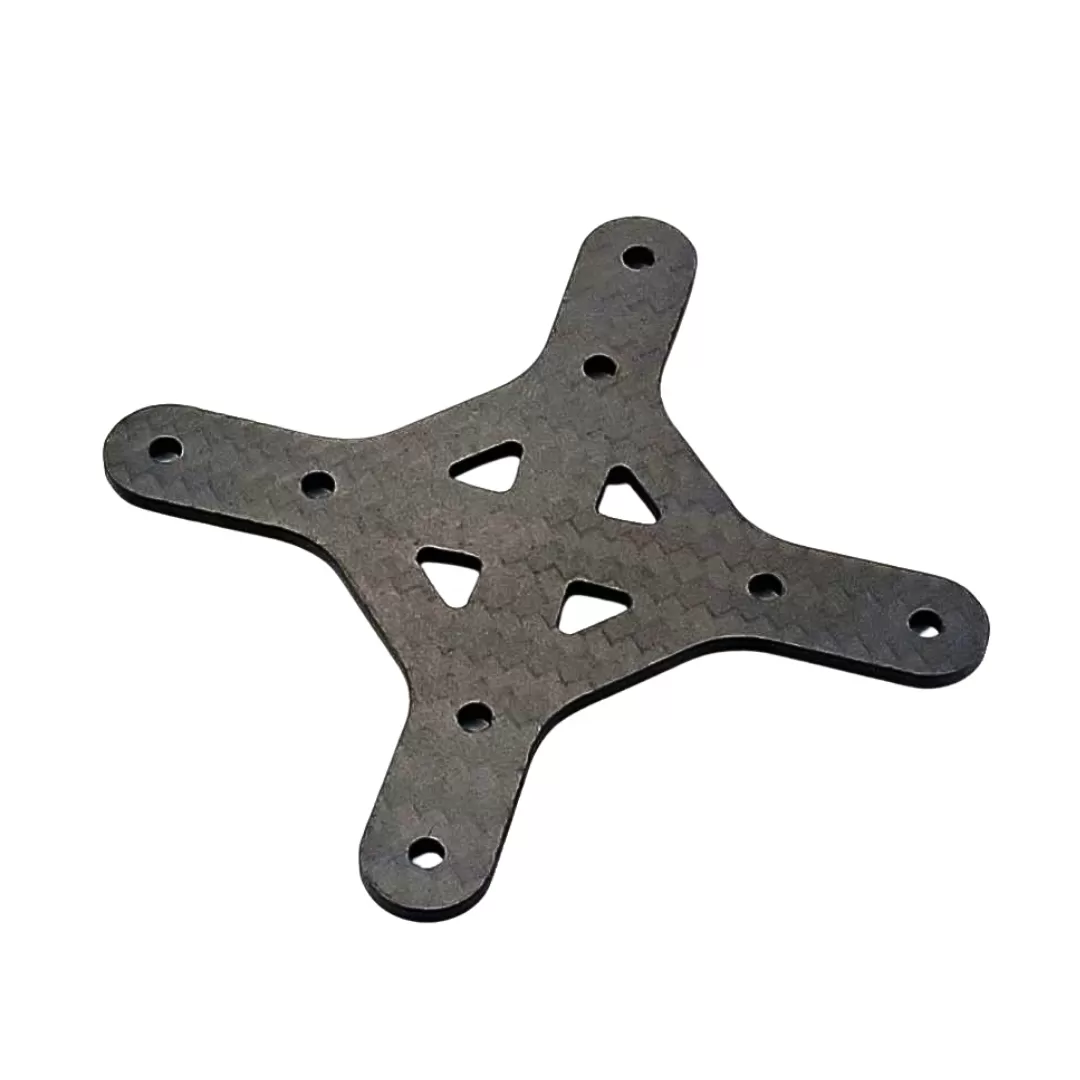
Trous de passage et fraisages en fibre de carbone : définition de l'interface avec les pièces de fixation
A fastener hole should be specified as part of its hardware interface.
Read guide →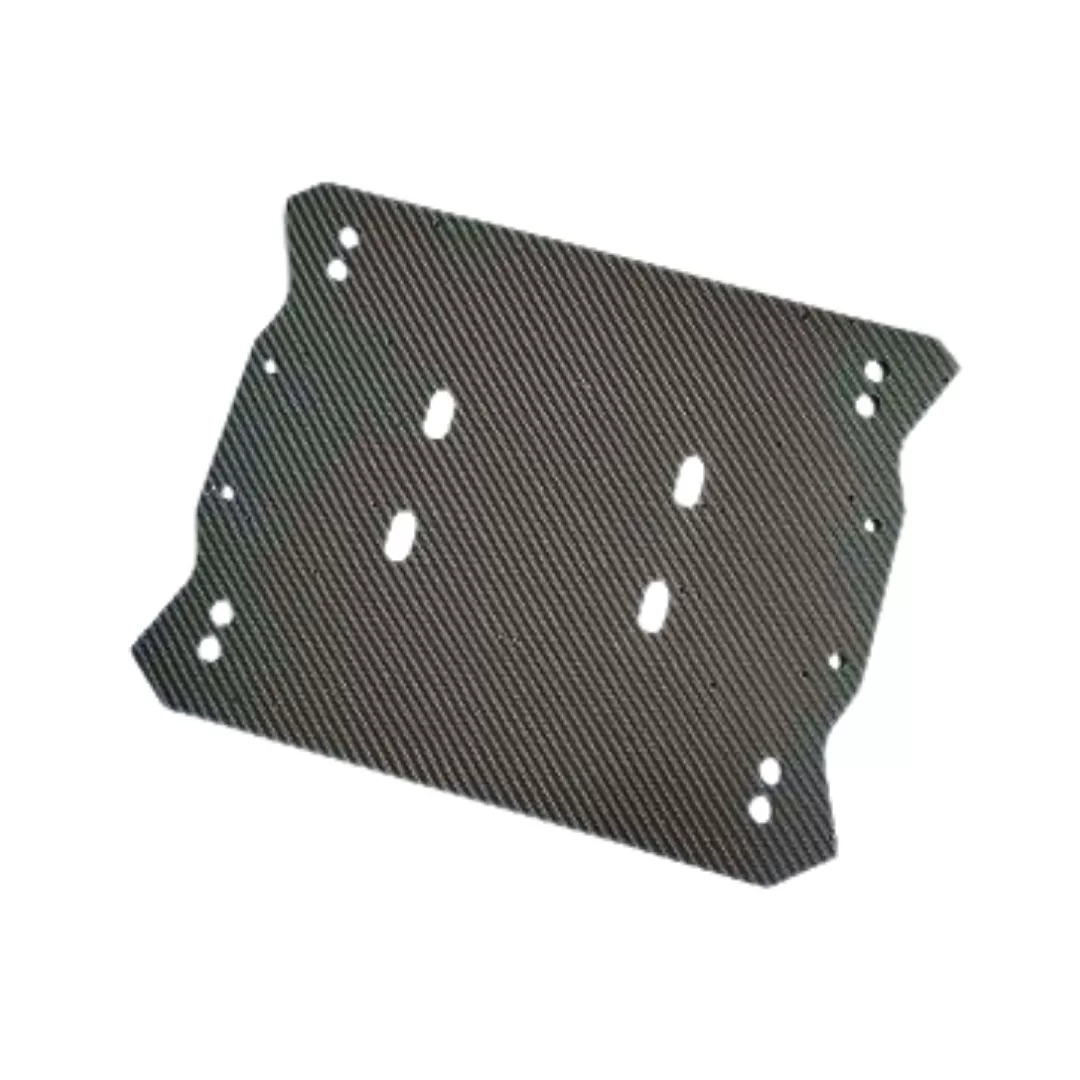
Liste de contrôle pour les dessins CNC de composants sur mesure en fibre de carbone
A CNC quotation becomes easier to assess when the drawing separates geometry, material, finish and acceptance requirements.
Read guide →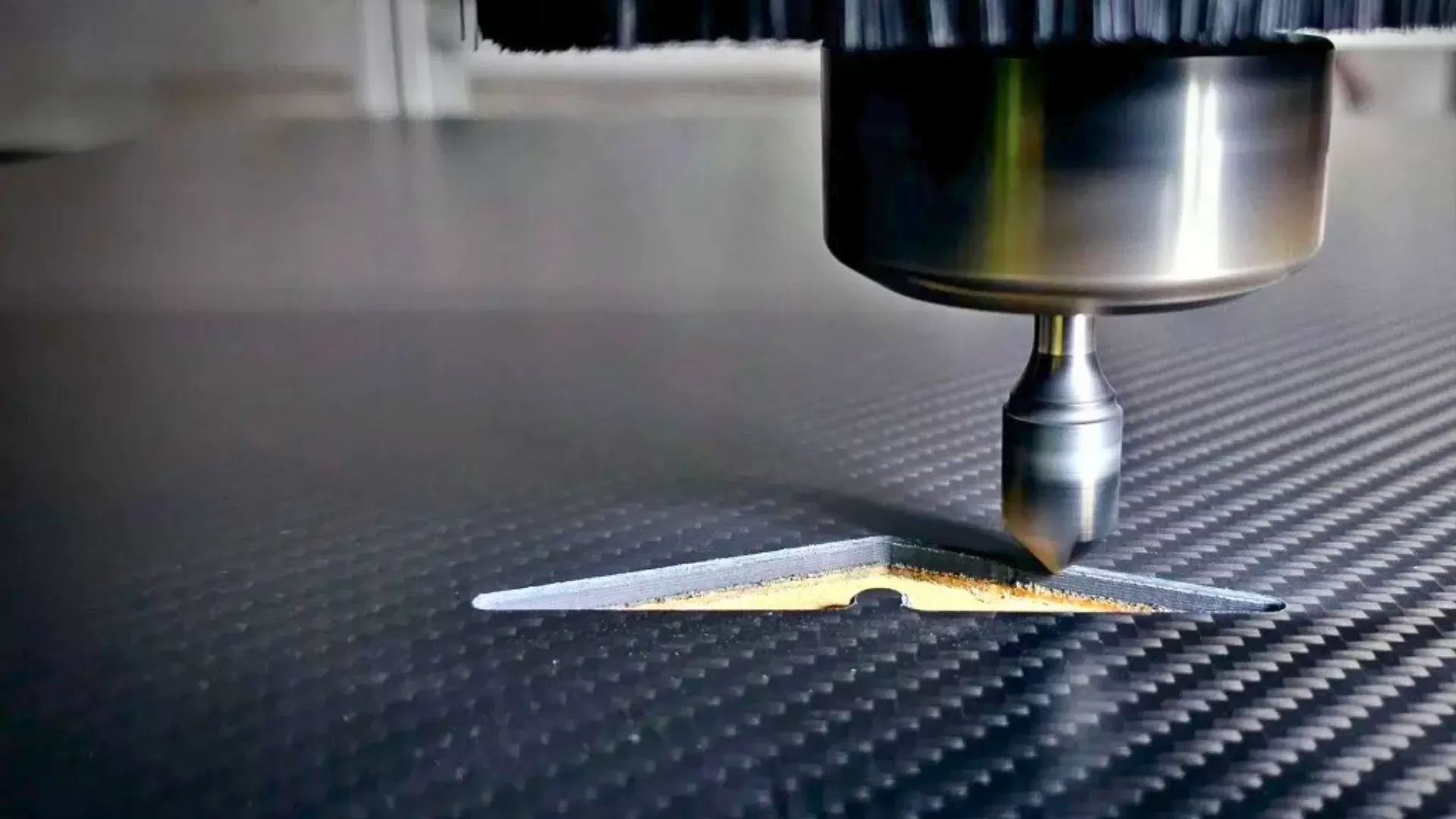
CNC Carbon Fiber Parts: Separate Stock, Machining and Finishing
A machined carbon fiber part begins with a defined stock material and ends with an agreed edge and surface condition. Quoting only the outline leaves important parts of the…
Read guide →Fabrication et outillage
Composite manufacturing and tooling development: mould geometry, fabric forming, process surfaces, sample preparation and controlled production changes.

Race-Tracking in Resin Moulding: Record the Gap Beside the Preform
A gap beside a reinforcement preform can provide a different flow route from the preform itself. When a trial shows resin advancing quickly along an edge, record the local…
Read guide →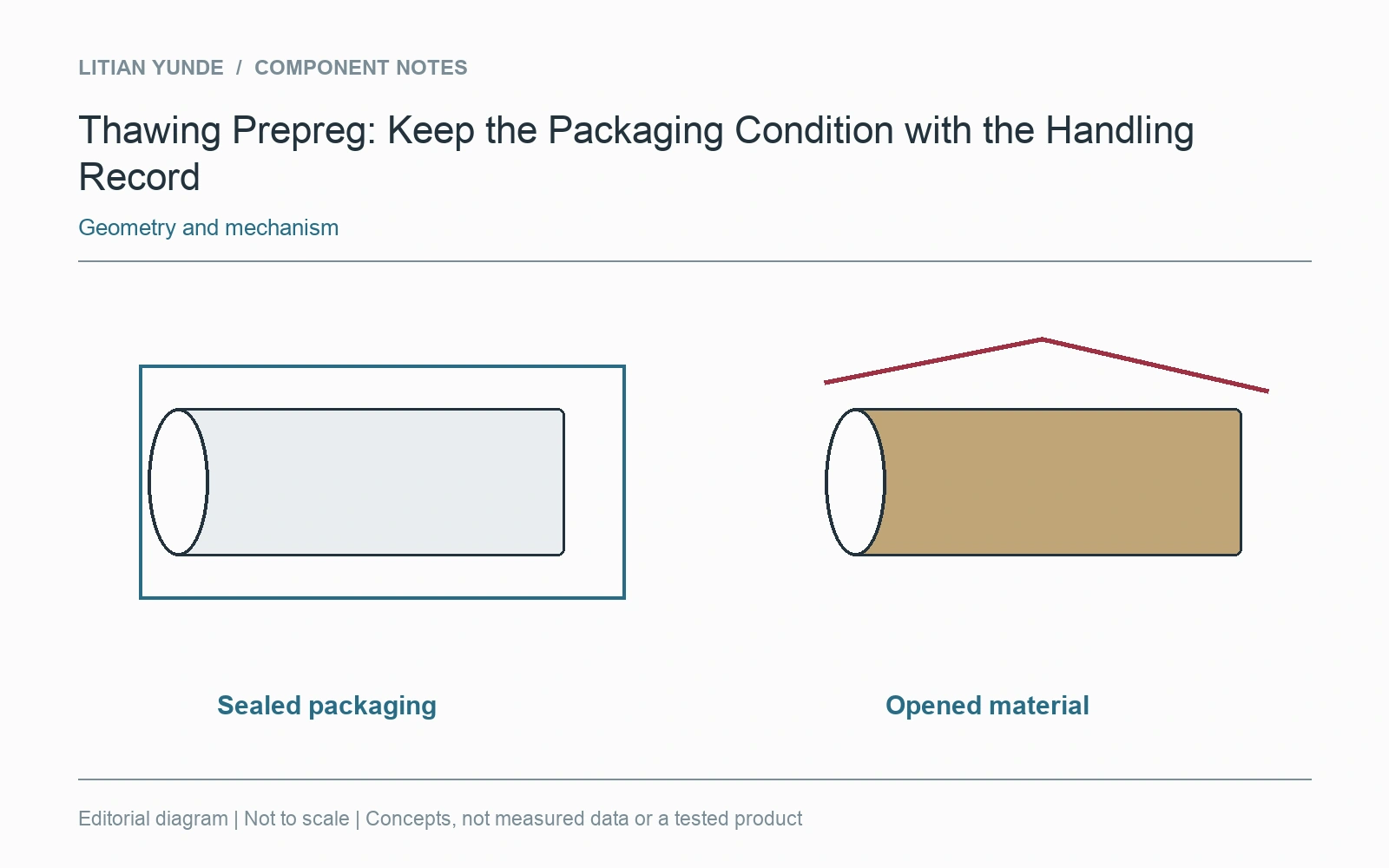
Thawing Prepreg: Keep the Packaging Condition with the Handling Record
Follow the selected prepreg’s handling instruction when bringing stored material into the layup environment. The packaging condition matters because cold material can be…
Read guide →
Vents in a Composite Mould: Distinguish Tool Features from Delivered Openings
A vent in the manufacturing tool and an opening required in the delivered carbon fiber part have different purposes. Label them separately in the process review. A hole drawn…
Read guide →
Ply Drop-Offs in Carbon Fiber Parts: Show Which Layers End in the Transition
A laminate thickness transition needs more than a smooth outside outline. Show which plies continue and which terminate through the region. A ply drop-off changes the…
Read guide →
Caul Plates in Composite Moulding: Define the Process Contact Surface
A caul plate is a process tool or sheet used at an identified contact surface. If it is included in the proposed manufacturing route, show its location and role. Do not…
Read guide →
Perforated Release Film: Specify the Hole Pattern as Well as the Film
Perforated and non-perforated release films are different process selections. For a perforated product, retain the grade and perforation designation in the bagging…
Read guide →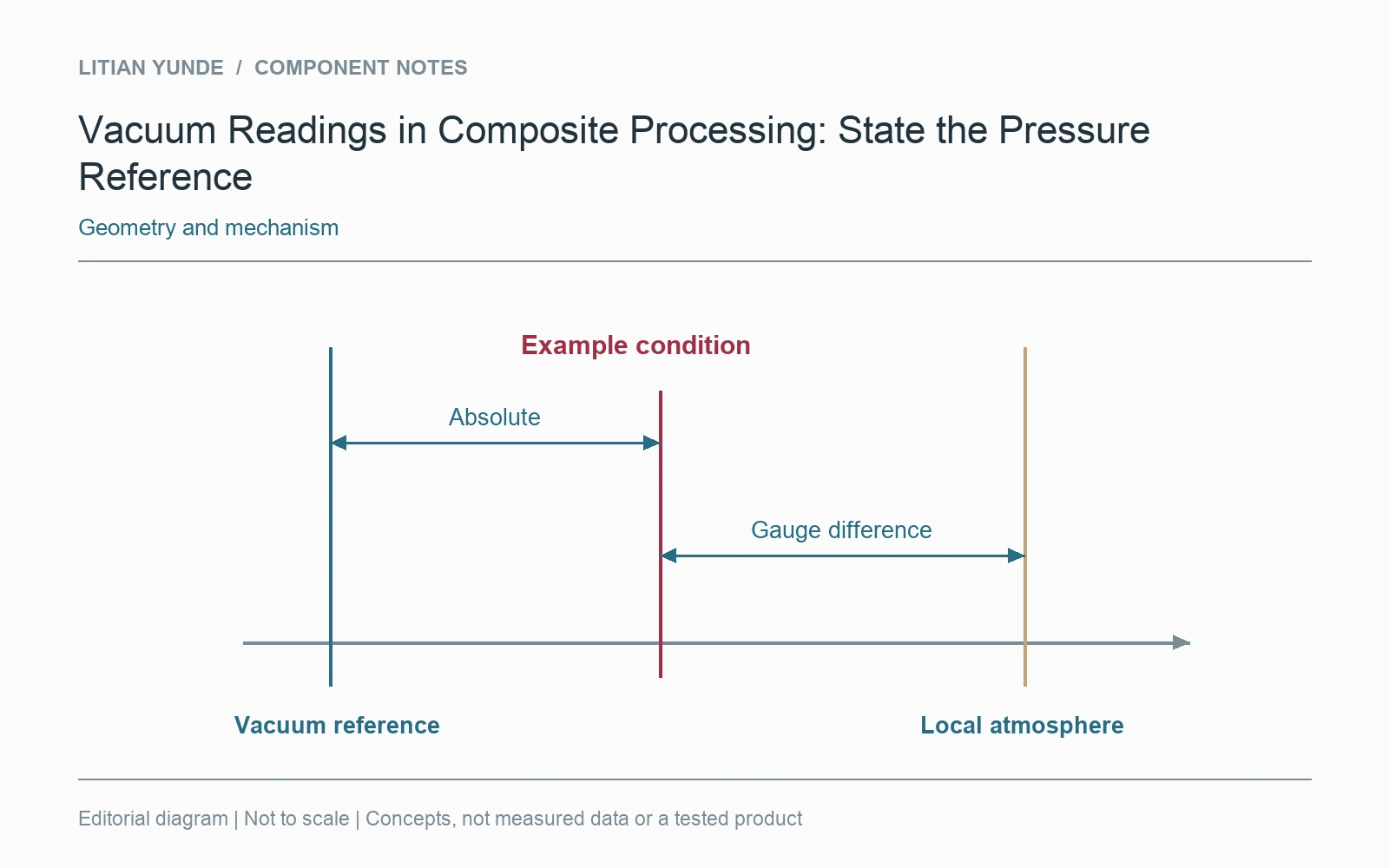
Mesures de vide dans le traitement des composites : préciser la référence de pression
A vacuum value needs its units and pressure reference. Absolute pressure is referenced to a vacuum; gauge pressure is referenced to the local atmosphere. Two instruments can…
Read guide →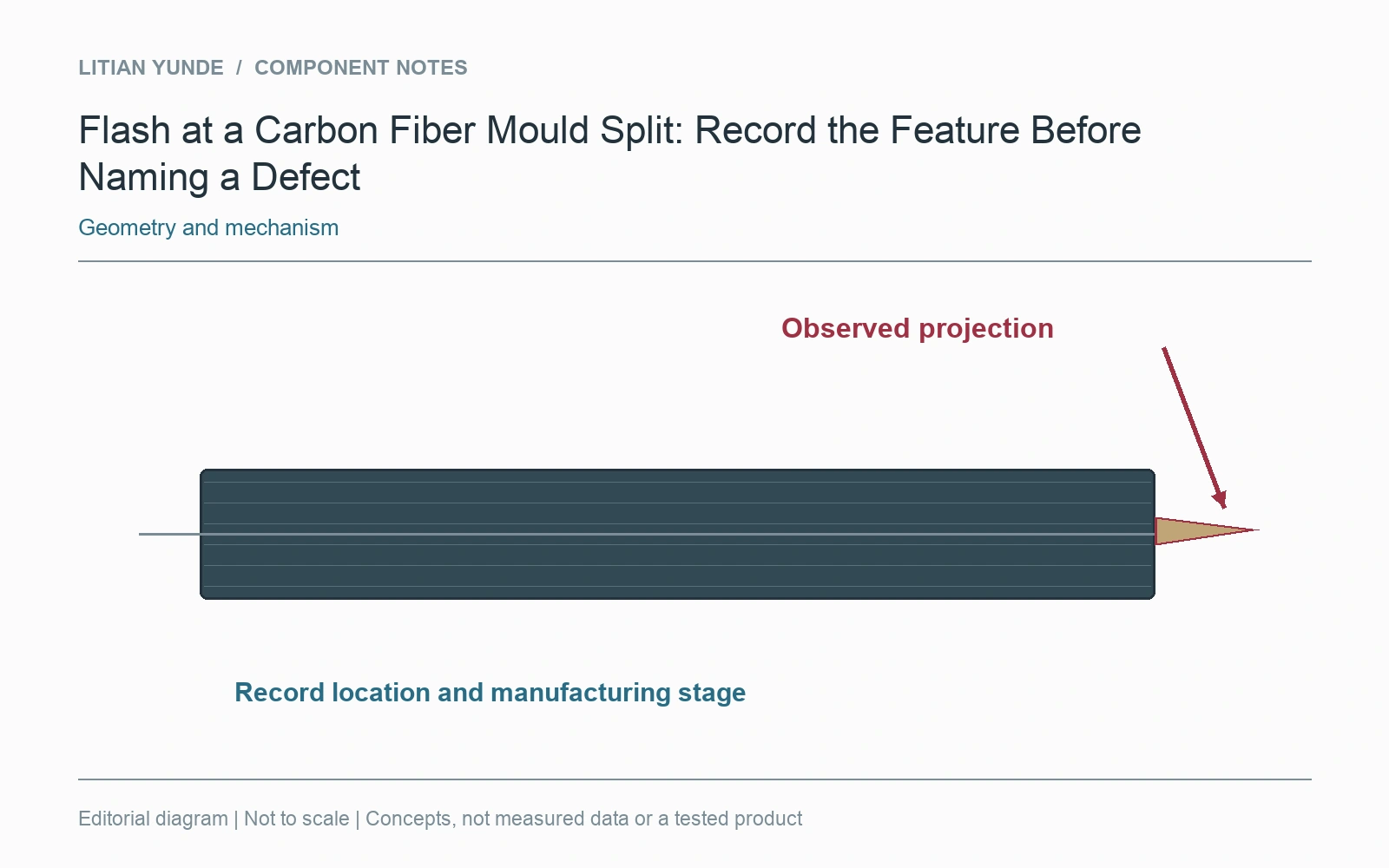
Flash at a Carbon Fiber Mould Split: Record the Feature Before Naming a Defect
A thin projection at a mould split needs a location and a clear description. Do not label every edge projection delamination from a photograph. Identify the intended finished…
Read guide →
Sandwich Core Joints: Locate the Internal Seam Before Closing the Skins
A joint between core pieces is an internal construction detail. Its location and proposed treatment need to be defined before the skins close the panel. An uninterrupted…
Read guide →
Trim Allowance on a Carbon Fiber Shell: Keep Both Boundaries Visible
A moulded shell can include material beyond its final trimmed edge. Show that allowance separately from the delivered outline. The tool boundary, intermediate blank and…
Read guide →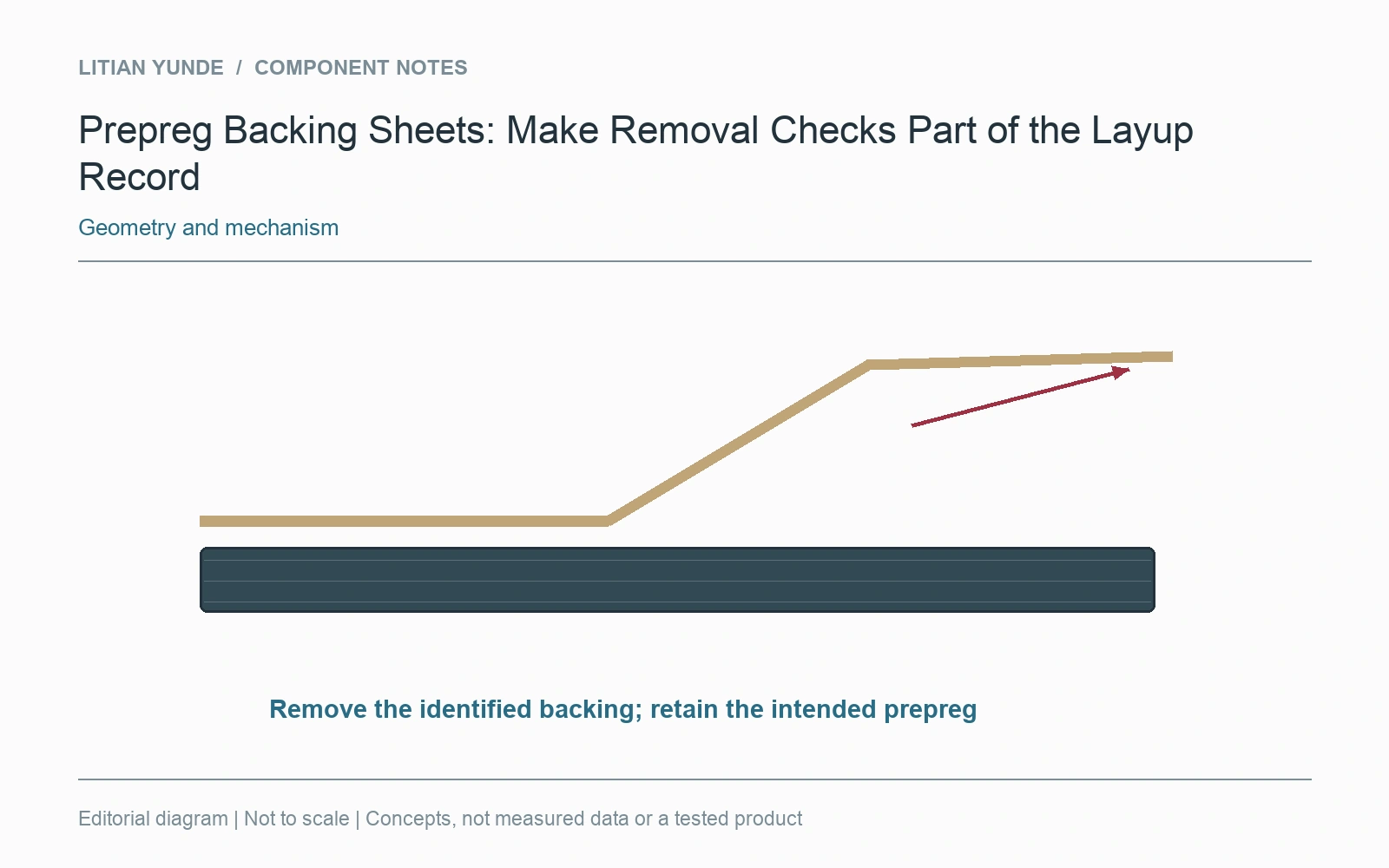
Prepreg Backing Sheets: Make Removal Checks Part of the Layup Record
Prepreg backing sheets protect material during handling and are removed as required by the applicable layup instruction. Their removal needs a clear check. A backing-sheet…
Read guide →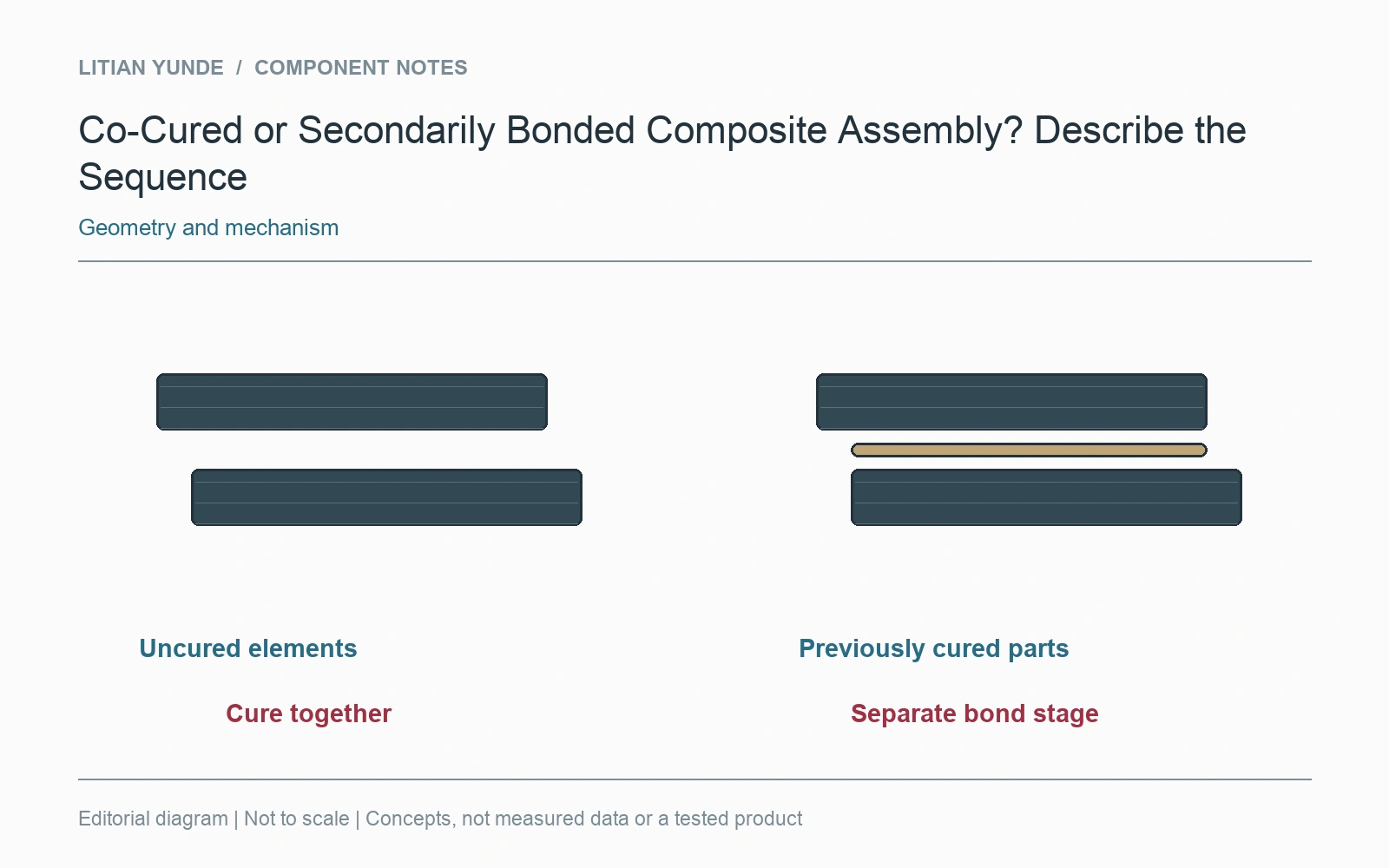
Co-Cured or Secondarily Bonded Composite Assembly? Describe the Sequence
Co-curing and secondary bonding describe different manufacturing sequences. Explain the state of the components when they are joined and identify any adhesive used. A…
Read guide →
Ribs in a Carbon Fibre Shell: Describe the Section Behind the Shape
A raised feature on a carbon fibre shell can be a cosmetic contour, a hollow formed rib or part of a separately assembled reinforcement. Show the cross-section and connection…
Read guide →
Essais d'infusion de résine : conserver la configuration d'alimentation et d'aspiration
When reviewing a resin-infusion trial, keep a layout of the resin feed, vacuum connections and reinforcement region. A finished surface photograph cannot explain how the…
Read guide →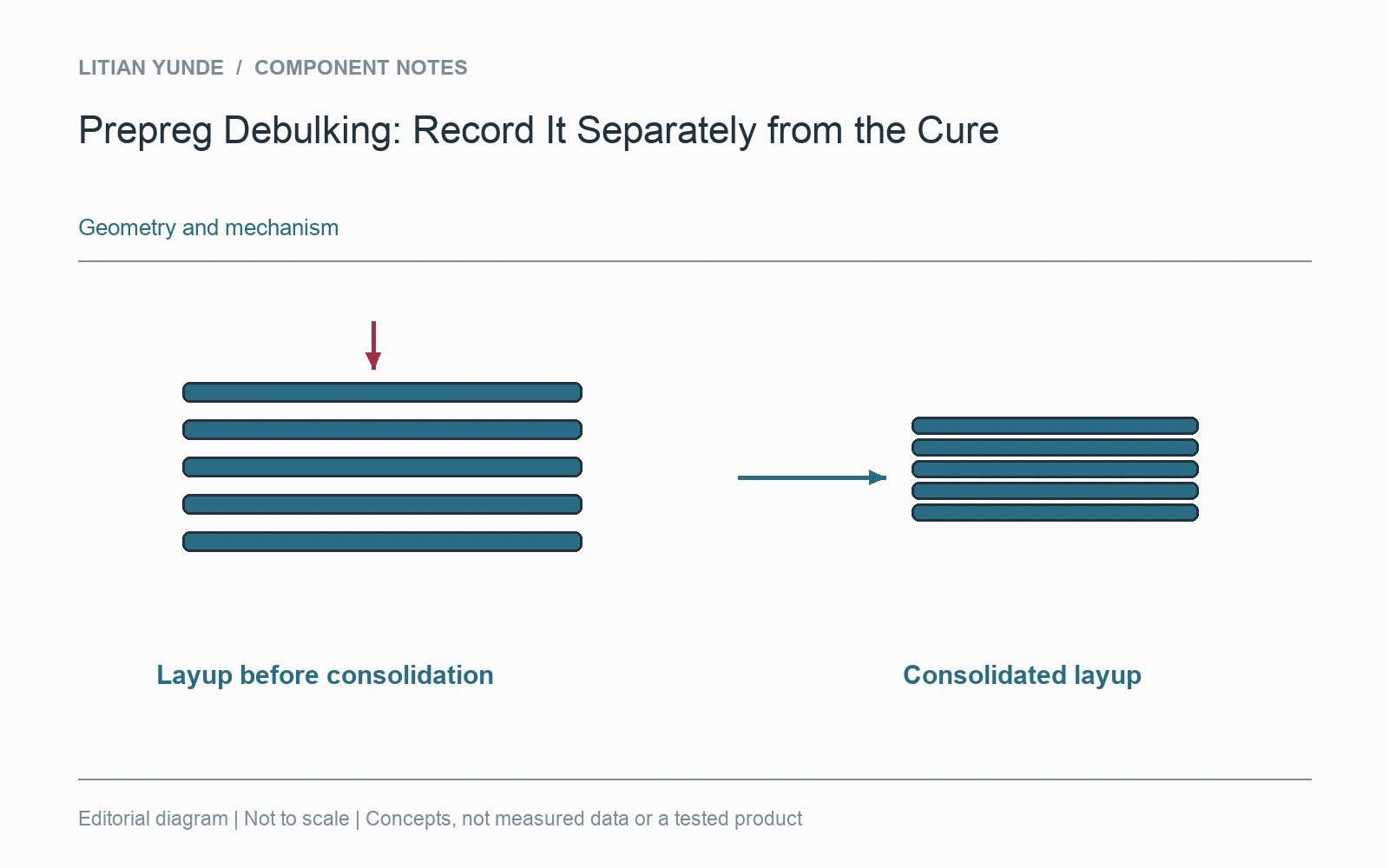
Prepreg Debulking: Record It Separately from the Cure
Debulking is a consolidation and air-removal operation during the preparation of a prepreg layup. It is not, by itself, evidence that the resin has completed its cure. Keep…
Read guide →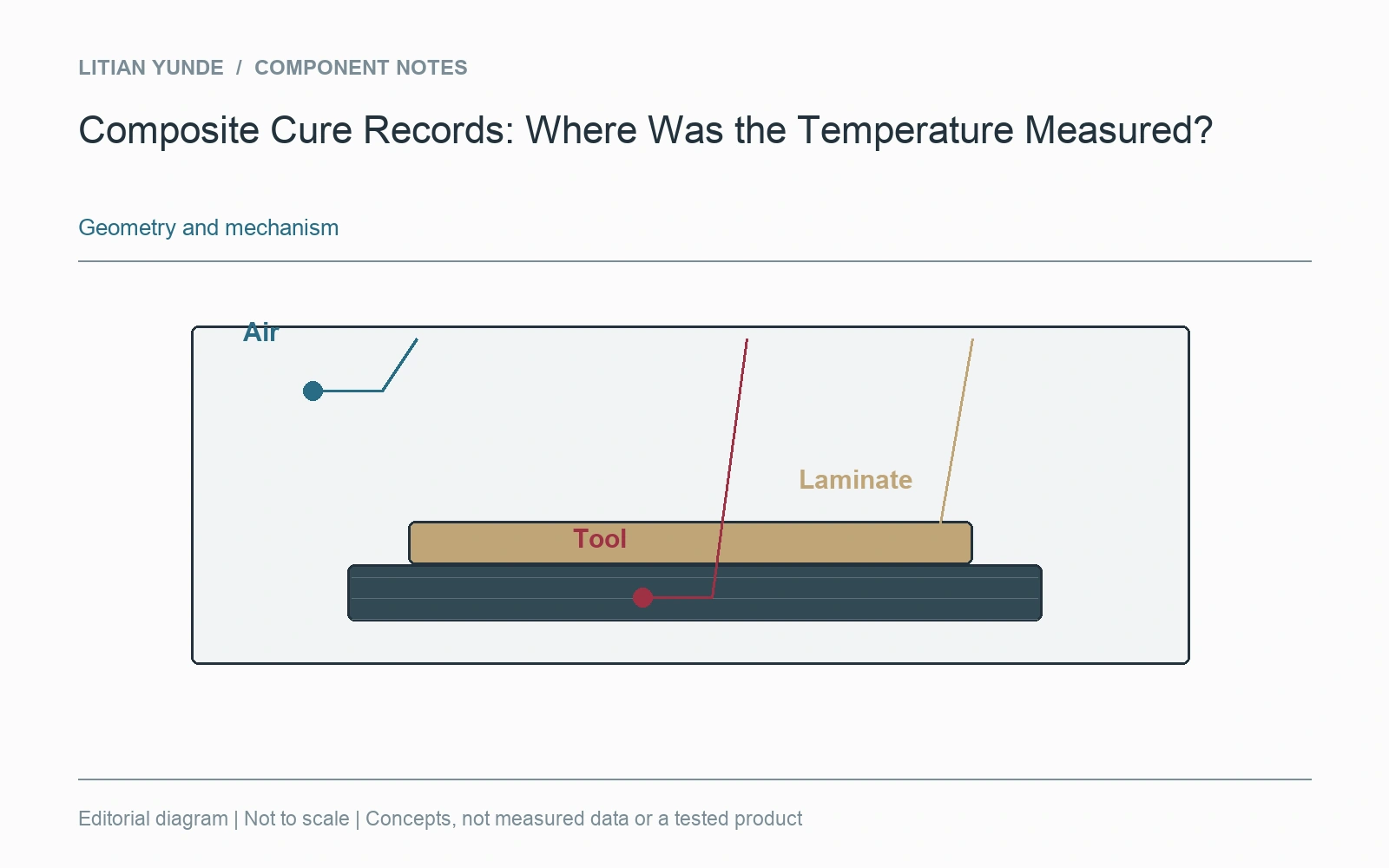
Composite Cure Records: Where Was the Temperature Measured?
A temperature trace needs a sensor location. An oven-air reading, a tool reading and a reading associated with the laminate describe different locations. Keep the channel map…
Read guide →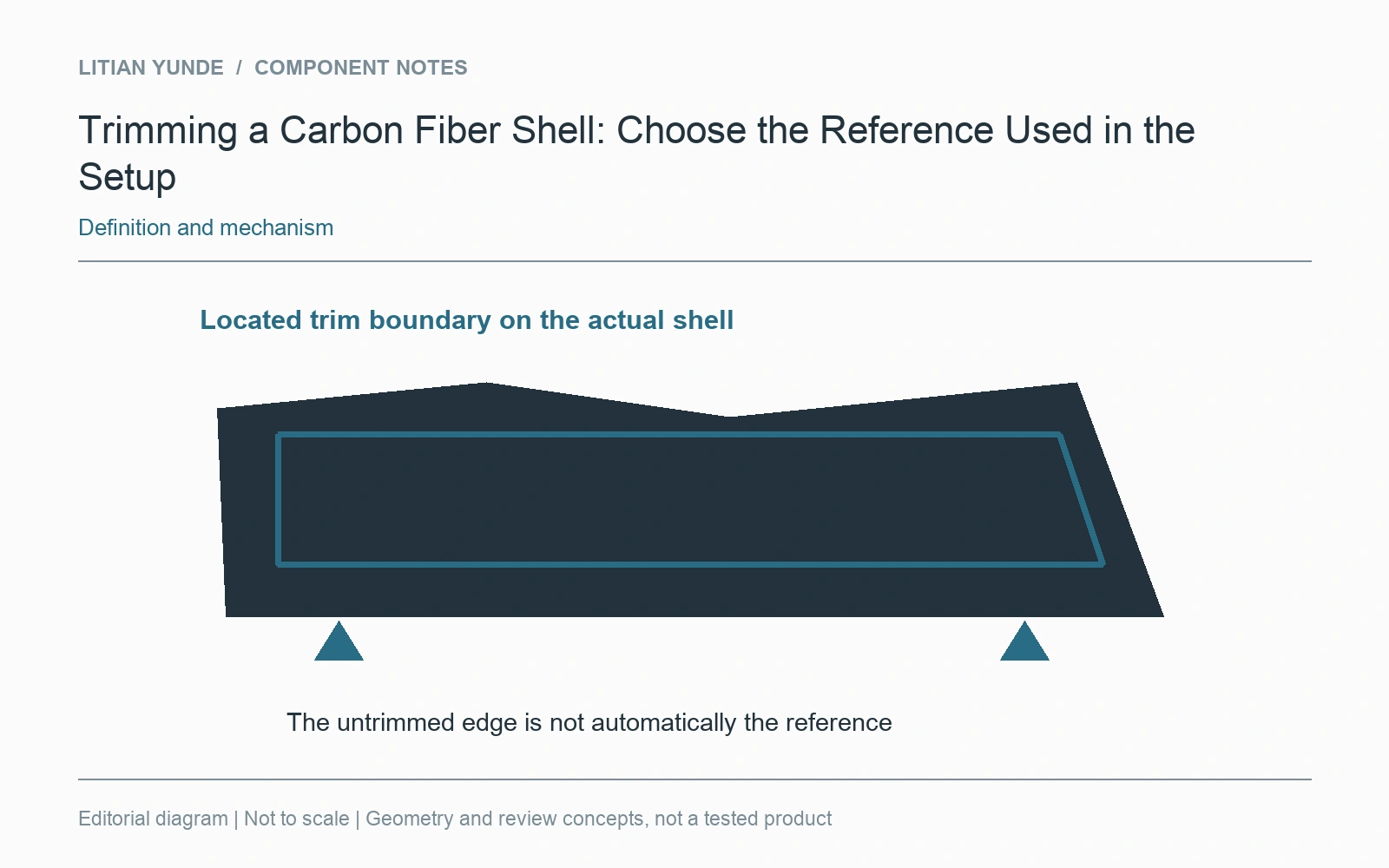
Découpe d'une coque en fibre de carbone : choisir la référence utilisée dans la configuration
A trim outline needs a reliable relationship to the moulded shell in its actual machining setup. Define how the shell is located and supported before comparing the finished…
Read guide →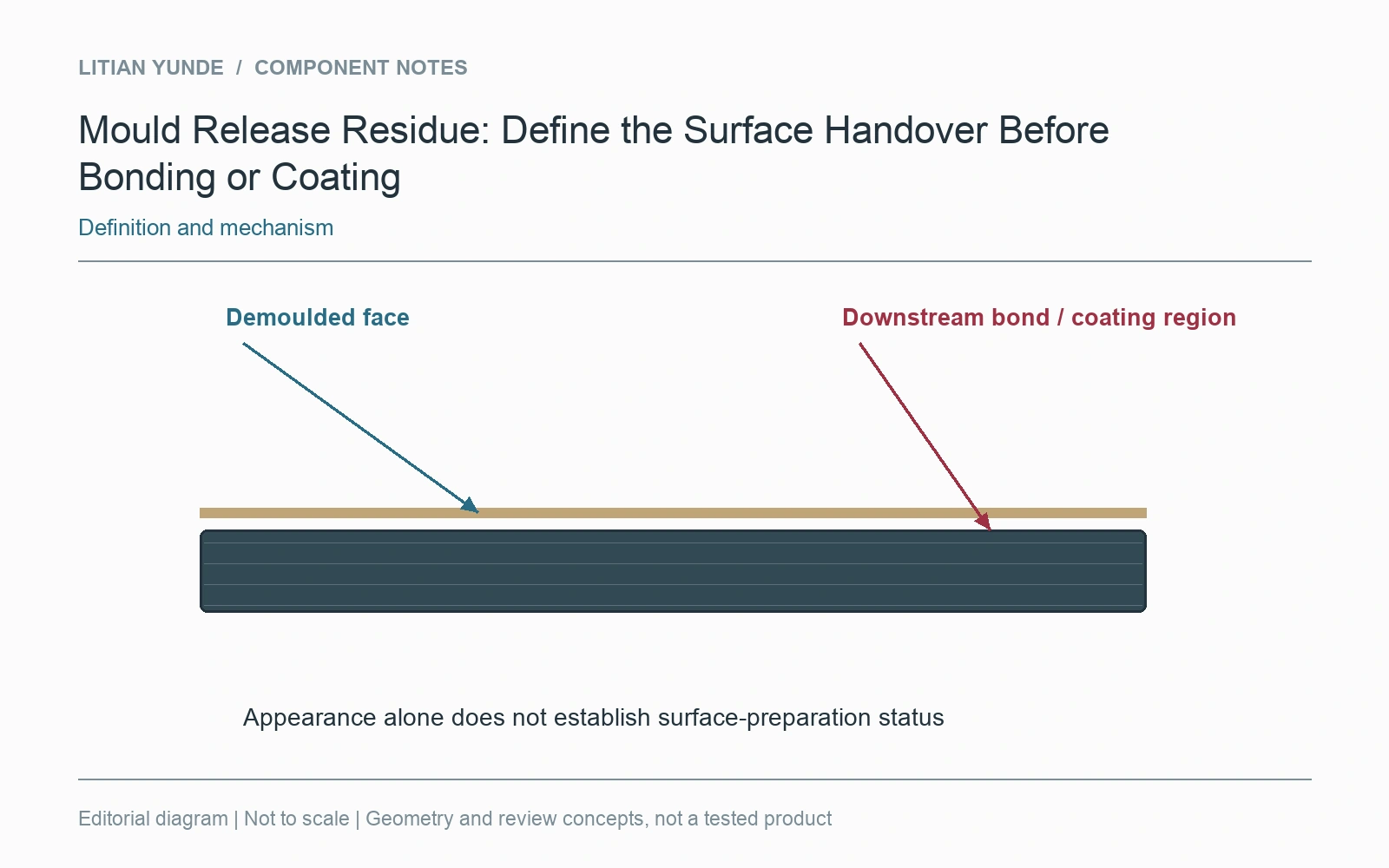
Résidus de démoulage : définir l'état de la surface avant le collage ou l'application d'un revêtement
A demoulded composite surface and a surface prepared for bonding or coating are different handover states. Clarify which state the supplier is delivering. A clean-looking or…
Read guide →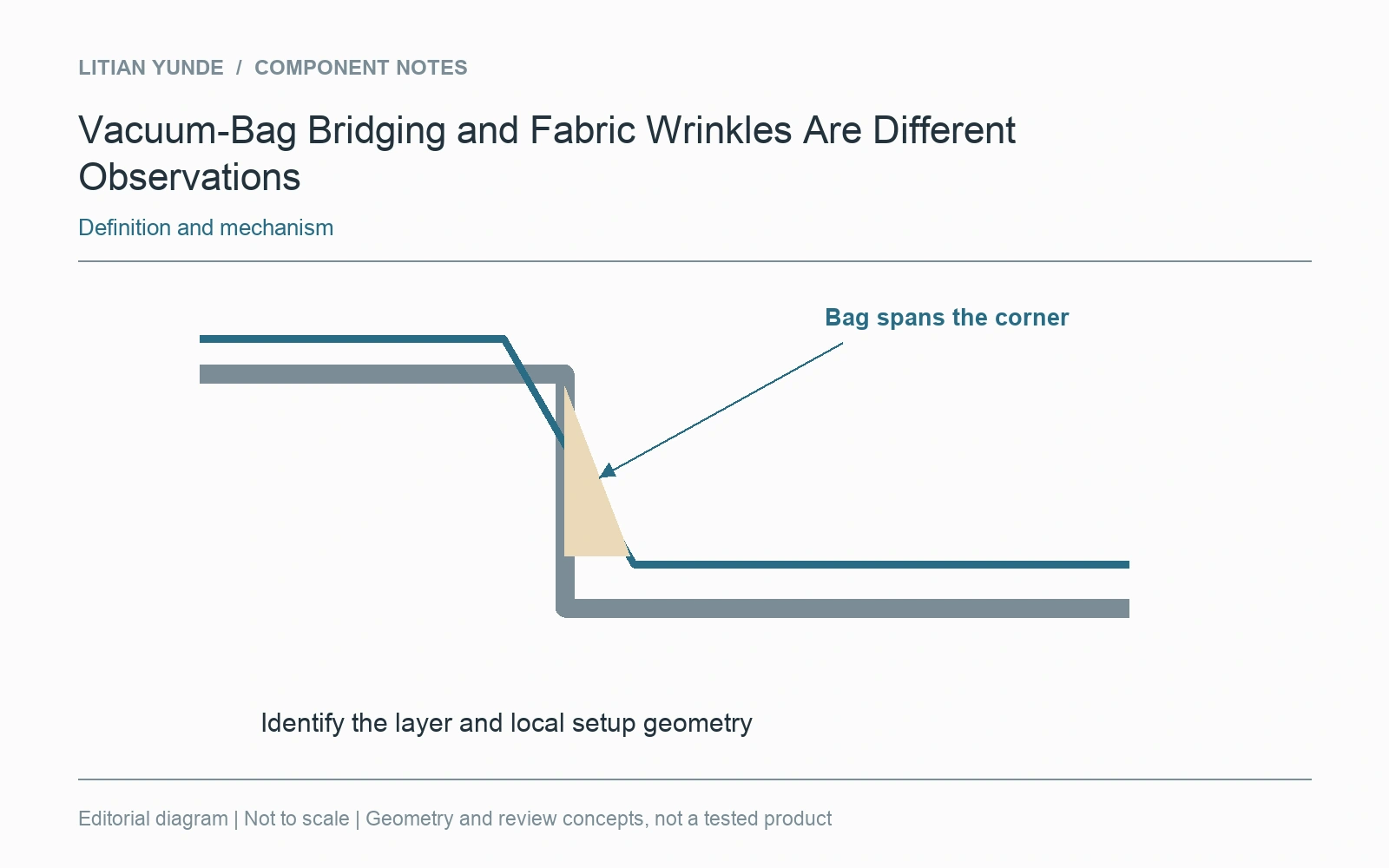
La formation de ponts dans les sacs sous vide et les plis du tissu sont deux phénomènes distincts
A vacuum bag spanning a corner without following the intended contour is a different observation from a fold in the reinforcement. Identify which layer and region is involved…
Read guide →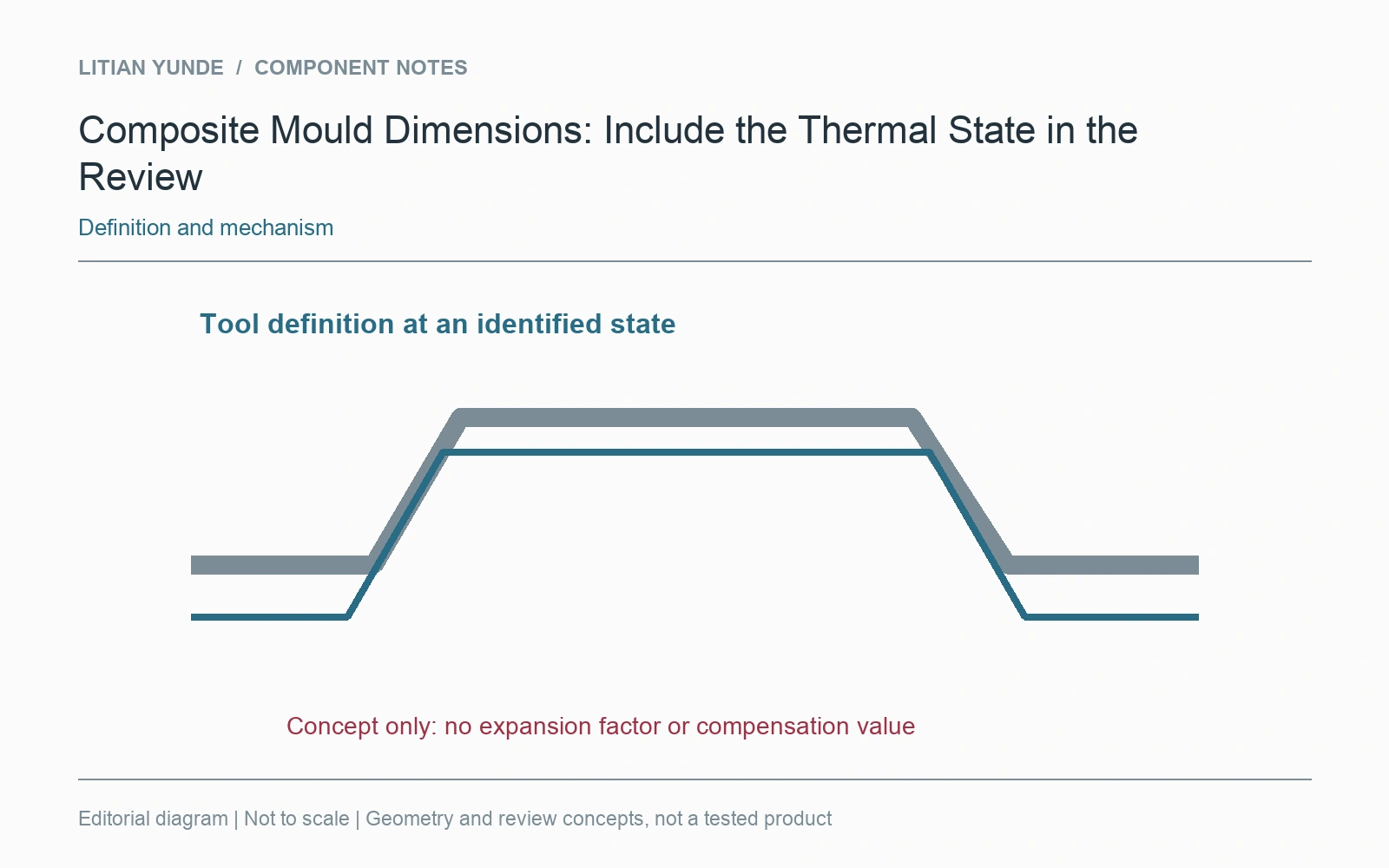
Dimensions du moule composite : prendre en compte l'état thermique lors de la révision
A mould dimension needs the temperature and reference condition in which it applies. Tool and laminate behaviour during processing can be relevant to the finished geometry.…
Read guide →
Prepreg Tack and Drape Describe Different Handling Behaviour
Tack concerns how a prepreg adheres during handling; drape concerns how it accommodates a shape. A material can be described on both bases. Neither term alone establishes the…
Read guide →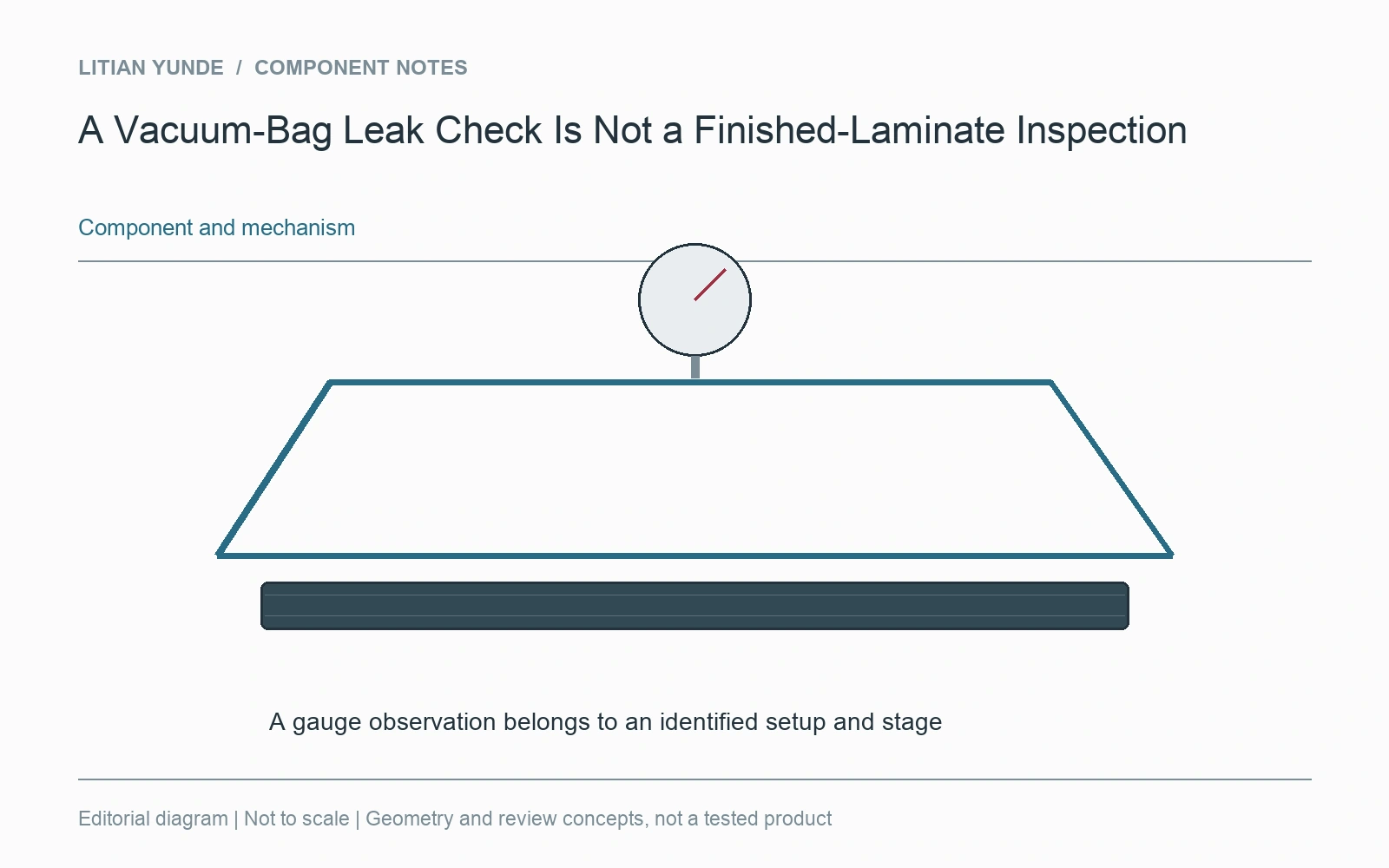
A Vacuum-Bag Leak Check Is Not a Finished-Laminate Inspection
A vacuum-bag leak check evaluates a process setup under its defined procedure. It does not directly measure the void content, mechanical properties or acceptance of the cured…
Read guide →
Breather and Bleeder Materials: Identify Their Role in the Composite Process
Breathing and bleeding describe different process functions: providing an air-evacuation path and absorbing resin where the process requires it. A process consumable can have…
Read guide →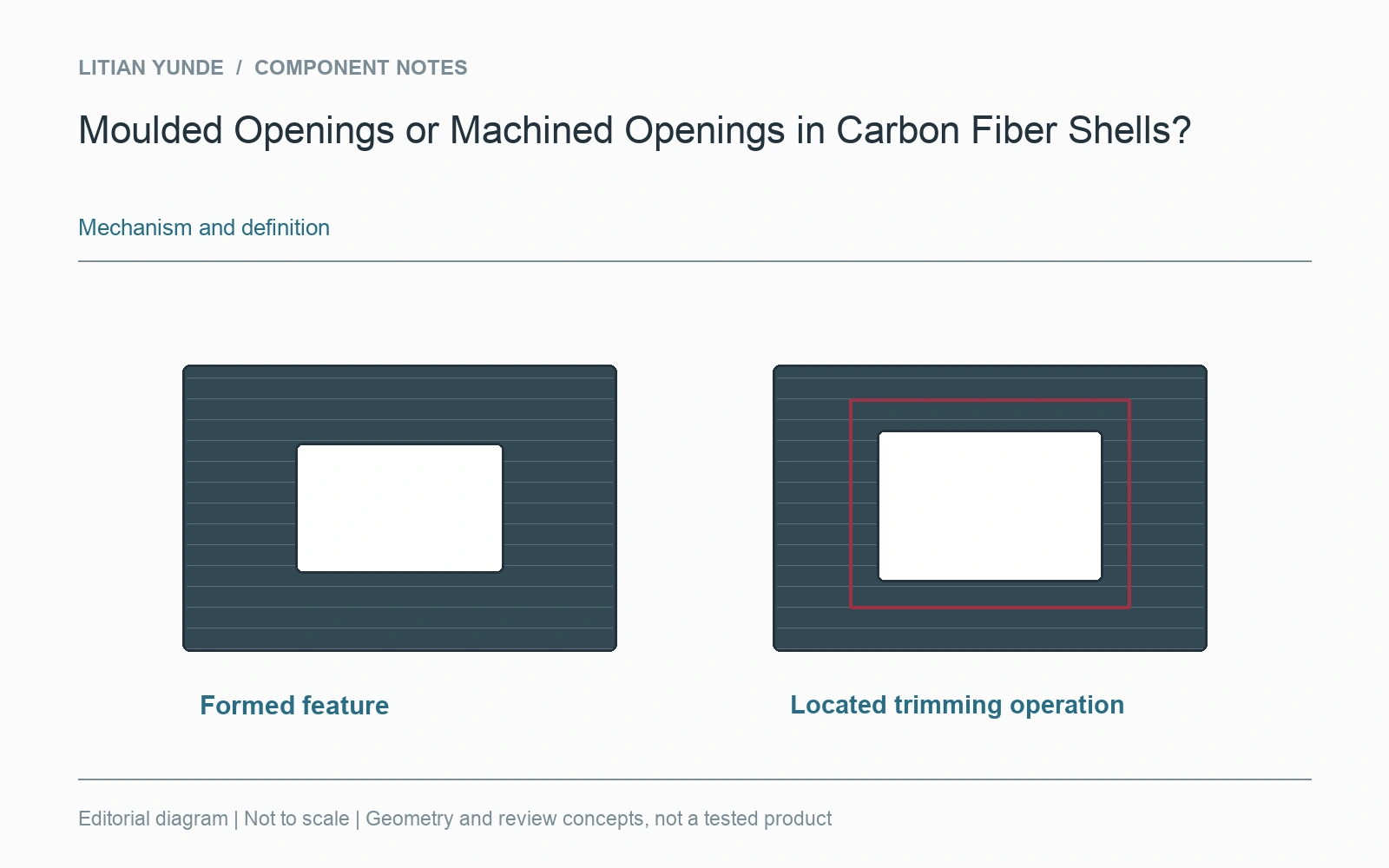
Moulded Openings or Machined Openings in Carbon Fiber Shells?
An opening in a carbon fiber shell may be formed during moulding, trimmed afterward or made through a combined route. The finished opening still needs a dimensional and…
Read guide →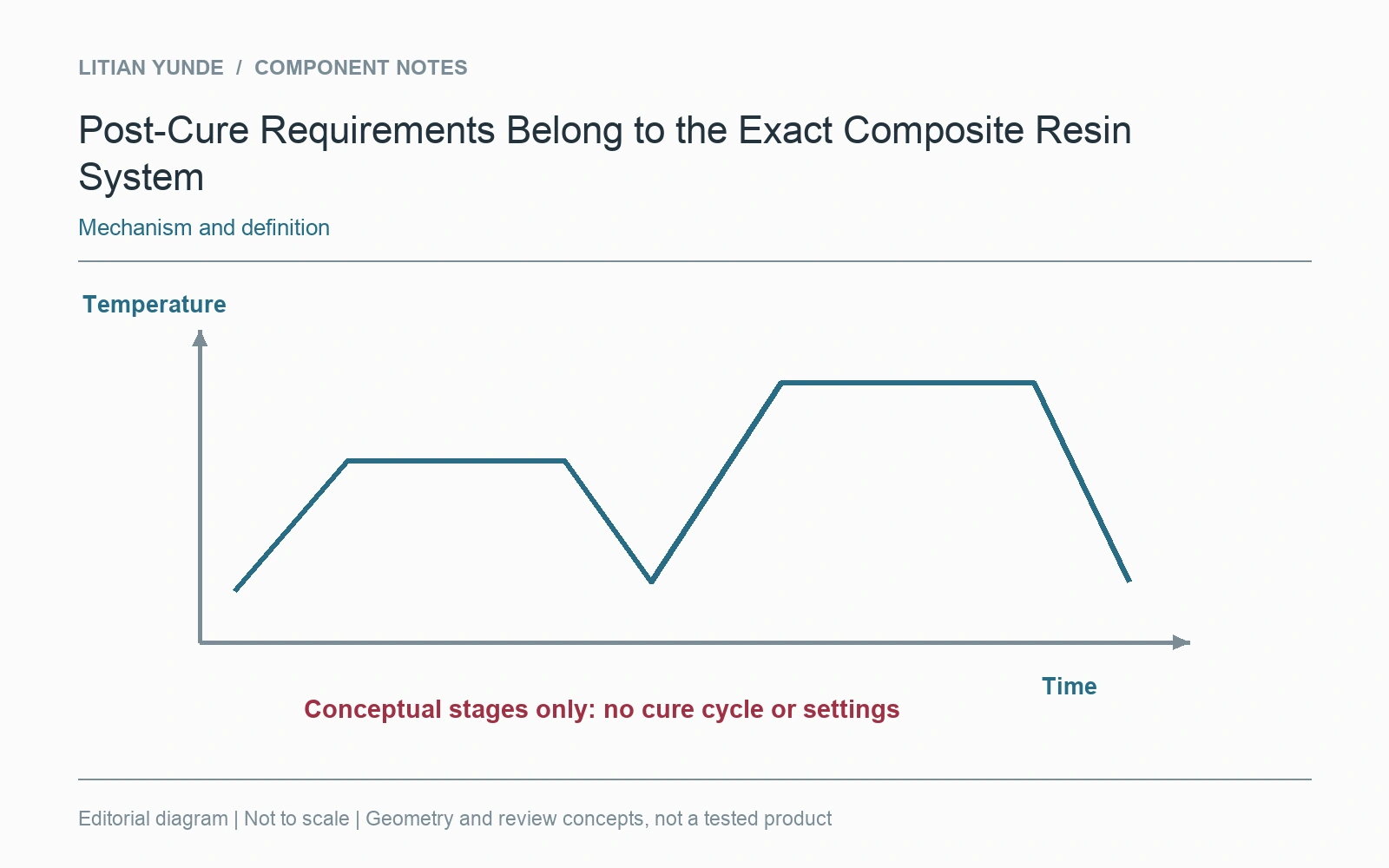
Les exigences relatives au post-durcissement dépendent du système de résine composite utilisé
A post-cure is a specified additional stage in a material’s processing definition, not a generic improvement to apply to every carbon fiber part. Review it against the exact…
Read guide →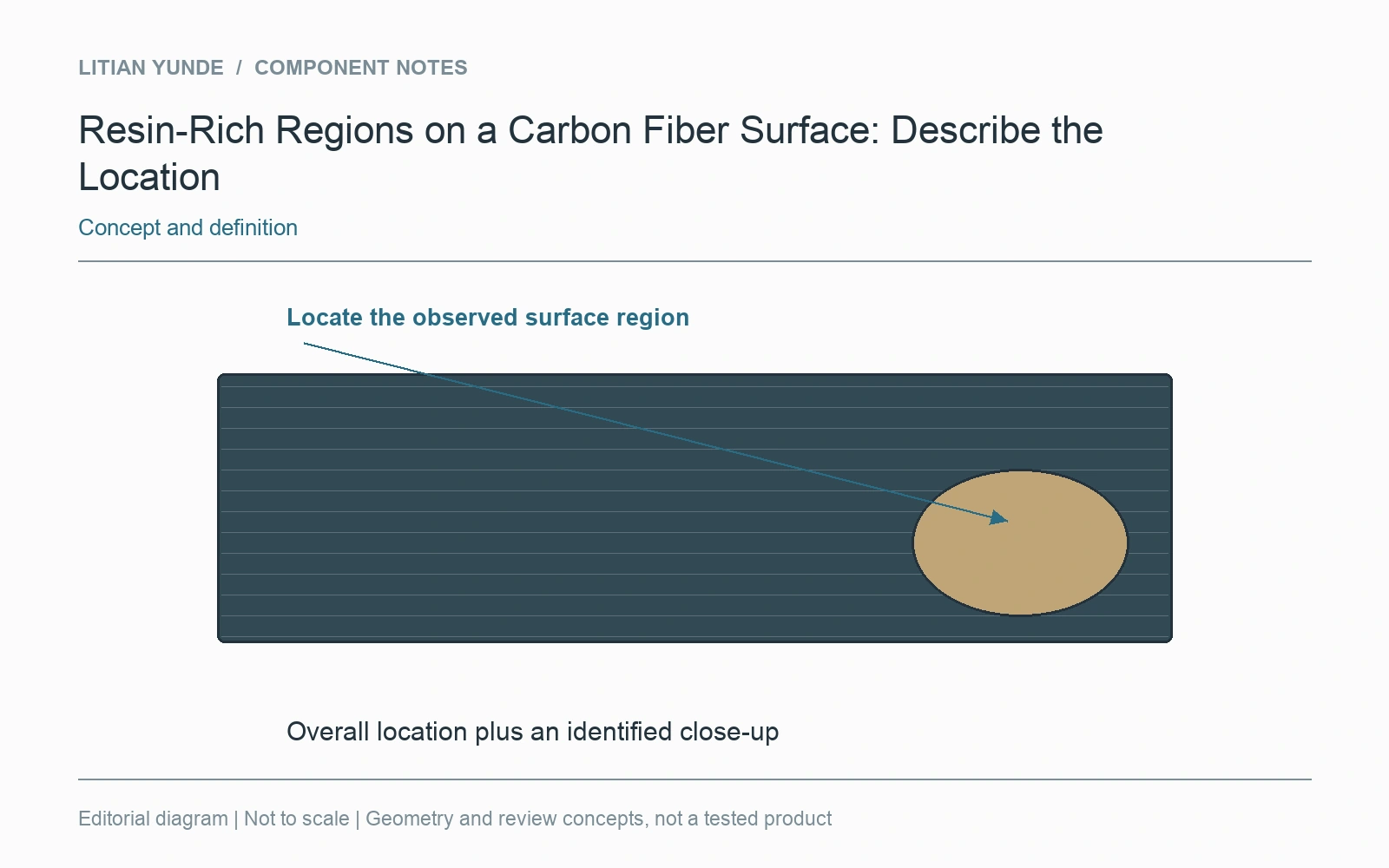
Zones riches en résine sur une surface en fibre de carbone : décrire leur emplacement
A local area dominated by resin is not the same observation as an empty region inside a laminate. When discussing a surface feature, describe its location and appearance…
Read guide →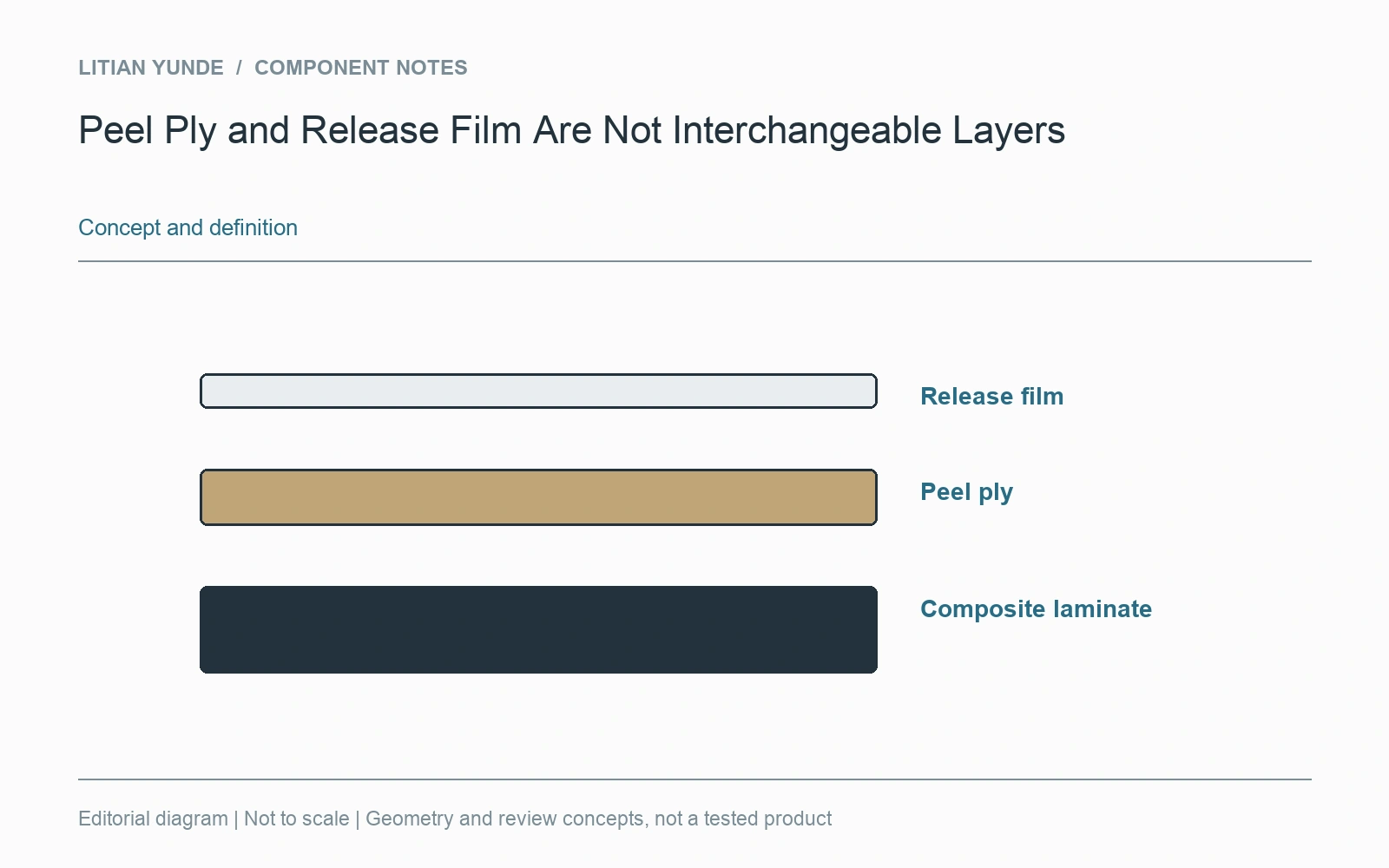
Peel Ply and Release Film Are Not Interchangeable Layers
Peel ply is a removable fabric that can leave a textured composite surface. Release film separates process layers and may have a defined perforation pattern. They have…
Read guide →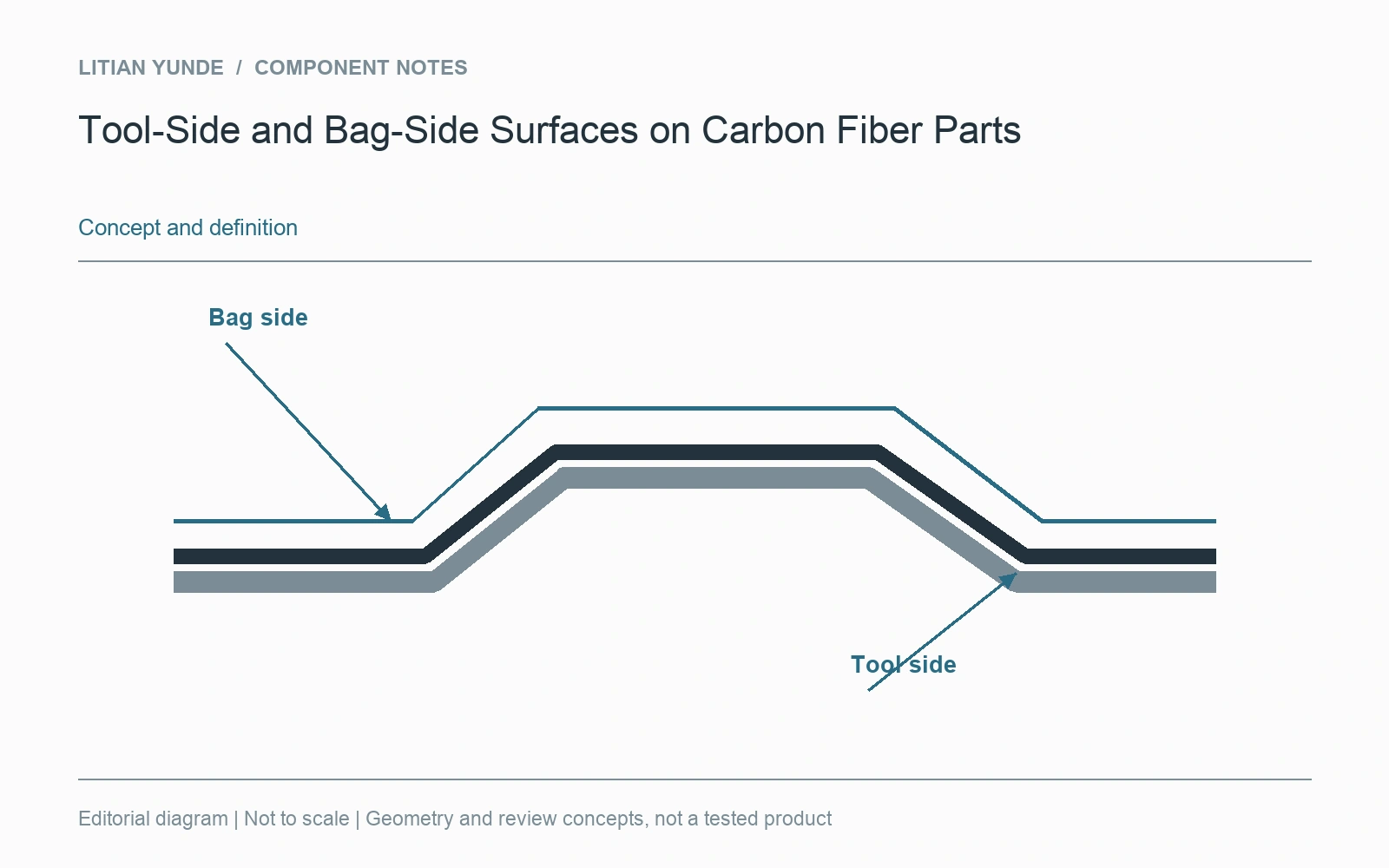
Tool-Side and Bag-Side Surfaces on Carbon Fiber Parts
In a process using a rigid mould on one side and a vacuum bag on the other, the two faces experience different contact conditions. Calling both faces “carbon finish” can hide…
Read guide →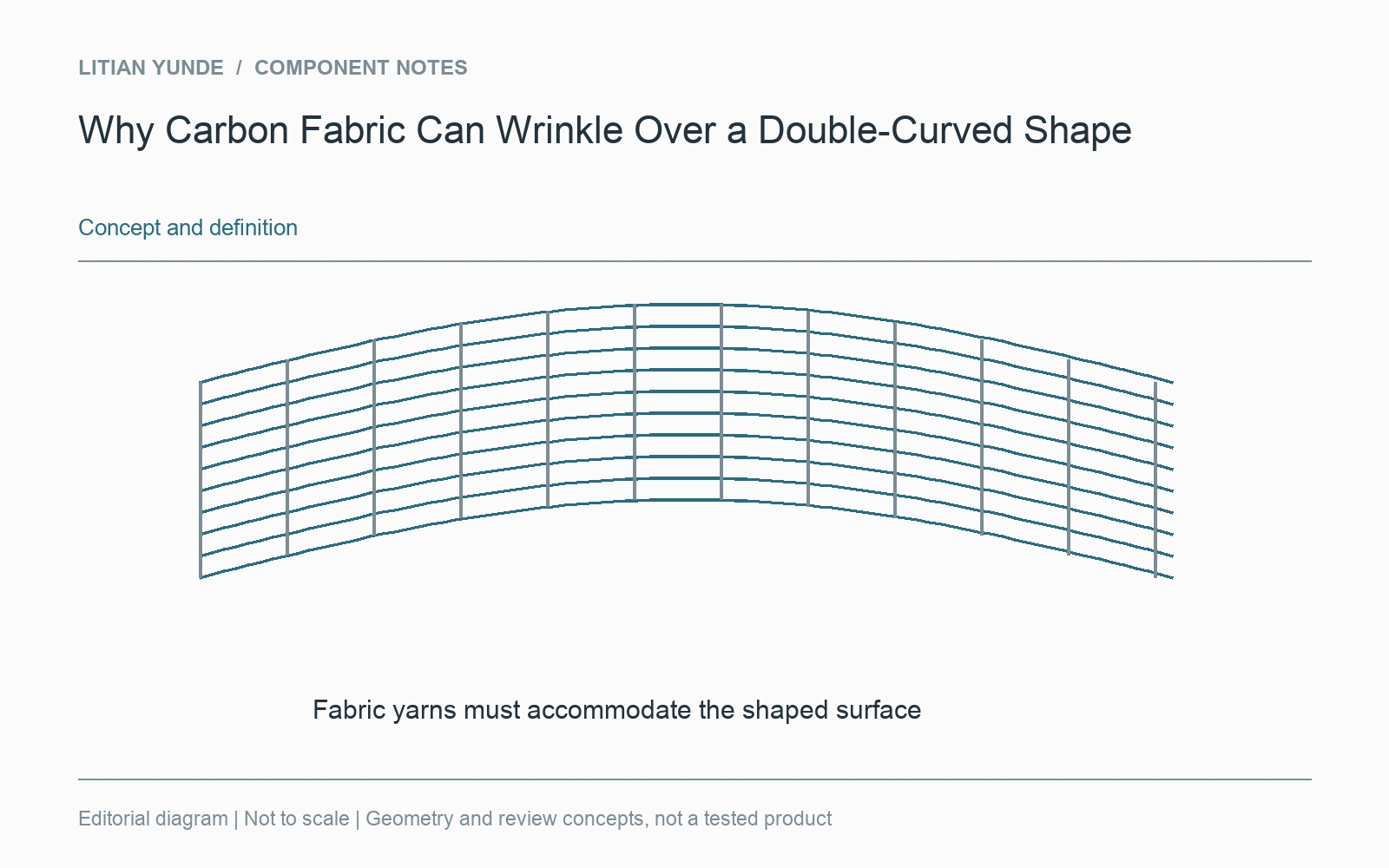
Pourquoi le tissu en carbone peut se froisser sur une forme à double courbure
A piece of fabric that lies flat on a table does not automatically follow every double-curved surface without changing its yarn arrangement. Tight corners and changing…
Read guide →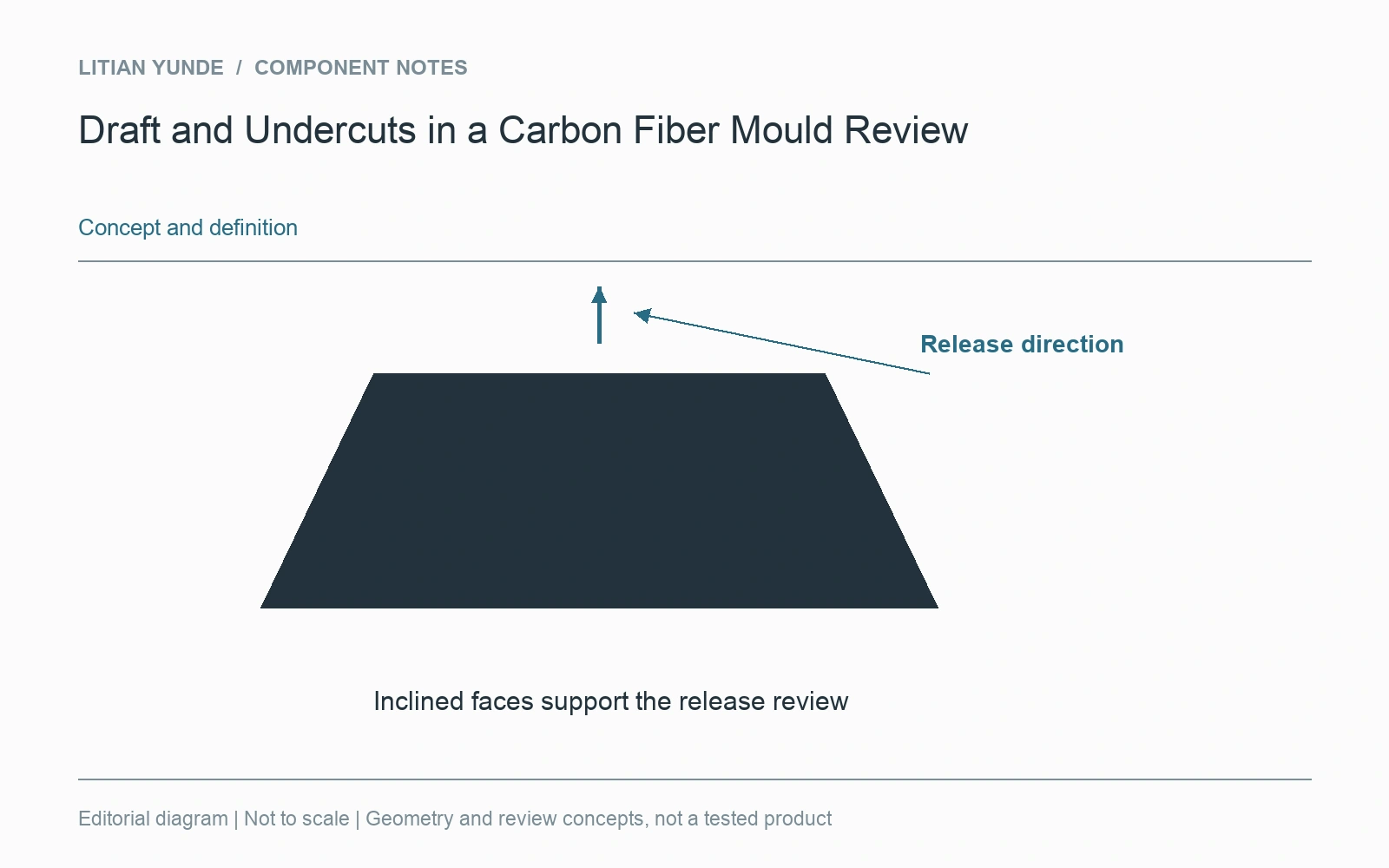
Draft and Undercuts in a Carbon Fiber Mould Review
A finished shape has to leave its manufacturing tool. Draft is a geometric feature related to that release direction; an undercut can obstruct the path. Review the proposed…
Read guide →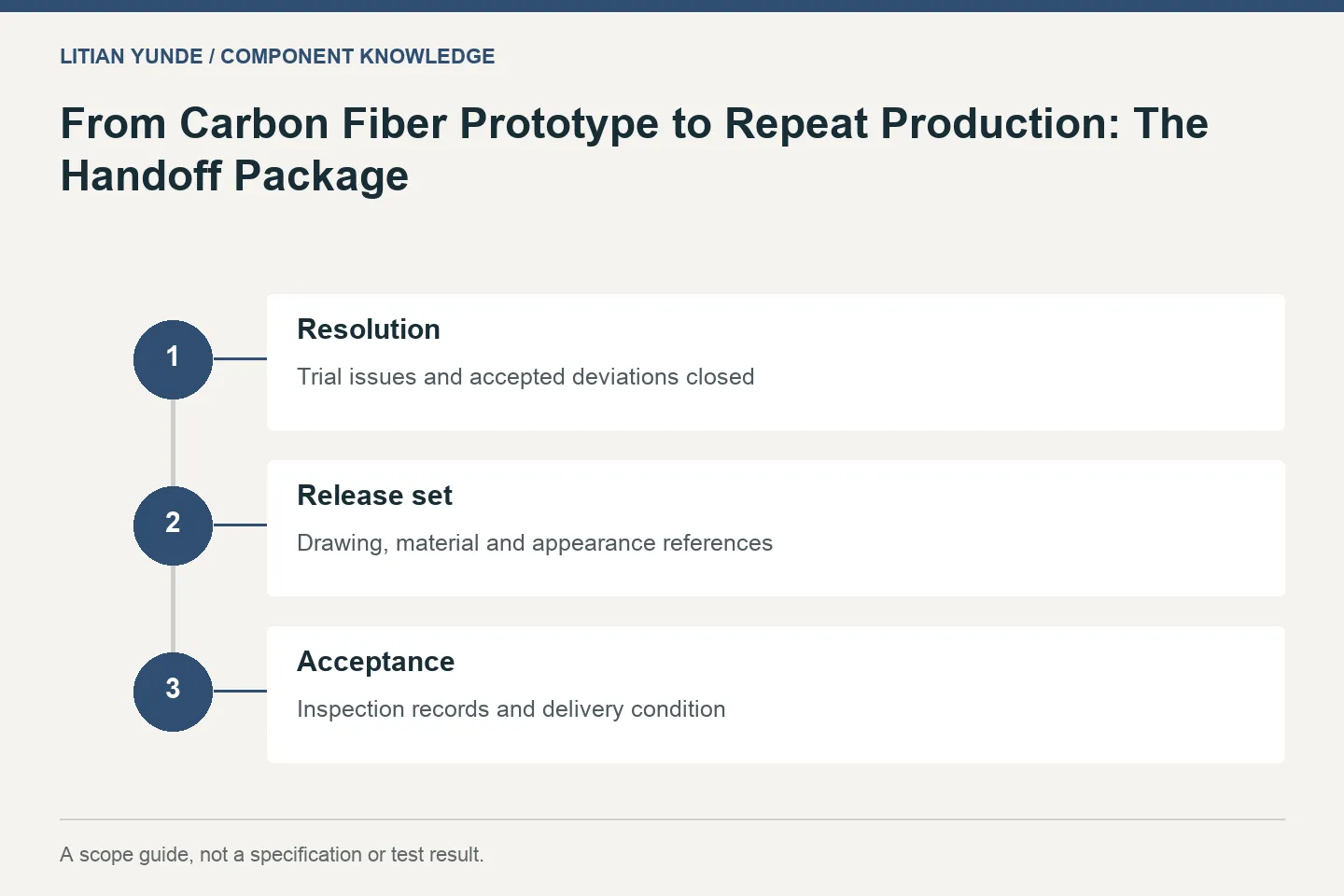
Du prototype en fibre de carbone à la production en série : le dossier de transfert
Un prototype réussi constitue un point de départ pour le lancement en production, et non un livret complet en soi.
Read guide →
Validation d'un échantillon de surface en fibre de carbone pour les commandes ultérieures
Un échantillon de surface ne prend toute sa valeur que s'il est identifié, s'il répond à un objectif convenu et si ses conditions d'observation sont bien définies.
Read guide →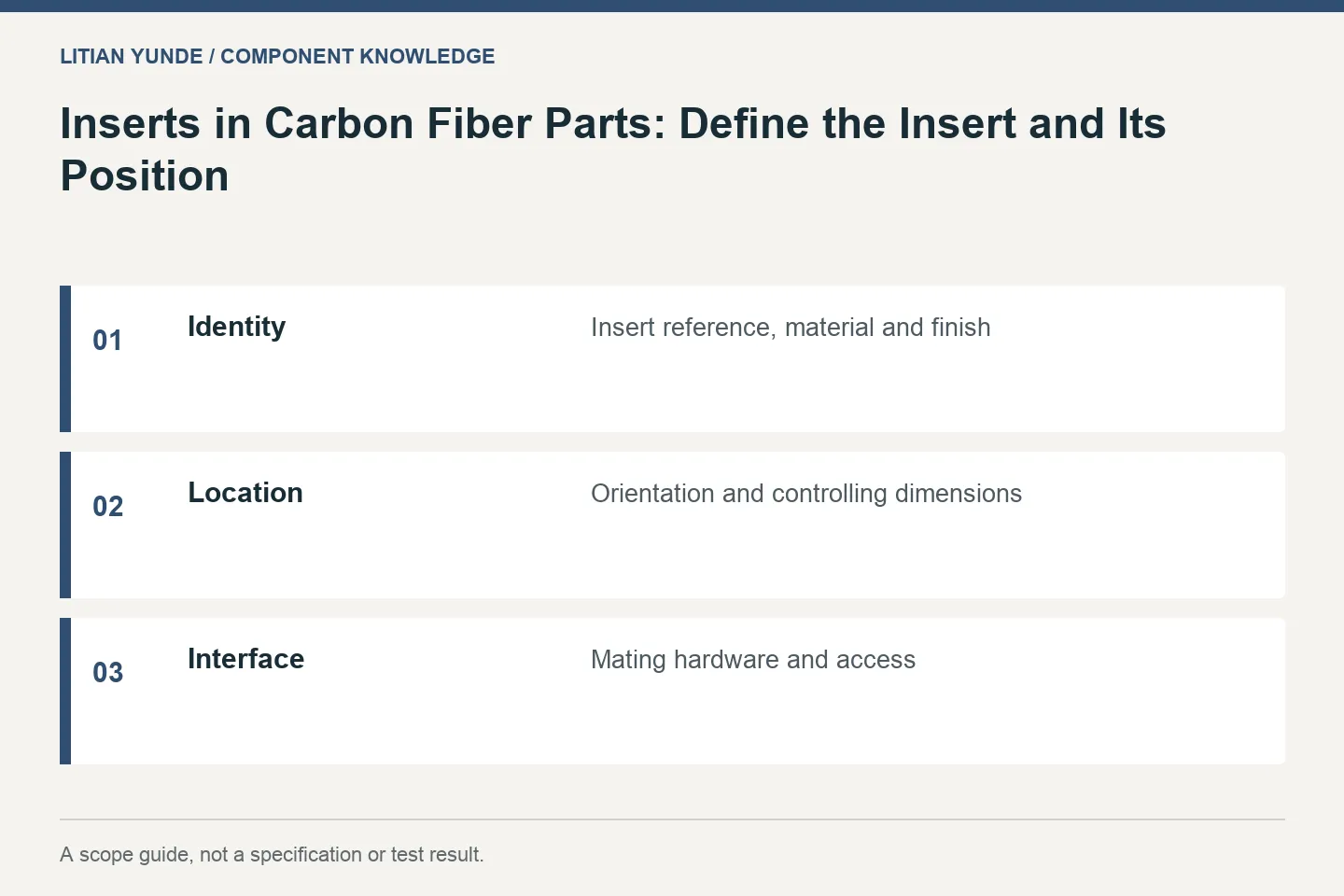
Inserts dans les pièces en fibre de carbone : définir l'insert et sa position
Une spécification d'insert doit identifier l'insert lui-même, sa position, les composants de raccordement associés et les modalités d'acceptation de l'interface une fois assemblée.
Read guide →
Lignes de joint et bords moulés : analyse d'une coque en fibre de carbone sur mesure
A custom shell drawing should identify more than the outside appearance.
Read guide →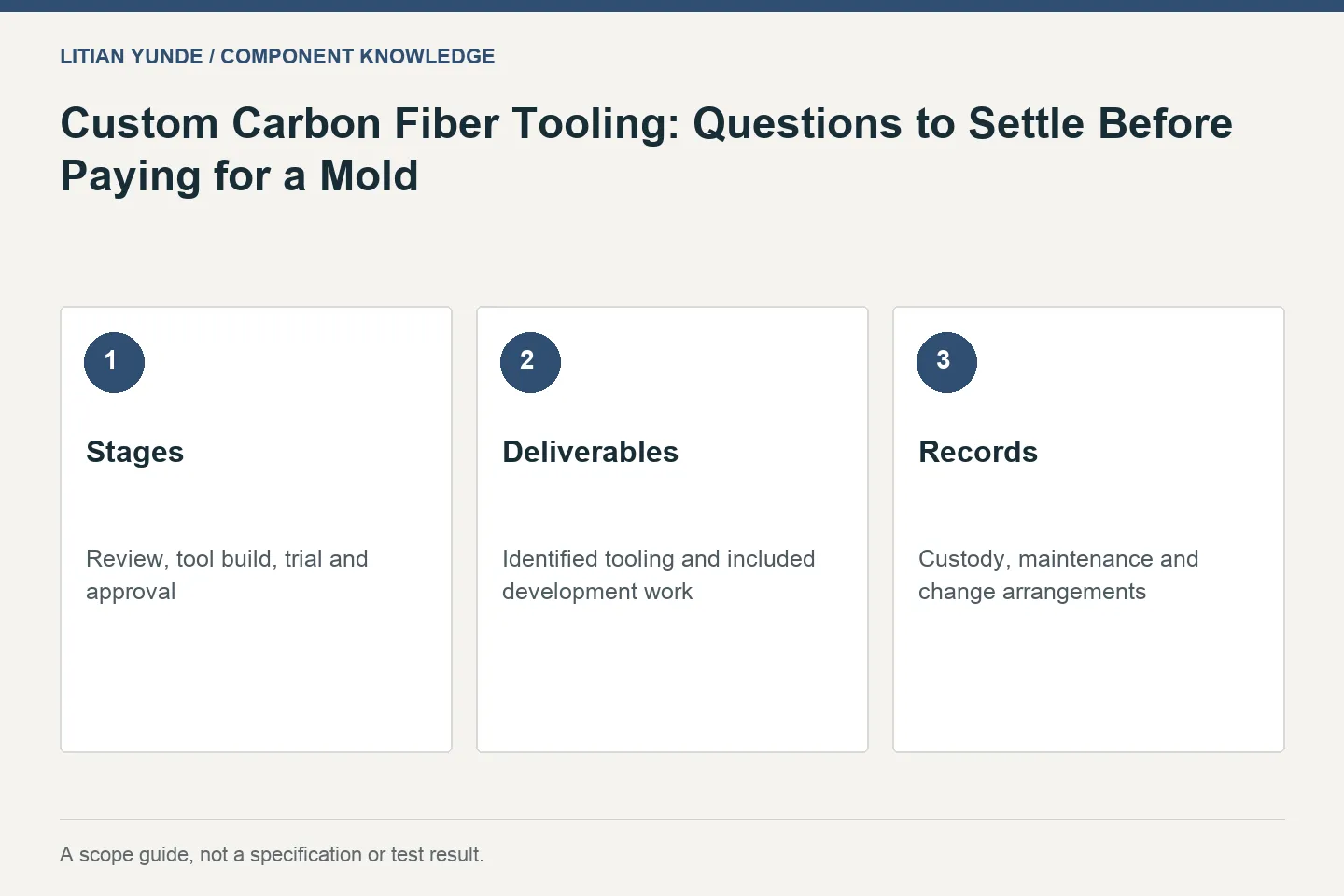
Outillage sur mesure en fibre de carbone : questions à clarifier avant de payer un moule
Before ordering tooling, agree what the tooling deliverable includes and how the approved part geometry will be controlled.
Read guide →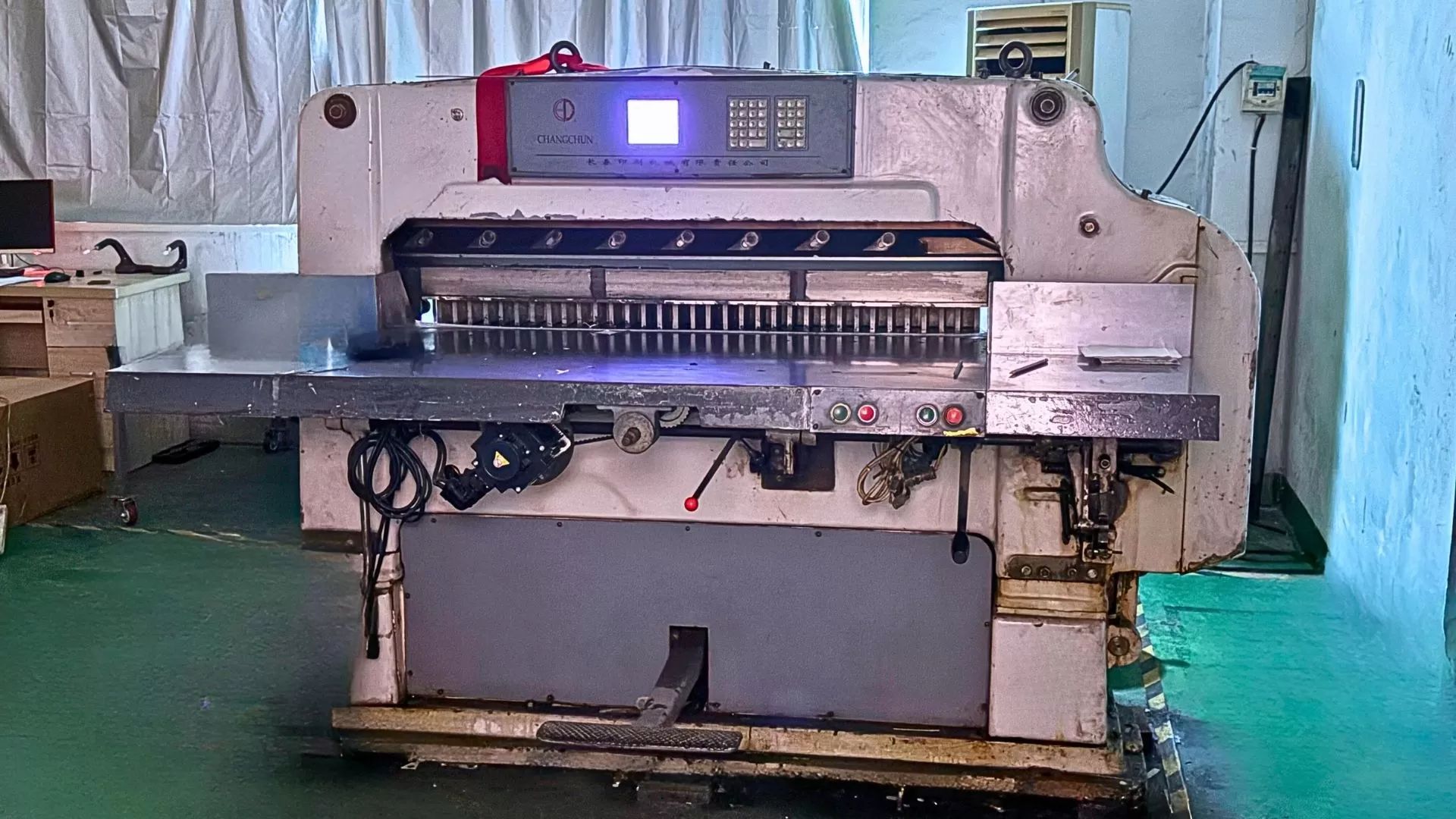
Carbon Fiber Scrap: Separate Dry Fabric, Prepreg and Cured Parts
Composite scrap should be described by its actual form. Dry reinforcement offcuts, uncured prepreg and cured laminate are different waste streams, and a recovery route that…
Read guide →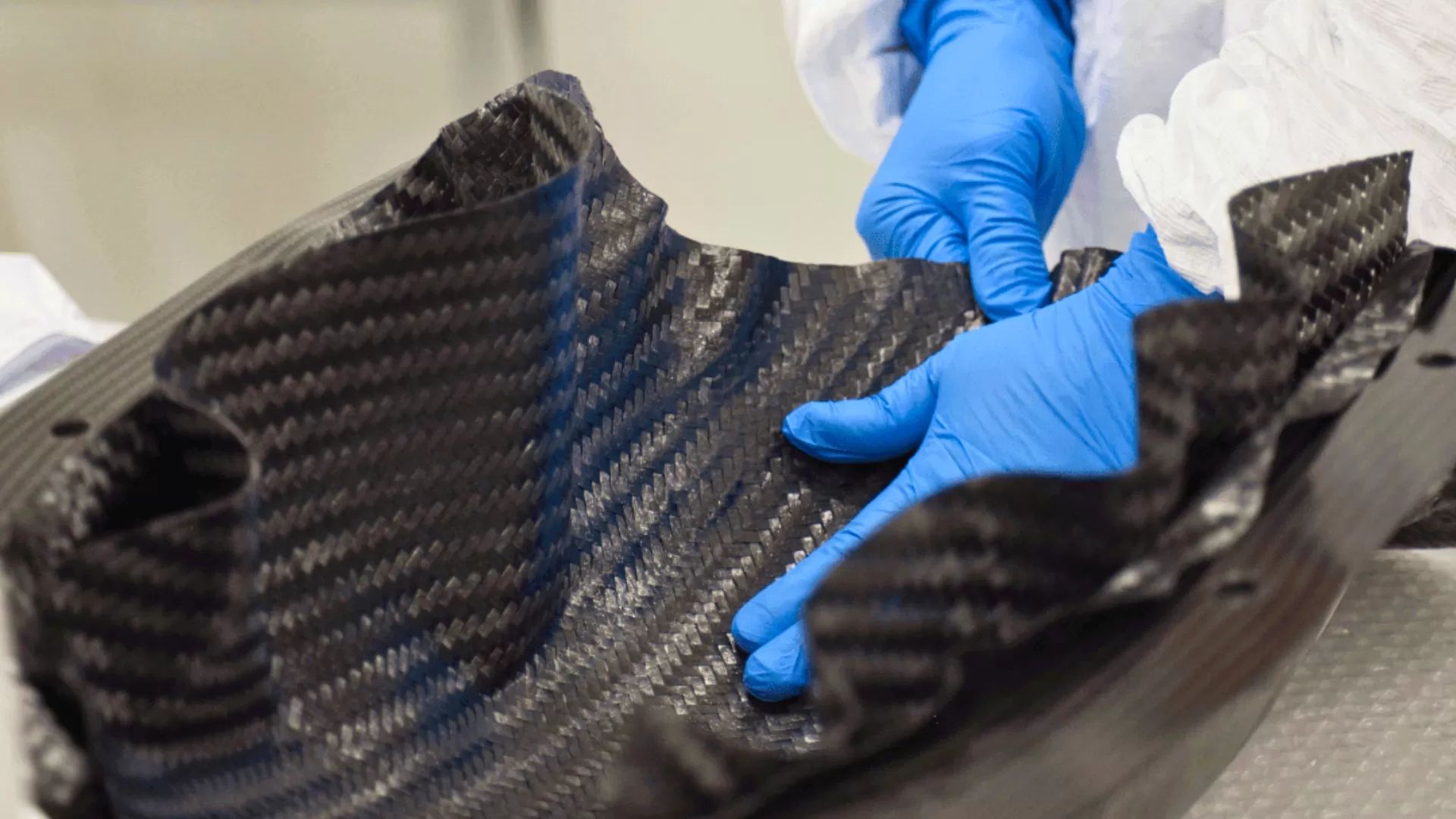
Evaluating a New Carbon Fiber Process: Start with a Comparison Plan
A new carbon fiber process is worth evaluating when it solves a defined production or part problem. Start with a comparison plan rather than a broad promise of innovation.
Read guide →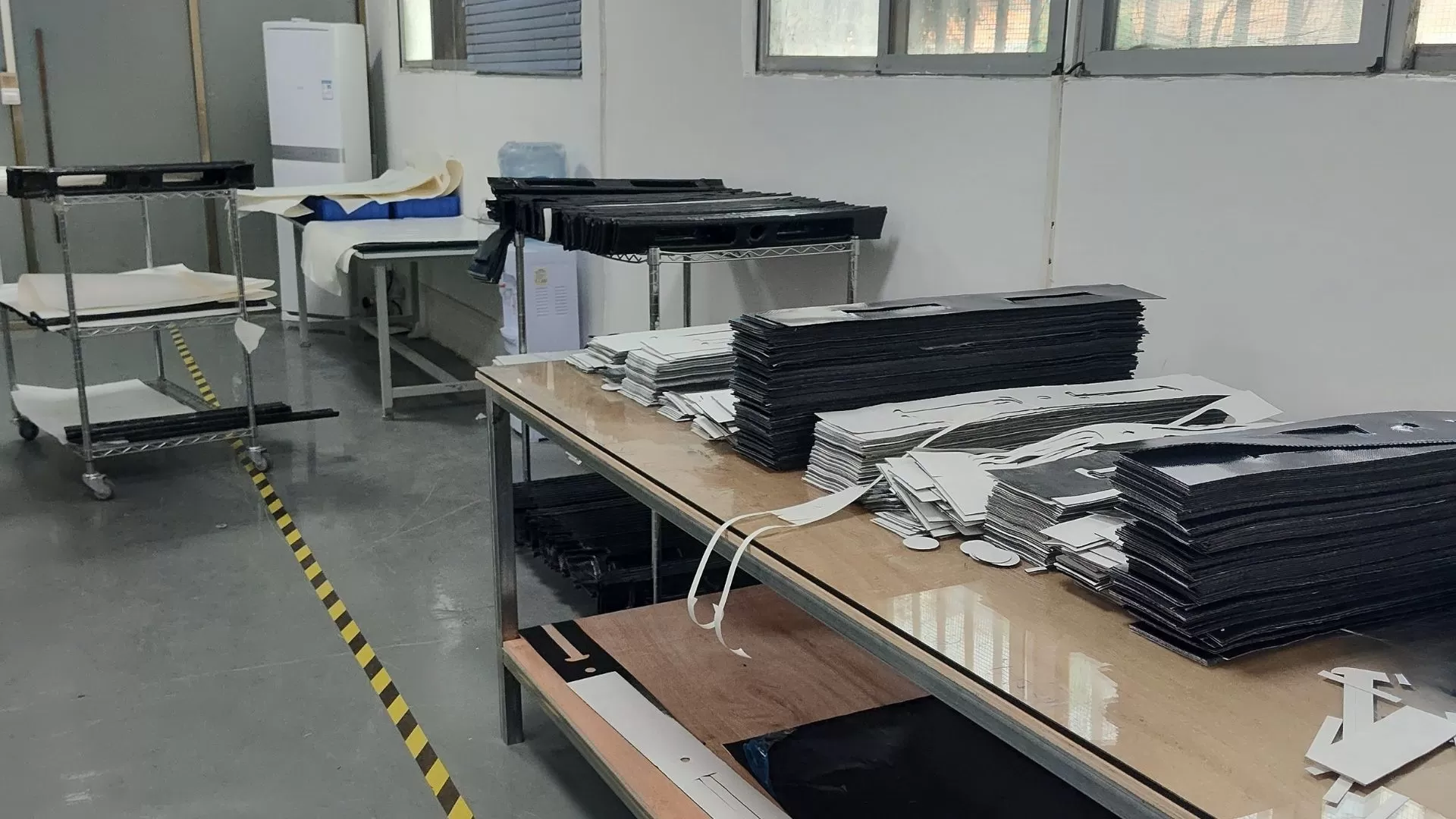
Déchets issus de la fabrication de composites : un rendement record avant de faire valoir ses droits
A manufacturing-waste claim needs a defined input and output record. Measure the actual material stream before describing a process as low-waste or comparing it with another…
Read guide →
Carbon Fiber Automotive Prototypes: Set a Useful Sample Review
A prototype review should answer specific questions about the proposed automotive part. Decide those questions before ordering the sample so the result leads to a clear next…
Read guide →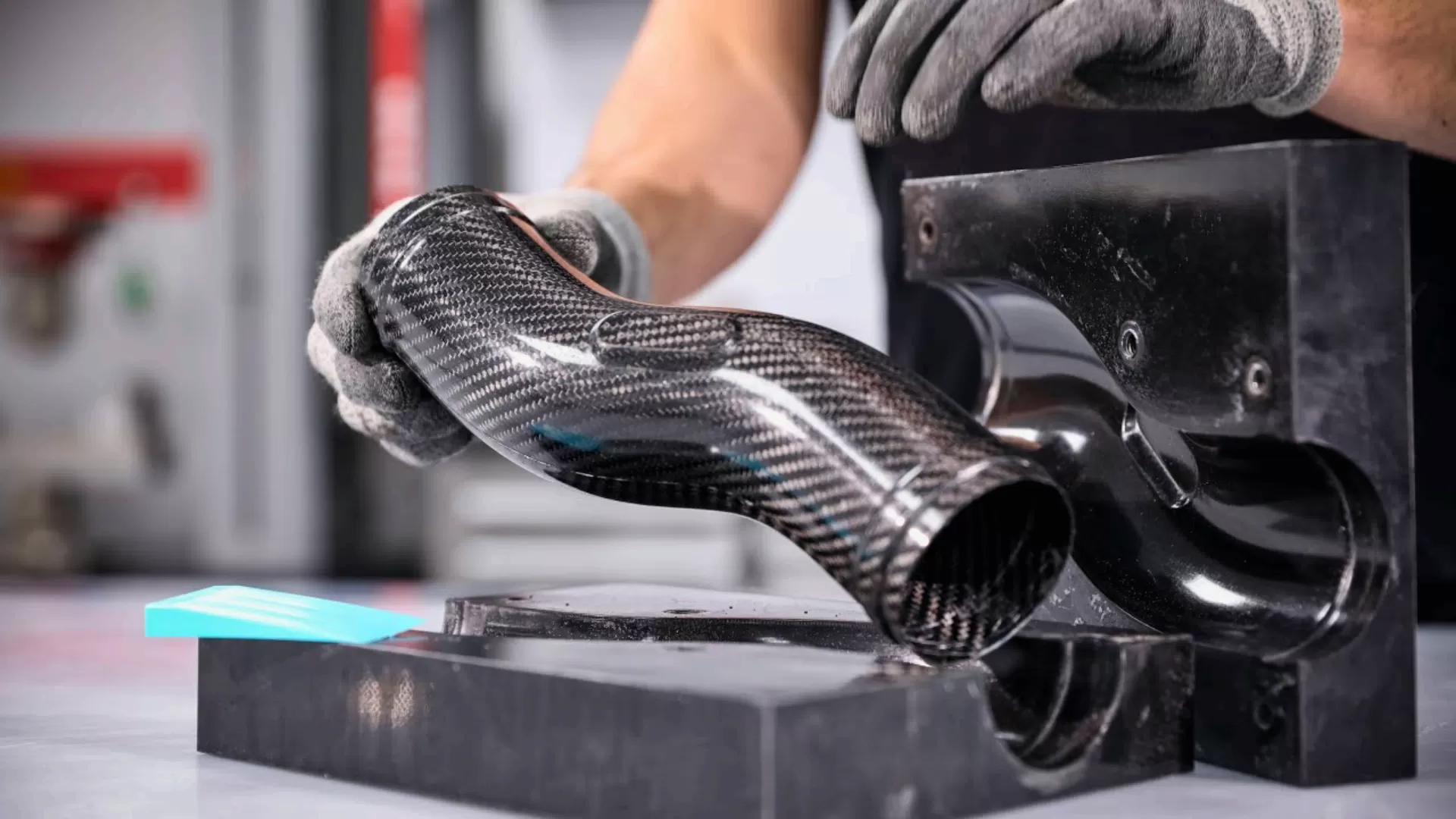
Making Carbon Fiber Bicycle Frames: What a Process Review Should Cover
A bicycle-frame manufacturing review should connect the drawing, material specification and process records. Photographs of moulding or finishing can explain a process stage,…
Read guide →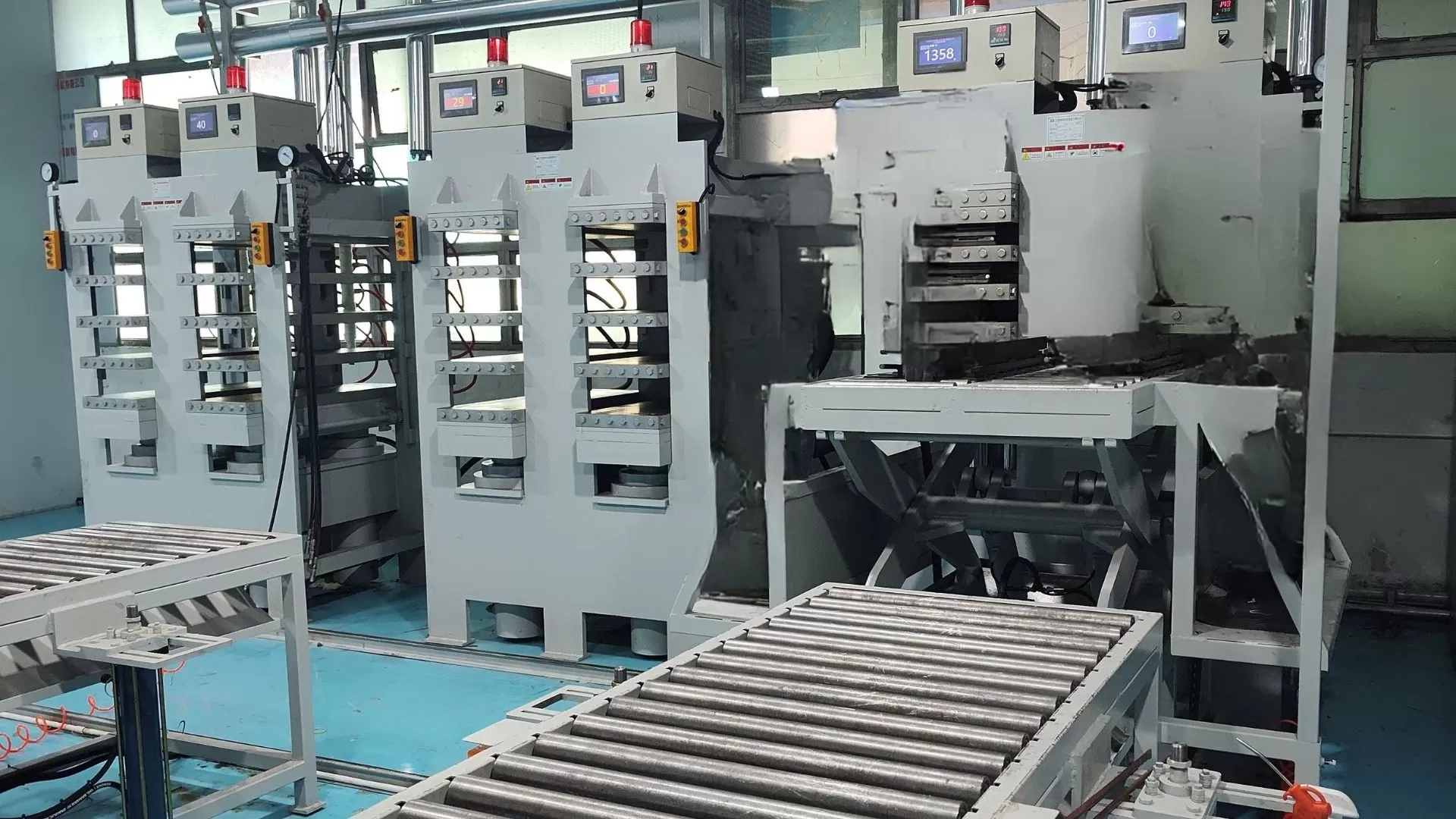
Carbon Fiber Manufacturing Routes: Ask Which Process Is Proposed
A carbon fiber manufacturing enquiry should name the proposed process and the supplied part, rather than assuming that all carbon components are made in the same way. The…
Read guide →Inspection et essais
Inspection and test methods for composite parts: method coverage, specimen condition, reference standards, limitations and reporting of actual results.

CMM Inspection of Carbon Fiber Parts: Check Stylus Access Before Promising a Result
A feature shown on the drawing may be difficult to reach with the proposed CMM stylus. Review the contact point, approach route and surrounding geometry before agreeing the…
Read guide →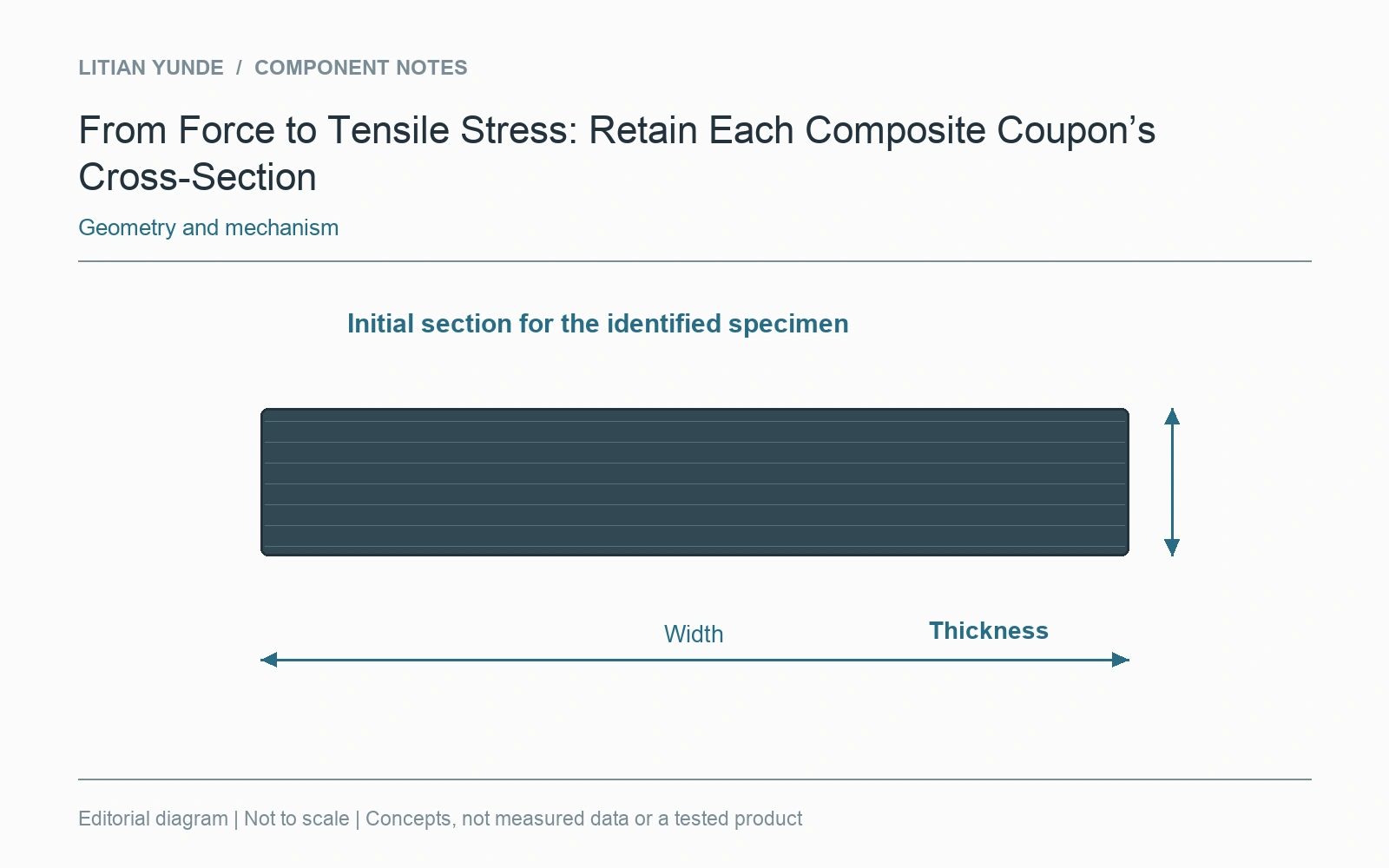
From Force to Tensile Stress: Retain Each Composite Coupon’s Cross-Section
Force and tensile stress are different reported quantities. Engineering tensile stress uses the applied force and the initial cross-sectional area defined for the specimen.…
Read guide →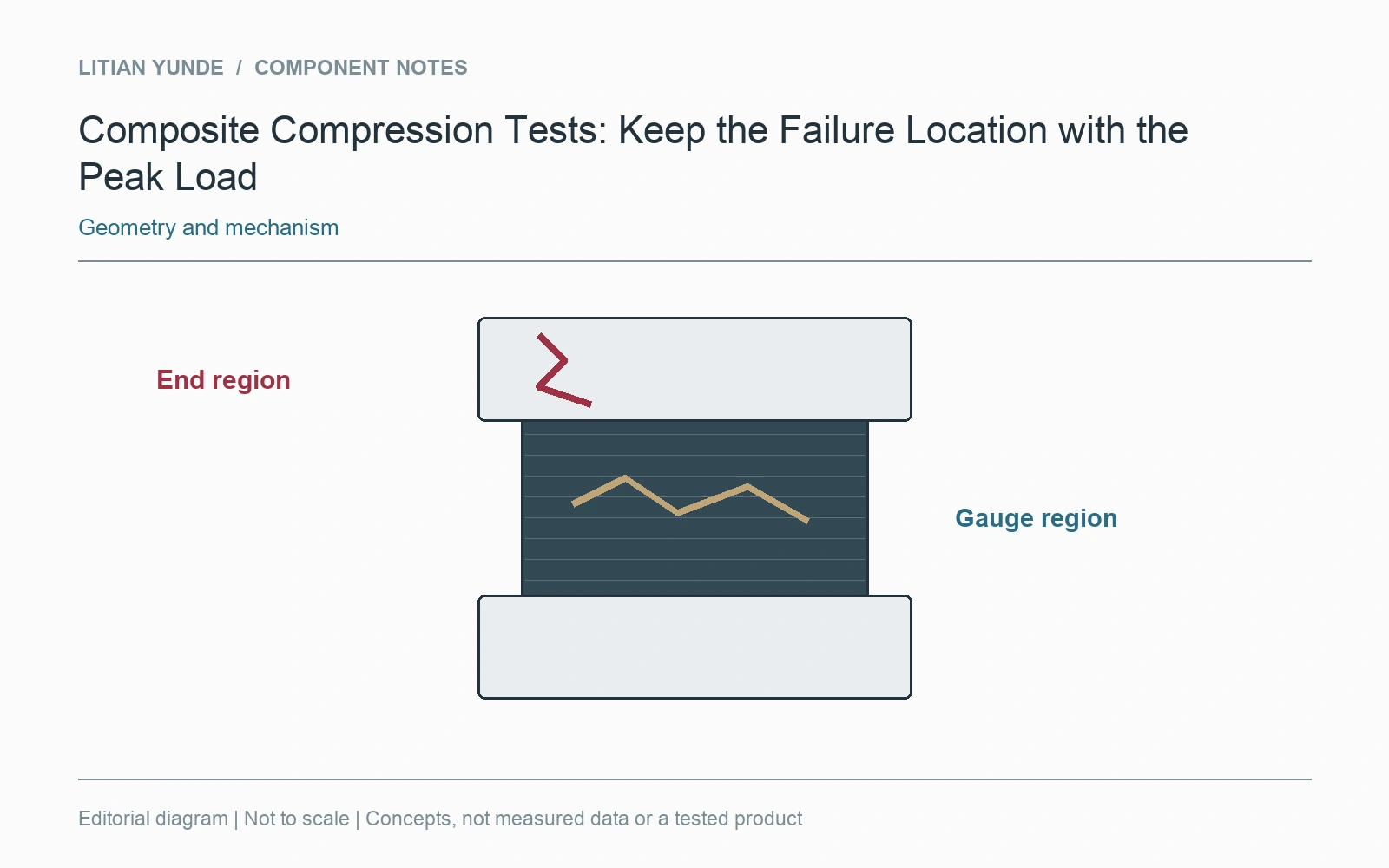
Composite Compression Tests: Keep the Failure Location with the Peak Load
A peak compression load needs the specimen’s failure location and the test-validity review. An end crush, a gauge-section failure and a buckling event are different…
Read guide →
Poisson’s Ratio for a Carbon Laminate: State the Loaded and Transverse Directions
A laminate Poisson’s ratio needs directional labels. Identify the direction being loaded and the transverse strain being measured. Do not copy a single value from a fiber…
Read guide →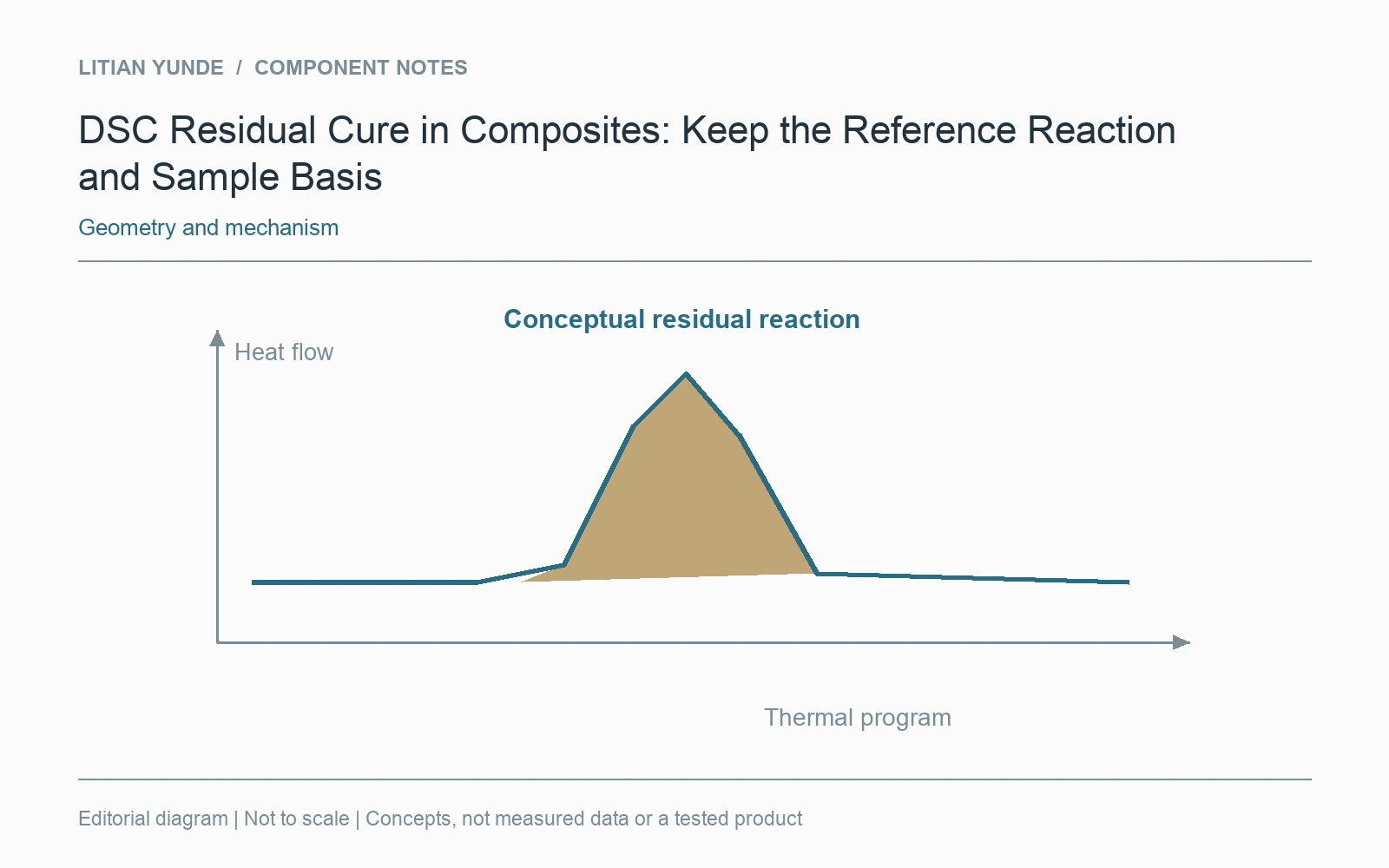
DSC Residual Cure in Composites: Keep the Reference Reaction and Sample Basis
A residual-cure result from differential scanning calorimetry needs the sample identity, thermal program and calculation basis. A small remaining exotherm does not explain…
Read guide →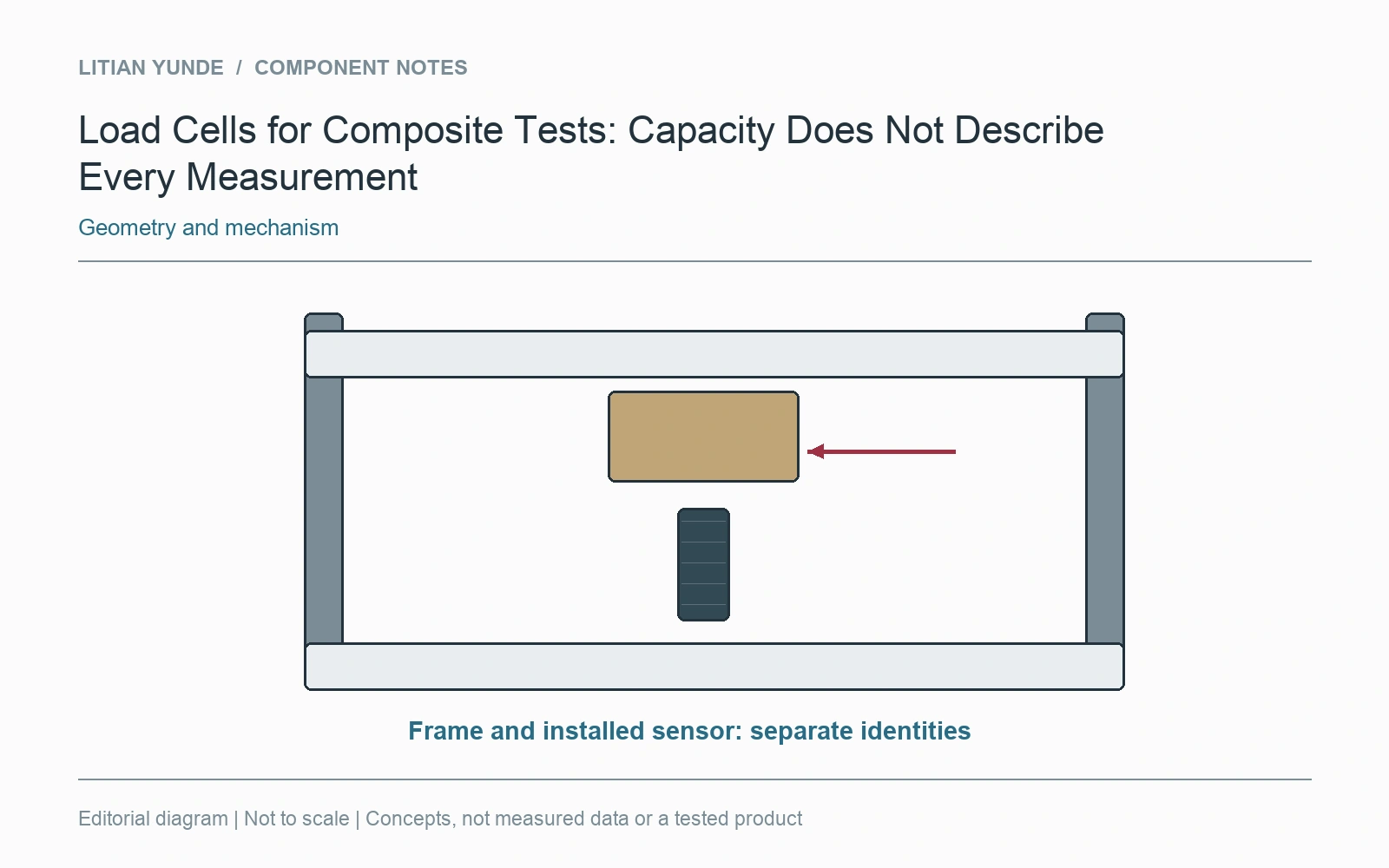
Load Cells for Composite Tests: Capacity Does Not Describe Every Measurement
A load cell’s rated capacity is not the complete specification of the force measurement used in a composite test. Keep the identified sensor, applicable calibrated range and…
Read guide →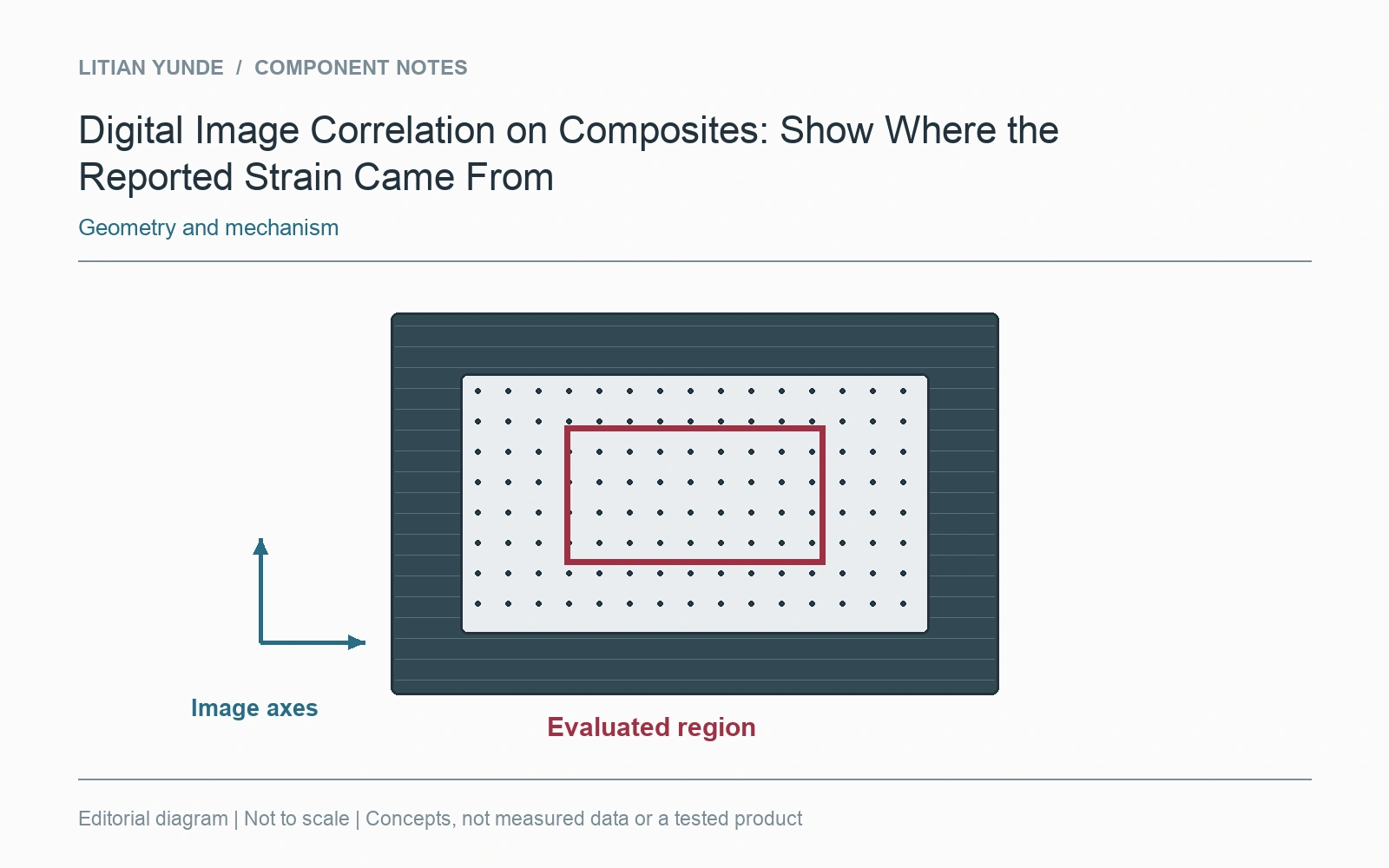
Digital Image Correlation on Composites: Show Where the Reported Strain Came From
A strain value from digital image correlation needs its direction and evaluated region. A coloured field does not identify the region used for a reported average. Keep the…
Read guide →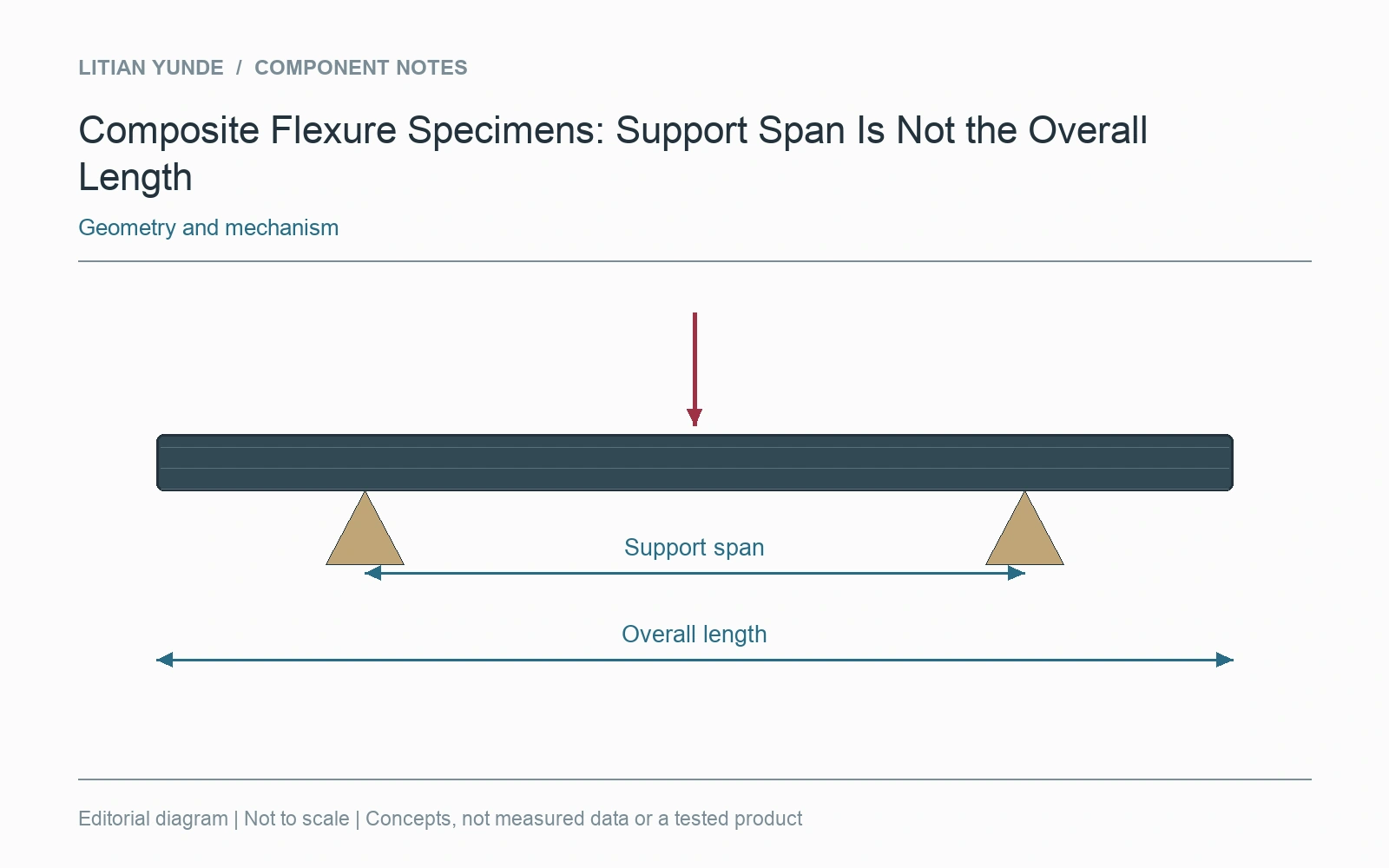
Composite Flexure Specimens: Support Span Is Not the Overall Length
For a composite bending test, record the support span separately from the specimen’s overall length. The overhang beyond the supports does not belong in the support-span…
Read guide →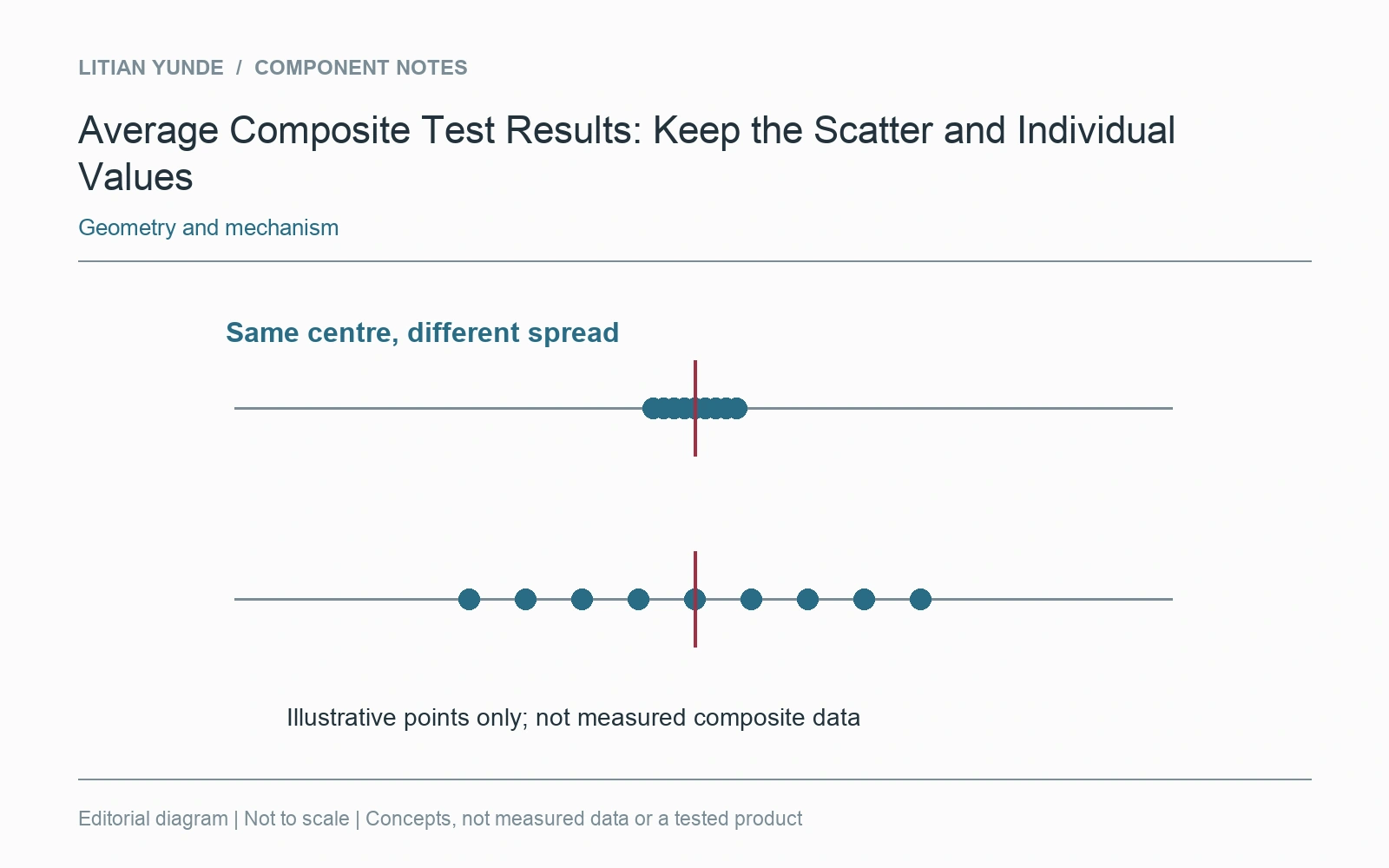
Average Composite Test Results: Keep the Scatter and Individual Values
An average summarizes a set of results; it does not show their spread or identify every specimen. Keep the number of observations, individual values and a suitable…
Read guide →
Lap-Shear Data for a Carbon Fiber Bond: Which Joint Was Tested?
A lap-shear result belongs to the tested adhesive joint, including its adherends and preparation. It is not a stand-alone capacity for every joint using the same adhesive.…
Read guide →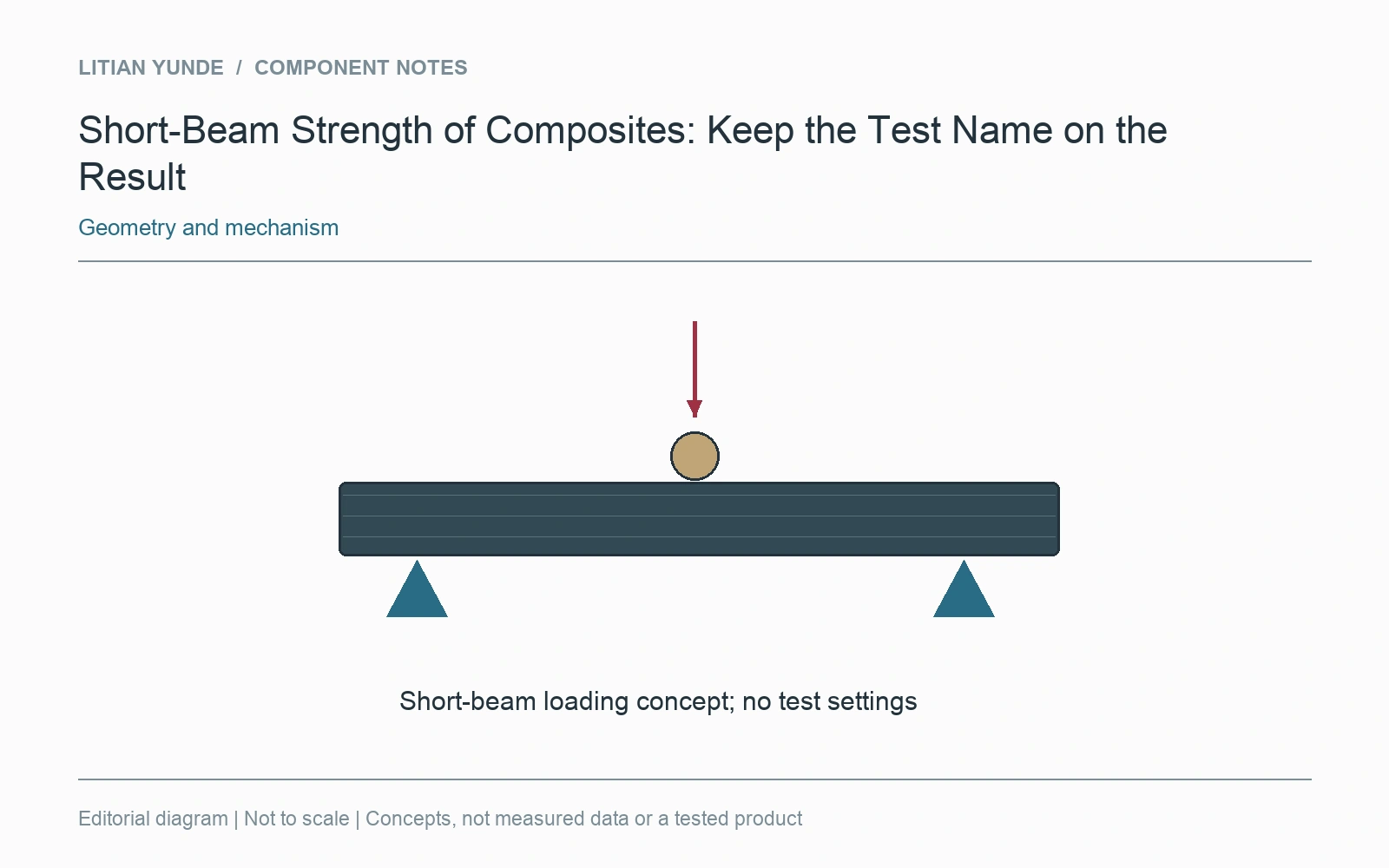
Short-Beam Strength of Composites: Keep the Test Name on the Result
A short-beam result should keep its test-method and specimen labels. It is not a general shear modulus or a universal material strength. The loading arrangement, laminate…
Read guide →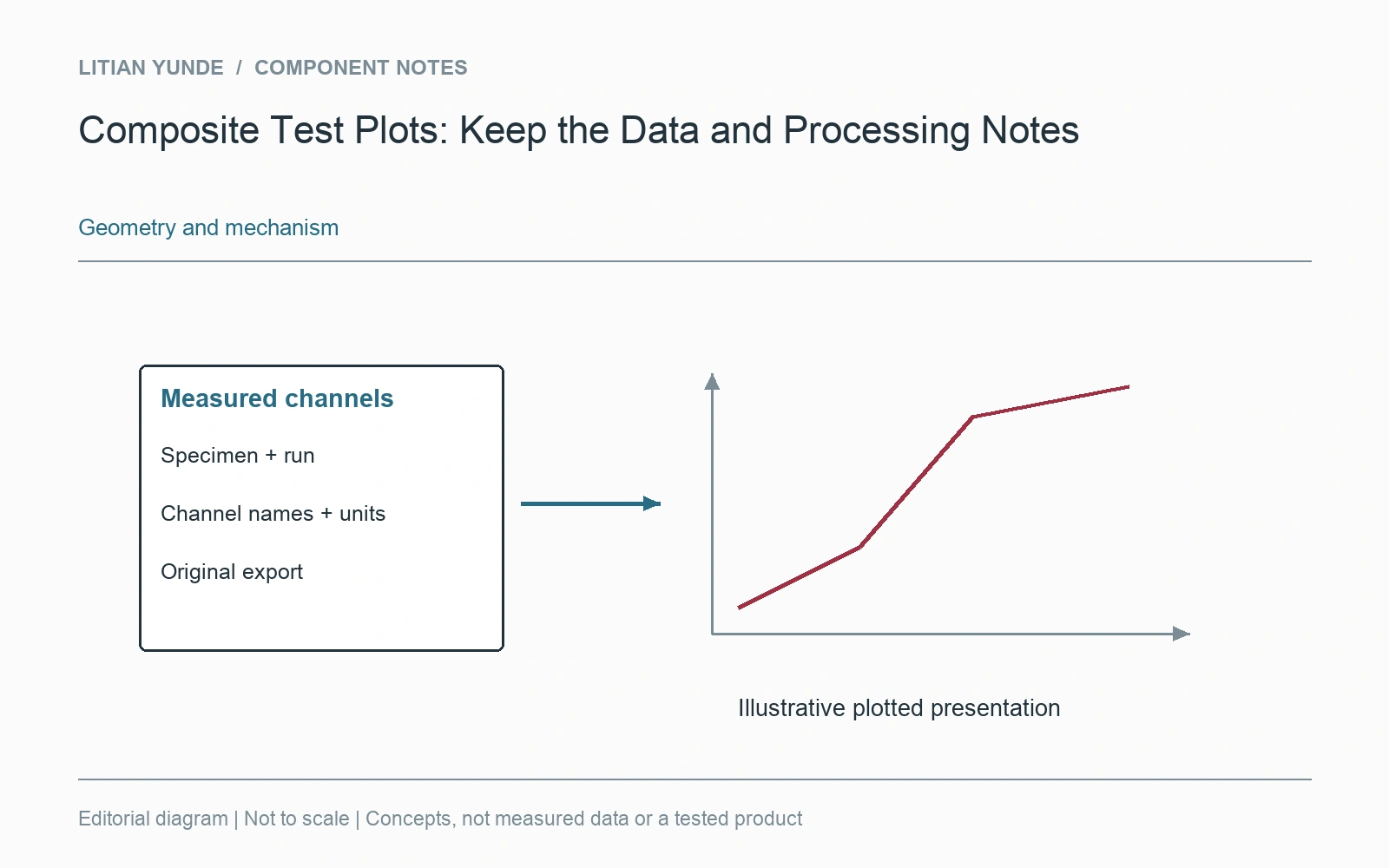
Composite Test Plots: Keep the Data and Processing Notes
A plotted curve is a presentation of data. If a composite test record must support later review, agree which data file and processing notes accompany the plot. A screenshot…
Read guide →
Composite Test Speed: Crosshead Motion Is Not a Strain Measurement
Crosshead displacement and specimen strain are different reported quantities. A test speed setting does not, on its own, describe how strain was measured in a composite…
Read guide →
A Composite Fatigue Result Needs More Than a Cycle Count
A cycle count is incomplete without the applied loading and test conditions. For a carbon composite fatigue result, retain the loading mode, stress or load range, stress…
Read guide →
Zero Setting Is Not the Same as Instrument Calibration
Setting an instrument to a reference indication is a different task from calibration of its measurement behaviour. A zero display alone does not establish suitability for…
Read guide →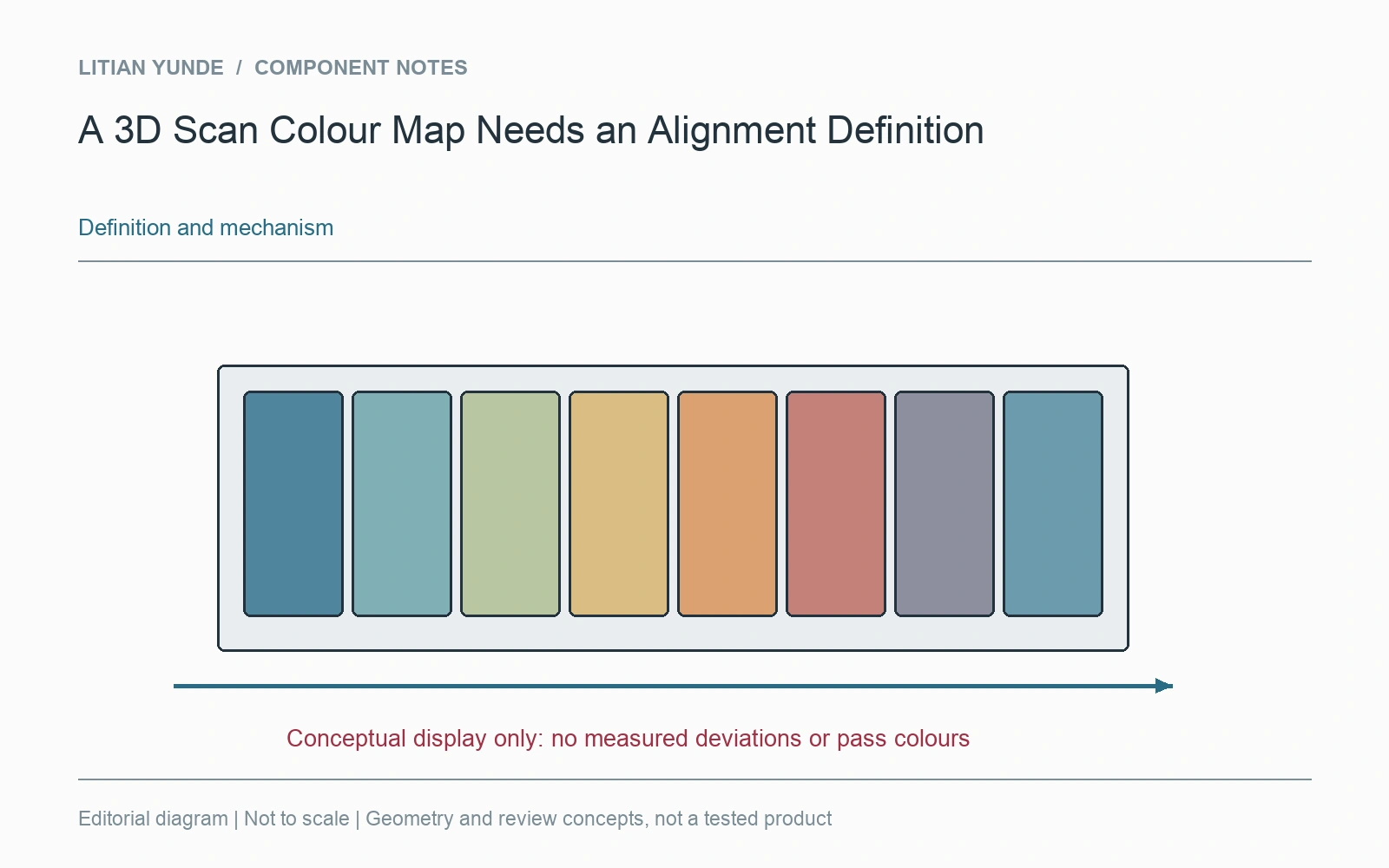
A 3D Scan Colour Map Needs an Alignment Definition
A colour comparison between a scan and nominal CAD geometry needs an identified alignment and evaluation rule. The colours show a result within that setup; they are not…
Read guide →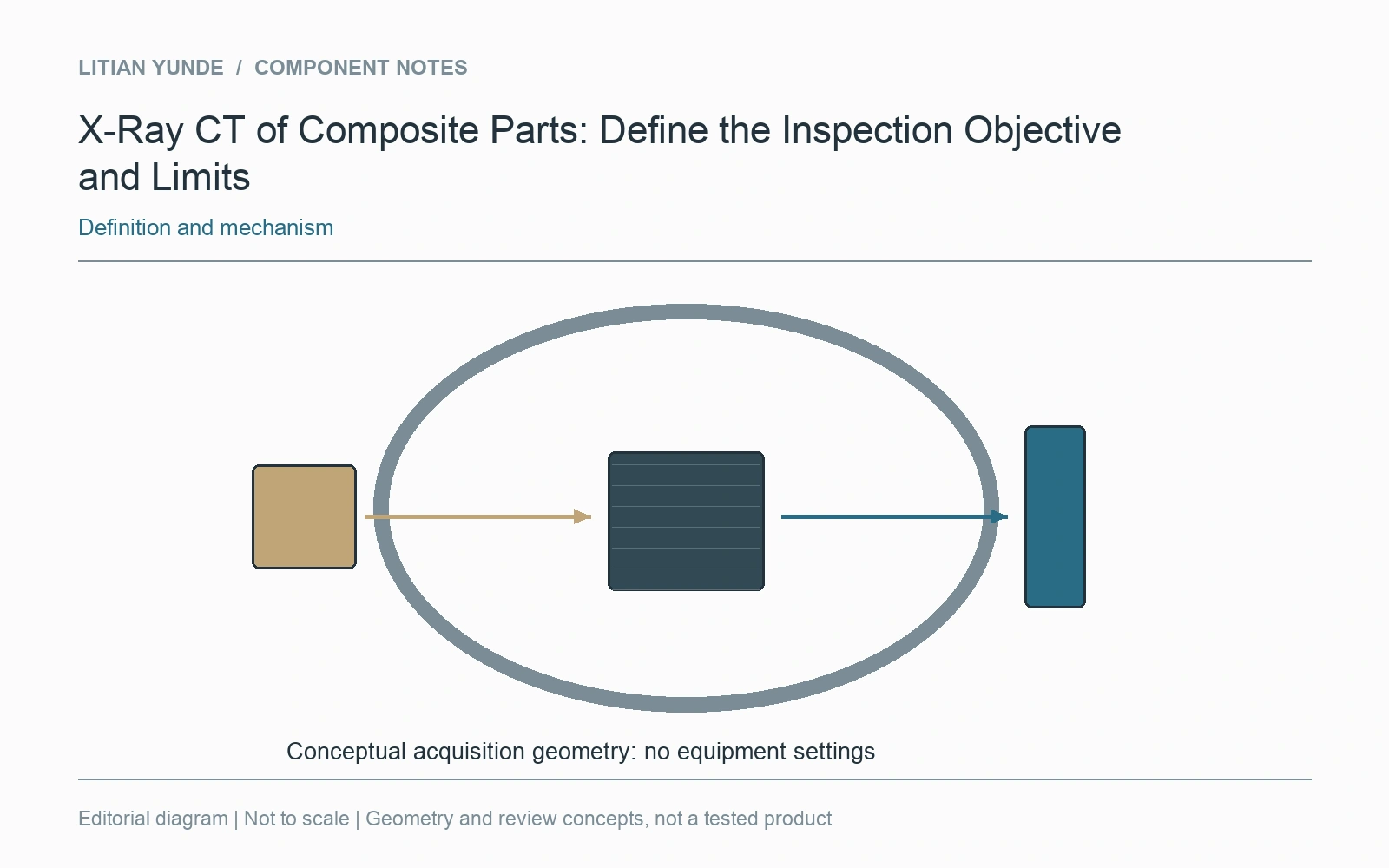
X-Ray CT of Composite Parts: Define the Inspection Objective and Limits
X-ray computed tomography can reconstruct three-dimensional information from radiographic data, but the usable inspection result depends on the component and setup. Specify…
Read guide →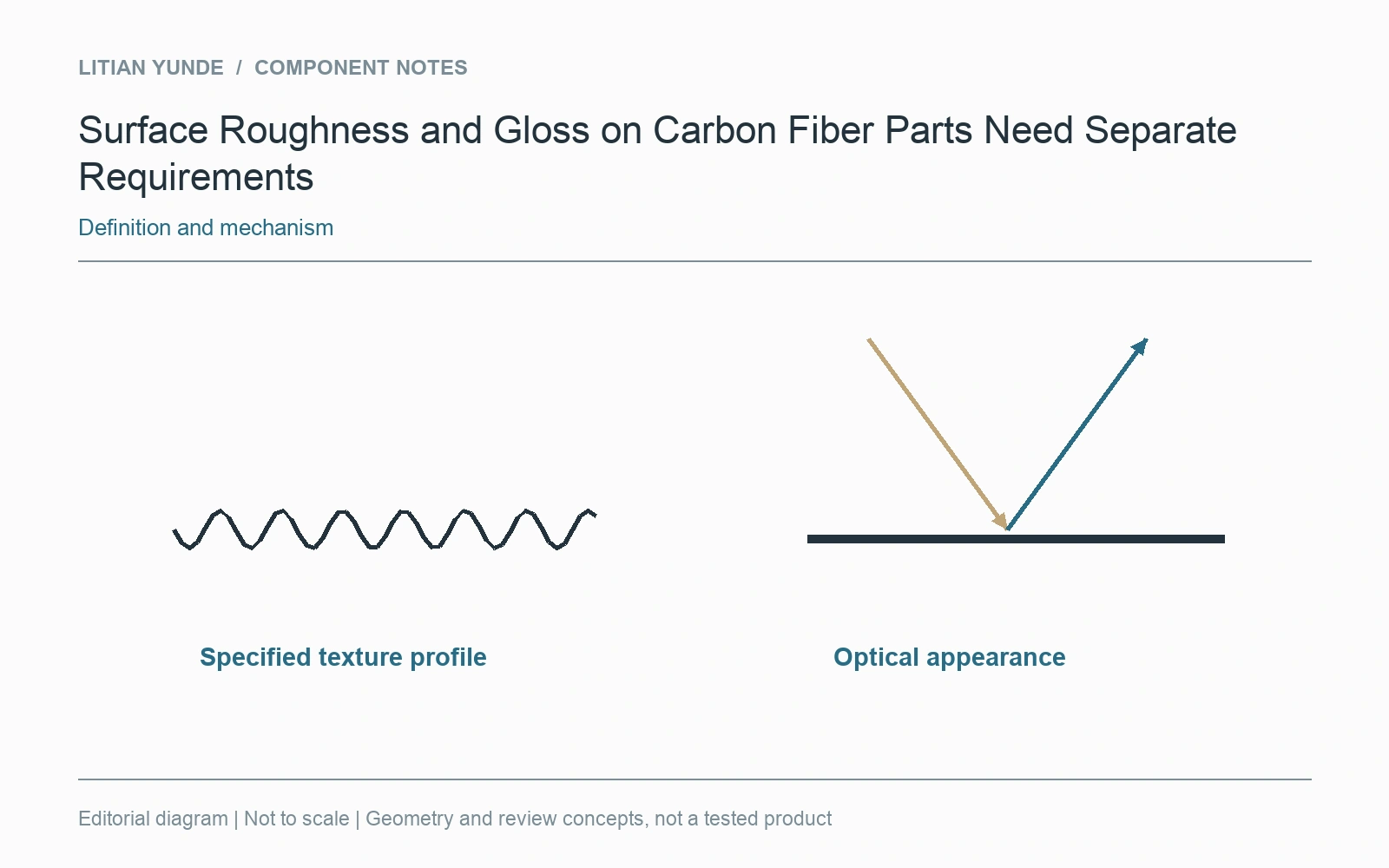
Surface Roughness and Gloss on Carbon Fiber Parts Need Separate Requirements
Gloss describes an optical appearance characteristic; a roughness measurement describes specified surface texture information. Neither should be used as a substitute for the…
Read guide →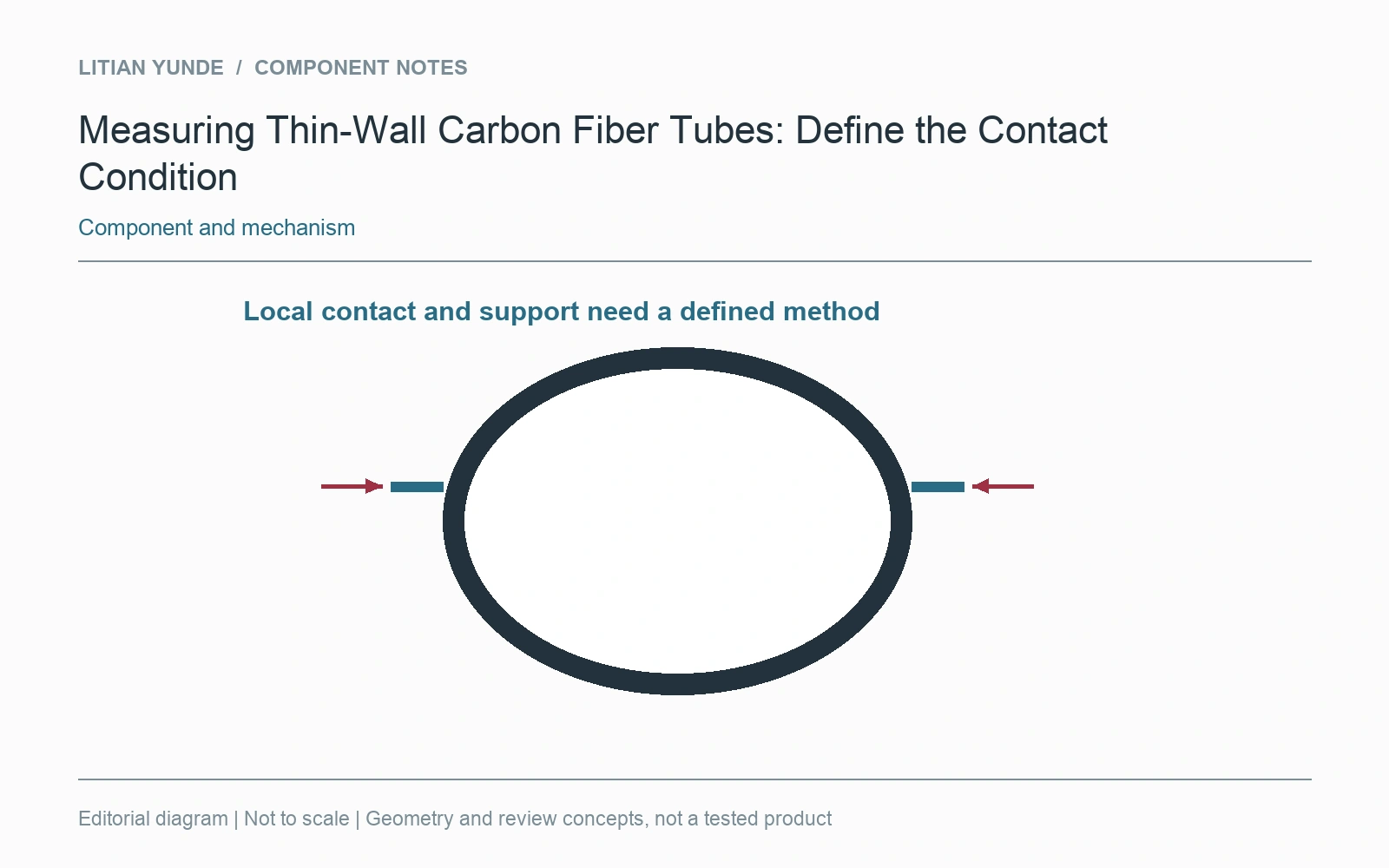
Measuring Thin-Wall Carbon Fiber Tubes: Define the Contact Condition
A thin-wall tube can be sensitive to how it is supported and contacted during measurement. Define the measured feature and the intended part condition before comparing…
Read guide →
Measurement Uncertainty and Drawing Tolerance Have Different Jobs
A drawing tolerance defines an allowed requirement. Measurement uncertainty describes the dispersion associated with values attributed to the measured quantity. They should…
Read guide →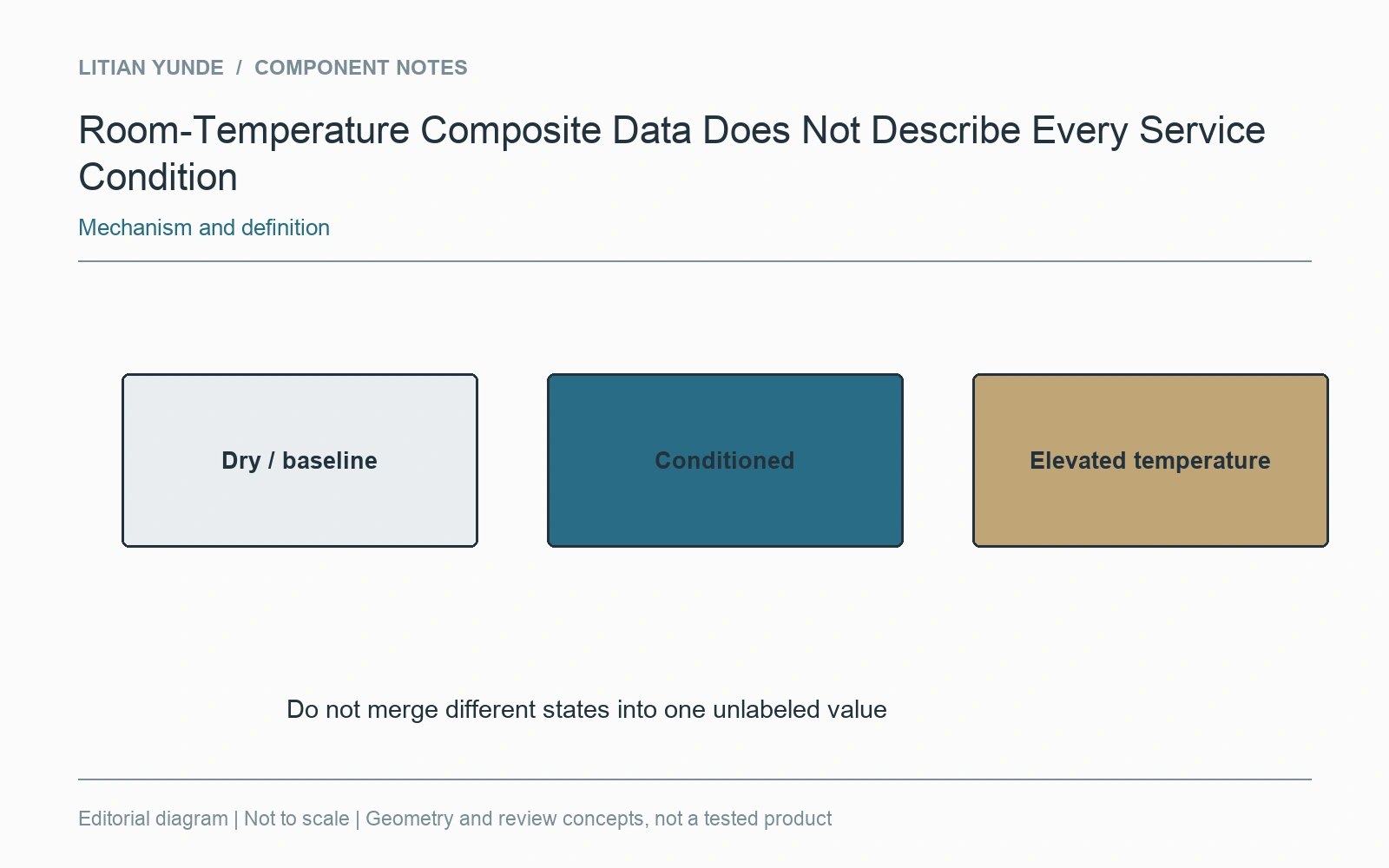
Room-Temperature Composite Data Does Not Describe Every Service Condition
A material result measured in one condition should retain that condition when it is reused. Temperature, moisture history and specimen state can matter to a composite…
Read guide →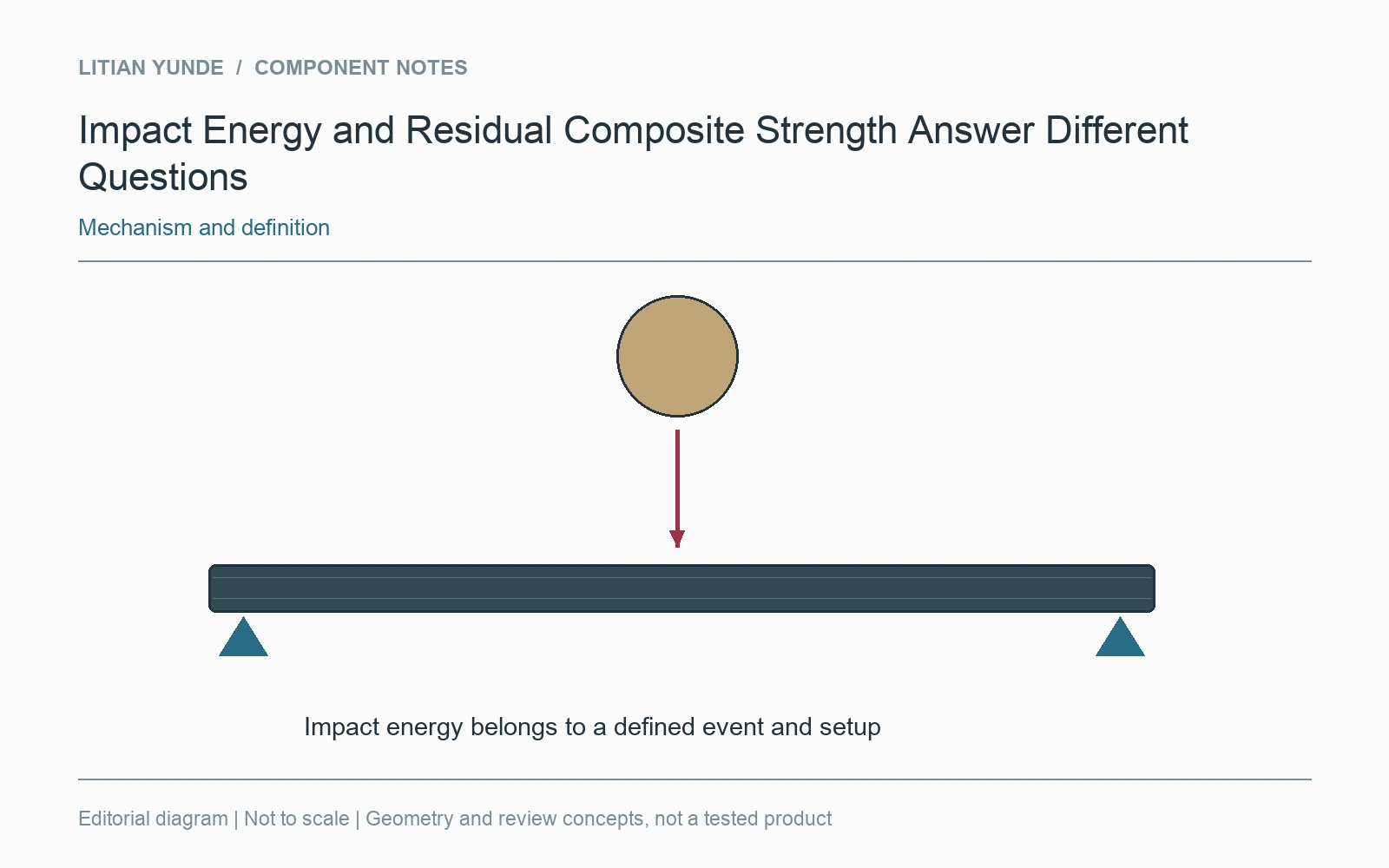
Impact Energy and Residual Composite Strength Answer Different Questions
An impact event and a later strength test describe different stages of an evaluation. Recording the impact energy does not, by itself, state how much load the damaged…
Read guide →
Three-Point or Four-Point Bending? Name the Composite Test
Three-point and four-point bending use different loading arrangements. A flexural result should identify the method, span, specimen and procedure. Keep those details when…
Read guide →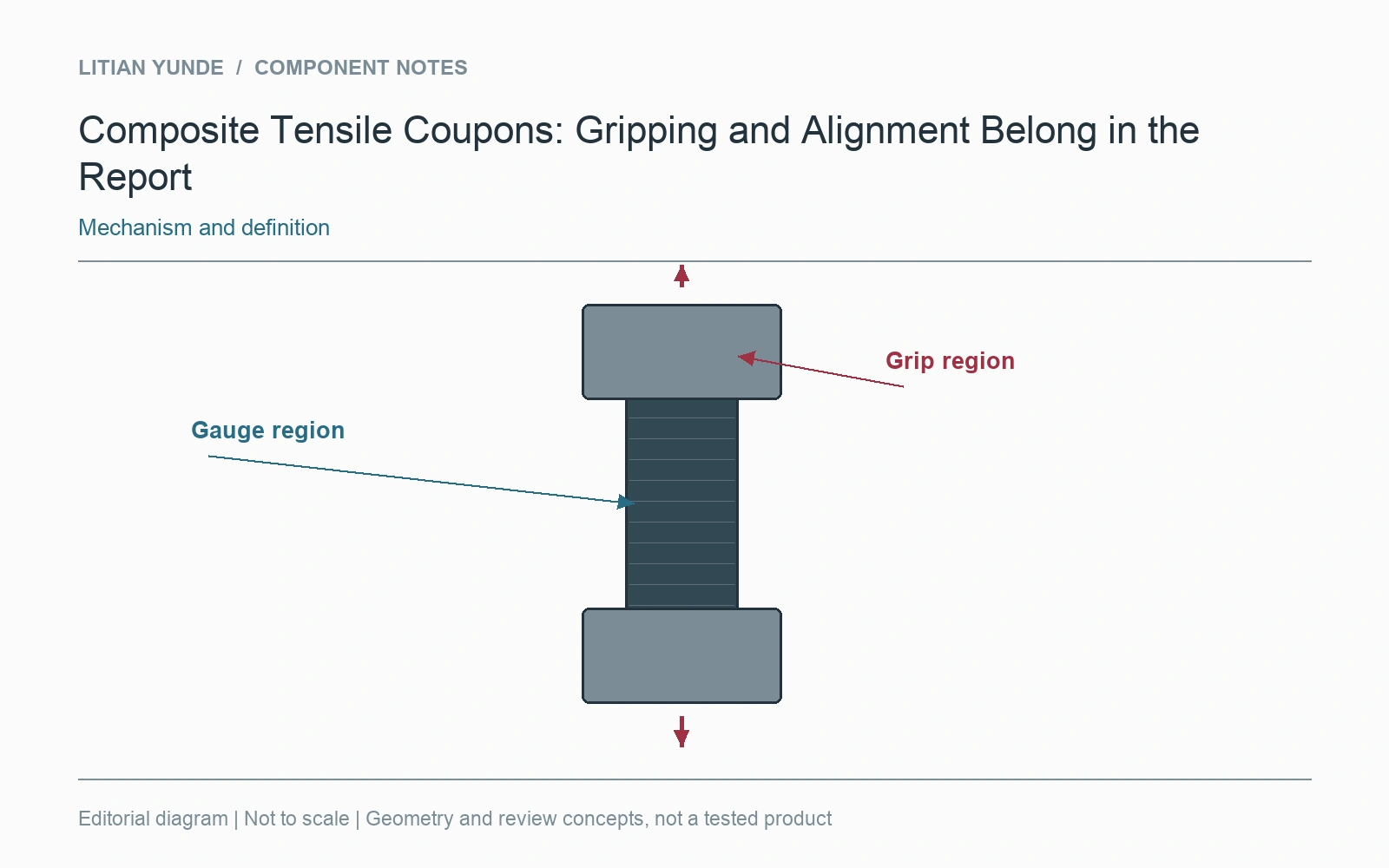
Composite Tensile Coupons: Gripping and Alignment Belong in the Report
A tensile coupon test needs a controlled loading and measurement arrangement. Grip configuration, alignment and the observed failure location help explain the result. They…
Read guide →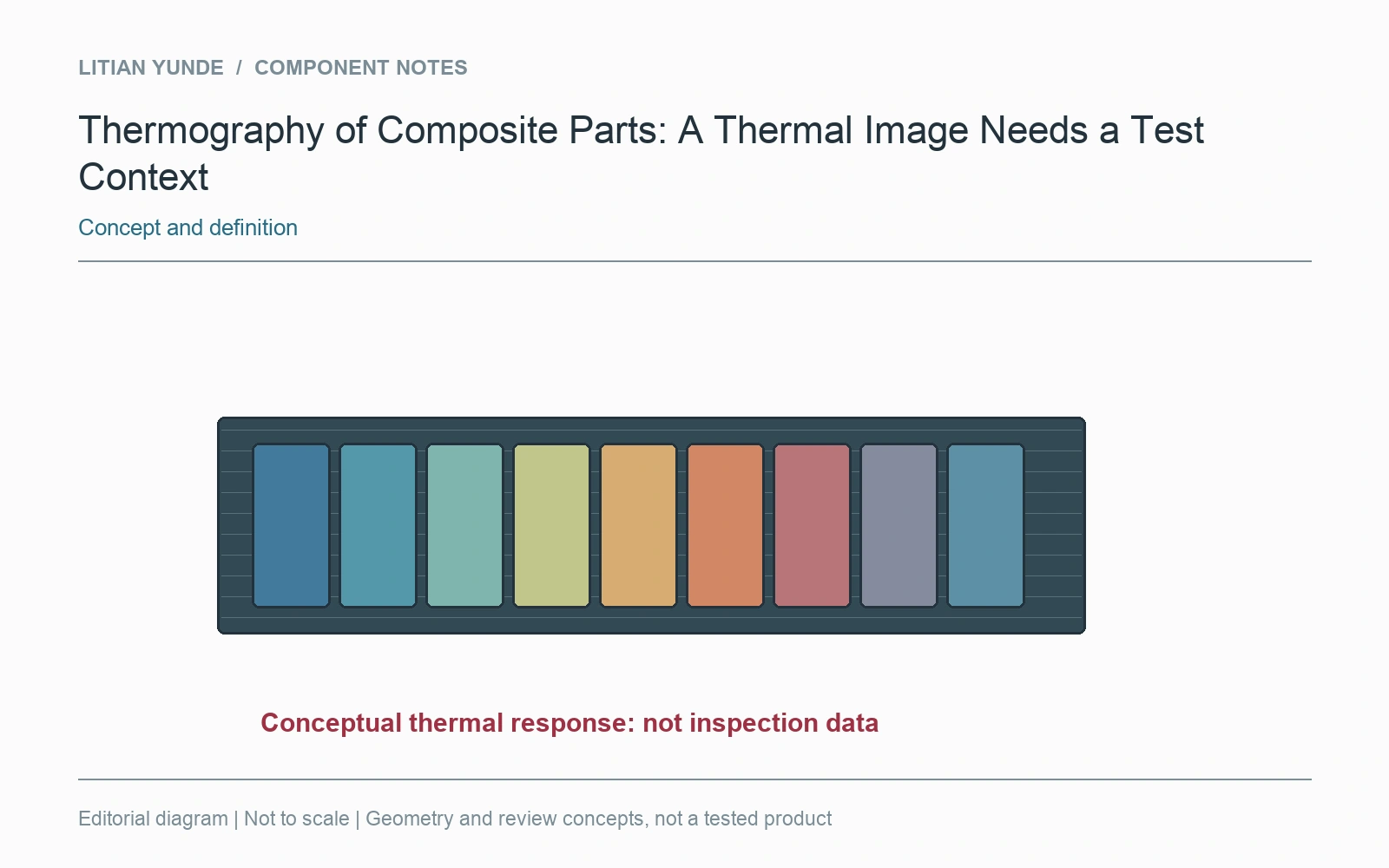
Thermography of Composite Parts: A Thermal Image Needs a Test Context
A colourful thermal image is a record of a surface thermal response, not a self-explanatory map of internal defects. To understand an inspection result, the reader needs to…
Read guide →
What a Composite Tap Test Can and Cannot Establish
A tap test compares the acoustic response of a region with an expected response. It can be useful in a suitable, defined inspection task, but a normal sound does not…
Read guide →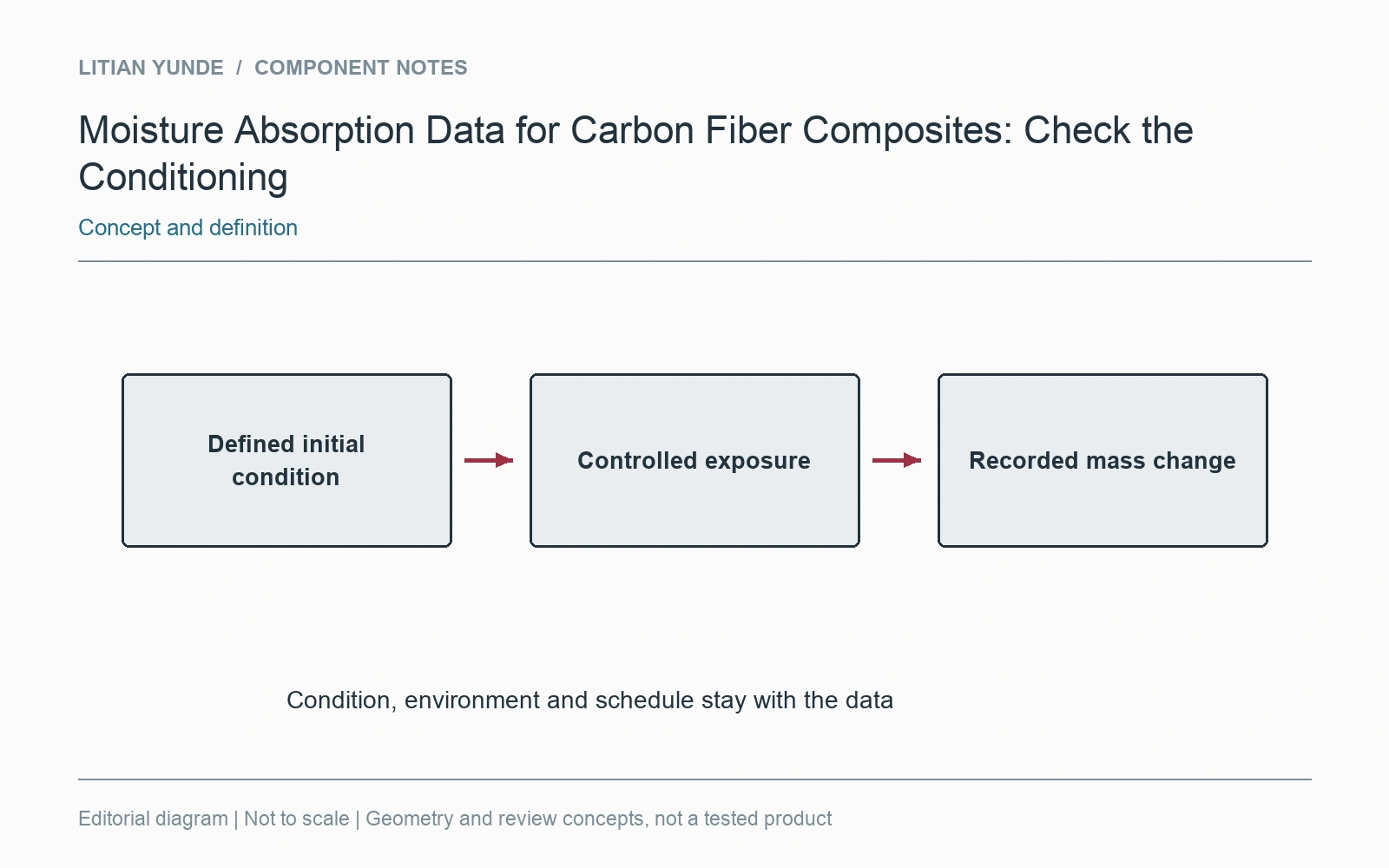
Moisture Absorption Data for Carbon Fiber Composites: Check the Conditioning
A moisture absorption value belongs to a specimen and a conditioning history. It is not a stand-alone promise that a finished component will behave the same way in every…
Read guide →
Ultrasonic Inspection of Carbon Fiber Parts: Define the Coverage
“Ultrasonic tested” is incomplete unless the report identifies the method, examined regions and evaluation criteria. Composite geometry and direction-dependent acoustic…
Read guide →
Composite Porosity: Ask What the Measurement Actually Represents
A porosity result needs a method and a defined sample. A surface photograph, a local section and a non-destructive scan do not describe the same evidence. Before comparing…
Read guide →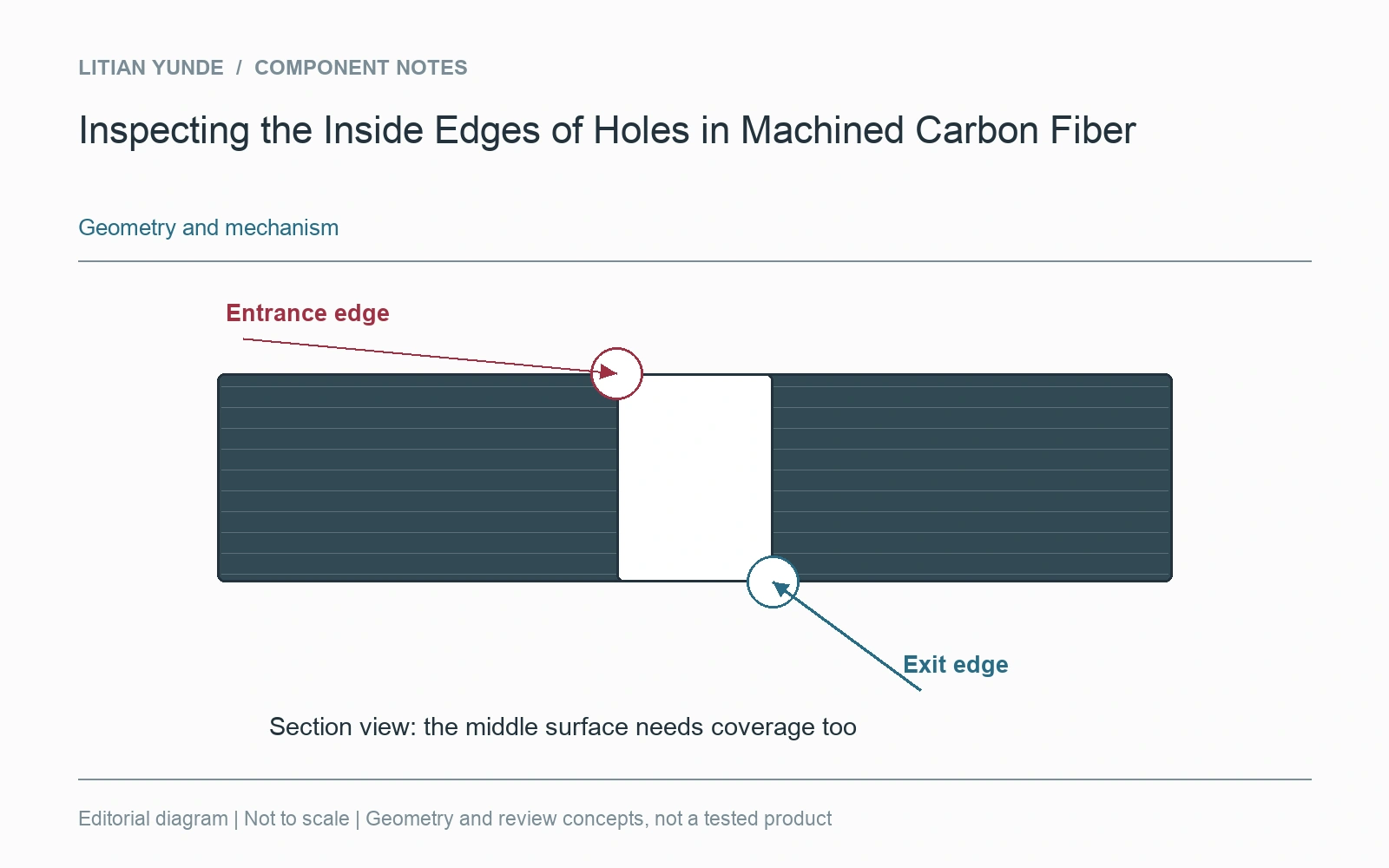
Inspecting the Inside Edges of Holes in Machined Carbon Fiber
A neat hole entrance is useful evidence, but it says little about an exit edge hidden against a fixture. For a machined carbon fiber part, make the inside surface and both…
Read guide →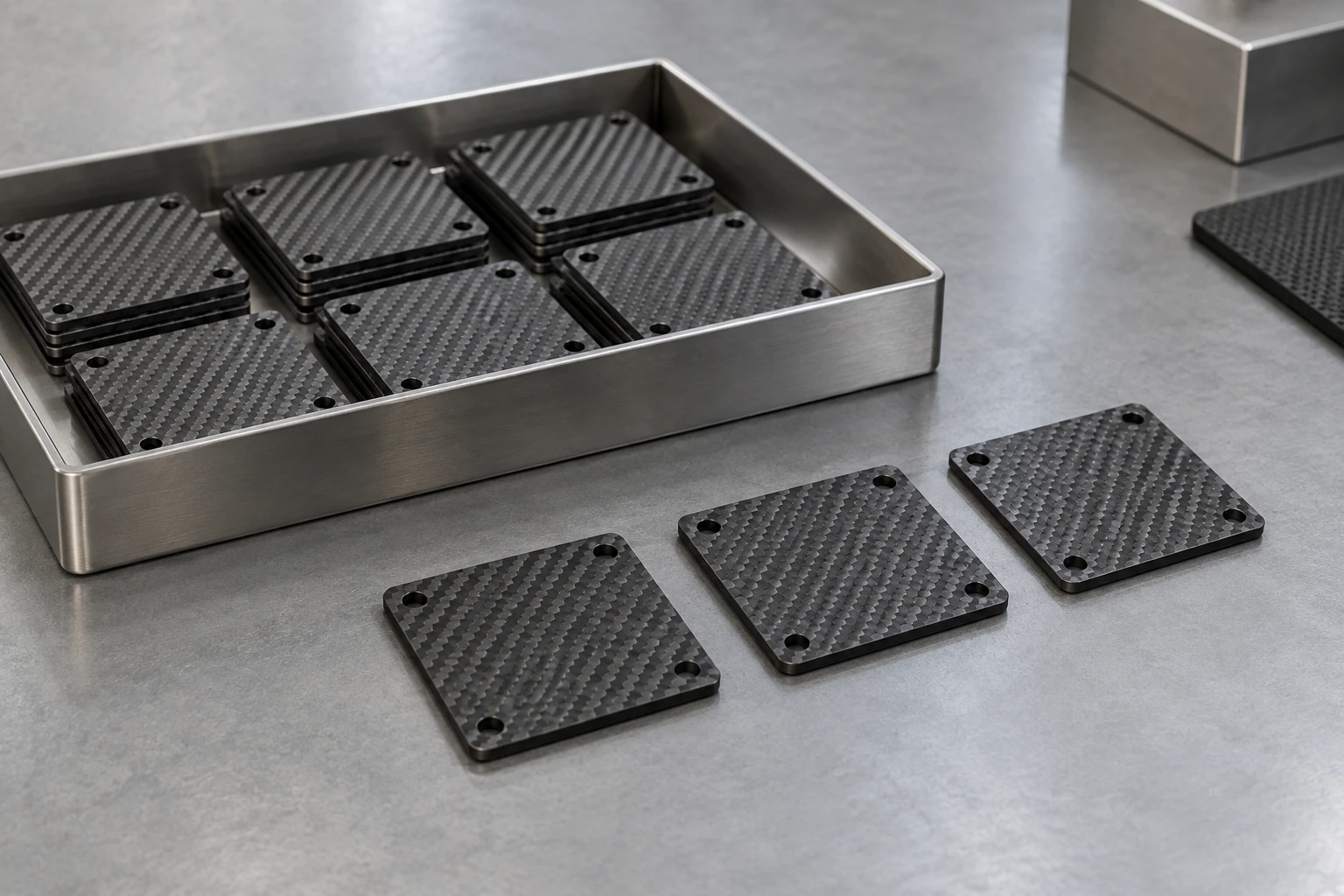
Carbon Fiber Shipment Sampling: Define the Lot Before Selecting Parts
Acceptance sampling needs an identified lot, a specified characteristic and an agreed decision plan. For a carbon fiber shipment, define the population before selecting…
Read guide →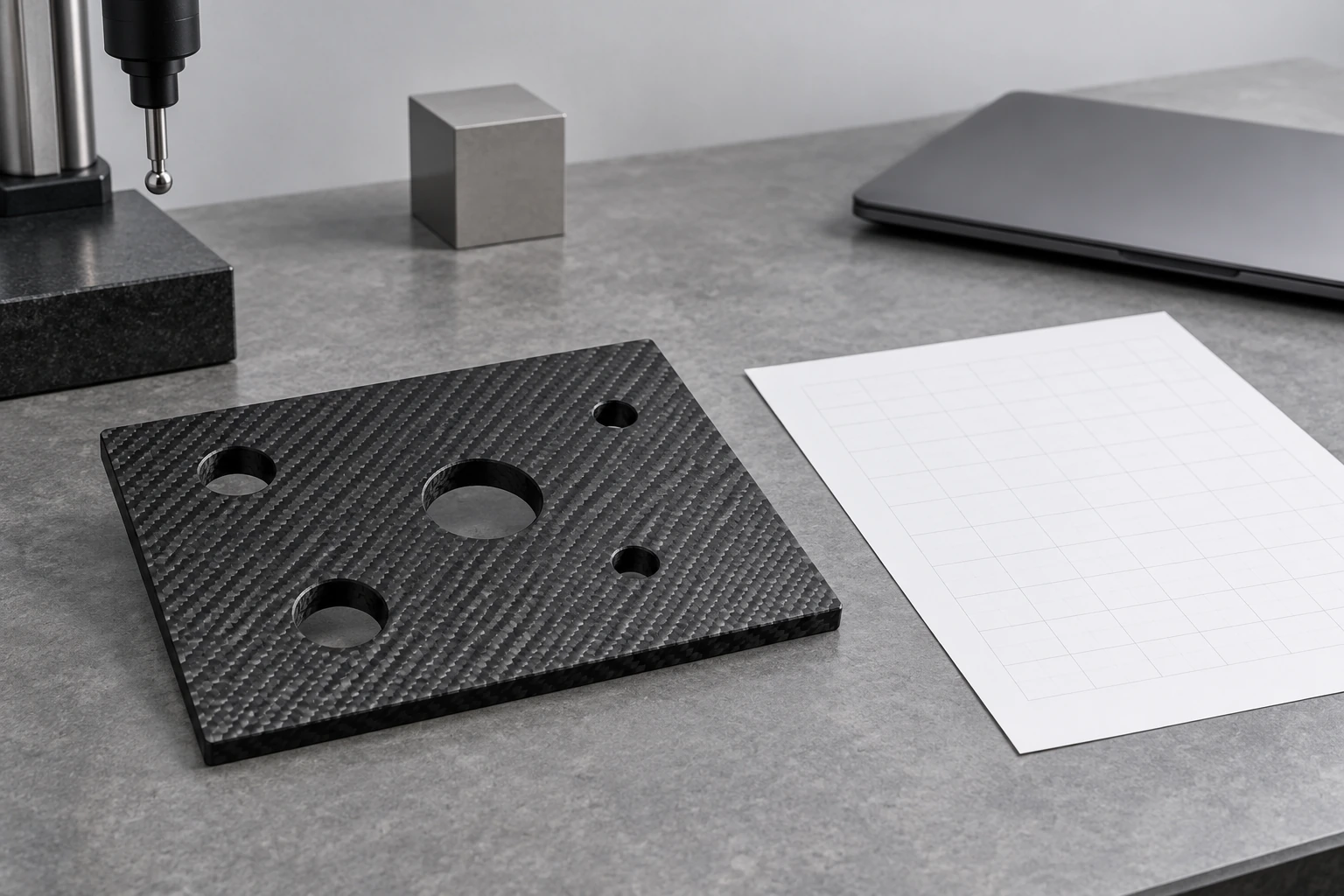
Coordonnées pour l'inspection de la fibre de carbone : définir les unités, les axes et le format de fichier
A coordinate file needs enough context to reproduce its interpretation. Agree units, origin, axis directions, feature names and file format before comparing carbon fiber…
Read guide →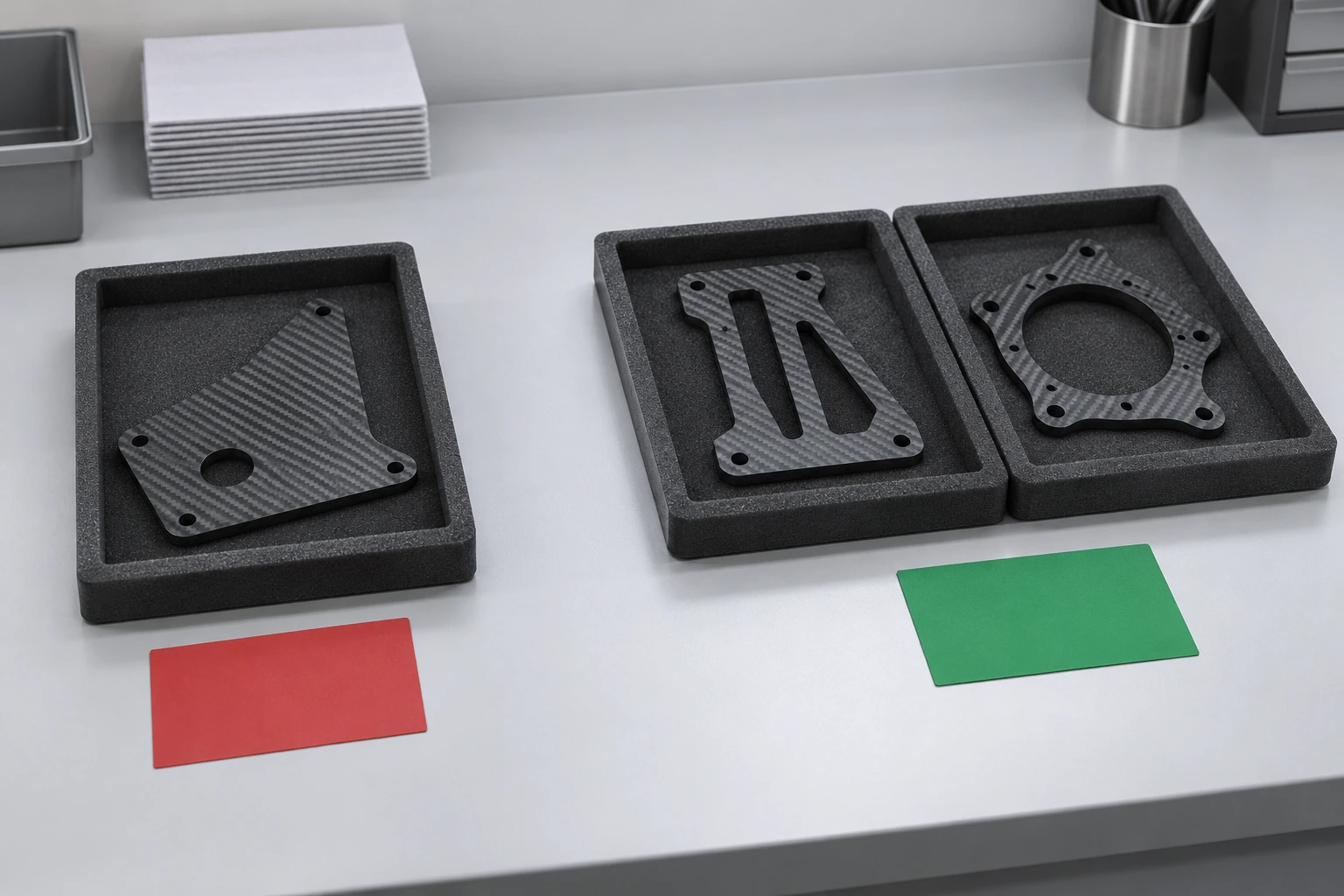
Pièces en fibre de carbone entrantes : définir un processus de mise en attente et de validation
Incoming carbon fiber components should have a clear receiving status before they become available for assembly. Identify the shipment, separate items awaiting inspection or…
Read guide →
Échantillons d'essai en matériaux composites et pièces finies : comprendre la signification des résultats
A composite test coupon provides evidence for the specimen and test conditions recorded. It does not automatically qualify every finished part made from similarly named…
Read guide →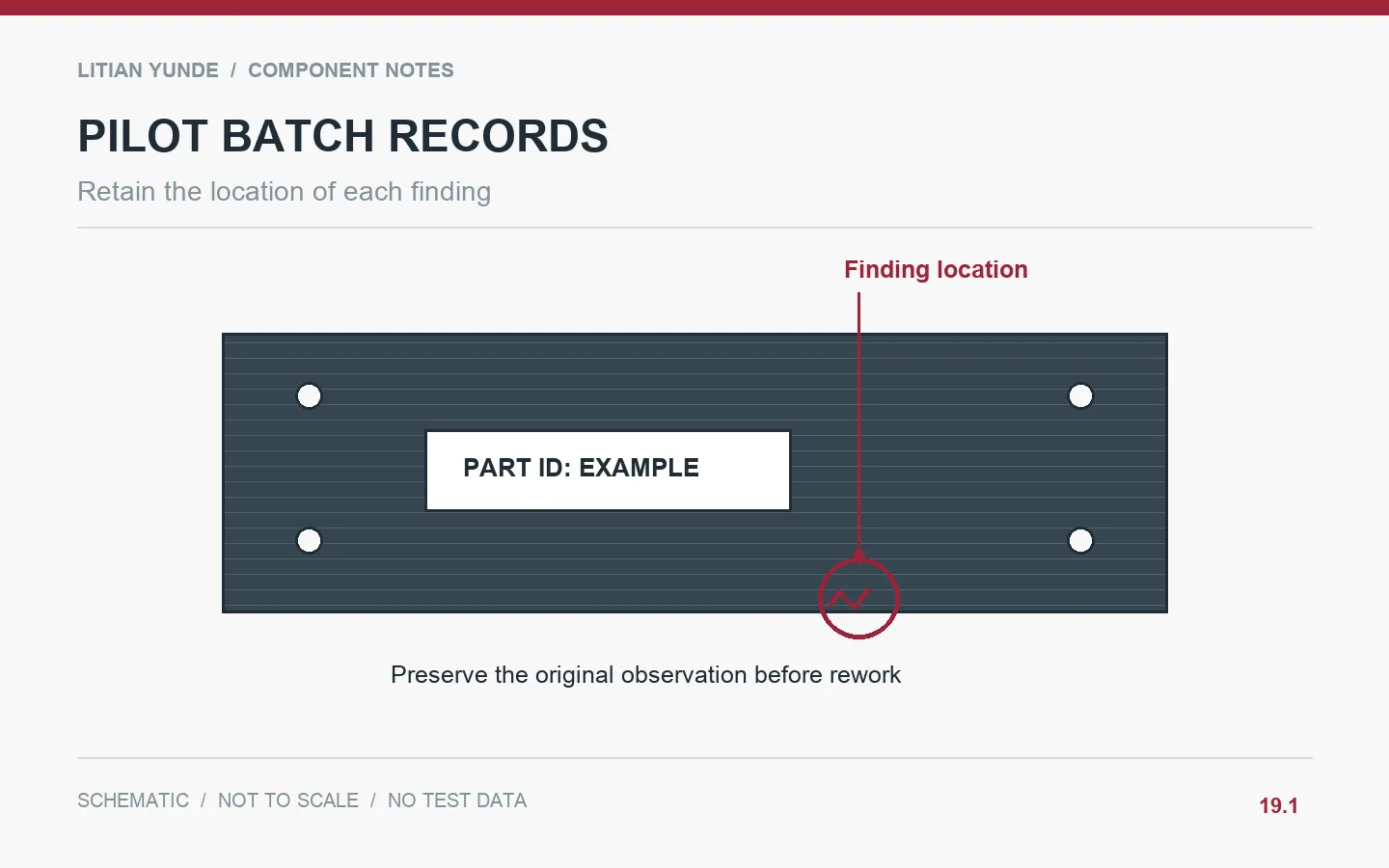
Lots pilotes en fibre de carbone : enregistrement des défauts sans perdre l'historique des pièces
A pilot-batch report should connect each observed issue to a specific part, feature and disposition. Keep first-pass results separate from results after rework. Otherwise a…
Read guide →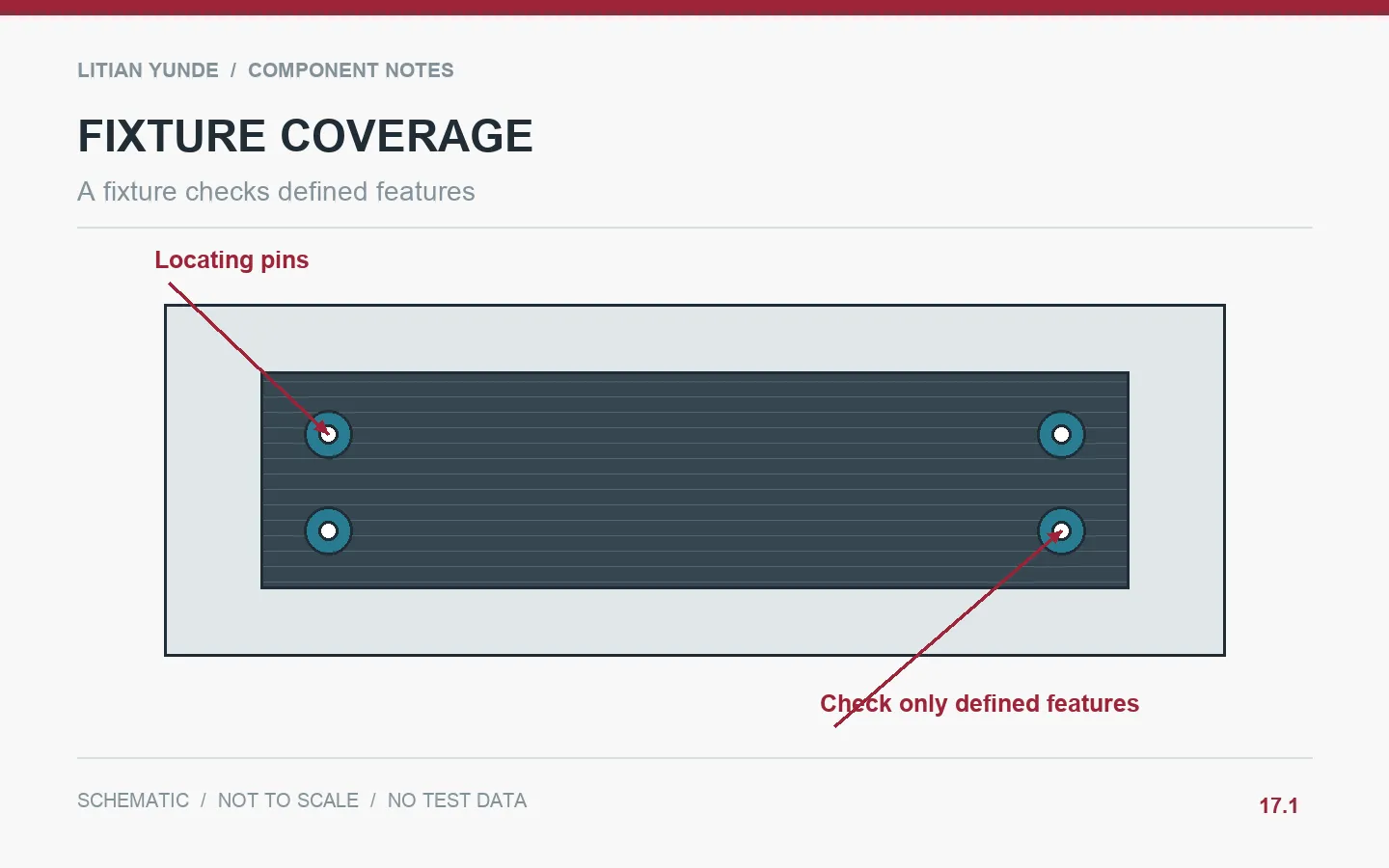
Vérification des gabarits pour les pièces en fibre de carbone : que signifie un résultat « conforme/non conforme » ?
A checking fixture proves only the features and conditions it was designed to evaluate. Define the locating points, contact rules and pass/fail criteria before using it to…
Read guide →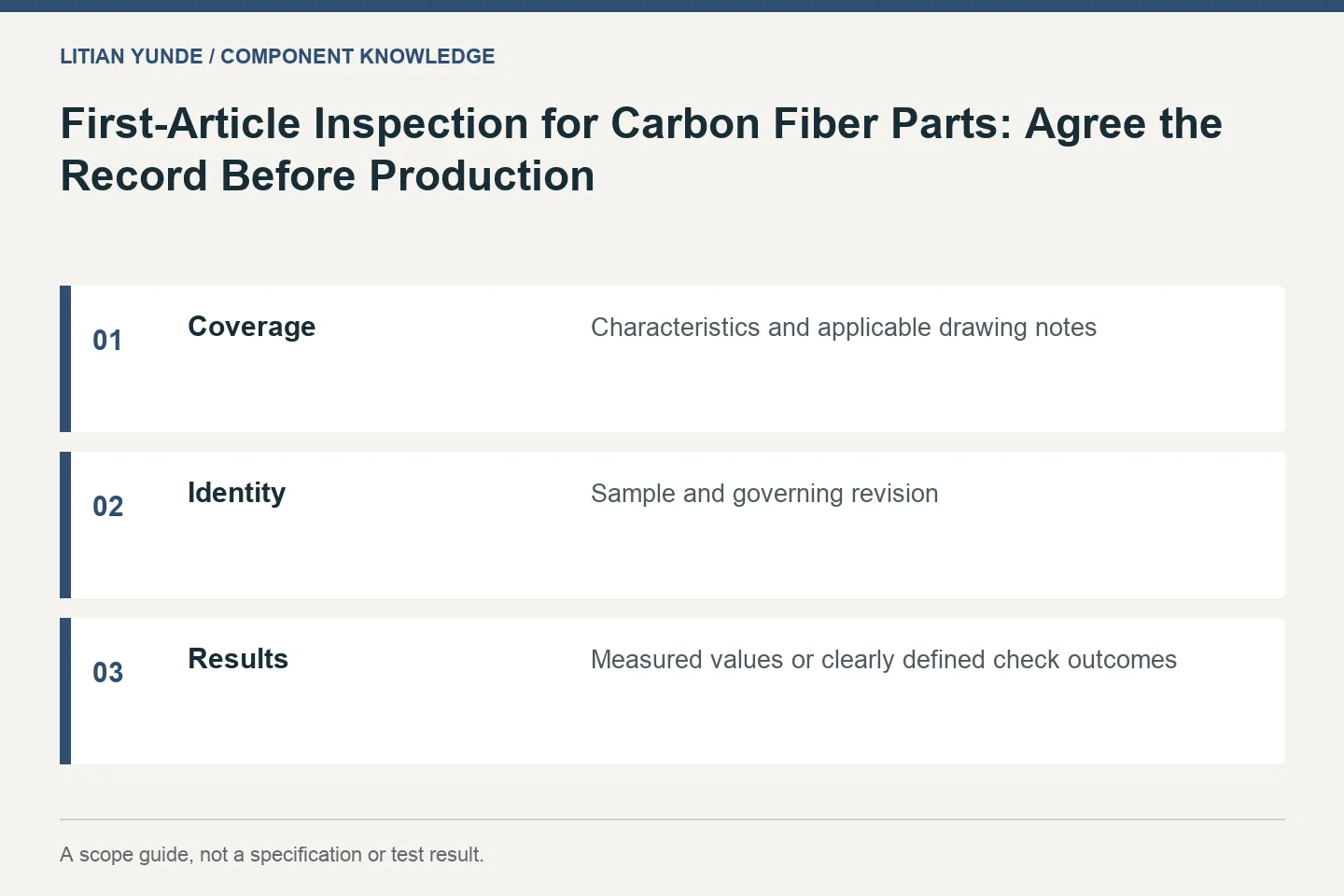
Contrôle du premier article pour les pièces en fibre de carbone : valider le procès-verbal avant le lancement de la production
A first-article inspection record should show which identified part was checked, against which drawing revision, by which agreed methods and with what results.
Read guide →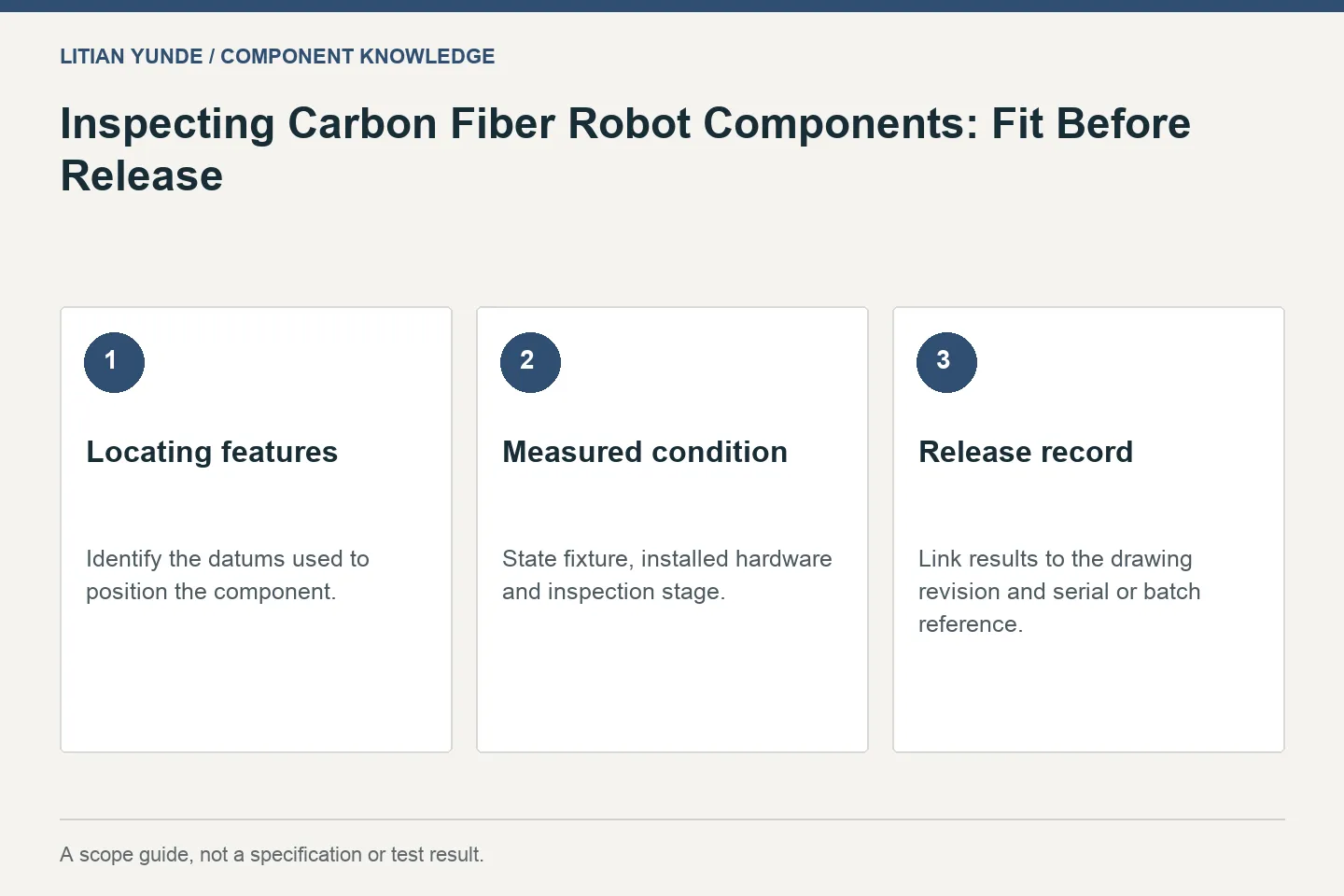
Inspecting Carbon Fiber Robot Components: Fit Before Release
For a robot component, an inspection report is most useful when it identifies the mounting features and clearances that affect the assembly. A photograph of an attractive…
Read guide →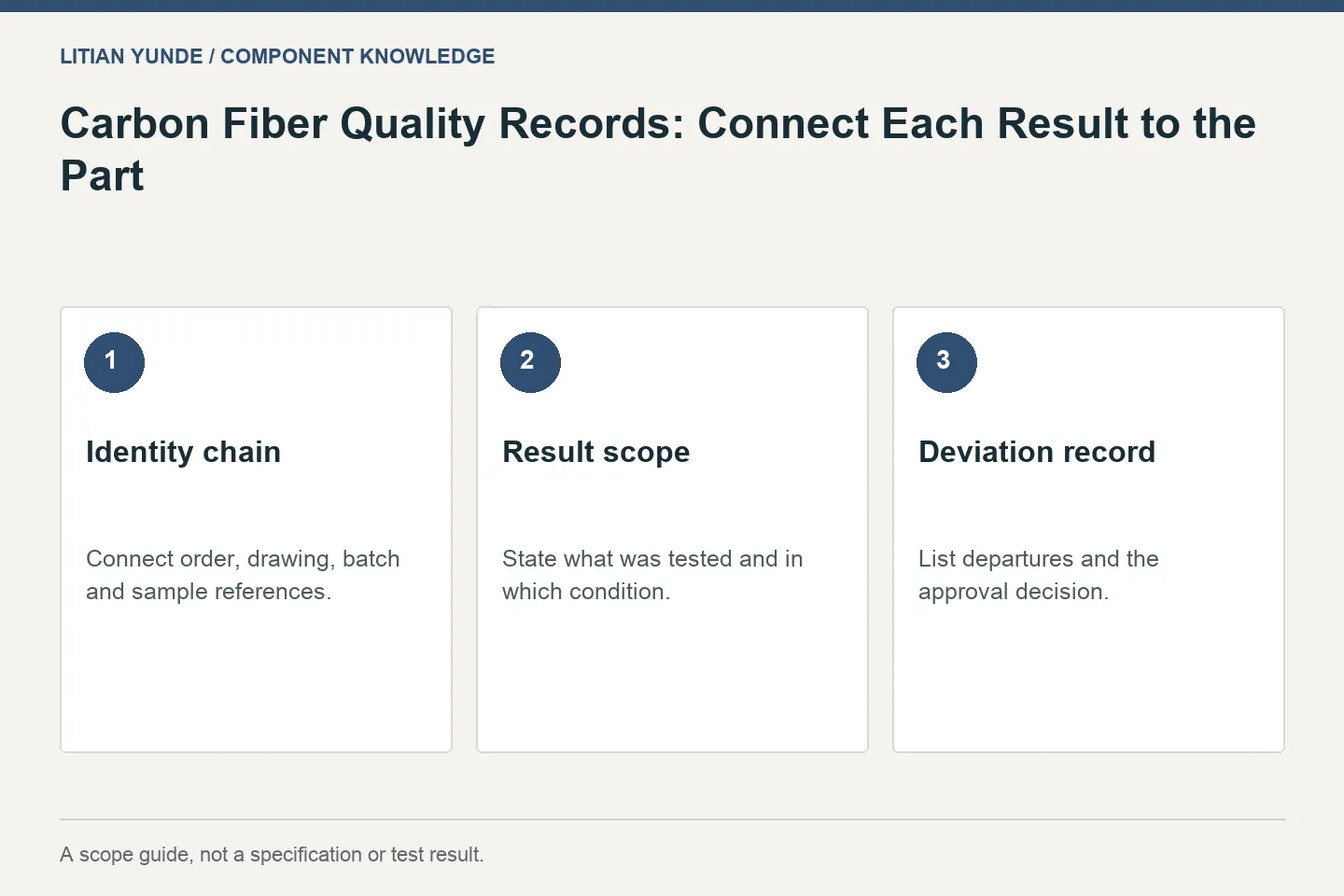
Données de qualité sur la fibre de carbone : associer chaque résultat à la pièce
A test or inspection result is useful only when it can be linked to the material, part and configuration being supplied. A report with impressive values but no identifiable…
Read guide →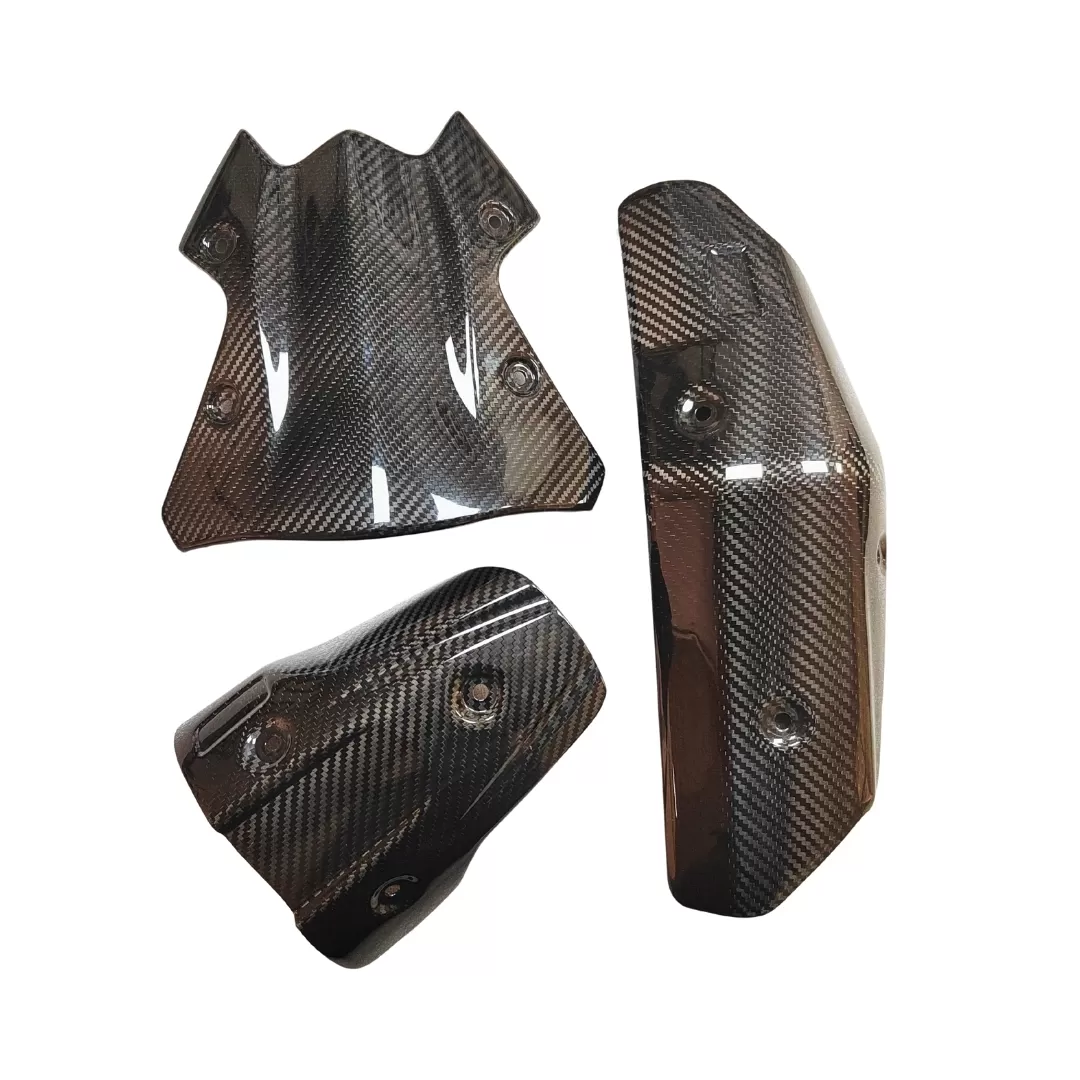
Panneaux de carrosserie en fibre de carbone : établir un rapport d'ajustement d'un échantillon
A useful vehicle-panel fit report records the platform, attachment configuration and specific observations. A single photograph of a fitted panel rarely explains what was…
Read guide →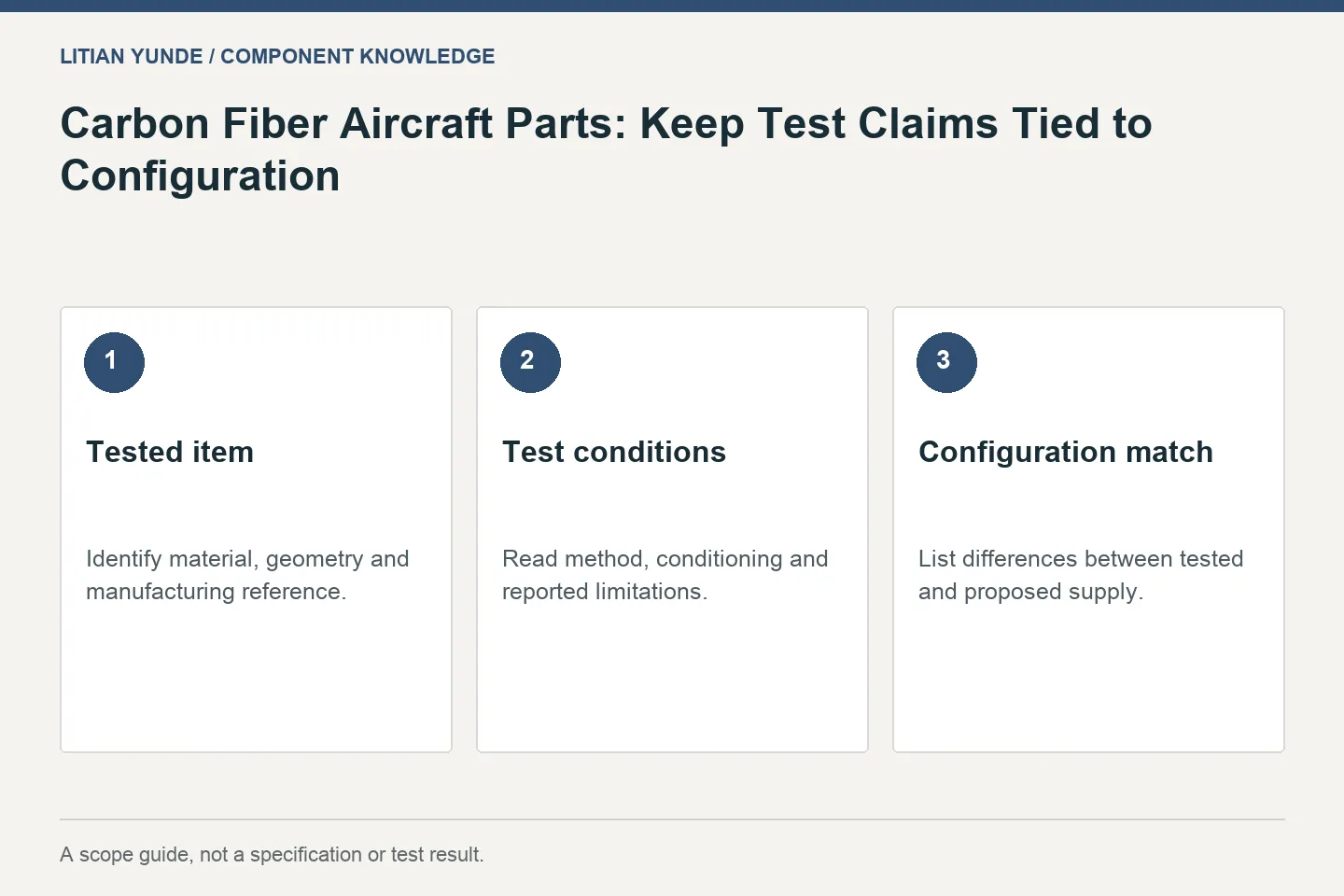
Pièces d'avion en fibre de carbone : veiller à ce que les résultats des essais soient liés à la configuration
A test result describes a particular specimen or component under stated conditions. Before using it in an aircraft-related enquiry, establish exactly what was tested and…
Read guide →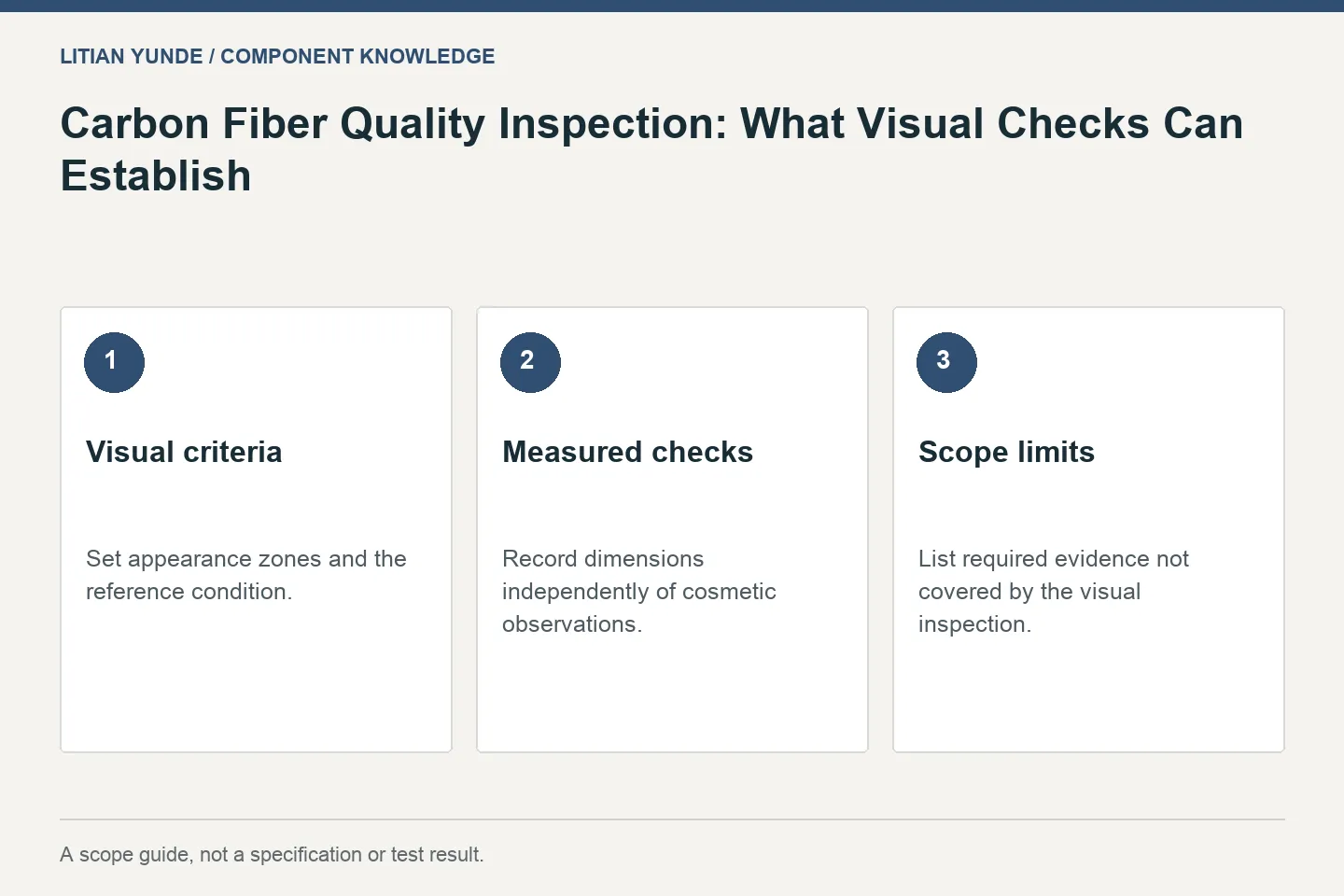
Contrôle qualité de la fibre de carbone : ce que permettent de déterminer les contrôles visuels
Visual inspection can document appearance and visible workmanship, but it does not establish every internal or mechanical characteristic of a composite part. Define what each…
Read guide →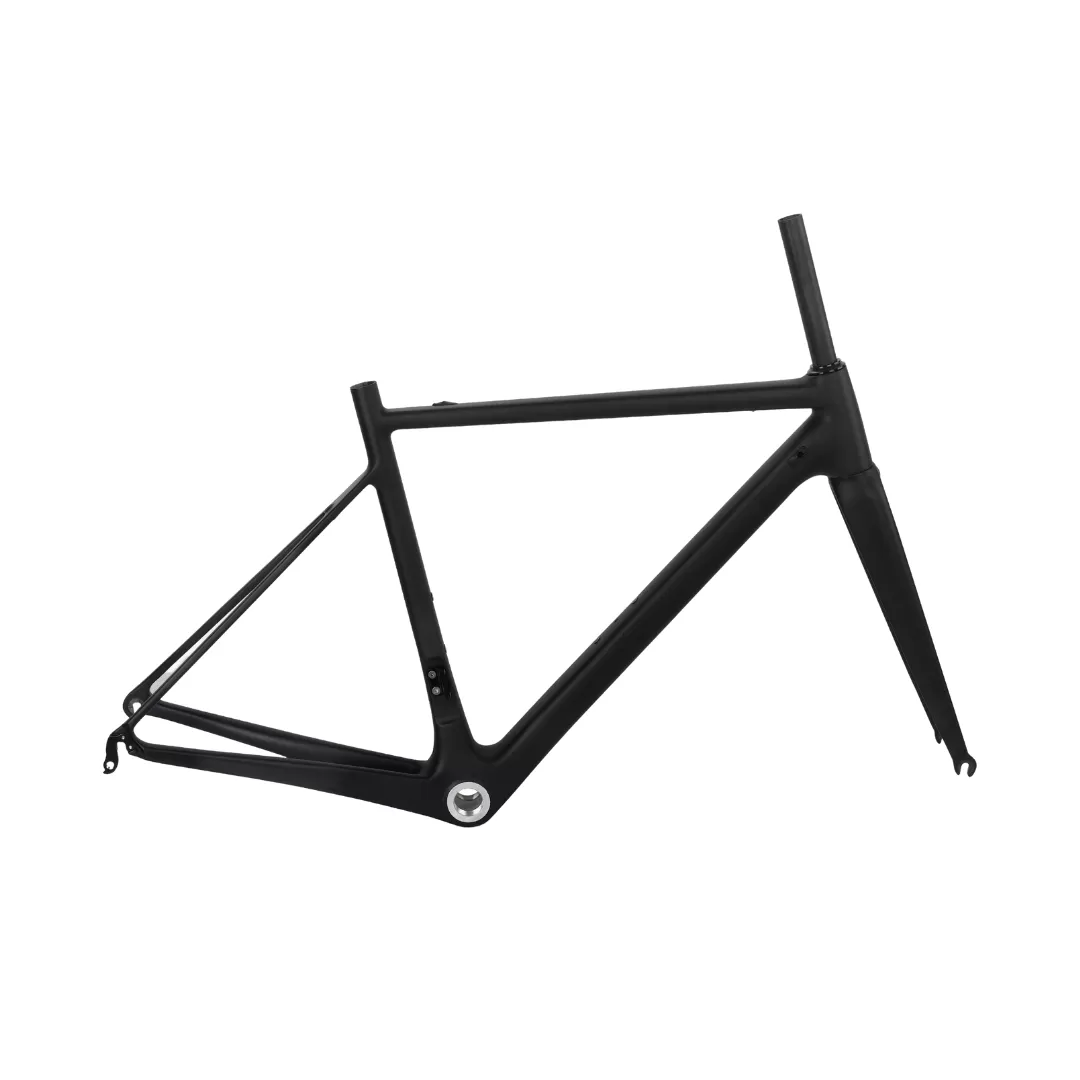
Carbon Fiber Bicycle Parts: Plan Inspection After an Impact
After an impact or suspected damage to a bicycle component, stop using it and seek the applicable manufacturer or qualified service guidance. Document the event; an…
Read guide →Ingénierie d'application
Using carbon fiber components in vehicles, UAVs, robotics, sport and equipment: interfaces, operating conditions, maintenance and application evidence.

Carbon Fiber Camera Shields: Black Appearance Does Not Define Stray-Light Behaviour
A black-looking carbon fiber shield can still reflect light into a camera under the installed lighting arrangement. Review stray-light behaviour with the actual lens,…
Read guide →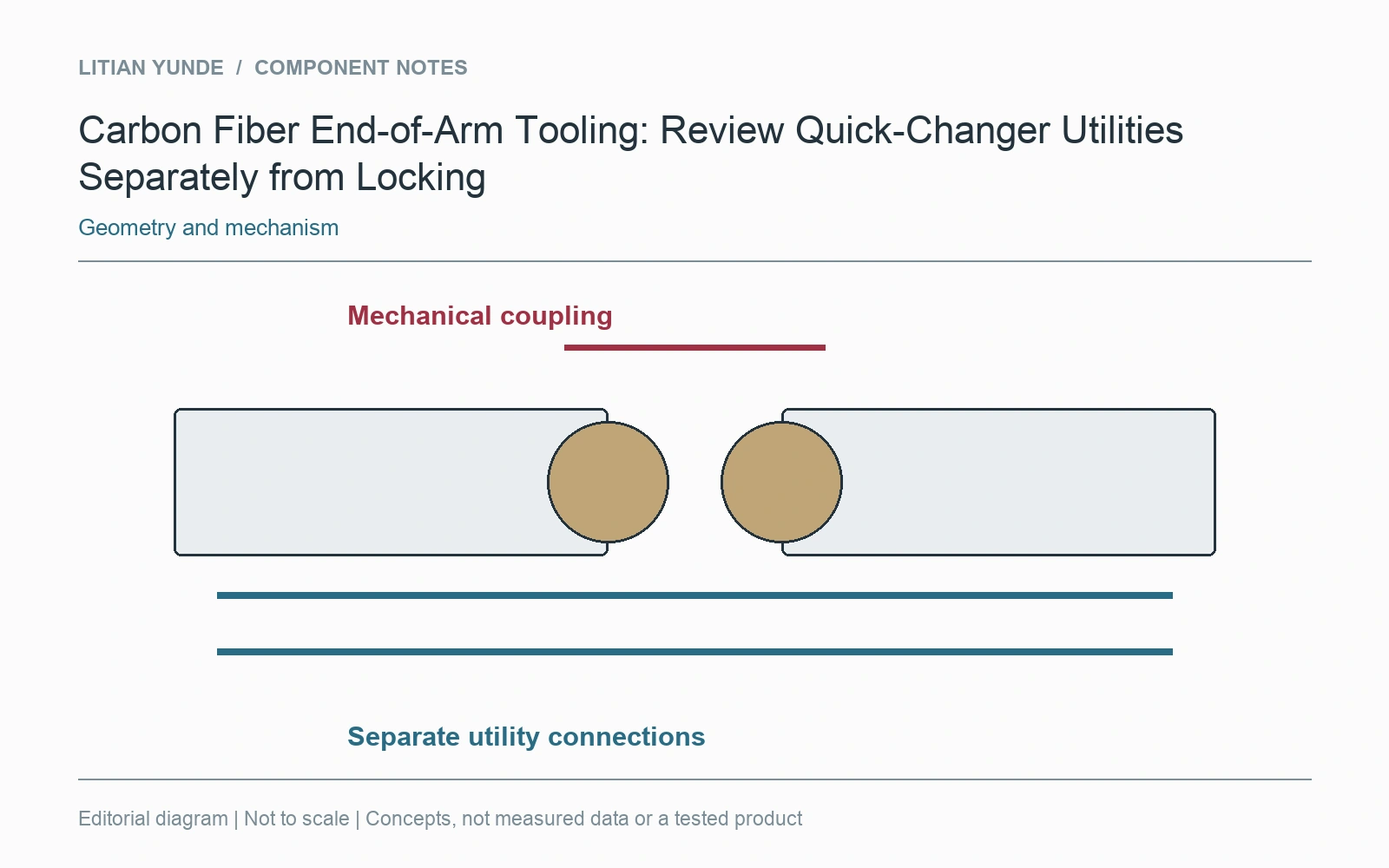
Outillage de bout de bras en fibre de carbone : examiner séparément les fonctions de changement rapide et de verrouillage
A quick-change interface can connect the mechanical tool and pass air, electrical signals or other utilities. Review those functions separately for a carbon fiber end-of-arm…
Read guide →
Douilles remplaçables dans les dispositifs en fibre de carbone : permettre l'identification des pièces d'usure
A replaceable bushing in a carbon fiber fixture needs its own identification and replacement interface. Keep the consumable or wear item distinct from the composite body that…
Read guide →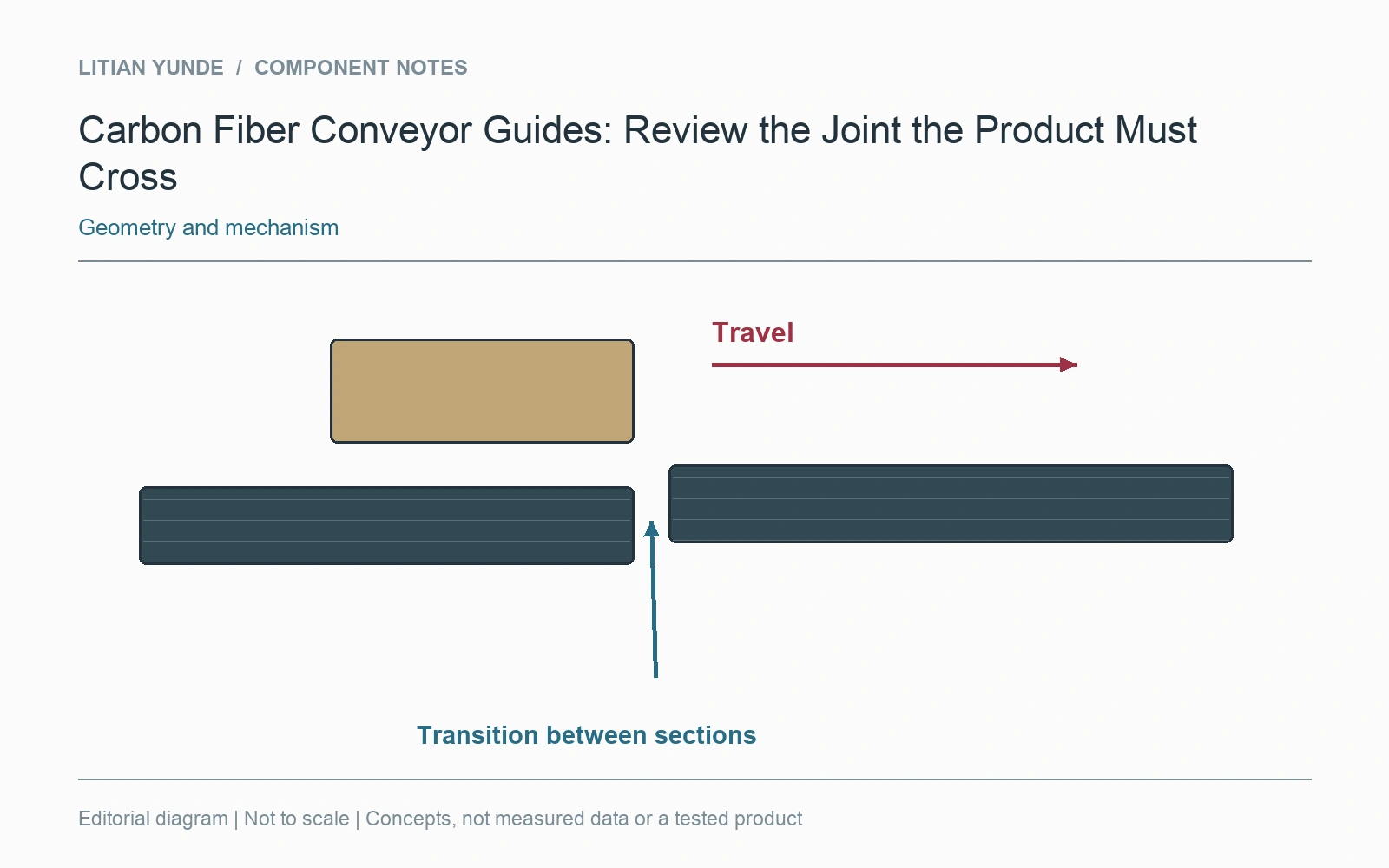
Guides de convoyeur en fibre de carbone : examinez le raccord que le produit doit franchir
A conveyor guide made in separate sections needs a review at each transition. The transported item encounters the installed joint, not just the finish on one loose component.…
Read guide →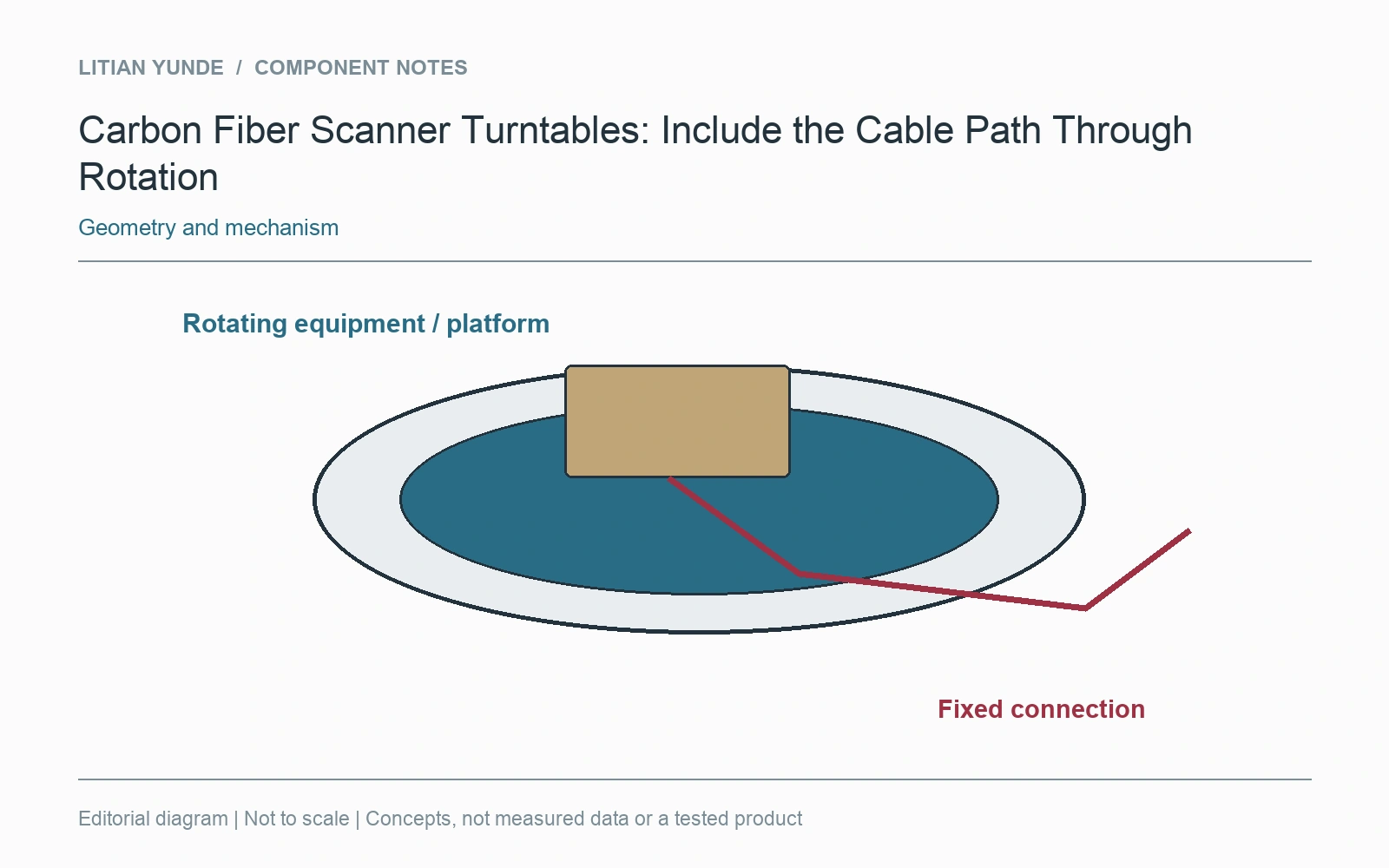
Carbon Fiber Scanner Turntables: Include the Cable Path Through Rotation
A scanner turntable needs a defined cable path through its required rotation. A carbon fiber platform that fits the equipment does not establish how connected cables behave…
Read guide →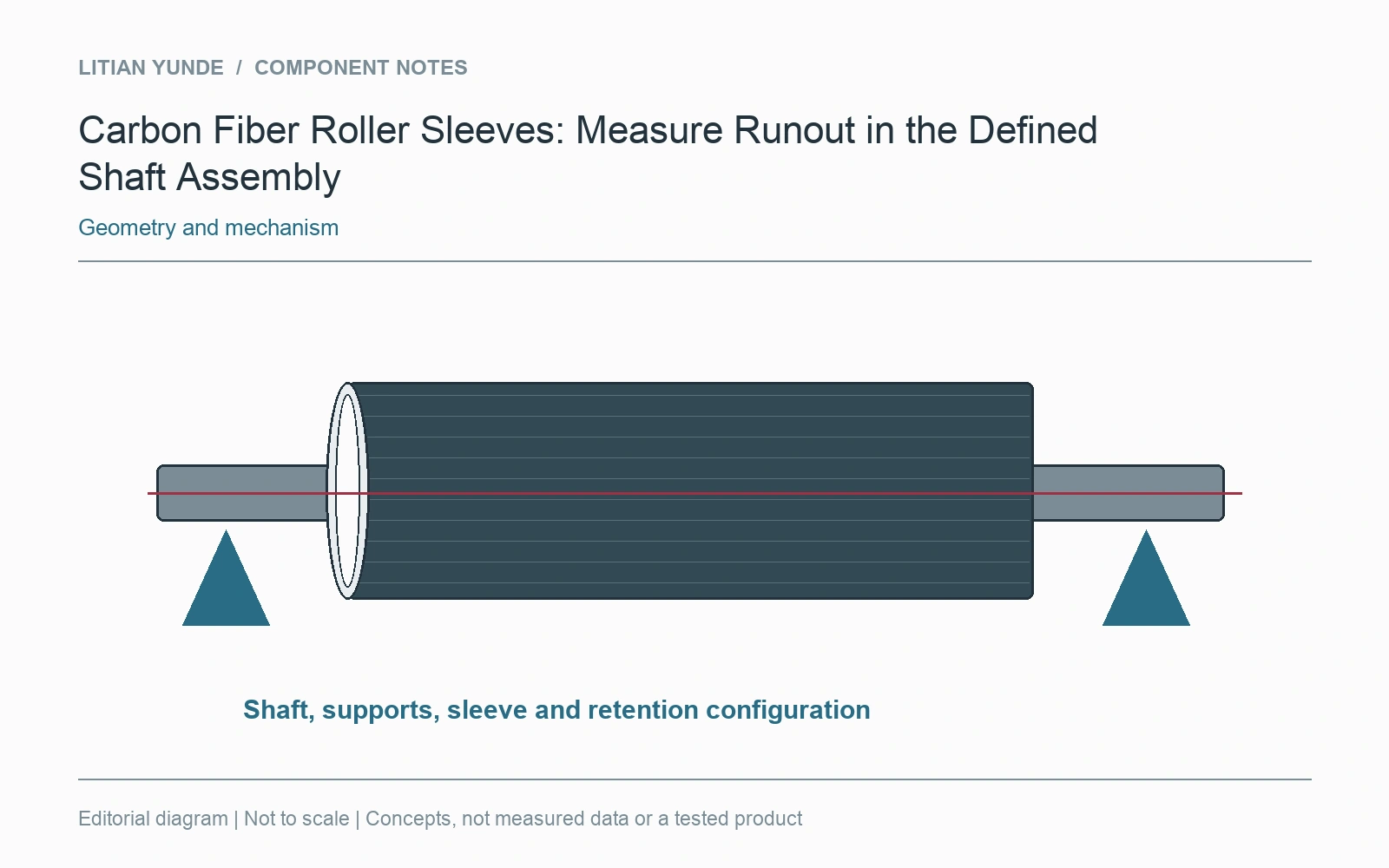
Carbon Fiber Roller Sleeves: Measure Runout in the Defined Shaft Assembly
A roller sleeve’s installed runout depends on the defined shaft assembly and measurement reference. A loose sleeve dimension is useful, but it does not describe the complete…
Read guide →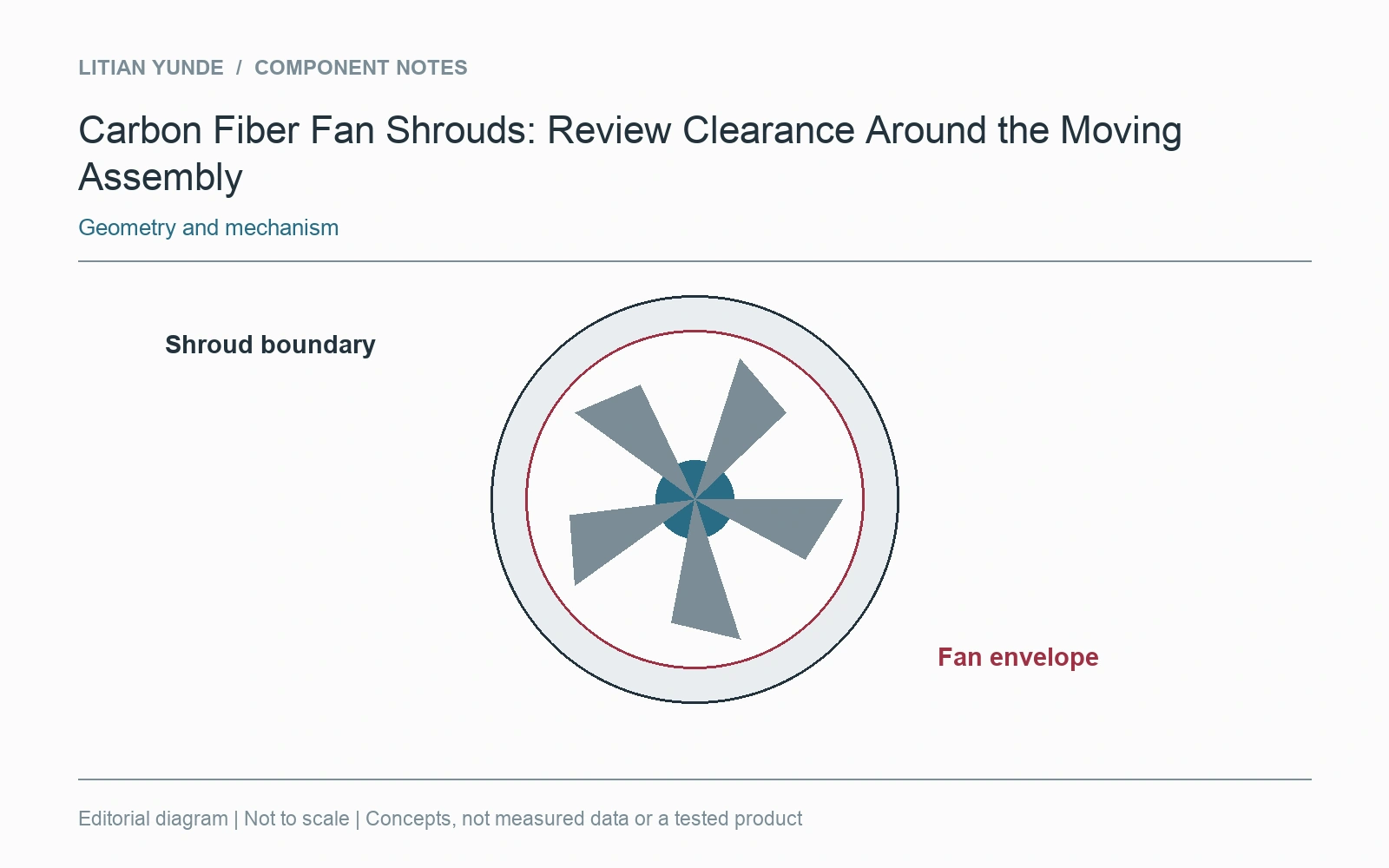
Caches de ventilateur en fibre de carbone : vérifier l'espace libre autour de l'ensemble mobile
A fan shroud needs a clearance review against the actual moving assembly. Show the fan, its mounting references and the surrounding envelope rather than comparing the shroud…
Read guide →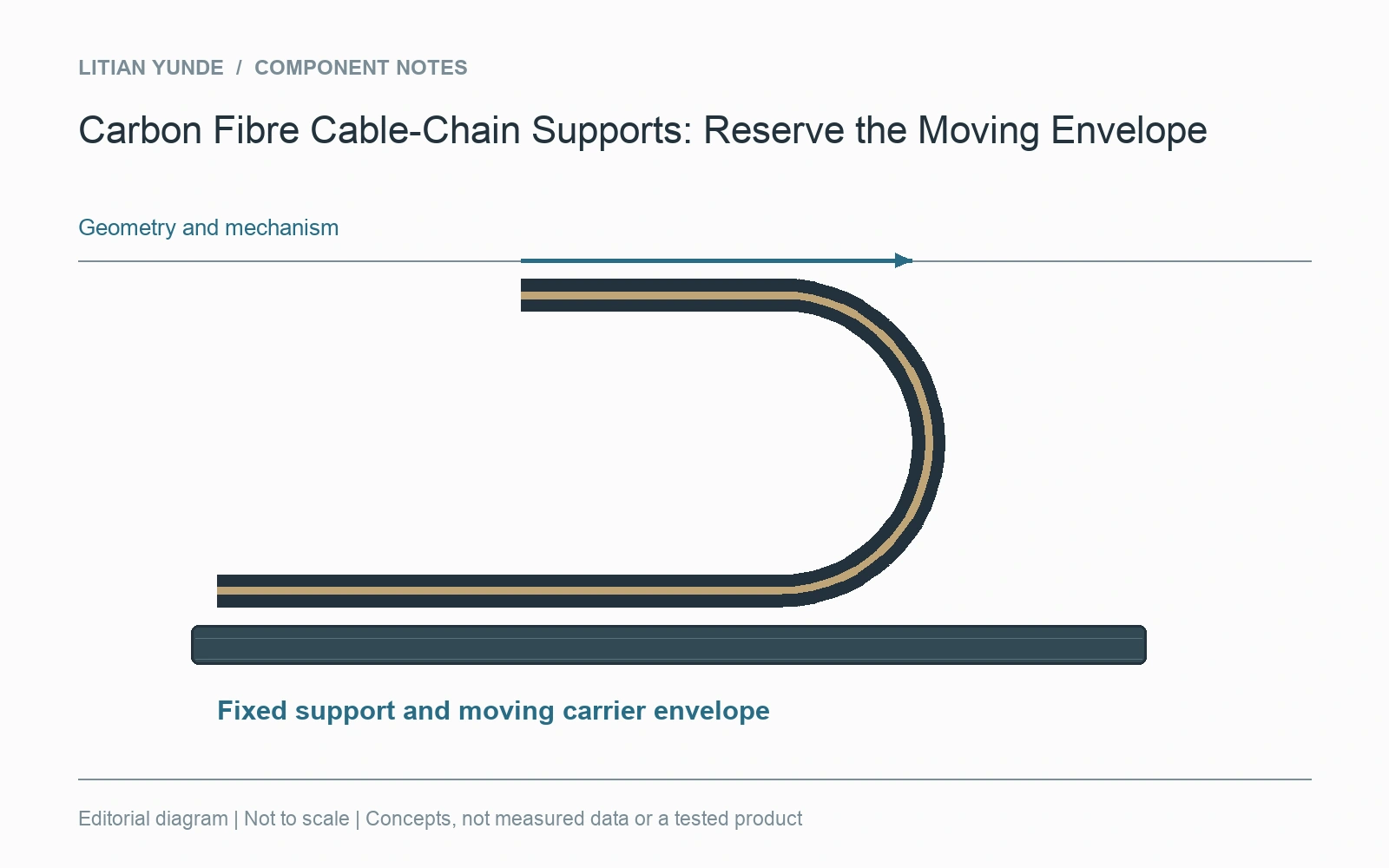
Carbon Fibre Cable-Chain Supports: Reserve the Moving Envelope
A support for a moving cable carrier needs the carrier’s travel envelope, not just its mounting-hole pattern. Include the carrier and cable requirements supplied by their…
Read guide →
Supports d'antenne en fibre de carbone : une vérification de l'ajustement n'est pas un test RF
A carbon fibre bracket can position an antenna mechanically, but mechanical fit does not establish radio performance. Keep the exact antenna, its installation instructions…
Read guide →
A Carbon Fiber Equipment Cover Is Not an Acoustic Performance Result
A carbon fiber cover defines a mechanical enclosure component. A noise-reduction claim concerns the behaviour of a complete system under stated conditions. Separate those…
Read guide →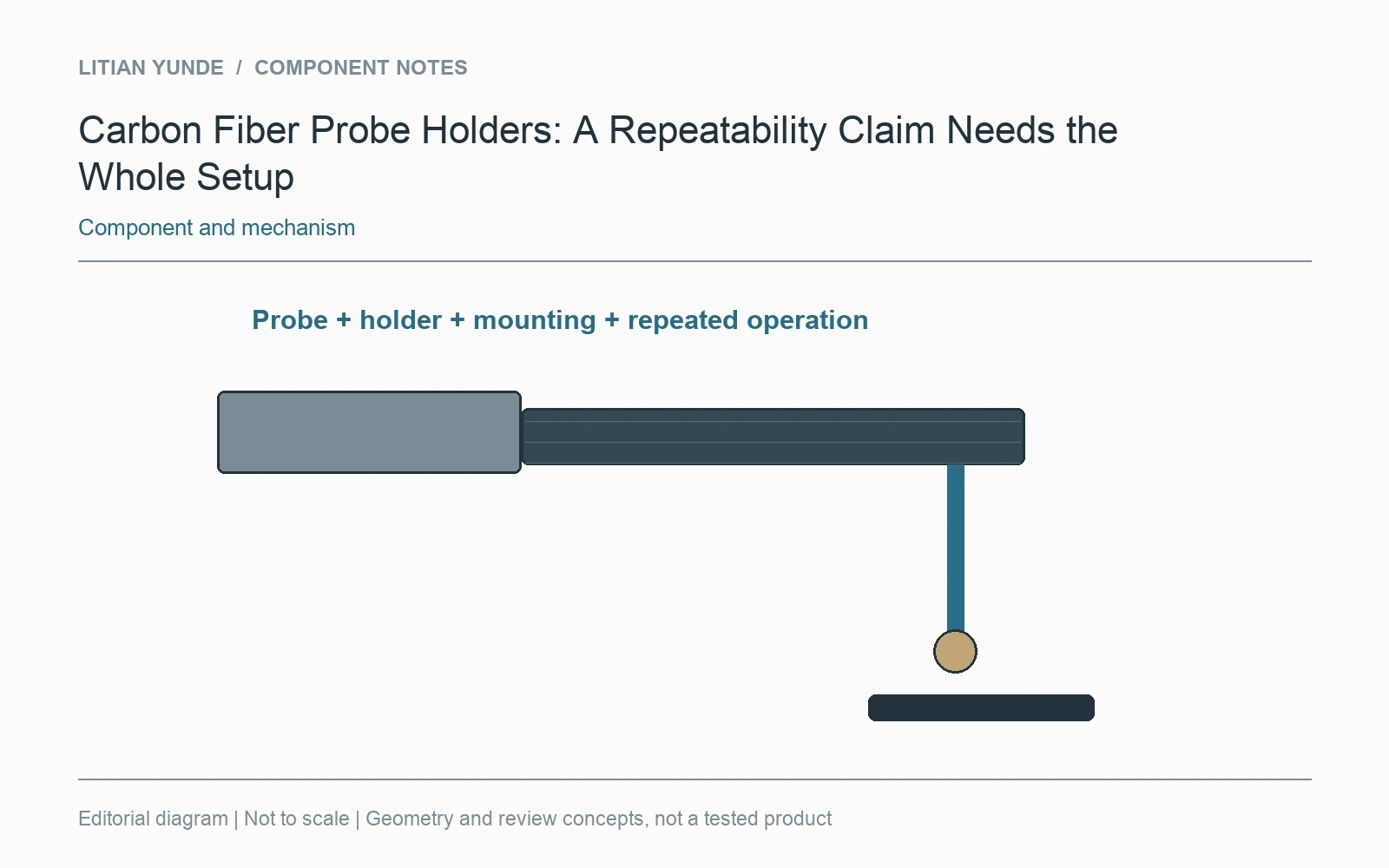
Supports de sondes en fibre de carbone : pour garantir la répétabilité, il faut tenir compte de l'ensemble du dispositif
A carbon fiber probe holder is one part of a measurement setup. A repeatability claim needs to identify the probe, holder, mounting arrangement and repeated operation. It…
Read guide →
Ponts pour systèmes de vision en fibre de carbone : définition de la référence entre la caméra et l'objet
A vision-system bridge positions a camera or sensor relative to the object being inspected. Specify that relationship through the mounts, supports and operating movement. A…
Read guide →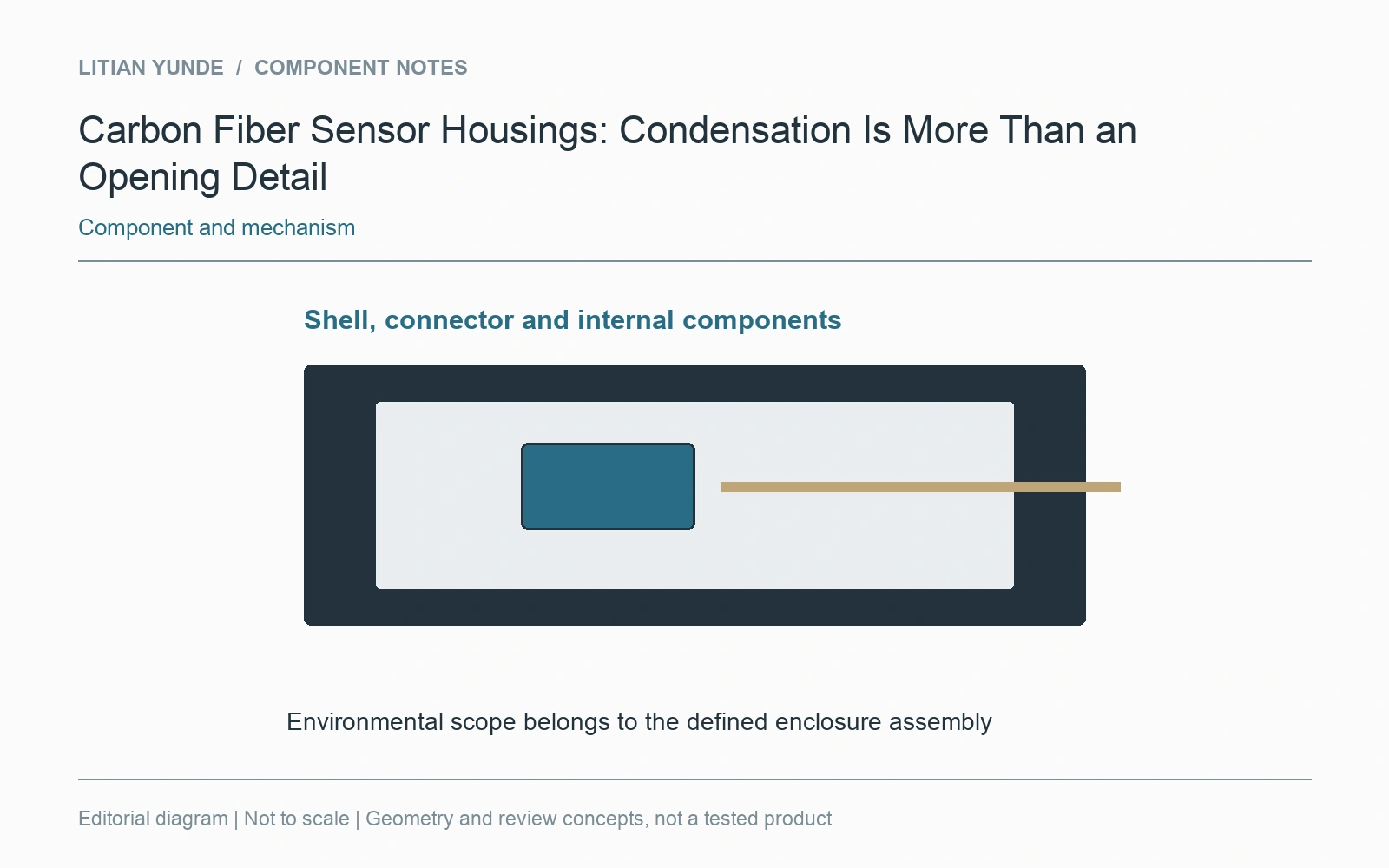
Boîtiers de capteurs en fibre de carbone : la condensation n'est pas qu'un simple détail d'ouverture
A sensor housing can experience moisture internally even when an external opening appears well protected. The enclosure, seals, internal components and operating environment…
Read guide →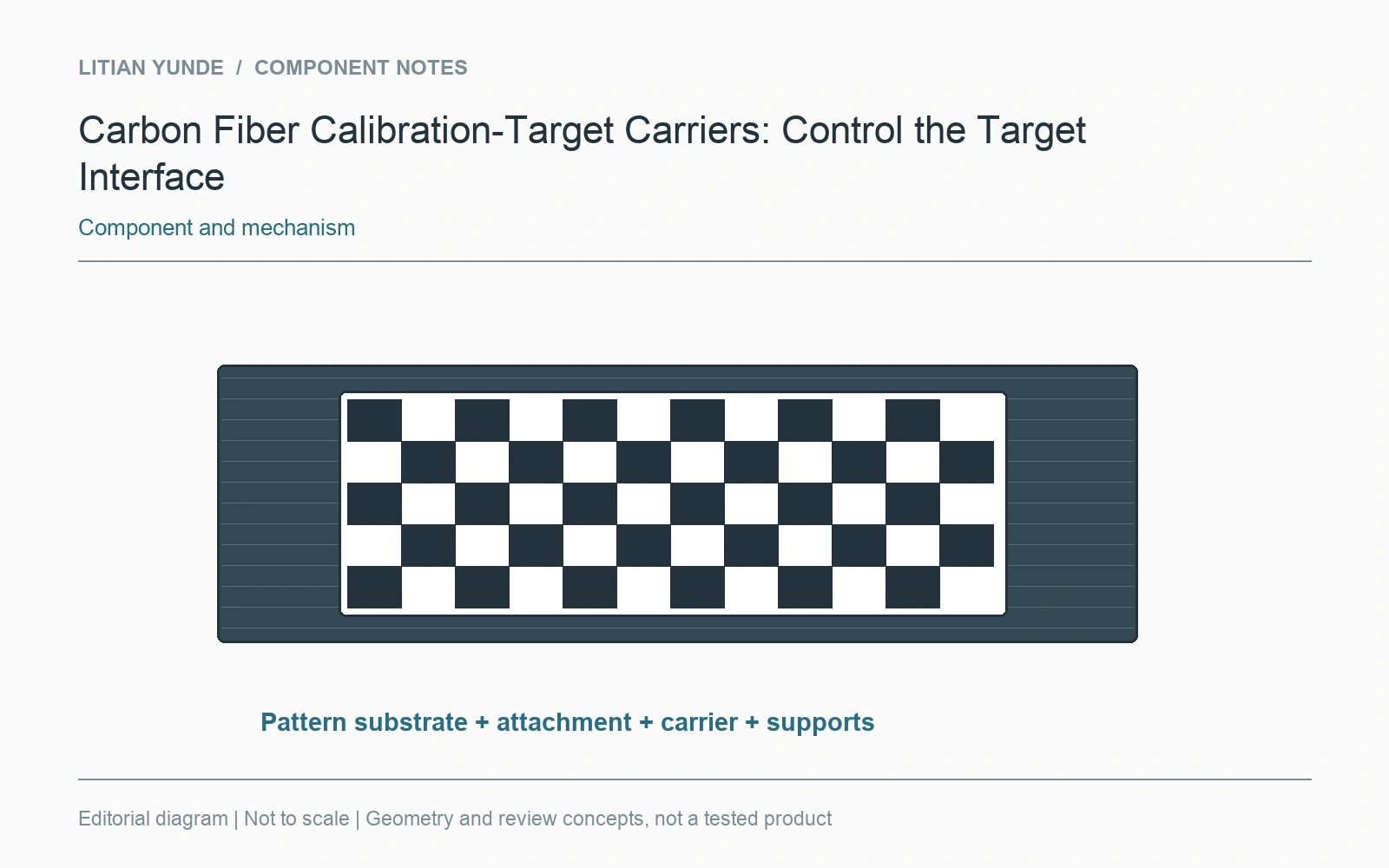
Carbon Fiber Calibration-Target Carriers: Control the Target Interface
A calibration target mounted on a carbon fiber carrier is an assembly. The target pattern, its substrate, attachment and support condition all belong in the definition. A…
Read guide →
Carbon Fiber Vacuum-Gripper Supports: Separate Structure from Vacuum Functions
A carbon fiber support can carry a vacuum-gripper assembly without being the vacuum manifold or sealing surface. Define what the proposed component actually supplies. The…
Read guide →
Doigts de préhension robotisés en fibre de carbone : définition du contact remplaçable
A robot gripper finger has at least two interfaces: the connection to the actuator and the contact with the handled item. A carbon fiber finger enquiry should define both. If…
Read guide →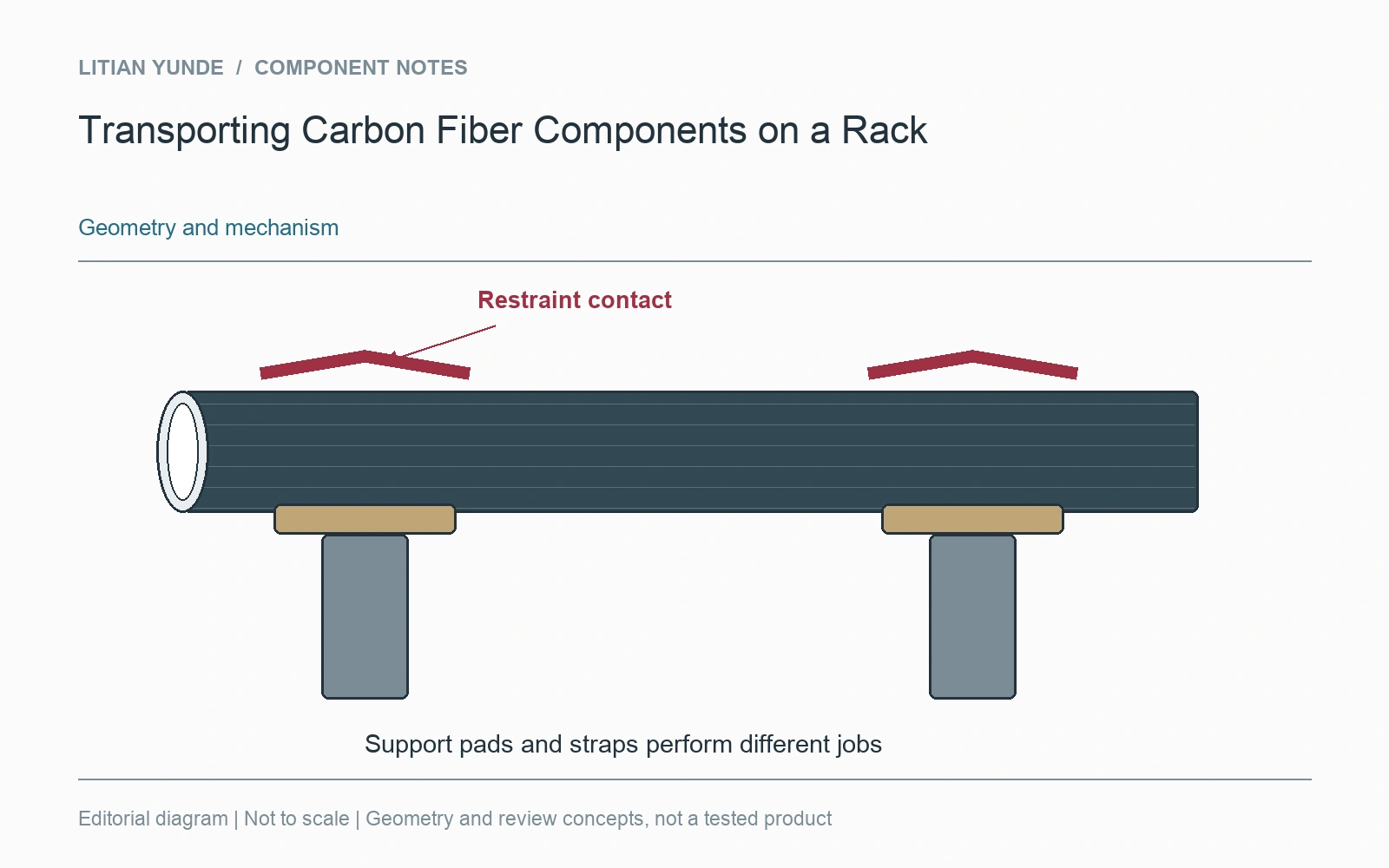
Transporting Carbon Fiber Components on a Rack
A transport rack introduces its own contact and restraint conditions. A carbon fiber component supported correctly in service may meet a small pad or a strap in a very…
Read guide →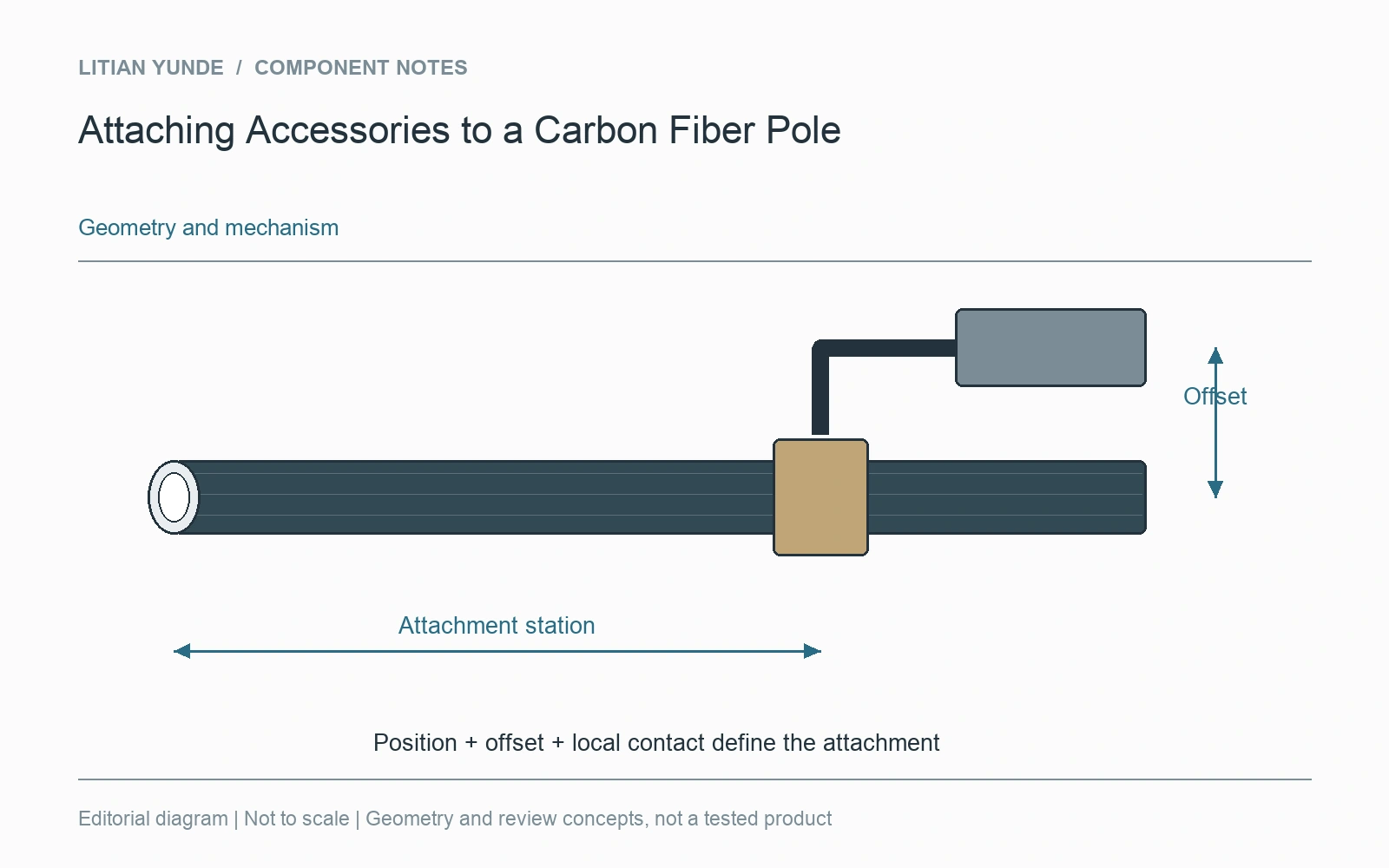
Attaching Accessories to a Carbon Fiber Pole
An accessory fitted to a long pole adds more than its own weight. Its position, offset and contact with the pole affect the assembled tool. Start with the complete…
Read guide →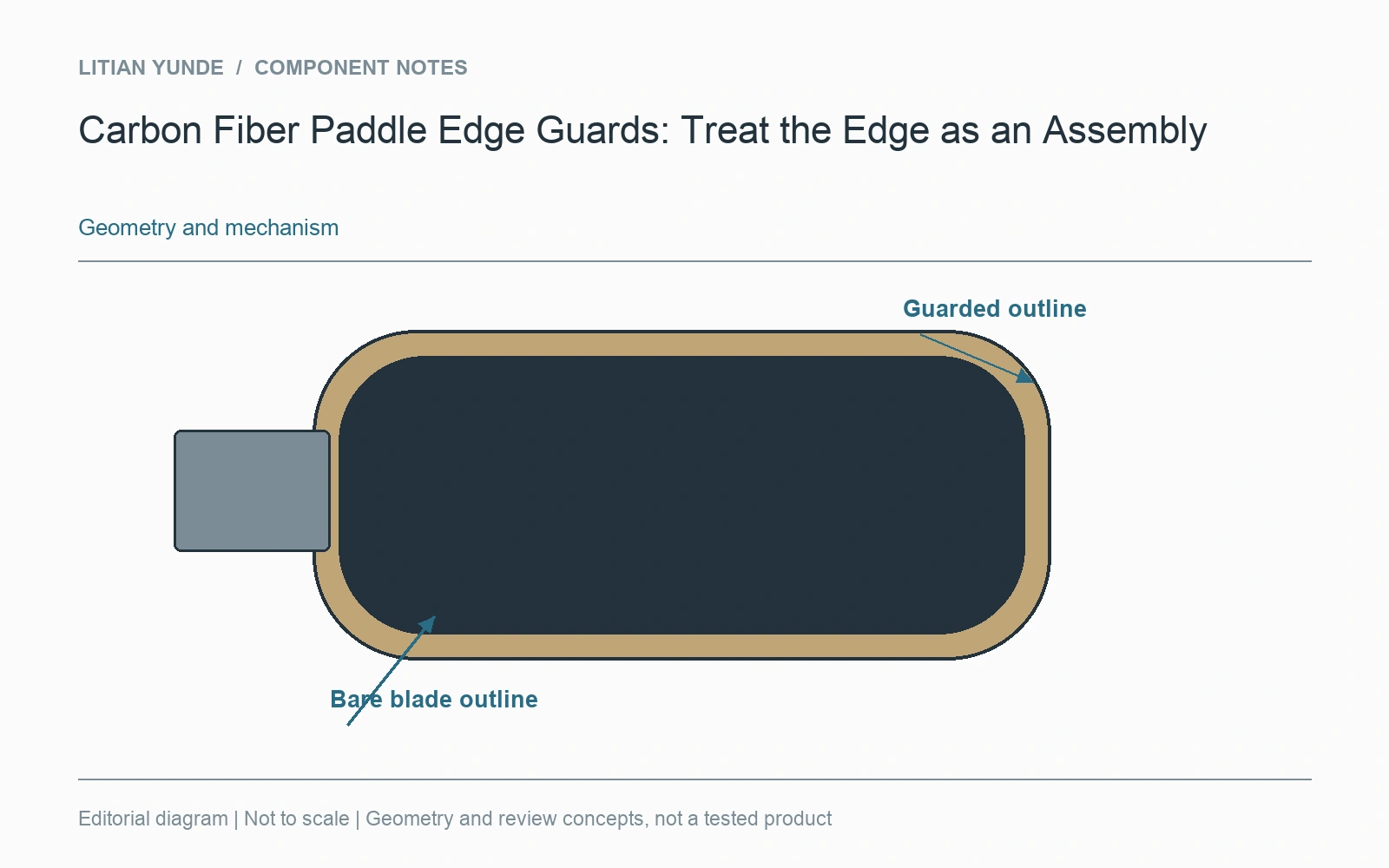
Carbon Fiber Paddle Edge Guards: Treat the Edge as an Assembly
An edge guard is another component in a paddle assembly, not merely a finishing detail. It changes the outside outline and may add local thickness and mass. Review it with…
Read guide →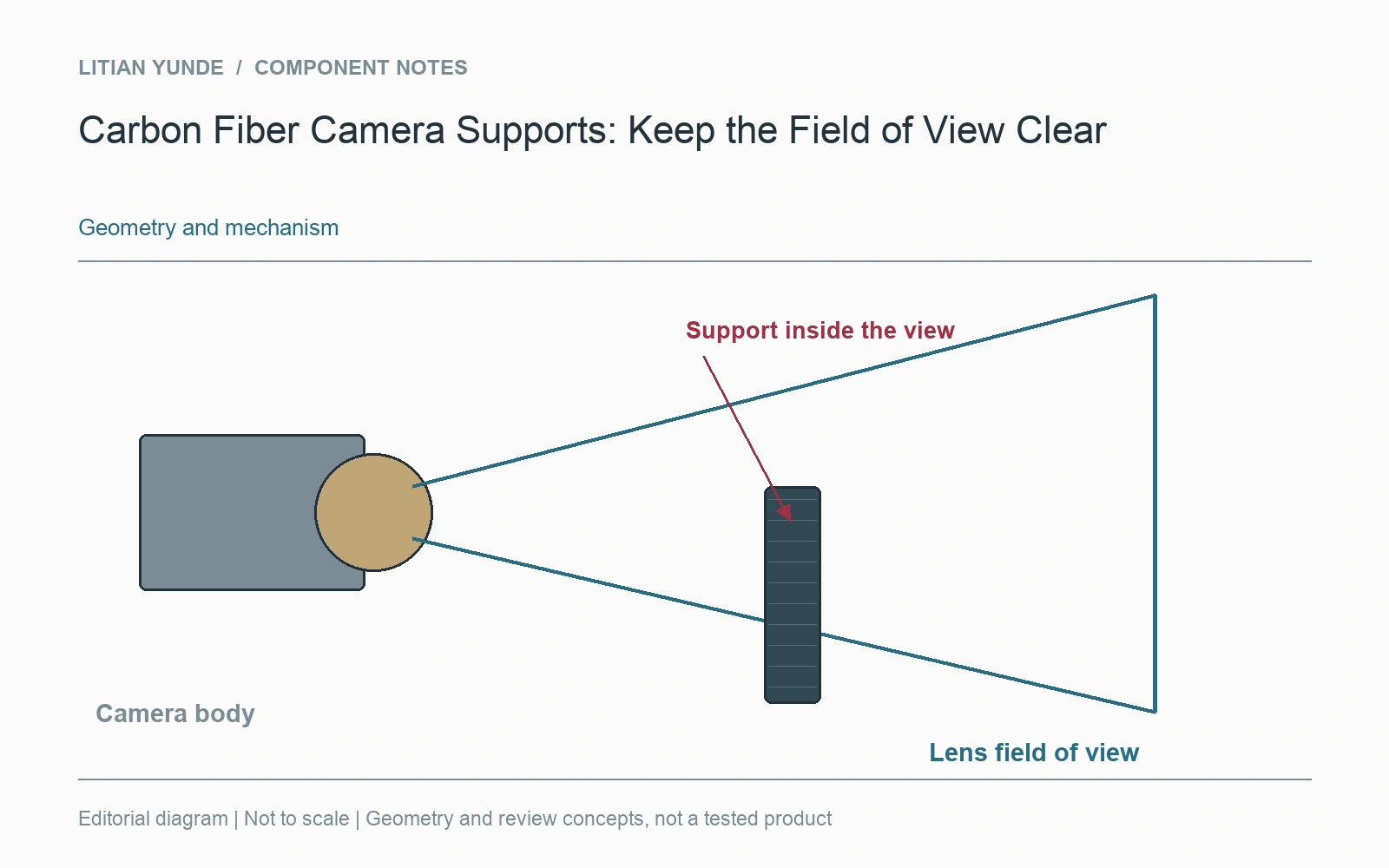
Supports de caméra en fibre de carbone : pour un champ de vision dégagé
A camera support can hold the camera in the right place and still appear in the image. Before refining a carbon fiber bracket or support arm, check the lens field of view…
Read guide →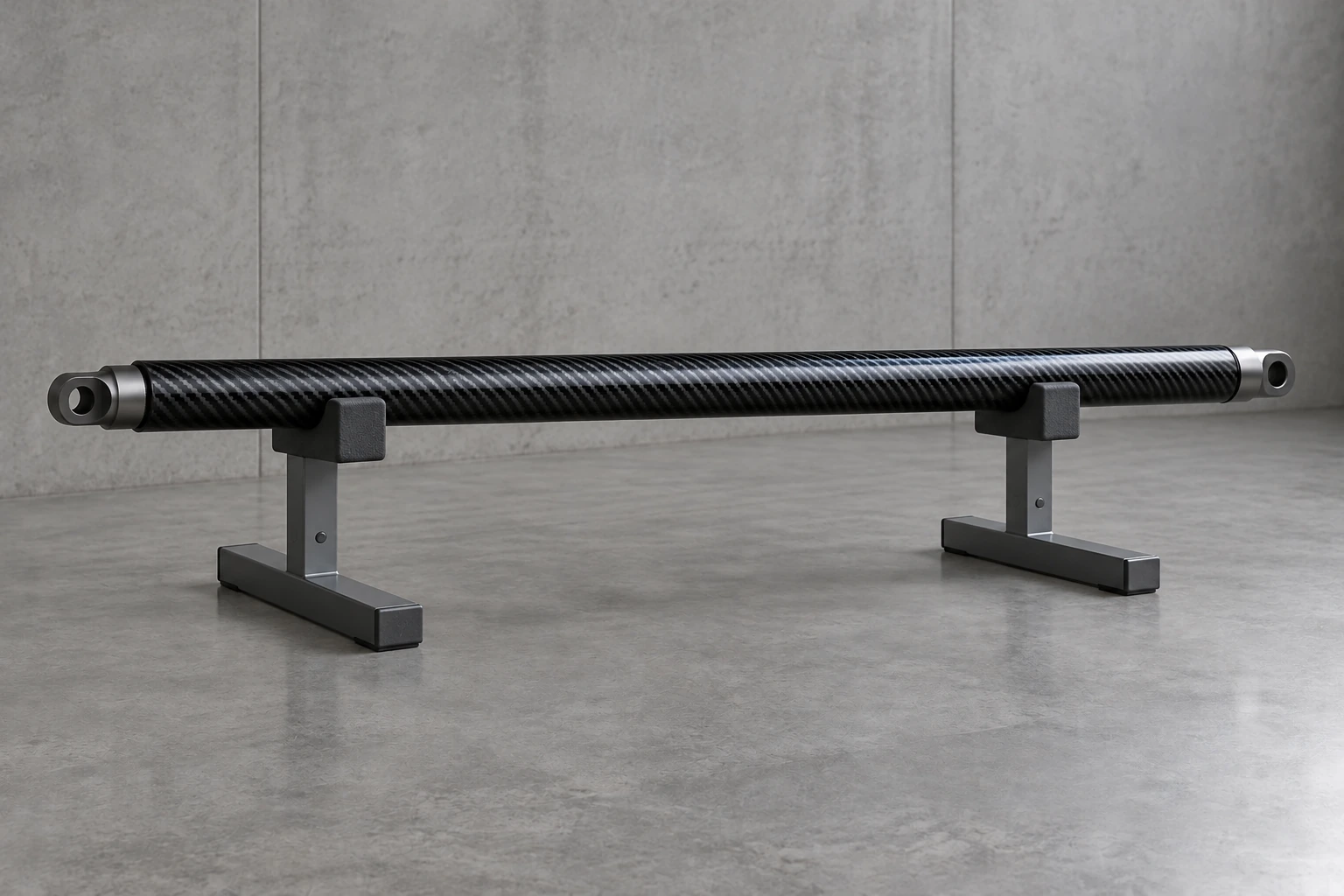
Stockage des pièces longues en fibre de carbone : validation des supports et des modalités de manutention avant la livraison
Long carbon fiber parts need a documented storage and handling arrangement appropriate to their construction and use. Agree support locations, separation and access before…
Read guide →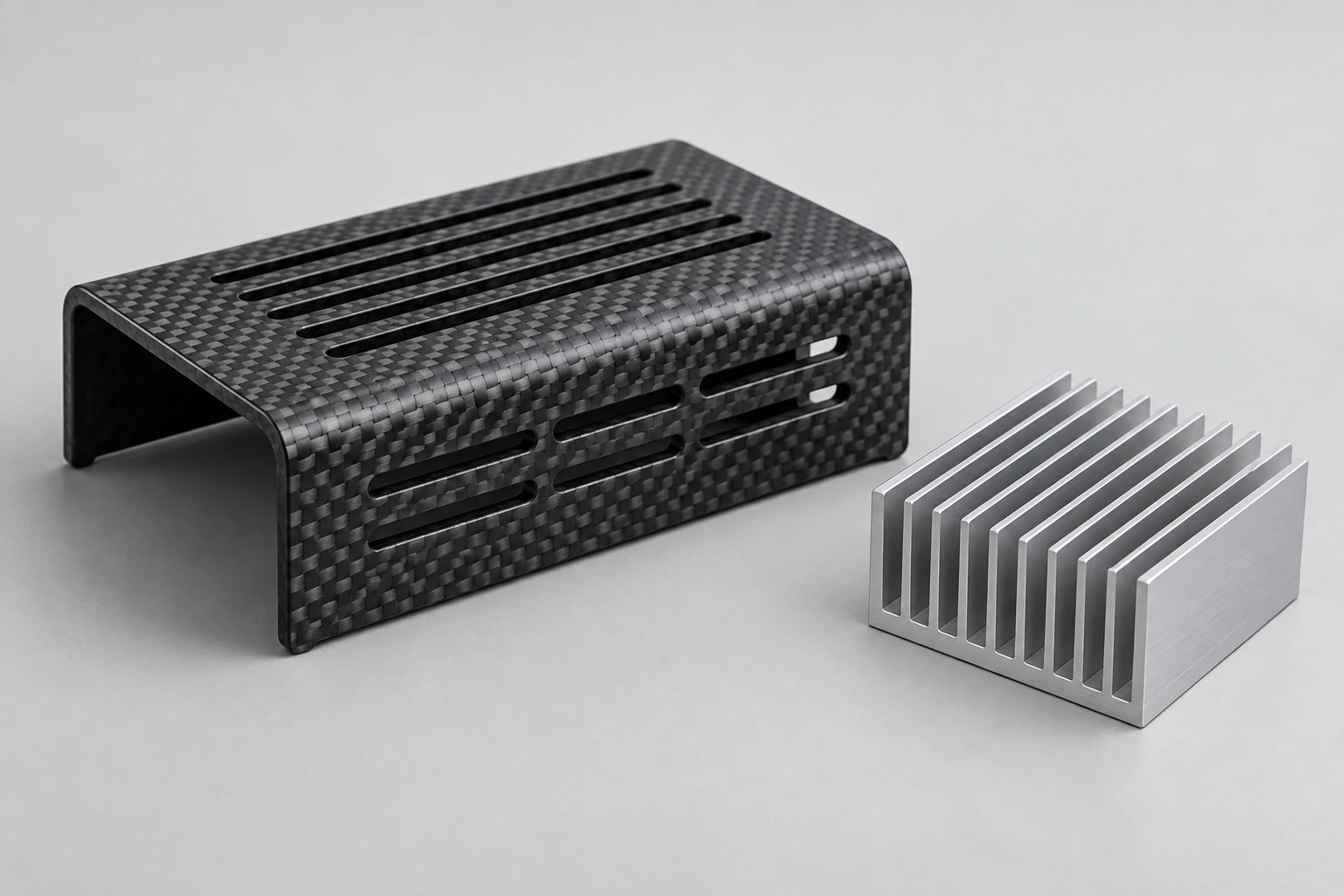
Caches en fibre de carbone ventilés : la surface ouverte ne favorise pas le refroidissement
Vent slots define an opening geometry, not a verified cooling performance. Review the heat sources, airflow route, installed orientation and nearby components before…
Read guide →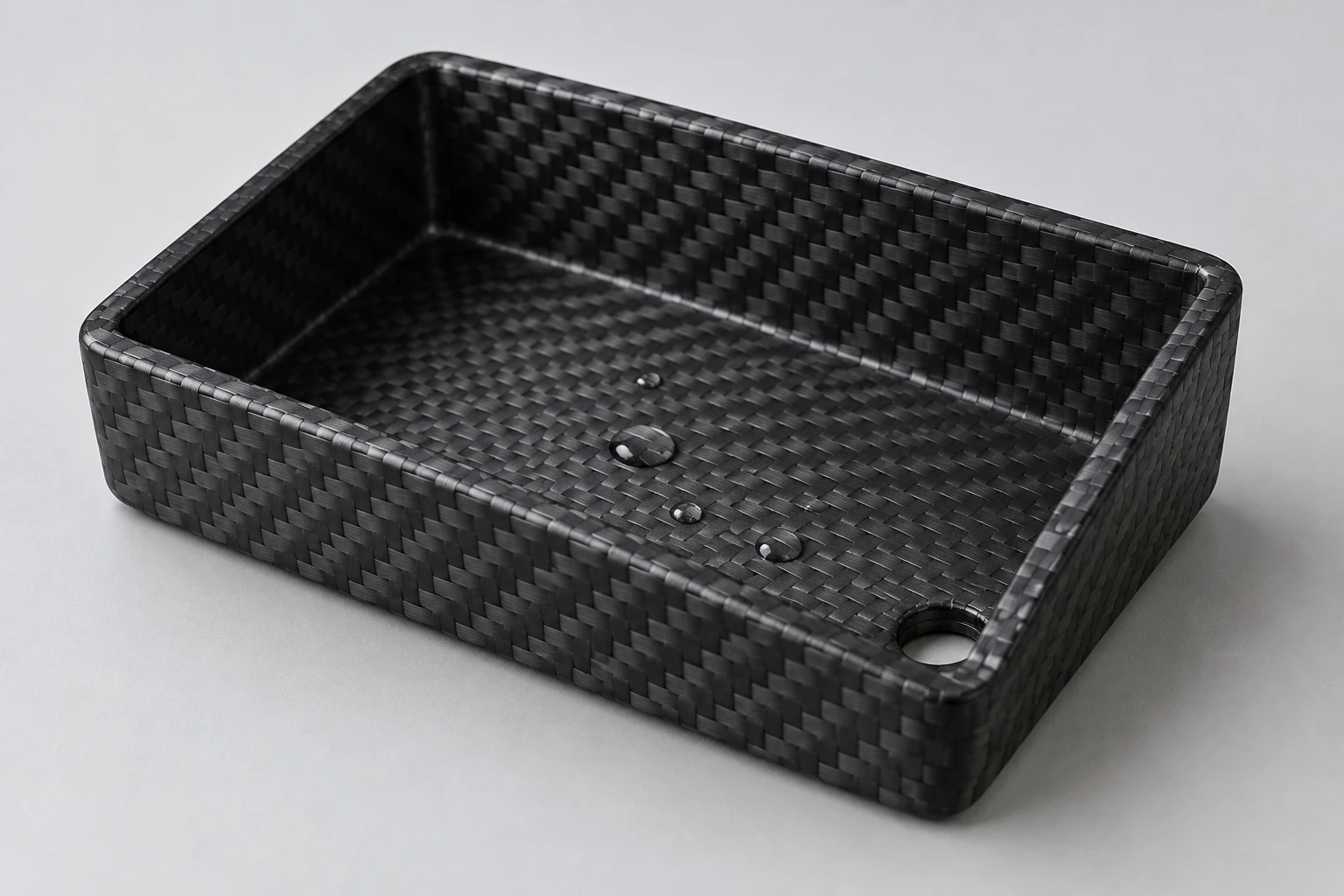
Housses de protection en fibre de carbone : vérifier les voies d'évacuation une fois les housses installées
A drain opening is useful only when water can reach it and leave the installed assembly. Review the cover’s actual orientation, low points, nearby supports and service…
Read guide →
Ensembles en fibre de carbone : préparer une liste des pièces de rechange avant la remise du produit
A carbon fiber assembly should be handed over with a list of the parts needed to maintain its agreed supplied scope. Identify the composite component, hardware, seals, pads…
Read guide →
Tolérances cumulées dans l'assemblage des pièces en fibre de carbone : vérifier l'écart entre les pièces
A carbon fiber component can meet its own drawing and still leave too much or too little clearance in an assembly. A tolerance stack relates the contributing dimensions to a…
Read guide →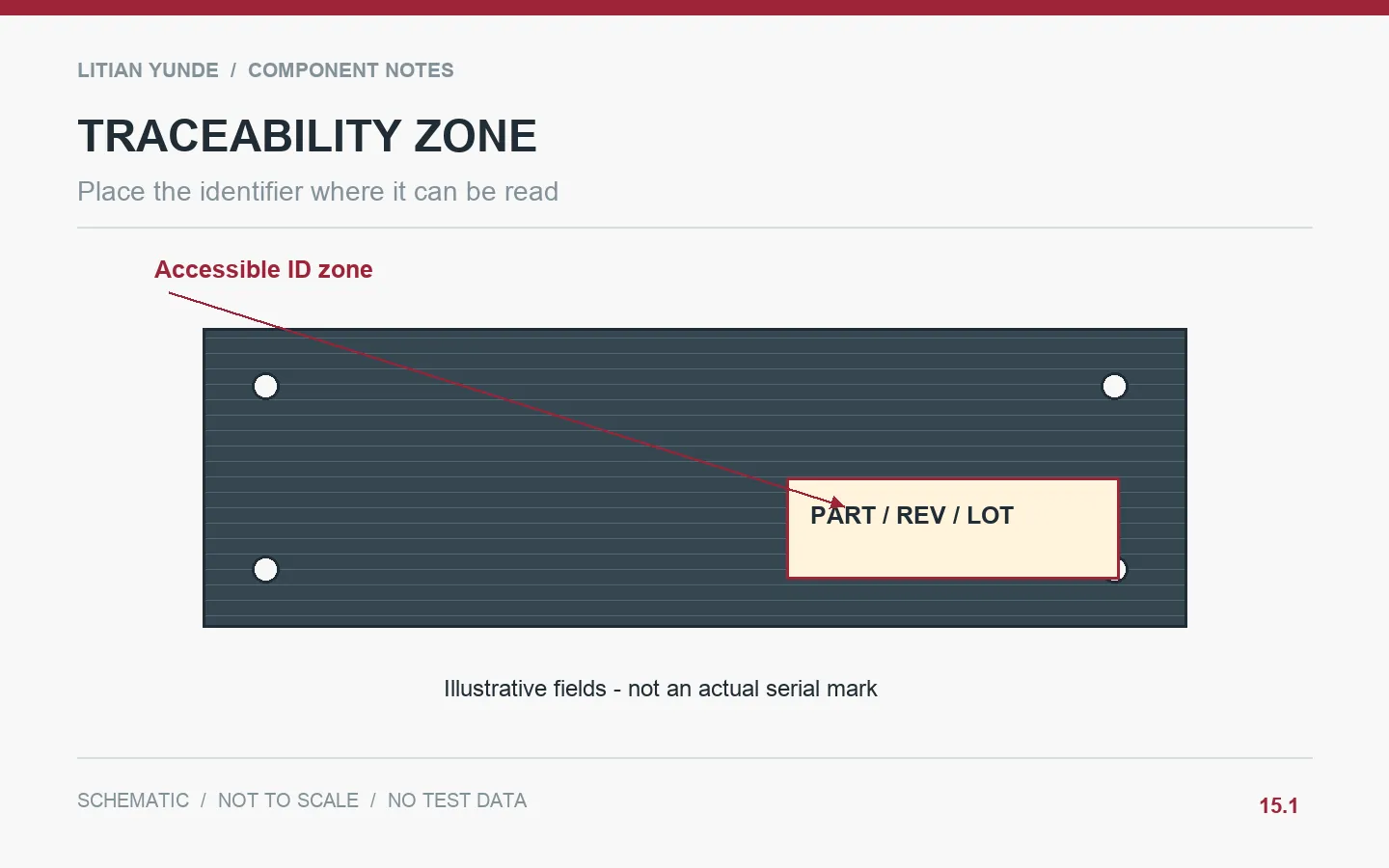
Marking Carbon Fiber Parts: Choose a Traceability Zone Before Production
A traceability mark needs an agreed location, method and readable content. Select a zone that remains accessible and does not conflict with bonding, clamping or critical…
Read guide →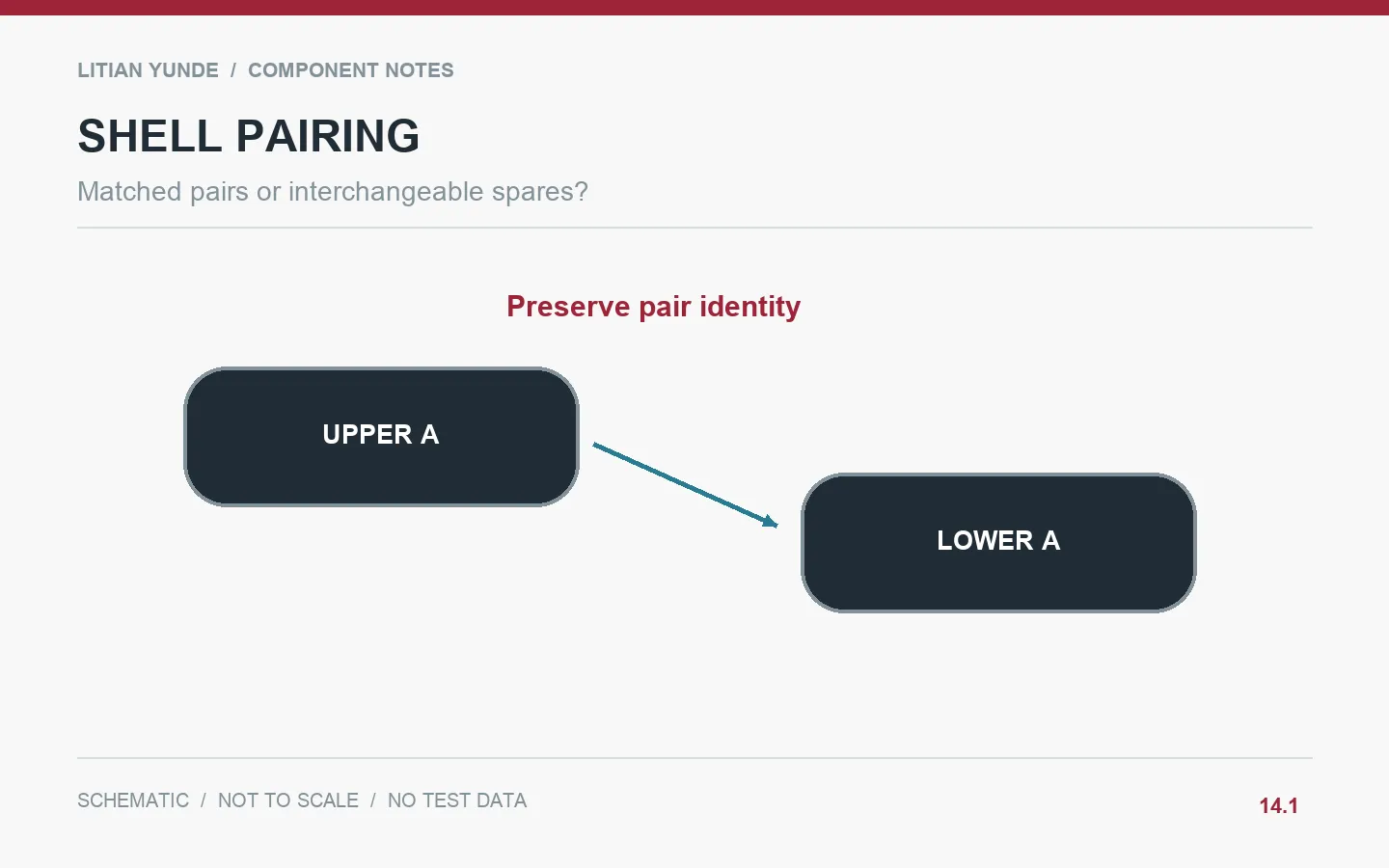
Matched Carbon Fiber Shell Halves: Plan Replacement and Interchangeability
Two shell halves that fit as one sample are not automatically interchangeable across a production batch. Decide whether halves are supplied as matched pairs or as…
Read guide →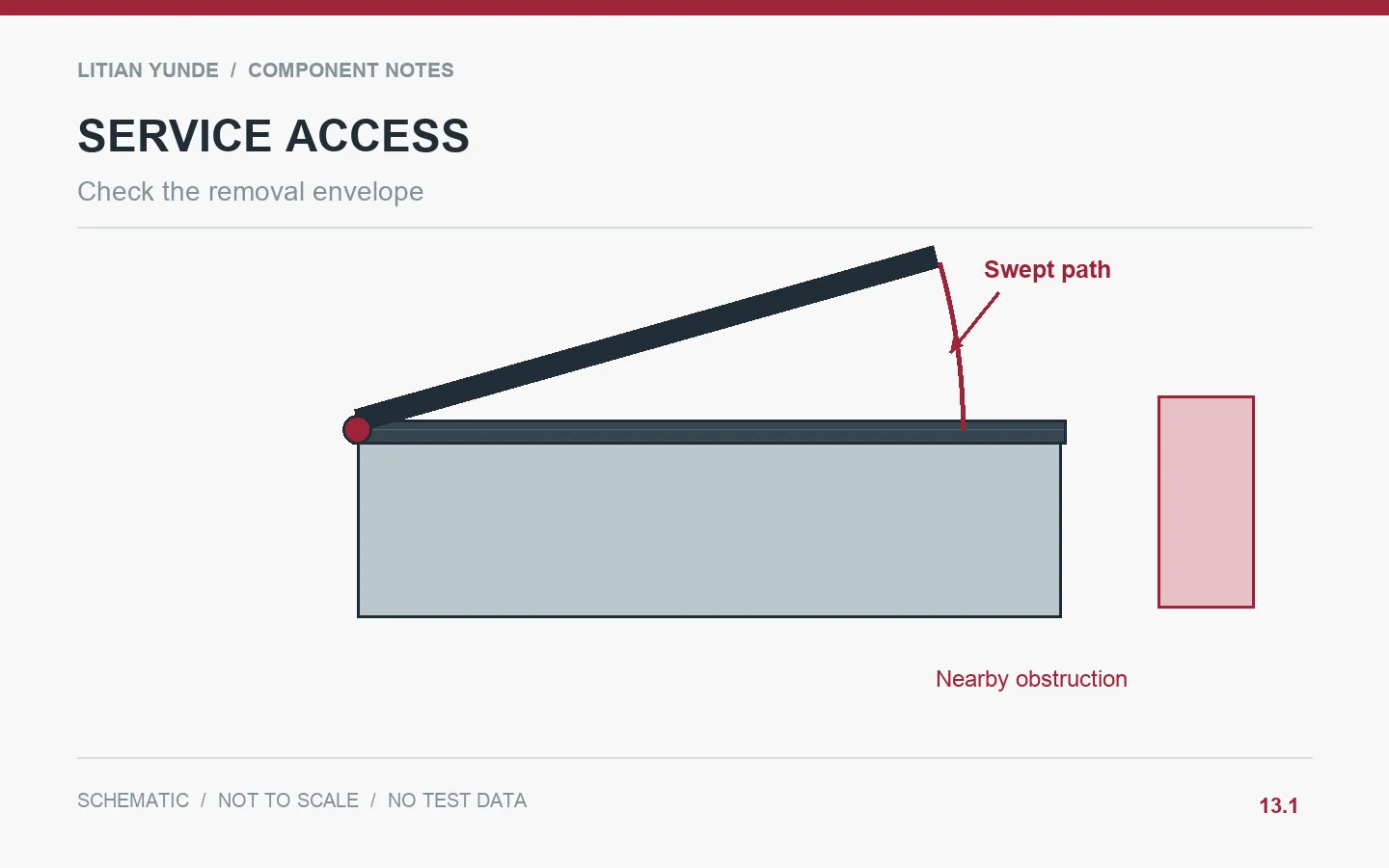
Carbon Fiber Access Panels: Check the Removal Path, Not Only the Closed Fit
An access panel can fit perfectly when closed and still be difficult to remove. Review the swept path, fastener access, hand clearance and nearby cables. The sample…
Read guide →
Coques en fibre de carbone : plan des charnières, des loquets et des dégagements internes
Le boîtier d'un appareil ne constitue qu'une partie d'un ensemble de protection.
Read guide →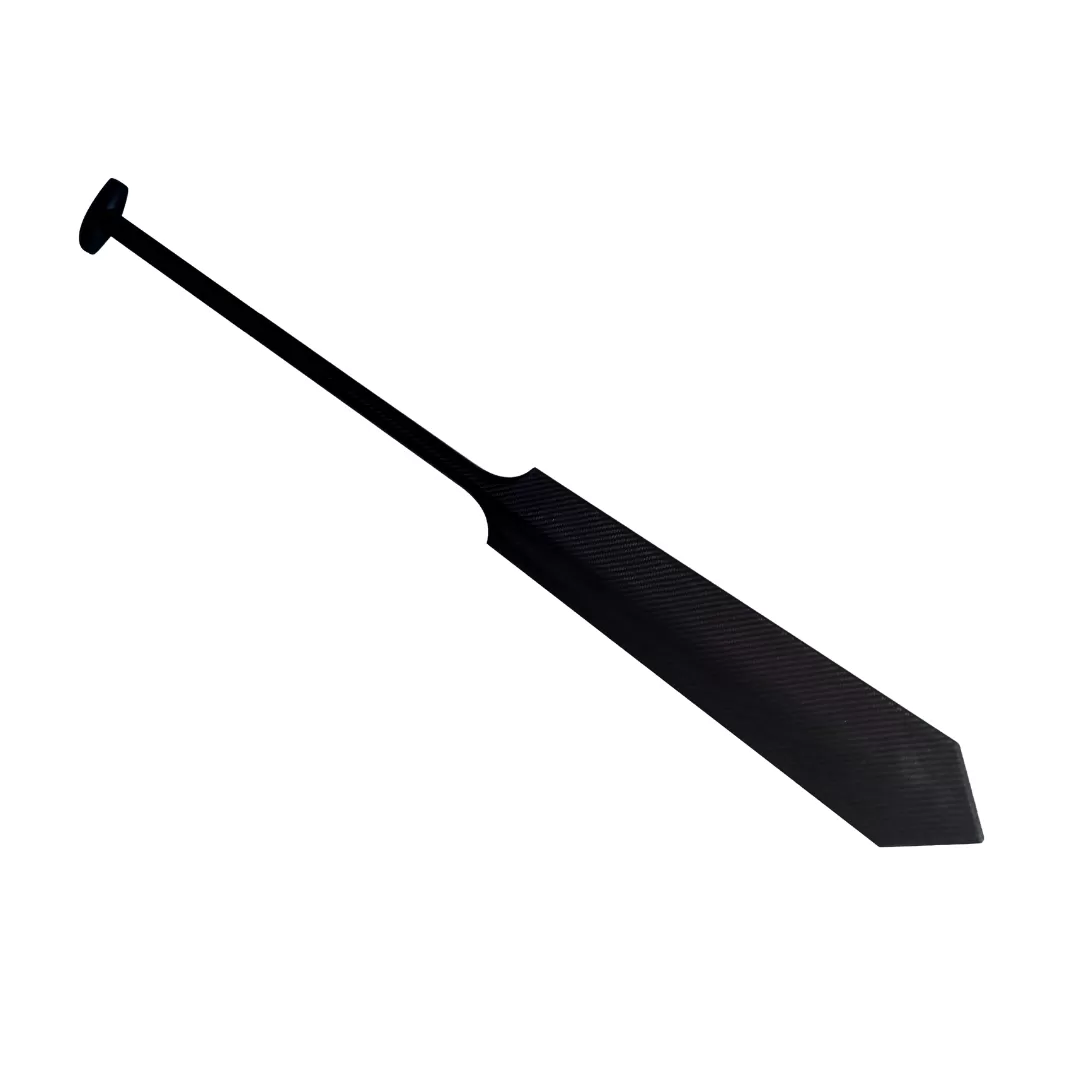
Composants de pagaie en fibre de carbone : définir les interfaces entre la pale et le manche
A paddle-component enquiry should identify the blade, shaft and any connection hardware as an assembly.
Read guide →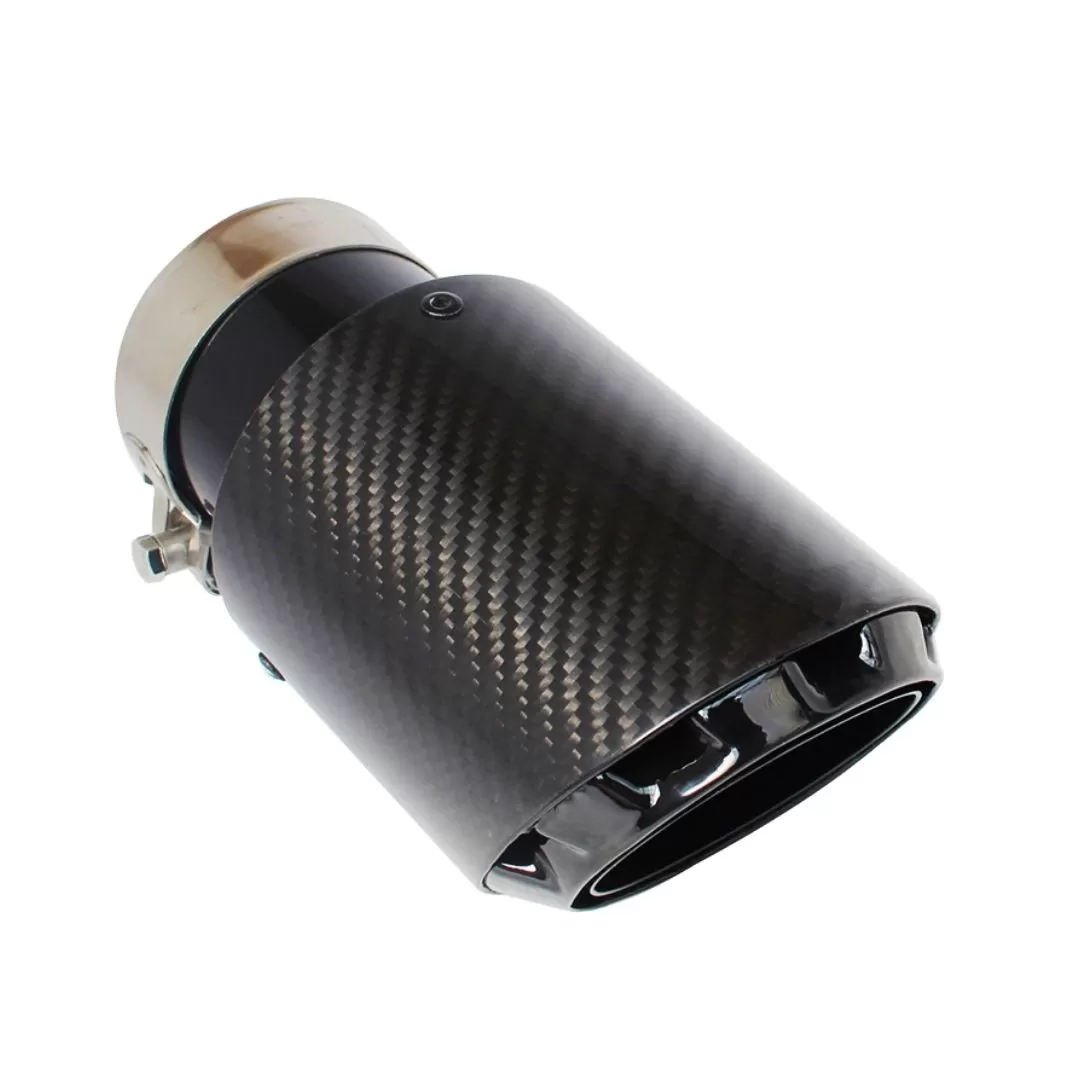
Carbon Fiber Exhaust-Look Components: Define the Actual Scope
A carbon-look exhaust component may be a decorative outer sleeve, a trim tip, a guard or another part of an assembly.
Read guide →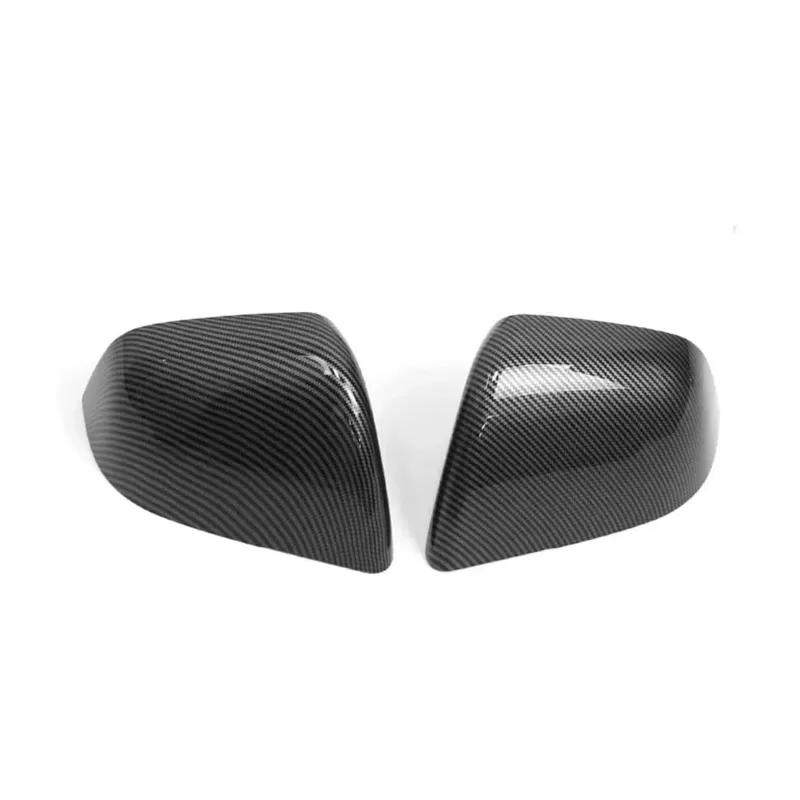
Caches de rétroviseurs en fibre de carbone : distinction entre la forme, l'ajustement et la finition
A mirror-cover enquiry has three distinct parts: the shell geometry, the attachment interface and the visible finish.
Read guide →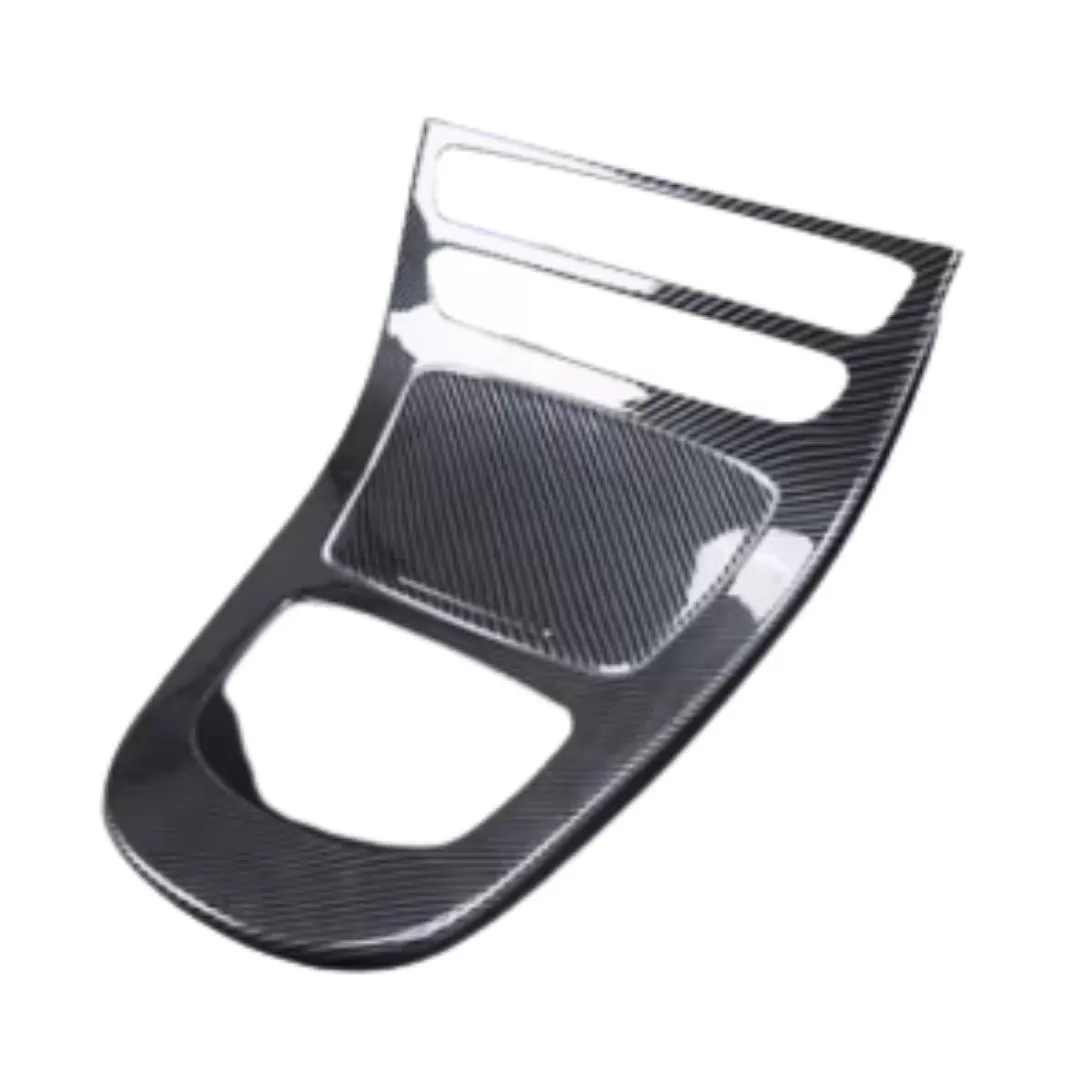
Garnitures en fibre de carbone pour l'automobile : informations relatives au montage dont un fournisseur a besoin
Toute demande concernant une moulure doit préciser la surface d'assemblage exacte et la méthode de pose.
Read guide →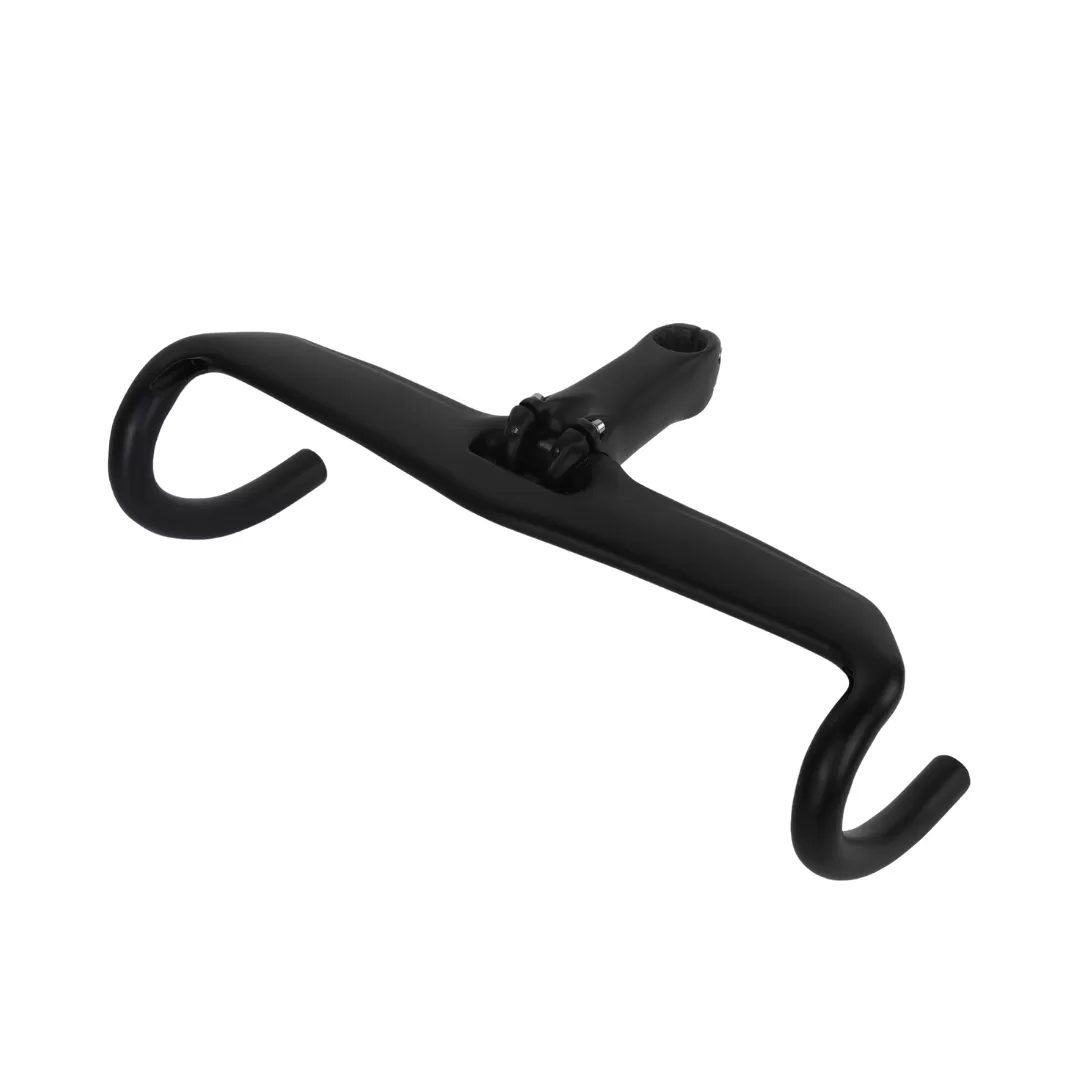
Guidons en fibre de carbone : établissez une liste de contrôle avant de demander un devis
Une demande concernant un guidon doit préciser la configuration complète du poste de pilotage, et pas seulement la forme souhaitée.
Read guide →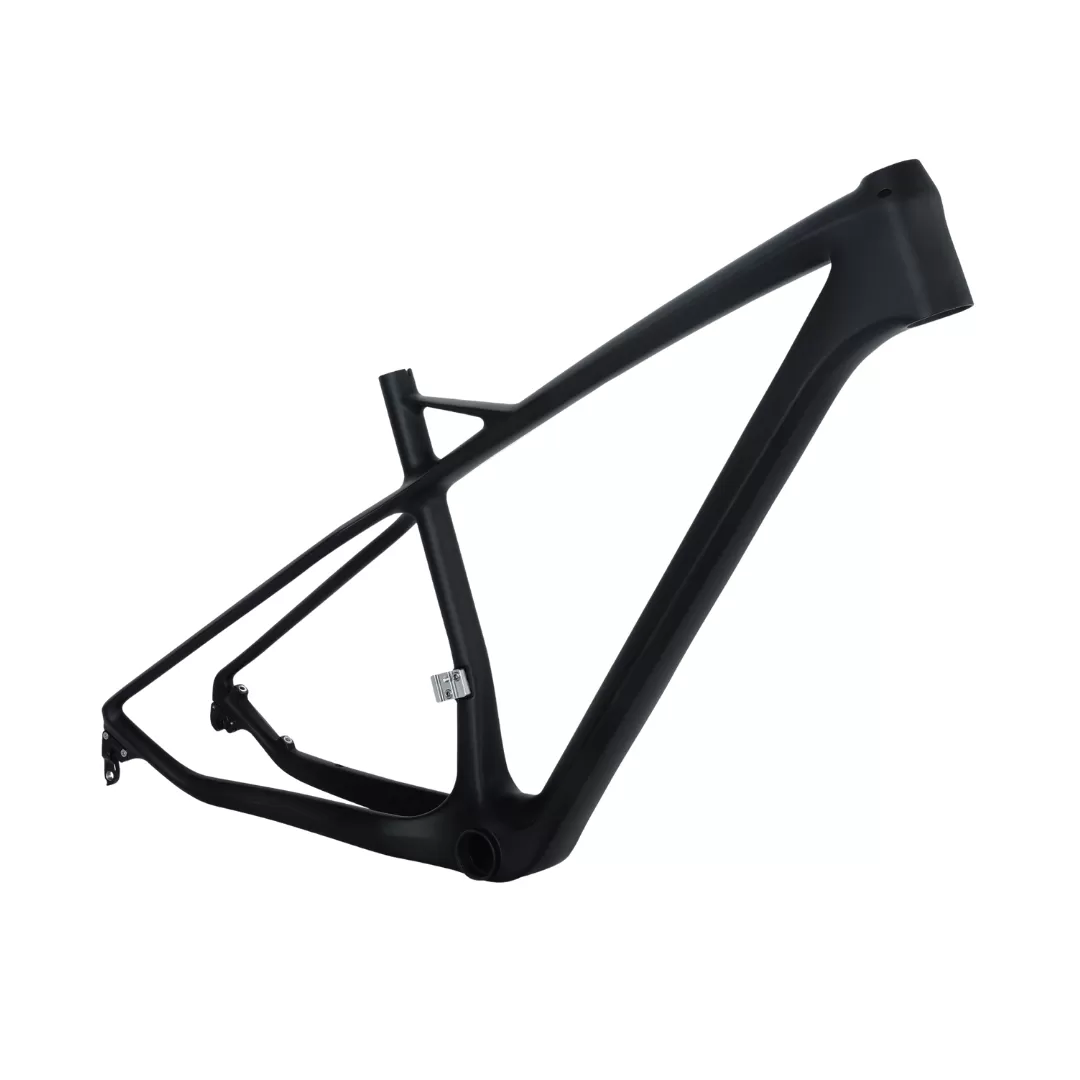
Demandes de renseignements sur les cadres de vélo en fibre de carbone : organiser les données d'interface
A bicycle-frame enquiry should start with a controlled geometry and interface package.
Read guide →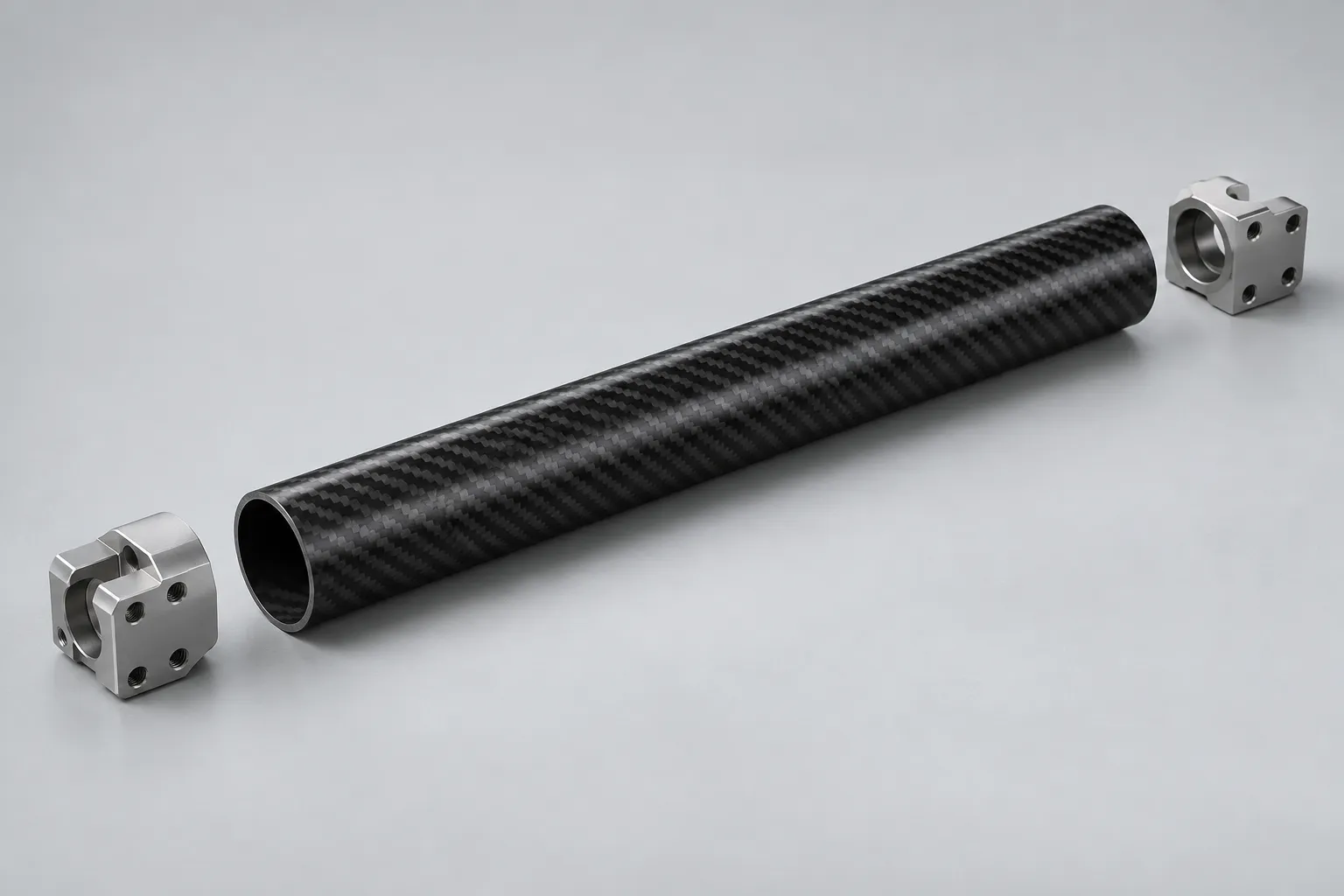
Tubes de bras pour drones en fibre de carbone : définition des interfaces d'extrémité
Pour un tube de bras de drone, les interfaces aux extrémités sont tout aussi importantes pour la demande que la longueur du tube.
Read guide →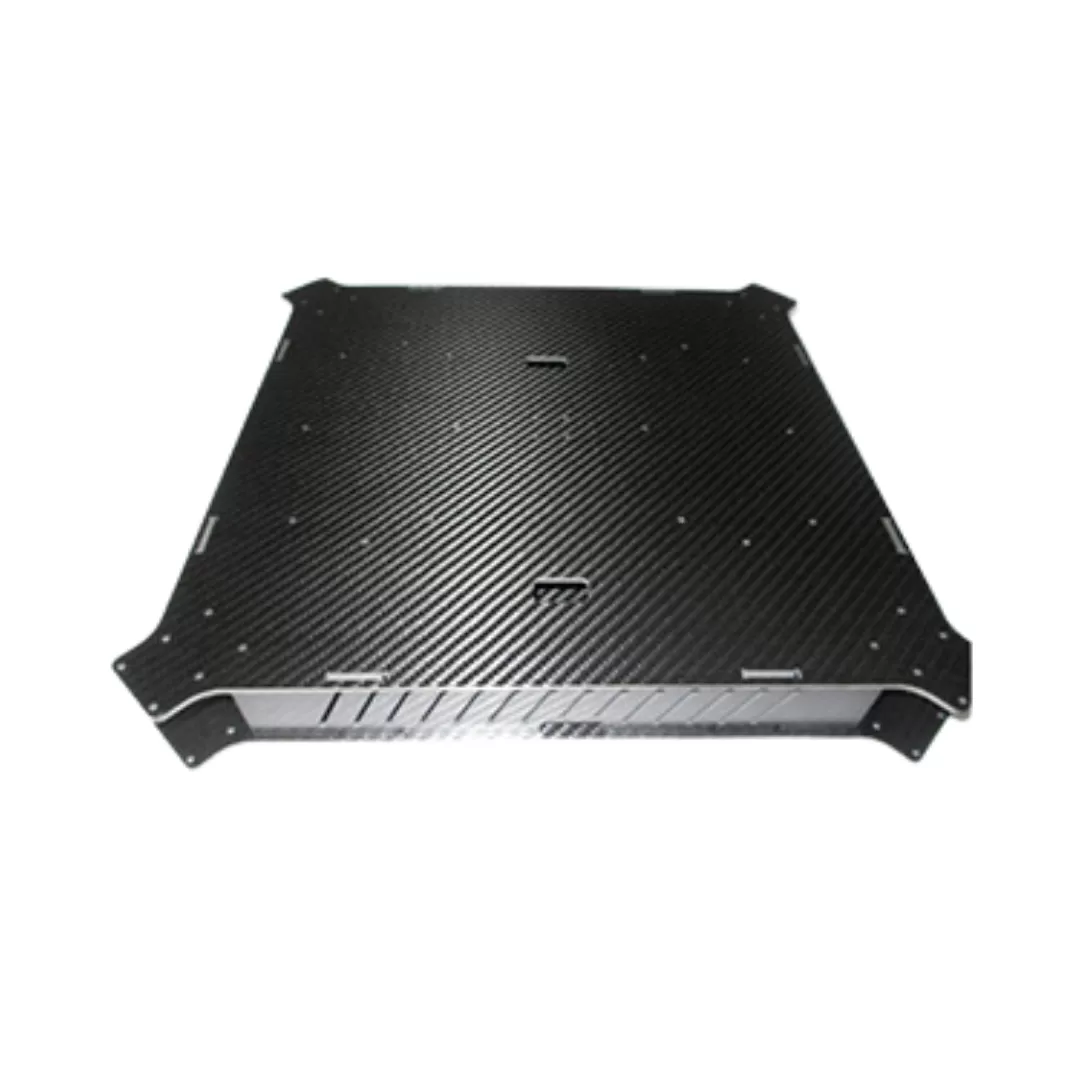
Conception d'un plateau électronique pour drone : la facilité d'accès avant tout
An electronics tray needs a clear equipment layout and service-access plan.
Read guide →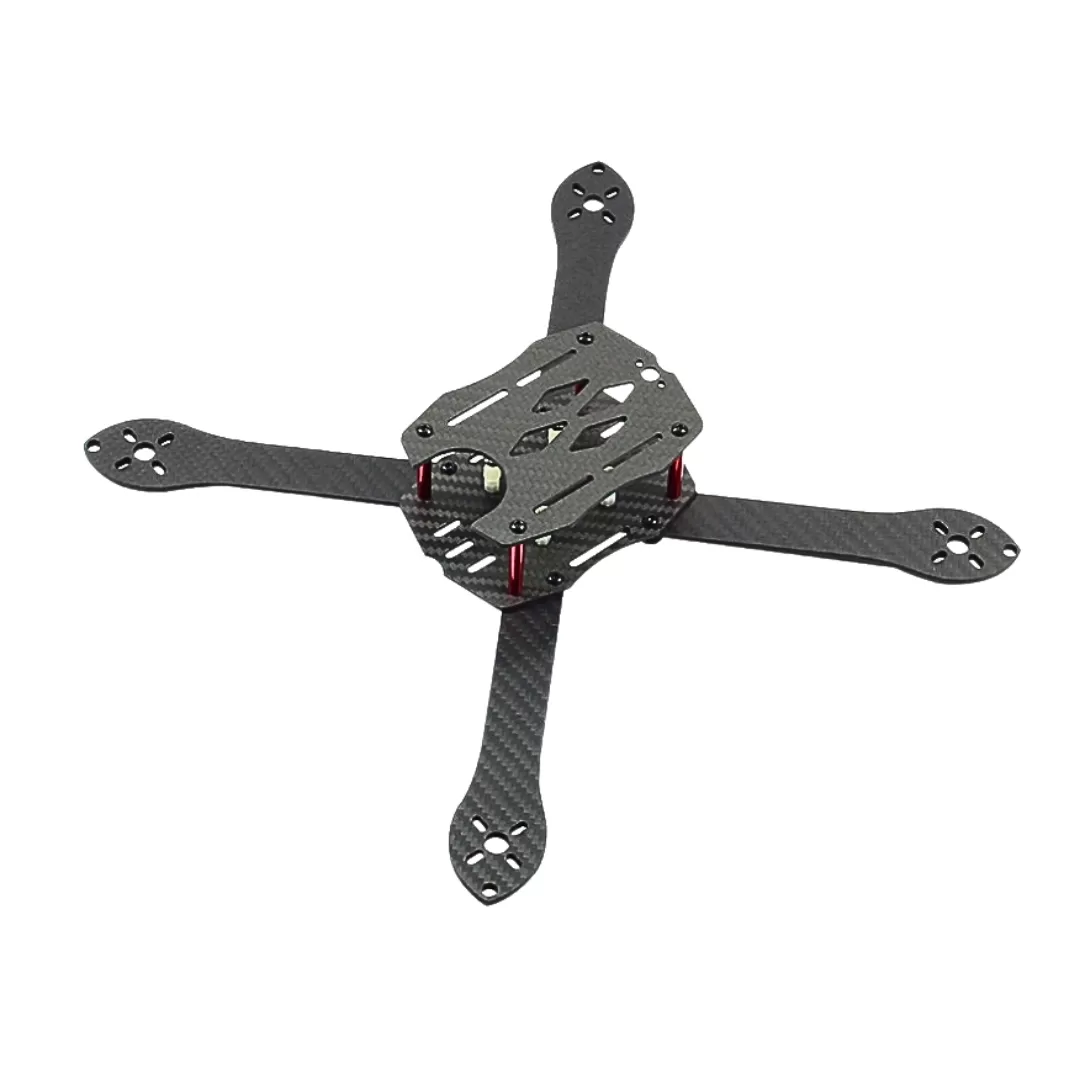
Plaques de fixation pour drones : un guide pratique des plans et des interfaces
Toute demande concernant une plaque de fixation pour drone doit préciser le composant à fixer, le schéma de fixation, l'espace disponible et les contraintes auxquelles la conception doit répondre.
Read guide →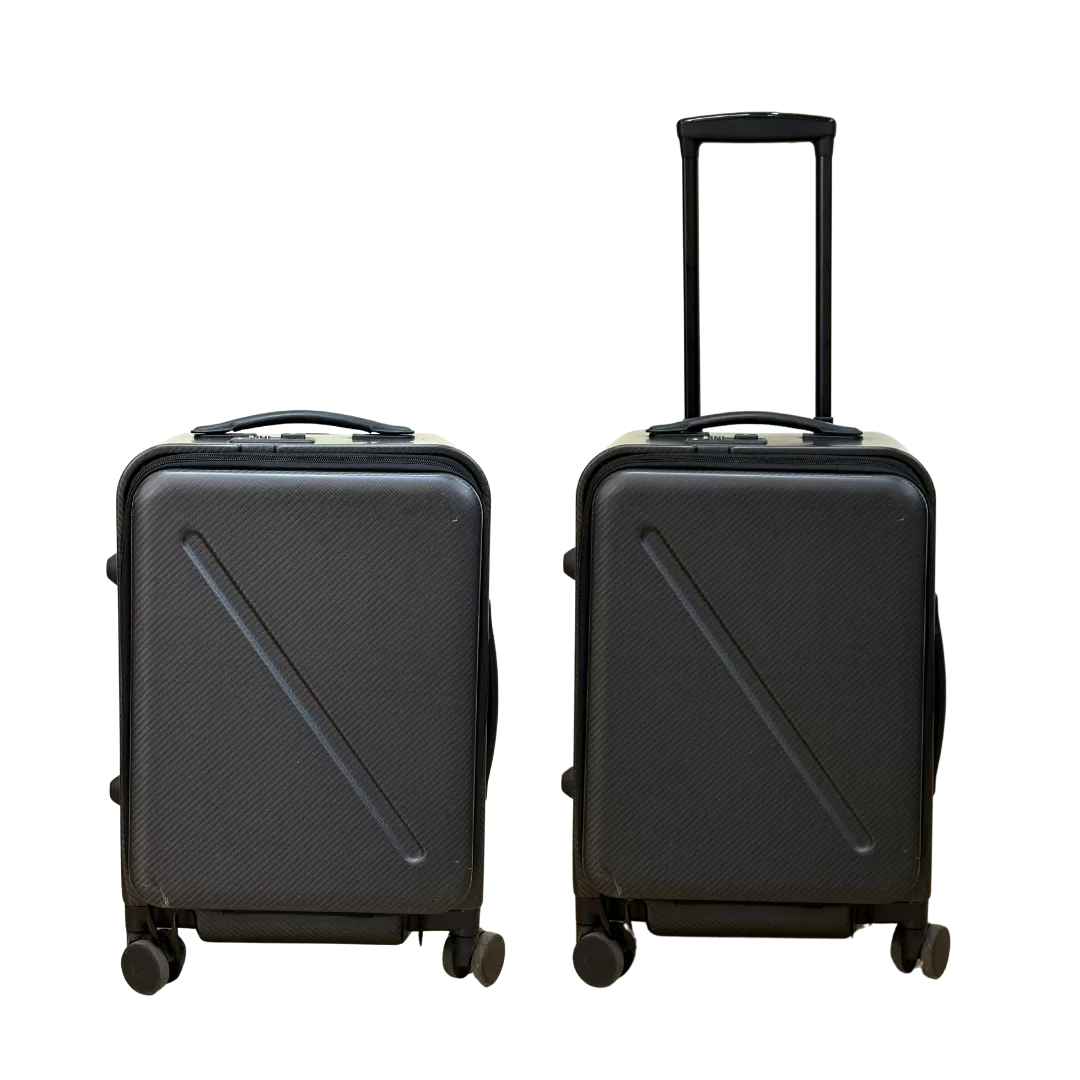
Carbon Fiber Lightweighting: Compare the Complete Assembly
A lighter component does not automatically produce a lighter assembly. Compare the finished part together with its brackets, inserts, fasteners and protective layers before…
Read guide →
Designing Carbon Fiber Automotive Panels: Shape and Attachment
For a custom automotive panel, the external surface and the attachment geometry need separate definition. A smooth rendered shape is not enough to quote a part that must fit…
Read guide →
Pièces d'équipements médicaux en fibre de carbone : définition du périmètre de la fourniture
An enquiry for a carbon fiber medical-equipment component should identify exactly what is being supplied: a prototype shell, a mechanical support or a finished device. These…
Read guide →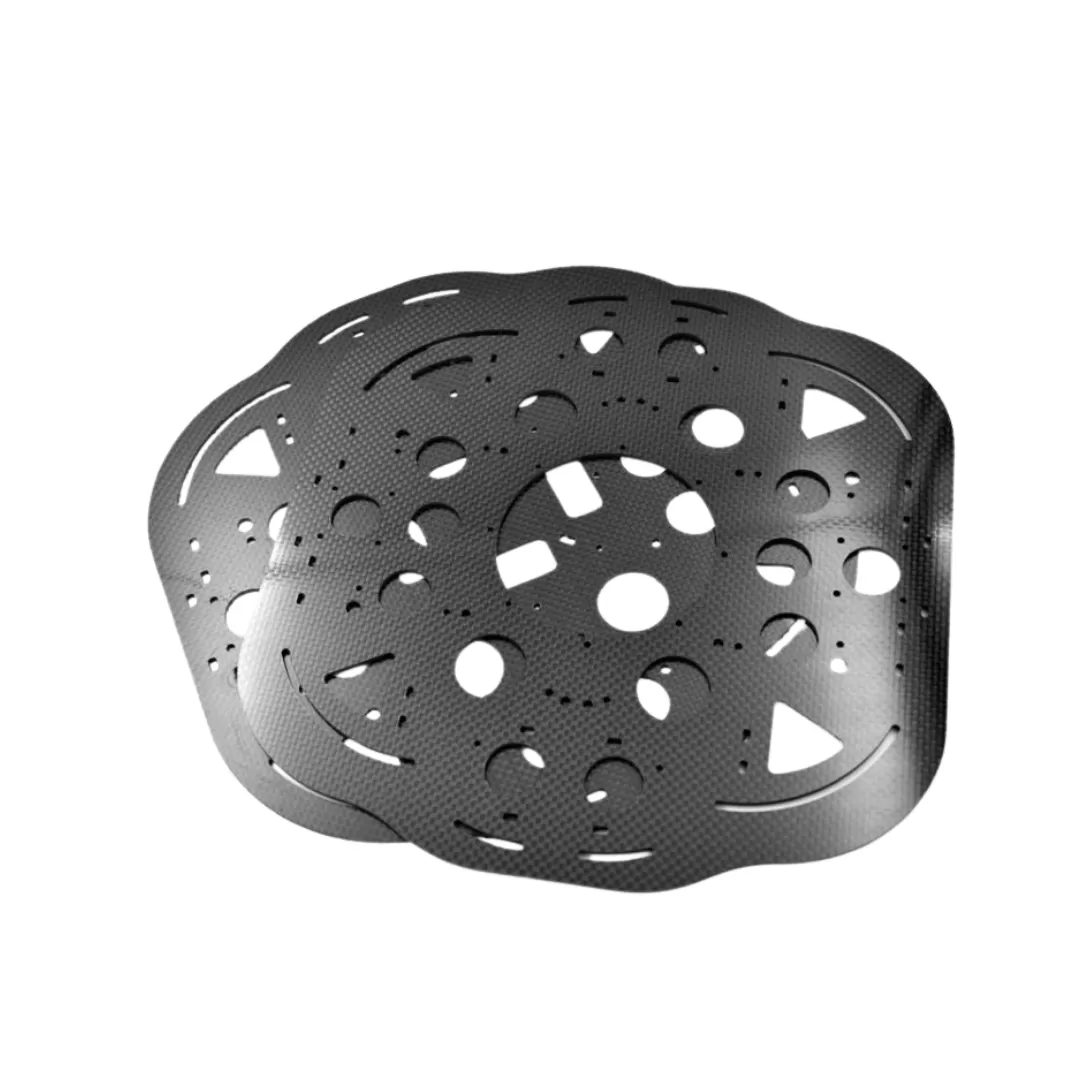
Capots de robot en fibre de carbone : accès, câbles et facilité d'entretien
A robot cover needs more than a matching outer shape. Its openings, fixing points and removal path should allow the equipment to be assembled and serviced without damaging…
Read guide →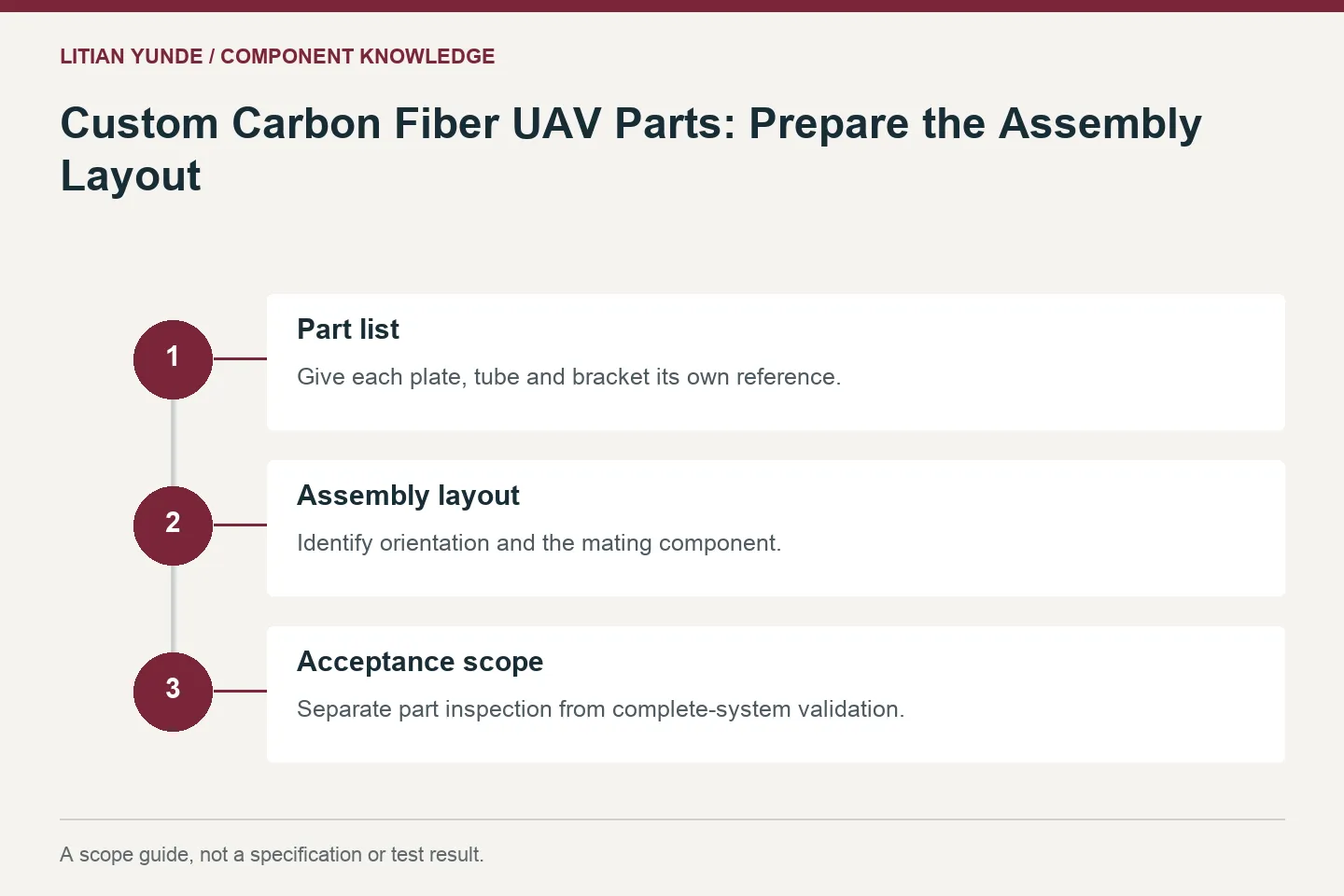
Pièces sur mesure en fibre de carbone pour drones : préparation du schéma d'assemblage
A useful UAV component enquiry starts with the assembly layout: what each plate, tube or bracket connects to and which spaces must remain clear. This helps separate a…
Read guide →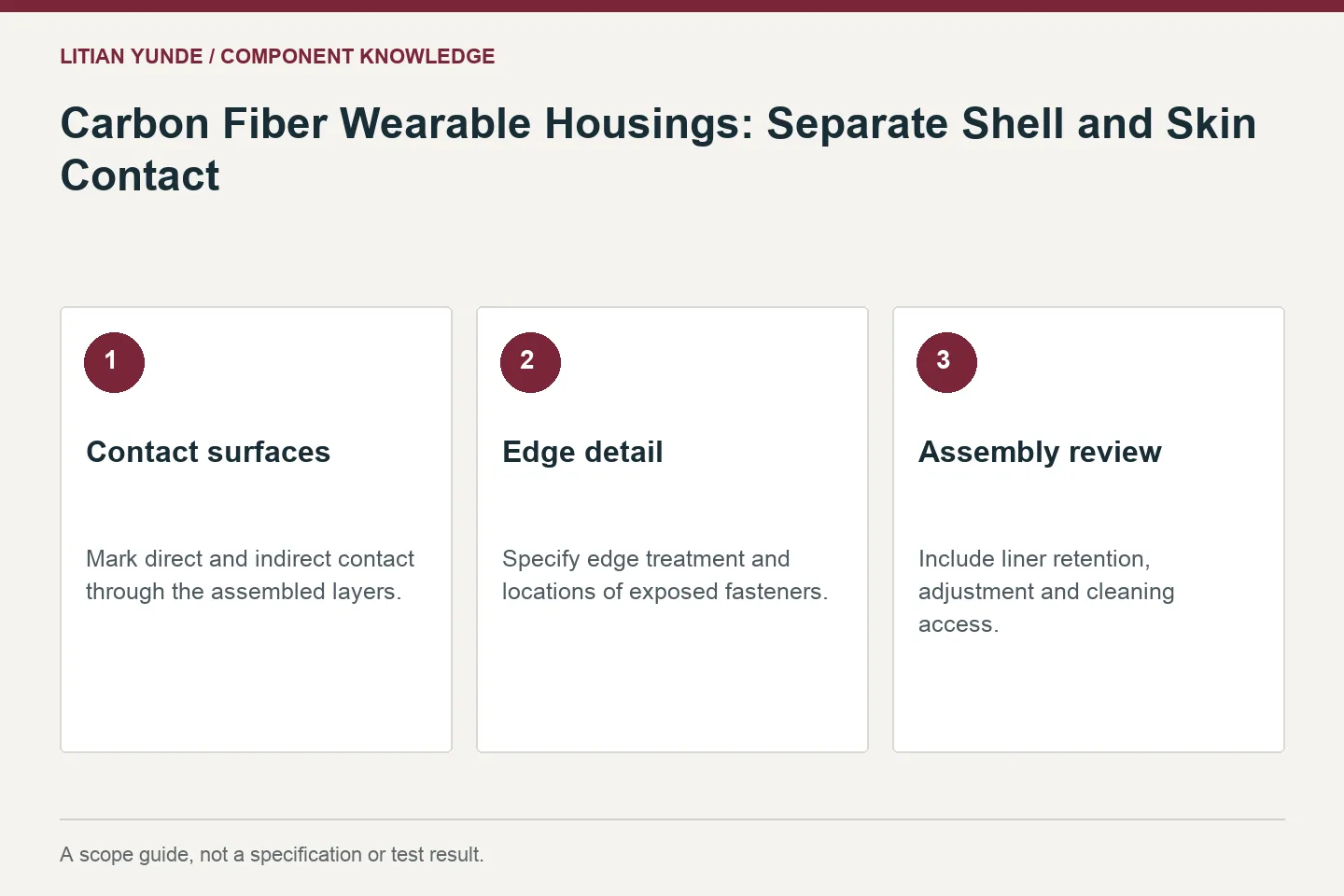
Boîtiers portables en fibre de carbone : contact distinct entre la coque et la surface en contact avec la peau
A carbon fiber outer housing and a surface that touches the wearer should be specified separately. The shell material name does not describe the complete contact surface,…
Read guide →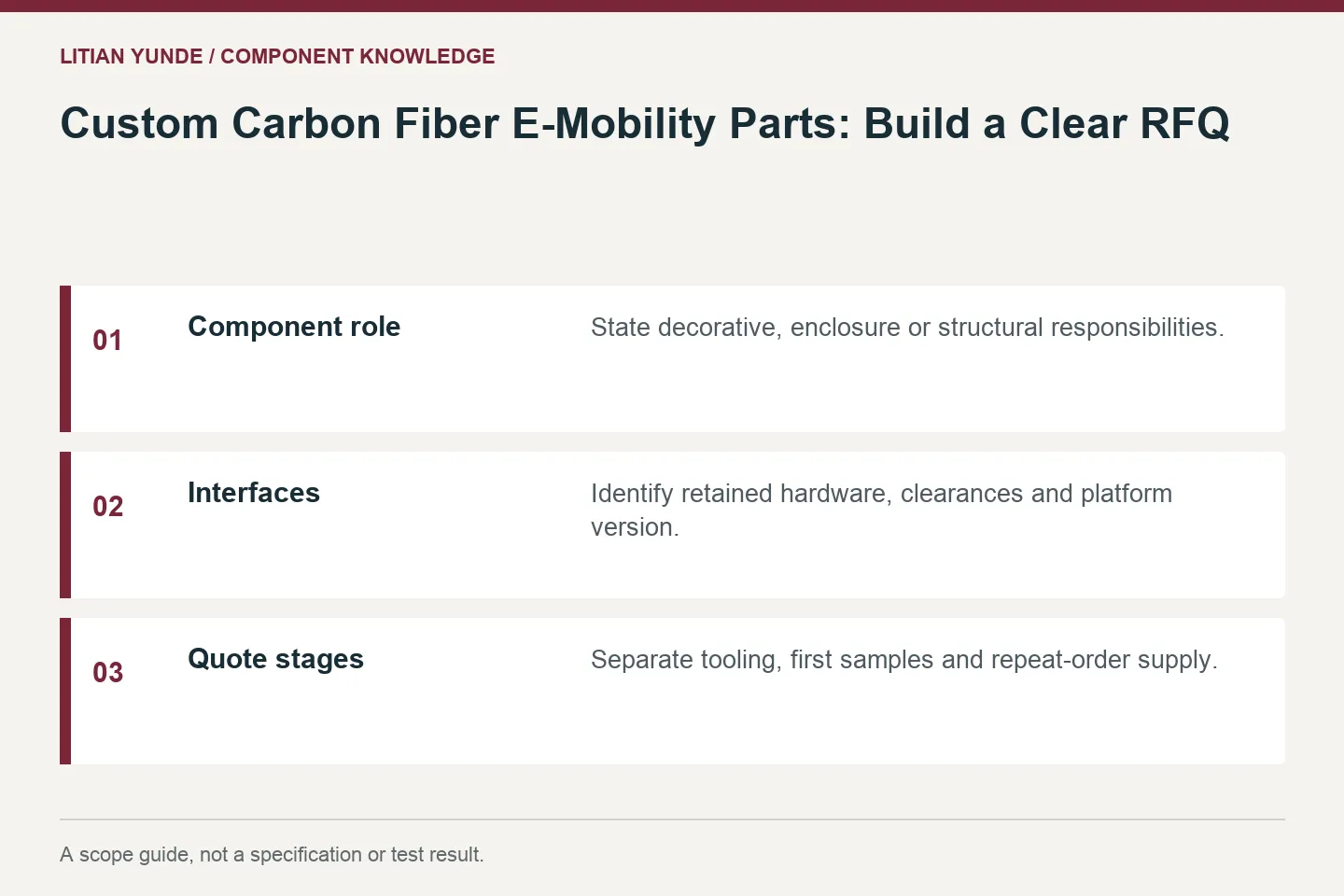
Pièces sur mesure en fibre de carbone pour la mobilité électrique : rédigez un appel d'offres clair
For an e-mobility project, specify the component’s role before asking for a carbon fiber quotation. A cosmetic panel, an electronics cover and a load-carrying member need…
Read guide →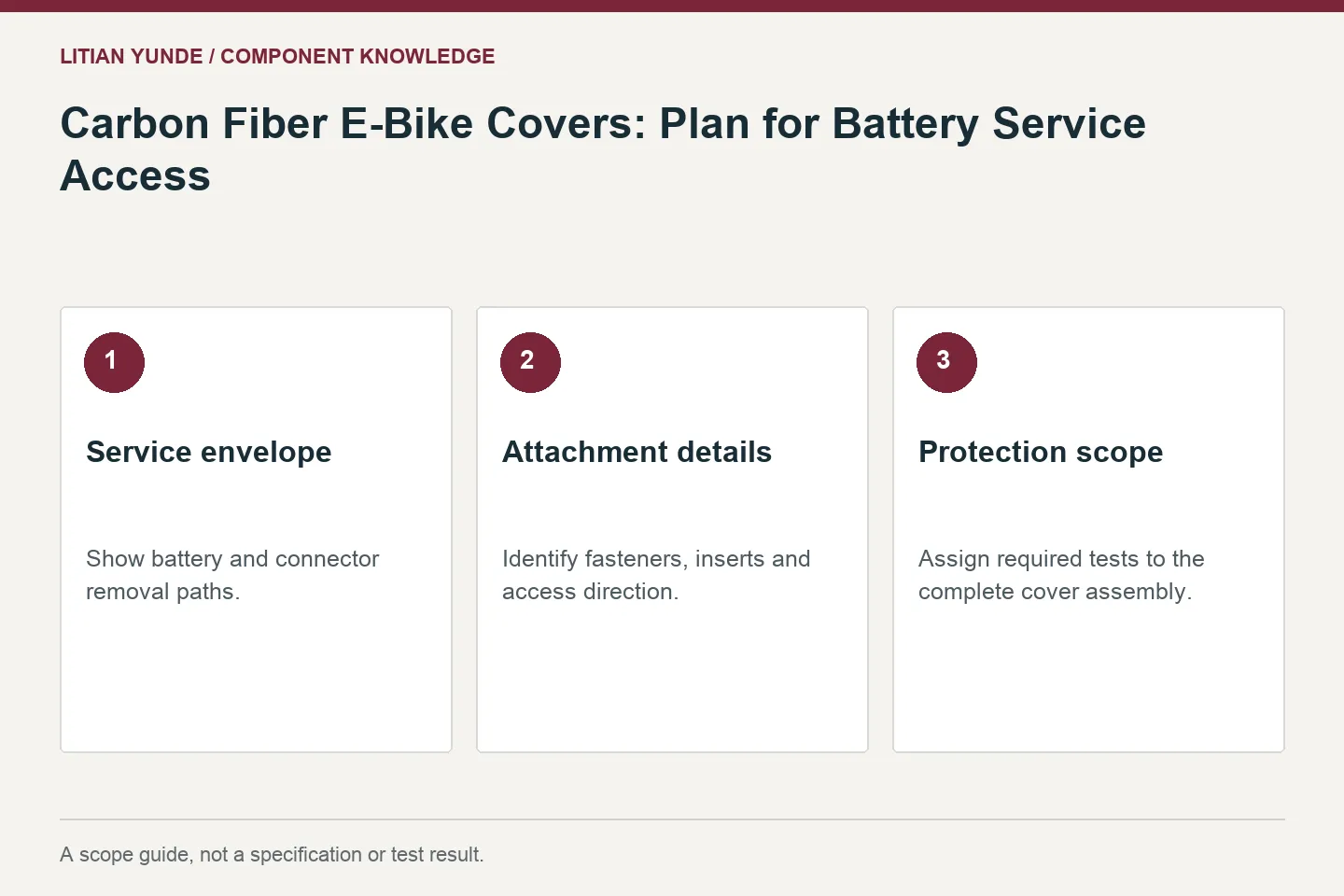
Housses en fibre de carbone pour vélos électriques : prévoir un accès pour l'entretien de la batterie
An e-bike cover should be reviewed with the battery, connectors and attachment hardware in place. A good external fit does not establish that the battery can be removed or…
Read guide →
Panneaux extérieurs en fibre de carbone : préciser l'exposition et la finition
For an exterior carbon fiber panel, describe the finish and the exposure it must withstand as separate requirements. A glossy photograph records appearance, not weathering…
Read guide →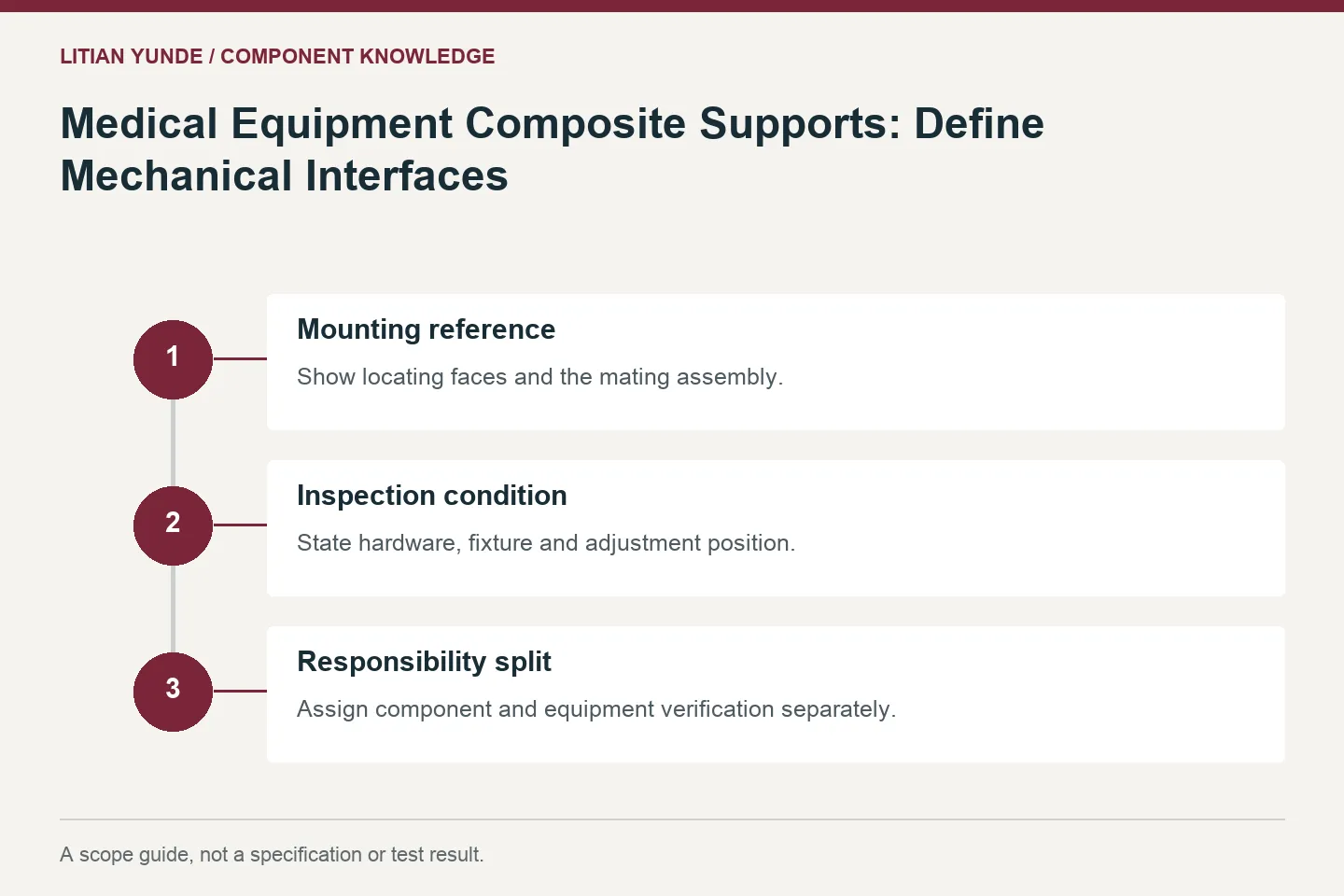
Supports composites pour équipements médicaux : définition des interfaces mécaniques
For a composite support used in medical equipment, the enquiry should make mounting and positioning requirements explicit. Mechanical fit can be reviewed without assuming…
Read guide →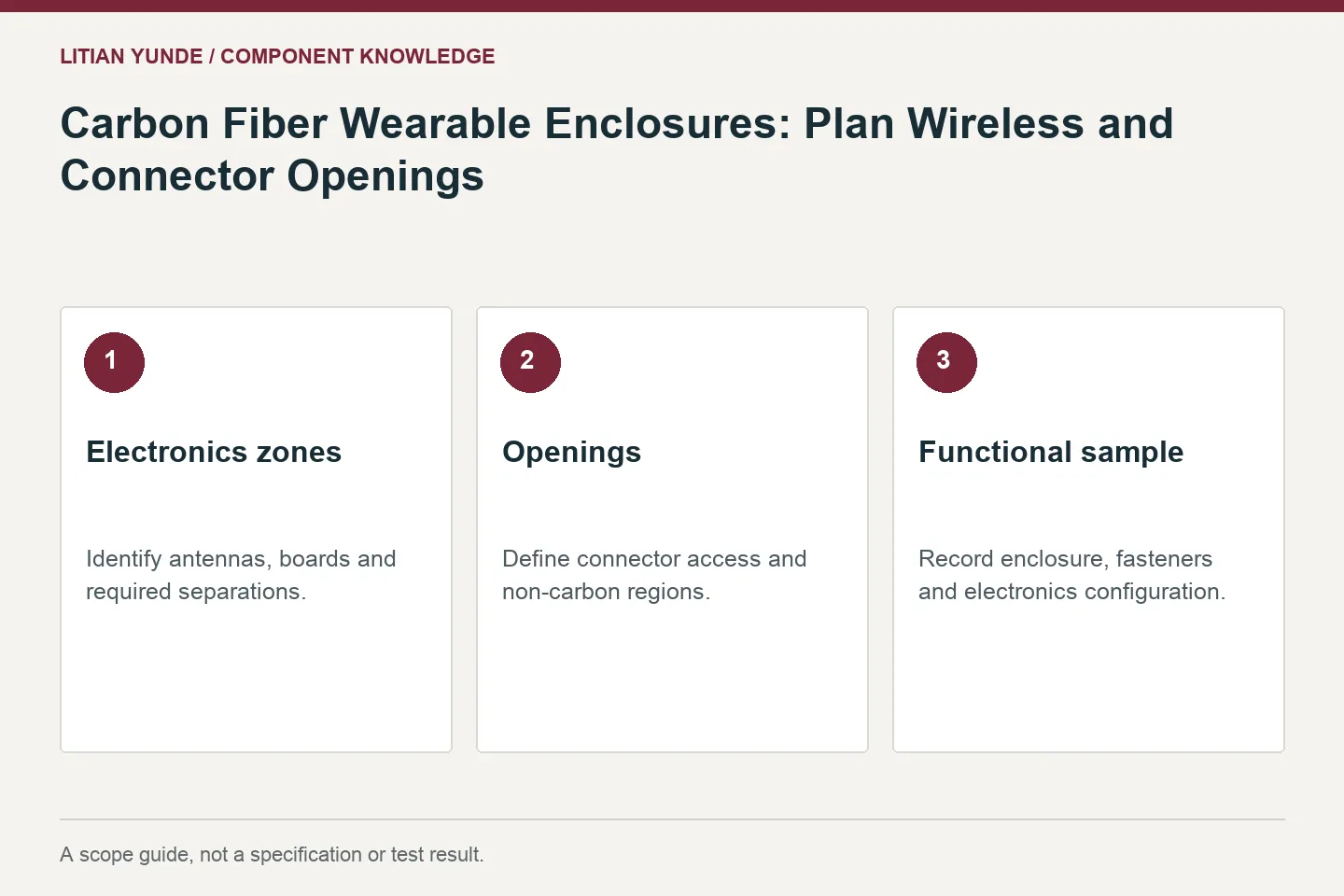
Boîtiers portables en fibre de carbone : planification des ouvertures pour les composants sans fil et les connecteurs
An enclosure layout should identify antenna regions, connectors and service openings before the carbon fiber shell is frozen. The enclosure material and the electronics…
Read guide →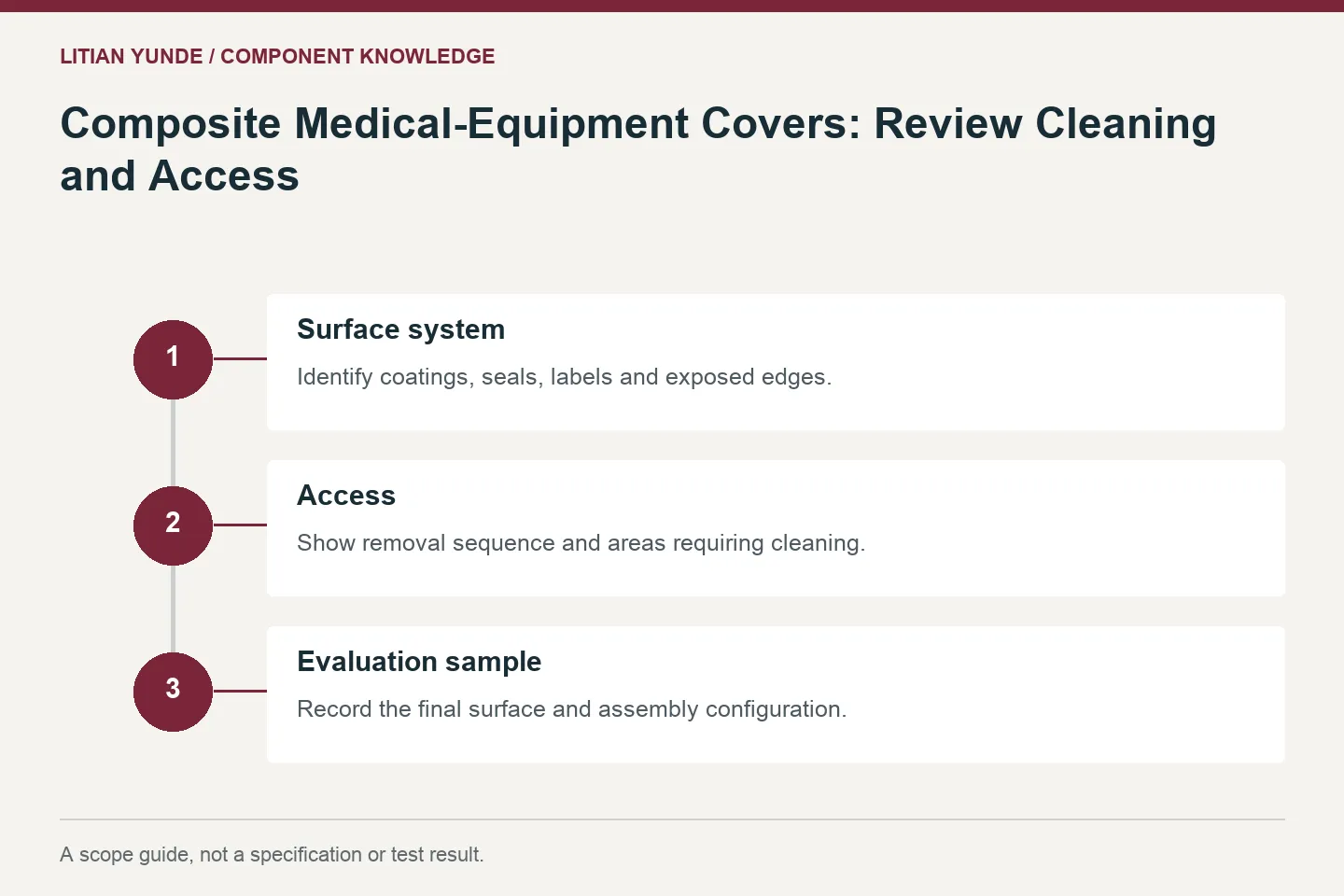
Housses composites pour matériel médical : examen des modalités de nettoyage et d'accès
A cover for medical equipment needs a defined cleaning and service brief. Material selection alone does not establish compatibility with a cleaning process or suitability for…
Read guide →
Châssis de drones en fibre de carbone : plan de câblage et accès pour l'entretien
An accessible UAV frame leaves room for wiring, connector insertion and component replacement. These spaces should be reviewed alongside the plate geometry, not improvised…
Read guide →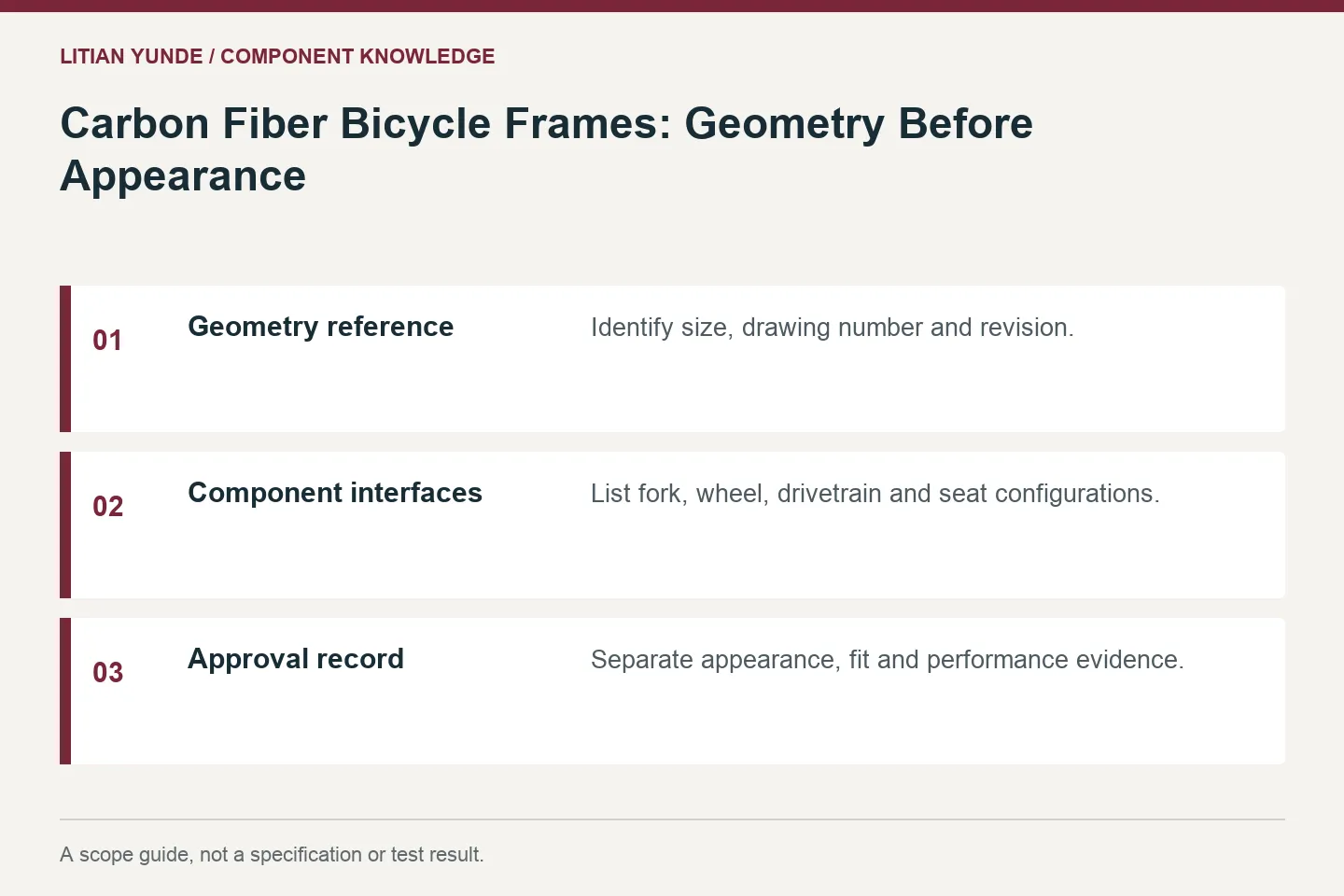
Cadres de vélo en fibre de carbone : la géométrie avant l'esthétique
When reviewing a carbon fiber bicycle frame, distinguish the visual shape from the geometry that defines the bicycle. A catalogue silhouette cannot confirm size, clearances…
Read guide →
Carbon Fiber Automotive Parts: Distinguish Trim from Structural Parts
Carbon fiber trim and a structural replacement can share a similar surface pattern but have different responsibilities. State the part’s function explicitly before comparing…
Read guide →
Carbon Fiber Bicycle Accessories: Specify the Mounting Interface
For a bicycle accessory, start with the mounting interface and the item it must hold. A small lightweight component still needs a clear fit and retention requirement.
Read guide →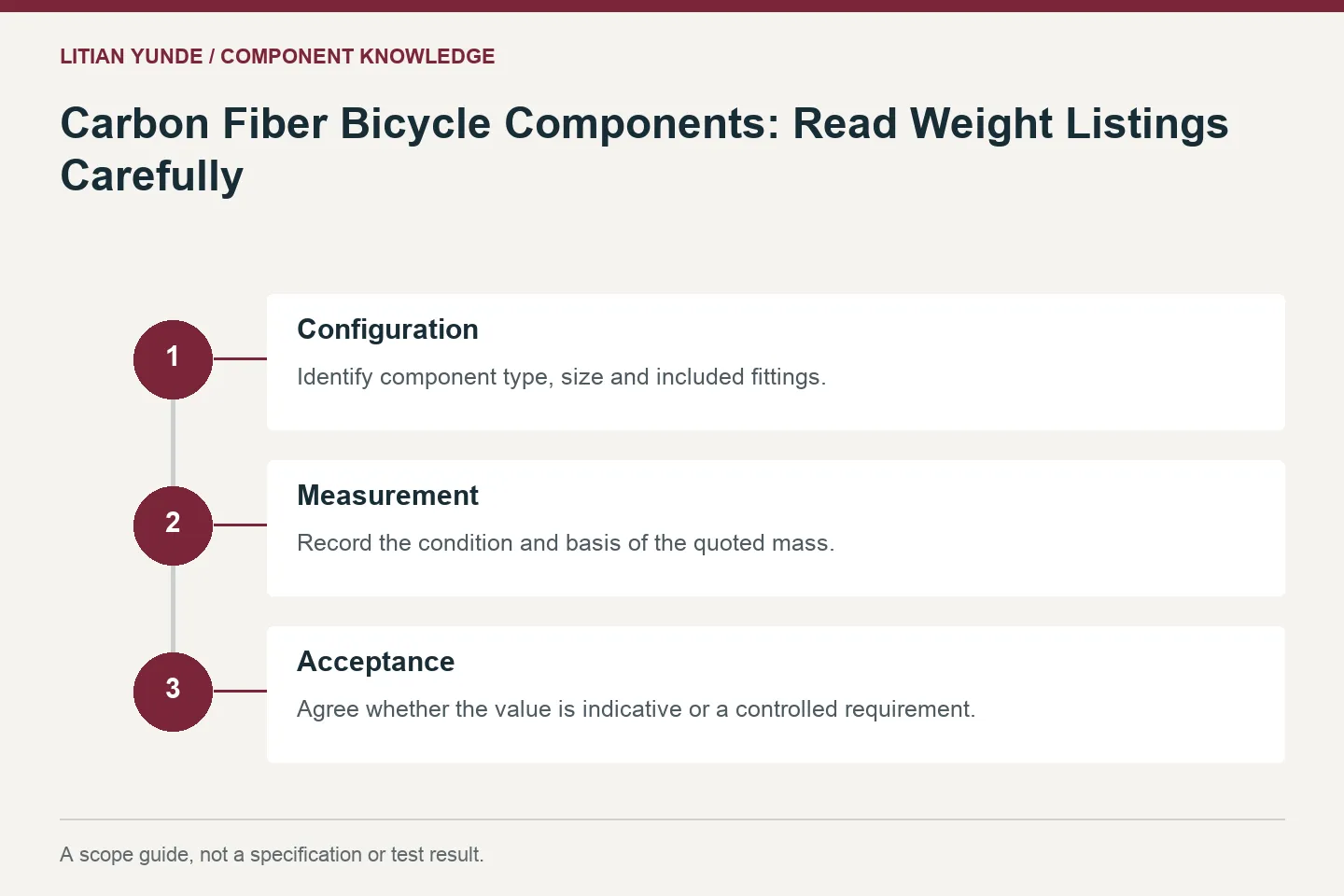
Carbon Fiber Bicycle Components: Read Weight Listings Carefully
A component weight is meaningful only when the size and supplied configuration are identified. Compare like-for-like assemblies before deciding whether one bicycle component…
Read guide →
Capots électroniques en fibre de carbone : préciser séparément l'isolation électrique
A carbon fiber cover should not be assumed to provide electrical insulation. Define the isolation requirements and the complete assembly arrangement with the electronics team…
Read guide →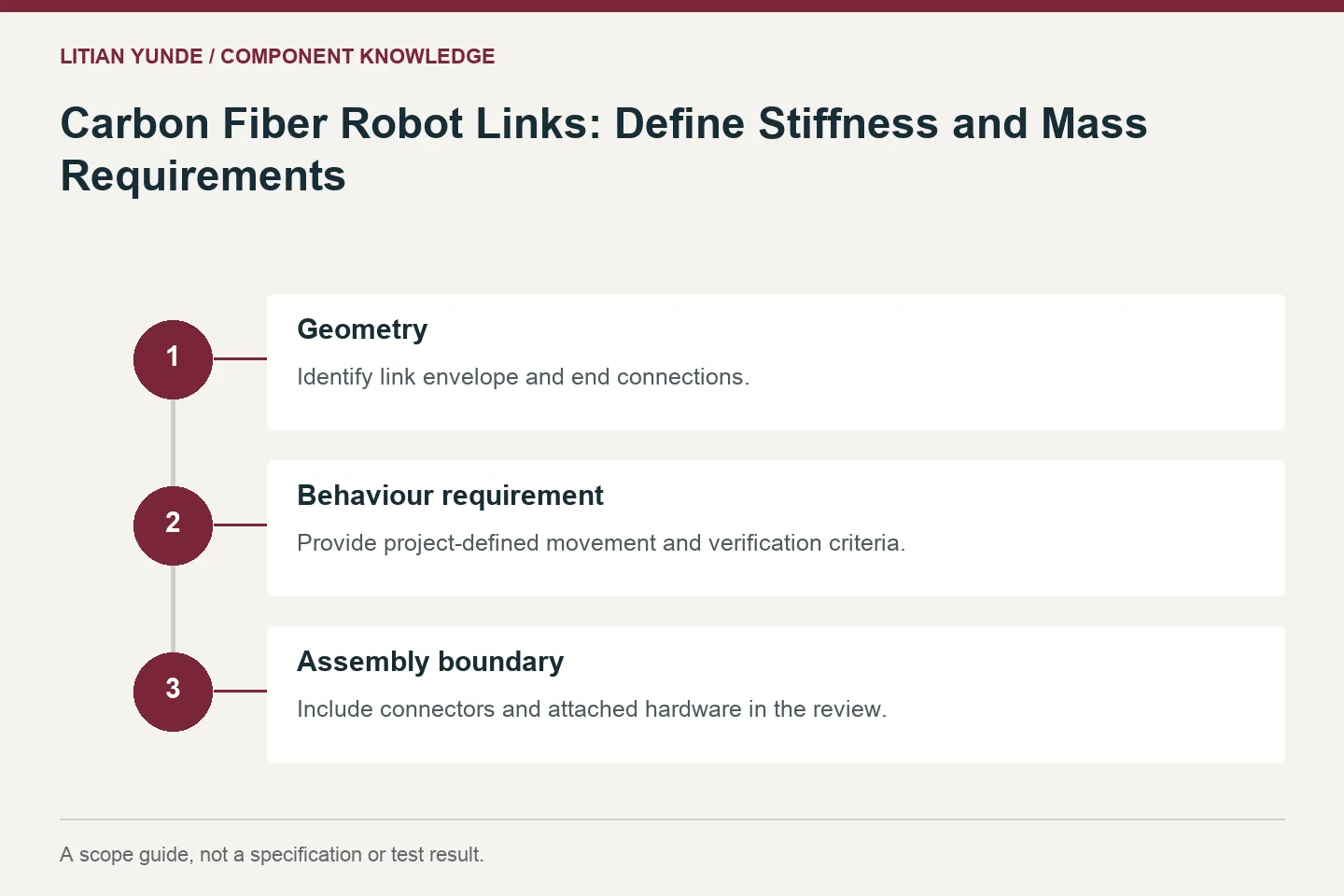
Liens sur les robots en fibre de carbone : définir les exigences en matière de rigidité et de masse
A robot-link brief should describe the geometry and the required behaviour separately. Asking for a light carbon fiber tube does not specify how the installed link must…
Read guide →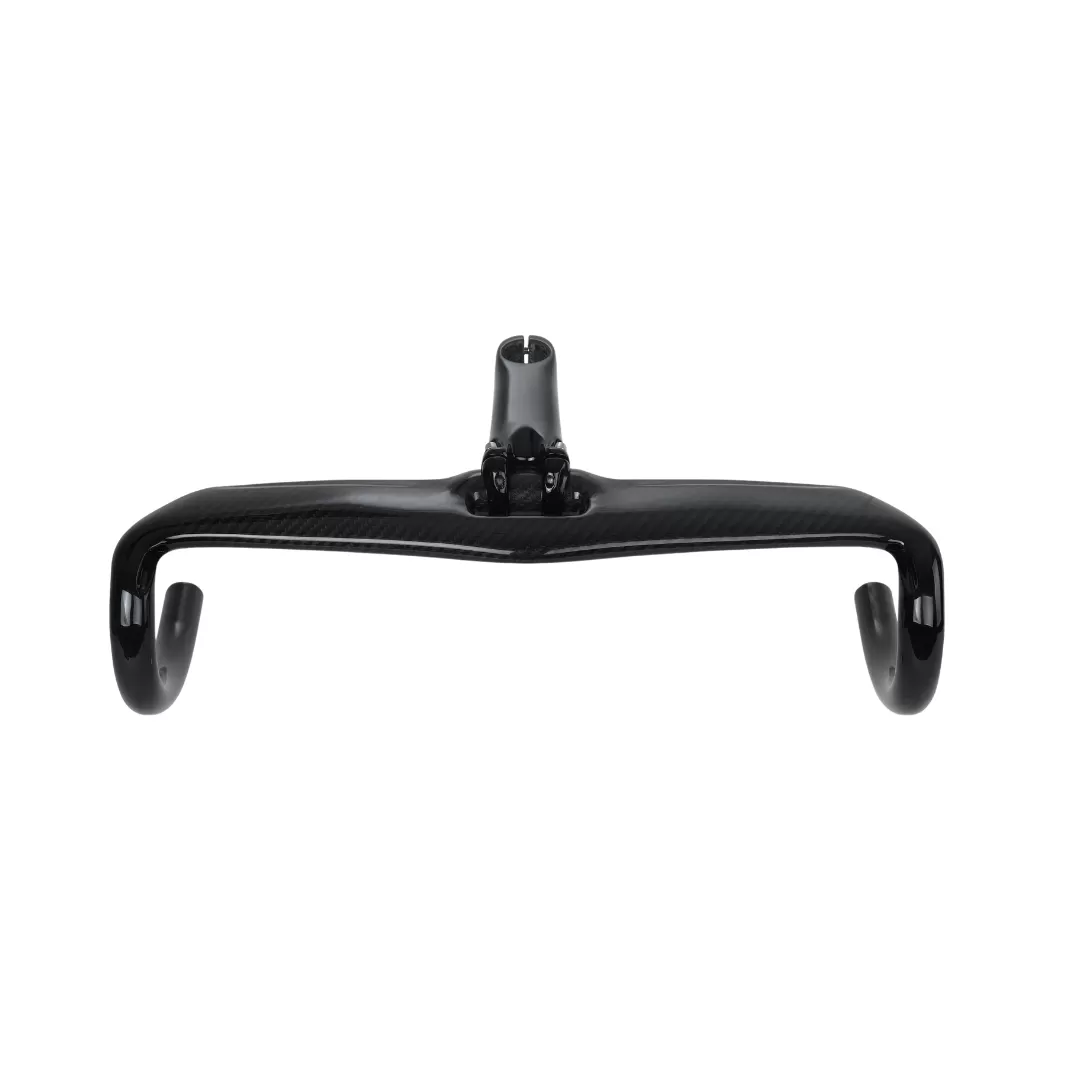
Cockpits de vélo en fibre de carbone : vérifiez la compatibilité des composants
A bicycle cockpit enquiry should identify the handlebar, stem and steering interfaces as an assembly. A matching appearance does not prove that the chosen parts are…
Read guide →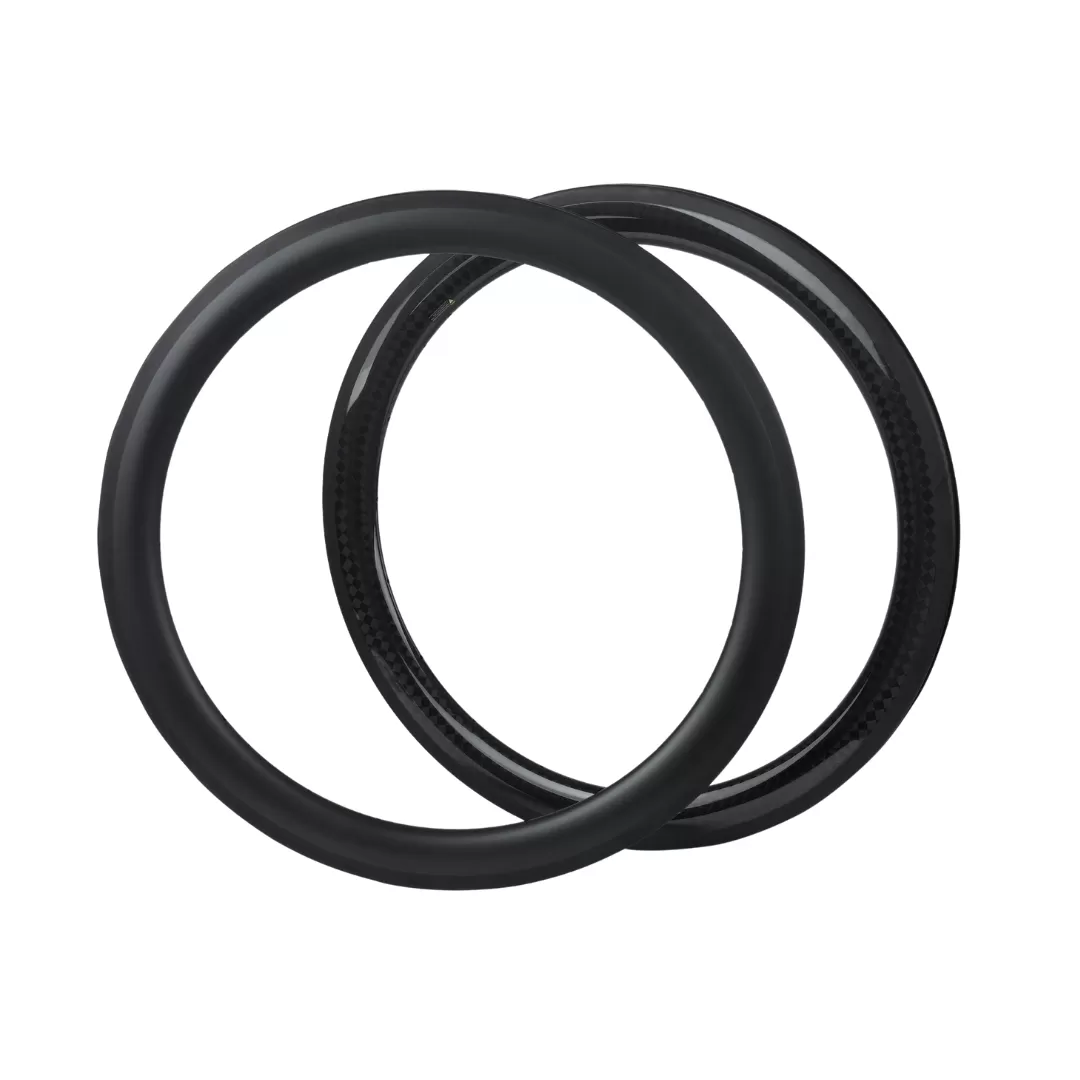
Carbon Fiber Bicycle Rims: Specify the Wheel Build
For a carbon fiber rim, identify the intended wheel build before comparing a product image or quoted mass. A rim is one component of a system that includes the tyre, spokes,…
Read guide →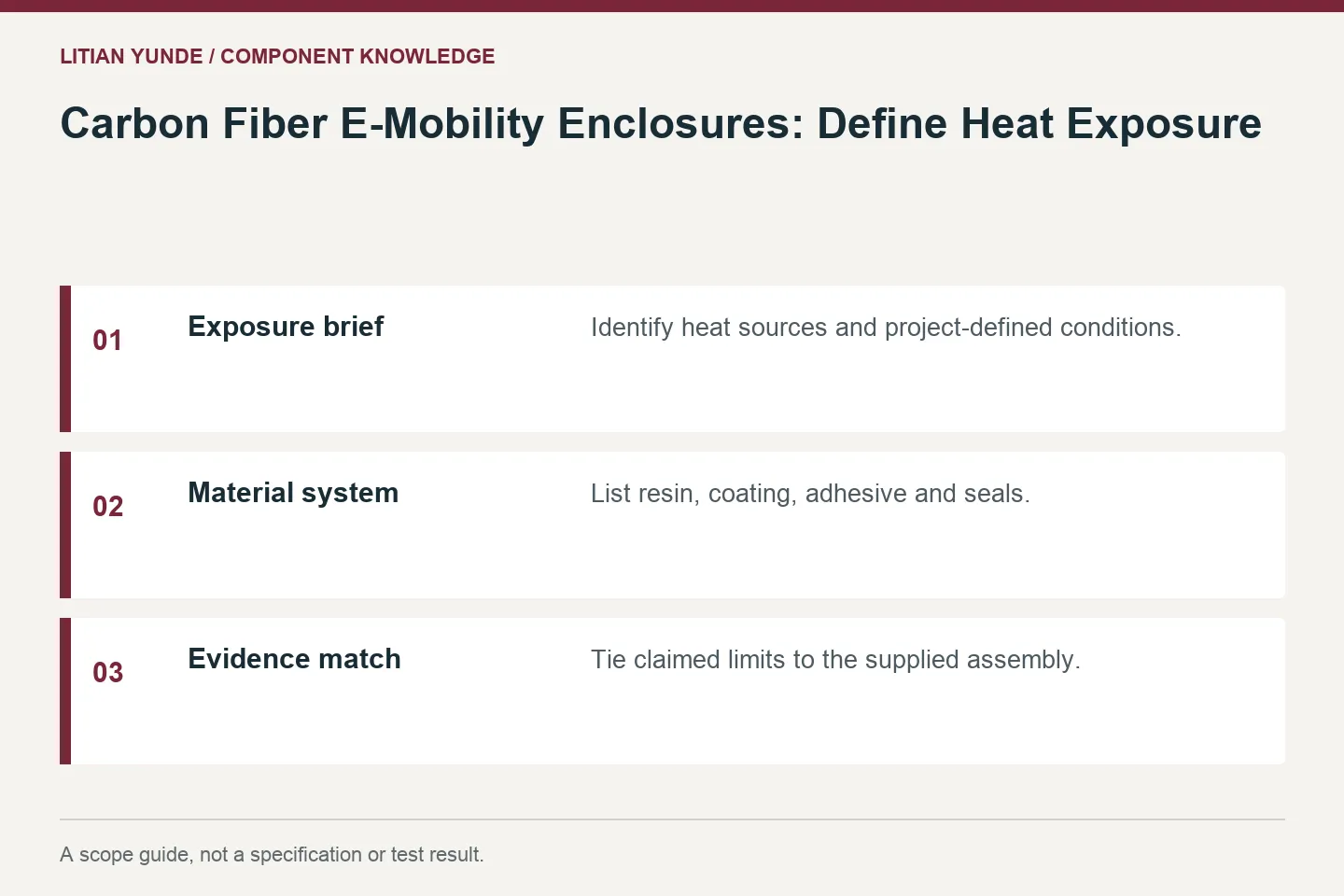
Boîtiers en fibre de carbone pour la mobilité électrique : définir l'exposition à la chaleur
For an e-mobility enclosure, describe the actual heat exposure before selecting a laminate or coating. The words carbon fiber do not establish a temperature rating or a…
Read guide →
Composite Transport Panels: Keep Installation and Maintenance Practical
A lightweight panel still needs to be installed, removed and replaced. Include the service procedure in the design brief so an attractive component does not create…
Read guide →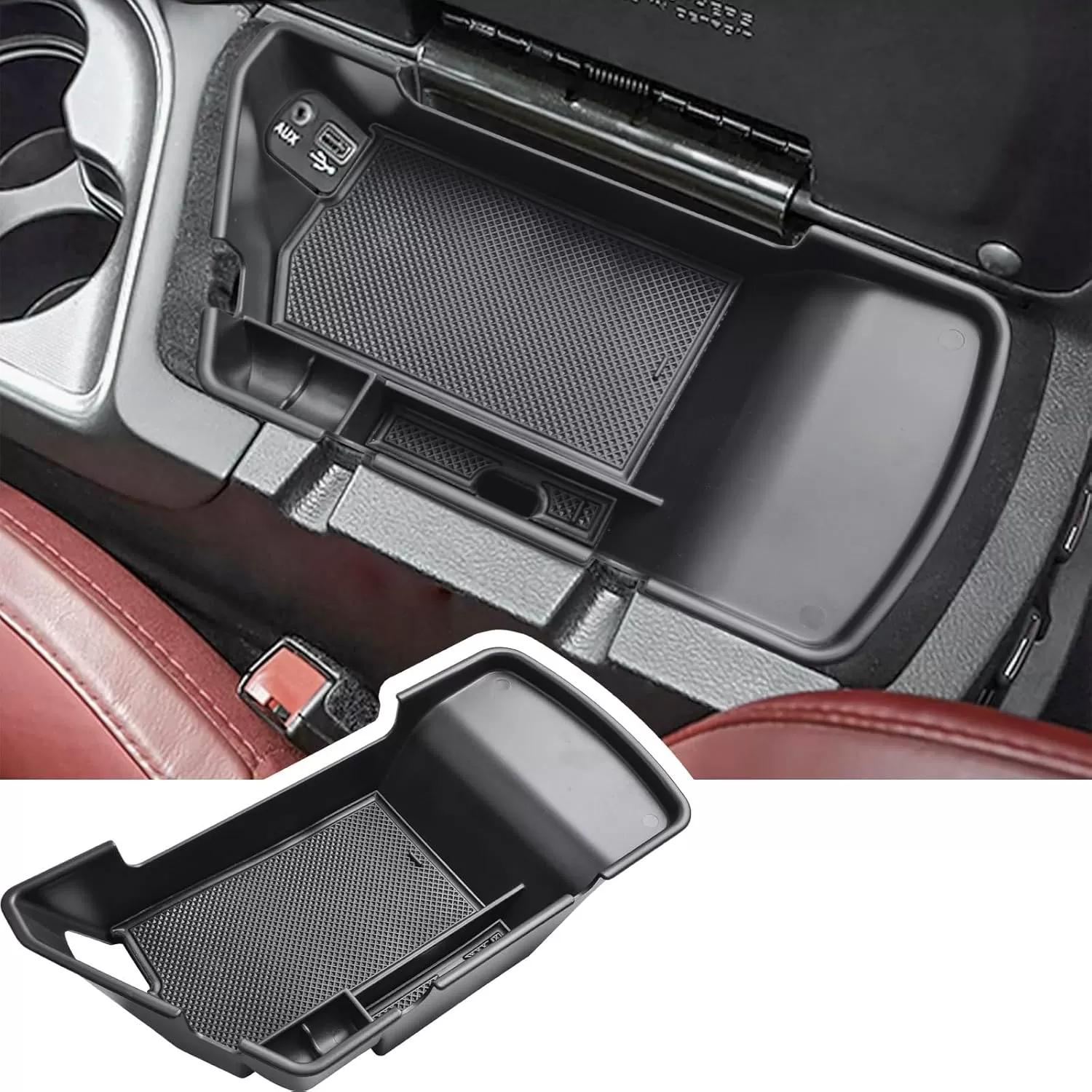
Carbon Fiber Interior Trim: Review Surface and Installation Together
Interior trim should be assessed for both its visible finish and its installation arrangement. A weave pattern that looks right in isolation may not align with adjacent parts…
Read guide →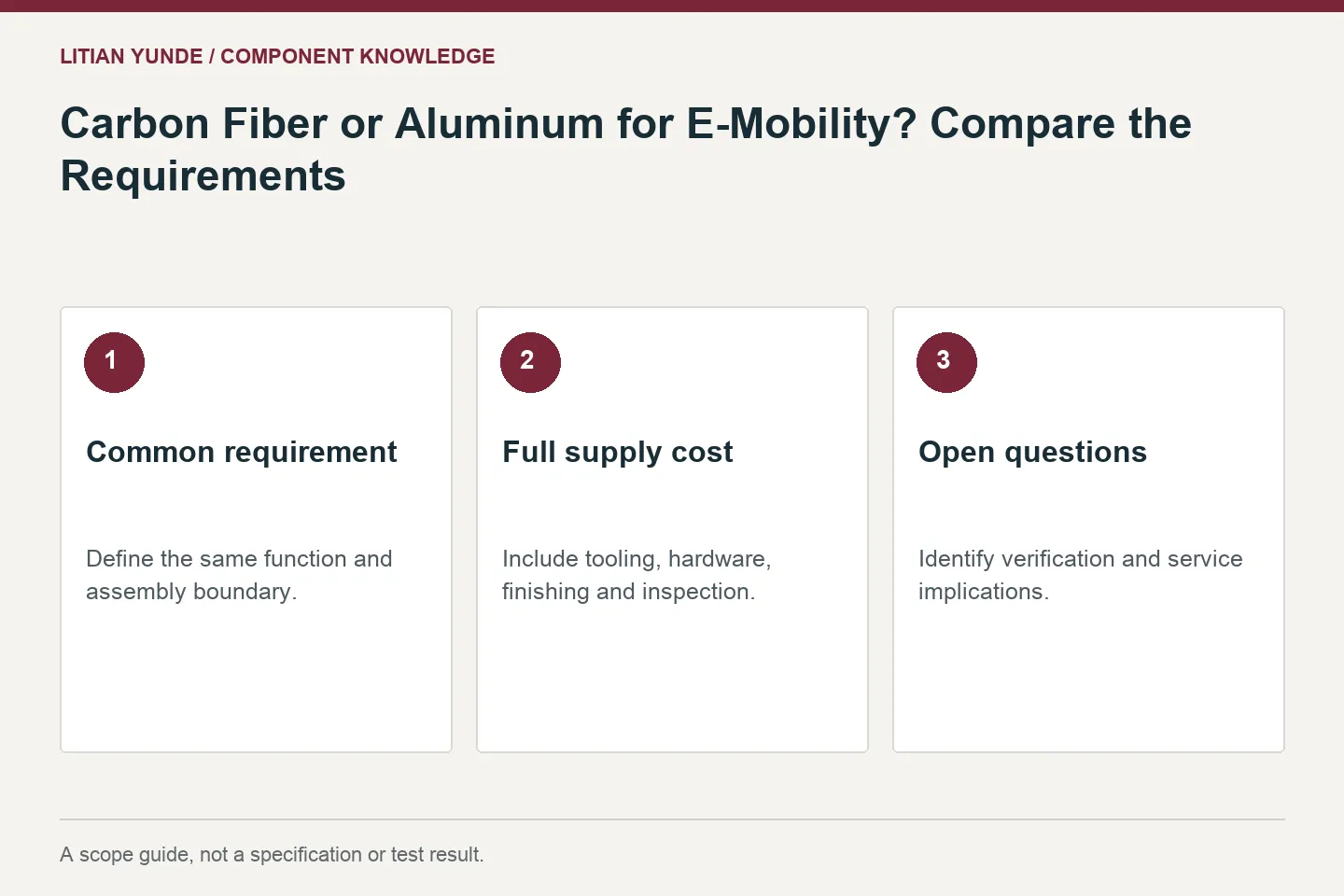
Carbon Fiber or Aluminum for E-Mobility? Compare the Requirements
The useful comparison between carbon fiber and aluminum starts with the component requirements. Weight, geometry, joining, production quantity and service arrangements all…
Read guide →Achats et suivi de projet
Buying and managing custom composite components: quotations, material documents, approved definitions, handovers, logistics and repeat-order control.
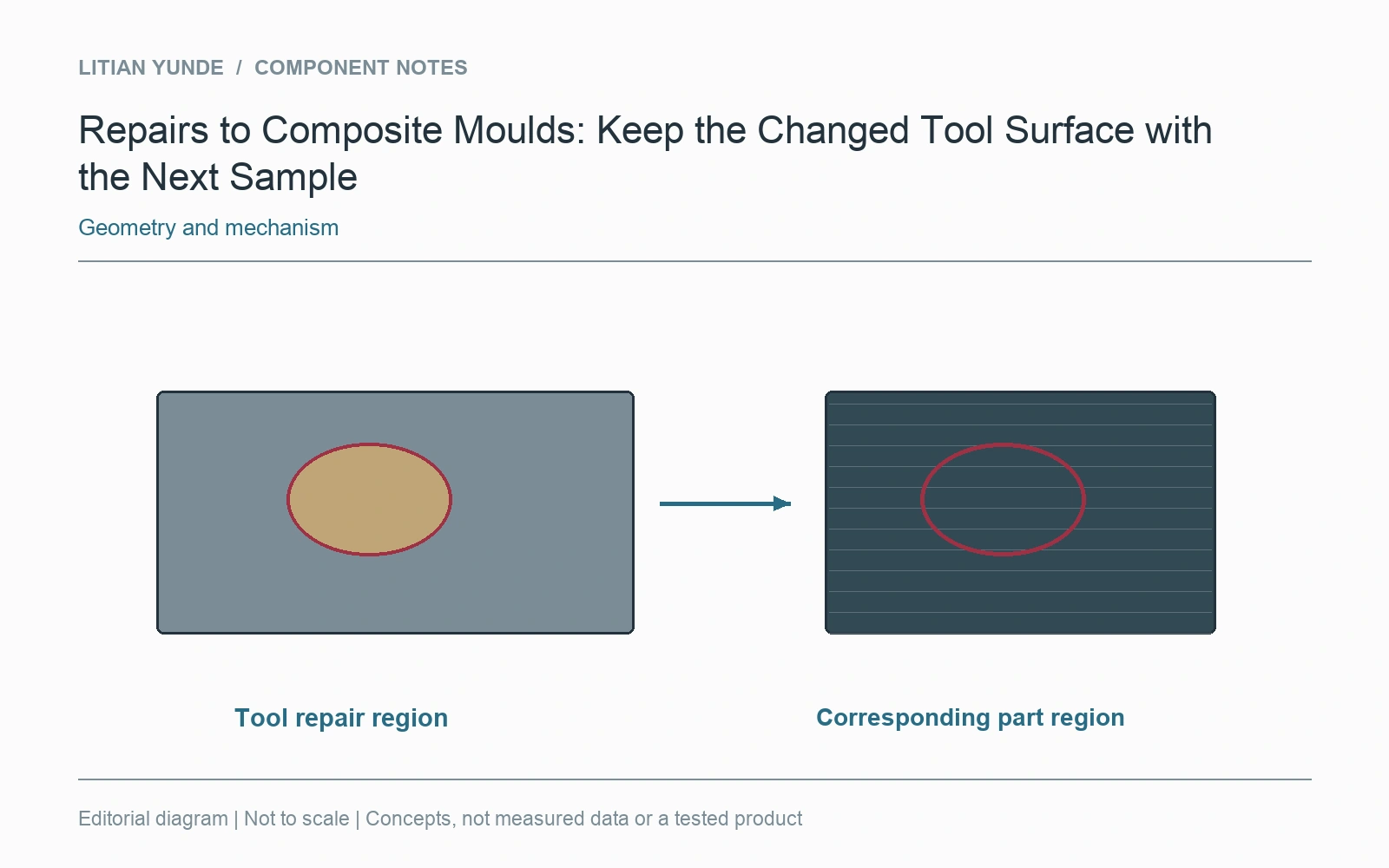
Repairs to Composite Moulds: Keep the Changed Tool Surface with the Next Sample
A repair to a mould surface should remain visible in the tool history and the next relevant sample review. Identify where the work occurred and which part features it can…
Read guide →
Forecasts and Firm Releases for Carbon Fiber Orders: Keep the Quantities Distinct
An annual forecast, a requested quotation quantity and a firm production release can be different numbers. Label each one in the order discussion. Do not let a planning…
Read guide →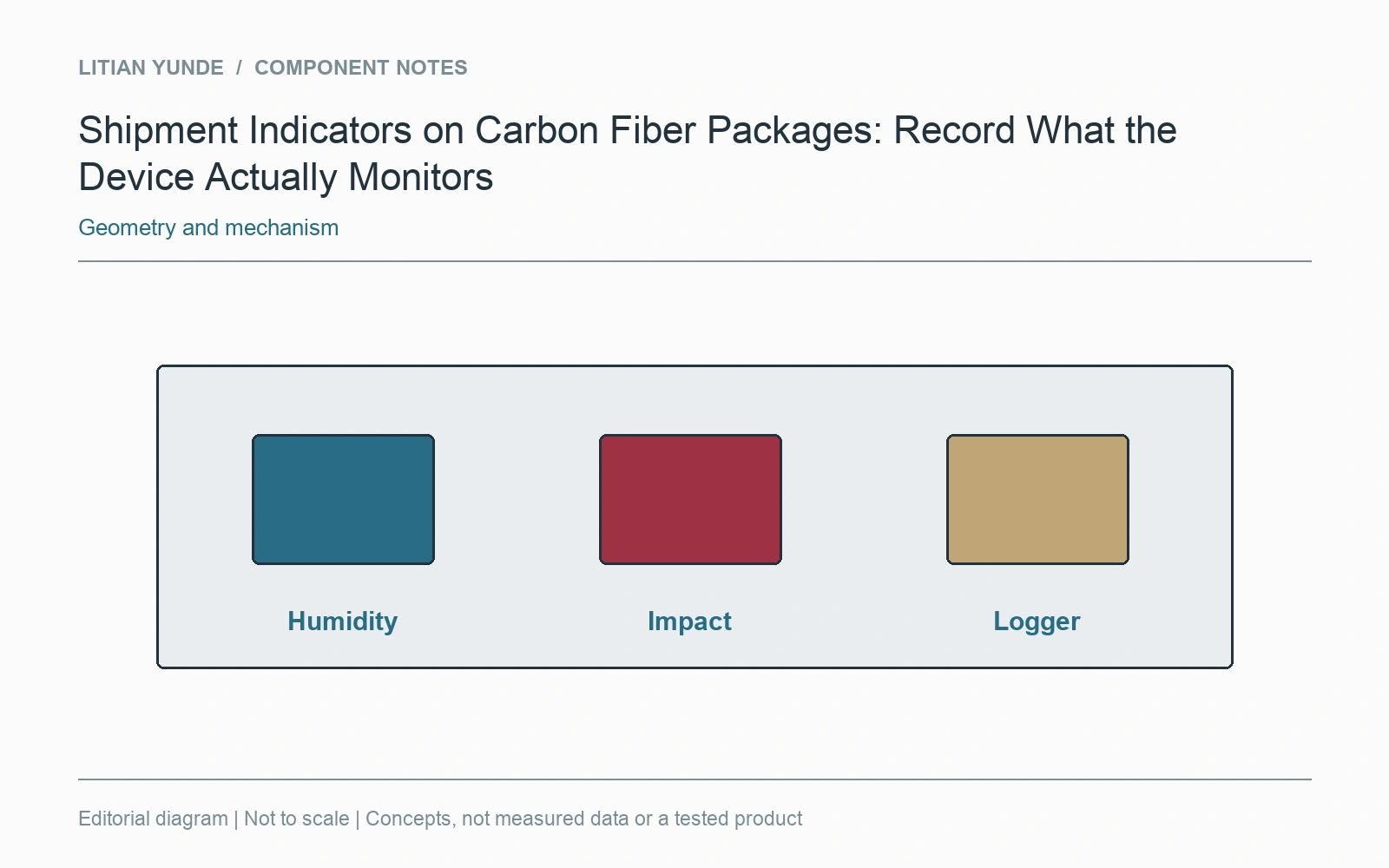
Shipment Indicators on Carbon Fiber Packages: Record What the Device Actually Monitors
A humidity indicator, an impact indicator and a multi-condition logger do not provide the same evidence. If monitoring devices are included in a carbon fiber shipment,…
Read guide →
Carbon Fiber Delivery Terms: Include the Named Place and Rule Version
When a quotation uses an Incoterms rule, retain the named place or port and the rule version with the three-letter term. A short label such as delivered does not define the…
Read guide →
Shipping Carbon Fiber Parts: Separate Net Weight, Gross Weight and Packed Size
For a shipment of carbon fiber parts, distinguish the weight of the identified goods from the weight and outside dimensions of the packed units. A component weight listing is…
Read guide →
Witnessing Carbon Fiber Inspection: Agree What Must Be Seen
Witnessing an inspection means observing an identified activity under an agreed scope. It is different from reviewing a report after the activity. State which operation or…
Read guide →
Customer-Supplied Carbon Fiber Stock: Agree the Material Reconciliation
When a customer supplies carbon fiber stock for processing, agree how the received material, delivered parts, usable remainder and scrap will be recorded. A finished-part…
Read guide →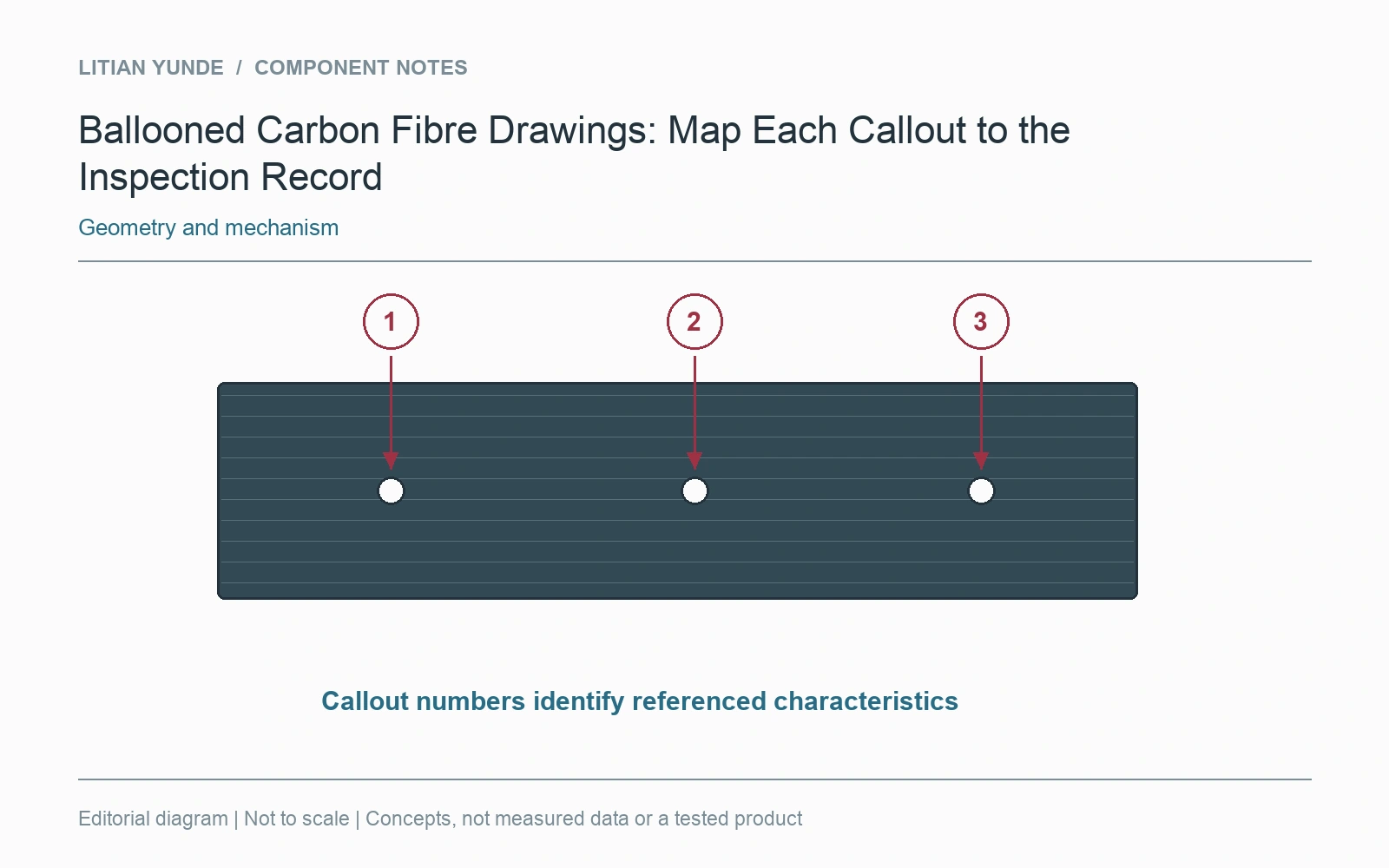
Plans en fibre de carbone agrandis : faire correspondre chaque légende au rapport d'inspection
A numbered balloon on a drawing is a reference to a characteristic, not a measurement result. Keep the ballooned drawing and inspection table linked to the same revision.…
Read guide →
Pièces en fibre de carbone réusinées : conserver le registre des mesures prises et des nouveaux contrôles
If a carbon fibre part is altered after a concern is raised, retain the approved disposition and the resulting inspection record. A better-looking photograph does not explain…
Read guide →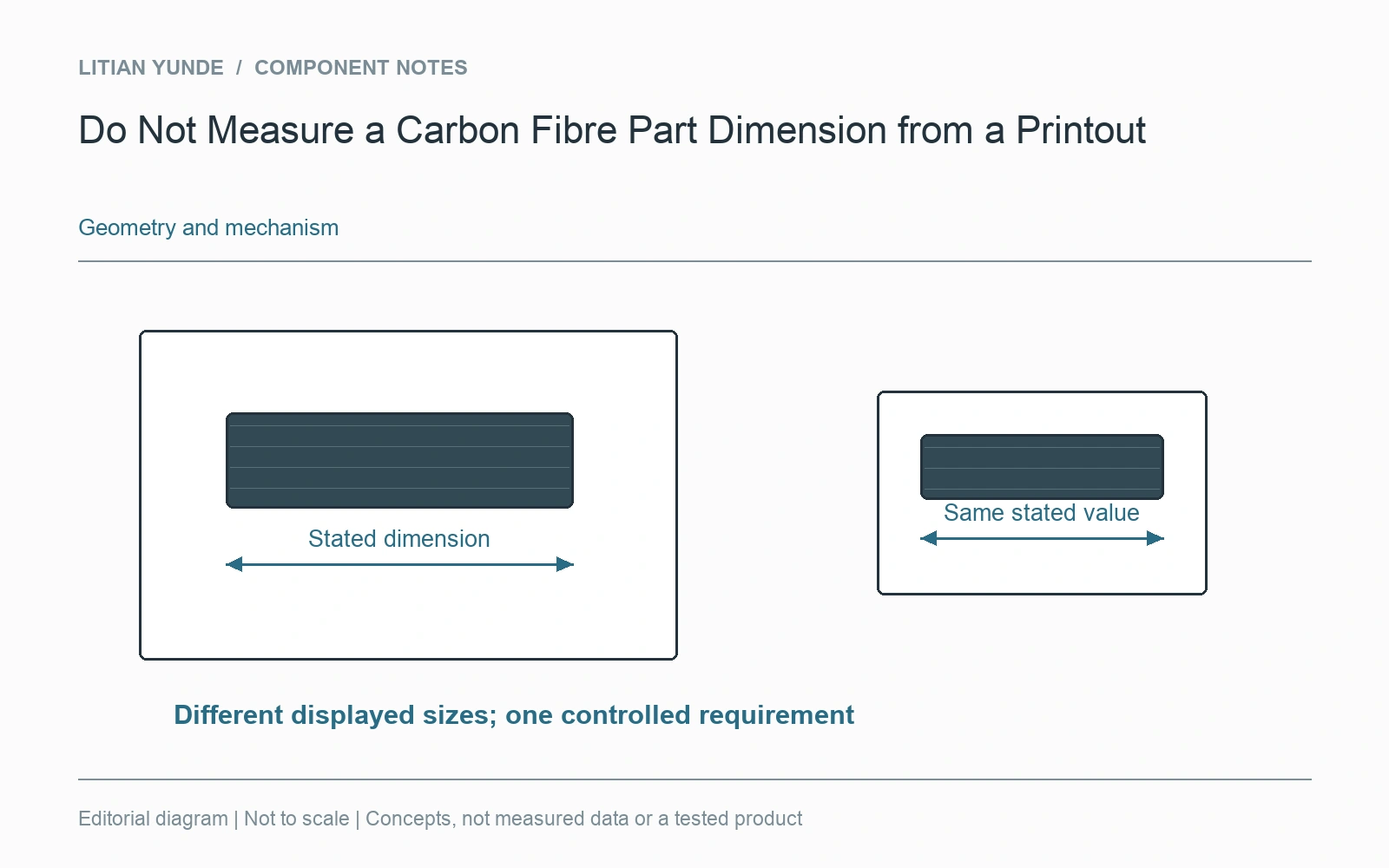
Ne mesurez pas les dimensions d'une pièce en fibre de carbone à partir d'une impression papier
A printed or on-screen drawing may have been resized. Use the stated dimensions and the agreed controlled definition rather than measuring a screenshot with a ruler. If a…
Read guide →
Supplier Redraws of Carbon Fiber Parts: Identify Which Definition Controls
A supplier may prepare a manufacturing drawing or redraw supplied geometry for review. That document needs a defined relationship to the customer’s released design. A…
Read guide →
Stored Composite Tooling: Storage Status Is Not Production Readiness
A record that a mould is in storage does not establish that it is ready for the next production run. Before restarting work, identify the tool, current component definition…
Read guide →
Inner-Part Labels and Outer-Carton Labels Have Different Jobs
An outer-carton label identifies a package; a part or inner-pack label identifies what remains after that package is opened. Define both where traceability or kit separation…
Read guide →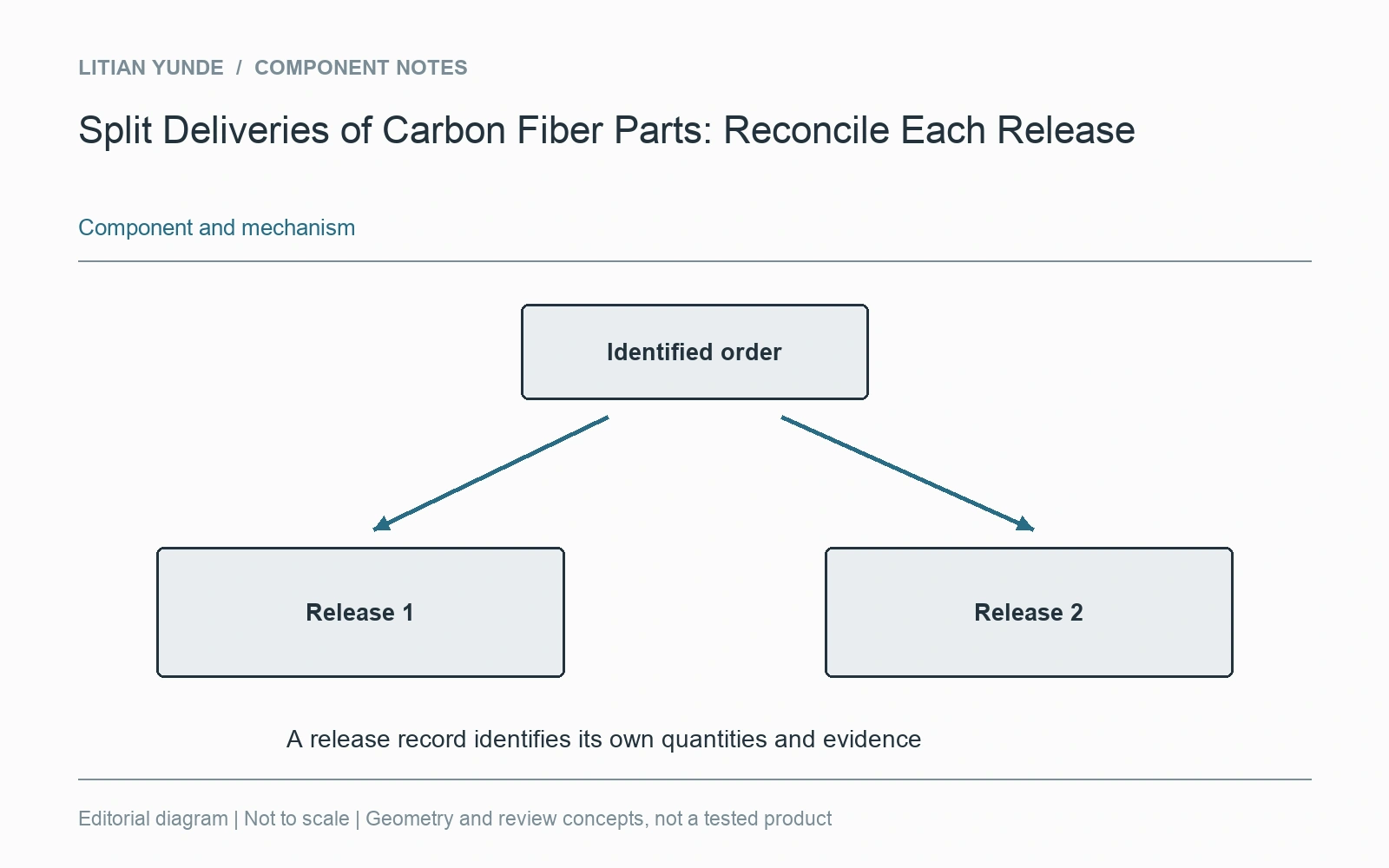
Livraisons fractionnées de pièces en fibre de carbone : rapprocher chaque livraison
A split delivery divides one order into more than one release. Keep the quantities, part identities and required records tied to each shipment. An accepted first release…
Read guide →
Kits de montage en fibre de carbone : compter séparément les lots et les pièces individuelles
An order for ten kits is not an order for ten of every listed item unless the kit definition says so. A carbon fiber assembly-kit enquiry should state the quantity of each…
Read guide →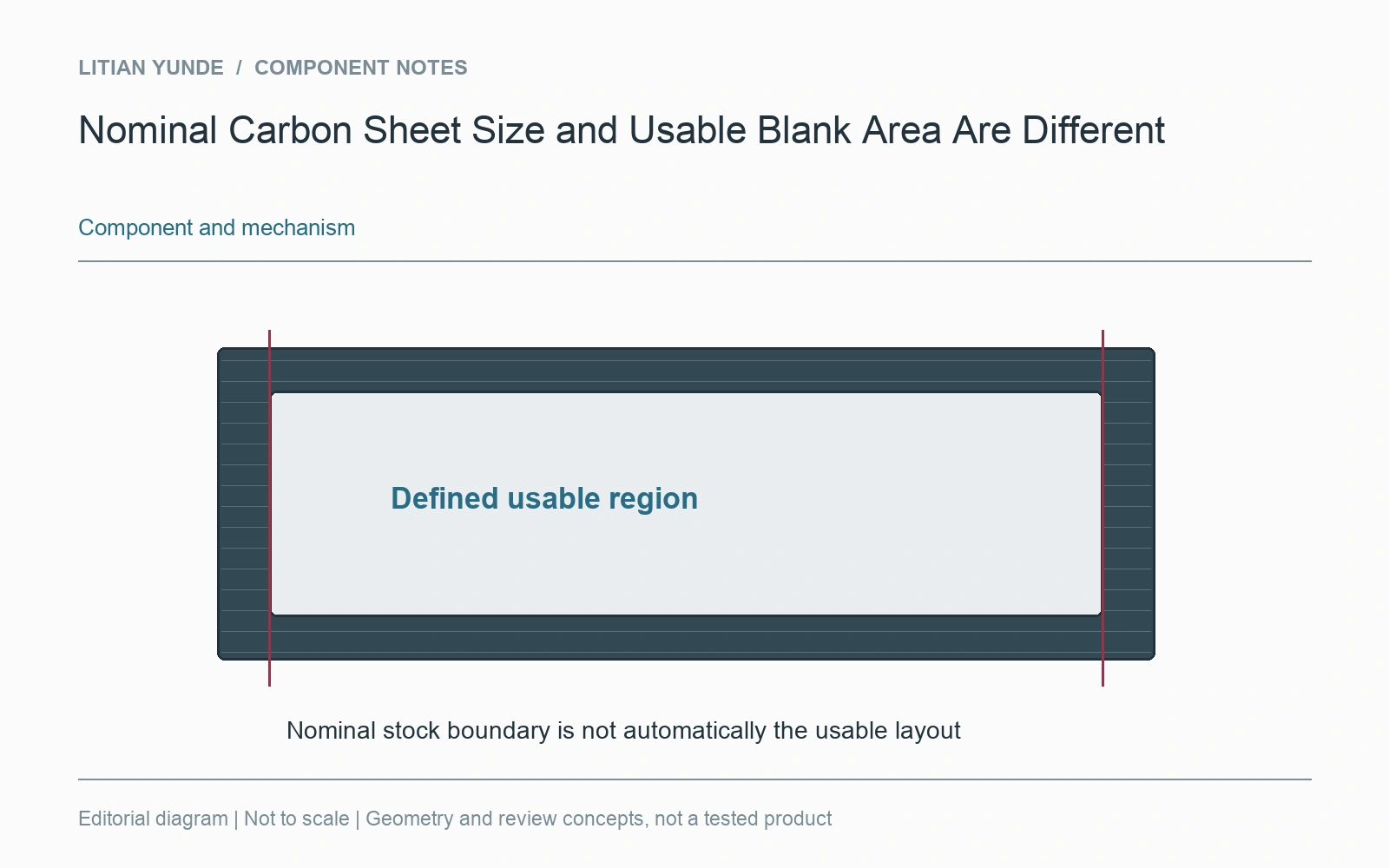
Les dimensions nominales de la feuille de carbone et la surface utile diffèrent
A nominal carbon sheet size does not necessarily define the usable area for a finished blank layout. Clarify edge allowances, excluded regions and the required orientation…
Read guide →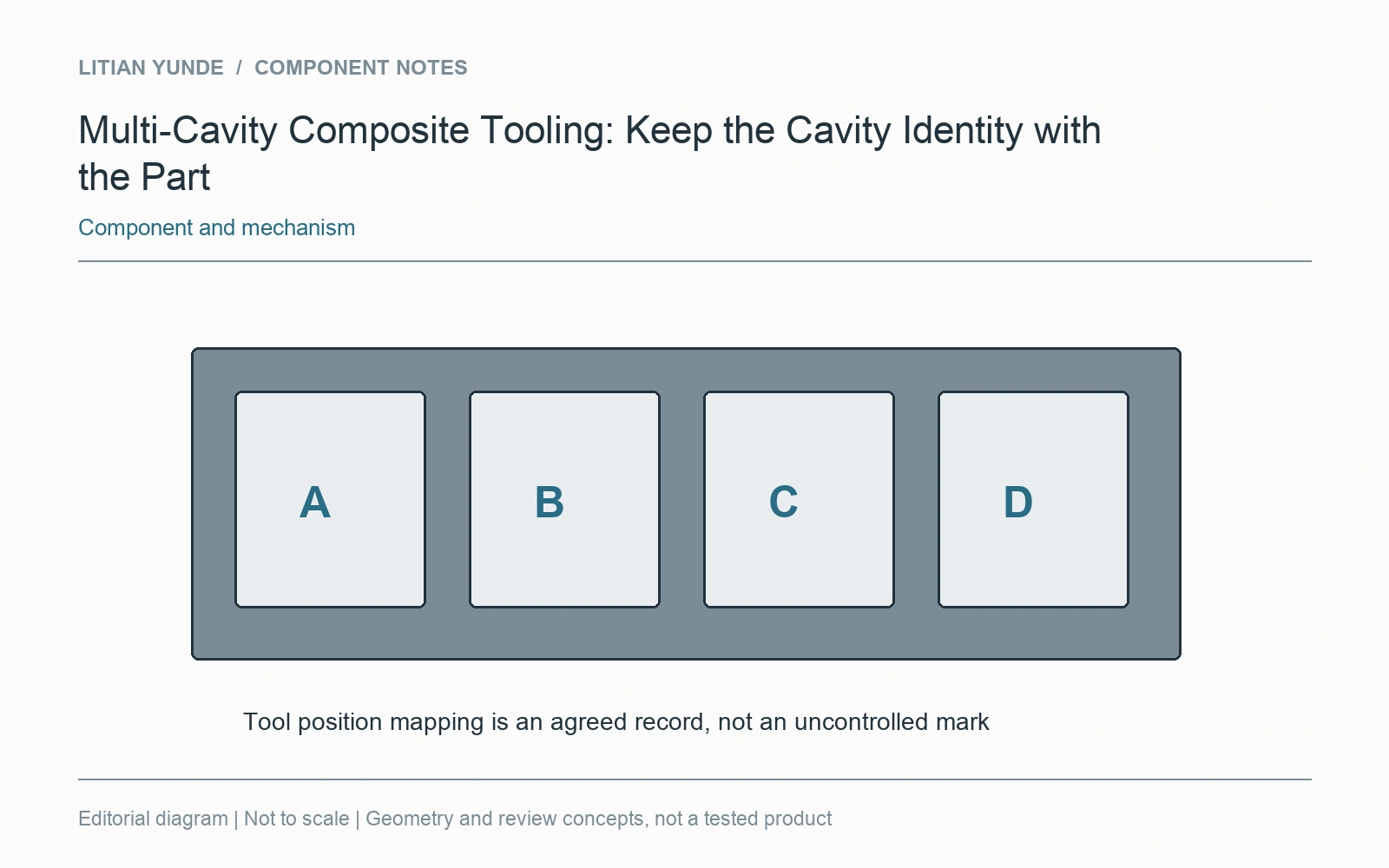
Outillage composite à cavités multiples : conserver l'identité de la cavité avec la pièce
When a tool produces more than one part per cycle, cavity identity can be useful traceability information. Define whether the order requires it and how it will be recorded. A…
Read guide →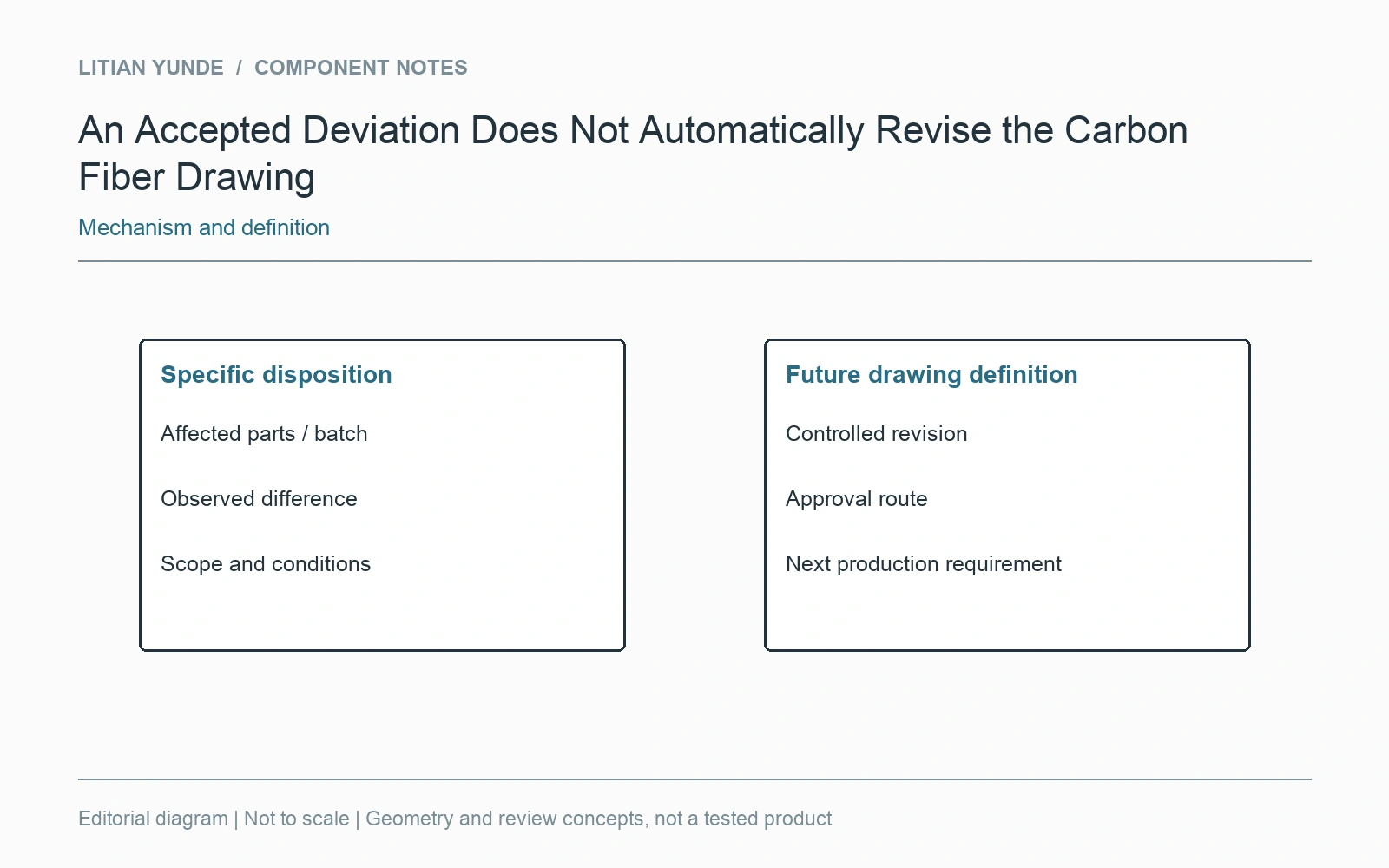
An Accepted Deviation Does Not Automatically Revise the Carbon Fiber Drawing
A decision to accept a specific deviation should identify the affected parts and requirement. It does not automatically change the drawing for future production. Keep the…
Read guide →
Dual-Unit Dimensions on Carbon Fiber Drawings: Identify the Governing Value
A drawing showing both millimetres and inches needs a clear rule for which value governs. Rounded secondary dimensions should not become a second, conflicting acceptance…
Read guide →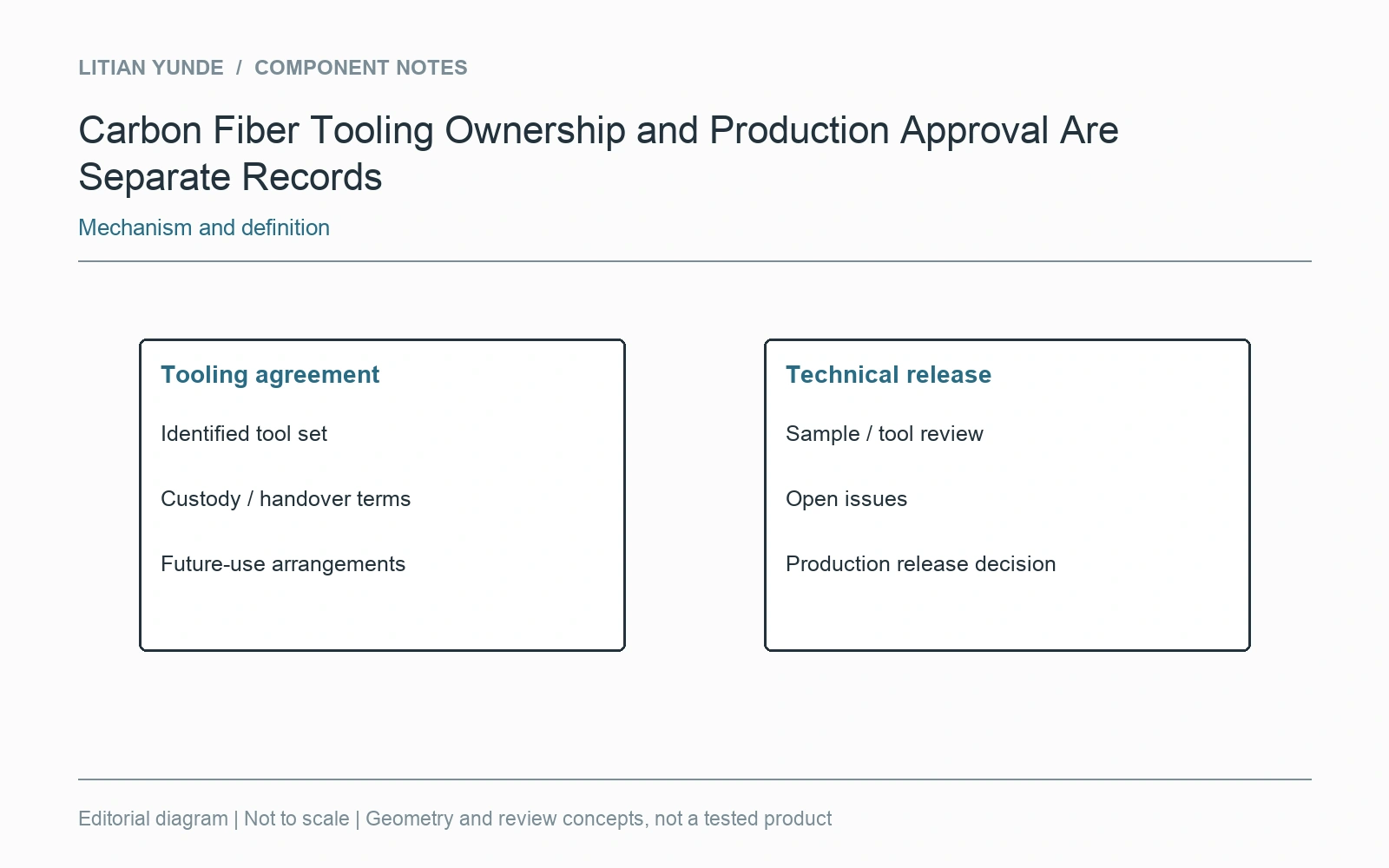
Carbon Fiber Tooling Ownership and Production Approval Are Separate Records
Paying for a mould does not, on its own, define its ownership, storage arrangements or production-release status. Put those commercial and technical questions into separate…
Read guide →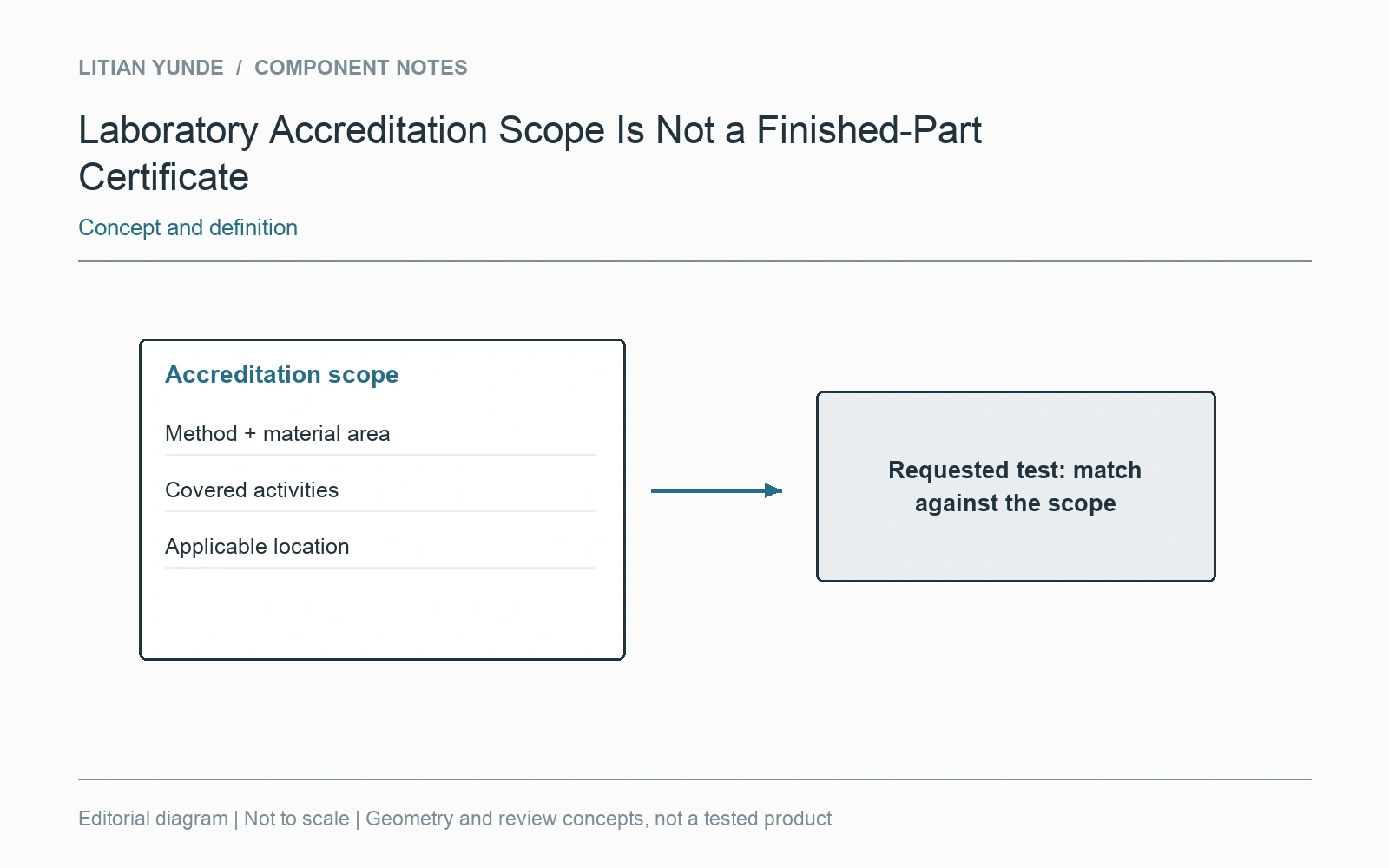
Laboratory Accreditation Scope Is Not a Finished-Part Certificate
An accredited laboratory is assessed for activities within its accreditation scope. That does not turn every test it offers into an accredited result, or make the tested…
Read guide →
Les substitutions de matériaux ou de procédés doivent suivre un circuit d'examen bien défini
A carbon fiber component can retain the same outline while its reinforcement, resin system or manufacturing route changes. A controlled substitution review identifies the…
Read guide →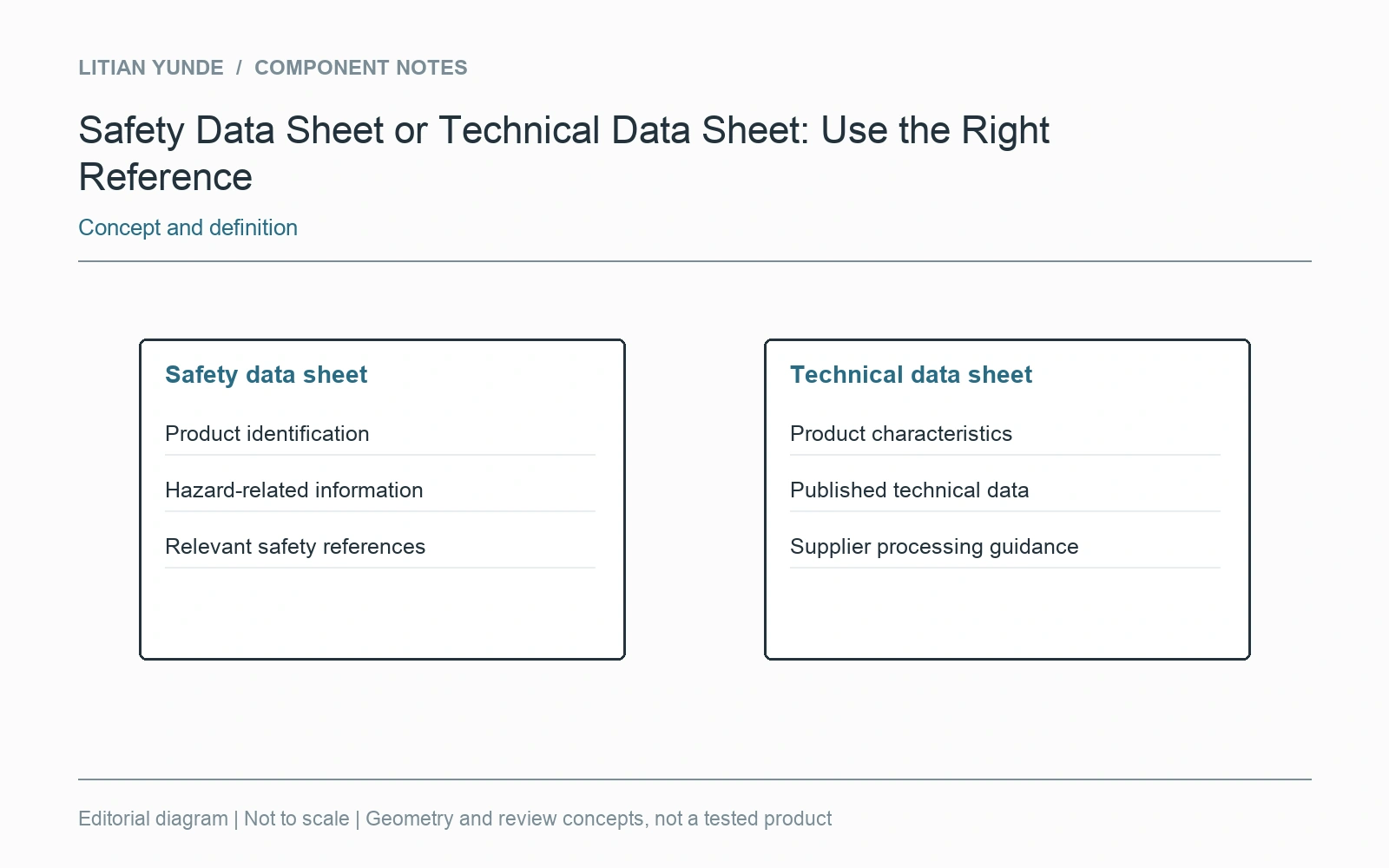
Fiche de données de sécurité ou fiche technique : utilisez la bonne référence
A safety data sheet explains hazard-related information for an identified material. A technical data sheet describes product characteristics and, where supplied, processing…
Read guide →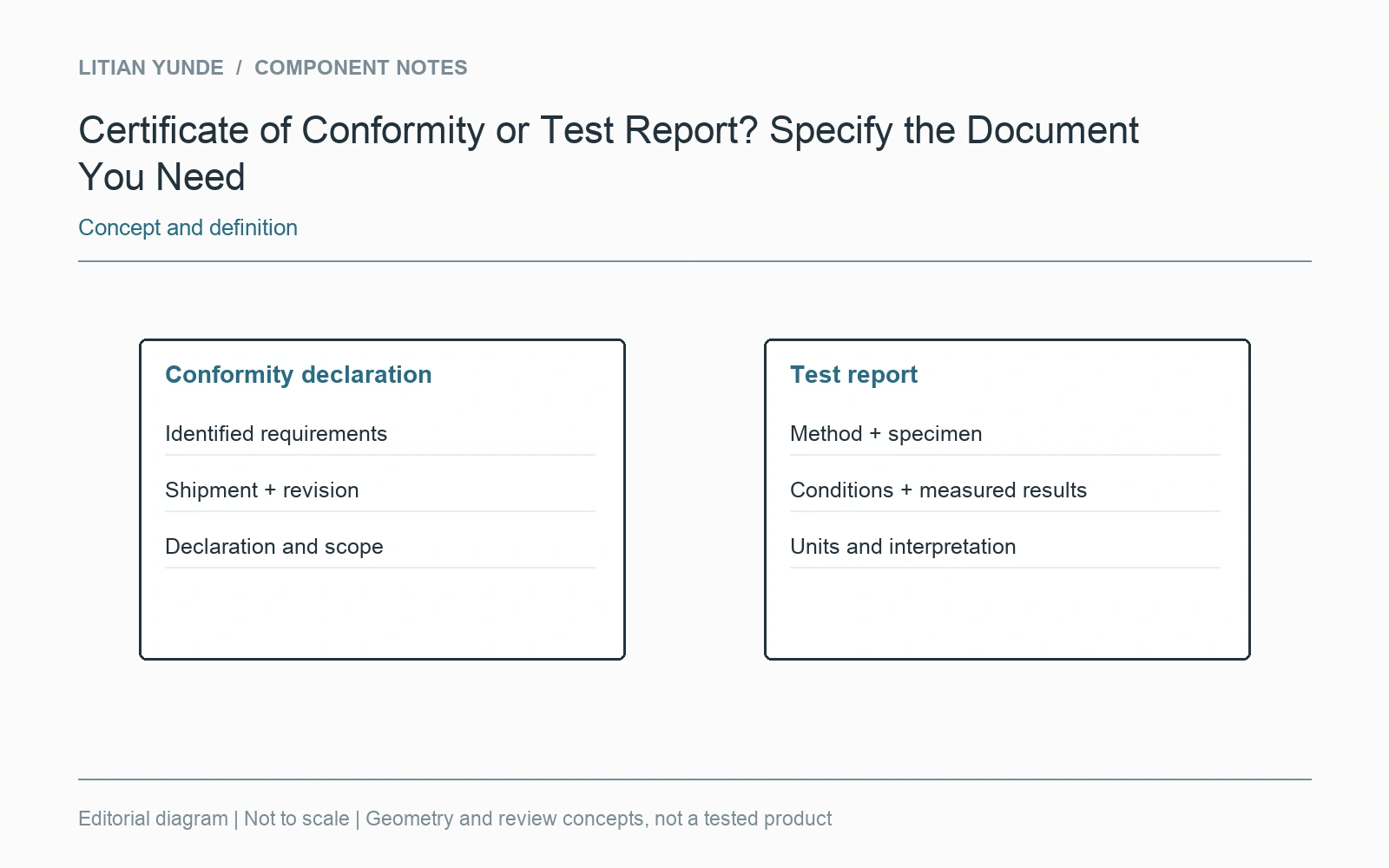
Certificat de conformité ou rapport d'essai ? Précisez le document dont vous avez besoin
A certificate of conformity records a declaration against identified requirements. A test report records a particular test and its results. One document may refer to the…
Read guide →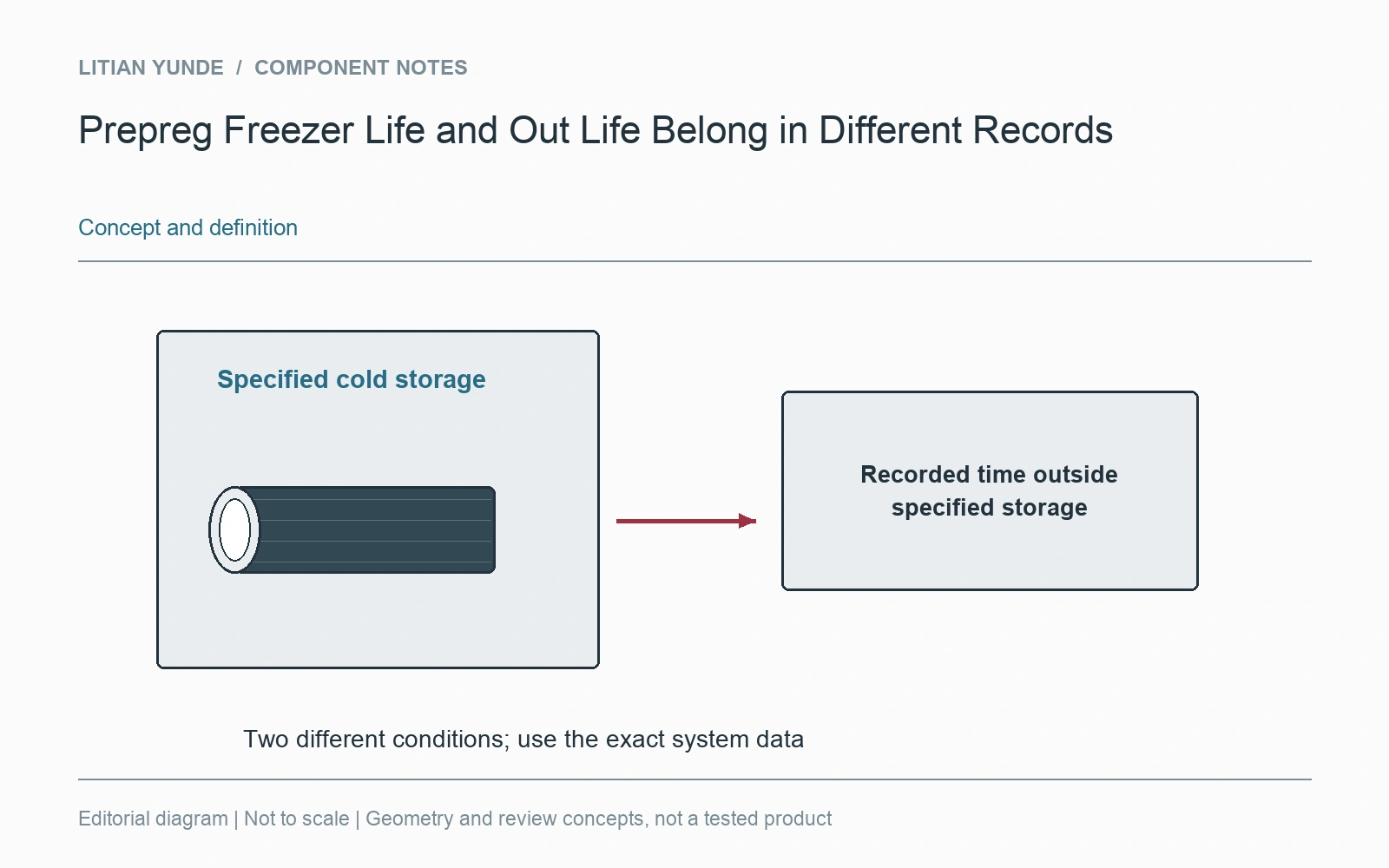
La durée de conservation en congélateur et la durée de vie utile des préimprégnés doivent figurer dans des registres distincts
Freezer life and out life are different material-control terms. Their limits and conditions come from the specific prepreg supplier documentation. A remaining freezer-life…
Read guide →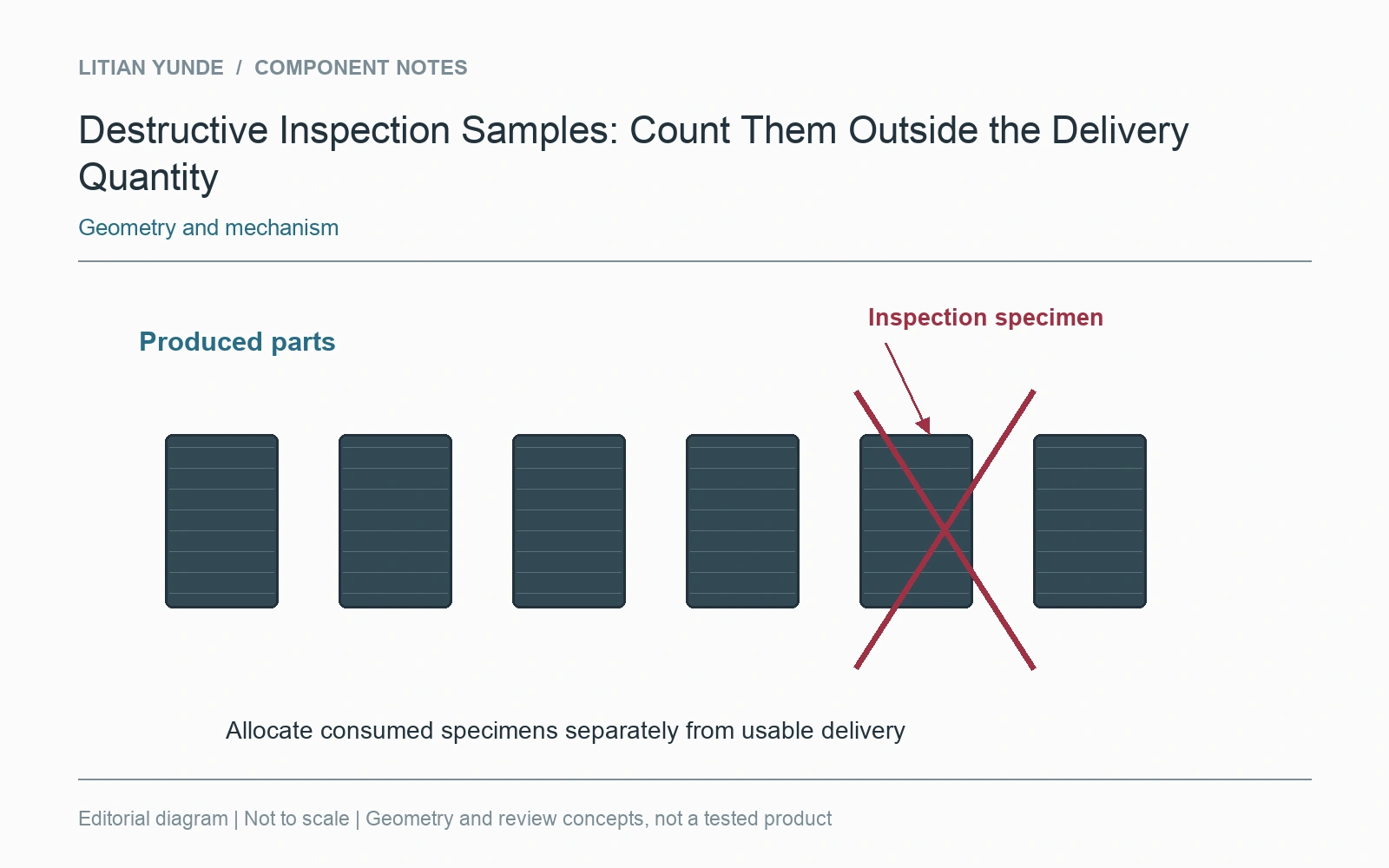
Destructive Inspection Samples: Count Them Outside the Delivery Quantity
A component used for a destructive check may no longer be available for installation. If an order needs both test pieces and usable parts, put those quantities on separate…
Read guide →
What Actually Starts the Lead Time for a Custom Carbon Fiber Order?
A lead-time estimate is only useful when both parties mean the same start and finish. For a custom carbon fiber component, an enquiry date, drawing release, tooling approval…
Read guide →
Putting Cosmetic Zones on a Carbon Fiber Part Drawing
“Good appearance” is difficult to inspect consistently. A cosmetic-zone drawing identifies where the surface matters most and where a different agreed condition is…
Read guide →
STEP or STL for a Custom Carbon Fiber Part Enquiry?
For a custom component enquiry, send the model format the supplier can work with and a drawing that states the requirements. STEP and STL are not interchangeable…
Read guide →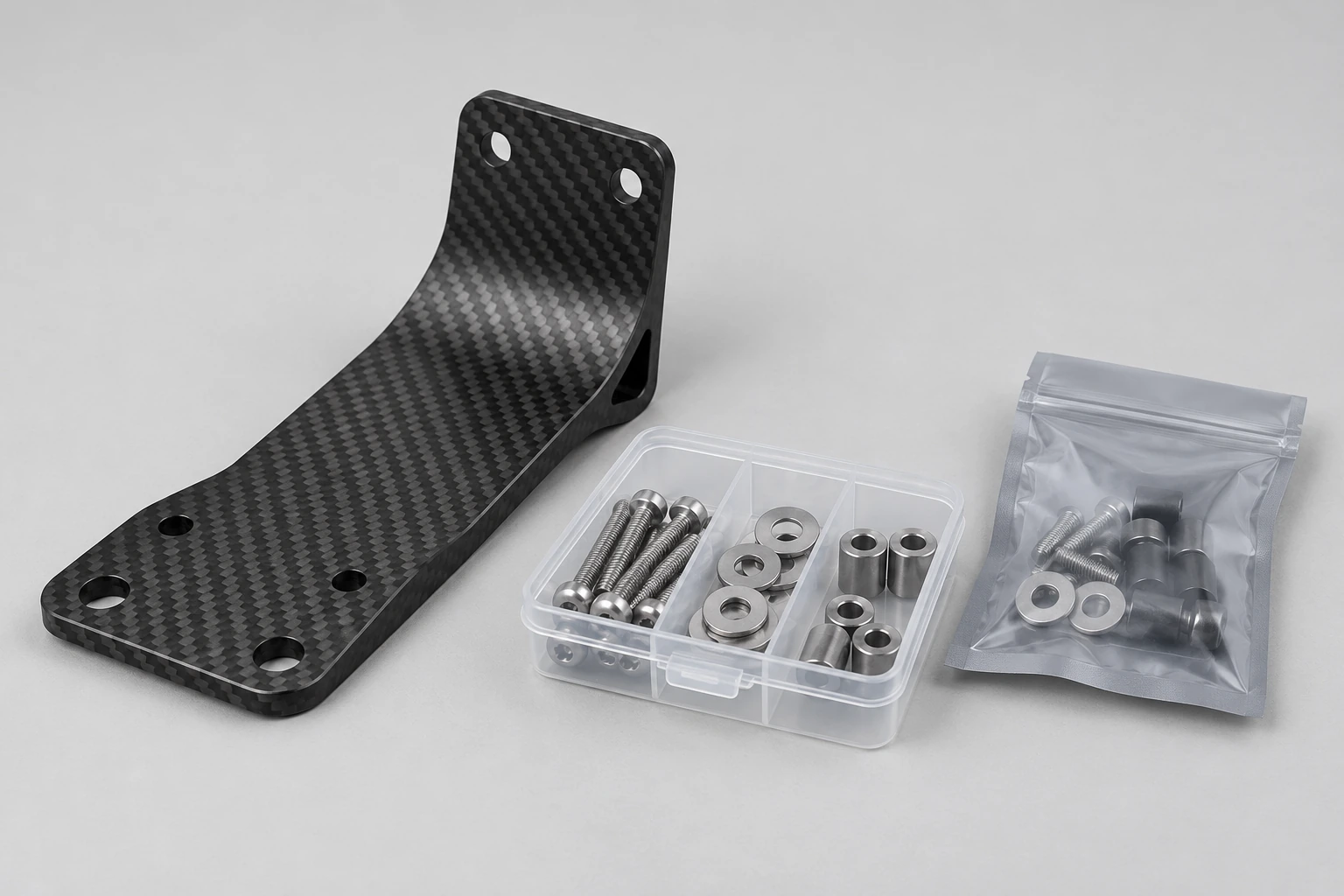
Matériel fourni par le client pour les pièces en fibre de carbone : définir les modalités de remise
When a customer supplies hardware for a carbon fiber assembly, record exactly what is handed over, what the supplier is expected to do with it and how unused or unsuitable…
Read guide →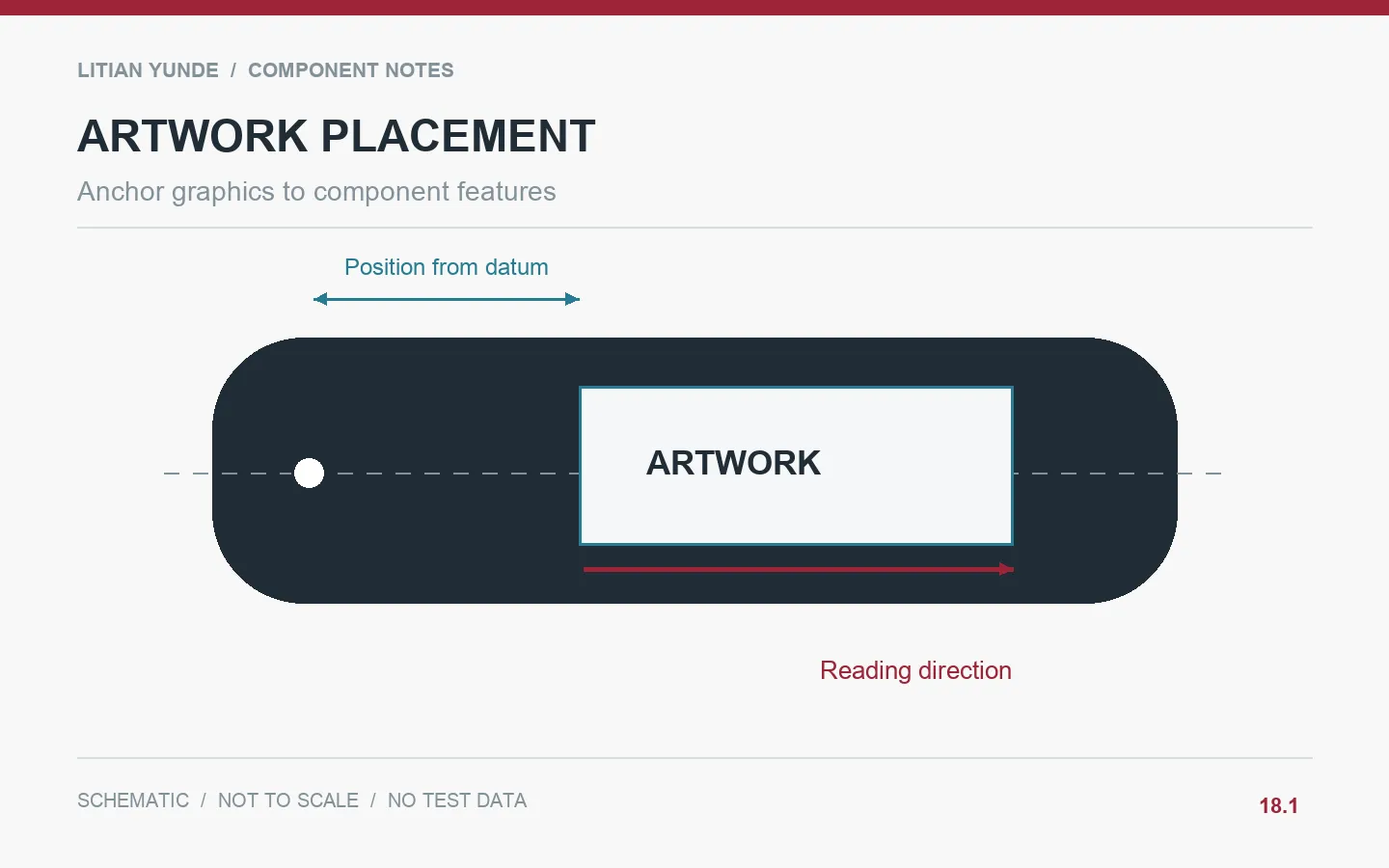
Graphisme sur les pièces courbes en fibre de carbone : valider la position et l'orientation de visualisation
Artwork approval on a curved carbon fiber part should cover orientation, location and the viewing condition, not just the flat graphic file. Identify the supplied finish and…
Read guide →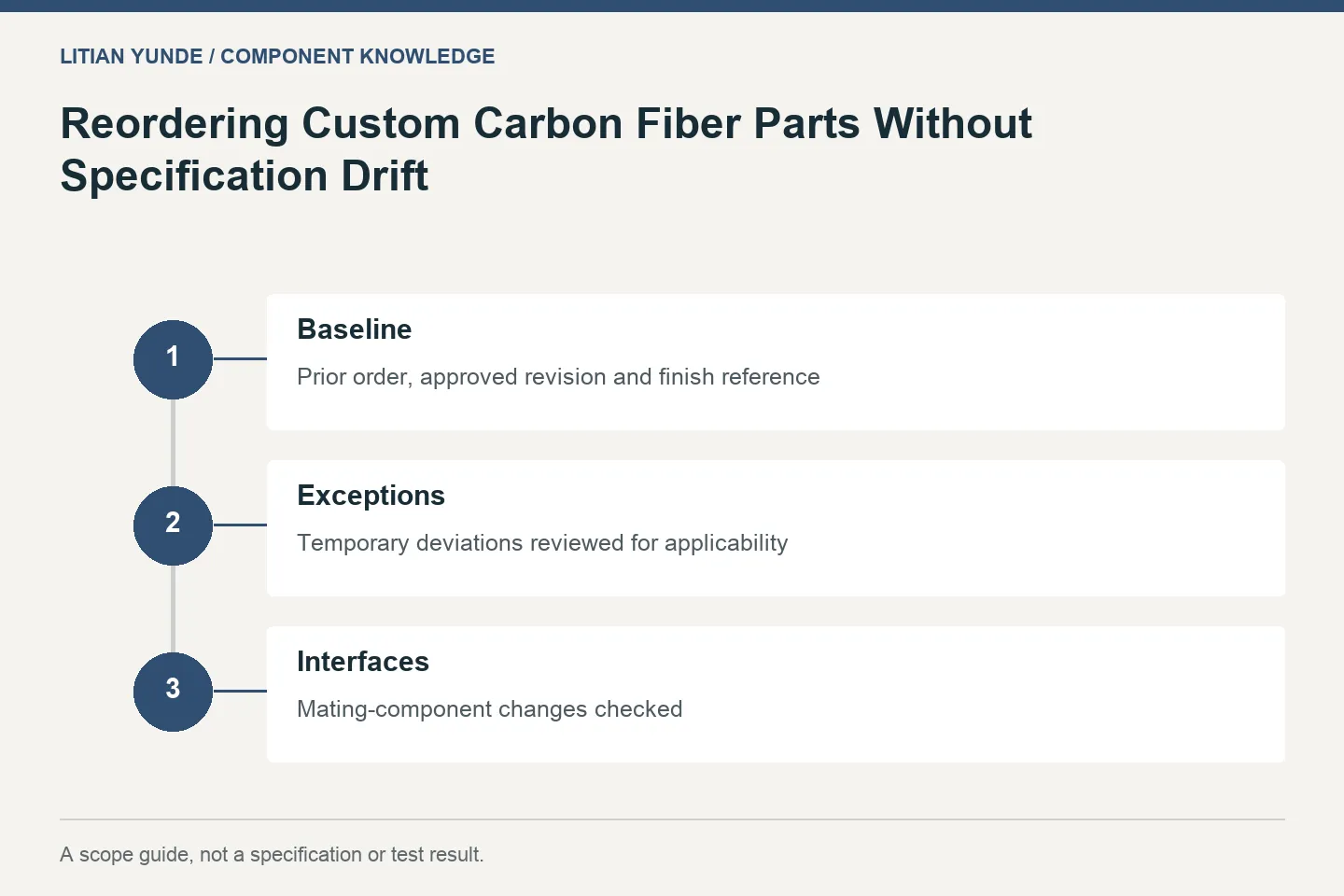
Commande de pièces sur mesure en fibre de carbone sans modification des spécifications
A repeat order should reference the approved definition, not simply ask for “the same as last time.” Confirm the drawing revision, material identity, finish reference and any…
Read guide →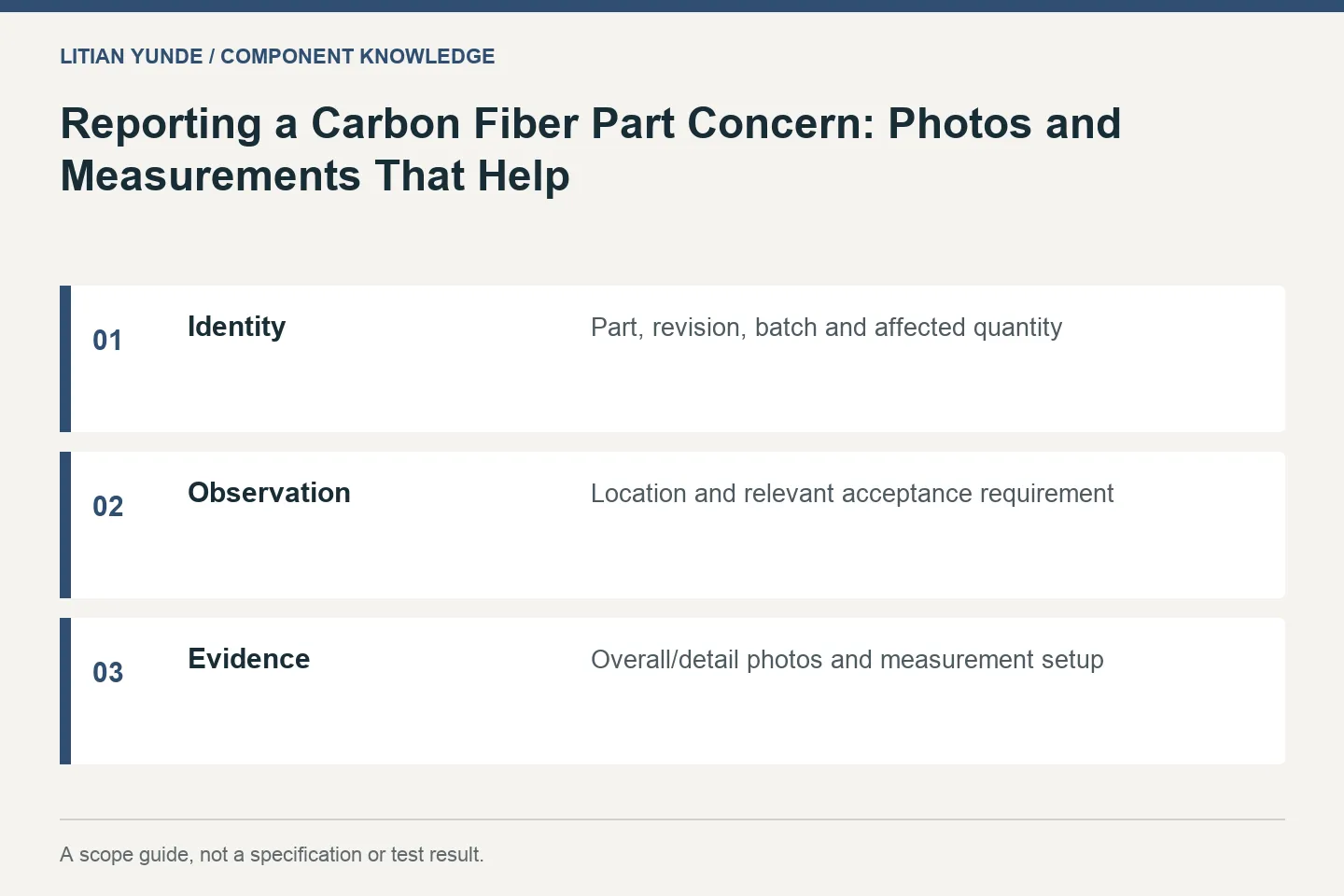
Signaler un problème concernant une pièce en fibre de carbone : photos et mesures utiles
Un rapport qualité pertinent identifie la pièce, sa révision et l'exigence concernée, puis apporte des preuves claires du problème.
Read guide →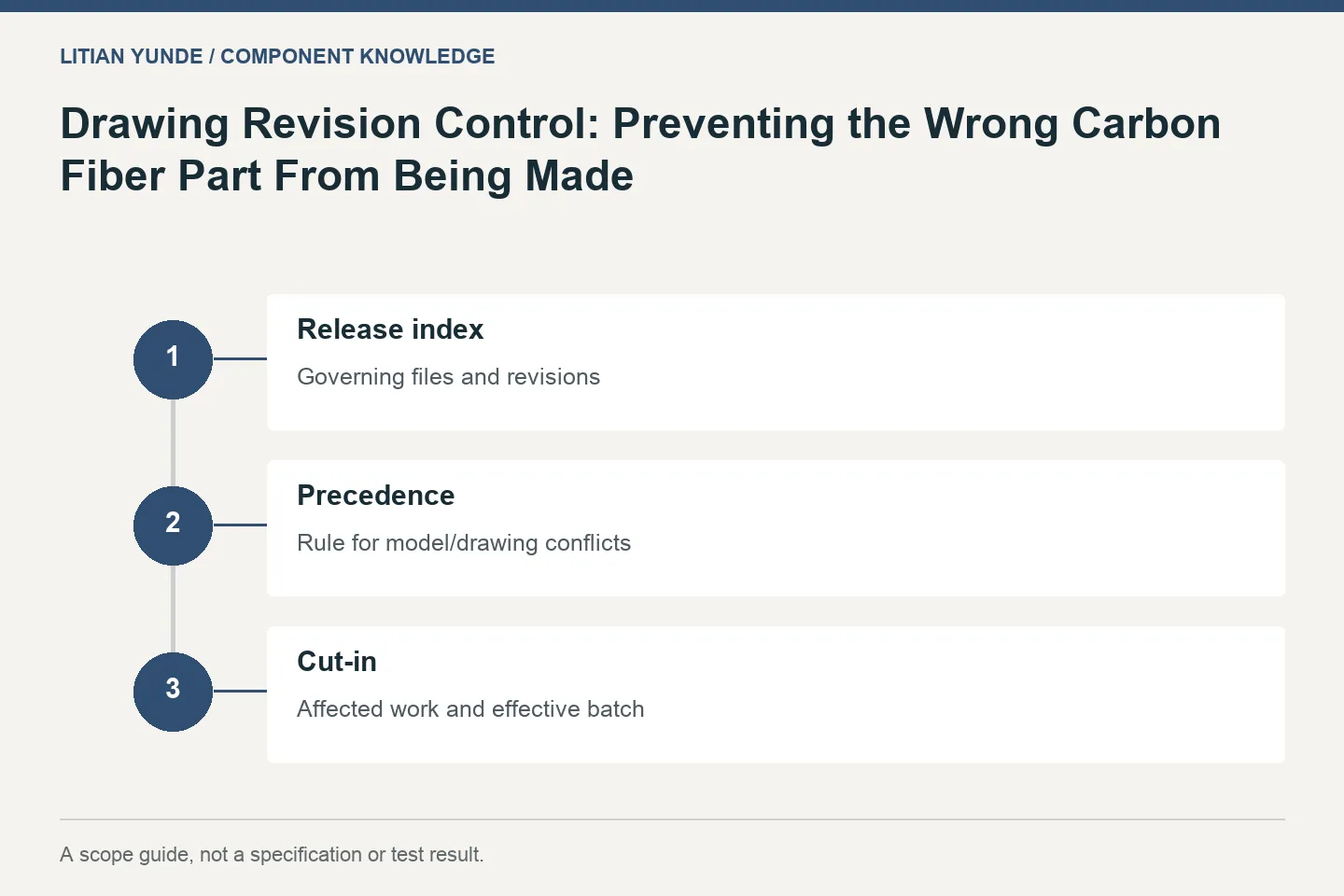
Contrôle des révisions des plans : éviter la fabrication d'une pièce en fibre de carbone non conforme
Un processus de révision clair permet à chacun de savoir quelle définition est en vigueur et à quelle date une modification prend effet.
Read guide →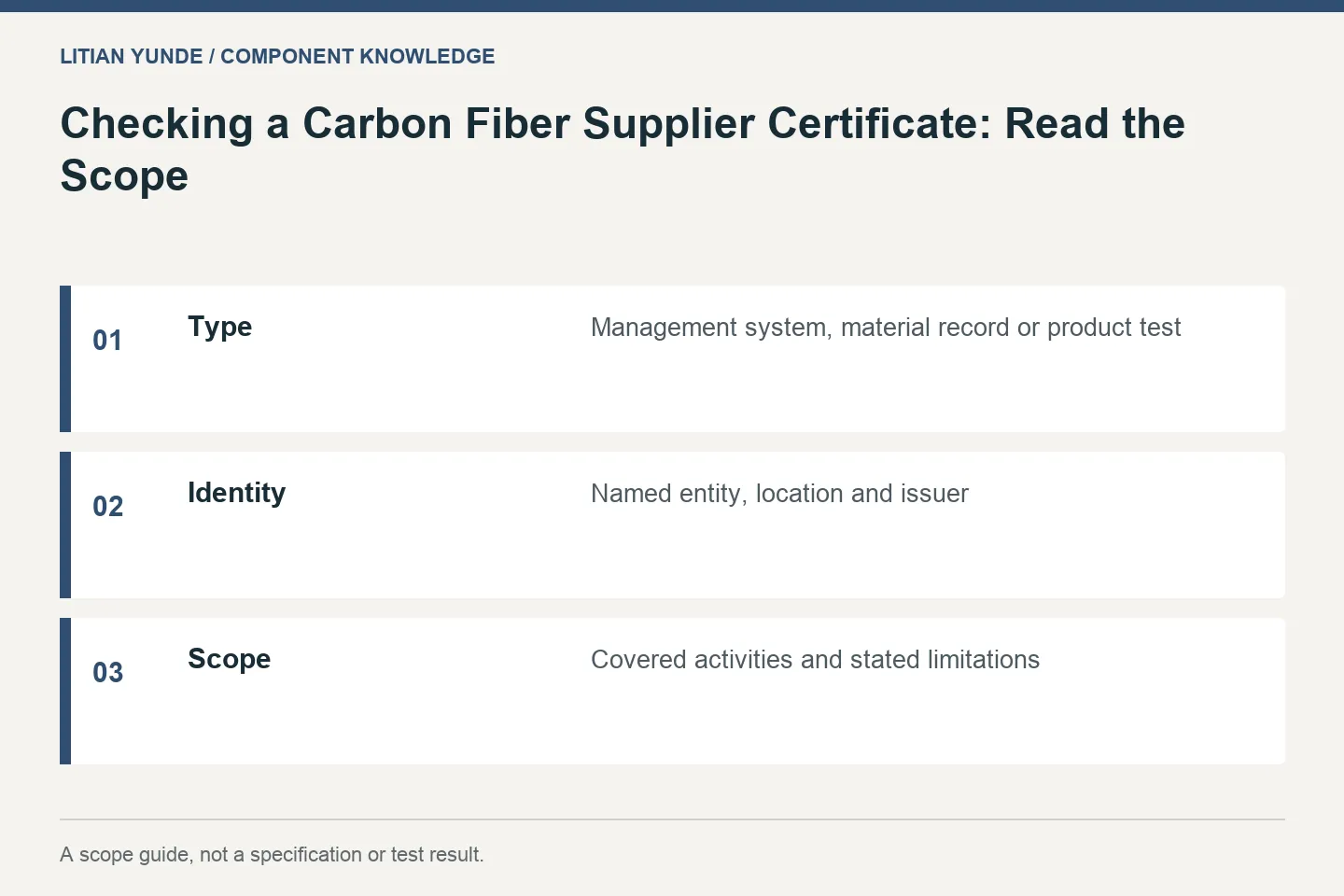
Vérification du certificat d'un fournisseur de fibre de carbone : lire le champ d'application
A certificate is useful only when its identity, scope and relevance to the purchasing requirement are understood.
Read guide →
Pourquoi les devis pour la fibre de carbone varient-ils en fonction de la quantité ? Questions sur les facteurs de coût
Lorsqu'un devis varie en fonction de la quantité, demandez quels coûts sont fixes, lesquels reviennent à chaque pièce et lesquels dépendent du mode de production choisi.
Read guide →
Emballage des composants en fibre de carbone : protégez les éléments essentiels
Les exigences en matière d'emballage doivent respecter la géométrie et les critères d'acceptation de la pièce.
Read guide →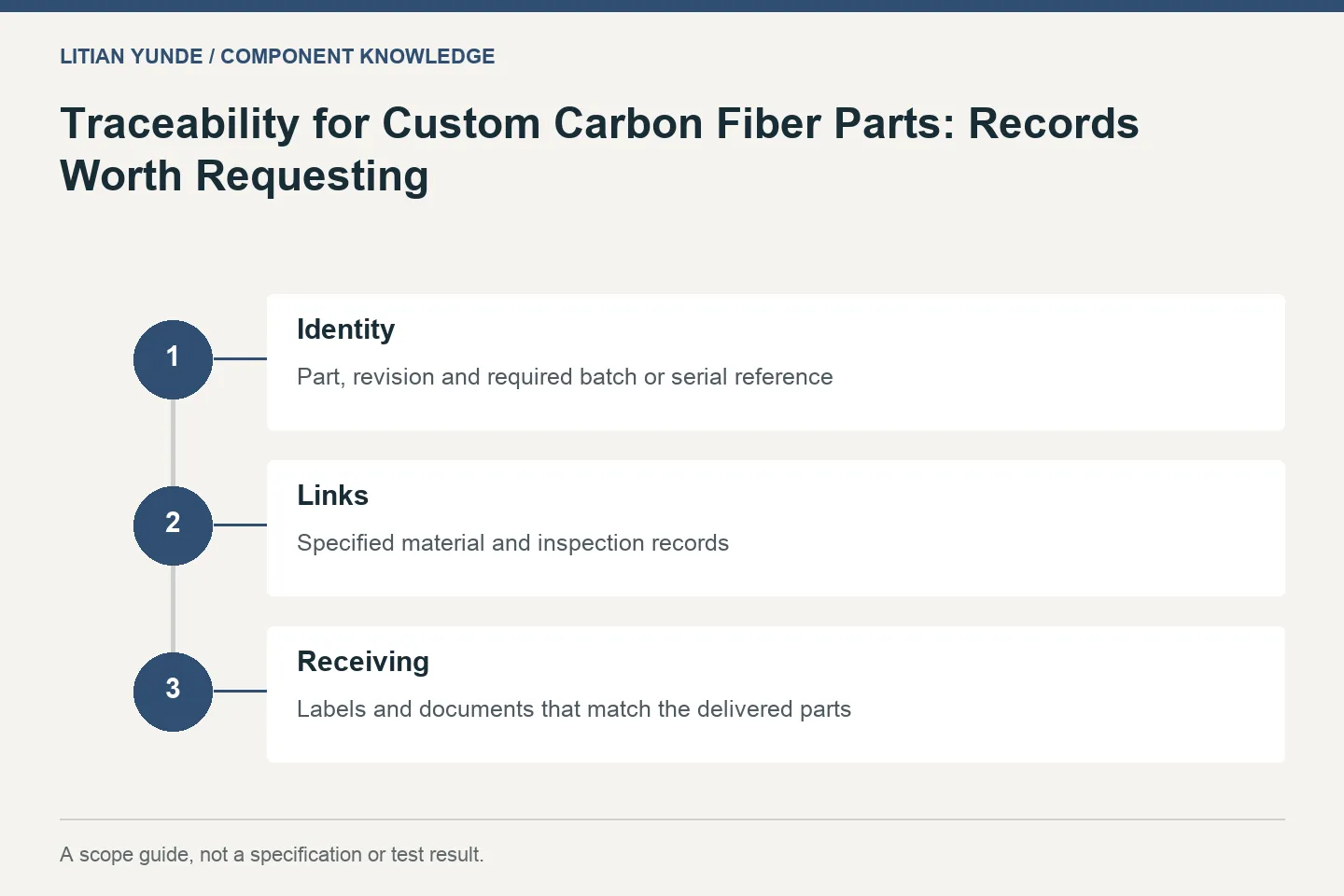
Traçabilité des pièces sur mesure en fibre de carbone : les documents qu'il convient de demander
Une traçabilité efficace permet d'établir un lien entre la pièce fournie, ses spécifications convenues et les dossiers de production ou de contrôle correspondants.
Read guide →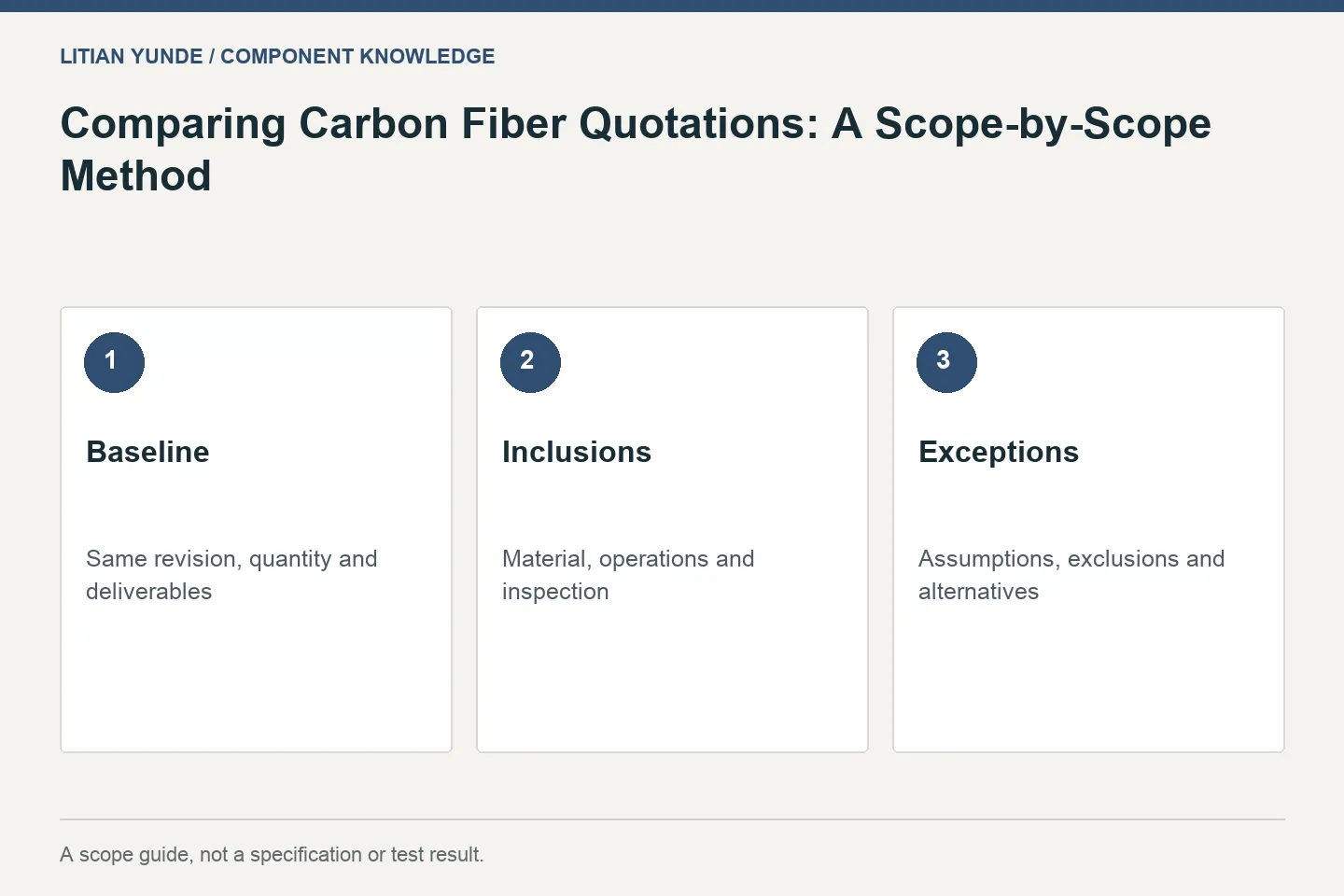
Comparaison des devis relatifs à la fibre de carbone : une méthode par périmètre
Comparez les devis en vous basant sur un cahier des charges commun avant de comparer les montants totaux.
Read guide →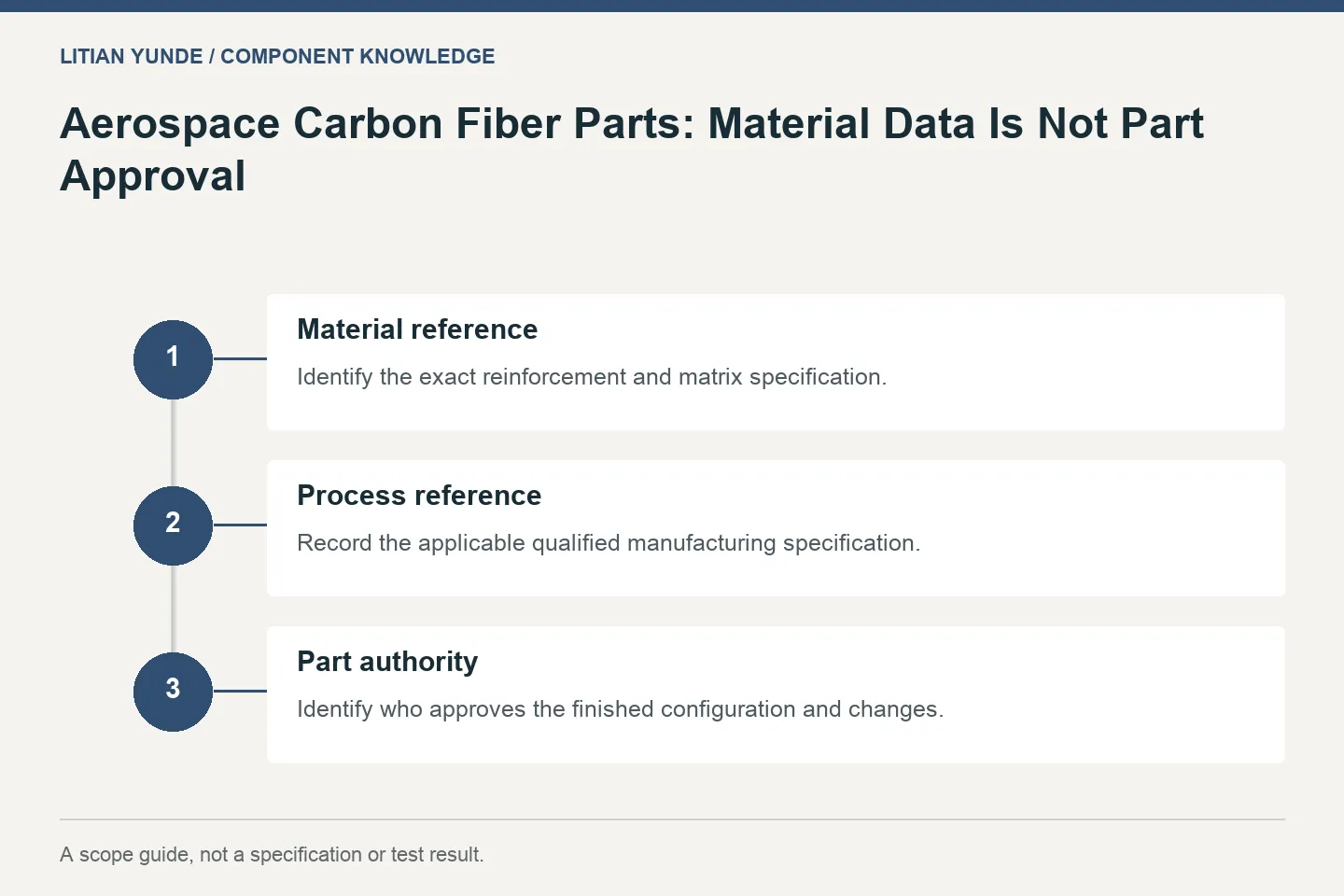
Pièces aérospatiales en fibre de carbone : les données sur les matériaux ne valent pas une homologation de pièce
A material datasheet and an approved aircraft component are different things. When discussing aerospace use, identify the part specification, qualified process and acceptance…
Read guide →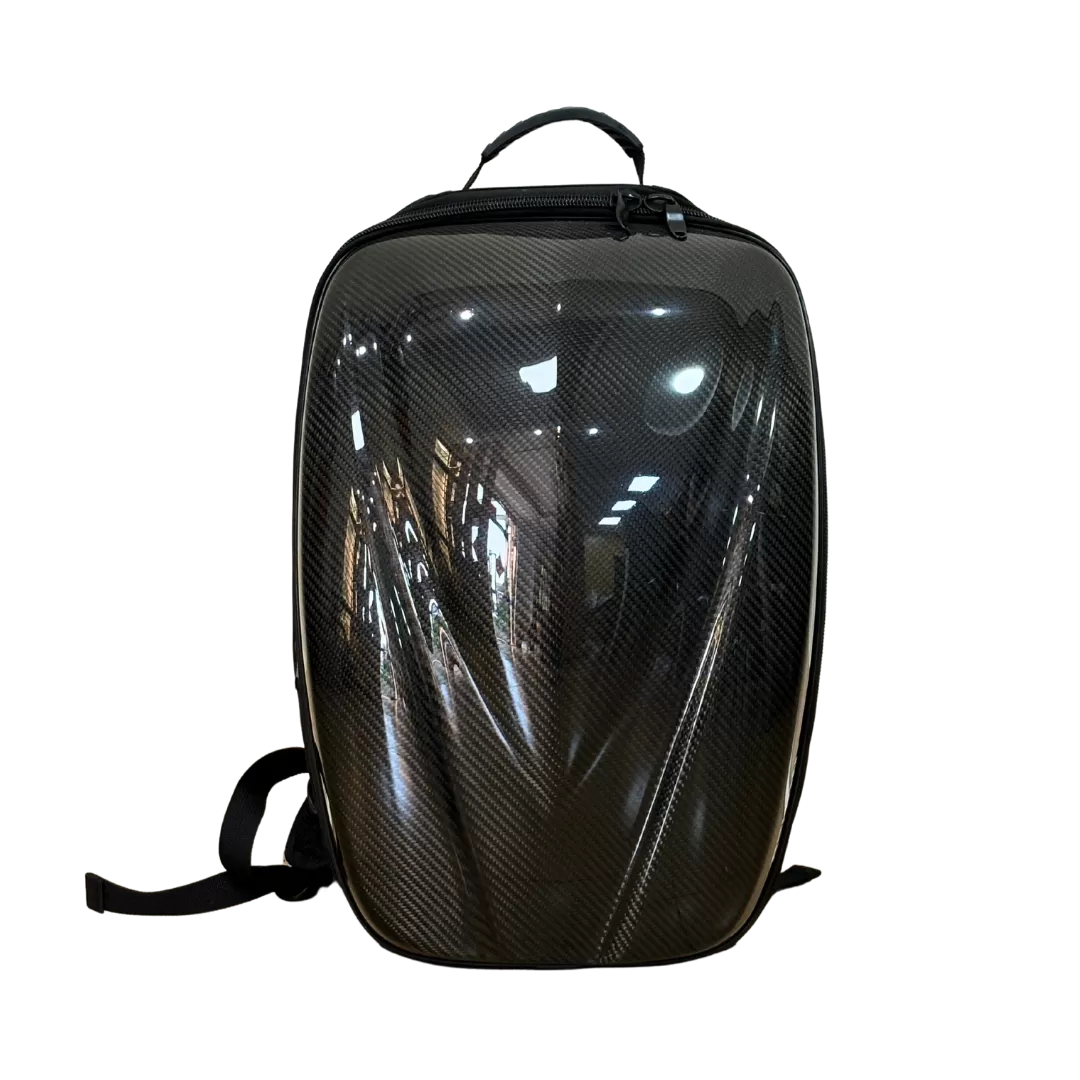
Pièces en fibre de carbone pour équipements spécialisés : préciser le périmètre du contrat
A specialist-equipment enquiry should define the component and the required records before using broad industry labels. A material or sector name does not tell a supplier…
Read guide →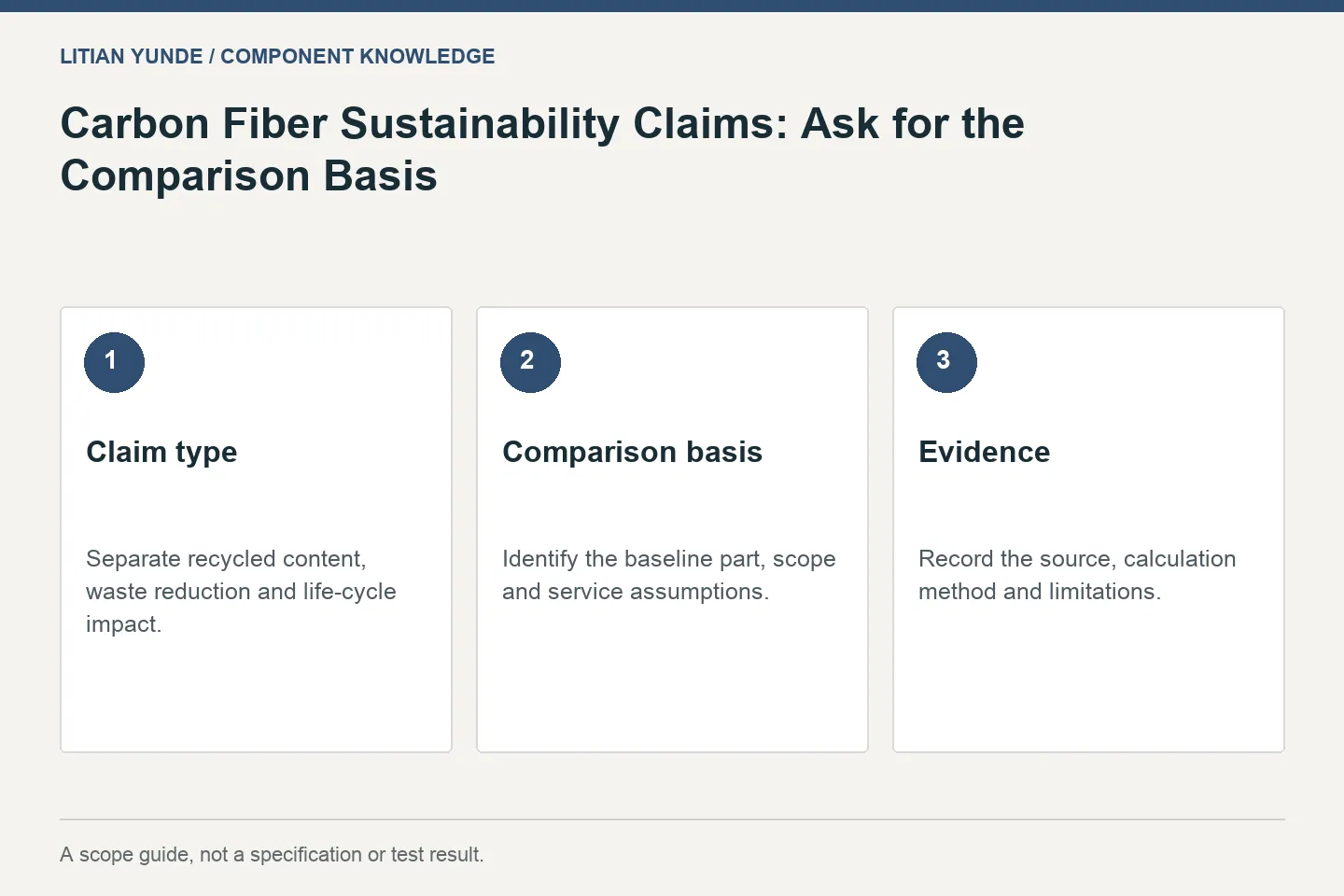
Allégations relatives à la durabilité de la fibre de carbone : demandez sur quelle base la comparaison a été effectuée
A carbon fiber part should not be labelled sustainable solely because it is light. Ask what is being compared, which life-cycle stages are included and what evidence supports…
Read guide →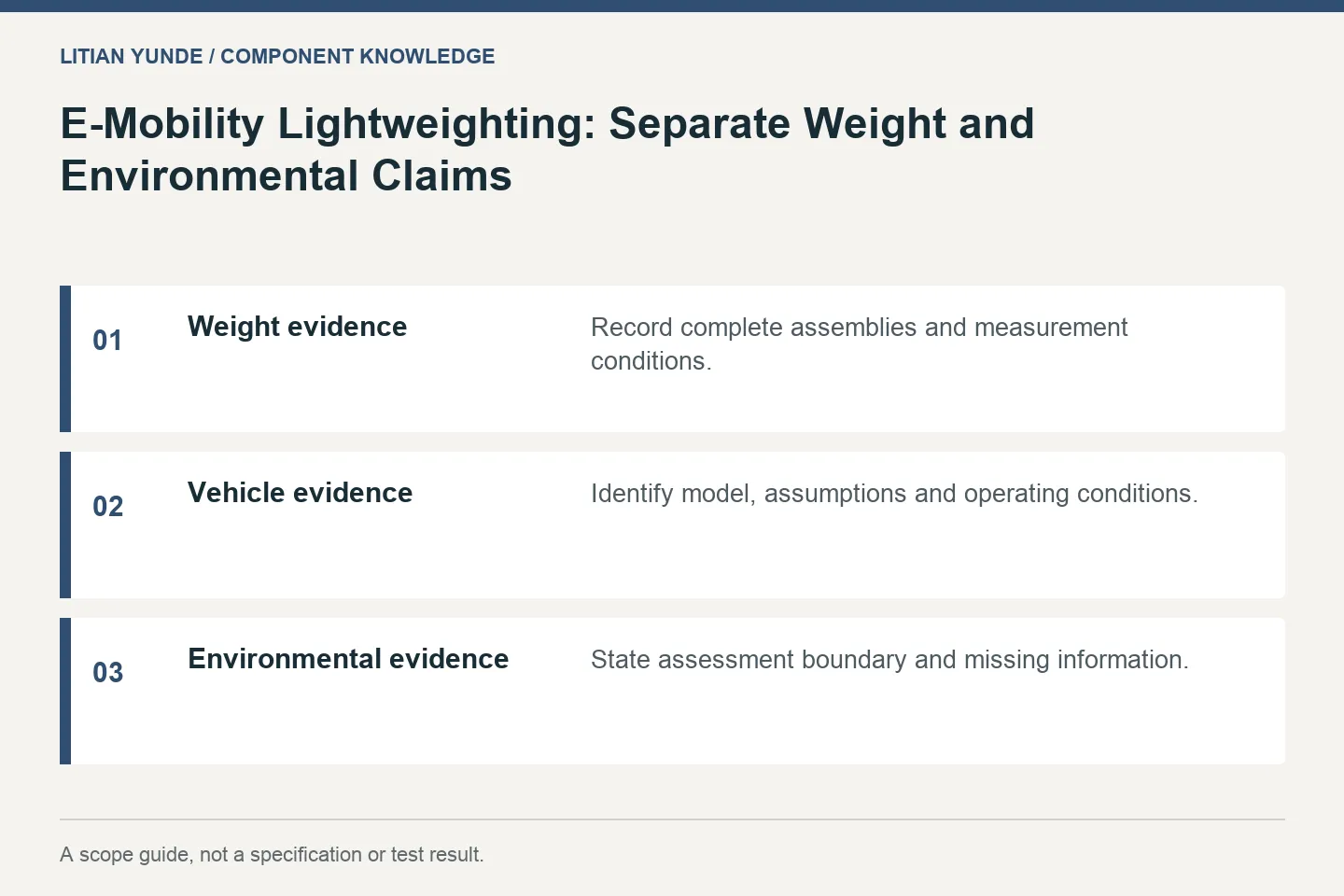
Allègement des véhicules électriques : distinguer les allégations relatives au poids de celles concernant l'environnement
A measured weight reduction and a lower environmental impact are different claims. Keep the evidence for each separate when assessing carbon fiber components for an…
Read guide →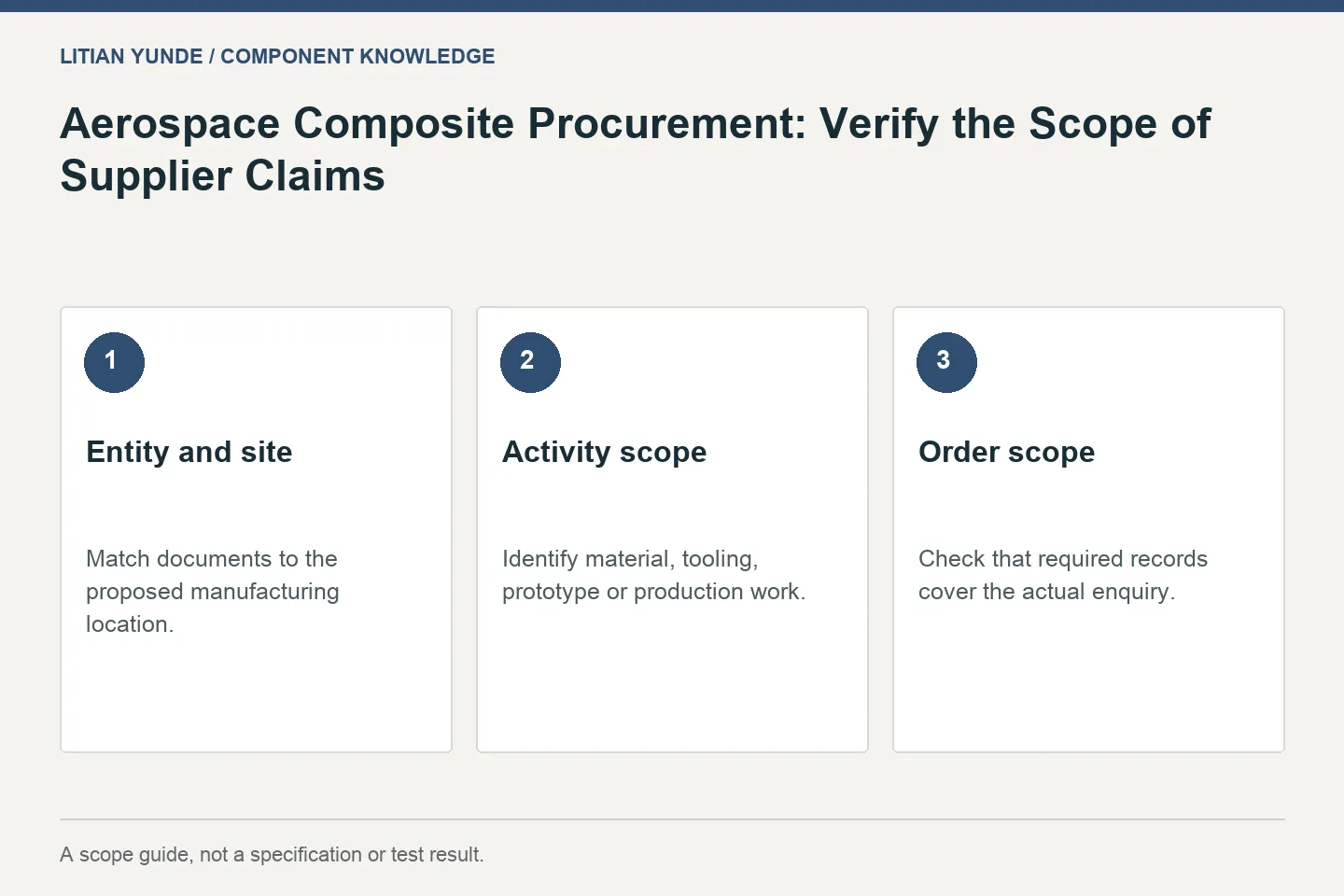
Approvisionnement en matériaux composites pour l'aérospatiale : vérifier la portée des déclarations des fournisseurs
When a supplier mentions aerospace experience, ask which documented activity and scope that statement refers to. Experience, a management-system certificate and approval of a…
Read guide →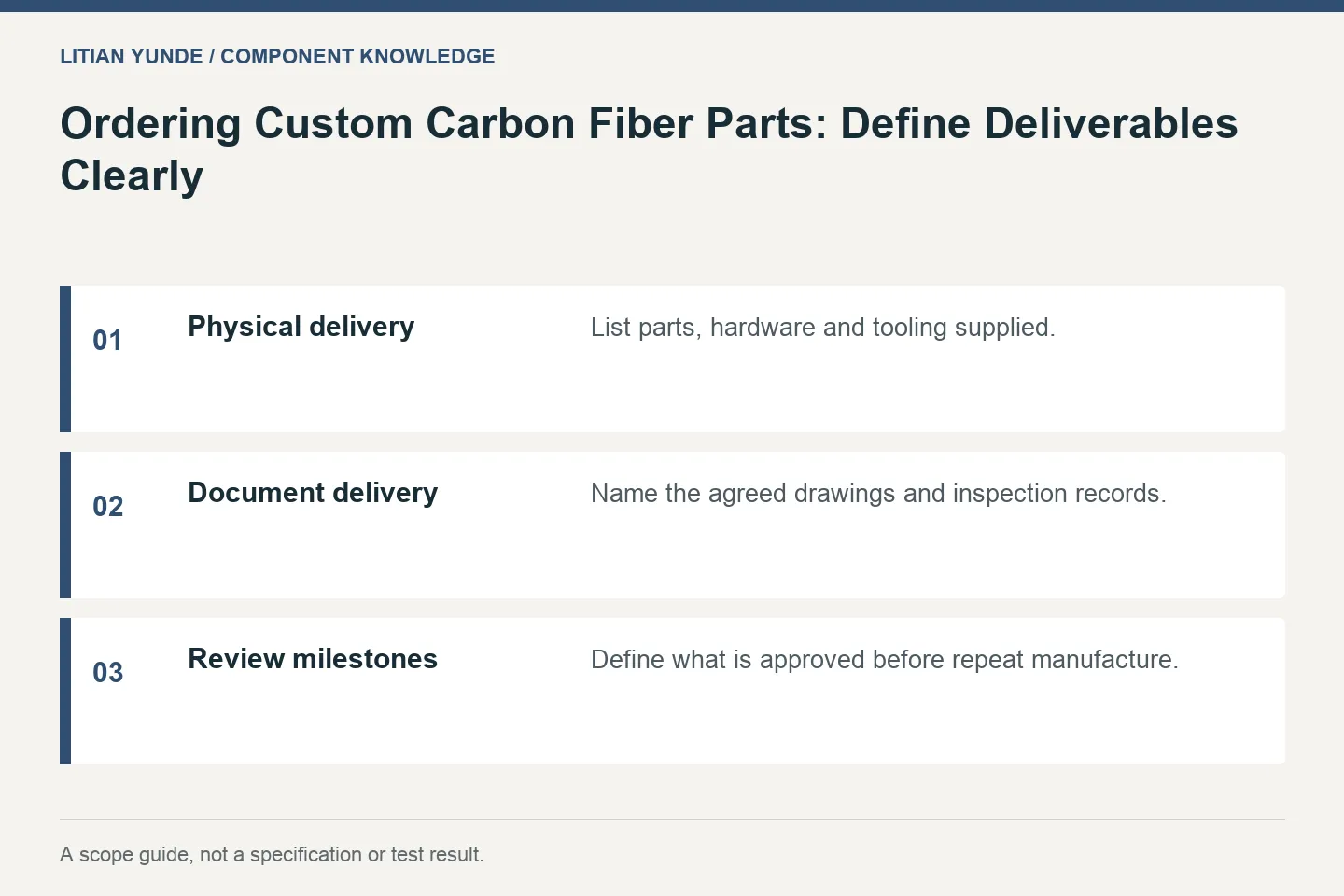
Commande de pièces sur mesure en fibre de carbone : définir clairement les livrables
A custom-part order should say whether it buys a component, an assembled item, tooling or development work. Clear deliverables prevent a reasonable supplier quotation from…
Read guide →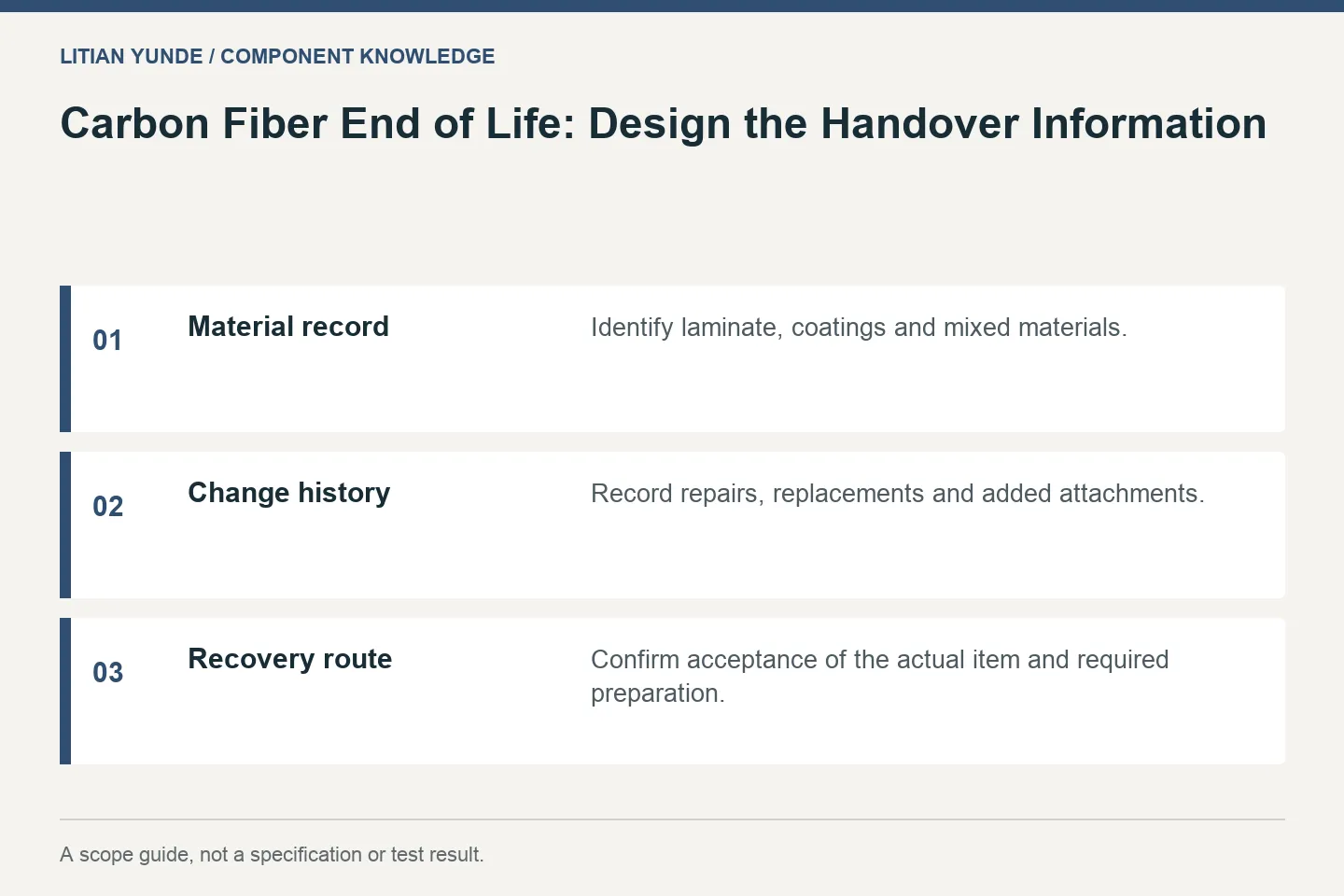
Fin de vie des composants en fibre de carbone : conception des informations de transfert
End-of-life planning starts with knowing what the part contains. Preserve information about the laminate, coatings and attached materials so a future owner can identify…
Read guide →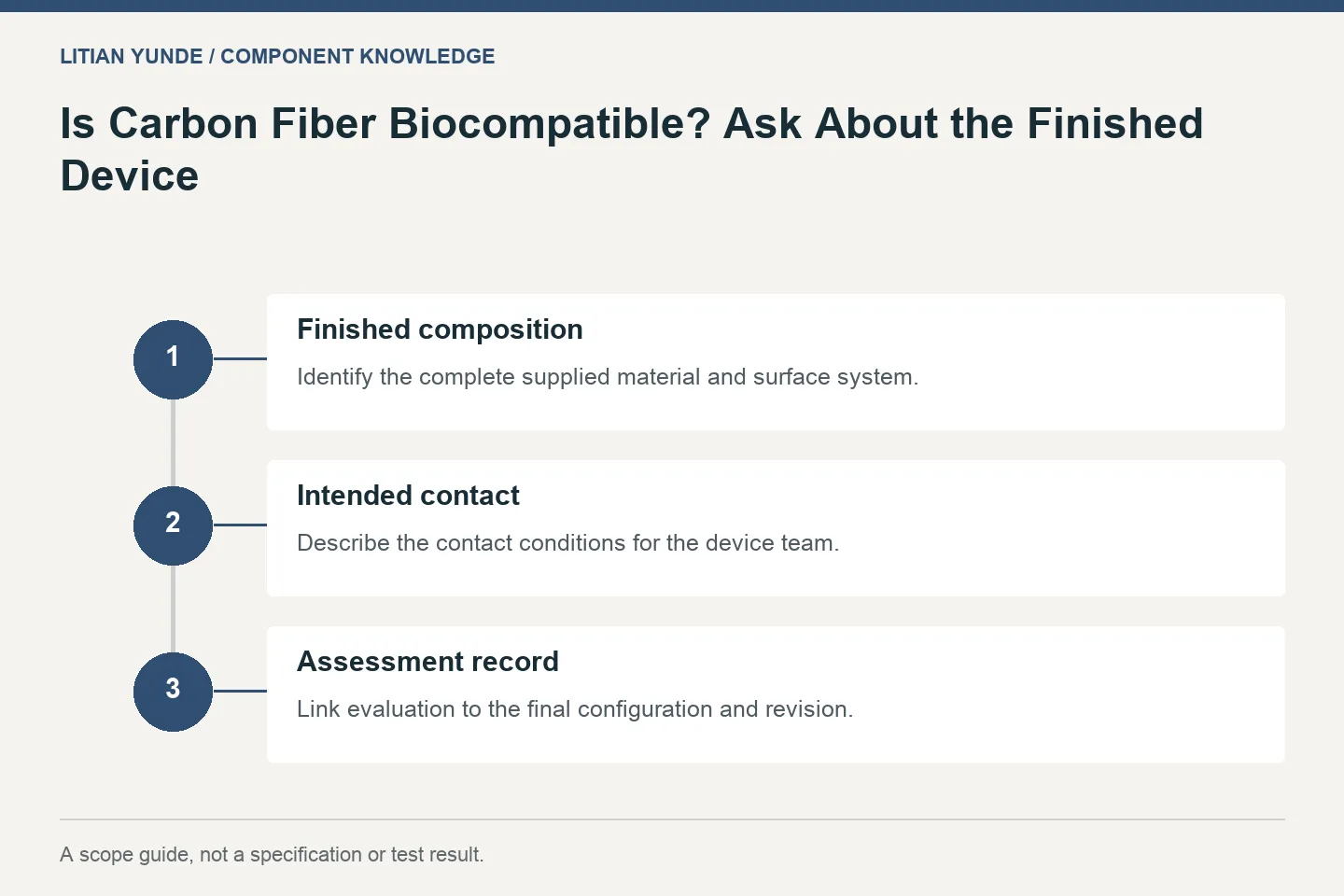
La fibre de carbone est-elle biocompatible ? Renseignez-vous sur le dispositif fini
The phrase carbon fiber does not establish biocompatibility. A device assessment must consider the finished configuration and its intended contact conditions, including the…
Read guide →All foundation and application notes are now included in the eight topics above.
Ready to review your component?
Share the drawing, intended use and project requirements so our team can review the supplied scope with you.
Discuss your project