
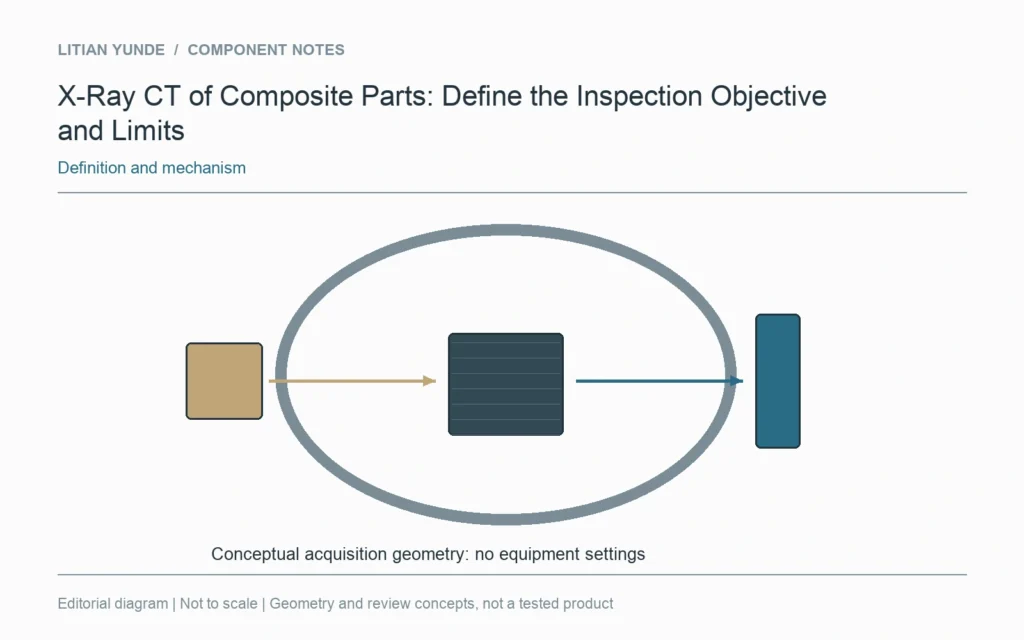
X-ray computed tomography can reconstruct three-dimensional information from radiographic data, but the usable inspection result depends on the component and setup. Specify the inspection objective, assessed region and reporting basis. A detailed-looking volume image is not automatic proof that every defect or dimension has been resolved.
Start with the question
Identify whether the project concerns an internal feature, a particular material condition or dimensional information. Give the provider the actual geometry and relevant attached materials. TWI’s CT overview describes the technique and its range of applications; it is not a capability guarantee for every composite assembly.
Retain the actual setup and coverage
The provider should establish suitable equipment, acquisition and evaluation arrangements. Keep the relevant resolution information, limitations and assessed region in the agreed report. Do not equate nominal voxel size with guaranteed detection of every feature, or assume that an attractive section image explains the complete evaluation.
Connect findings to the requirement
Use an identified part or specimen and an agreed acceptance basis. If CT is proposed instead of another method, review whether it answers the required question rather than calling the methods interchangeable. Confirm project-specific capability and reporting before promising a service. This article does not state that Litian Yunde operates CT equipment or supplies a particular qualified inspection capability.

Further reading: TWI: computed tomography.