
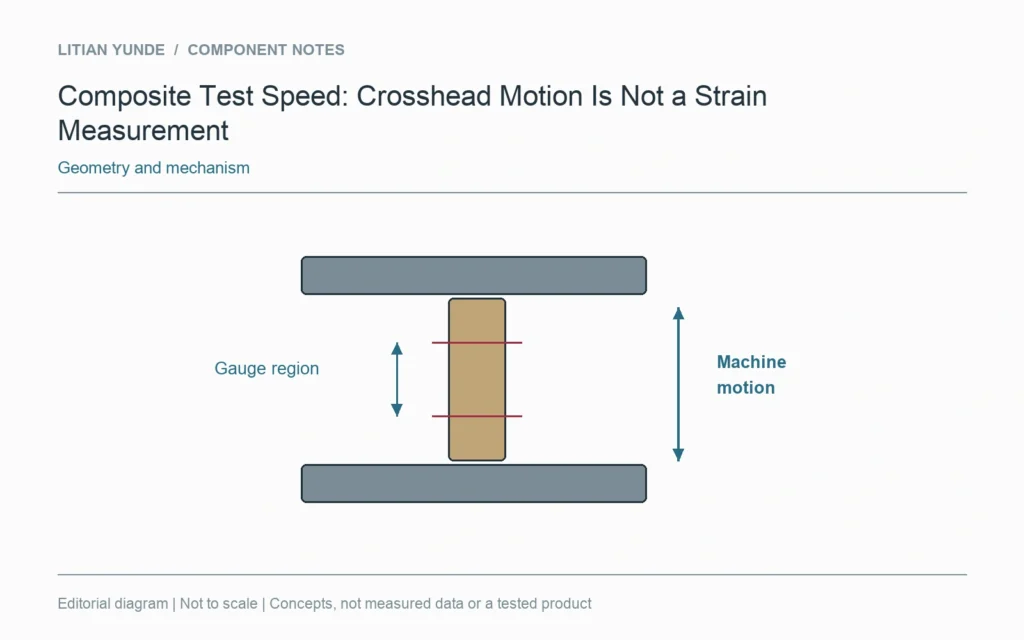
Crosshead displacement and specimen strain are different reported quantities. A test speed setting does not, on its own, describe how strain was measured in a composite specimen. Keep the motion setting, control mode and strain-measurement method with the result.
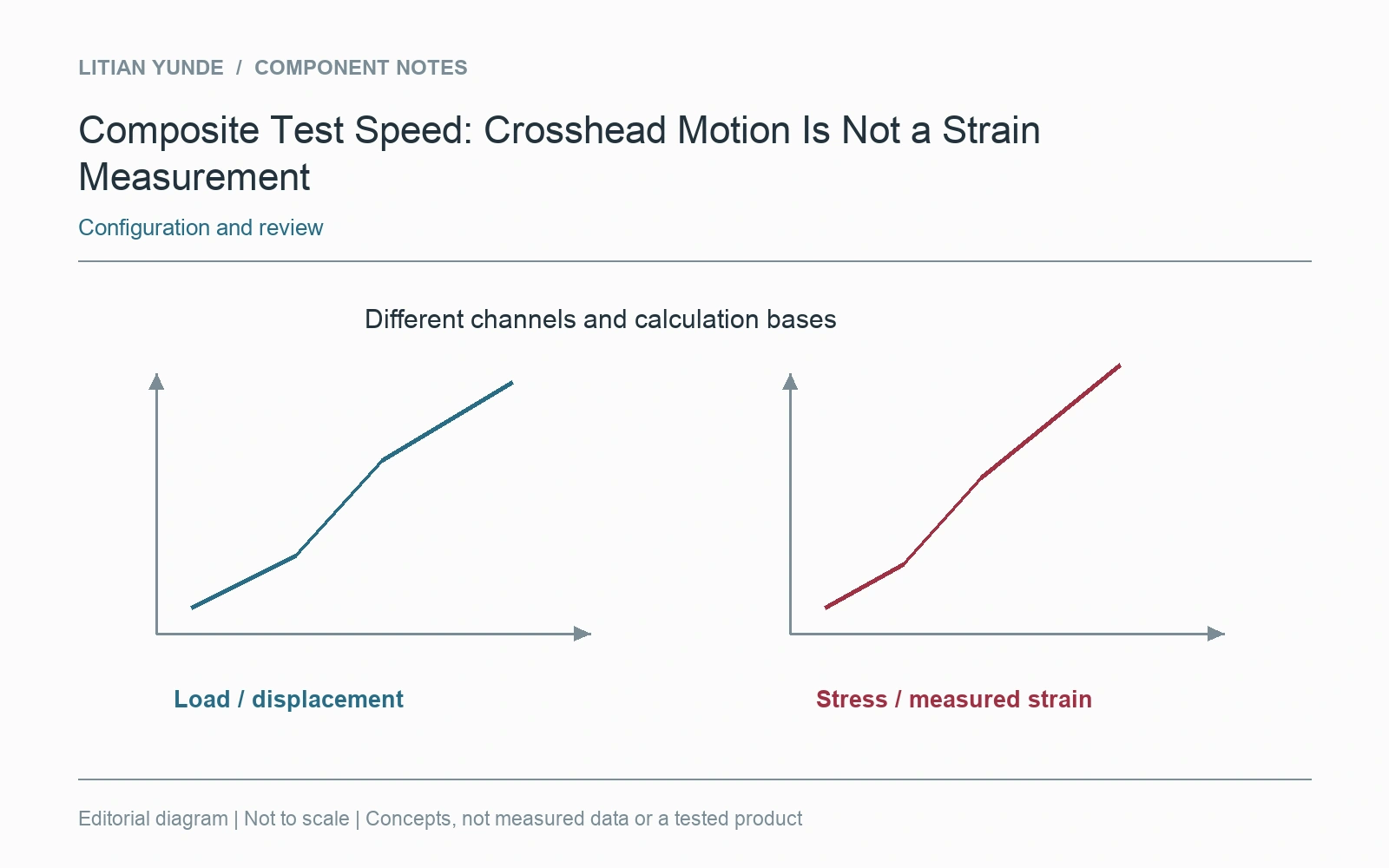
A graph of load against machine displacement is not automatically a stress–strain curve. Identify the plotted channels and their units. If the report gives strain, ask which measurement region or device supplied it and which specimen dimensions were used for the calculations.
Describe the actual method
ZwickRoell describes optical strain measurement for composites and explains its difference from measurement through crosshead travel. The selected method and its use belong in the test record. Do not convert crosshead travel to specimen strain without the required basis, or assume that identical motion settings make different test arrangements equivalent.
Keep comparisons tied to the setup
When requesting a comparison, provide the intended test method, specimen construction and conditioning, then ask the laboratory to identify the applicable control and measurement details. Keep any change of grip arrangement or measurement region visible in the records. A shortened chart legend should not become the only surviving definition of the test. The aim is a result that another reviewer can interpret, not a generic speed value copied onto every enquiry.
Further reading: ZwickRoell: optical strain measurement for composites.