

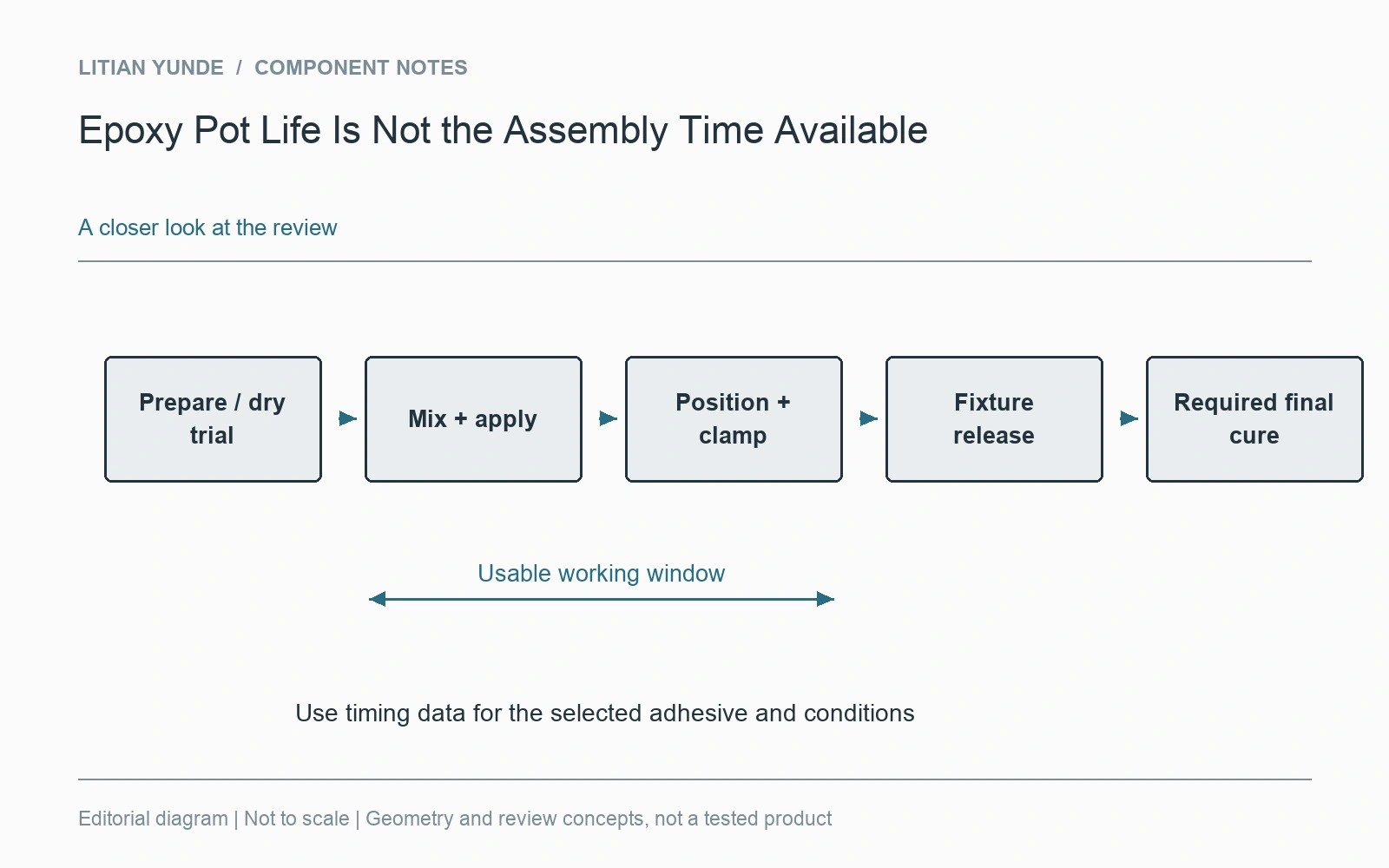
An adhesive pot-life figure is not a promise that a complete assembly can take that long. Mixing, application, positioning and clamping consume the usable working period, and the conditions used to measure a published value may differ from the workshop.
Read the terms before building a schedule
For epoxy systems, pot life describes a specified contained quantity under stated conditions; working or open time may be described for material spread as a thinner film. WEST SYSTEM explains this distinction in its epoxy chemistry guidance. For the adhesive actually selected, use its own technical data and terminology. Do not transfer a time from one resin/hardener combination to another.
Make a dry assembly part of the preparation
Have the parts, fixtures and access route ready before mixing starts. A dry trial can expose alignment difficulties without spending the adhesive working window. Mark which steps require another person or a fixture adjustment. If application occurs in several areas, include the travel and handling time rather than timing only the first bond surface.
Release from a fixture is another decision
An assembly may hold its position before it reaches its specified final properties. Fixture-release time, handling time and full cure should therefore be recorded separately when the adhesive data distinguish them. Part temperature and ambient conditions need attention; a schedule copied from a different environment may not represent the current job.
Record the process that made the sample
Retain the product and batch identification, mix method, actual conditions and relevant times for a reviewed sample. Note any required post-cure only when it belongs to the selected system. If the joint or application sequence changes, revisit the schedule. A concise process record gives repeat production a real starting point instead of a vague instruction to wait until the adhesive looks hard.
Technical background: WEST SYSTEM: epoxy chemistry and working-time terms.