
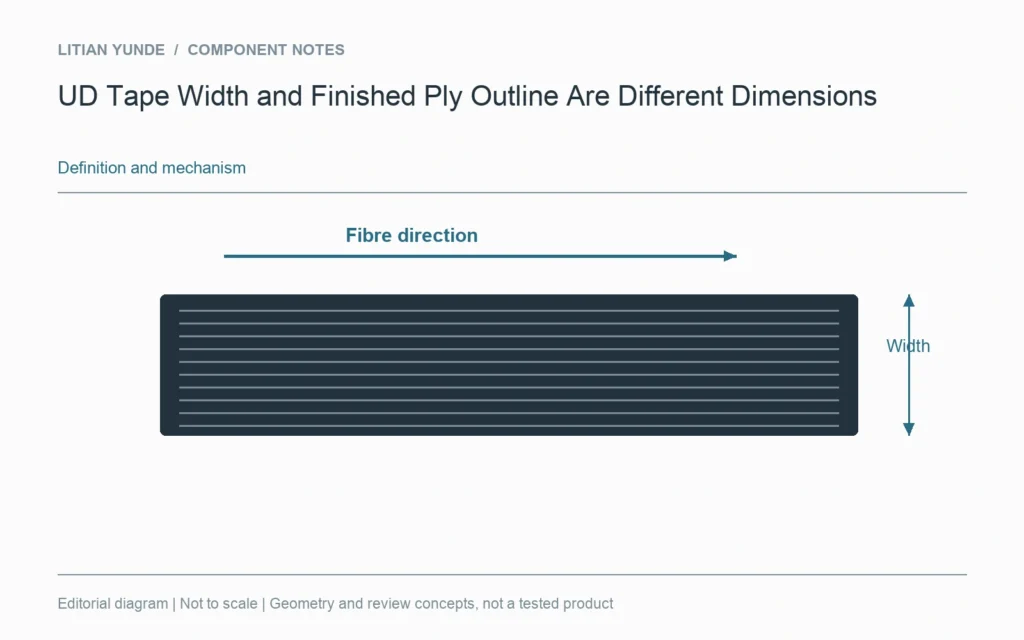
The width of a unidirectional tape is a material-supply dimension. The outline of a finished cut ply describes a layer prepared for a particular component. Specify which one an enquiry or drawing refers to before comparing dimensions and quantities.
Identify the item being supplied
A roll of tape, strips cut from a wider material and a prepared ply kit are different deliverables. Record the material designation and supplied form. A quotation for stock width should not be assumed to include contour cutting, orientation identification or grouping into component sets.
Keep the fibre reference on the outline
A rectangular or shaped ply needs an identified orientation relative to the component definition. The longest side of a cut shape does not automatically identify the fibre direction. If several plies look similar, use an agreed identification convention so their intended layer and orientation remain clear through preparation.
Reconcile the prepared kit
For cut-ply supply, define the controlling geometry, revision, number of layers and required delivery grouping. List any relevant handling or protection requirements through the agreed material process. These details concern the delivered preparation scope; they do not prescribe a layup or cure recipe. Resolve whether dimensions apply to raw stock, a cut layer or the cured part before using them as an acceptance requirement.

For the project review: roll stock or prepared ply scope; material designation and fibre reference; controlled ply geometry and revision; per-component layer and quantity definition.