
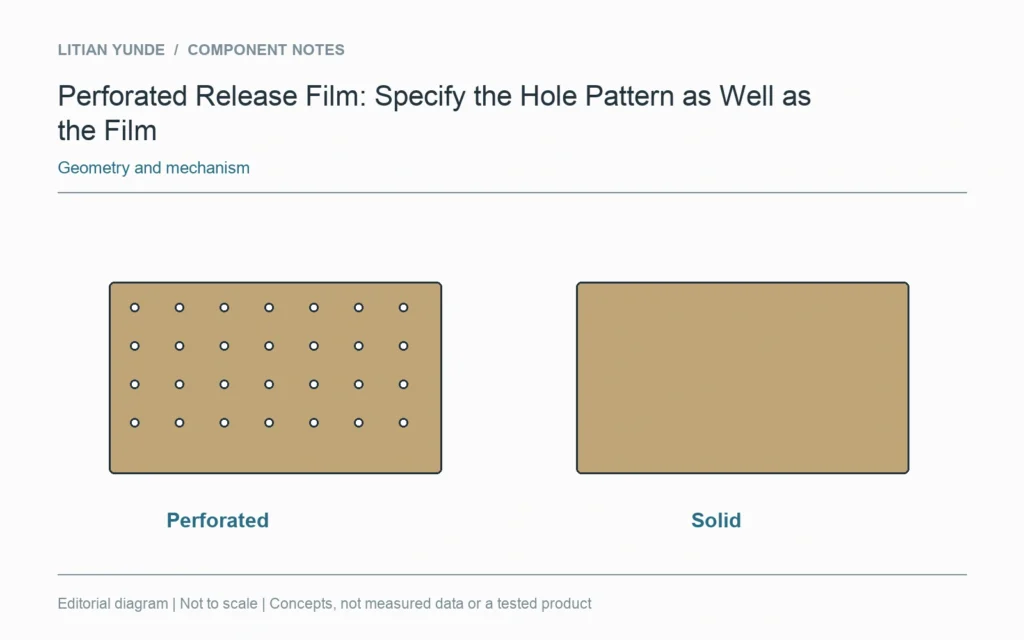
Perforated and non-perforated release films are different process selections. For a perforated product, retain the grade and perforation designation in the bagging instruction. Calling both materials release film can hide a change in how air or resin passes through the layer.
Identify the actual consumable
Fibre Glast offers release film in perforated and non-perforated forms. This distinction concerns the selected consumable, not the visible weave of the finished part. Product temperature limits and other processing restrictions still need the applicable manufacturer information.
Show its place in the stack
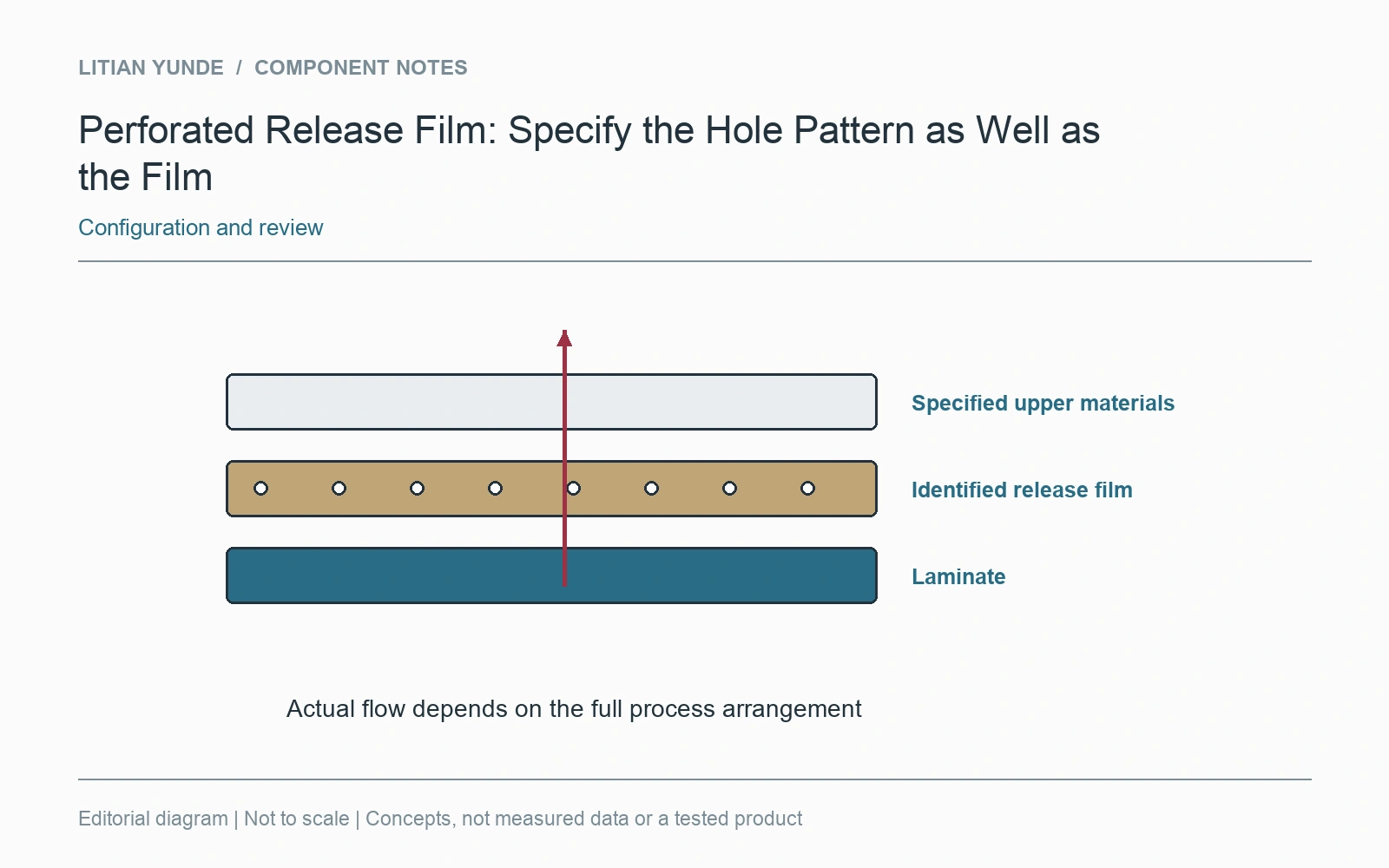
Locate the film relative to the laminate and the specified surrounding materials. A sketch should make clear which layers remain in the component and which are removed. The existence of holes does not define the whole resin-management arrangement or replace a validated process instruction.
Control a substitution
If a different perforation pattern is proposed, ask the supplier to identify the change and its review basis. Do not transfer a hole spacing or processing temperature from a generic example. Keep the selected film designation with the trial or production record so the observed result refers to a known bagging arrangement, rather than an unnamed sheet used above the laminate.
Further reading: Fibre Glast: perforated and non-perforated release film.