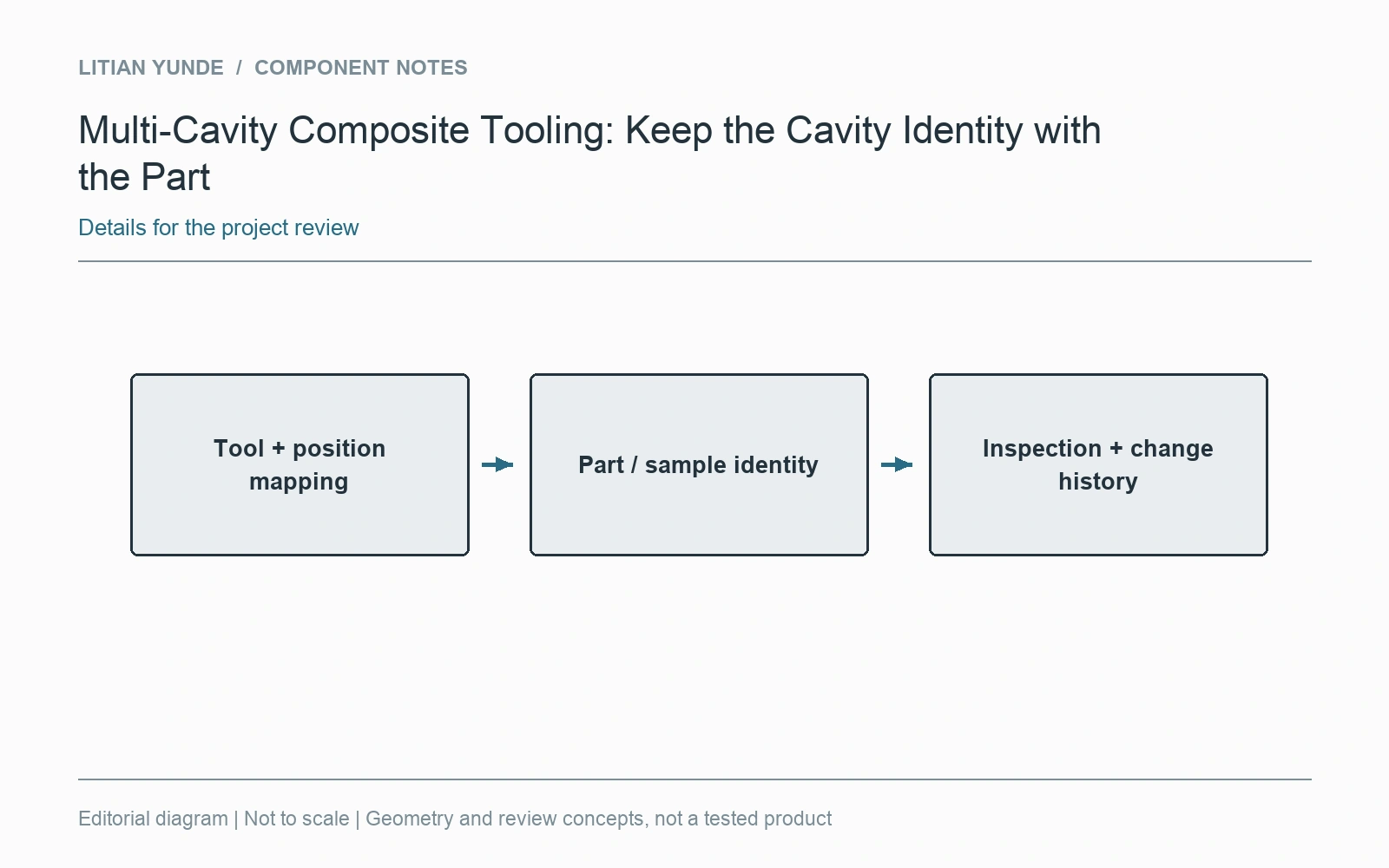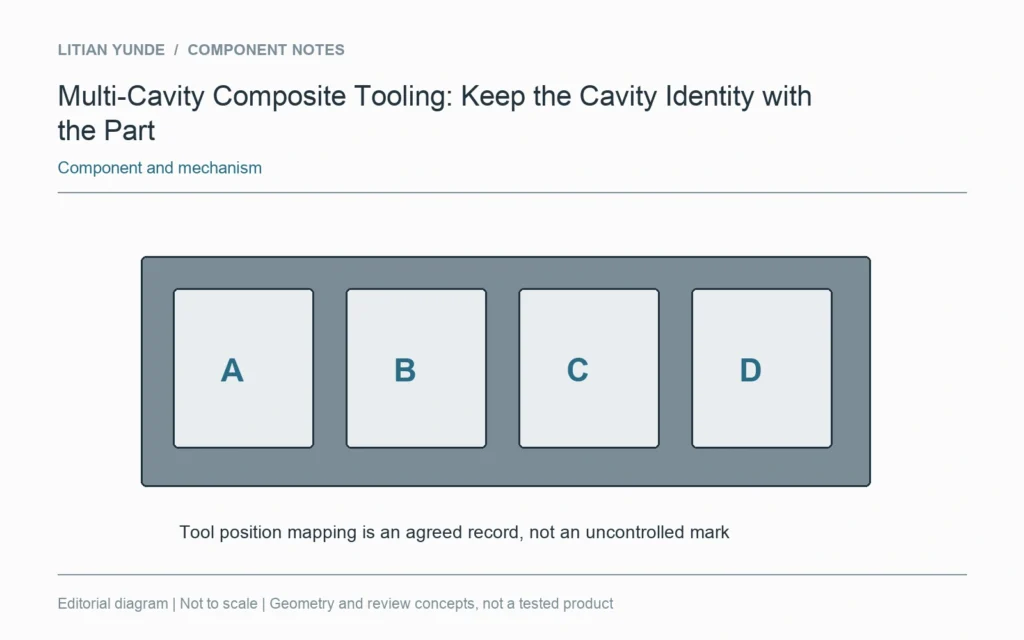
When a tool produces more than one part per cycle, cavity identity can be useful traceability information. Define whether the order requires it and how it will be recorded. A batch number alone may not distinguish which tool location produced an observed feature.
Map the production positions
Identify the tool and the applicable cavity or position convention. The manufacturer’s internal layout and the customer’s required records should use an agreed mapping where that relationship matters. Do not add uncontrolled marks to a functional or cosmetic face simply to create traceability.
Scope the sample review
If first-article or process review must represent particular cavities, include that requirement in the plan. One accepted sample should not be assumed to represent every position unless the agreed basis supports that conclusion. Record specimen identity and the conditions represented.
Use the identity when reviewing concerns
A cavity reference can help locate repeated observations without proving their cause. Keep it with actual inspection data and any affected quantities. If a tool position is repaired or changed, the relevant change and release records should remain understandable. This is a reporting option to agree for the project, not a claim that every carbon fiber order needs multi-cavity tooling or cavity-specific certification.