
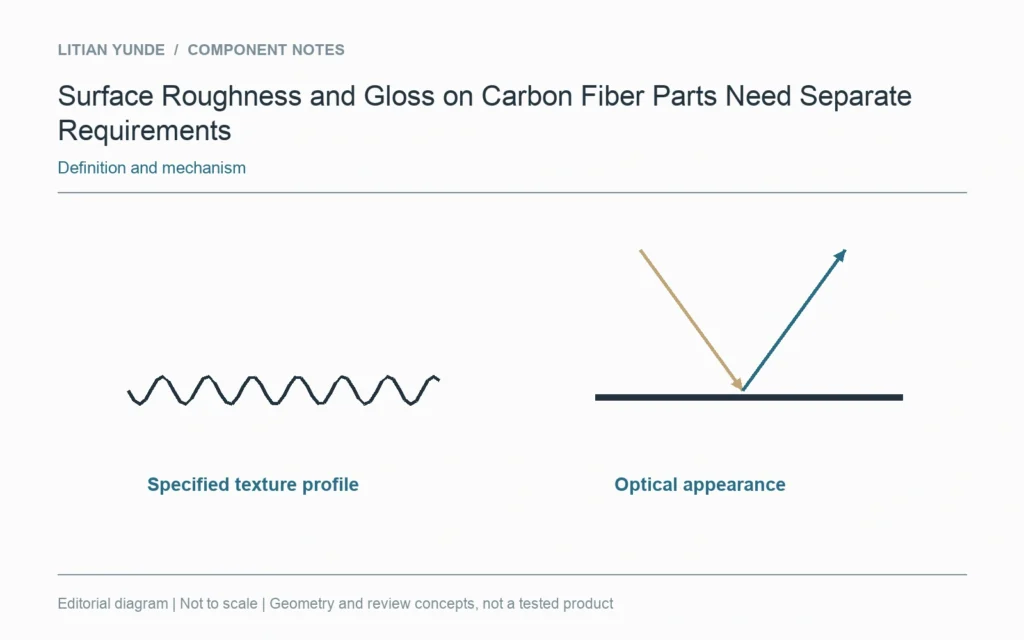
Gloss describes an optical appearance characteristic; a roughness measurement describes specified surface texture information. Neither should be used as a substitute for the other. Identify which surface characteristic the component actually needs to control.
A visible exterior face, bonding region and mating contact can have different requirements. If a roughness value is specified, retain its parameter, method and measurement location. Mitutoyo’s surface-texture resources show why a bare number without its measurement definition is incomplete.
Keep the observation conditions
An appearance comparison needs an agreed viewing condition or applicable optical measurement. A roughness evaluation needs its own suitable method and setup. The visible weave, coating and local geometry can complicate a casual comparison. Do not infer a roughness result from a shiny photograph, or assume a matte description specifies one numeric texture value.
Scope the supplied evidence
State whether the order requires a retained appearance sample, measured texture information or both. Agree the relevant inspection with the responsible reviewer before production, especially where the geometry or finish limits access. This makes the acceptance discussion concrete without imposing an invented universal roughness or gloss limit on all carbon fiber parts.

Further reading: Mitutoyo: surface roughness measurement resources.