
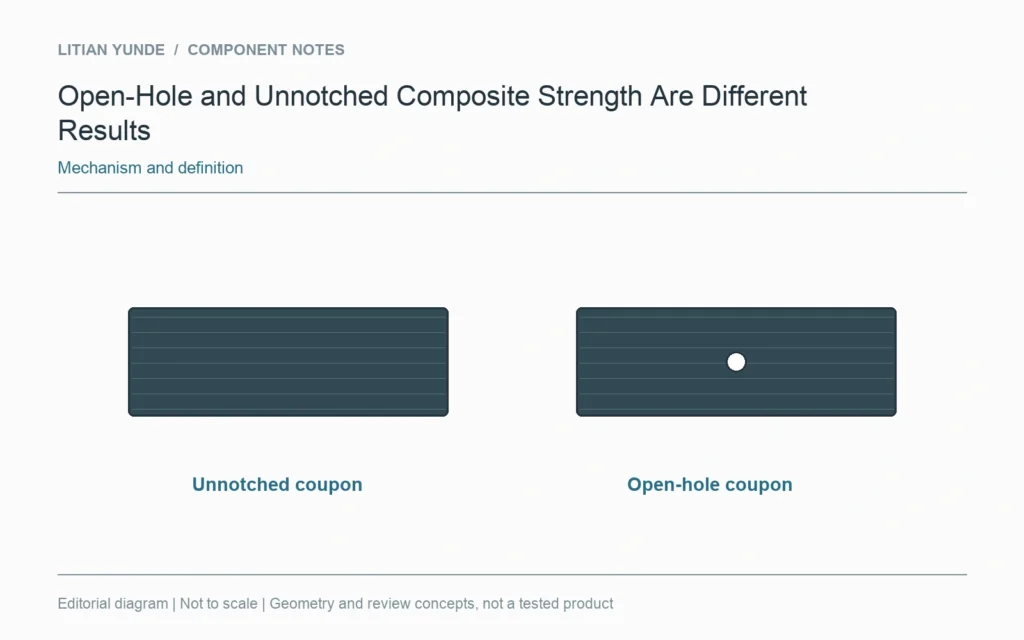
A strength result for an unnotched coupon does not directly establish the strength of a laminate containing a hole. Open-hole tests examine a defined specimen with a defined opening and loading condition. Keep those results separate when reviewing material information.
Hole geometry, specimen dimensions and laminate construction belong with an open-hole result. It is not enough to attach the words “carbon fiber strength” to a number. ASTM publishes separate methods for different composite test configurations; their identities should remain visible in the report.
Do not turn a material value into a joint rating
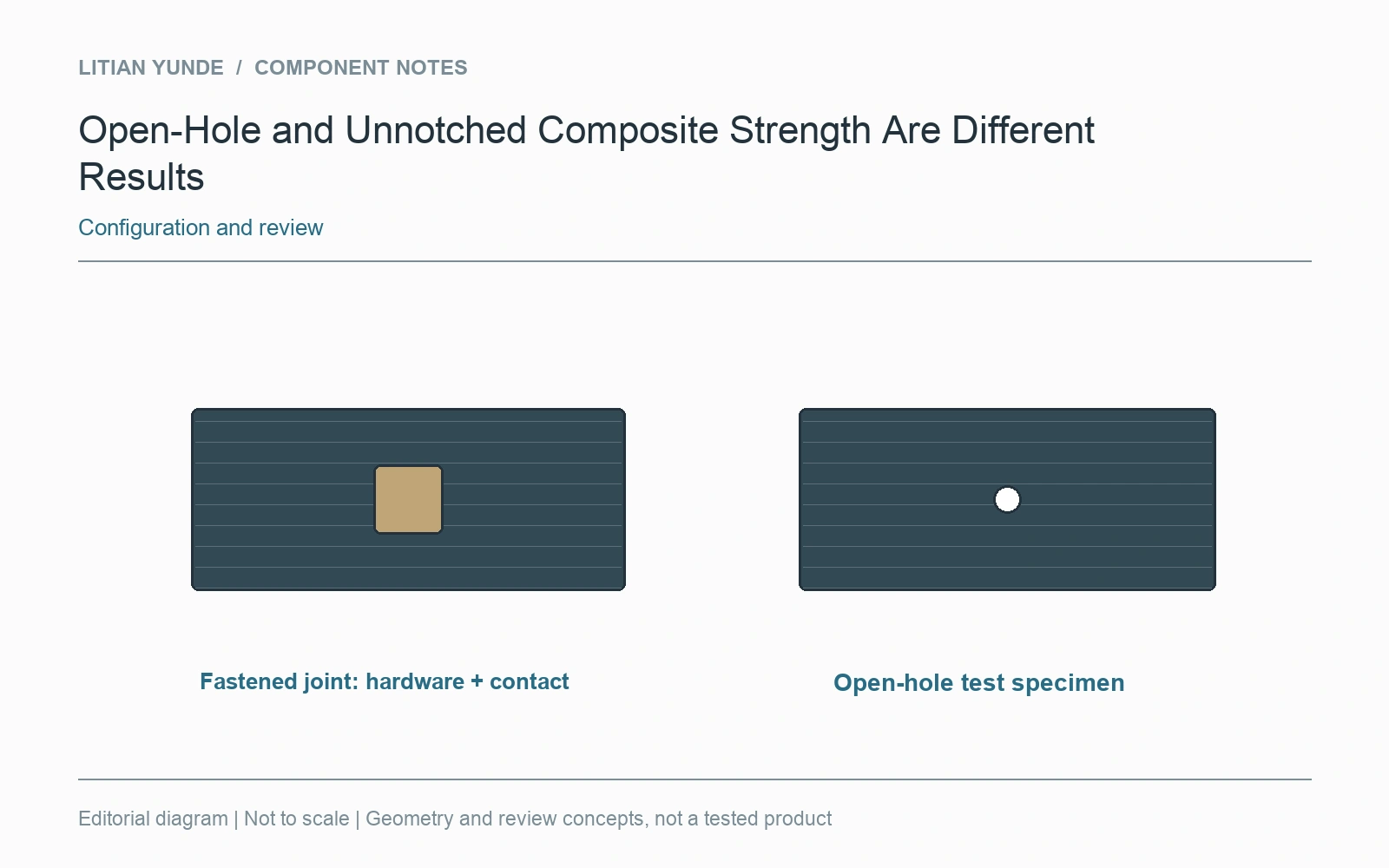
A fastened assembly also includes hardware, contact conditions, edge distances and load transfer. An open-hole coupon result is useful evidence within its scope, but is not automatically a bearing, pull-through or complete-joint test. Define the engineering question before choosing the evidence.
Make a comparison table honest
Use separate columns for property, method, specimen construction and condition. If one candidate has only unnotched data, leave the open-hole field unconfirmed rather than filling it with a converted guess. For a component enquiry, include the actual drawing and attachment requirements so any additional assessment can be scoped before the order is released.
Further reading: ASTM: composite test method catalogue.