
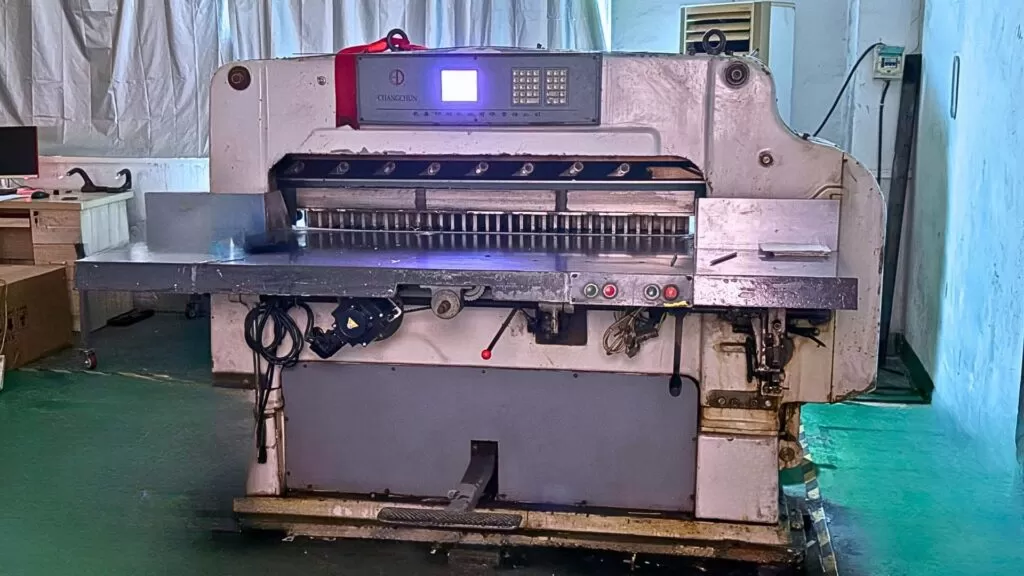
Existing workshop photograph of reinforcement cutting equipment.
Gli scarti compositi devono essere descritti in base alla loro forma effettiva. Gli scarti secchi di rinforzo, il prepreg non indurito e il laminato indurito costituiscono flussi di rifiuti distinti, e un percorso di recupero che accetta uno di essi potrebbe non accettare gli altri.
Make an inventory before choosing a route
Record the material form, known resin or coating and contamination such as metal inserts or packaging. Keep material identification linked to the collection container. A photograph helps illustrate the stream but should be accompanied by a written description and quantity estimate.
Confirm acceptance with the receiving organisation
Ask what the recycler accepts, how the material must be prepared and which records accompany collection. Composites UK distinguishes several recovery and disposal routes rather than treating all composite waste as one material. Local availability and acceptance need checking for the actual site; this article does not promise a recycling service.
Scenario di esempio
A scrap container contains cured parts, dry fabric and metal inserts. A recycler’s acceptance of dry fibre does not confirm acceptance of the whole container. Describe the streams separately and obtain the receiving criteria for each proposed collection.
Punti da annotare
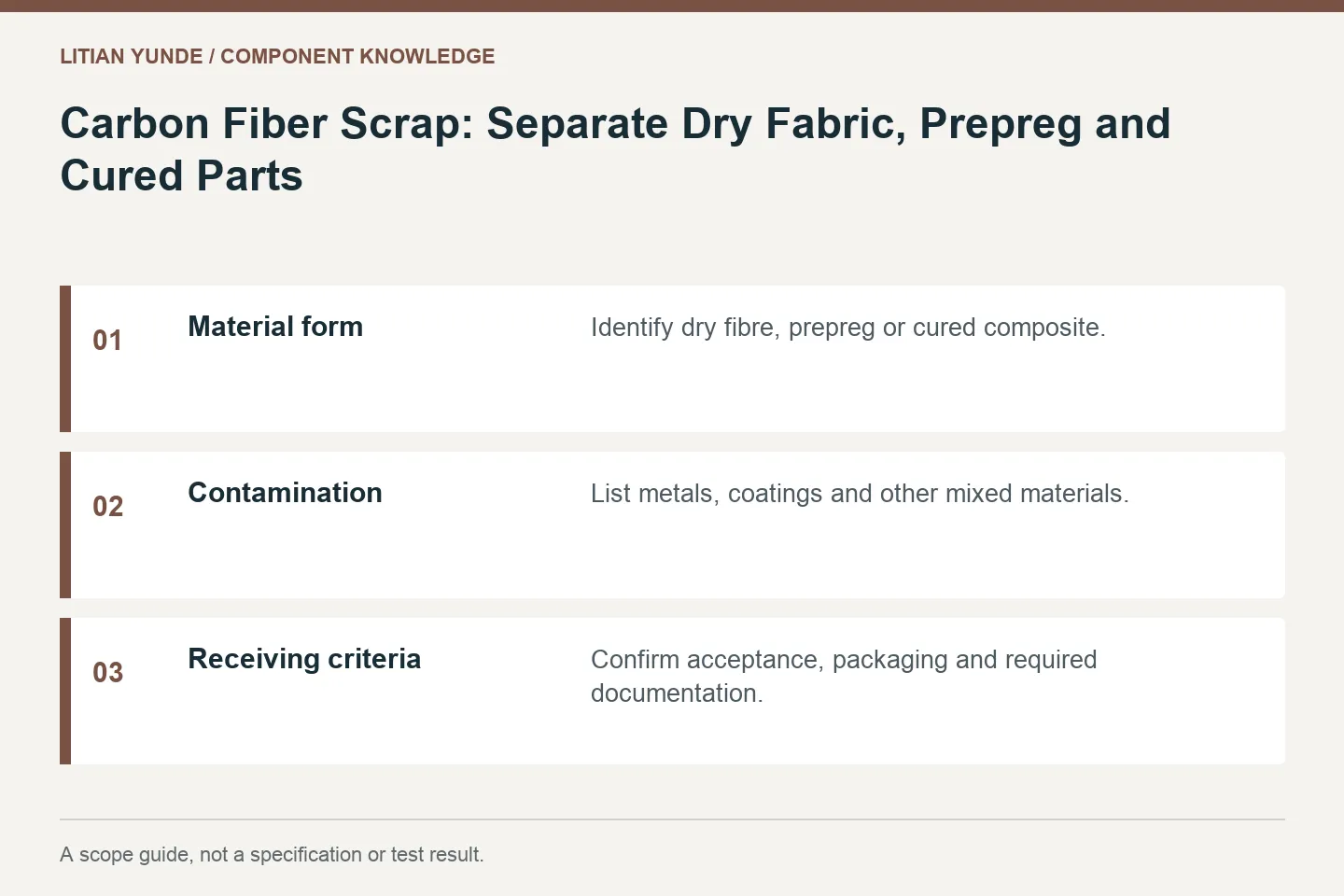
| Material form | Identify dry fibre, prepreg or cured composite. |
|---|---|
| Contamination | List metals, coatings and other mixed materials. |
| Receiving criteria | Confirm acceptance, packaging and required documentation. |
Altre letture consigliate
- Carbon Fiber Sustainability Claims: Ask for the Comparison Basis
- Carbon Fiber End of Life: Design the Handover Information
Riferimenti di contesto: Composites UK — What Can I Do with My Waste?.
Discutere i requisiti dei componenti
Inviare il disegno del componente e i requisiti pertinenti alla presente guida affinché ne venga valutata la portata.
Contatta Litian Yunde