
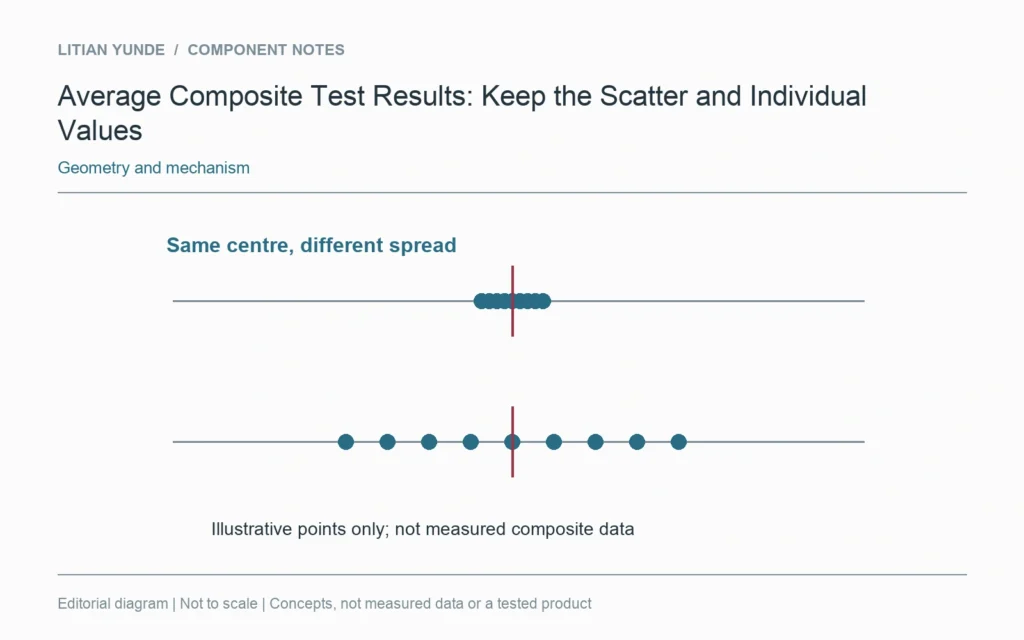
An average summarizes a set of results; it does not show their spread or identify every specimen. Keep the number of observations, individual values and a suitable description of variation when a composite test series is summarized for review.
Two sets can share an average
Closely grouped results and widely dispersed results can have the same arithmetic mean. A single average therefore leaves an important part of the series unexplained. NIST’s statistics guidance distinguishes summaries of location from measures of scale or spread.
Define which results are included
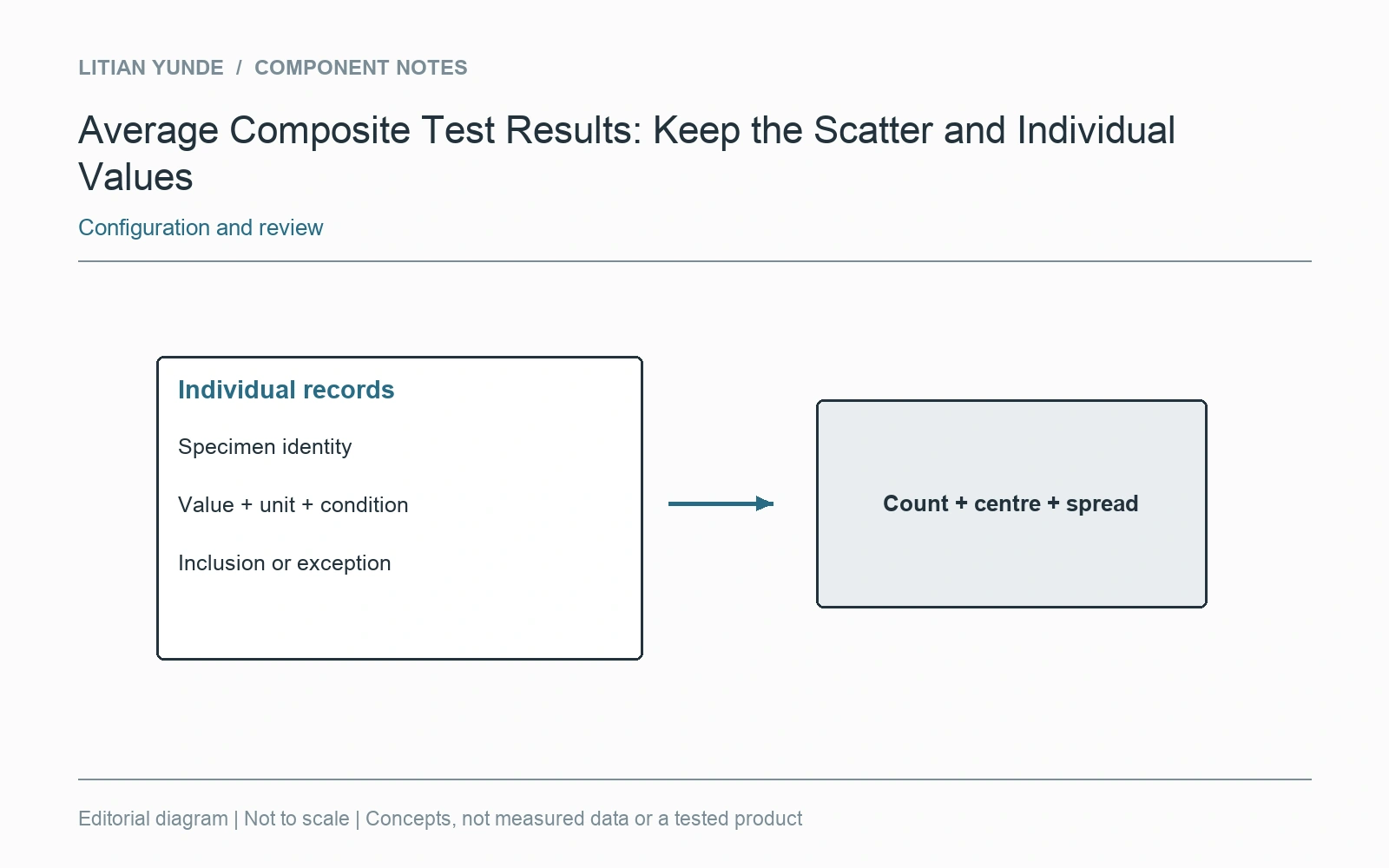
Keep specimen identities, units and test conditions with the individual entries. If an observation is excluded or a specimen has a different outcome, retain the reason and the original record. Do not combine results from different constructions or methods merely to produce a larger sample count.
Agree how the summary will be used
A sample average is not automatically a minimum requirement, a design allowable or a guarantee for a future batch. Those uses require their own agreed statistical and engineering basis. Ask what the series is intended to estimate before choosing a sample plan or acceptance rule. A clear handover includes the underlying data and the chosen summary, so a reviewer can see both the centre of the results and their variation without reconstructing the series from a chart.
Further reading: NIST: measures of scale and spread.