
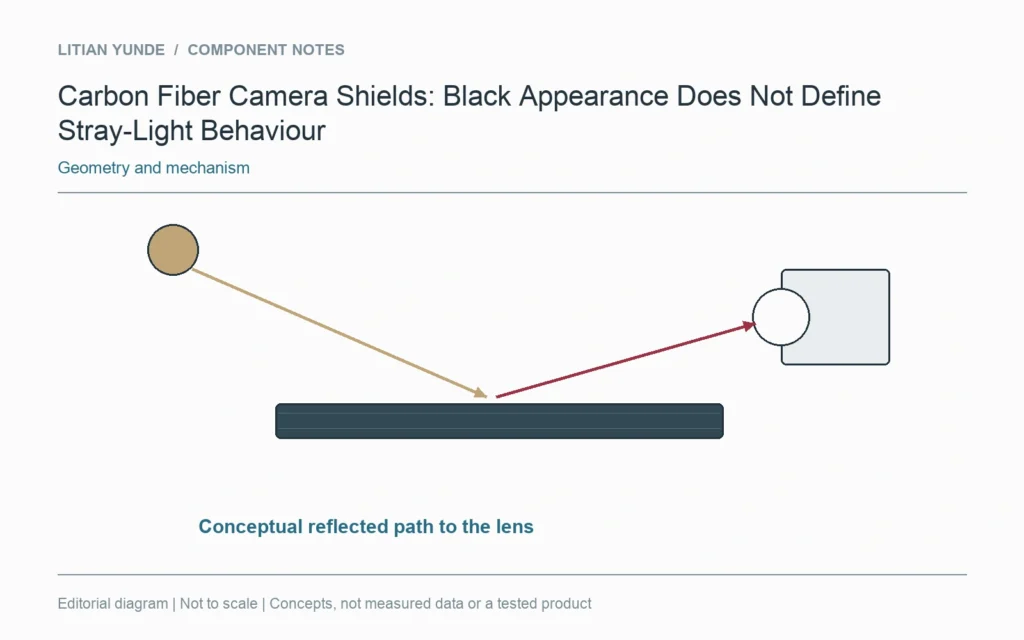
A black-looking carbon fiber shield can still reflect light into a camera under the installed lighting arrangement. Review stray-light behaviour with the actual lens, illumination and surface condition. Keeping the shield out of the image is only one part of that review.
Identify the illuminated surfaces
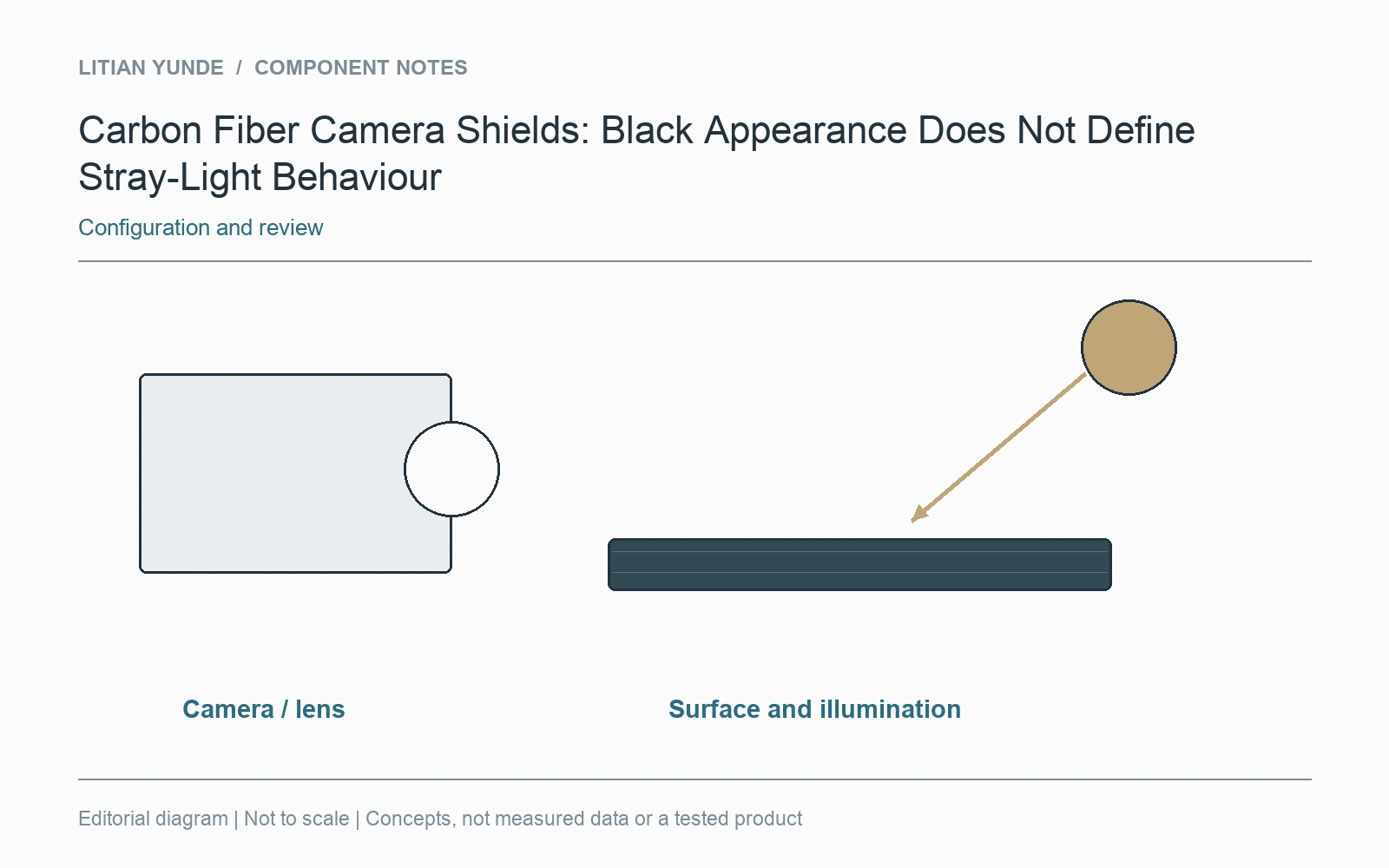
Show which faces can receive light from the source or nearby equipment and which can be seen by the lens. Include cut edges, fixings and any exposed coating. A front-view product photograph may hide the surface that contributes the unwanted reflection.
Retain the camera configuration
Use representative camera, lens, exposure and lighting settings for the agreed check. Keep the shield position and surface treatment with the images. A dark preview taken under another setup does not establish the same optical result after installation.
Describe the supplied finish precisely
If a matte treatment or another optical surface is required, identify the actual product and its applicable acceptance scope. Avoid substituting a general black colour description for a measured optical requirement. Keep dimensional clearance, optical observations and any separate mechanical checks as distinct records. This gives a supplier a practical finish and layout question without promising that carbon fiber alone suppresses stray light.
Further reading: Edmund Optics: stray light in optical-system integration.