
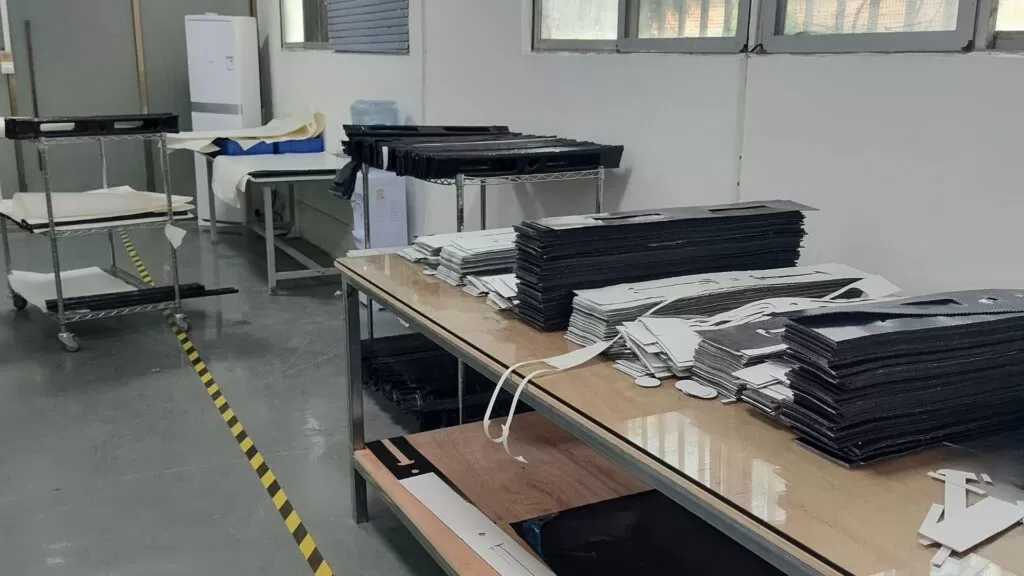
Existing workshop photograph of reinforcement material on a cutting table.
Per valutare la quantità di scarti di produzione è necessario disporre di dati precisi relativi alle materie prime in entrata e ai prodotti finiti in uscita. È necessario misurare il flusso effettivo di materiale prima di definire un processo come a basso impatto ambientale o di confrontarlo con un altro percorso produttivo.
Define what enters and leaves the process
Separate purchased material, usable cut pieces, process scrap and finished parts. State whether the record includes packaging, trial runs and rejected parts. Use the same boundary and period for both sides of a comparison so a process change is not confused with a change in accounting.
Use the record to identify an actionable loss
Record where scrap arises and which form it takes. This can support a discussion about cutting layouts, handling or recovery options without inventing a universal saving. If a recycling partner is involved, keep acceptance and collection evidence distinct from a plan to recycle.
Scenario di esempio
One yield record excludes setup scrap while another includes it. Reconcile the measurement boundary before comparing the percentages. Keep setup, cutting offcuts and rejected finished parts visible so a proposed improvement can be traced to the correct stream.
Punti da annotare
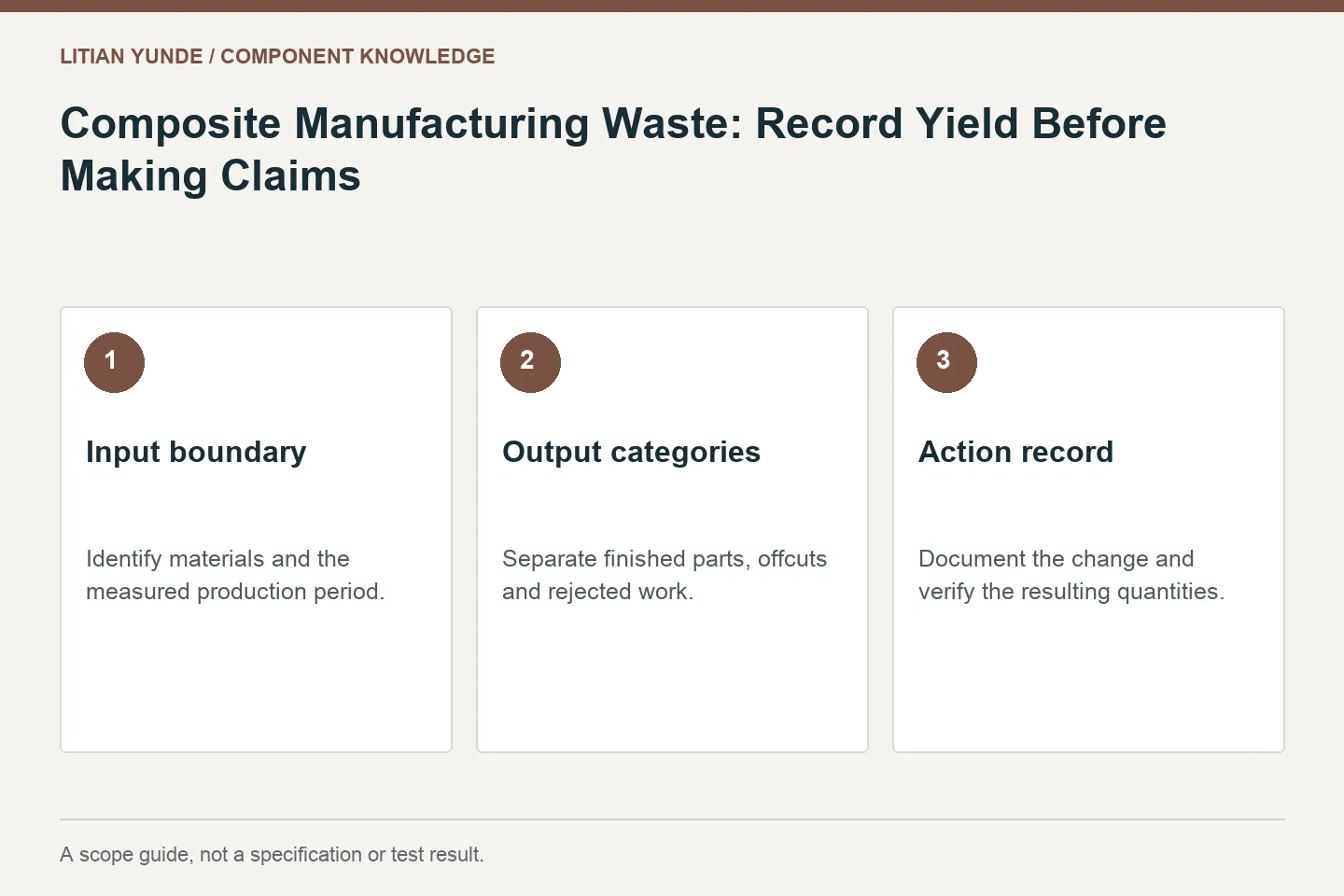
| Input boundary | Identify materials and the measured production period. |
|---|---|
| Output categories | Separate finished parts, offcuts and rejected work. |
| Action record | Document the change and verify the resulting quantities. |
Altre letture consigliate
- Rifiuti di fibra di carbonio: separare il tessuto secco, i prepreg e i componenti induriti
- Carbon Fiber Sustainability Claims: Ask for the Comparison Basis
Riferimenti di contesto: Composites UK — What Can I Do with My Waste?.
Discutere i requisiti dei componenti
Inviare il disegno del componente e i requisiti pertinenti alla presente guida affinché ne venga valutata la portata.
Contatta Litian Yunde