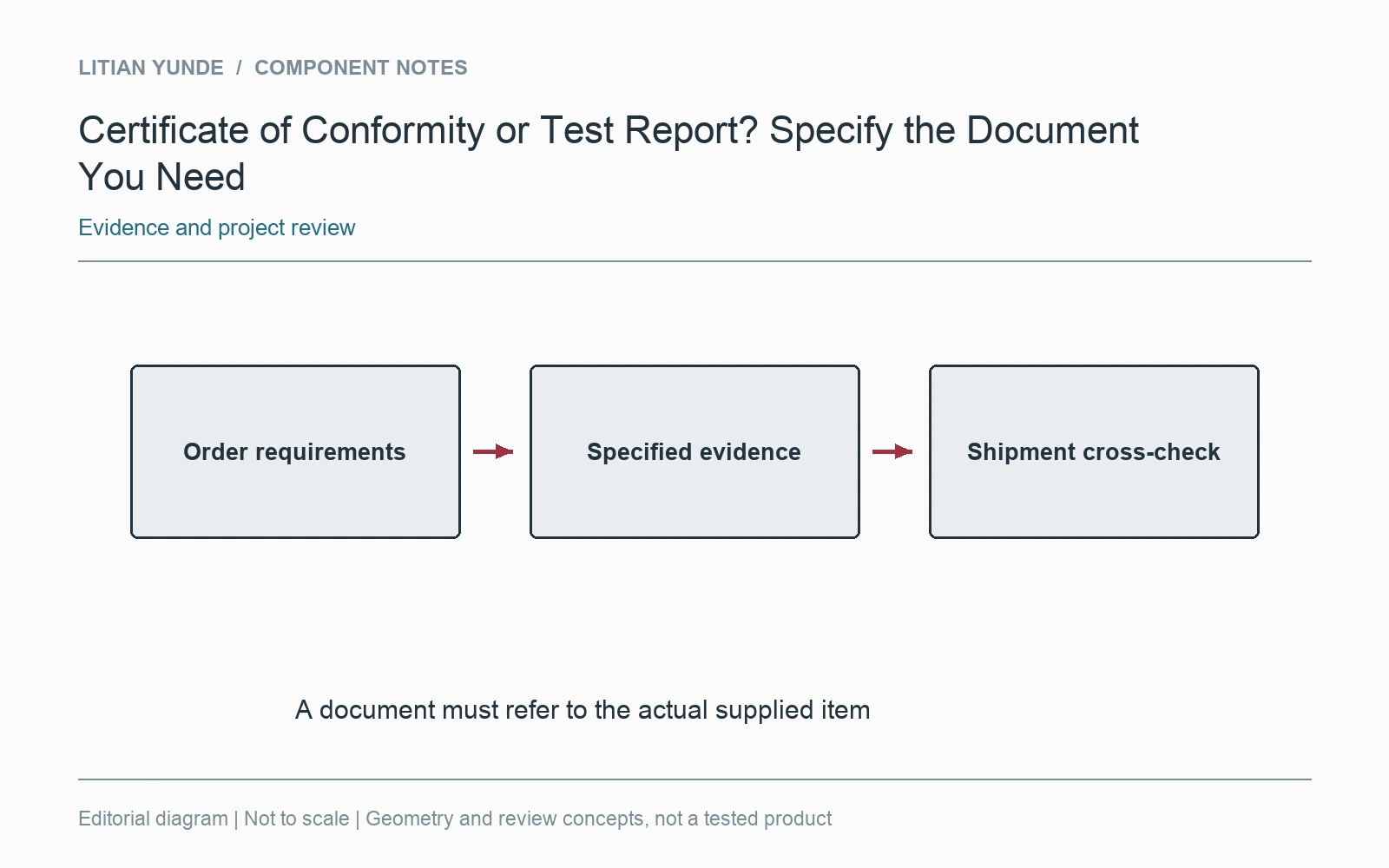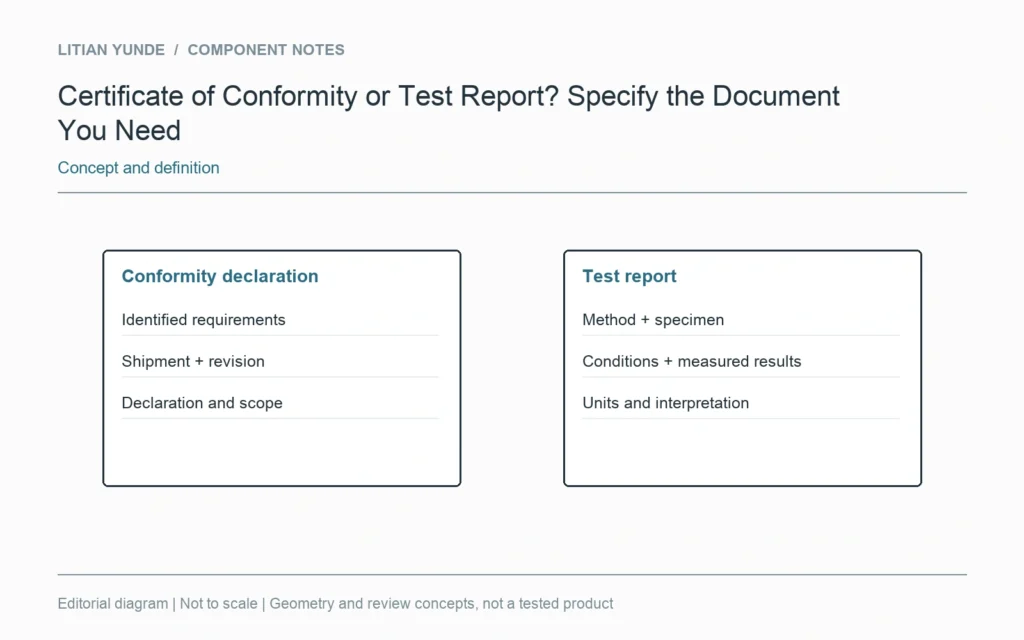
A certificate of conformity records a declaration against identified requirements. A test report records a particular test and its results. One document may refer to the other, but asking for a “certificate” without defining its purpose can produce the wrong evidence.
Define what must be declared
For a shipment document, identify the supplier, delivered item, revision, quantity and order reference as appropriate to the agreed scope. State which requirements the declaration is to address. Do not assume that a short declaration includes laboratory measurements, independent certification or evidence for every performance statement in a brochure.
Define what must be measured
If test results are required, specify the property or inspection, applicable method and the relationship between the tested specimen and delivered parts. The report should identify the specimen, conditions, units and results needed by the agreed requirement. A coupon test, an inspection of finished parts and a material supplier datasheet describe different evidence.
Match the paperwork to the purchase
List the required documents in the enquiry and order so the supplier can quote their scope and timing. A test that consumes a specimen or uses an external laboratory may need planning before production. At release, check that references actually match the shipment. This avoids treating an unrelated report as proof for the current parts or expecting an unquoted investigation after the delivery has already been packed.