
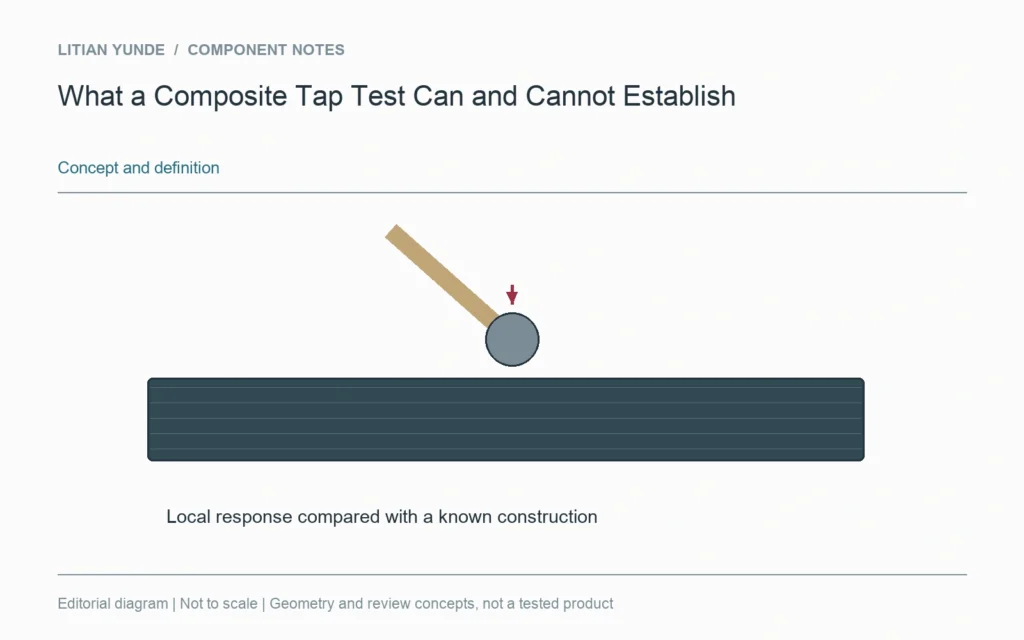
A tap test compares the acoustic response of a region with an expected response. It can be useful in a suitable, defined inspection task, but a normal sound does not establish that every internal condition is acceptable. The method has access, depth and interpretation limits.
The comparison needs a reference
Sound changes with construction, thickness, support and local geometry as well as with some defects. An edge or a stiffened region may sound different from an open panel. Without knowing the expected structure, a sound change alone does not identify the cause. FAA guidance discusses tap inspection within controlled composite inspection and repair contexts, including its limitations.
Describe the actual inspection task
The applicable procedure should identify the part, examined area, reference condition and assessment method. Skilled interpretation is important; the task is not equivalent to casually tapping an unknown panel and declaring it safe. Regions outside the method’s useful coverage need another agreed approach where the requirement calls for it.
Do not let a quick check become a broad certificate
A purchase record should distinguish a screening observation from a specified acceptance inspection. If a report mentions tap testing, ask which regions were checked and what requirement supported the disposition. For a service-critical component, follow the applicable engineering and maintenance requirements. A short supplier note or video cannot replace that process, and this article provides no repair instructions or independent clearance for continued use.

Further reading: FAA: inspection guidance and method limitations.