
Editorial scope guide. The points are also available as readable text below.
End-of-life planning starts with knowing what the part contains. Preserve information about the laminate, coatings and attached materials so a future owner can identify realistic reuse or recovery options.
Keep a material and assembly record
Record the component identity and the known material system. Identify bonded or mechanical attachments and any inserts that are not obvious from the outside. If a part is repaired or modified, update the record rather than retaining only the original bill of materials.
Check the receiving route instead of promising recyclability
Recovery options depend on material form and the receiving organisation’s criteria. Ask whether the actual finished item is accepted and what preparation is required. A general statement that carbon fibre can be recovered is not a collection arrangement for this particular component.
Example scenario
A component is repaired using an additional bonded patch. Add the patch and adhesive information to the material record where known. A future recovery enquiry should describe the modified part rather than only the original laminate.
Points to record
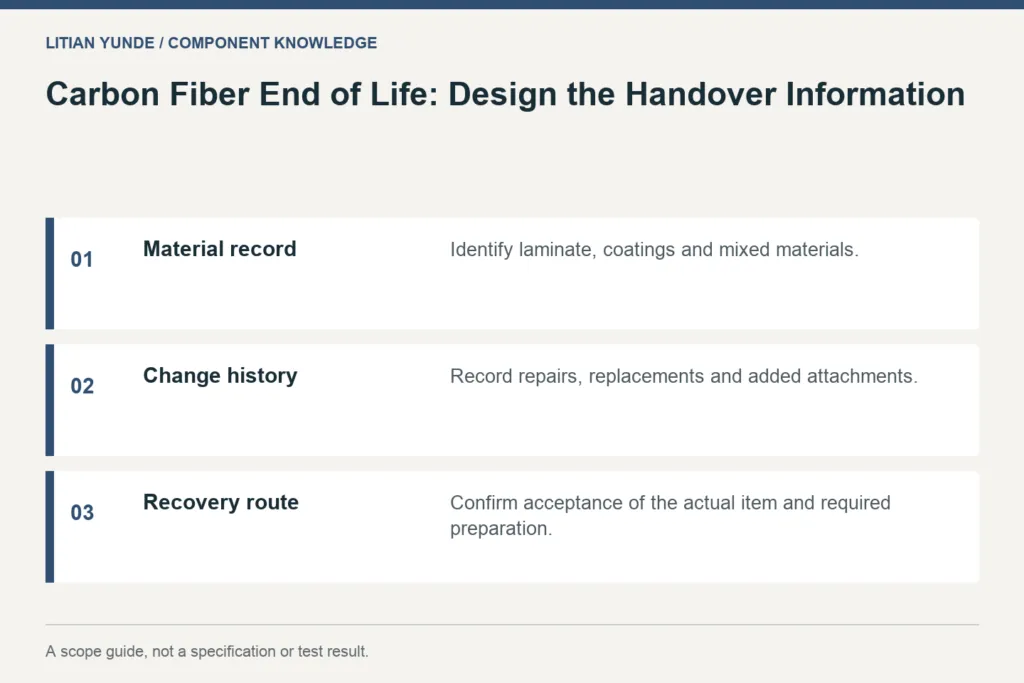
| Material record | Identify laminate, coatings and mixed materials. |
|---|---|
| Change history | Record repairs, replacements and added attachments. |
| Recovery route | Confirm acceptance of the actual item and required preparation. |
Related reading
- Carbon Fiber Scrap: Separate Dry Fabric, Prepreg and Cured Parts
- Carbon Fiber Sustainability Claims: Ask for the Comparison Basis
Background reference: Composites UK — What Can I Do with My Waste?.
Discuss the component requirements
Send the part drawing and the requirements relevant to this guide for a scope review.
Contact Litian Yunde