

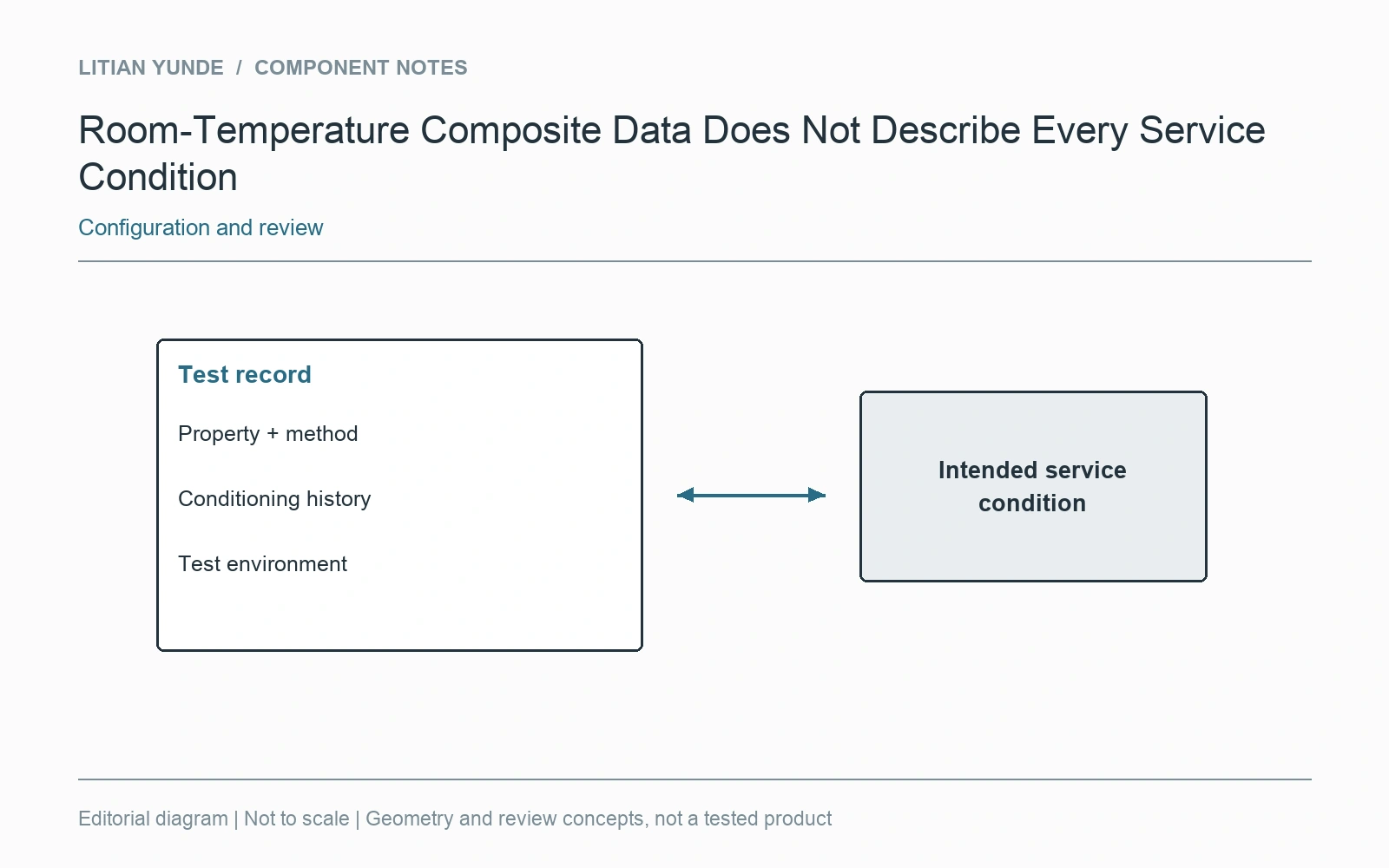
A material result measured in one condition should retain that condition when it is reused. Temperature, moisture history and specimen state can matter to a composite evaluation. A room-temperature result is useful evidence within its stated scope, not an all-environment rating.
Keep the test environment and preparation history with the reported method. Do not merge dry, conditioned and elevated-temperature results into one unlabeled column. Where documentation uses abbreviations, ask for the corresponding definitions instead of guessing their meaning.
Describe the environment in the enquiry
State the expected operating exposures and mechanical task as far as they are known. A reviewer can then identify what material evidence or component assessment is relevant. If the service condition is still undecided, retain that uncertainty rather than silently selecting the most convenient datasheet result.
Control comparison and release
Use compatible test bases when comparing alternatives and record any agreed limitations. A condition-specific evaluation may require time and specimen allocation, so scope it before production. This is different from measuring moisture uptake alone: the question here is which mechanical evidence supports the intended environment. The complete component and its joints still need their applicable requirements.
Further reading: Gurit: guide to composites.