
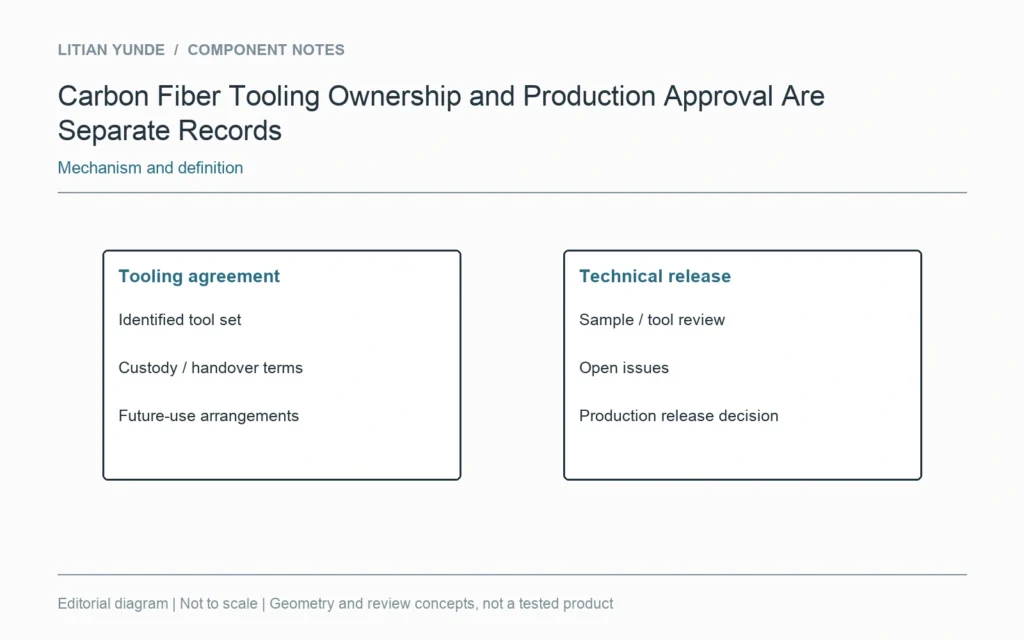
Paying for a mould does not, on its own, define its ownership, storage arrangements or production-release status. Put those commercial and technical questions into separate records before tooling work starts. This avoids relying on one vague “mould approved” message.
Define the tooling deliverable
Identify the tool or tool set, the agreed scope and how it will be recorded. The order should state the relevant ownership, custody, access and handover arrangements in the parties’ agreed terms. This guide does not determine legal ownership from who paid an invoice.
Define the technical approval
A tooling review and an accepted component sample are different milestones. Record what was examined, which issues remain and whether production is released. A photograph of a completed mould does not establish that the resulting part meets the component requirements.
Keep future use understandable
Address how repeat orders, changes, maintenance and end-of-project handover will be managed under the agreement. Identify which records accompany the tool, such as its identity and applicable part revision. Keep these decisions with the order so later teams do not need to reconstruct them from scattered messages. Where contractual meaning is disputed, the parties need to resolve the agreement rather than treat this checklist as a legal ruling.
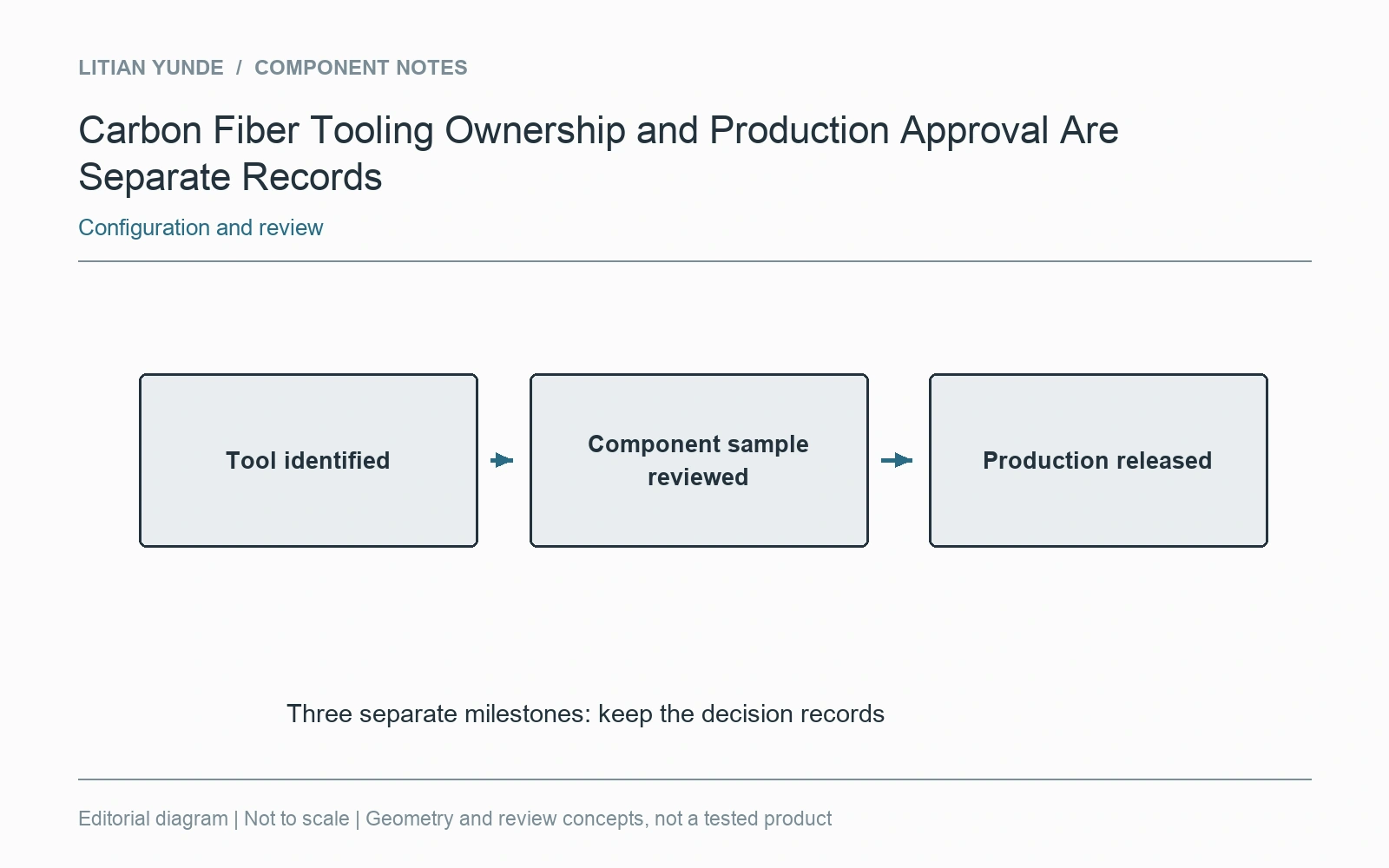
For the project review: identified tool set and deliverable; agreed custody and handover terms; technical review and production release; repeat-order and change records.