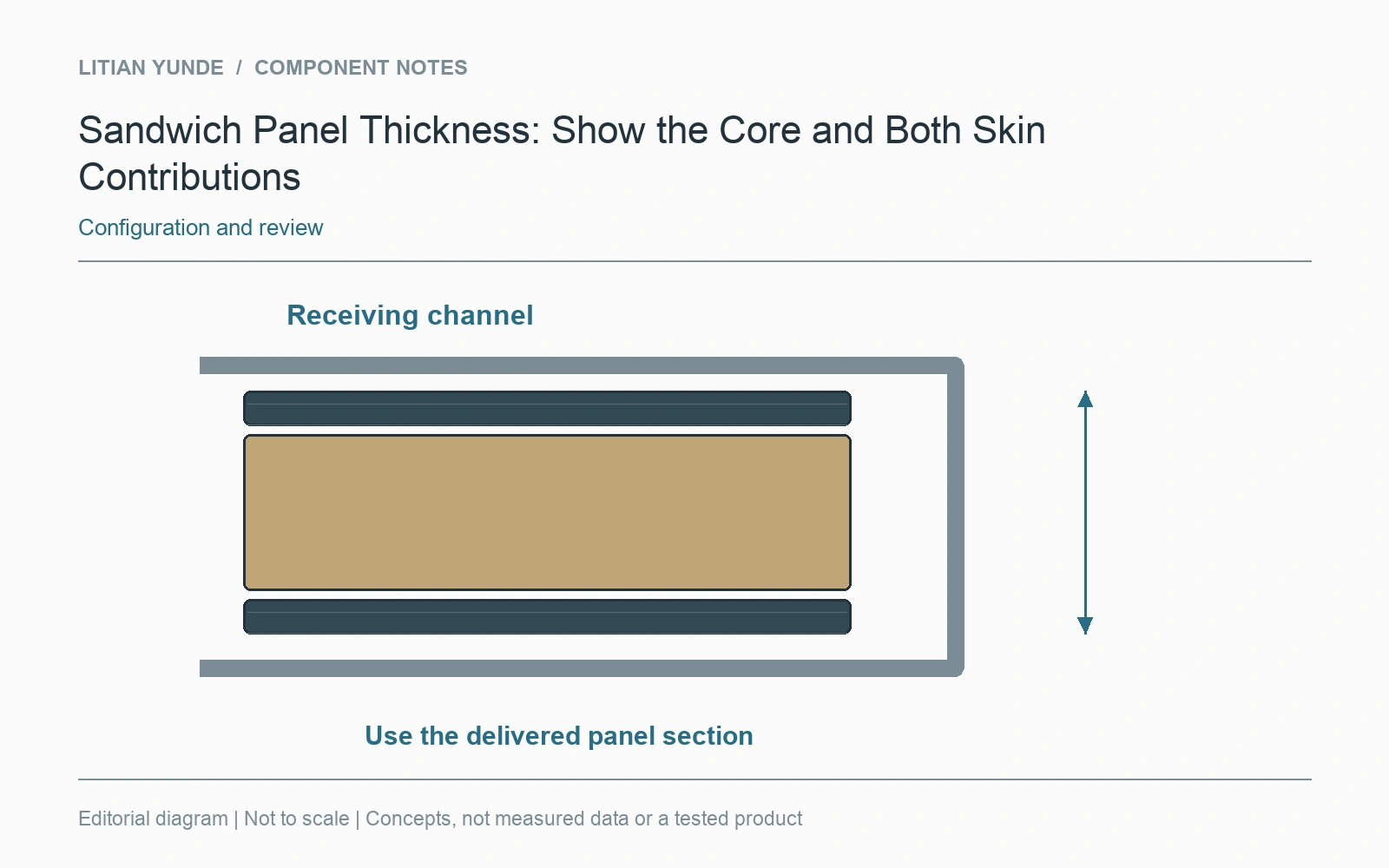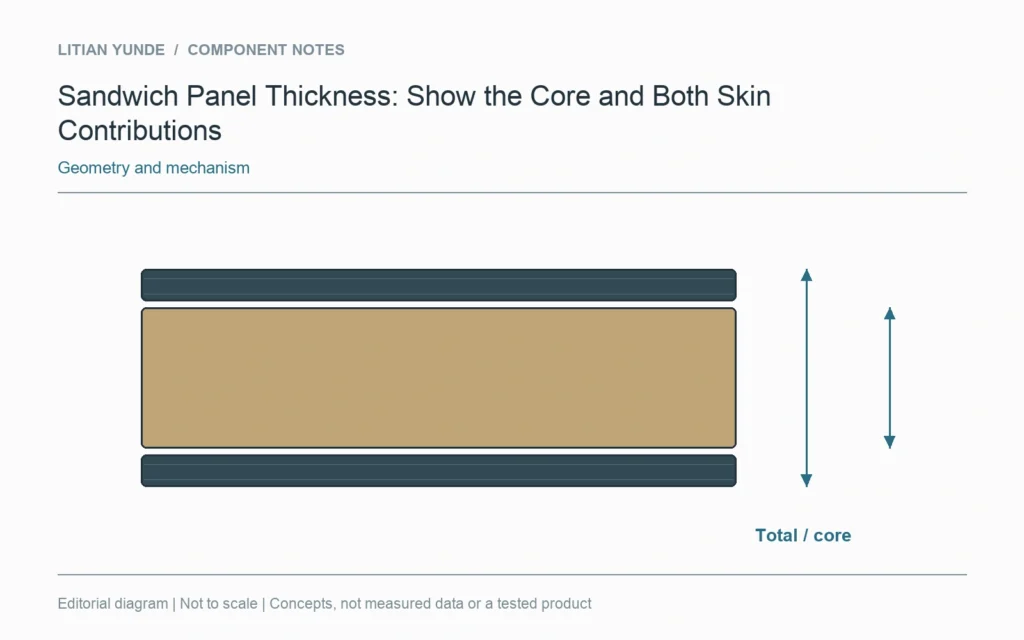
Core thickness and finished sandwich-panel thickness are different dimensions. Show the skins, core and any included surface layers when stating the delivered thickness. A core product label does not by itself define the overall panel dimension.
Identify what the number includes
Place the thickness dimension across the intended finished faces. If a coating or bonded surface layer is included in that dimension, say so. The arithmetic outline is useful for discussing the construction, but actual delivered thickness still follows its agreed manufacturing and inspection definition.
Keep the layer definition available
List the core and skin construction rather than substituting one overall number for the complete section. Two panels with similar overall thickness can have different core depths and skin build-ups. That matters when reviewing an edge fitting, local insert or a change in supplied construction.
Check interfaces using the finished scope
A channel or clamp that receives the panel needs the relevant delivered thickness range and surface condition. Do not check the fit using the core’s nominal thickness. Retain where thickness is measured and any local features excluded from the measurement. The resulting dimensional record describes the specified section; it does not establish bending performance from thickness alone.