
Application Engineering · Component review guide · Litian Yunde
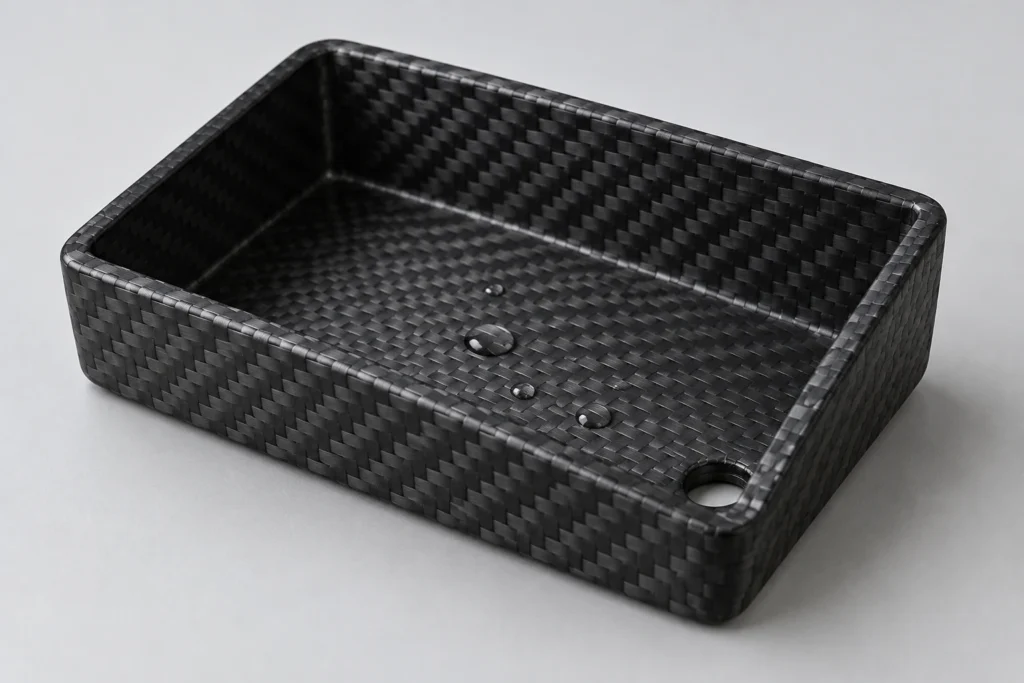
AI-generated explanatory concept; not a Litian Yunde product photograph or a validated design.
A drain opening is useful only when water can reach it and leave the installed assembly. Review the cover’s actual orientation, low points, nearby supports and service condition. A hole visible on a loose shell does not prove the assembled cover drains, and drainage does not establish a waterproof or ingress-protection rating.
Begin with where water could collect
Describe the exposure and the regions where liquid might enter or condense. Review the assembled orientation, including any slope or position change. A drawing view that shows the shell upright may differ from its equipment mounting angle. Look for pockets behind flanges, seals or pads. Do not assume that the weave, coating or carbon material alone determines the behaviour of the complete enclosure.
Follow the exit through adjacent parts
Show the route from a low region to the outside and check whether a bracket, cable, seal or fastener obstructs it. Clarify the drain-edge finish and any protection needed at the opening. If the route includes multiple components, review their combined geometry. A drain feature should be part of the controlled design; do not instruct users to drill extra holes in a supplied component without approval.
Define an appropriate assembly review
Agree what condition the drainage check represents and who determines the test method. Include equipment position, installed hardware and any conditions relevant to safe evaluation. Keep observations and limitations with the result. A demonstration of one route does not establish performance for all orientations or environments. If an ingress rating is required, it belongs to a separate defined assessment of the completed assembly.
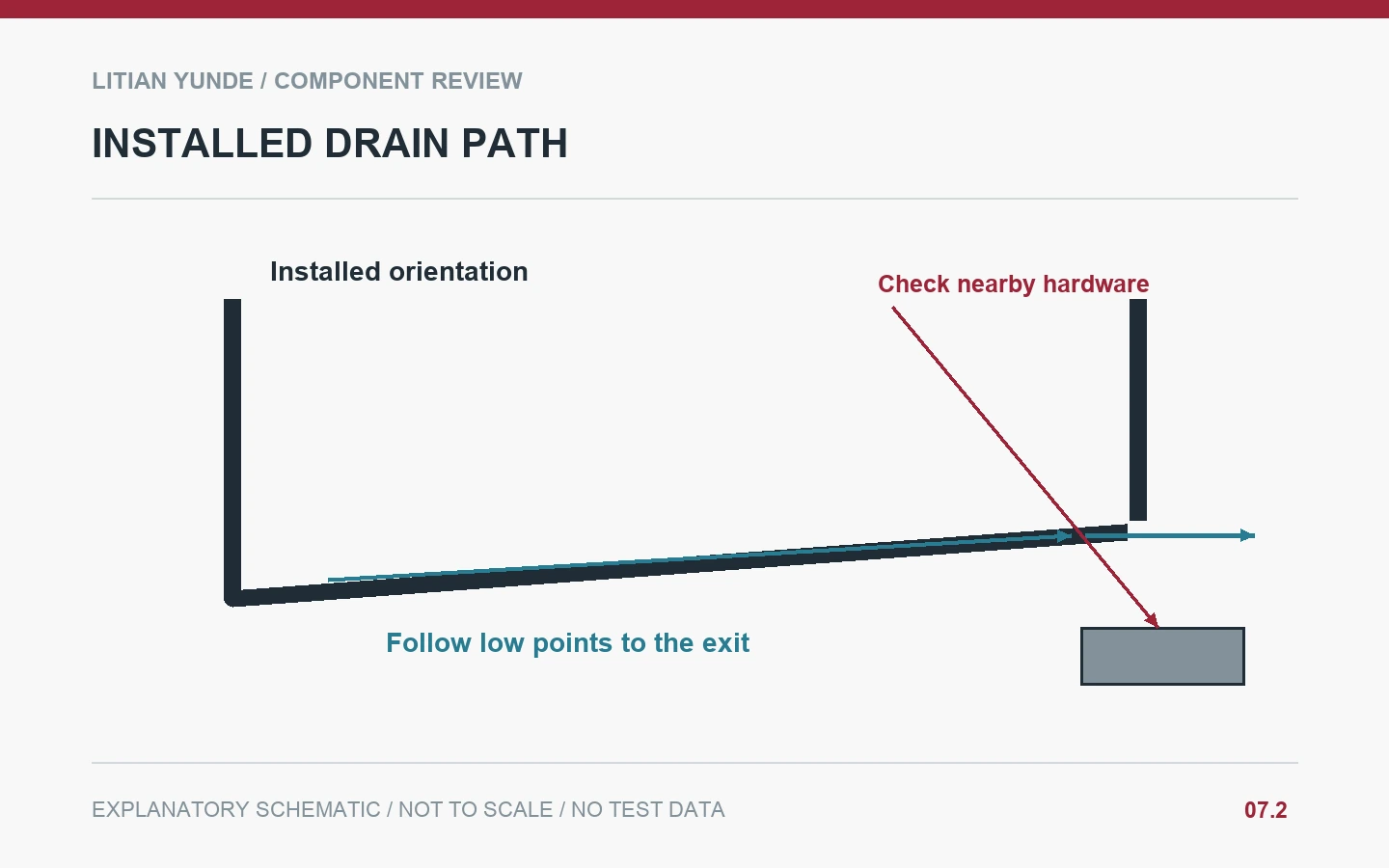
Example: a cover mounted on an inclined frame
A loose cover has an opening that appears to be at its bottom. After installation, a support pad sits beneath that exit and the equipment angle creates another low pocket. The design review follows the complete route and changes the controlled assembly detail. The subsequent drainage check records the installed orientation and hardware.
Illustrative scenario, not a customer case or reported production result.
Details to agree before ordering
| Review item | Record to agree |
|---|---|
| Position | Operating and service orientations. |
| Collection | Potential pockets and liquid entry paths. |
| Exit | Opening, edge detail and adjacent obstructions. |
| Evidence | Defined drainage review; ingress rating separately. |
Questions buyers ask
Does a drain hole make a cover waterproof?
No. Drainage and ingress protection address different requirements.
Can an installer add a hole to solve trapped water?
Only through an approved design or service change; document the concern before altering the component.
Technical background and related reading
Background resource: Hexcel: Composite Engineering Resources. Background reading only; the project checklist is editorial guidance, and this reference does not establish supplier certification or part approval.
- Carbon Fiber Exterior Panels: Specify Exposure and Finish
- Carbon Fiber Assemblies: Prepare a Service Parts List Before Handover
- Browse the carbon fiber knowledge centre
Review your component with Litian Yunde
Share the drawing revision, intended application and the interface or inspection question you need to resolve. The quoted construction and acceptance requirements are confirmed for the specific project.