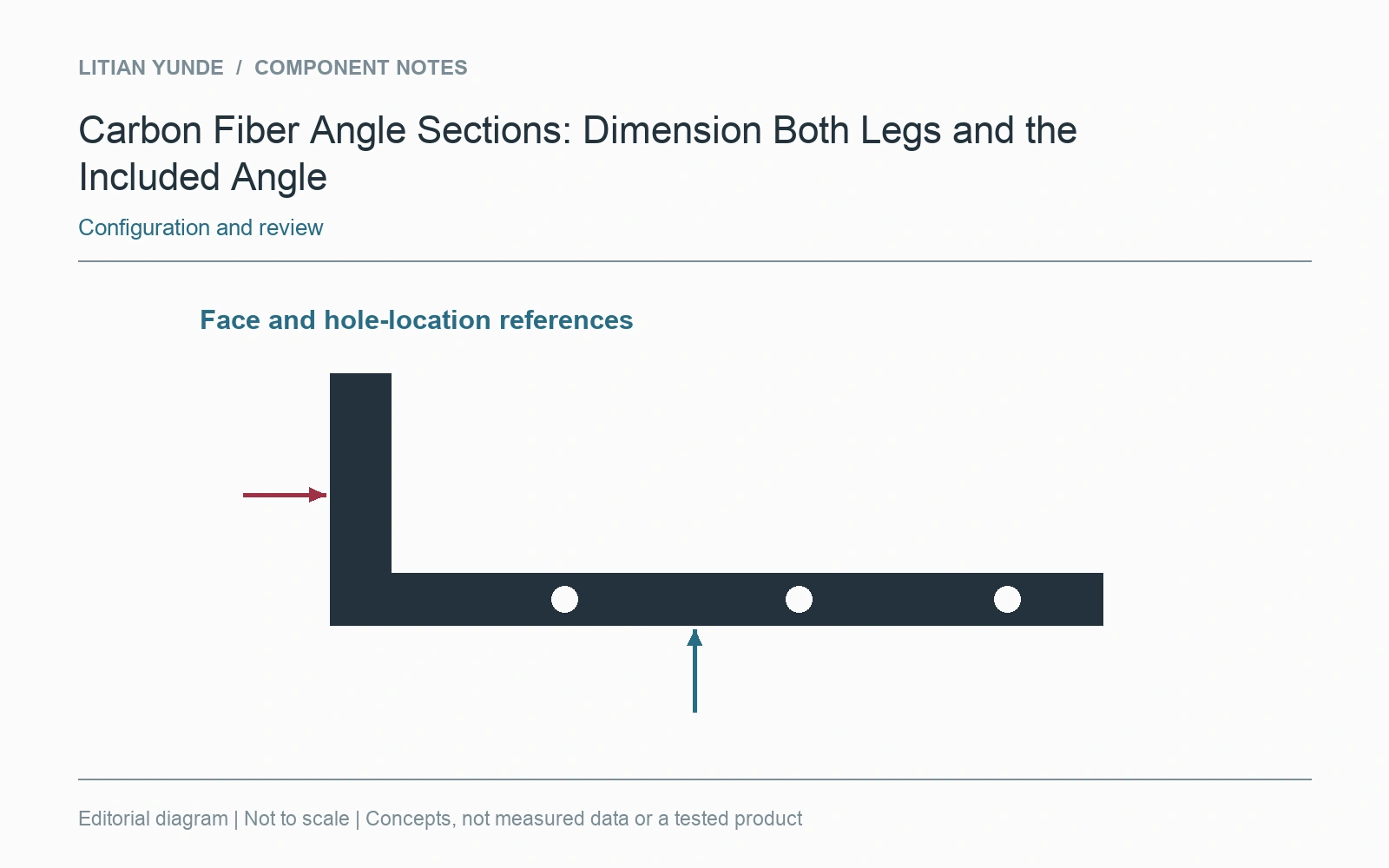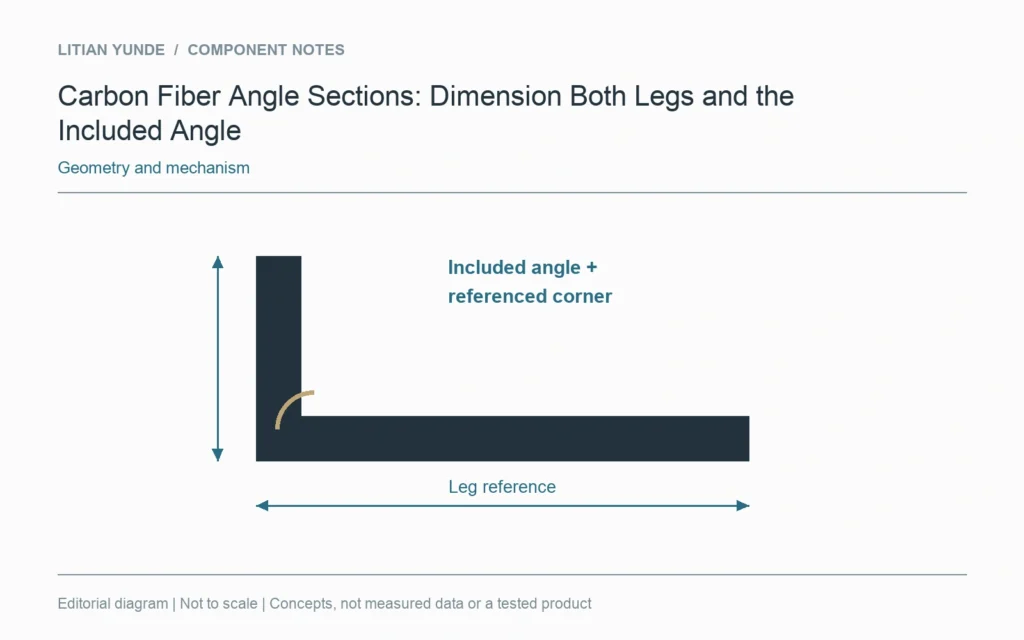
A carbon fiber angle needs a section definition, not just two nominal leg widths. Include the included angle, thickness references and inside or outside corner geometry. These details determine which faces and edges the supplied part presents to the mating assembly.
Choose the dimensional references
State whether a leg dimension runs to a virtual intersection, an outer edge or another identified reference. Show the corner radius on the appropriate surface. A thick section can produce different inside and outside dimensions, so a sketch with one radius and no arrow leaves the requirement uncertain.
Locate the mounting features
Define hole and slot locations from the agreed faces or references. If both legs mount to another structure, show that structure’s relevant geometry in the review. Do not assume that a nominal right-angle appearance guarantees simultaneous contact on both mating faces.
Agree the delivered condition
Identify whether the part is moulded, machined from another construction or supplied through a different proposed route. The laminate and any trimming still need a controlled definition. For sample evaluation, state whether measurements are made free or in the intended mounting condition. Keep the section and assembly references with the result so a later discussion of an open corner or offset hole can be tied to the same geometry.