
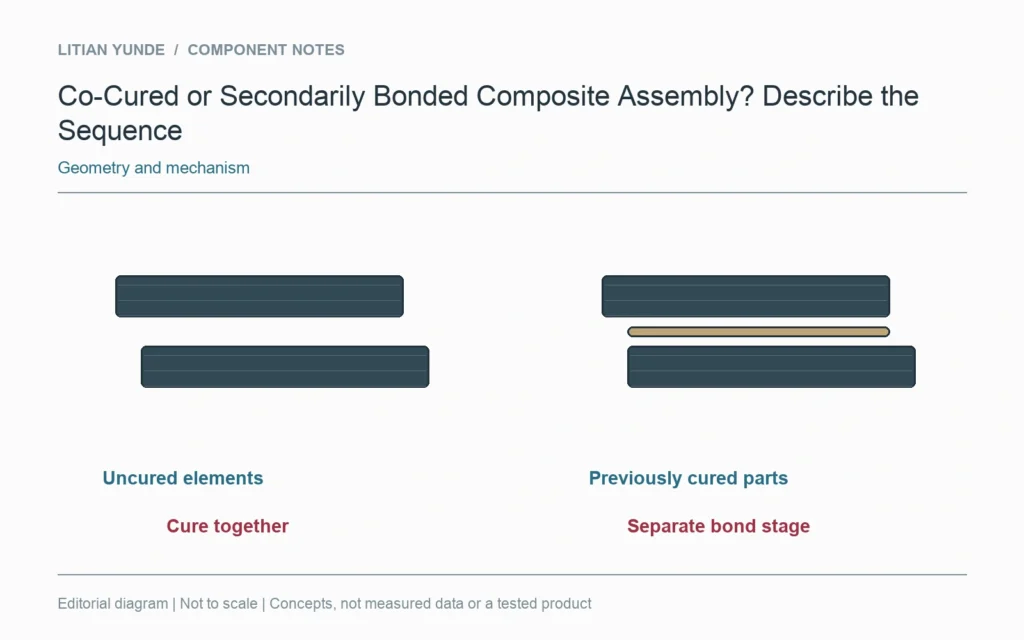
Co-curing and secondary bonding describe different manufacturing sequences. Explain the state of the components when they are joined and identify any adhesive used. A completed assembly photograph usually cannot show which sequence produced the joint.
Identify what enters the joining stage
In a co-cure proposal, uncured composite elements are cured together. Secondary bonding joins already cured components using a separate bonding operation. Other sequences, including co-bonding, need their own description. If a term is used loosely in a quotation, ask for the actual sequence instead of resolving it from the name alone.
Keep the interface requirements with the route
NASA research on bonded laminates distinguishes co-curing from conventional secondary bonding. That distinction does not make one adhesive or preparation route suitable for every proposed assembly. Record the proposed materials, interface preparation and processing instruction for the actual assembly.
Review a route change before production
A change from a unitized cure to an assembled bonded part can change tooling, inspection access and the records required for acceptance. Keep that change visible even when the outer geometry remains the same. Confirm which stage the sample represents and which work is included in the quotation. The manufacturing label is useful when it makes the sequence clear; it is not evidence that the finished joint has met its requirements.
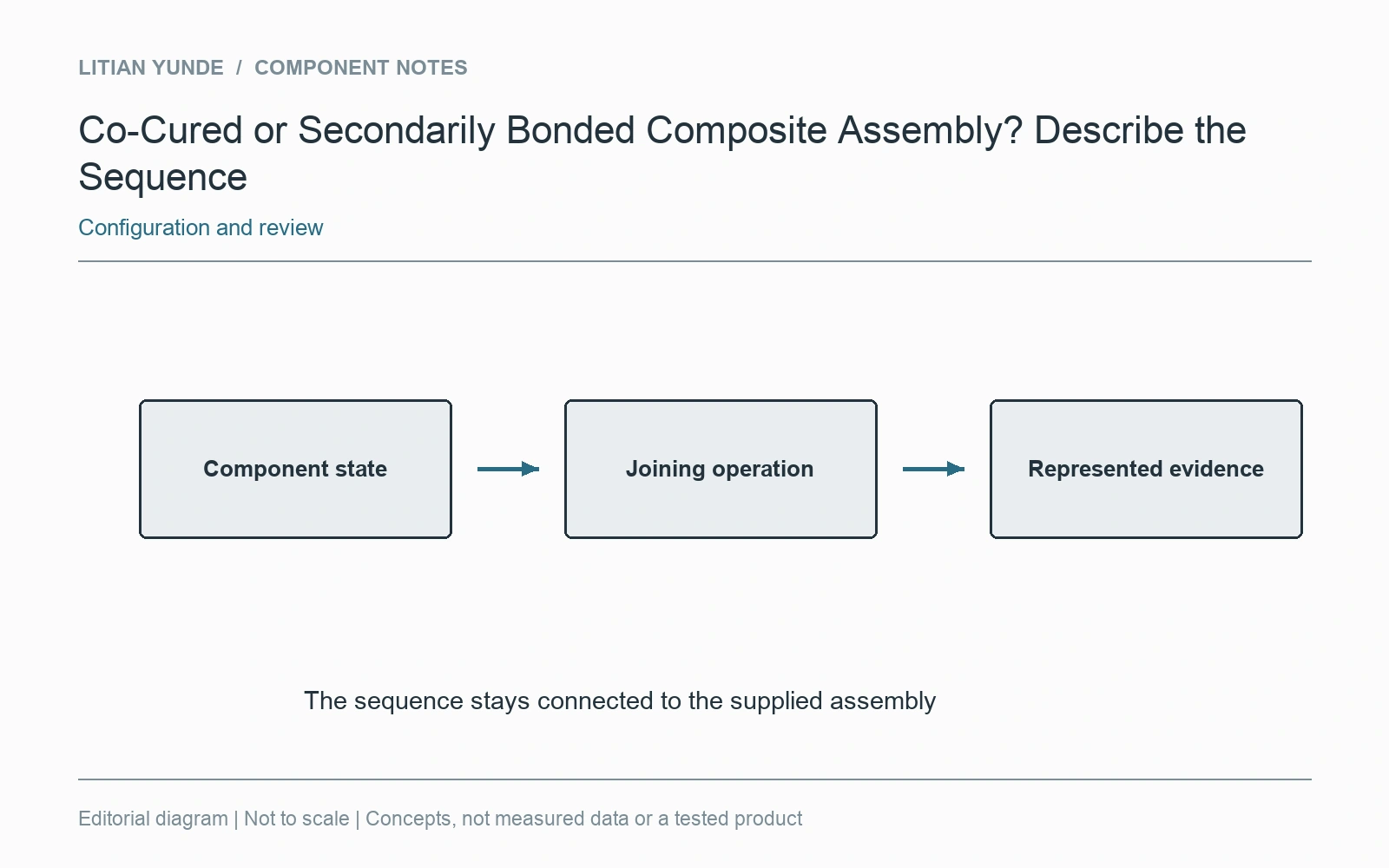
For the project review: cure state of each joining component; actual sequence and any adhesive; interface and processing requirements; represented sample and acceptance scope.
Further reading: NASA: co-curing and secondary bonding of composite laminates.