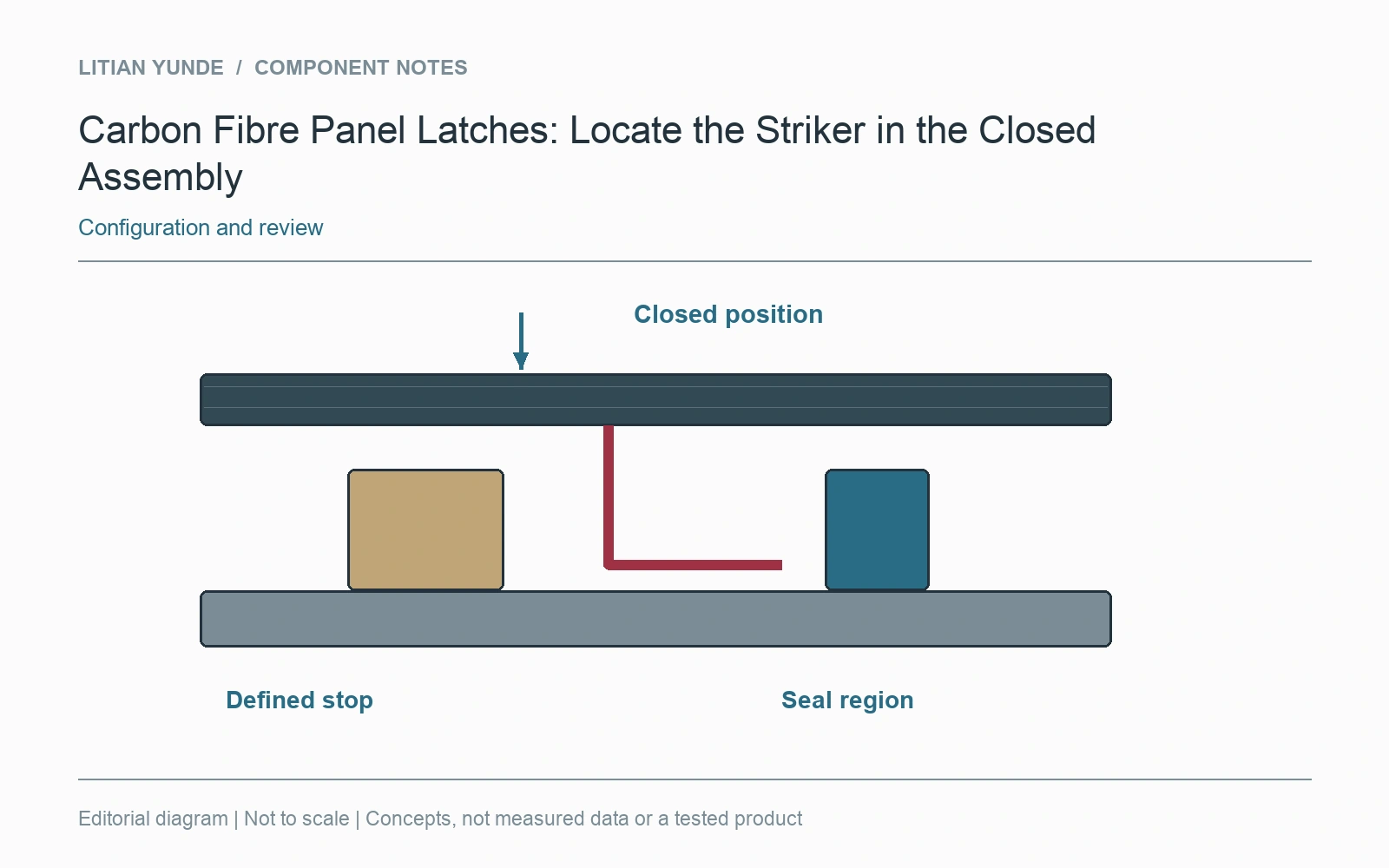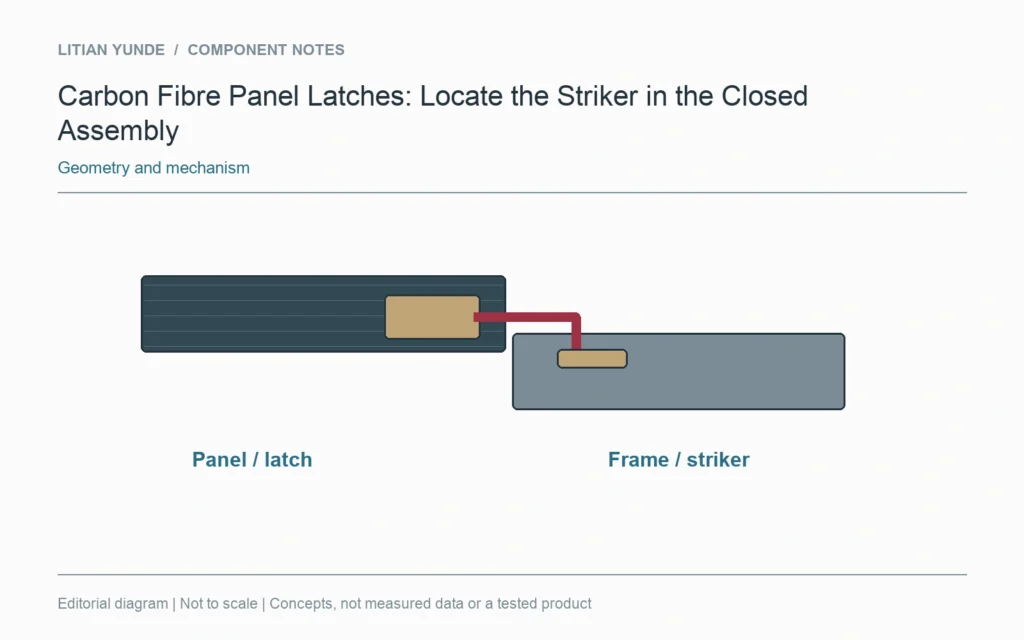
A latch on a carbon fibre panel engages a striker or mating feature on another part. Define both sides in the closed assembly. A hole pattern on the panel alone cannot establish engagement, closing position or access to the release.
Identify the latch and striker references and show the mounting faces used to position them. Include the panel, frame and any intervening seal in the closed condition. If the hardware has adjustment, record the proposed installed position rather than assuming the middle of its travel will suit every assembly.
Explain what stops the panel
The latch may retain the panel while other features establish its closed position. Show stops, contact pads and the represented seal condition where relevant. Do not assign an unverified compression or retention capability to the carbon shell merely because the latch can be closed.
Review release and replacement
Check whether the latch can be reached and released in the installed equipment. Keep the mating hardware and panel revision with the sample fit record. If a replacement panel is supplied without its original frame, identify the references it must match. The supplier review should distinguish shell machining, hardware supply and final assembly responsibilities, so a successful latch demonstration is tied to the configuration actually delivered.