

A fixture has to hold a component, and its contact with the surface can leave evidence. If a carbon fiber face will remain visible, discuss the contact regions and any protective layers before machining rather than discovering fixture marks during final cosmetic inspection.
Show the installed viewing face on the drawing and identify hidden regions that may be available for contact. A finished part can have one demanding cosmetic face and a less visible rear face, or it may be visible from several angles. That difference affects which fixture concepts are practical. Do not assume a surface that looks unimportant in the machining setup will be hidden after installation.
A protective layer changes the setup
A pad, tape or film may reduce direct contact, but it also changes how the component is located and restrained. Its thickness, compressibility and tendency to move need consideration. Adhesive residue or transfer can introduce a separate finishing problem. Confirm the proposed material and whether it will be removed before dimensions and cosmetic condition are checked.
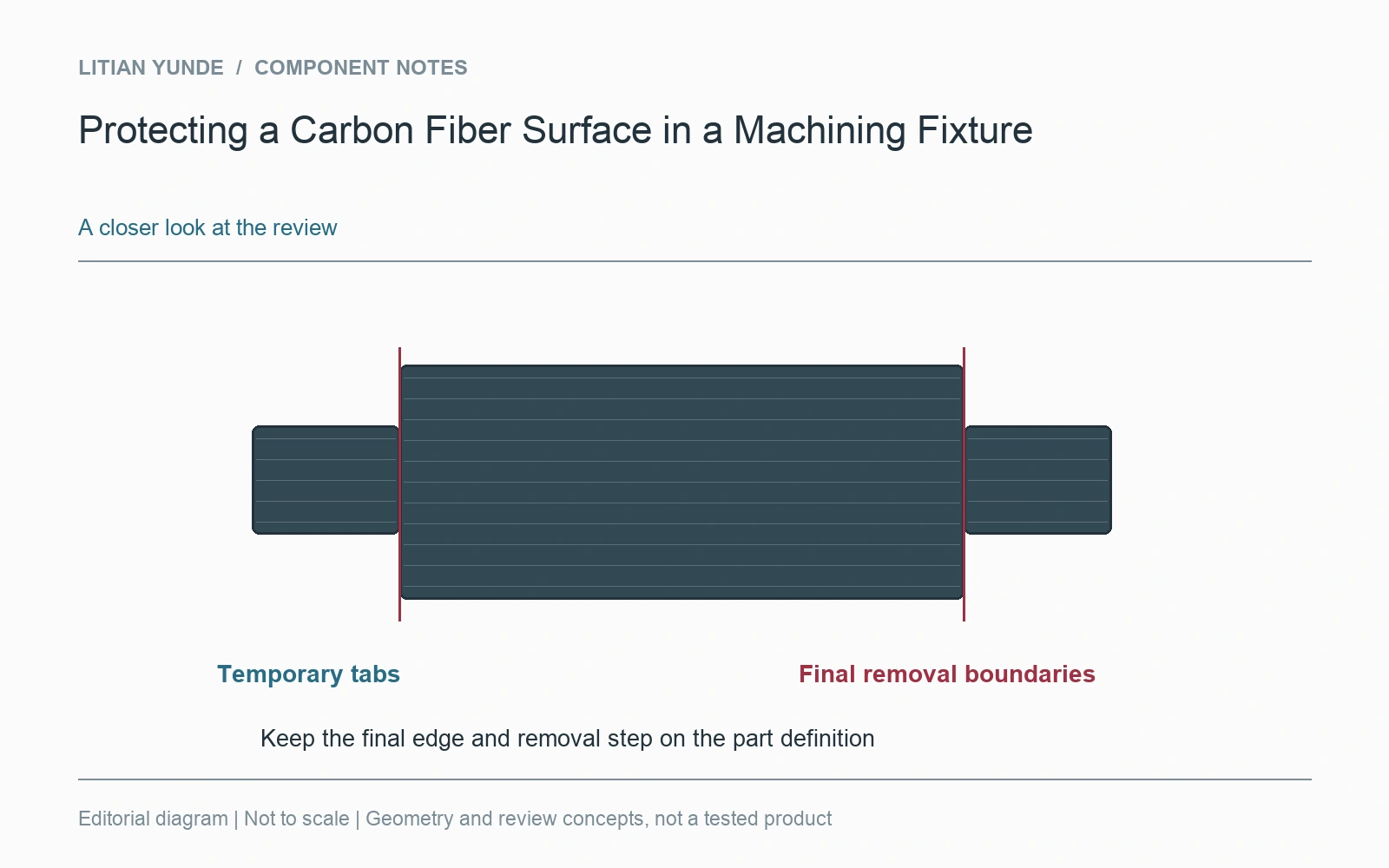
Temporary tabs are part of the manufacturing route
On some plate geometries, additional material can provide a handling or workholding region that is removed later. That route needs an agreed final edge and a defined removal step. It is not interchangeable with gripping the finished outline. Show where temporary material is permitted and retain enough allowance information for the supplier to evaluate the proposed sequence.
Inspect after the protection is removed
A film can hide marks, residue or a local finish issue. Keep any protected-state check distinct from the final exposed-surface inspection. For a reviewed sample, record the relevant fixture contact regions and photograph the visible face in a useful lighting condition. The goal is a repeatable surface result, not a promise that every workholding method leaves no trace.
For the project review: installed viewing face; permitted fixture contact regions; protective material and removal step; final exposed-surface inspection.