
编辑指南由 立天云德 · 更新于2026年10月9日
采购与质量 / 采购指南
A clear revision process tells everyone which definition is current and when a change takes effect. Part names alone are not enough, especially when several similar files circulate during development. Link the purchase order, drawing, model and inspection requirements to one controlled release before manufacturing starts.
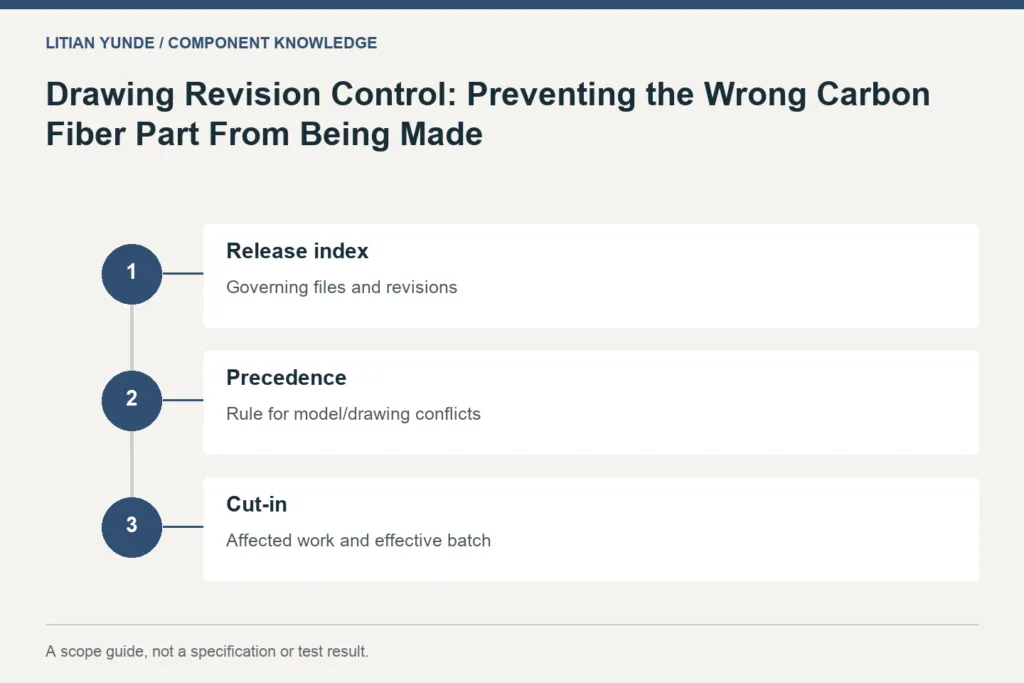
该主题的文献综述范围图。综述要点也以文本形式列于下方。.
Create a release index
List the governing file names, part numbers, revisions and units in the enquiry or order package. Mark obsolete files as superseded rather than leaving them beside current files without explanation. If a model and drawing are both supplied, state which governs a conflict and resolve known discrepancies before release.
Define the change cut-in
When the design changes, identify the affected parts and ask the supplier to confirm the status of work already started. Record whether the change applies to open work, a later batch or both. Avoid relying on a message such as “use the latest file” when more than one revision may be present.
Verify what was delivered
Require the delivered part and inspection documents to identify the applicable revision. At receiving, compare that identification with the order. If a deviation was approved, attach its reference and scope so the receiving team does not mistake it for an undocumented error.
咨询中应包含的信息
| 评论对象 | 需提供的信息 |
|---|---|
| Release index | Governing files and revisions |
| Precedence | Rule for model/drawing conflicts |
| Cut-in | Affected work and effective batch |
| Receiving | Revision and deviation references on documents |

常见问题
Can the same file name be reused for every revision?
It creates avoidable ambiguity. Use a controlled revision identifier and a clear release record.
Should an approved deviation change every future order?
Only if its documented scope says so. Otherwise keep it limited to the approved situation.
编辑指南由 立天云德. 具体项目的范围和验收要求已达成一致。.