
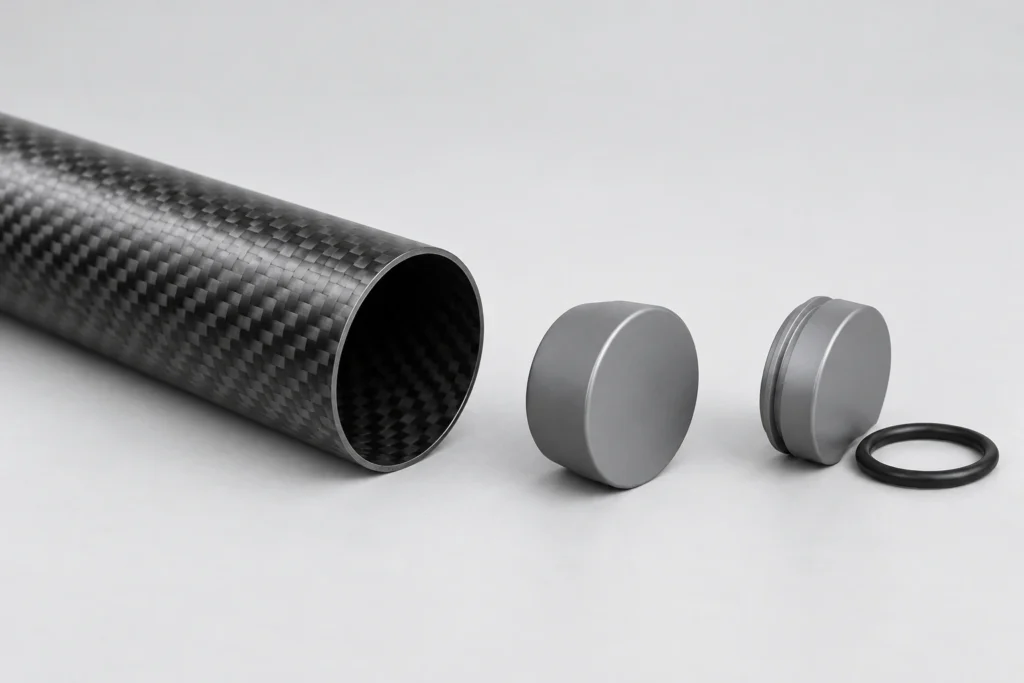
Tubes et interfaces · Guide d'évaluation des composants · Litian Yunde
Concept explicatif généré par l'IA ; il ne s'agit ni d'une photographie de produit de Litian Yunde ni d'un design validé.
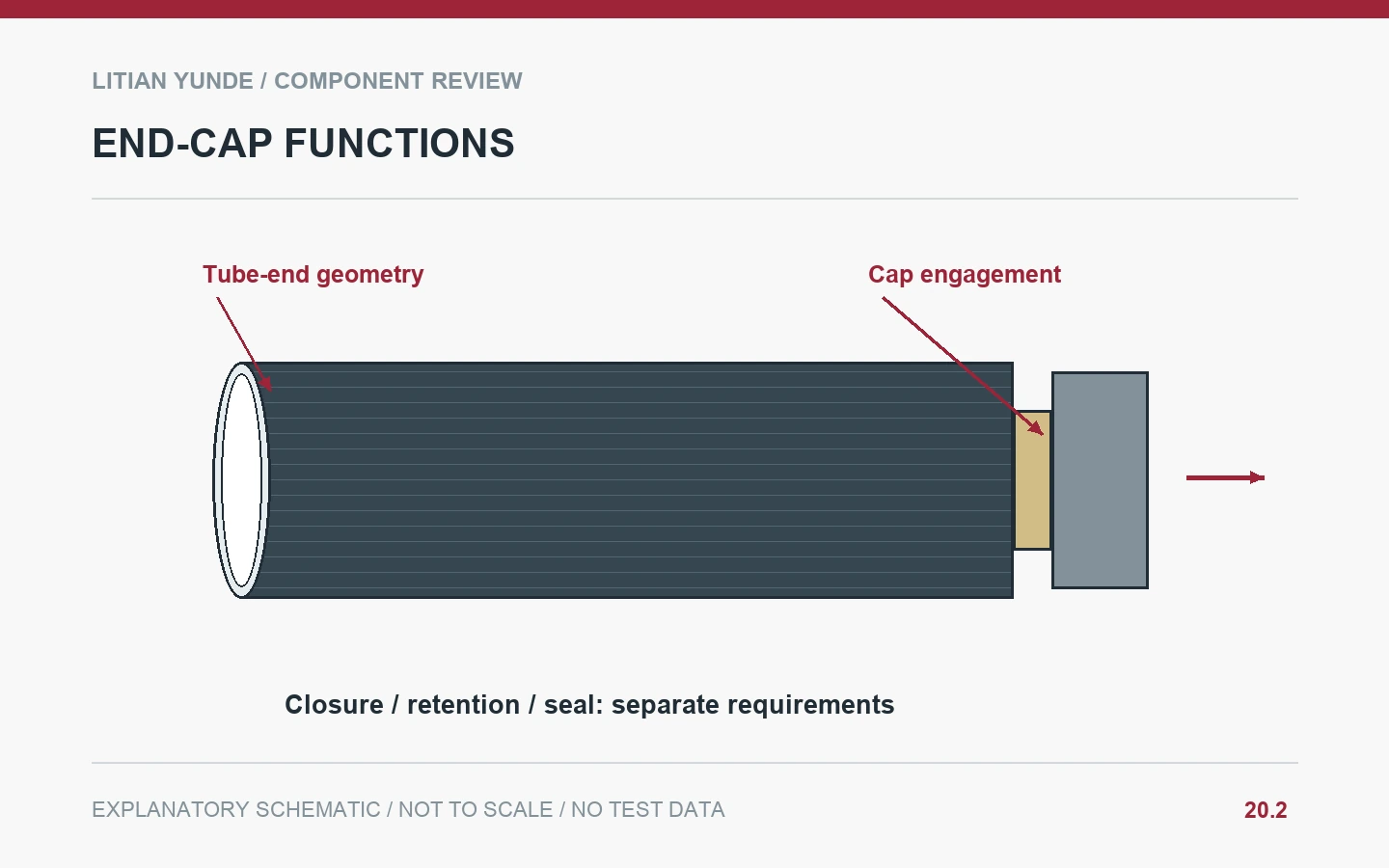
A tube end cap can close an opening without providing a verified seal or structural connection. Define the function before choosing its fit and retention. For a carbon fiber tube, review the cap, tube end, attachment, removal route and any separate sealing or load requirement as one named assembly.
Identify what the cap is expected to do
State whether the cap is cosmetic, protects an edge, retains another item, supports a fitting or forms part of a sealing arrangement. These uses require different evidence. A generic plug shape should not silently acquire a pressure or load rating. If those functions are needed, the responsible engineer must define the complete requirements and validation. Include the cap material and compatibility with the proposed contact and environment.
Specify engagement and attachment
Show the cap section, engagement length, contact surfaces and any adhesive, fastener or approved interference condition. Review the actual tube end geometry and the internal or external surface used for fit. Avoid requiring installers to hammer a plug into a thin wall without a controlled method. If the cap uses a removable retainer, provide its identity and seating condition. Keep fit requirements and retention requirements separately inspectable.
Resolve removal and other interfaces
A bonded cap can close off access required for a cable, insert or cleaning operation. Review installation order and future service before attachment. State how a removable cap is extracted without damaging the tube and whether it is reusable. If the cap includes a seal, treat sealing evidence separately from visible seating. A cap flush with the tube end does not prove that the assembly meets all of its intended functions.
Example: a protective plug and an internal cable
A project proposes a bonded plug to protect the tube opening. The service review discovers that a cable must later be replaced through that end. The team resolves cap removal or another approved access route before production. The cap’s edge-protection function stays separate from any sealing requirement.
Scénario à titre d'exemple ; il ne s'agit ni d'un cas client ni d'un résultat de production avéré.
Éléments à convenir avant de passer commande
| Article à évaluer | Consigner pour accord |
|---|---|
| Fonction | Closure, protection, retention or defined seal. |
| Fit | Section, engagement and tube-end reference. |
| Pièce jointe | Approved method and acceptance checks. |
| Service | Removal, reuse and access to internal items. |
Questions posées par les acheteurs
Does a snug end cap make the tube airtight?
No. A sealing requirement needs an appropriate specified assembly and evidence.
Can a decorative cap transfer structural loads?
Do not infer that function from its appearance or fit. It needs its own design and validation.
Contexte technique et lectures complémentaires
Document d'information : Hexcel : Ressources en ingénierie des composites. À titre d'information uniquement ; la liste de contrôle du projet constitue une orientation rédactionnelle, et ce document ne vaut ni certification du fournisseur ni homologation des pièces.
- Commande de tubes en fibre de carbone coupés à longueur : l'état des extrémités est déterminant
- Alésages des tubes en fibre de carbone : les mesures aux extrémités ne reflètent pas la section totale du passage
- Parcourez le centre de connaissances sur la fibre de carbone
Passez en revue votre composant avec Litian Yunde
Veuillez nous communiquer la version révisée du plan, l'application prévue ainsi que la question relative à l'interface ou au contrôle que vous souhaitez voir résolue. Les exigences de construction et de réception mentionnées sont validées pour ce projet spécifique.