
Tubes & Interfaces · Component review guide · Litian Yunde
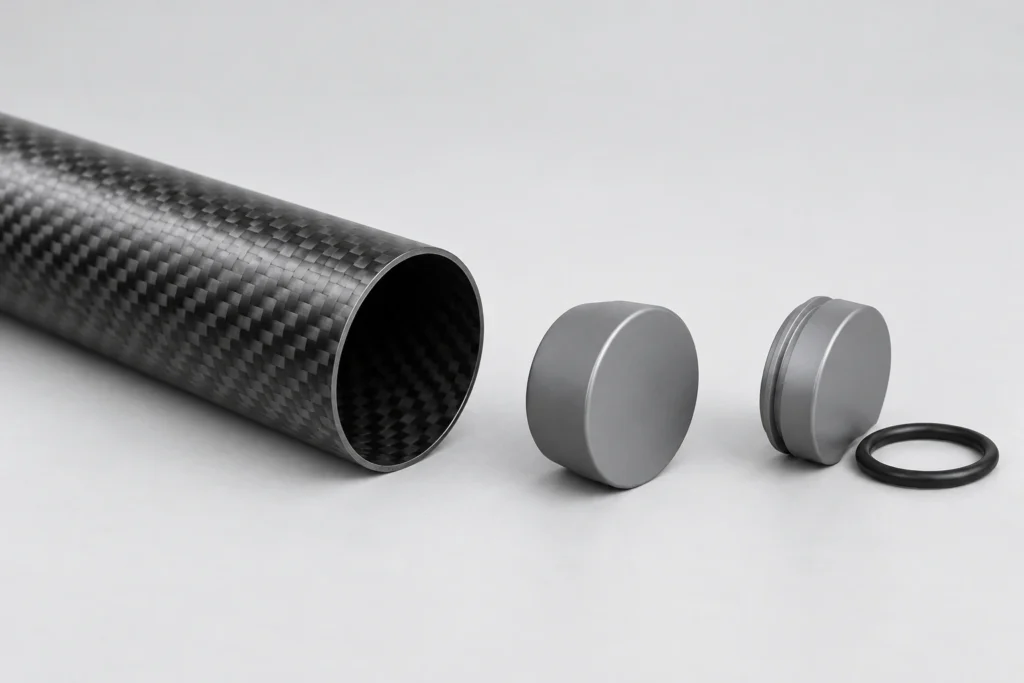
AI-generated explanatory concept; not a Litian Yunde product photograph or a validated design.
A tube end cap can close an opening without providing a verified seal or structural connection. Define the function before choosing its fit and retention. For a carbon fiber tube, review the cap, tube end, attachment, removal route and any separate sealing or load requirement as one named assembly.
Identify what the cap is expected to do
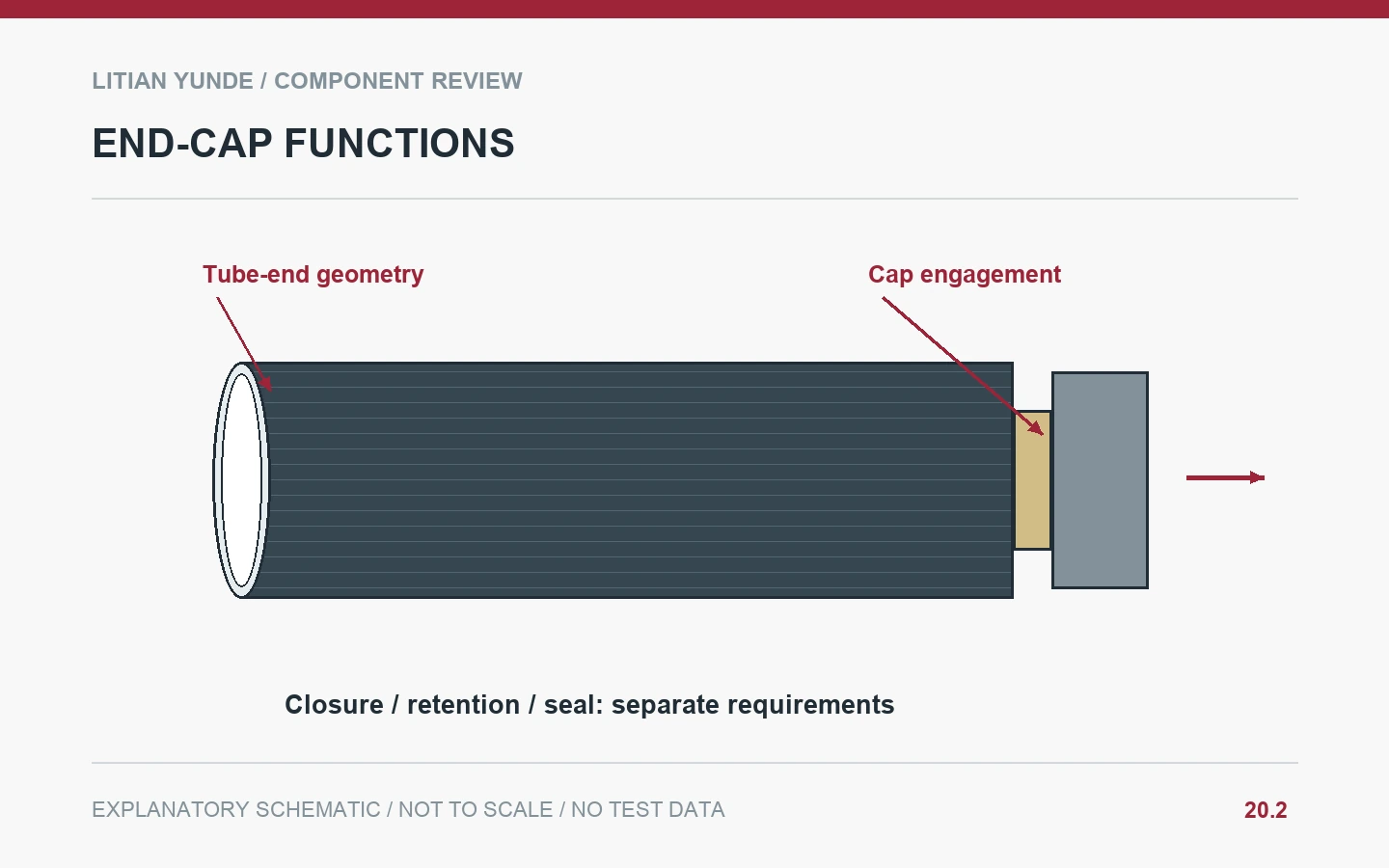
State whether the cap is cosmetic, protects an edge, retains another item, supports a fitting or forms part of a sealing arrangement. These uses require different evidence. A generic plug shape should not silently acquire a pressure or load rating. If those functions are needed, the responsible engineer must define the complete requirements and validation. Include the cap material and compatibility with the proposed contact and environment.
Specify engagement and attachment
Show the cap section, engagement length, contact surfaces and any adhesive, fastener or approved interference condition. Review the actual tube end geometry and the internal or external surface used for fit. Avoid requiring installers to hammer a plug into a thin wall without a controlled method. If the cap uses a removable retainer, provide its identity and seating condition. Keep fit requirements and retention requirements separately inspectable.
Resolve removal and other interfaces
A bonded cap can close off access required for a cable, insert or cleaning operation. Review installation order and future service before attachment. State how a removable cap is extracted without damaging the tube and whether it is reusable. If the cap includes a seal, treat sealing evidence separately from visible seating. A cap flush with the tube end does not prove that the assembly meets all of its intended functions.
Example: a protective plug and an internal cable
A project proposes a bonded plug to protect the tube opening. The service review discovers that a cable must later be replaced through that end. The team resolves cap removal or another approved access route before production. The cap’s edge-protection function stays separate from any sealing requirement.
Beispielszenario, kein Kundenfall und kein gemeldetes Produktionsergebnis.
Vor der Bestellung zu klärende Details
| Rezensionsobjekt | Zu Protokoll nehmen, um zuzustimmen |
|---|---|
| Funktion | Closure, protection, retention or defined seal. |
| Fit | Section, engagement and tube-end reference. |
| Attachment | Approved method and acceptance checks. |
| Service | Removal, reuse and access to internal items. |
Fragen, die Käufer stellen
Does a snug end cap make the tube airtight?
No. A sealing requirement needs an appropriate specified assembly and evidence.
Can a decorative cap transfer structural loads?
Do not infer that function from its appearance or fit. It needs its own design and validation.
Technischer Hintergrund und weiterführende Literatur
Hintergrundmaterial: Hexcel: Composite Engineering Resources. Background reading only; the project checklist is editorial guidance, and this reference does not establish supplier certification or part approval.
- Ordering Cut-to-Length Carbon Fiber Tubes: End Conditions Matter
- Carbon Fiber Tube Bores: End Measurements Do Not Describe the Full Passage
- Entdecken Sie das Wissenszentrum zum Thema Kohlefaser
Besprechen Sie Ihre Komponente mit Litian Yunde
Teilen Sie uns die überarbeitete Zeichnung, den vorgesehenen Einsatzzweck sowie die Frage zur Schnittstelle oder zur Abnahme mit, die Sie klären möchten. Die angegebenen Konstruktions- und Abnahmeanforderungen sind für das jeweilige Projekt bestätigt.