
Inspection & Testing · Component review guide · Litian Yunde
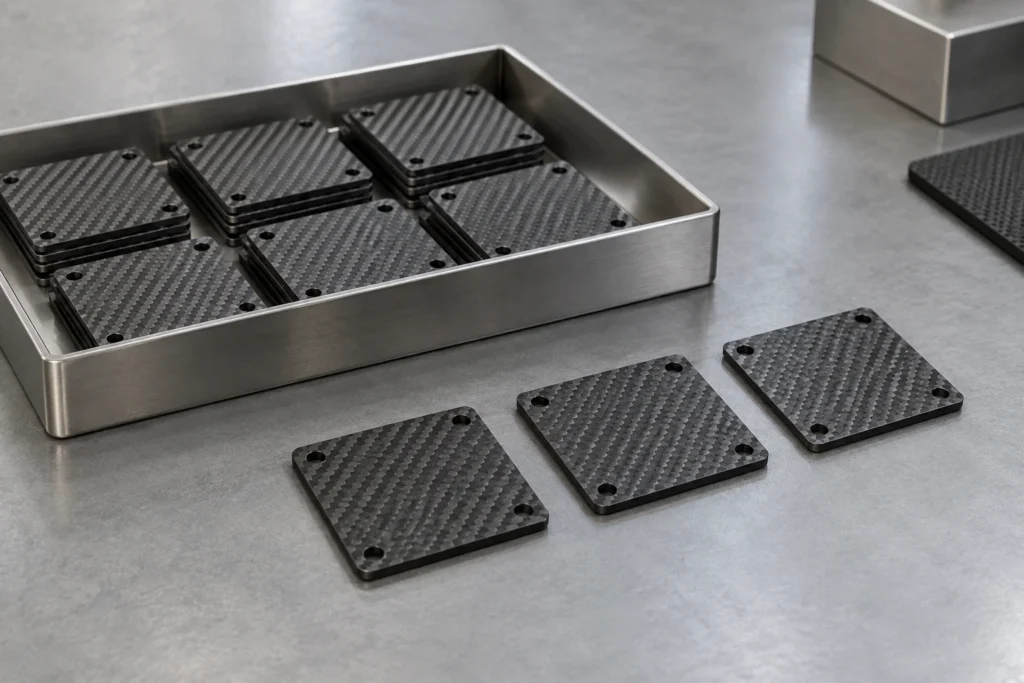
AI-generated explanatory concept; not a Litian Yunde product photograph or a validated design.
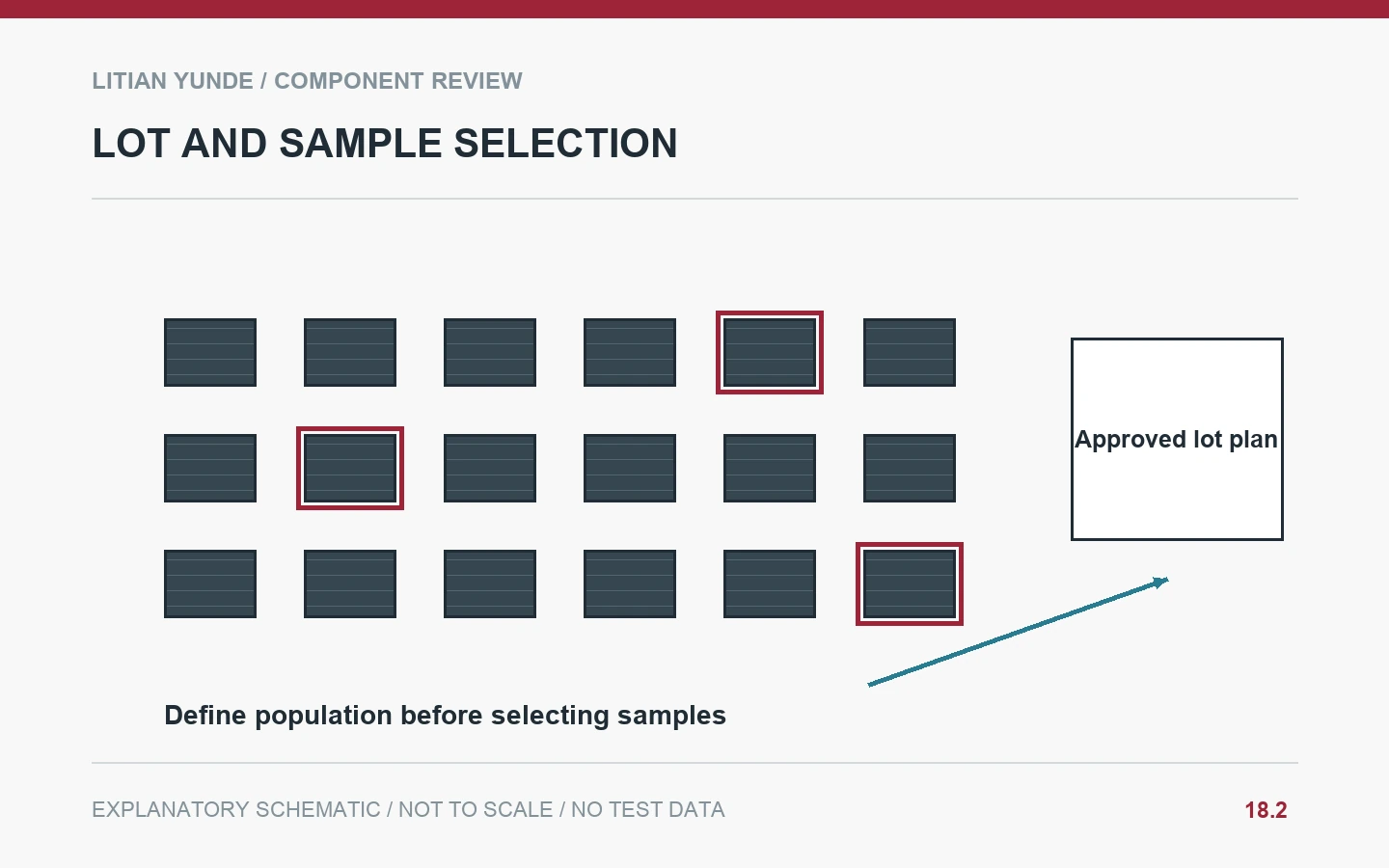
Acceptance sampling needs an identified lot, a specified characteristic and an agreed decision plan. For a carbon fiber shipment, define the population before selecting samples. Checking a convenient handful of parts is not automatically a statistical acceptance plan, and a first-article result does not itself accept every later shipment.
Describe what belongs to the lot
Record the item reference, applicable version, quantity and any process or material grouping required by the order. If one shipment contains different constructions or revisions, review whether they belong to separate lots. Do not make the receiving box the only lot definition when it mixes different populations. Keep the selected samples linked to their lot and preserve required serial or batch identities.
Agree the characteristic and decision rule
Appearance, hole position, wall thickness and documentation checks may require different methods and coverage. State which characteristics the sampling plan addresses and what requires other inspection. A competent quality owner should select any applicable standard, sample size, acceptance/rejection numbers and selection method. This article does not invent an AQL or sample quantity. Sampling involves producer and consumer risks, so the plan should be part of the agreement rather than chosen after a defect is found.
Keep disposition specific to the evidence
Record how samples were selected, the findings and the decision against the approved plan. If the lot is held, document its next route without silently removing defective pieces and declaring the rest accepted. Screening, rework and resubmission need defined instructions and traceable records. Keep first-article approval, routine lot acceptance and any performance-validation requirements separate, even when they concern the same component reference.
Example: two versions in one delivery
A shipment contains an earlier and a later cover version. The receiver initially proposes one sample count for the whole box. The review separates the populations and applies the agreed requirements to each identified lot. The resulting record shows which version and quantity each decision covers.
Illustrative scenario, not a customer case or reported production result.
Details to agree before ordering
| Review item | Record to agree |
|---|---|
| Population | Item, revision, construction and lot quantity. |
| Coverage | Characteristic and inspection method. |
| Plan | Approved selection and acceptance/rejection rules. |
| Disposition | Lot-specific decision and resubmission route. |
Questions buyers ask
Is first-article approval a shipment sampling plan?
No. It addresses a different purpose and does not replace the agreed routine lot acceptance process.
Can the sampling plan be changed after seeing defects?
Changing the plan after the results can change the decision basis. Use an authorised, documented process.
Technical background and related reading
Background resource: NIST: Lot Acceptance Sampling. Background reading only; the project checklist is editorial guidance, and this reference does not establish supplier certification or part approval.
- First-Article Inspection for Carbon Fiber Parts: Agree the Record Before Production
- Incoming Carbon Fiber Parts: Set a Hold-and-Release Workflow
- Browse the carbon fiber knowledge centre
Review your component with Litian Yunde
Share the drawing revision, intended application and the interface or inspection question you need to resolve. The quoted construction and acceptance requirements are confirmed for the specific project.