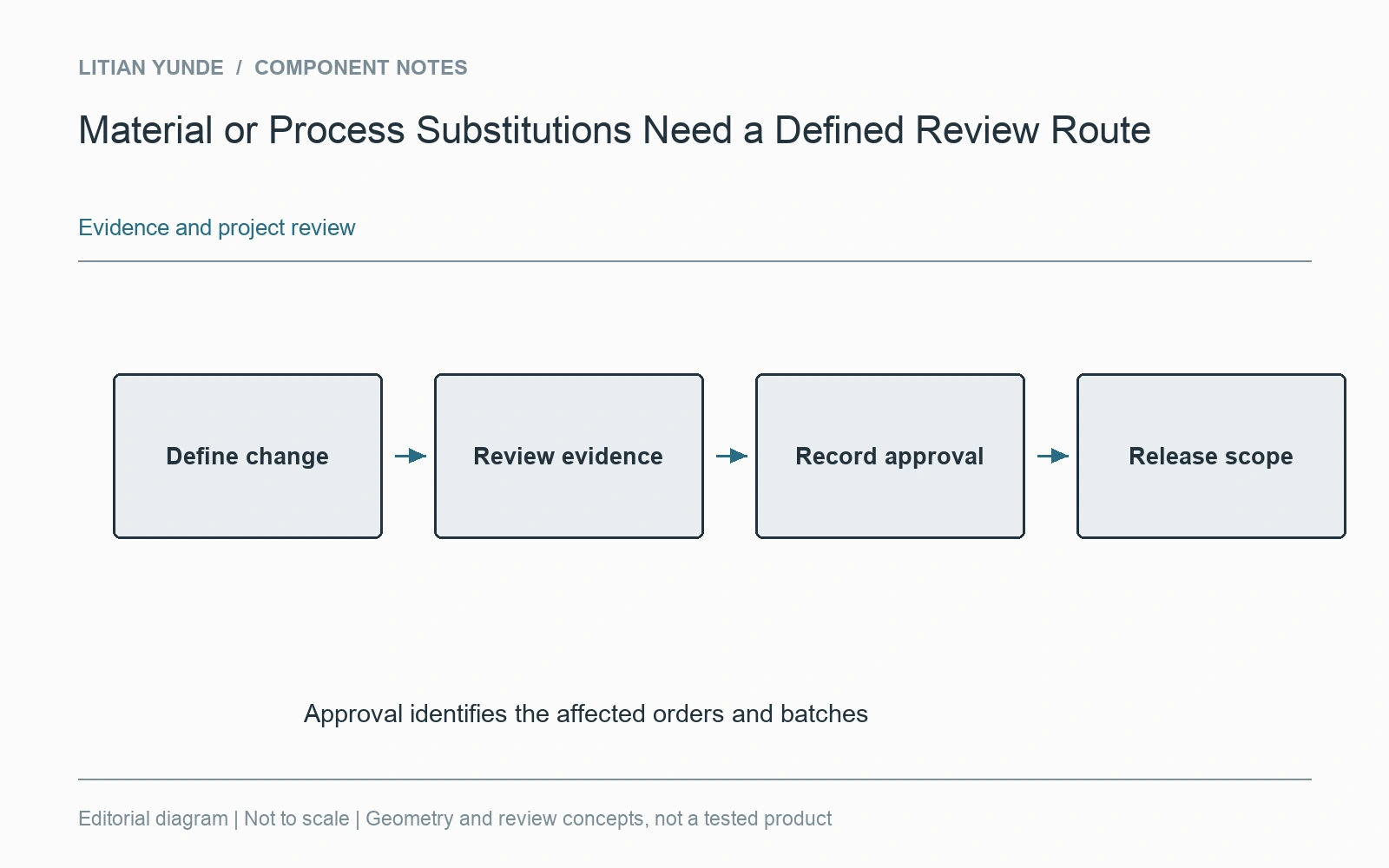
A carbon fiber component can retain the same outline while its reinforcement, resin system or manufacturing route changes. A controlled substitution review identifies the proposed change and checks it against the agreed requirements before the affected work is released.
Name the proposed change precisely
Avoid descriptions such as “equivalent carbon” without a comparison basis. Identify the current and proposed material designations, construction or process details relevant to the requirement. A commercial availability problem may explain why a change is proposed; it does not by itself establish technical equivalence.
Review the consequences that apply to the component
Possible review topics include dimensions, appearance, joining compatibility, documented properties and inspection requirements. These are questions to evaluate, not a claim that every substitution causes a problem. The evidence needed depends on the component and the agreement. Where new samples or tests are required, establish their purpose and acceptance basis before commissioning them.
Record the decision and affected scope
Define who must be notified, which work is held and how approval is recorded. Identify the affected batch or order so an approval for one delivery is not silently extended to every future part. Keep the revised material record with the component definition. A drawing revision may be part of the process, but an unchanged drawing number should not hide a material or manufacturing change that the purchase agreement requires to be reviewed.