
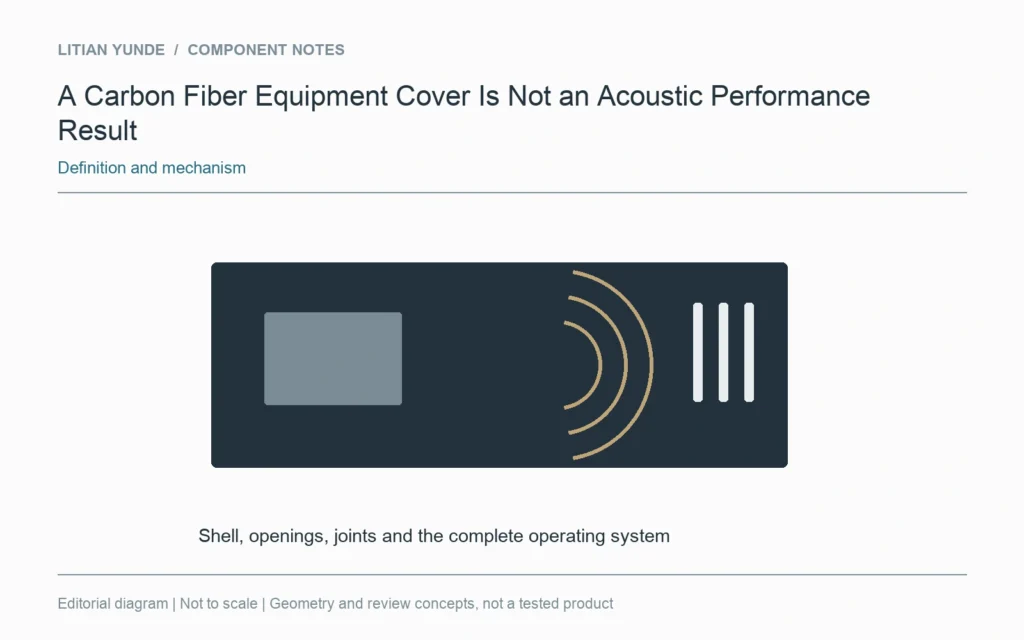
A carbon fiber cover defines a mechanical enclosure component. A noise-reduction claim concerns the behaviour of a complete system under stated conditions. Separate those requirements before treating a material choice or a closed cover as evidence of acoustic performance.
Describe the complete enclosure concept
Identify openings, joints, mounting interfaces and other specified components. Keep the carbon shell supply boundary clear. If acoustic materials or seals are proposed, state who selects and supplies them rather than implying that the bare shell includes a finished noise-control system.
Define the result being requested
The responsible specialist needs the relevant equipment, operating state and measurement objective. An informal before-and-after impression does not establish a general reduction figure. A material property, a measurement near one position and a system-level assessment also need their own clearly stated scopes.
Keep mechanical acceptance separate
Dimensions, surface finish and assembly access can be checked against the component drawing. Acoustic evaluation needs its identified system configuration and method where required. If a sample is assessed, retain the actual openings, joints and operating condition with the result. A later ventilation or access change may affect what the earlier evaluation represents even if the main cover remains the same.
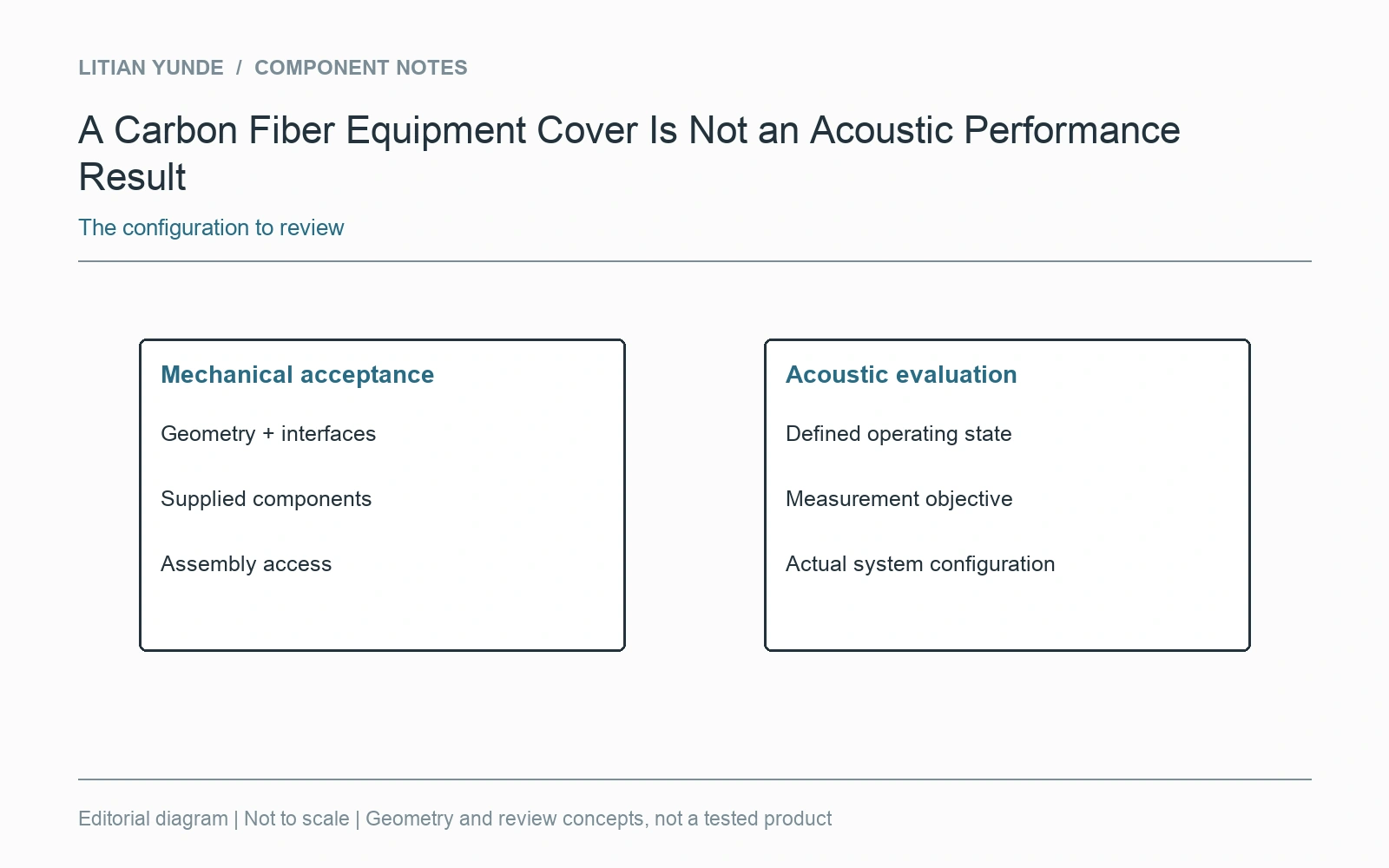
For the project review: shell and complete-system boundaries; openings, joints and specified materials; defined operating and measurement objective; configuration retained with the evidence.