
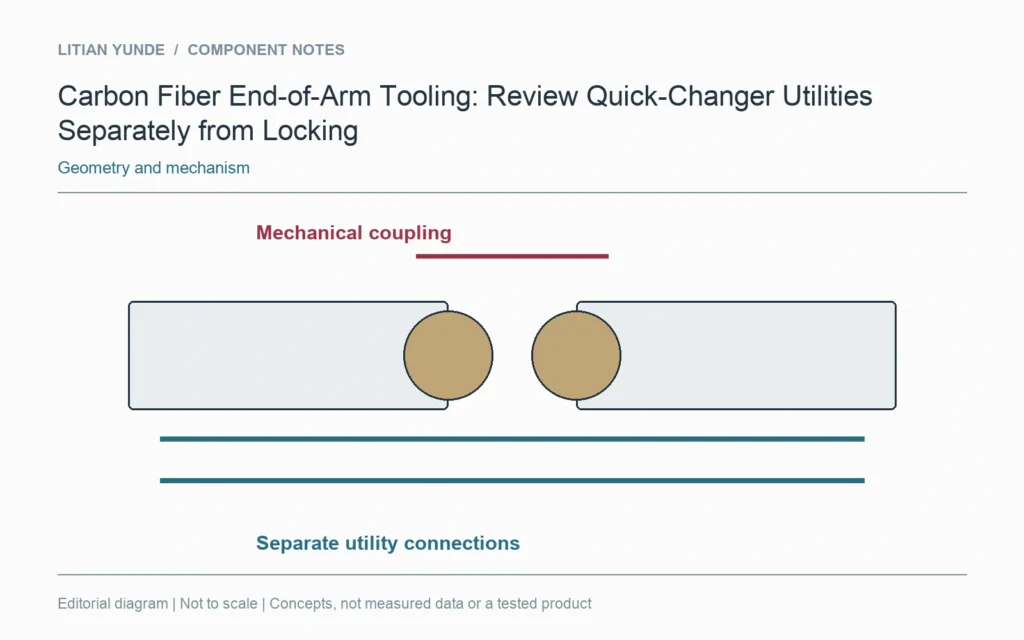
A quick-change interface can connect the mechanical tool and pass air, electrical signals or other utilities. Review those functions separately for a carbon fiber end-of-arm assembly. A mechanically seated tool does not establish that every required service is connected and usable.
List the services the tool actually needs
Identify each connection crossing the changer and its destination on the tool. ATI describes utility modules separately from the mechanical changer interface. Use the selected model’s information rather than assuming that every unit carries the same services.
Draw the approach and parked conditions
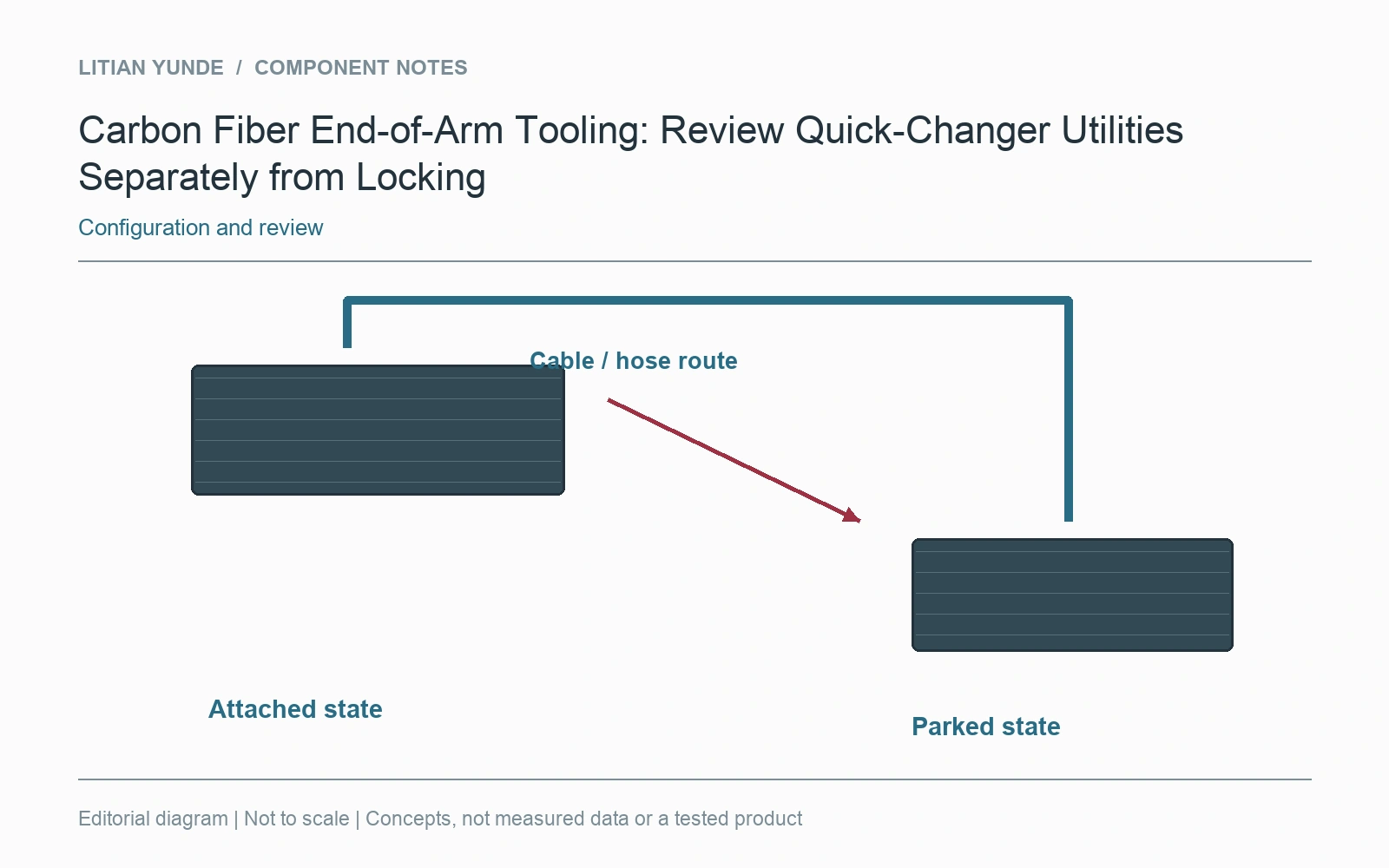
Include hoses, cables and connectors in both the attached arrangement and the change sequence. The carbon support can fit the mounting pattern while a nearby cable prevents the intended approach. Keep the tool stand or parking interface in the review when it affects that sequence.
Agree the integration evidence
Retain which checks establish mechanical coupling, service connection and the required controller indications. They are related parts of an integrated system, with responsibilities that need to be identified. A carbon component supplier should state its actual supply boundary. Keep the installed configuration with the acceptance record instead of treating the changer’s catalogued features as proof of the complete robot application.
Further reading: ATI: tool changer utility modules.