
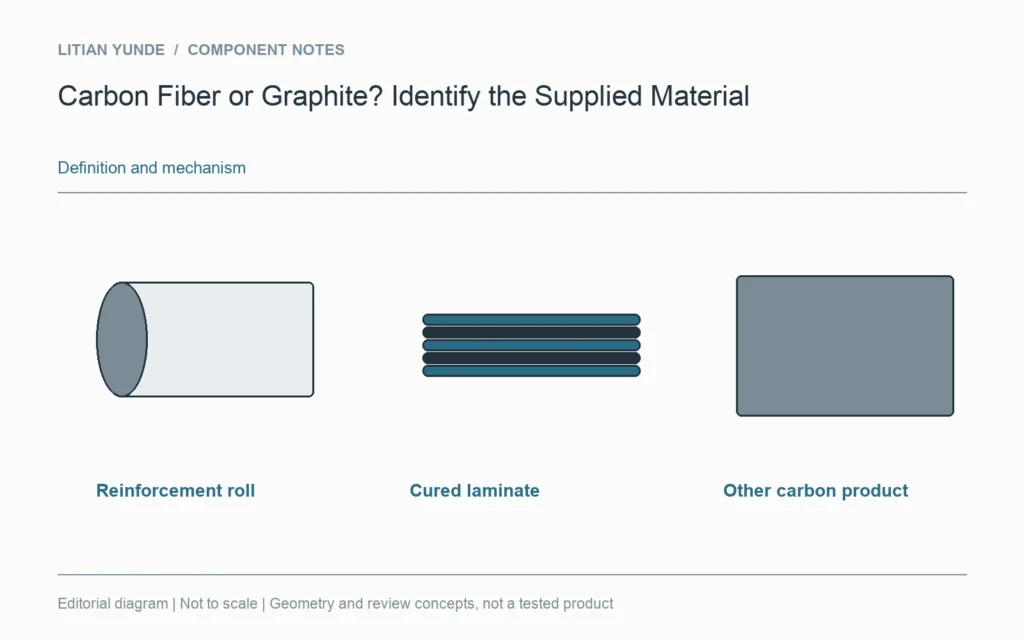
An enquiry that uses “carbon” and “graphite” interchangeably can leave the supplied material unclear. Identify whether the order concerns reinforcement, a polymer-matrix laminate or a different carbon-based product. A familiar trade description is not a complete material definition.
Start with the form being purchased
A fabric roll, cured composite plate and machined carbon-based block are different deliverables. Show the intended product form before discussing a grade or property. A supplier should not have to infer that form from a black surface in a reference photograph.
Retain the actual designation
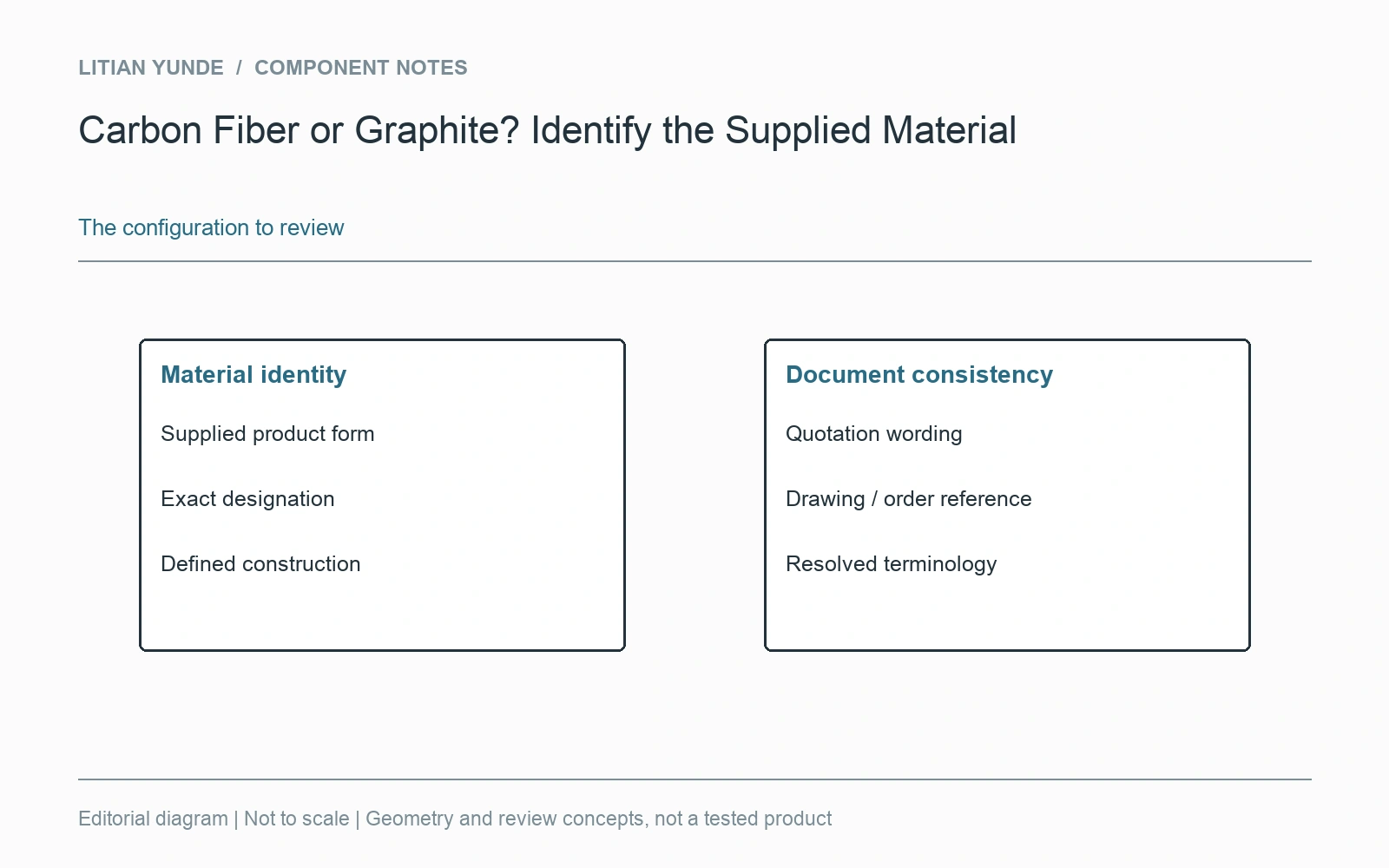
For a composite component, keep the reinforcement and resin construction in the controlled record. Hexcel’s reinforcement resources, for example, ask for fibre grade and fabric information rather than relying on one broad material word. The visible surface may identify neither the internal laminate nor the full delivered assembly.
Resolve naming differences before release
If two documents use different terms, ask which exact material definition governs the order. Record the answer against the part and revision, then use it consistently in quotation, manufacture and inspection. Do not silently replace an unfamiliar designation with the nearest common name. This is especially useful when translating an enquiry or comparing proposals from suppliers whose catalogues use different naming conventions. It prevents a vocabulary shortcut from becoming an unintended substitution.
Further reading: Hexcel: reinforcement specification information.