
Application Engineering · Component review guide · Litian Yunde
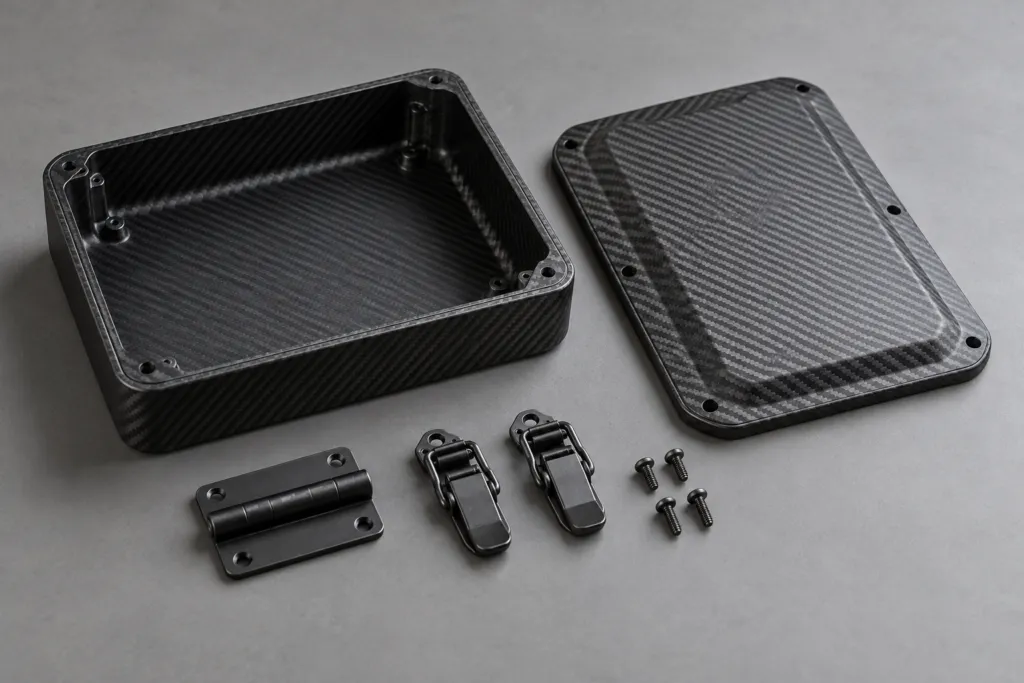
AI-generated explanatory concept; not a Litian Yunde product photograph or a validated design.
A carbon fiber assembly should be handed over with a list of the parts needed to maintain its agreed supplied scope. Identify the composite component, hardware, seals, pads and replacement kits separately. A bill of materials used to build the first unit is not automatically a usable service-parts list.
Distinguish installed parts from orderable spares
A production assembly can contain purchased items, bonded items and matched components that are not independently replaceable in service. Mark which items can be ordered individually, which belong to a kit and which require the assembly to be returned for review. Use controlled identifiers rather than descriptions such as small screw or black cover. A picture can help locate an item, but should not be the only ordering reference.
Include the conditions of compatibility
Record applicable assembly versions and any left/right or paired restrictions. If a replacement needs a supplied spacer, seal or updated fastener, include that relationship. Do not claim that all later parts fit every earlier unit without supporting review. Keep approved substitutions identifiable. The service document should let a receiving team distinguish a compatible replacement from a visually similar piece in the store.
Make the handover usable at the equipment
Show how to find the identifier without dismantling unrelated systems where practical. Separate replacement parts from tools, consumables and instructions. Specify which procedures and torque or adhesive instructions are controlled by other documents; do not invent values to make the list look complete. If a service action requires technical assessment, label that route clearly. The list should support the defined service scope, not imply unrestricted field repair.

Example: a hinged instrument cover
A supplier delivers a carbon shell, hinge, seal and latch hardware. The operator needs to know whether the seal can be bought separately and which latch kit applies to its assembly. The handover adds orderable identifiers, compatibility notes and controlled replacement instructions. Bonded hinge work remains a separate technical disposition rather than an assumed user repair.
Illustrative scenario, not a customer case or reported production result.
Details to agree before ordering
| Review item | Record to agree |
|---|---|
| Identity | Installed identifier and orderable reference. |
| Scope | Individual spare, kit or return-for-review item. |
| Compatibility | Assembly versions and paired restrictions. |
| Instructions | Controlled documents, tools and consumables. |
Questions buyers ask
Is a manufacturing BOM sufficient for service?
Only if it also identifies orderable spares, compatibility and replacement conditions clearly enough for the user.
Does a spare-part number authorise any repair?
No. The approved service procedure and component limits still govern the work.
Technical background and related reading
Background resource: ISO/TC 176: Documented Information Guidance (2015 edition). Background reading only; the project checklist is editorial guidance, and this reference does not establish supplier certification or part approval.
- Matched Carbon Fiber Shell Halves: Plan Replacement and Interchangeability
- Carbon Fiber Protective Covers: Review Drain Paths in the Installed Position
- Browse the carbon fiber knowledge centre
Review your component with Litian Yunde
Share the drawing revision, intended application and the interface or inspection question you need to resolve. The quoted construction and acceptance requirements are confirmed for the specific project.