

Existing workshop photograph of fabric placement in a shaped mold.
A new carbon fiber process is worth evaluating when it solves a defined production or part problem. Start with a comparison plan rather than a broad promise of innovation.
Choose the question the trial must answer
Identify the current problem: an appearance inconsistency, assembly difficulty, material waste or another documented issue. Record the baseline configuration and the proposed change. A trial that changes geometry, material and finishing at once needs a clear explanation of what the comparison can establish.
Set the decision criteria before reviewing samples
Agree which observations will decide whether the proposal advances to the next stage. Include fit, relevant inspection results and the supplied cost scope. Keep successful sample observations distinct from claims about repeat production until the latter has been reviewed.
Example scenario
A trial changes both the mould and the finishing process. If the surface improves, the trial alone does not identify which change produced the difference. Record both changes and design the next review around the specific remaining question.
Points to record
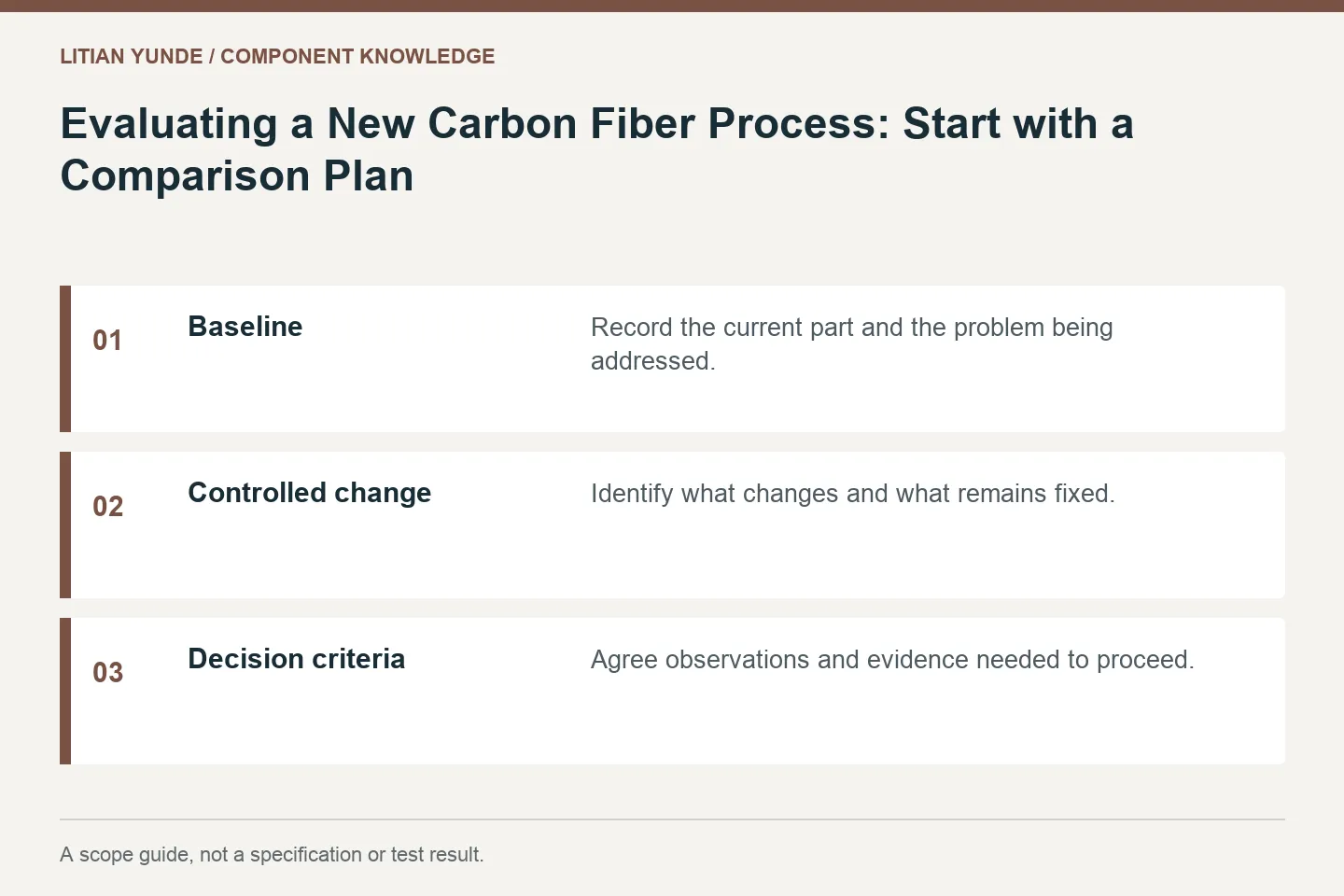
| Baseline | Record the current part and the problem being addressed. |
|---|---|
| Controlled change | Identify what changes and what remains fixed. |
| Decision criteria | Agree observations and evidence needed to proceed. |
Related reading
- From Carbon Fiber Prototype to Repeat Production: The Handoff Package
- Custom Carbon Fiber Tooling: Questions to Settle Before Paying for a Mold
Background reference: Gurit — Composite Materials.
Discuss the component requirements
Send the part drawing and the requirements relevant to this guide for a scope review.
Contact Litian Yunde