
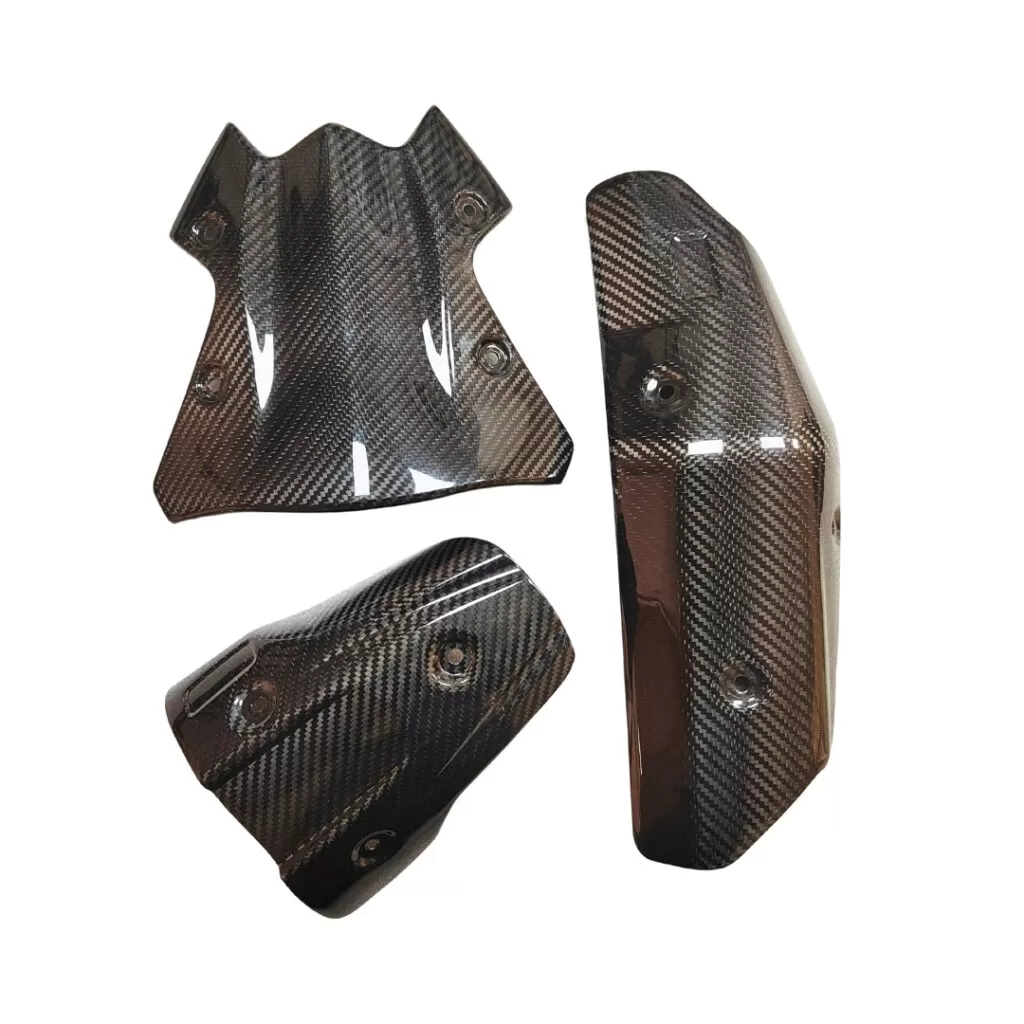
Shaped carbon fiber motorcycle panel references.
A useful vehicle-panel fit report records the platform, attachment configuration and specific observations. A single photograph of a fitted panel rarely explains what was checked.
Use the same reference for every reviewer
Identify the vehicle or fixture, model variant and panel revision. Photograph the overall installation and the individual attachment points. Mark the inspected gaps and areas of interference on a drawing or image so reviewers can discuss the same locations.
Close each observation explicitly
Separate accepted appearance variation from issues requiring a drawing or tooling change. Record the next action and the configuration that must be resubmitted. If the attachment arrangement changes, repeat the relevant fit review instead of carrying the old approval forward automatically.
Example scenario
A panel fits one vehicle variant but the project includes another with different adjacent trim. Record which variant was checked and which remains open. Avoid extending an approval to all variants merely because they share a model-family name.
Points to record
| Test reference | Identify vehicle or fixture and panel revision. |
|---|---|
| Observation location | Mark gaps, interference and attachment points. |
| Disposition | Record accepted items, corrections and resubmission scope. |

Related reading
- Automotive Carbon Fiber Trim: Fitment Information a Supplier Needs
- Reporting a Carbon Fiber Part Concern: Photos and Measurements That Help
Background reference: Gurit — Composite Materials.
Discuss the component requirements
Send the part drawing and the requirements relevant to this guide for a scope review.
Contact Litian Yunde