
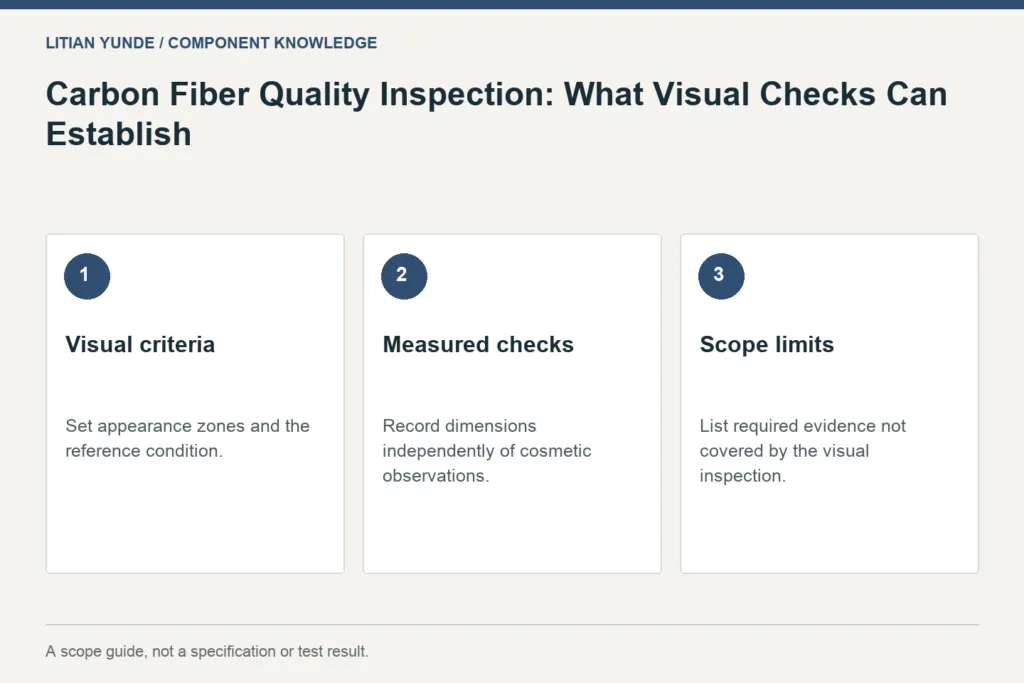
Editorial scope guide. The points are also available as readable text below.
Visual inspection can document appearance and visible workmanship, but it does not establish every internal or mechanical characteristic of a composite part. Define what each inspection method is intended to check.
Make visual acceptance specific
Identify the viewing conditions, appearance zones and agreed reference sample. Mark locations for observations instead of relying on a general pass or fail photograph. Distinguish cosmetic comments from measured dimensional results so each observation has a clear basis.
Add other evidence where the specification requires it
If the application calls for internal-defect assessment or mechanical evidence, identify the method and acceptance criteria through the responsible technical team. Do not use a flawless-looking surface as a substitute. The inspection report should list the checks actually performed and any checks outside the supplier’s scope.
Example scenario
A finished face matches the approved cosmetic sample, but a required dimensional report is missing. Record visual acceptance and the outstanding measurement separately. A single overall pass label would hide the difference between work completed and evidence still needed.
Points to record
| Visual criteria | Set appearance zones and the reference condition. |
|---|---|
| Measured checks | Record dimensions independently of cosmetic observations. |
| Scope limits | List required evidence not covered by the visual inspection. |
Related reading
- First-Article Inspection for Carbon Fiber Parts: Agree the Record Before Production
- Approving a Carbon Fiber Surface Sample for Repeat Orders
Background reference: Gurit — Composite Materials.
Discuss the component requirements
Send the part drawing and the requirements relevant to this guide for a scope review.
Contact Litian Yunde