

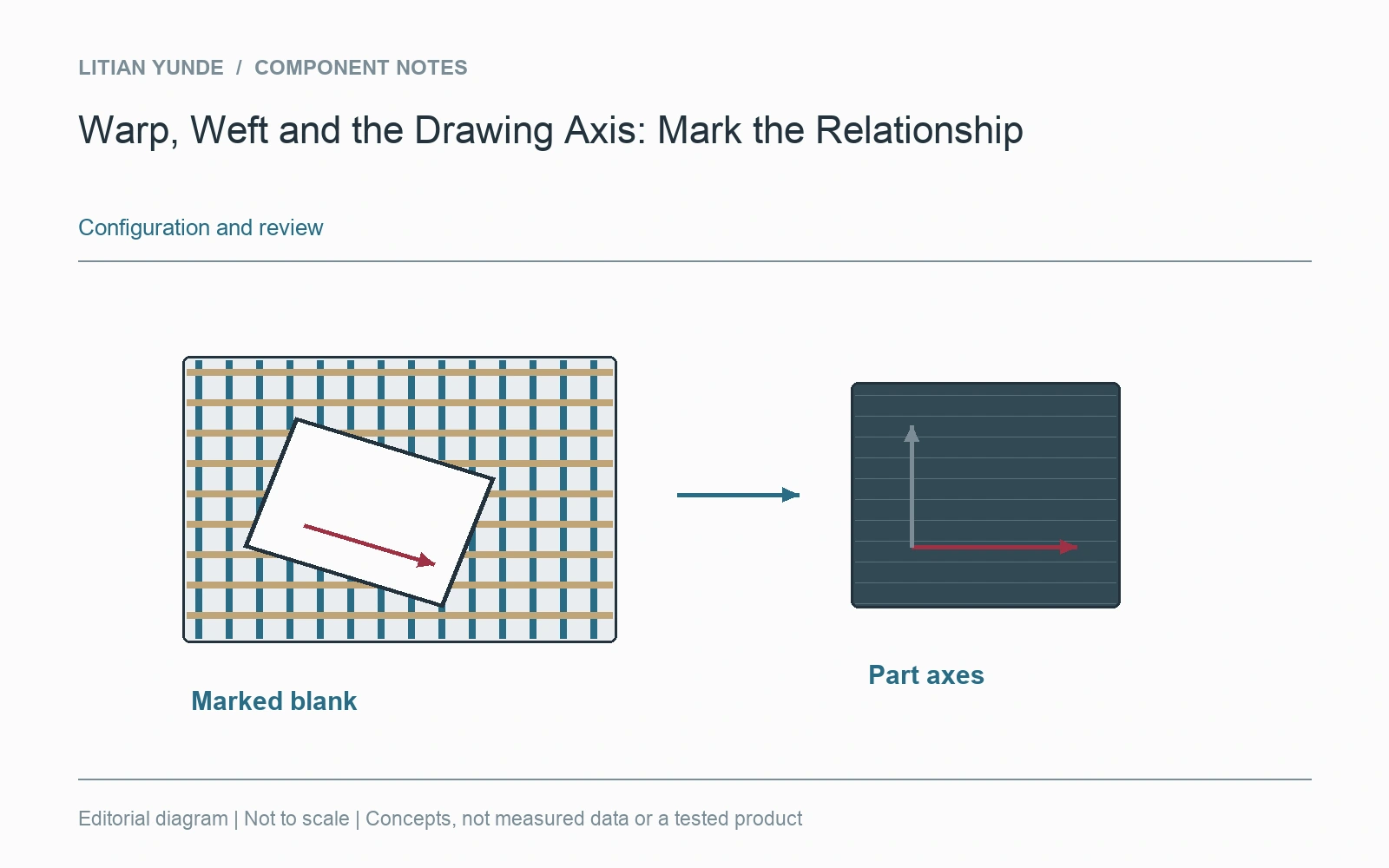
Warp and weft identify yarn directions in a woven fabric. The part drawing uses its own reference axes. Connect those two descriptions explicitly; a photograph of the weave is a poor substitute for a direction mark on the cutting or layup definition.
Two coordinate systems meet at the ply
A rectangular blank can be turned on the sheet without changing its outline. The relationship between the fabric directions and the part axes can still change. Show the fabric reference direction on the blank and identify the drawing axis used for the placement. For bias-woven material, do not assume that a roll edge follows the same direction as a yarn.
Read the fabric designation
Hexcel lists bias-woven reinforcements as well as conventional woven products. Use the actual construction description rather than inferring it from the edge of a roll. If direction-specific material values are supplied, retain their original direction labels when connecting them to the component definition.
Check the handover to cutting
The direction mark needs to survive the transfer from the design file to the cutting instruction. A cropped screenshot can lose the axis arrow or legend. Supply a controlled drawing or file with the blank identity, orientation reference and revision together. When reviewing a replacement fabric, compare those references before discussing whether the surface pattern looks similar.
Further reading: Hexcel: fabric and reinforcement constructions.