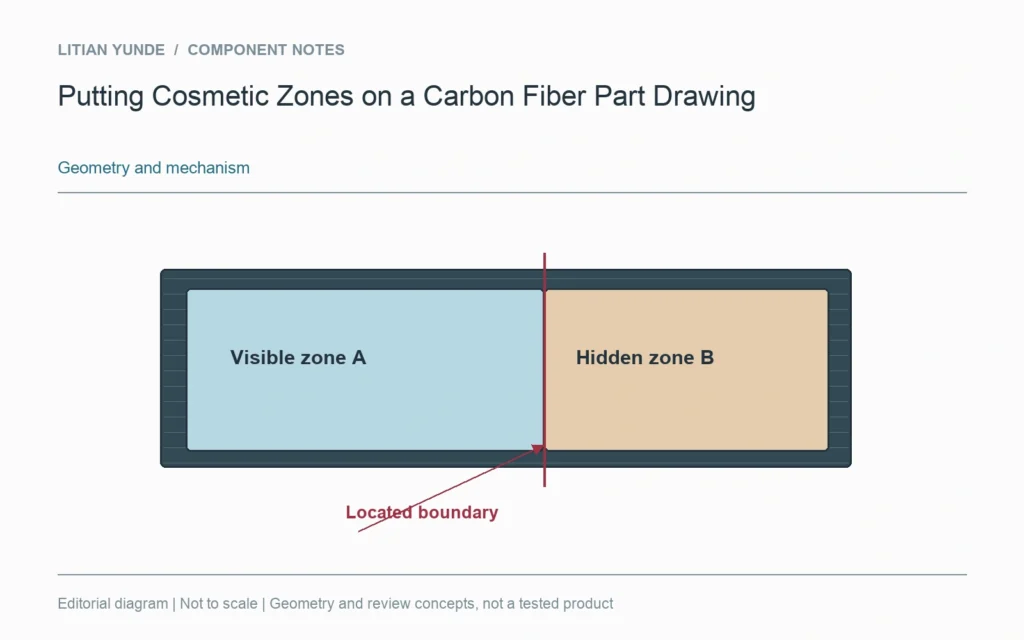
“外观良好”这一标准难以进行一致性检查。外观区域图明确指出了表面要求最严格的位置,以及哪些位置可接受经协商确定的不同标准。它有助于将经批准的样品与部件的实际安装状态相匹配。.
Classify surfaces using the actual installation: frequently visible, occasionally visible and hidden regions may have different needs. Include edges and recesses that become visible when a cover is opened. A manufacturing orientation is not necessarily the customer viewing orientation, so use an assembly view or simple photographs to make the distinction clear.
Give the boundary a location
Draw the zone boundary on the controlled part definition. A written note such as “front side only” can leave an edge, flange or curved transition ambiguous. Name the relevant face or feature and show where the requirement ends. If artwork or a bonded area interrupts the finish, record that exception on the same view.
Use a sample and an inspection condition together
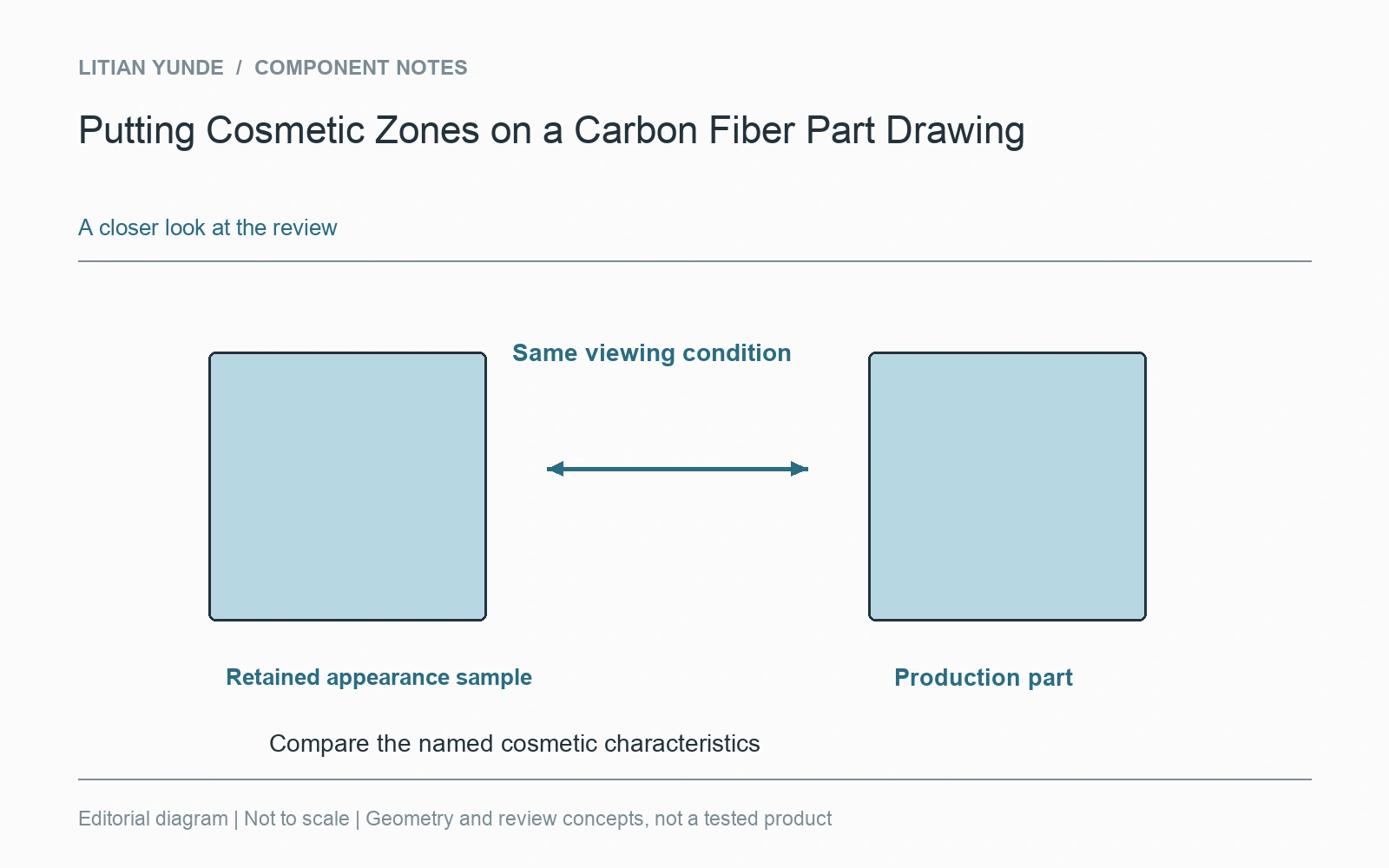
A retained sample can communicate texture, colour and the accepted overall appearance. Agree how it will be compared: lighting, viewing distance and relevant viewing directions are practical parts of the discussion. Photographs can support the record, but exposure and reflections can change what they show. For a disputed local feature, retain an identified close-up and enough context to locate it.
Do not let the cosmetic map rewrite the structure
A hidden zone still needs its functional requirements. Likewise, a visually acceptable surface does not establish laminate quality or structural performance. Keep cosmetic acceptance distinct from dimensional and engineering checks. When the drawing or finish process changes, review which parts of the retained appearance reference remain applicable rather than assuming the old sample covers the new configuration.