
Machining & Assembly · Component review guide · Litian Yunde
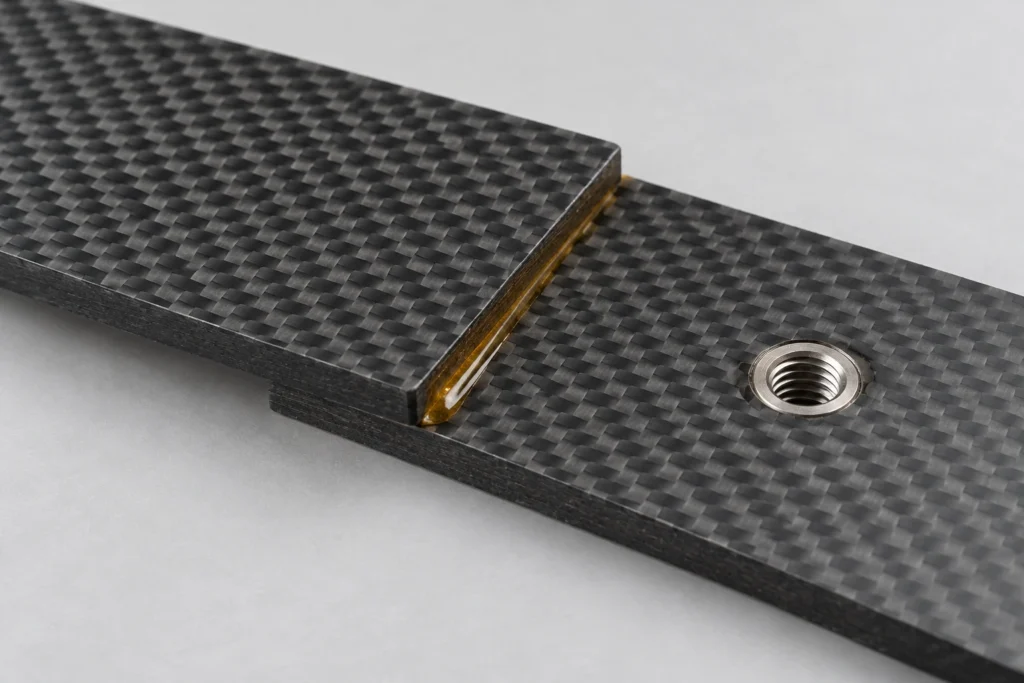
由人工智能生成的概念示意图;并非利天云德的产品照片或经过验证的设计。.
Adhesive displaced during assembly can reach holes, visible surfaces or service interfaces. Define where squeeze-out is permitted, where surfaces must remain clear and how excess adhesive is handled. A neat external bead does not prove the internal bond is sound, and uncontrolled cleanup can disturb the agreed bonding process.
Locate the neighbouring functional surfaces
Show the bond region together with nearby threads, holes, connector seats, sliding surfaces and visible areas. Identify the keep-clear boundaries on a controlled view. A bond drawn alone can hide the features affected by displaced adhesive. Include the actual assembly position and any fixture contact that could spread it. Clarify whether an external fillet is required, permitted or restricted; do not infer its acceptance from appearance.
Use the adhesive supplier’s process instructions
The appropriate application, cure and cleanup method depends on the selected adhesive and substrate preparation. Record the controlled product and process instructions. Avoid prescribing an arbitrary solvent, scraping method or cure schedule from a generic web article. If masking is proposed, review its compatibility and removal stage. Changes made to protect appearance should not quietly change the bond geometry or contaminate a surface intended for adhesion.
Check clearances as well as the bond record
Inspect the keep-clear zones at the specified stage and confirm that relevant hardware or service functions remain usable. Record findings before approved cleanup or rework. Bond acceptance needs the agreed evidence for the project, which may include process records or defined validation. A visible bead, the absence of a bead and a successful assembled fit each describe different observations; none alone should become an unrestricted strength claim.
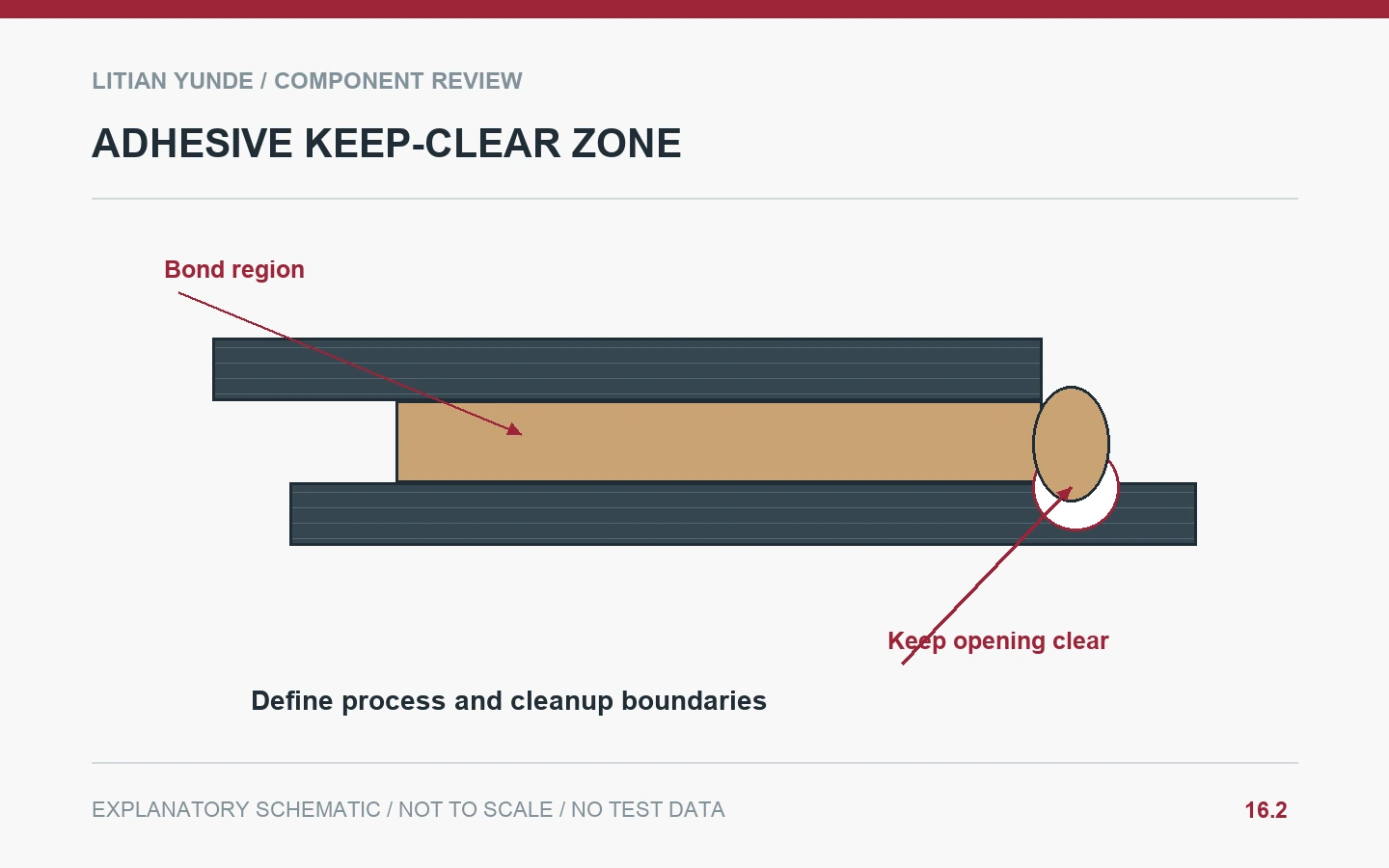
Example: excess adhesive near a threaded insert
A mounting foot is bonded close to a threaded insert. The sample reveals adhesive at the insert opening. The project marks a keep-clear region and agrees the application and cleanup steps with the adhesive process owner. The inspection records both the insert usability and the bond’s required evidence.
此为示例场景,并非客户案例或已报告的生产结果。.
下单前需确认的细节
| 评论对象 | 记录以示同意 |
|---|---|
| Map | Bond boundary and nearby functional features. |
| Limits | Permitted bead and keep-clear zones. |
| Process | Selected adhesive and approved cleanup stage. |
| Evidence | Original finding, disposition and separate bond acceptance. |
买家常问的问题
Does an external adhesive bead show the full internal bond?
No. It is a surface observation whose meaning must stay within the agreed inspection scope.
Can excess adhesive always be cleaned with solvent?
Use the selected product’s approved instructions; a generic solvent recommendation is insufficient.
技术背景及相关阅读资料
背景资料: WEST SYSTEM: Surface Preparation. 仅供背景参考;项目检查清单仅为编辑指导,本参考资料并不构成供应商认证或零部件批准。.