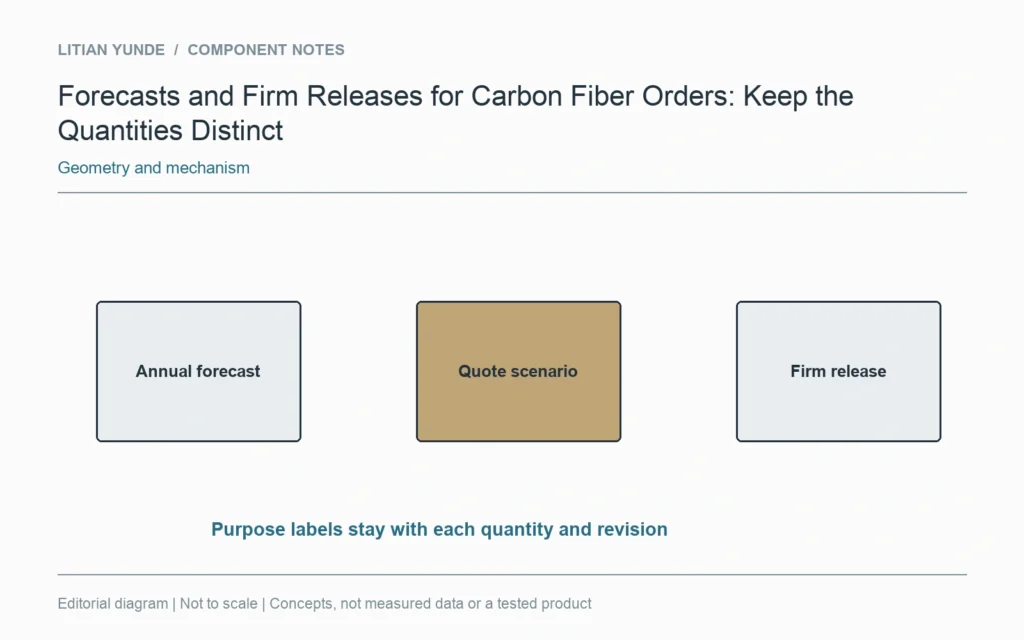
An annual forecast, a requested quotation quantity and a firm production release can be different numbers. Label each one in the order discussion. Do not let a planning estimate silently become an instruction to make or ship parts.
Give each quantity a purpose
State whether a number supports capacity planning, a price scenario, a material proposal or a confirmed release. Keep the part and revision reference with it. A large annual estimate does not explain the quantity or timing of the next authorized production batch.
Carry assumptions into the quotation
Ask the supplier to identify the volume and release assumptions behind its offer. If price or material planning depends on a forecast, retain that dependency for agreement. This article does not define contractual liability or invent an order commitment from a spreadsheet heading.
Reconcile later changes
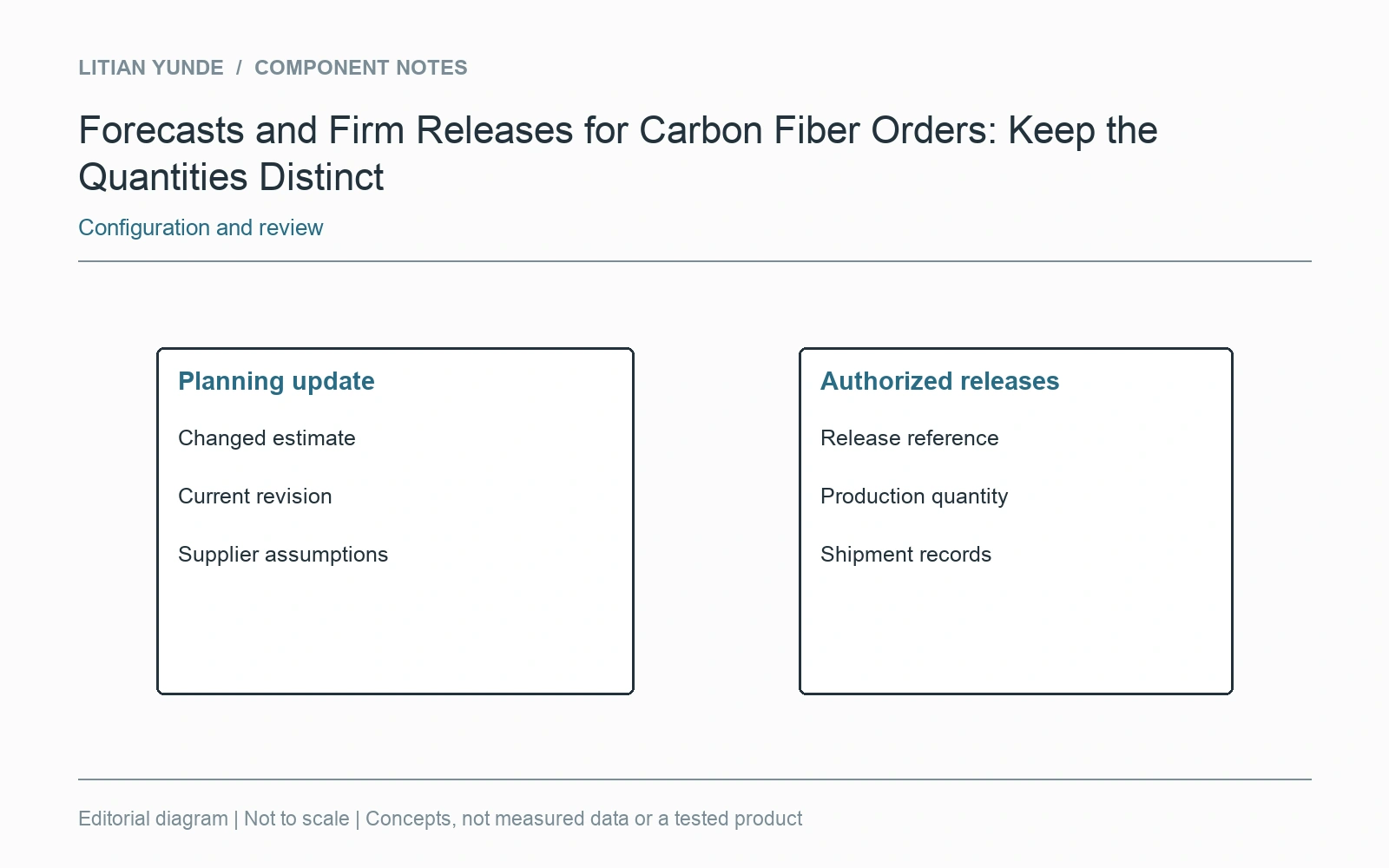
When the forecast changes, identify which planning information changed and which actual releases remain current. Keep dispatched quantities tied to their shipment records rather than subtracting them from an unlabeled annual total. The final order documents should make it possible to distinguish what is expected, what has been authorized and what has actually been supplied without reconstructing the decision from informal messages.