
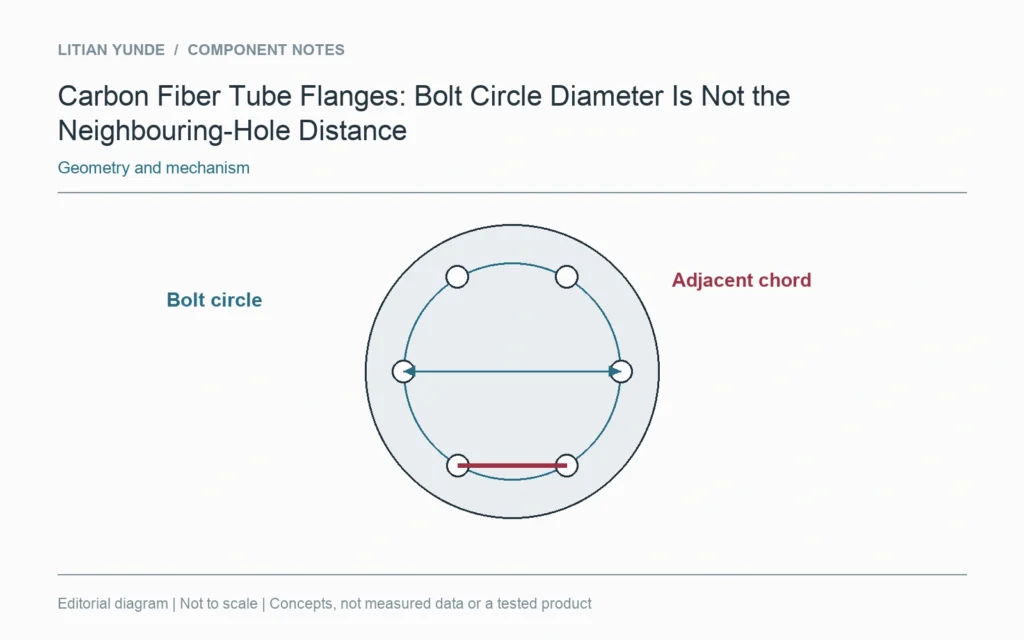
On a circular flange, bolt circle diameter locates hole centres around a circle. The straight distance between neighbouring hole centres is a chord, not that diameter. Identify the hole count and angular arrangement with the bolt-circle dimension.
Dimension the centres
Show the bolt-circle centre and its relationship to the tube or fitting reference. Keep the actual hole diameter separate from the circle carrying the hole centres. A dimension across the outer rim does not define either of those quantities.
Make the pattern orientation visible
An equally spaced pattern still needs an orientation reference when the mating assembly requires one. Identify a clocked hole, datum direction or another agreed convention. If holes are not equally spaced, provide the actual locations rather than leaving the drawing to suggest symmetry.
Compare drawings on the same basis
When checking a mating flange, confirm that both drawings use the same centre, hole count and pattern definition. Do not compare a measured adjacent-hole chord with a listed bolt-circle diameter and call the difference a manufacturing error. Retain the units and inspection method with the result. A clear pattern definition supports fit review without establishing the load capacity of the flange or its tube connection.
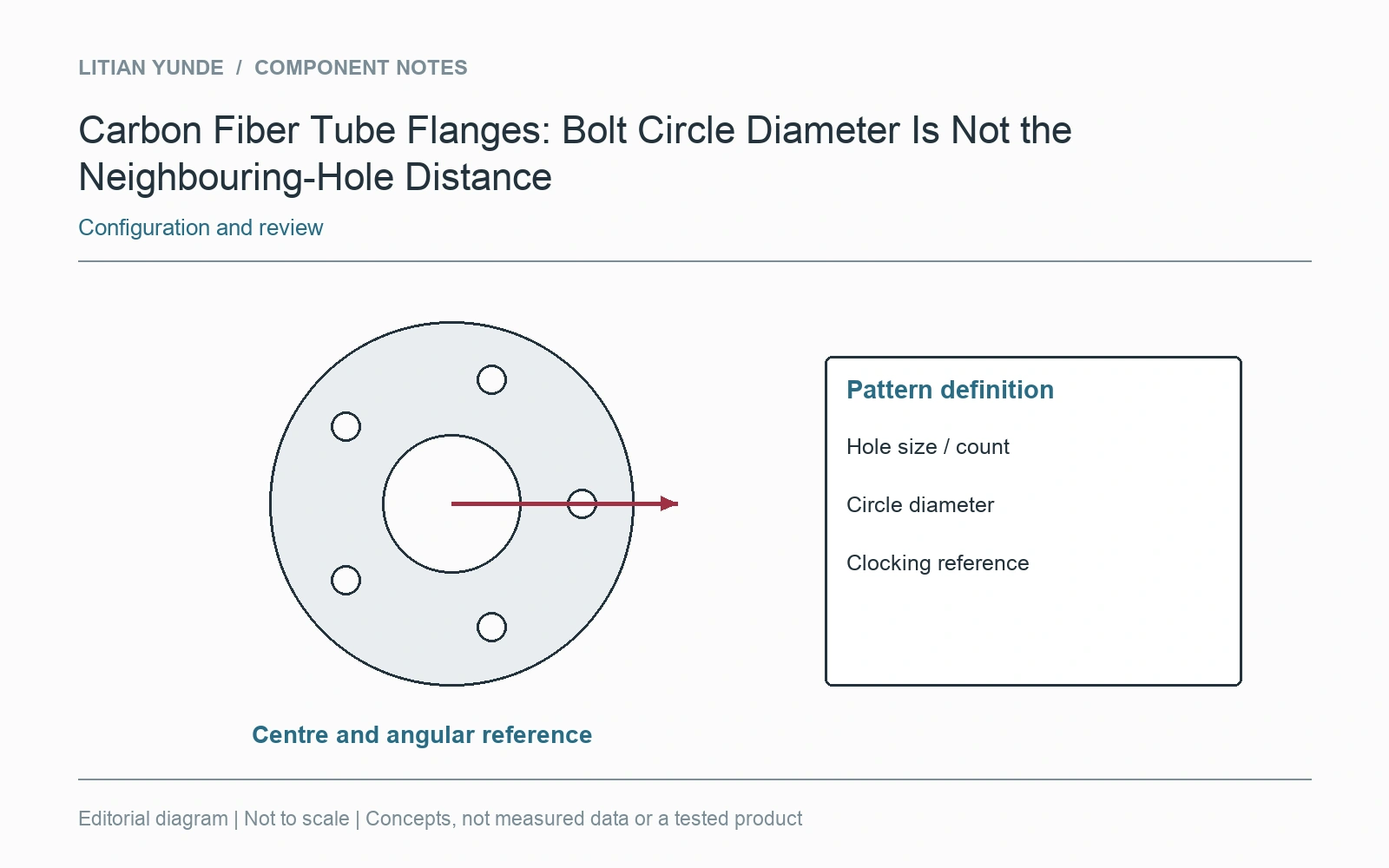
For the project review: bolt-circle centre and diameter; hole diameter, count and spacing; angular orientation reference; mating definition and inspection basis.