
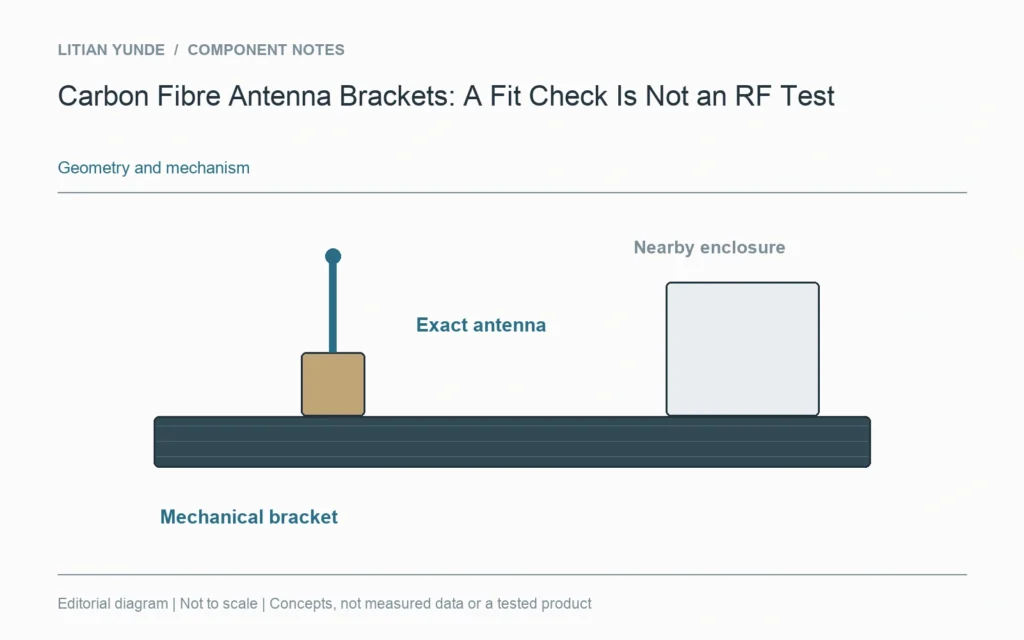
A carbon fibre bracket can position an antenna mechanically, but mechanical fit does not establish radio performance. Keep the exact antenna, its installation instructions and the nearby materials in the review. Treat radio verification as a separate result for the represented assembly.
Use the actual antenna guidance
Taoglas discusses enclosure and surrounding-material effects in its cellular antenna selection guidance. An installation recommendation belongs to the specific antenna and system, not to every carbon composite bracket. A material can occupy a different role as a mounting surface than as a wall between an embedded antenna and the outside.
Show more than the fixing holes
Include the antenna position, cable route and the nearby enclosure or equipment. Identify relevant clear regions from the antenna supplier’s instructions rather than inventing a universal separation distance. The mechanical drawing should make any antenna-specific requirements visible to the component supplier.
Retain the tested configuration
When radio performance is evaluated, retain the antenna model, cable arrangement, bracket and surrounding assembly revision with the result. Moving the antenna or adding a nearby cover changes that configuration. Do not convert a successful bolt-up demonstration into an RF approval, or claim that a carbon surface is universally transparent or universally unsuitable. A useful enquiry separates the supplied bracket from the system-level antenna evaluation.
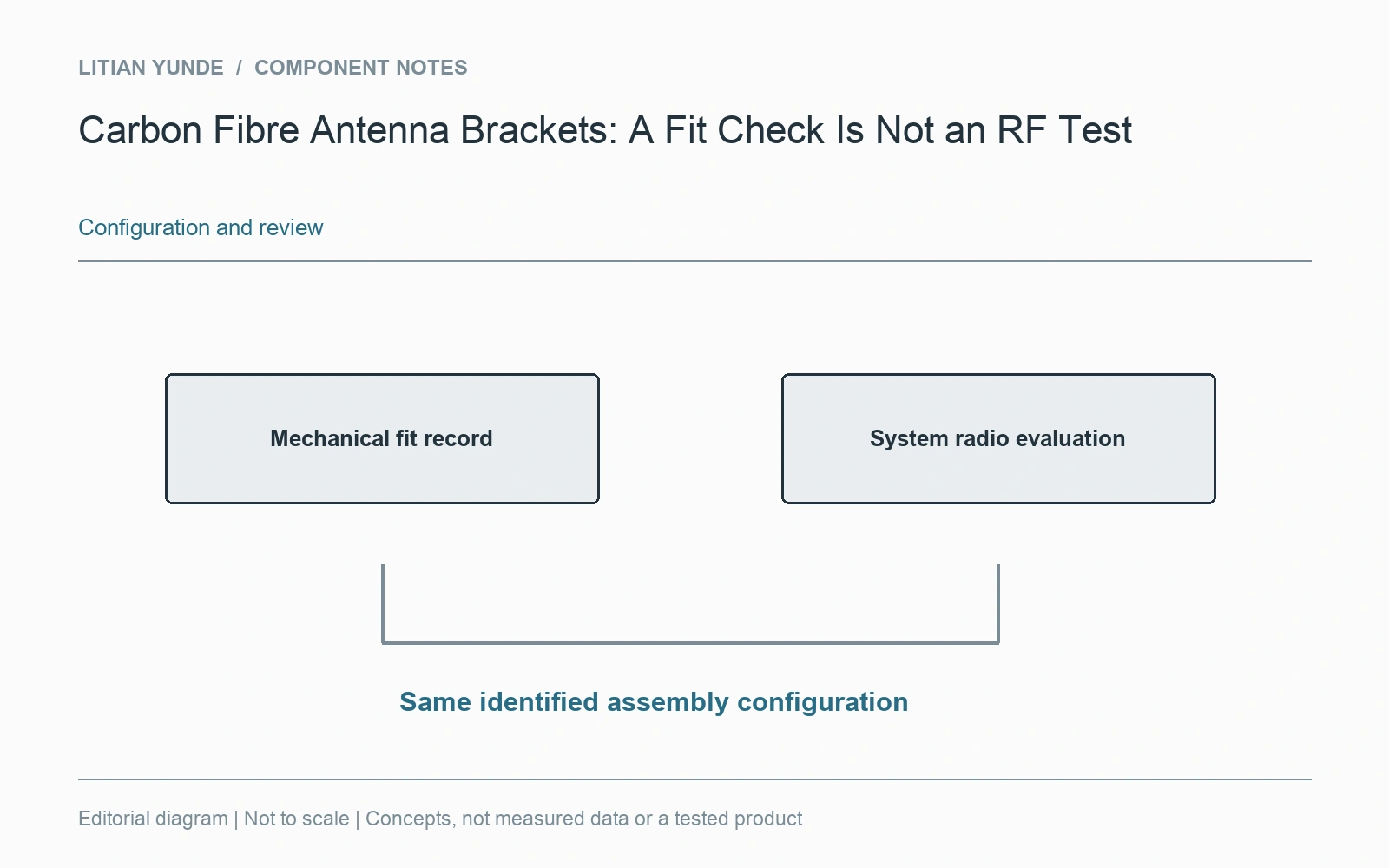
For the project review: exact antenna and installation reference; bracket position and surrounding materials; cable arrangement and required clear regions; mechanical and RF evaluation scope.
Further reading: Taoglas: antenna selection and surrounding materials.