
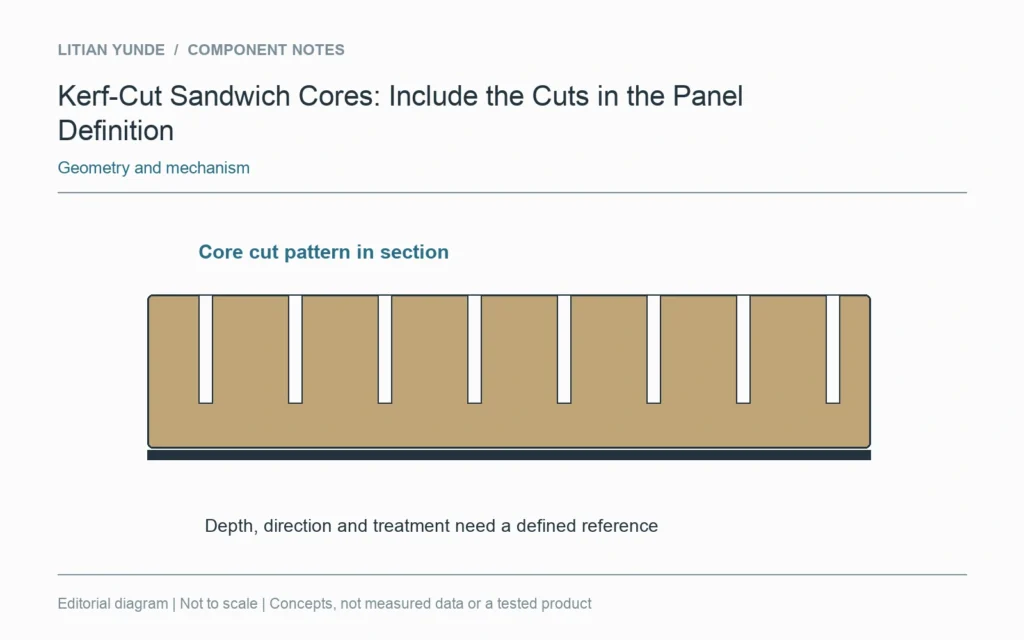
A kerf-cut core has a cut pattern as well as a nominal material and thickness. The cuts help the core accommodate a shape, but they also change the represented construction. Include their direction, extent and treatment in the panel definition rather than specifying core density alone.
Describe the supplied core format
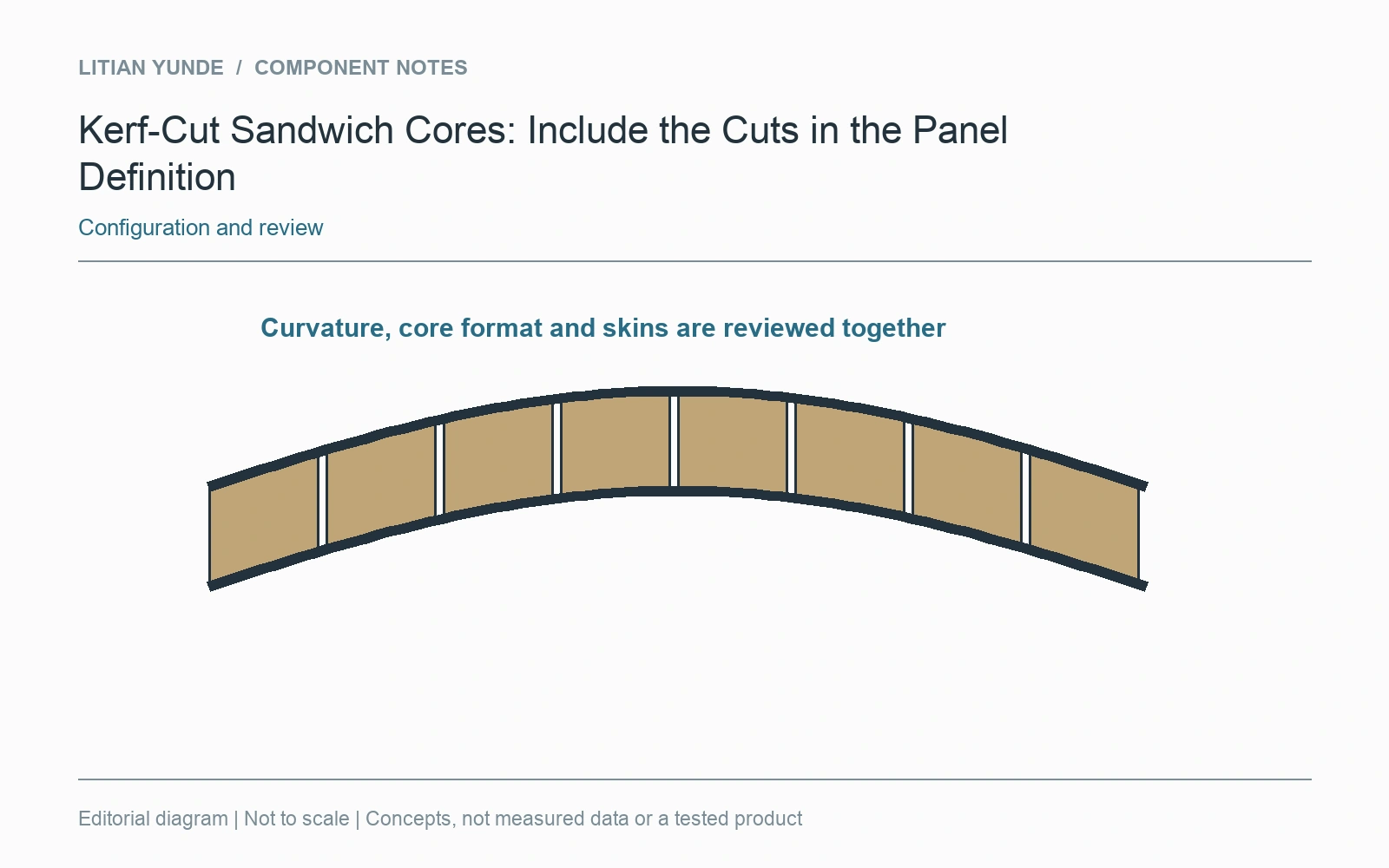
A plain board and a cut or grooved format are not the same supplied item. Identify the manufacturer’s material, thickness and format. Show the intended cut direction in relation to the panel curvature. Avoid treating an image of a bendable core as a complete production definition.
Review the proposed processing
Diab’s finishing information distinguishes core cuts, grooves and perforations by their intended form and flow roles. Use the instructions applicable to the chosen material. Where the construction includes filled cuts or additional bonding material, ask how that is represented in the proposed panel and mass estimate. This article gives no universal resin allowance.
Keep the sample construction reproducible
A curved panel sample should retain its core-format and orientation reference alongside the skins and process proposal. If the cut pattern changes, review the construction instead of approving it as a cosmetic difference. Agree inspection of the resulting panel under its actual requirements. Core density remains useful information, but it cannot stand in for the complete skin, core and cut-pattern definition.
Further reading: Diab: core finishing, cuts, grooves and perforations.