
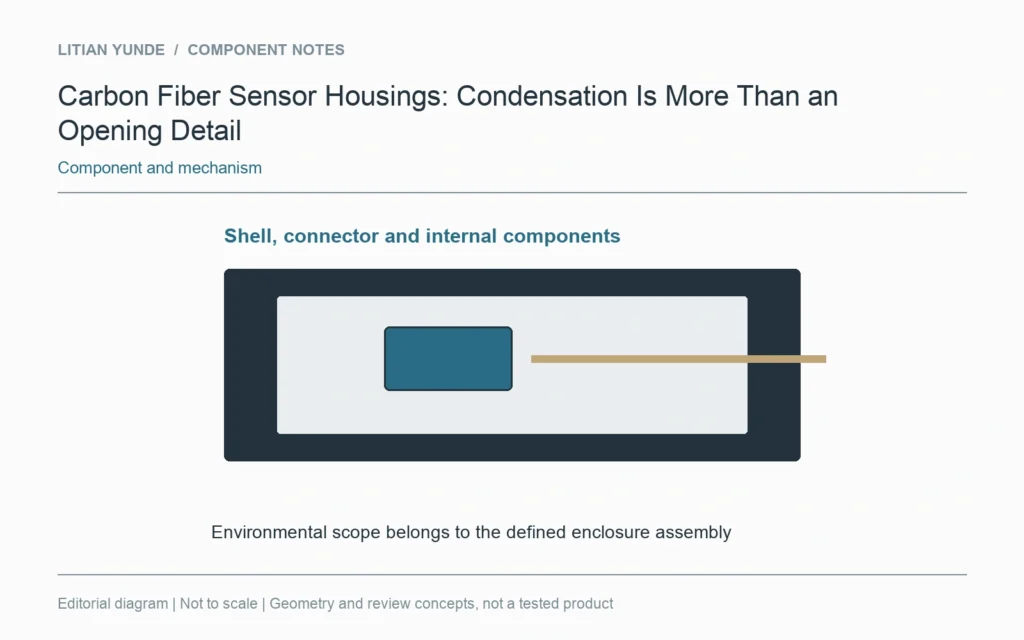
A sensor housing can experience moisture internally even when an external opening appears well protected. The enclosure, seals, internal components and operating environment need a coordinated review. Supplying a carbon fiber shell does not automatically include environmental qualification of the assembled sensor.
Describe the operating cycle
Record the expected temperature and humidity conditions, changes between locations, and whether the enclosure is opened during service. These inputs help the responsible designer decide what environmental assessment is appropriate. Avoid solving an undefined condensation concern by adding an arbitrary hole to the shell.
Keep component responsibilities visible
Identify who supplies the seals, connectors, vents and internal protective measures, if any are specified. A shell manufacturer needs the relevant interfaces and keep-clear areas. Those details should reflect an agreed enclosure concept rather than imply an unverified ingress-protection or condensation-free rating.
Separate mechanical and environmental acceptance
The carbon shell can have dimensional, finish and interface requirements of its own. Environmental performance belongs to the identified complete configuration and test scope. If a prototype is evaluated, record the assembly state and exposure. A later connector, seal or service-opening change may need another review even when the shell geometry remains unchanged.
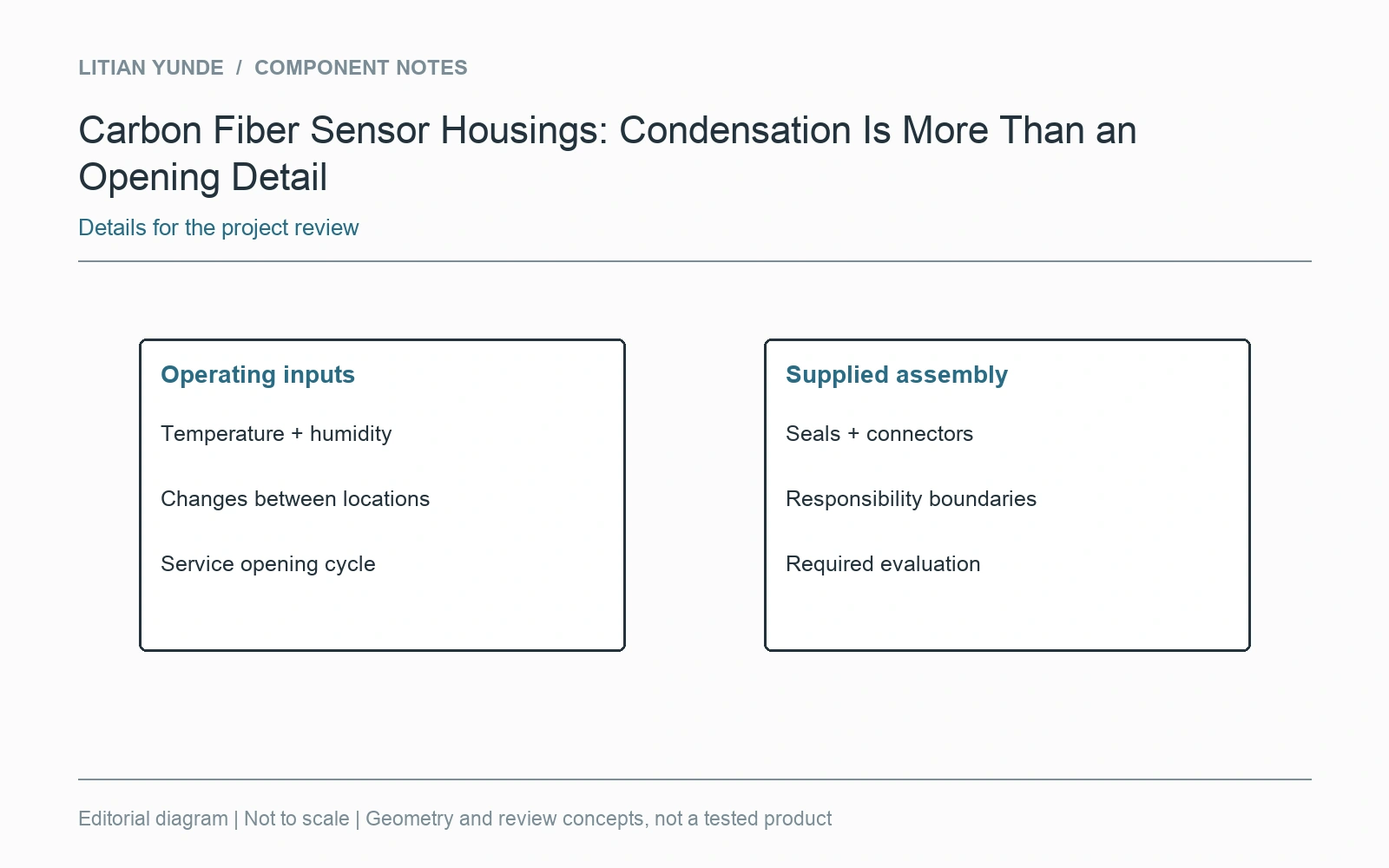
For the project review: operating cycle and exposure; supplied enclosure components; defined interfaces and responsibilities; complete-assembly evaluation scope.