
A colourful thermal image is a record of a surface thermal response, not a self-explanatory map of internal defects. To understand an inspection result, the reader needs to know how the thermal response was produced, observed and evaluated.
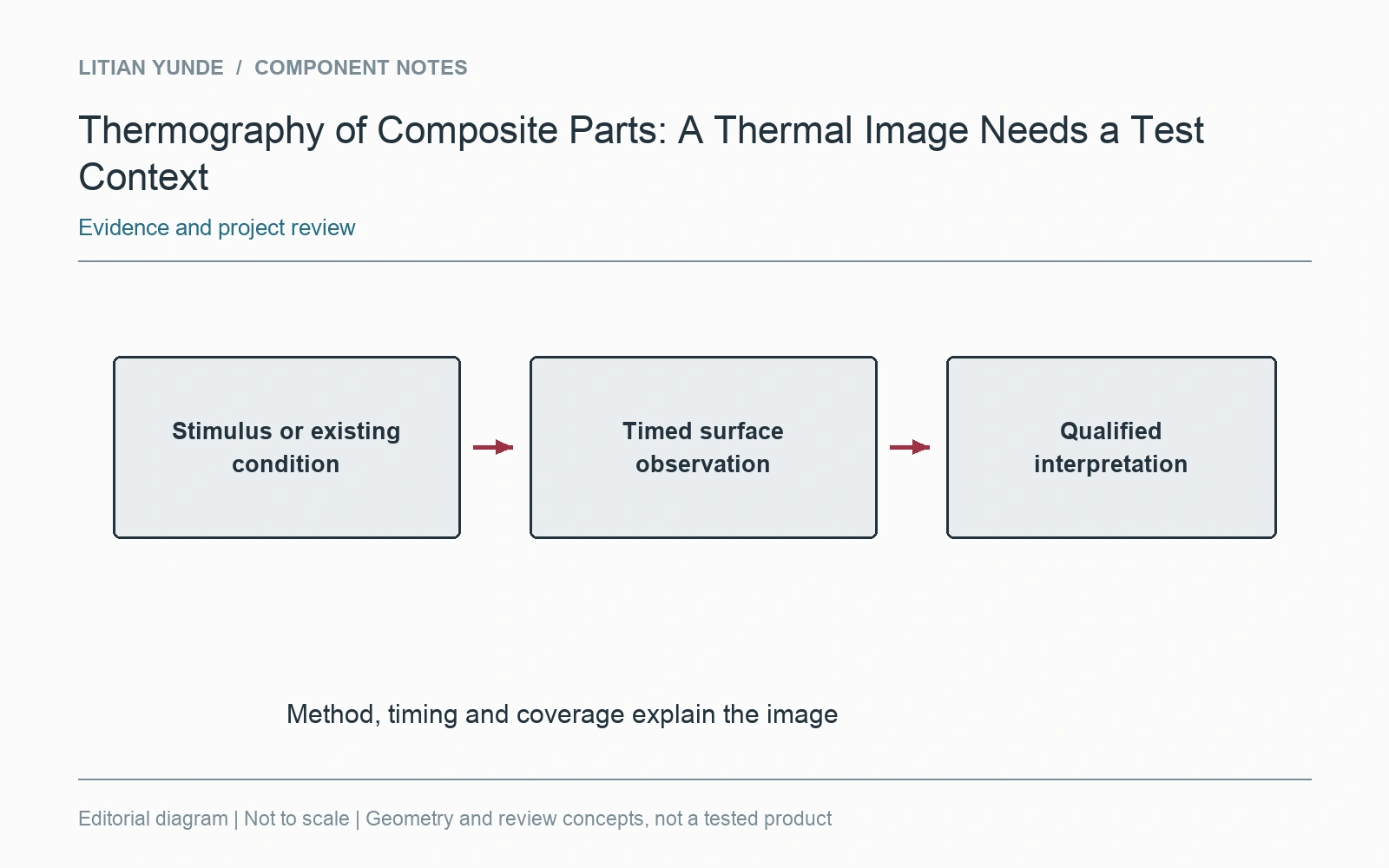
TWI distinguishes thermography using an introduced thermal stimulus from observation of an existing temperature condition. The resulting image depends on the method and observation conditions. A normal visible-light photograph, even when shown with false colours, is not a thermal inspection record.
Capture the setup with the result
Identify the component and examined face, the technique, equipment configuration and relevant timing. Surface condition, access and surrounding conditions can affect the observation. Keep the raw record or agreed report format with the interpreted result, rather than retaining only a cropped colour image that has lost its scale and location.
State the scope of the interpretation
A qualified assessment should explain the examined coverage, the evaluation basis and limitations relevant to the component. The appropriate method depends on the inspection objective; thermography is not automatically the best choice for every laminate, thickness or geometry. When requesting a quotation, describe the concern and ask the inspection provider to propose a suitable approach. Confirm capability and acceptance arrangements for the actual project before promising the inspection to another party.
Further reading: TWI: thermography methods.