
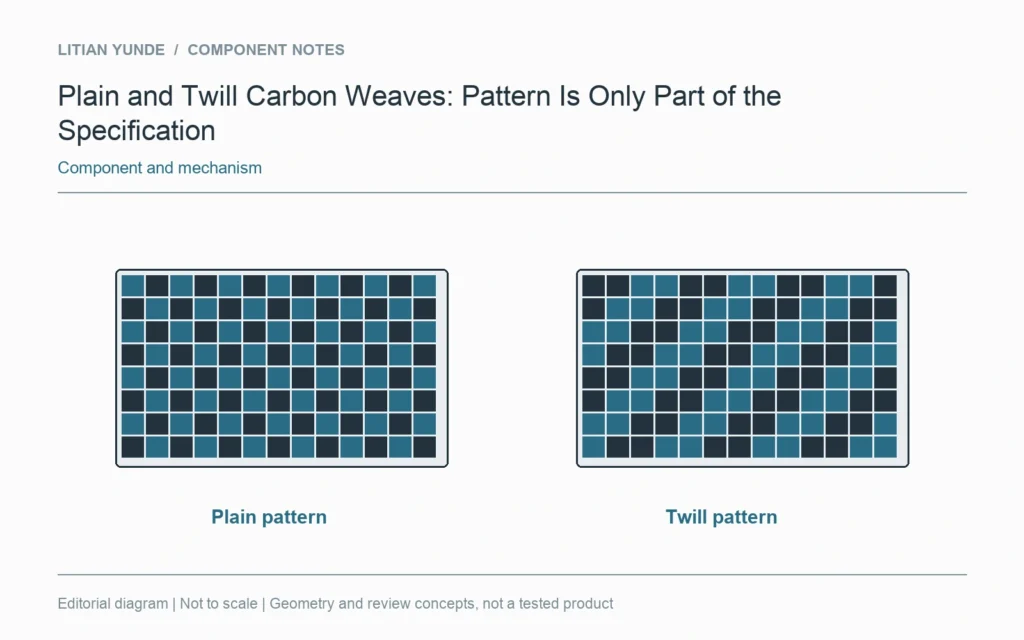
Plain and twill identify weave constructions, not complete carbon fiber component specifications. Their visible patterns can help an appearance discussion, but a fabric choice also needs its product designation and the rest of the laminate definition.
Retain the fabric designation
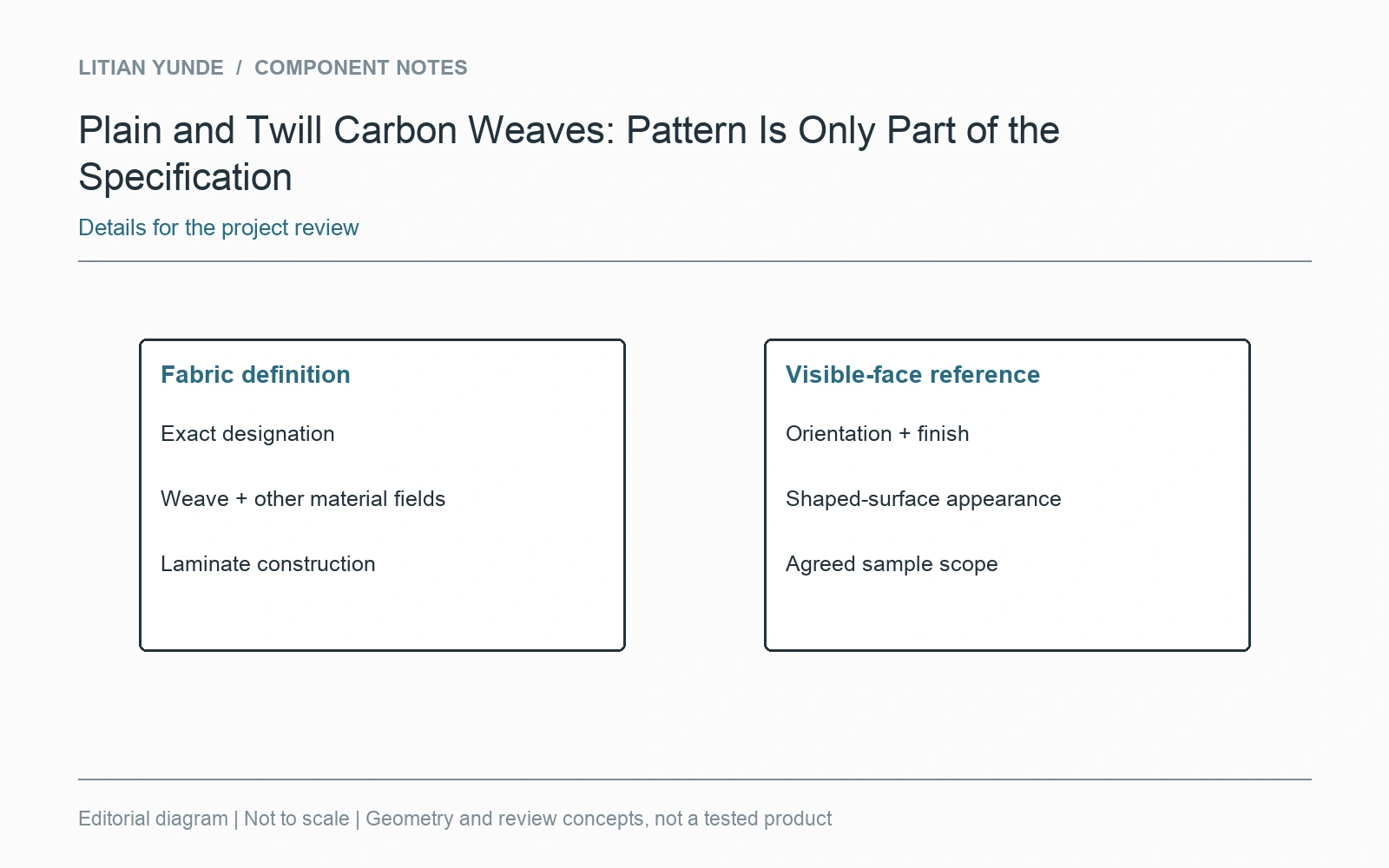
Hexcel’s fabric information lists weave style alongside other material fields. For an enquiry, use that complete designation rather than ordering from a photograph labelled only “twill.” The image may show the desired pattern while leaving fibre grade, fabric weight and resin construction unresolved.
Define the appearance reference separately
If the visible face matters, identify the approved orientation, viewed surface and finish. Curved geometry and local forming can change how the pattern appears across the part. An appearance sample has a clear role, but it is not a substitute for the engineering definition of the laminate.
Compare proposals without inventing a ranking
A weave name alone does not establish which finished part is stronger, lighter or more suitable. Compare the proposed construction against the actual component requirements and evidence. If a supplier proposes another fabric, record which fields change and whether another appearance or engineering review is needed. This keeps a cosmetic shorthand from becoming an uncontrolled material substitution.
Further reading: Hexcel: fabric and reinforcement resources.