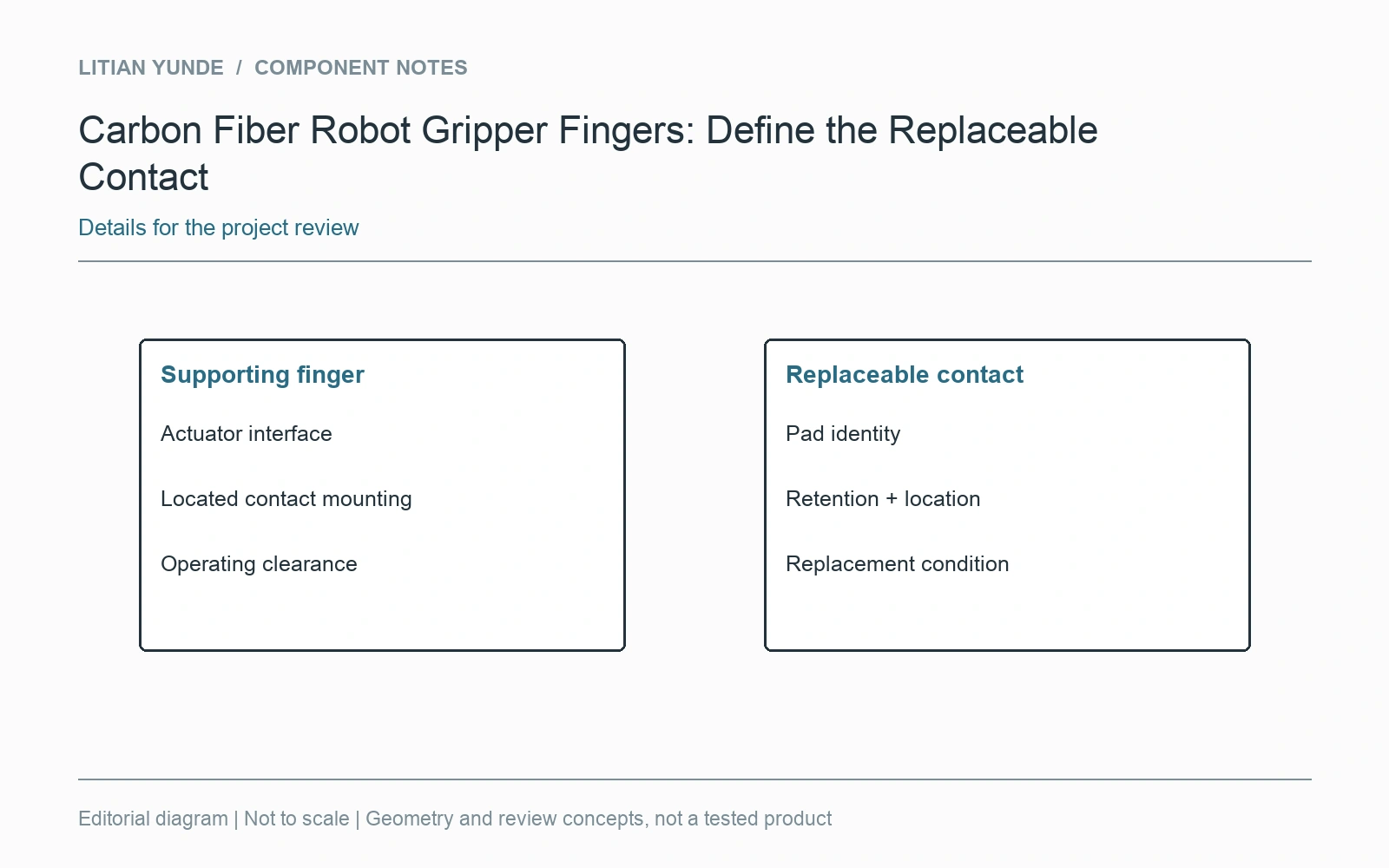
A robot gripper finger has at least two interfaces: the connection to the actuator and the contact with the handled item. A carbon fiber finger enquiry should define both. If the contact pad is replaceable, describe that pad and its replacement condition separately from the supporting finger.
Start with the object being handled
Show the contact locations, the available space and the intended grip motion. Include the range of item shapes or sizes that the project must accommodate. A lightweight finger outline is not enough to establish retention, contact pressure or protection of the handled surface.
Keep the replaceable part identifiable
Record how a pad is located and retained, its supplied scope and the features used to restore its position after replacement. The customer may supply the pad or ask for a complete assembly; the quotation needs to say which. Do not assume a carbon fiber surface itself is the intended gripping material.
Review the assembled finger
Check the actuator interface, fastener access and interference through the operating motion. If a sample is evaluated, retain the contact material and assembly condition with the result. Changing a pad or its mounting can change the task even when the carbon component stays identical. Application loads and operating safeguards remain matters for the responsible machine designer.